
How to Integrate Voice AI With POS Systems Without Breaking on Complex Menus

Building consumer products with Voice AI
This scenario happens far too often with low-tech Voice AI solutions that aren’t deeply integrated with the POS or menu logic.
Picture a Friday night, deep in the 7 p.m. rush. Chaos is in full swing. Suddenly, pepperoni runs out. For most pizza restaurants, that’s a top-selling item. When one domino falls, others usually follow.
Now imagine what happens next.
A Voice AI system that isn’t smart enough fails in that moment. Even worse, the item goes out while the AI is already on a call and that call happens to be from one of your OG customers trying to order their usual pepperoni pizza. This is where expectations matter. You need a system intelligent enough to recognize what’s happening in real time and respond appropriately, no matter the situation.
That’s exactly what we built at Kea.
Before submitting any order, Kea performs a final validation check to ensure it never sends something to the kitchen that can’t be fulfilled. That last check prevents the tipping point that overwhelms staff and damages the customer experience. We didn’t just handle the happy path—we perfected the edge cases. This goes beyond human reasoning. With Kea mastering menus, even highly complex menus are handled cleanly and confidently over voice.
Most Voice AI systems hit a wall here. They either awkwardly say, “That item is unavailable,” and leave the customer hanging or worse, they take the order anyway and create a mess in the kitchen.
But what if your Voice AI could think like your best employee? Take a look on how the best phone answering service Kea AI handles menus.
Kea's AI assistant answers every call and handles complex ordering scenarios that would challenge traditional systems.
The Hidden Cost of Menu Complexity
Running a restaurant means managing chaos. Your menu isn't just a list of items. It's a living, breathing system with:
- Multiple nested modifiers (think "large pepperoni pizza with extra cheese, light sauce, well-done, half mushrooms, gluten-free crust")
- Daily inventory changes
- Seasonal items that come and go
- Hard-to-pronounce specialty dishes
- Marketing names that customers butcher every time
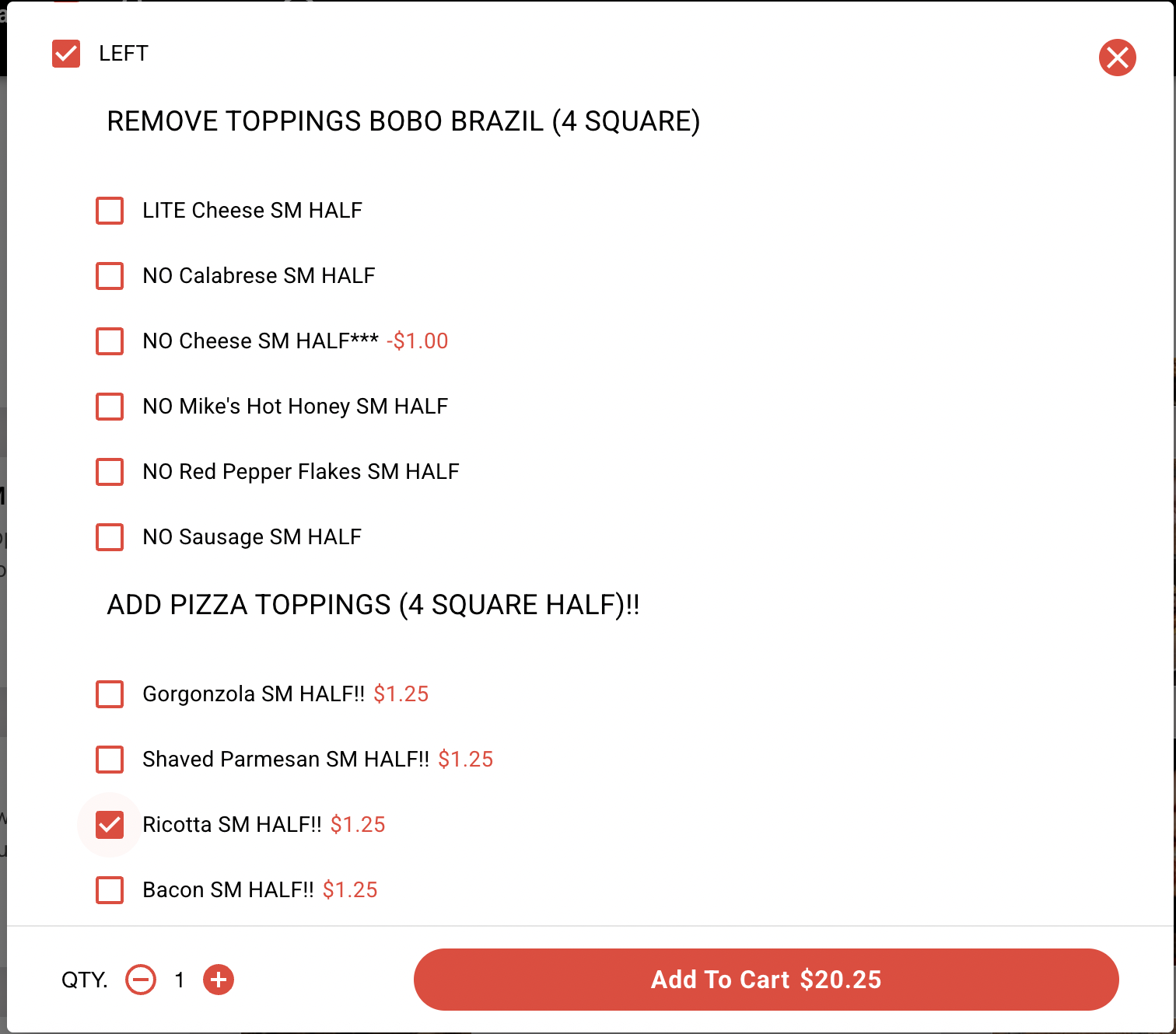
When a customer says “Half ricotta on my pizza” the AI needs to know that half would be left and don’t accidentally double up on the right and keep it the same.
Wendy's complex menu has over 200 billion possible ways to order a Dave's Double, and that's just one item. Now multiply that complexity across your entire menu, and you start to see why most voice AI systems fail.
The 86'd Problem That Costs You Money
Here's what typically happens when an item runs out:
- Customer calls and orders their usual
- AI says "Sorry, that's not available"
- Customer gets frustrated
- Customer hangs up
- You lose the sale
According to industry research, restaurants miss 43% of their phone calls, which costs the average venue up to $292,000 annually in lost business. But it gets worse when your voice AI can't handle the situation intelligently.
How Kea AI Turns Problems Into Opportunities
This is where Kea AI changes everything. When something's 86'd, our system doesn't just inform the customer. It actively saves the sale by suggesting similar alternatives.
Picture this conversation:
Customer: "I'll have the BBQ bacon burger."
Kea AI: "I'm sorry, the BBQ bacon burger is currently unavailable. However, I can offer you our smokehouse burger which has similar flavors with bacon and BBQ sauce, or our classic bacon cheeseburger. Which would you prefer?"
Customer: "Oh, the smokehouse burger sounds good!"
Sale saved.
Pepperoni pizza 86'd? The Food Critic keeps customers informed with real-time item, modifier, and FAQ updates, ensuring your AI always knows what's available and what to suggest instead.
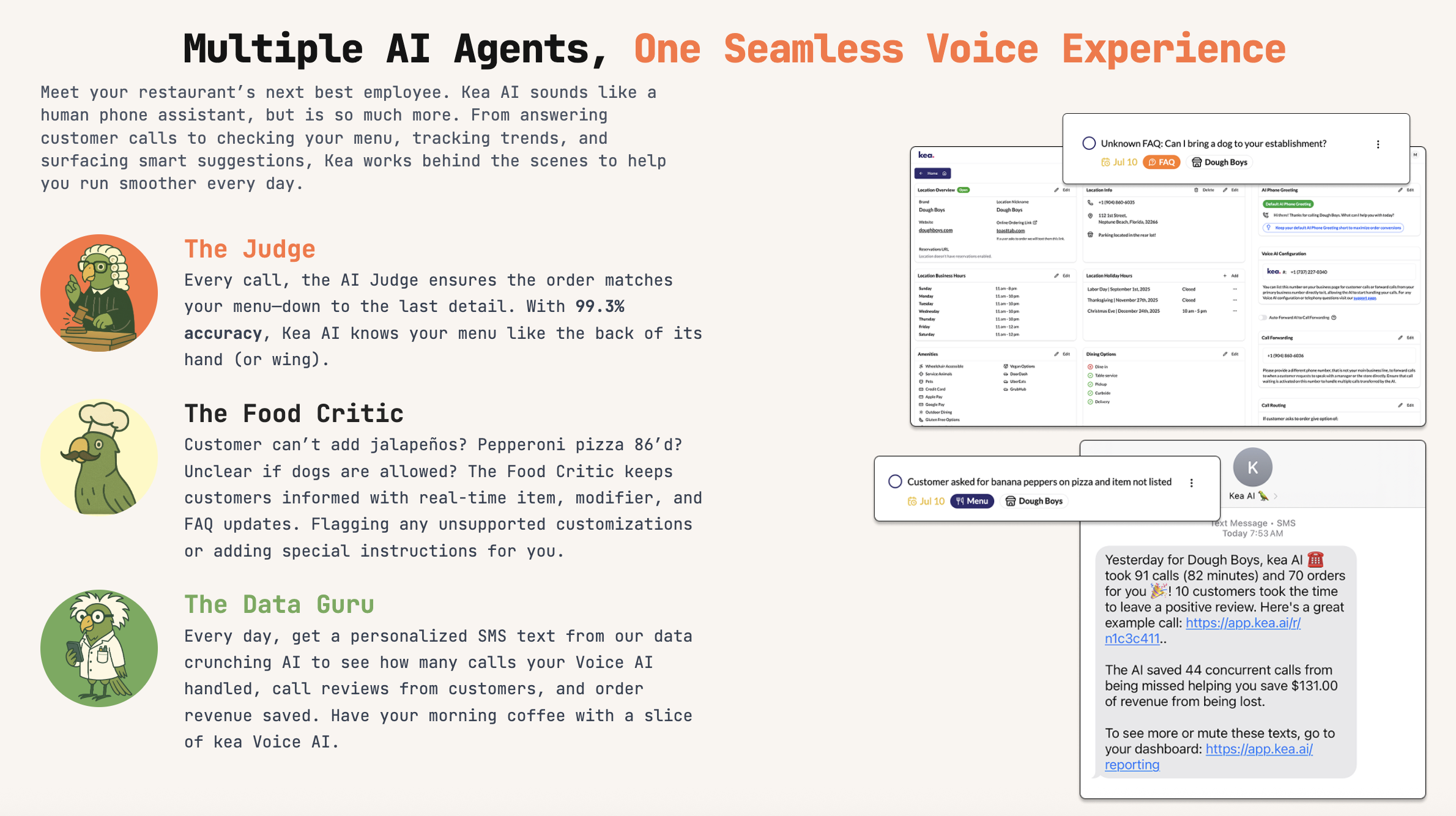
Kea AI's specialized agents work together to ensure accurate orders and intelligent substitutions.
Beyond Basic Voice Recognition
But Kea AI goes further. We handle:
Deeply Nested Modifiers
Menu mastery: Modifiers, combos, seasonal items, and 86'd logic isn't just a feature for us. It's our foundation. Whether a customer wants:
- A burger with seventeen modifications
- A pizza split four ways with different toppings, and half-and-half
- Substitutions within substitutions
Kea AI processes it all without breaking a sweat.
Marketing Names and Pronunciations
Got a "Sriracha Sensation Sandwich" or "Pho Ga Special"? We teach our AI your unique menu vocabulary, including those creative marketing names that customers struggle with. No more lost sales because the AI couldn't understand "that spicy thing you advertised last week."
Real-Time Menu Intelligence
The AI is synced in real-time with the restaurant's menu, including item availability. But unlike others, Kea AI doesn't just track what's out. We intelligently manage the entire experience, suggesting profitable alternatives that keep customers happy and orders flowing.
The Technology That Makes It Possible
Voice AI adapts to different restaurant menus by combining structured menu data, language understanding, and continuous learning. Here's how Kea AI excels where others fail:
1. Menu Ingestion & Structure
We start by ingesting your actual menu through POS integration or structured menu files. Items break down into:
- Categories (entrees, sides, drinks)
- Variants (sizes, flavors, proteins)
- Modifiers (add/remove toppings, cooking style)
- Pricing and availability (have to know the happy hours specials).
This structured foundation lets our AI reason about your menu instead of treating it like plain text.
2. Intelligent Substitution Engine
When items go 86'd, our AI doesn't panic. It:
- Identifies similar items based on ingredients, flavor profiles, and price points
- Suggests alternatives that make sense
- Maintains your average order value
- Keeps the conversation natural and helpful
3. Continuous Learning
Every interaction makes Kea AI smarter about your specific restaurant. We learn:
- Which substitutions customers accept most often
- Local pronunciation variations
- Popular modifier combinations
- Peak time patterns
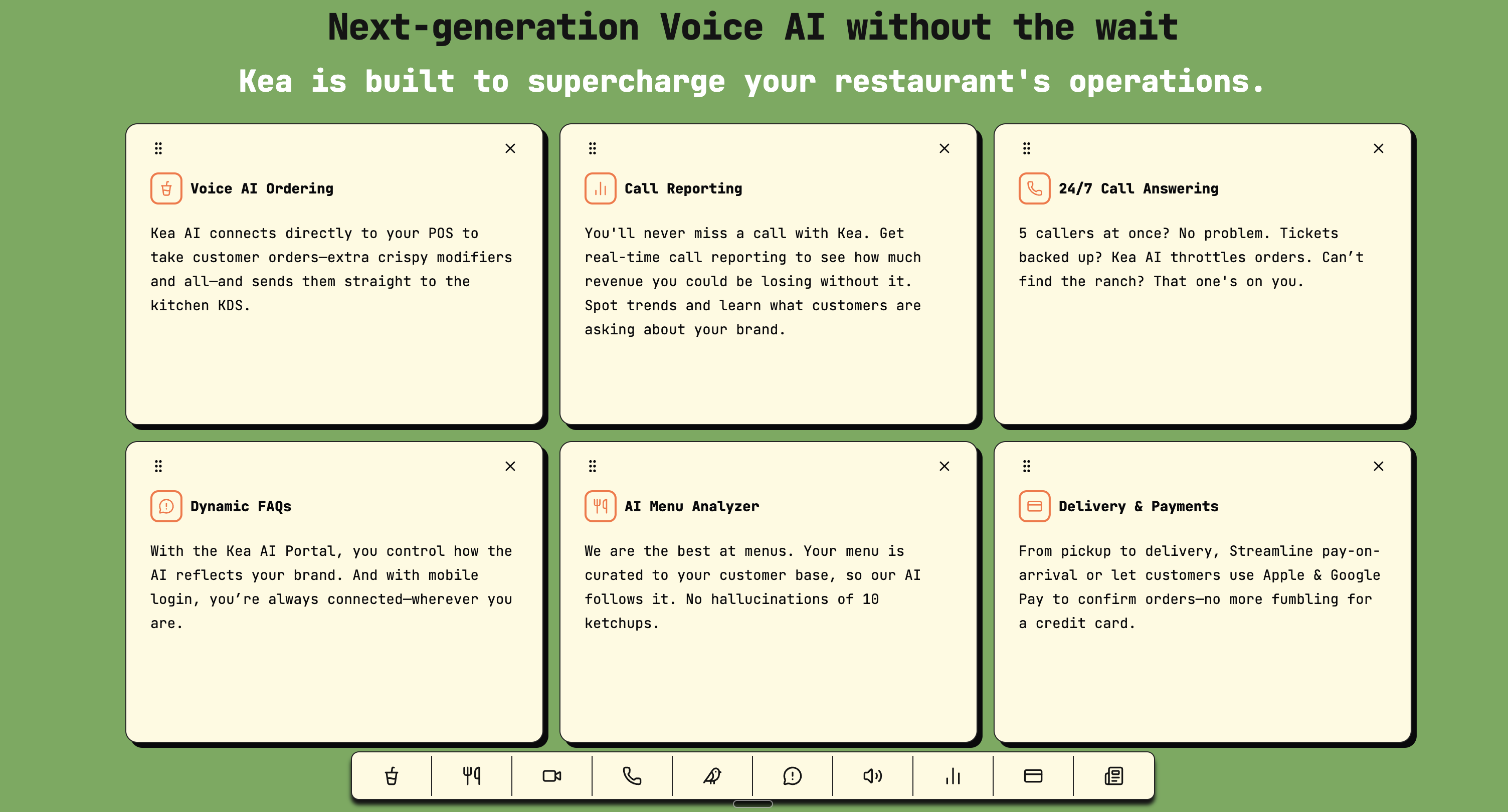
Kea AI's comprehensive feature set handles everything from ordering to payments and analytics.
Real Results From Real Restaurants
One pizza customer saw their phone order revenue jump 23 percent just from having AI answer every call and suggest add-ons consistently. But it's not just about upselling. It's about never losing a sale to poor menu management.
Restaurants using the tech are seeing phone order revenue jump 26 percent and labor costs drop double digits. Why? Because intelligent menu handling means:
- Fewer abandoned calls
- Higher order completion rates
- Better customer satisfaction
- More successful upsells
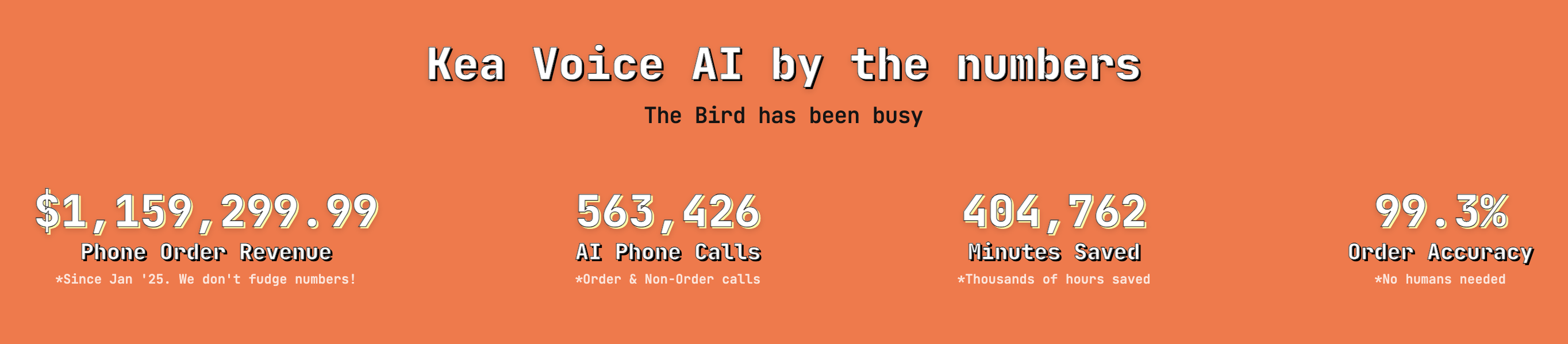
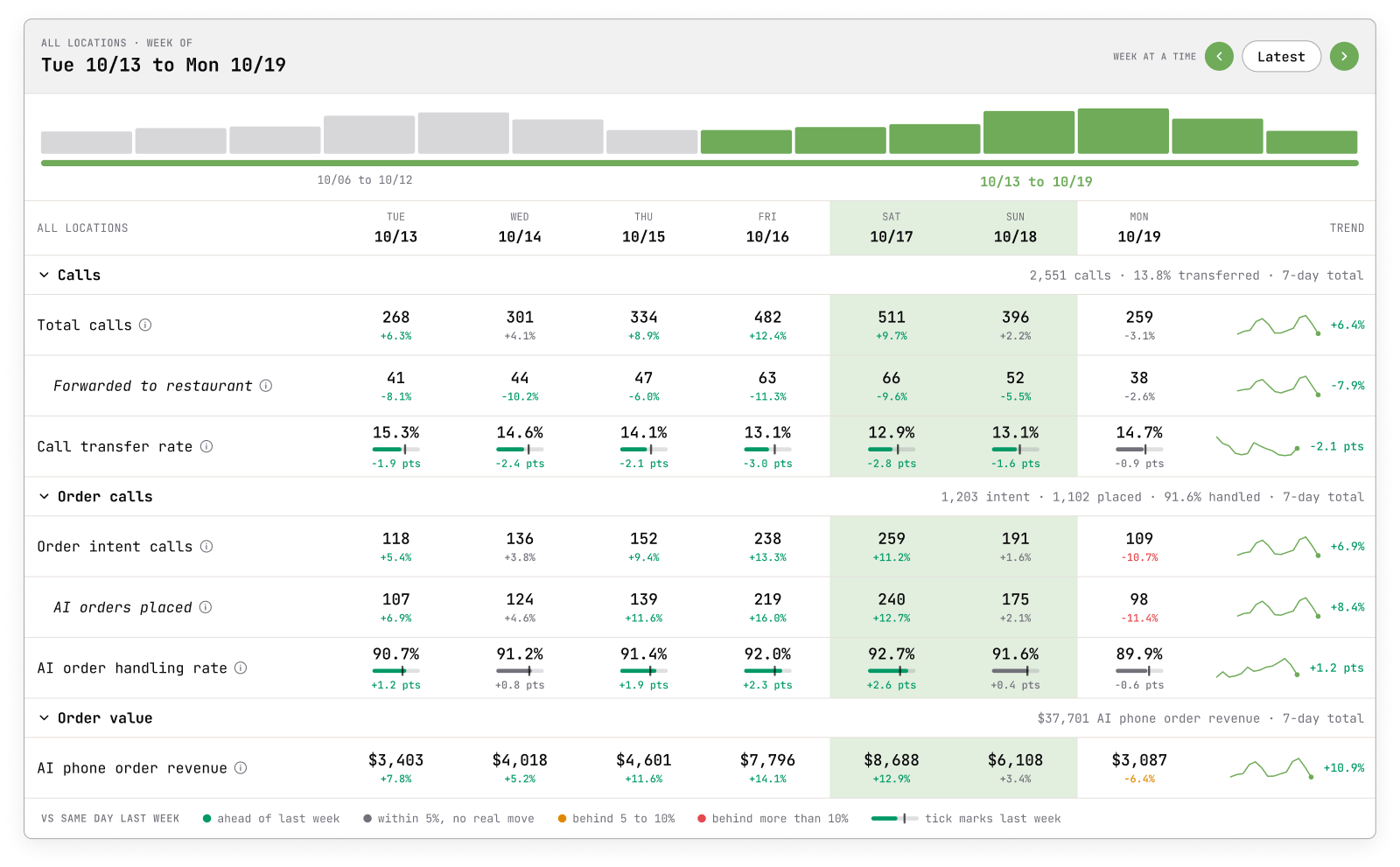
Real performance data showing over $1 million in phone order revenue and 99.3% accuracy.
Why This Matters More Than Ever
As of January 2024, the restaurant industry has experienced an average annual turnover rate of 79.6% in the last decade. In fact, in 2024, 45% of restaurant operators said their restaurant doesn't have enough staff to meet demand and almost 6 in 10 restaurant operators said they were more than 10% understaffed. In this environment, every call matters. Every potential order counts.
You can't afford a voice AI that fumbles when things get complicated. You need one that handles your menu's full complexity while thinking on its feet.
Setting Up for Success
Getting started with Kea AI is surprisingly simple:
- Integration: Setup in a day, not 8-12 weeks
- Menu Mapping: We ingest your complete menu structure, including all modifiers and variations
- Customization: Teach special pronunciations and marketing names
- 86'd Management: Set up intelligent substitution rules
- Go Live: Start capturing every call, every order, every opportunity
The Future of Restaurant Ordering
71% of consumers prefer using voice search to manually entering queries. The question isn't whether to adopt voice AI anymore. It's whether your voice AI can handle your restaurant's unique challenges.
With Kea AI, you get:
- The most advanced menu complexity handling in the industry
- Intelligent 86'd item substitution that saves sales
- Real-time menu synchronization
- Natural conversation flow that customers love
- Support for 50+ locations with brand wide changes as simple as 2 clicks
Ready to Never Lose Another Sale?
Every day you wait is another day of lost orders, frustrated customers, and missed opportunities. Kea AI doesn't just answer phones. We protect your revenue by thinking like your best employee, handling your menu's full complexity, and turning potential losses into completed sales.
Because in the restaurant business, the difference between success and failure often comes down to how you handle the unexpected. With Kea AI, you're always ready.
FAQ
How does Kea AI handle extremely complex menu modifications?
Kea AI uses advanced natural language processing specifically trained on restaurant ordering patterns. We handle deeply nested modifiers, split preparations, and complex combinations that would challenge even experienced staff. Our system understands context, so whether someone orders a "pizza with everything on the left half except olives, extra cheese on the right, and make it well-done," we get it right.
What makes Kea AI's 86'd item handling unique?
Unlike other voice AI systems that simply inform customers an item is unavailable, Kea AI proactively suggests intelligent alternatives based on similarity, price point, and customer preferences. This approach saves sales that would otherwise be lost and maintains customer satisfaction during potentially frustrating moments.
How quickly can Kea AI be implemented?
Setup takes just one day, not the 8-12 weeks typical of other solutions. Our streamlined implementation process gets you up and running fast, so you can start capturing more revenue immediately.
Can Kea AI handle multiple restaurant locations?
Absolutely. Kea AI can handle 50+ locations, making brand-wide changes as simple as 2 clicks. Whether you're a single location or a growing chain, our system scales with your needs.
How accurate is Kea AI with phone orders?
Kea AI maintains industry-leading accuracy by combining restaurant-specific language models with real-time menu synchronization. Our system handles accents, background noise, and complex orders while maintaining natural conversation flow.
What happens when Kea AI encounters something it can't handle?
While Kea AI handles the vast majority of situations autonomously, we've built in seamless escalation protocols. If needed, calls can be transferred to your staff without any awkward transitions or lost information.
How does Kea AI stay updated with menu changes?
The Food Critic keeps everything updated in real-time, including items, modifiers, and availability. Your menu changes sync automatically, ensuring customers always get accurate information.
What kind of ROI can restaurants expect with Kea AI?
Restaurants typically see phone order revenue jump 26 percent and labor costs drop by double digits. The combination of never missing calls, intelligent upselling, and saved sales from smart substitutions delivers measurable results fast.
Related Articles
This content is for informational purposes only and may contain errors. Please contact us to verify important details.