
Top 5 Voice AI Trends: Why 2025 Changed Everything

Looking back at 2025, I can't help but feel energized about where we've come and where we're heading. This year marked something special for Kea AI—not just in terms of growth, but in how the entire restaurant technology landscape transformed around us.
When I started Kea AI eight years ago, I knew exactly what operators needed. As I partnered with brand I'd so those initial chaotic dinner rushes and even jumped in to help juggle multiple phone lines, and watched orders slip through the cracks for restaurants that were really hurting. That experience shaped everything we built. The ‘Aha’ moment of operators turning on Kea the first time and hearing silence away from the ringing.
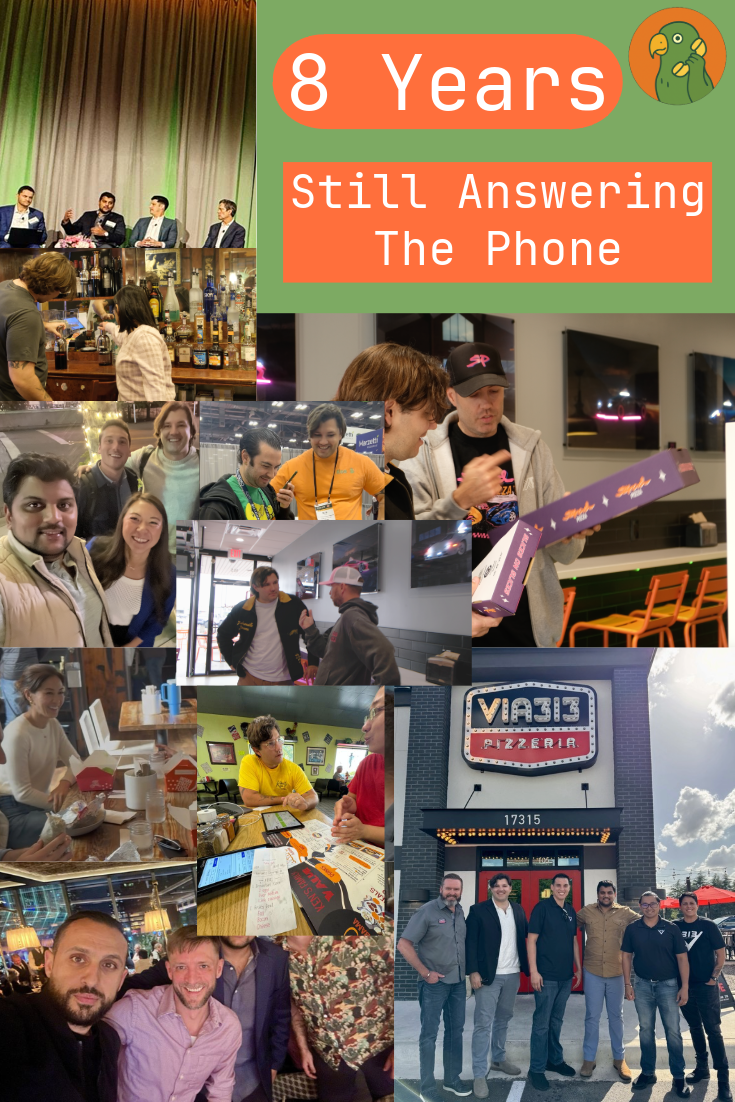
Over 8 years, Kea AI has always put restaurants first when it comes to leading and inventing new technology.
From Browser Submissions to Generative AI Leadership
Eight years ago, we were manually submitting orders through a browser. Today? The Voice AI market for restaurants is projected to expand dramatically from $10 billion to $49 billion by 2029, and Kea AI stands as the number one leader in this Voice AI revolution, handling complex restaurant operations without any human intervention. The transformation has been incredible.
This year especially, I spent countless hours inside restaurants—watching, learning, understanding. Not from a tech perspective, but from an operator's view. What I saw confirmed what we've been building toward: restaurants need technology that actually works in their world, not solutions that force them to change how they operate.
In the past three years, AI-powered voice ordering has shifted from experimental tech to a core growth driver in the restaurant industry. A 2025, a Statista report projects the voice AI foodtech market to surpass $2.5 billion by 2027, growing at an average of 32% annually. We've moved completely away from human-in-the-loop systems to fully generative AI that handles even the most complex restaurant scenarios. No delays. No handoffs. Just seamless order processing that actually works.
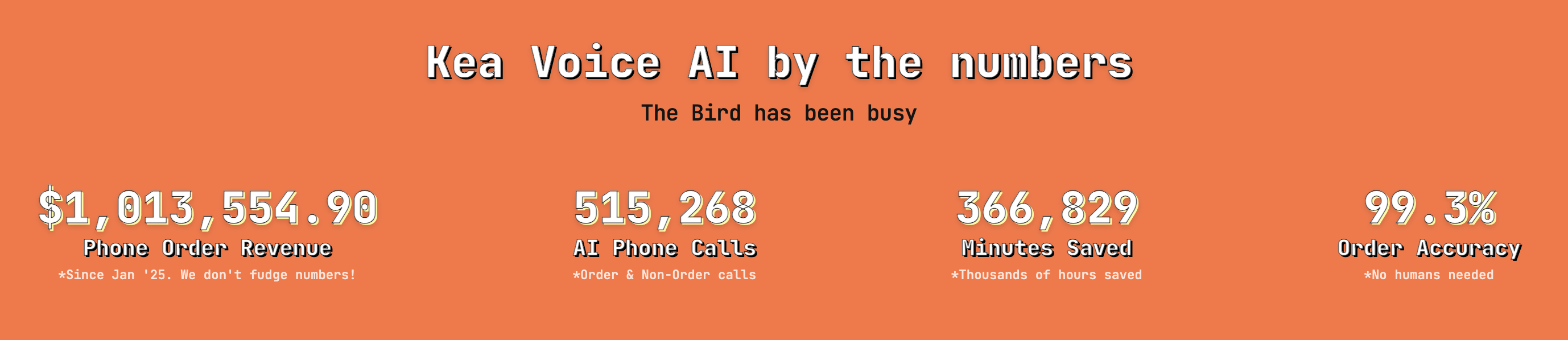
Our 2025 performance data shows over $1 million in phone order revenue and 99.3% order accuracy without human intervention.
The Top 5 Industry Shifts We Witnessed in 2025
After spending so much time in restaurants and watching the industry evolve this year, five major trends stood out:
1. The Competition Got Real (But Many Missed the Mark)
In the past two years, new suppliers have begun to pop up as demand grows and the barriers to entry come down thanks to advances in large language models. The voice AI space exploded with new players in 2025. Startups appeared almost overnight, each claiming to revolutionize restaurant ordering. But here's what many missed: restaurants need actual ordering capabilities, not just informational calls and fake integrations with humans behind the scenes.
You can't get away with half-baked integrations anymore. Restaurants need technology that:
- Handles complete order processing.
- Integrates seamlessly with their POS systems.
- Works with their existing setup—no compromises.
Too many competitors tried to shortcut this. They offered partial solutions or required restaurants to change their entire workflow. That approach simply doesn't work when you're dealing with the realities of restaurant operations. Kea AI's revolutionary restaurant revenue system demonstrates how proper voice AI should integrate with existing operations.
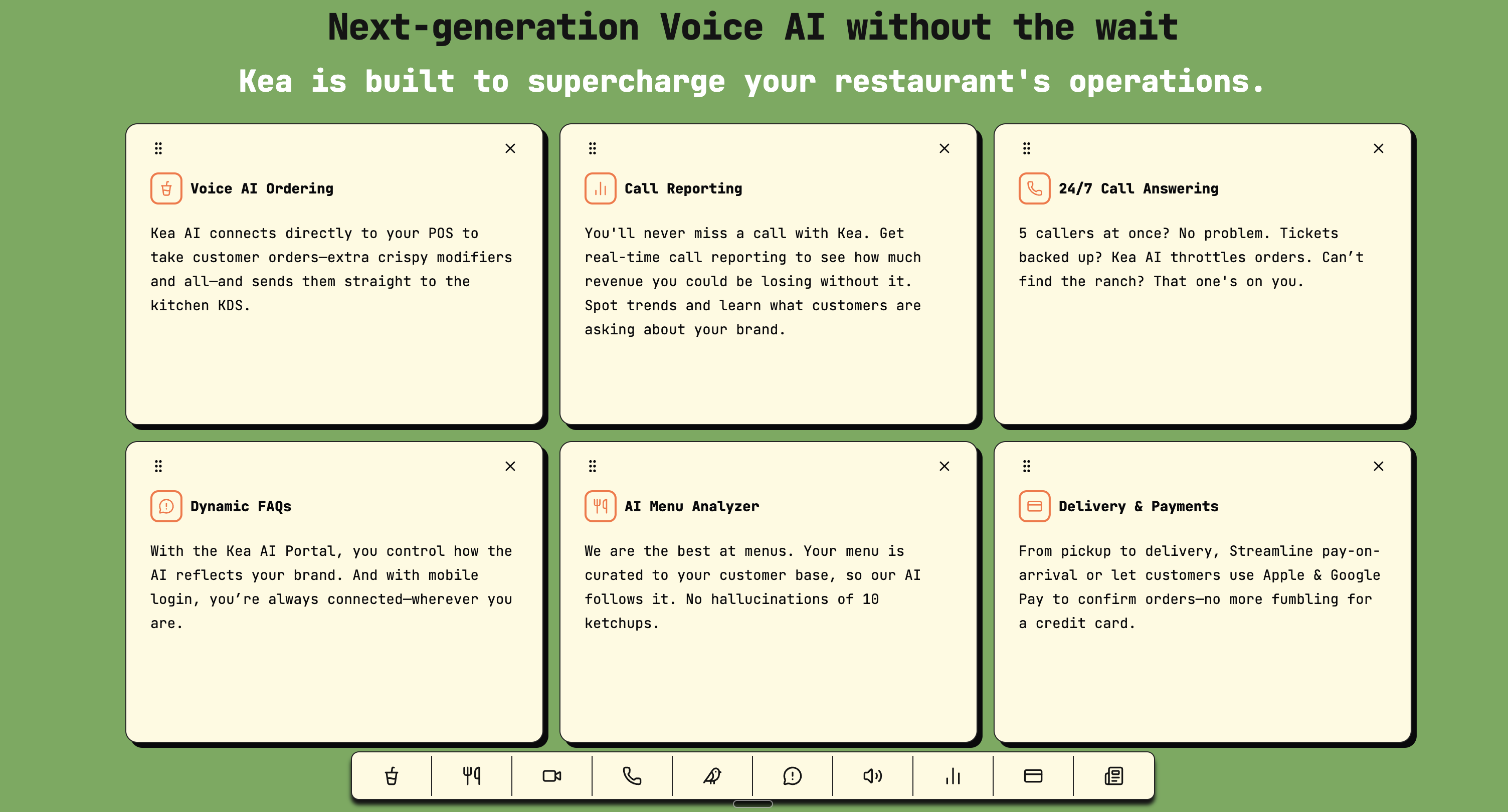
Kea's comprehensive feature set includes Voice AI Ordering, Call Reporting, 24/7 Call Answering, Dynamic FAQs, AI Menu Analyzer, and integrated Delivery. Also other innovative features like Text AI and Kea Pay.
2. The Numbers Game Gets Murky with New Competition
With increased competition came an unfortunate trend: inflated metrics and misleading claims. I've watched competitors tout impossible accuracy rates and hide their real performance data.
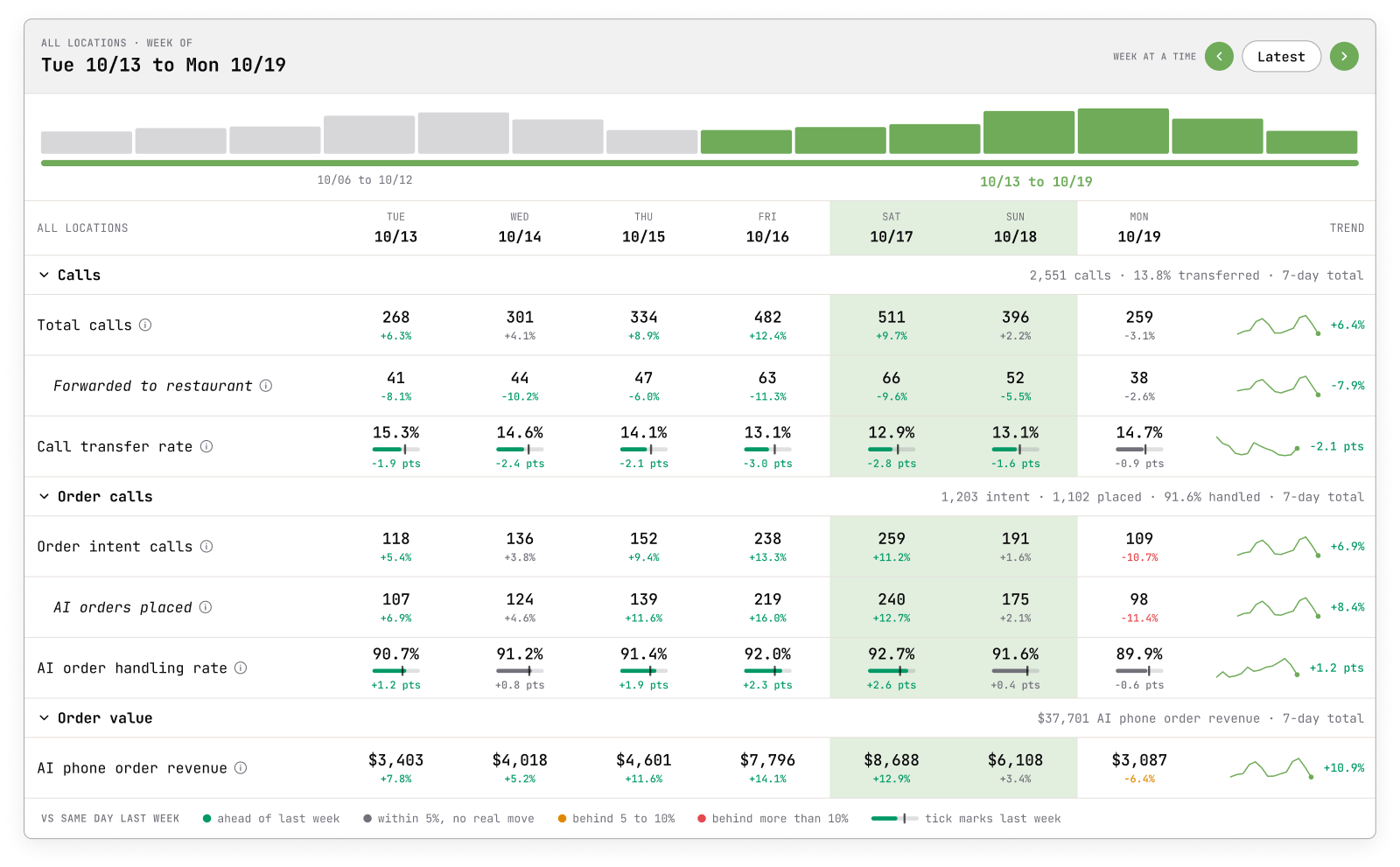
At Kea AI, transparency has always been our approach. We publish our actual revenue numbers. We share our customer satisfaction metrics—including our like-to-dislike ratios from post-call feedback. There's nothing to hide when your technology actually delivers. Our transparent call analytics approach shows exactly how we measure and report real performance data.
We collect feedback after every single call, and we share those results openly. When larger players entered the market this year, many brought corporate habits of obscuring real performance data. That's not how we operate. Restaurant owners deserve honesty about what they're implementing in their businesses. Value comes from truth, no shortcuts around it.
3. The Human Loop Problem Persists
Despite all the AI advancement, many competitors still rely on human intervention. Questions remain about AI's ability to handle orders accurately without human help, especially as they scale. Some systems are still monitored by remote workers who can step in if there's a problem. They'll take an order via AI, then route it to a human agent who spends 4-8 minutes processing it before submission. That's not just inefficient—it's actively harmful to restaurant operations. As you scale to multiple locations, can your voice provider scale too? Human-dependent models hit limits—true Voice AI scales infinitely.
Early AI adopters are seeing mixed results. Some restaurants report major wins, while others face customer complaints and order disasters. Those extra minutes cut directly into make time. In a business where every second counts during rush periods, that delay can mean the difference between satisfied and frustrated customers.
At Kea AI, we've solved what I call "the hard problem." Our system handles:
- Deeply nested modifiers (think "extra cheese, but only on half, with light sauce on the other half.. Oh yea, add the cupped pepperonis I like on the cheese side.")
- Menus with over 1,000 items.
- Complex customizations that would stump most AI systems.
With Kea AI you get no human loop. No delays. Just pure generative AI handling real restaurant complexity. Our menu adaptation capabilities show how we handle even the most complex restaurant orders without human intervention.
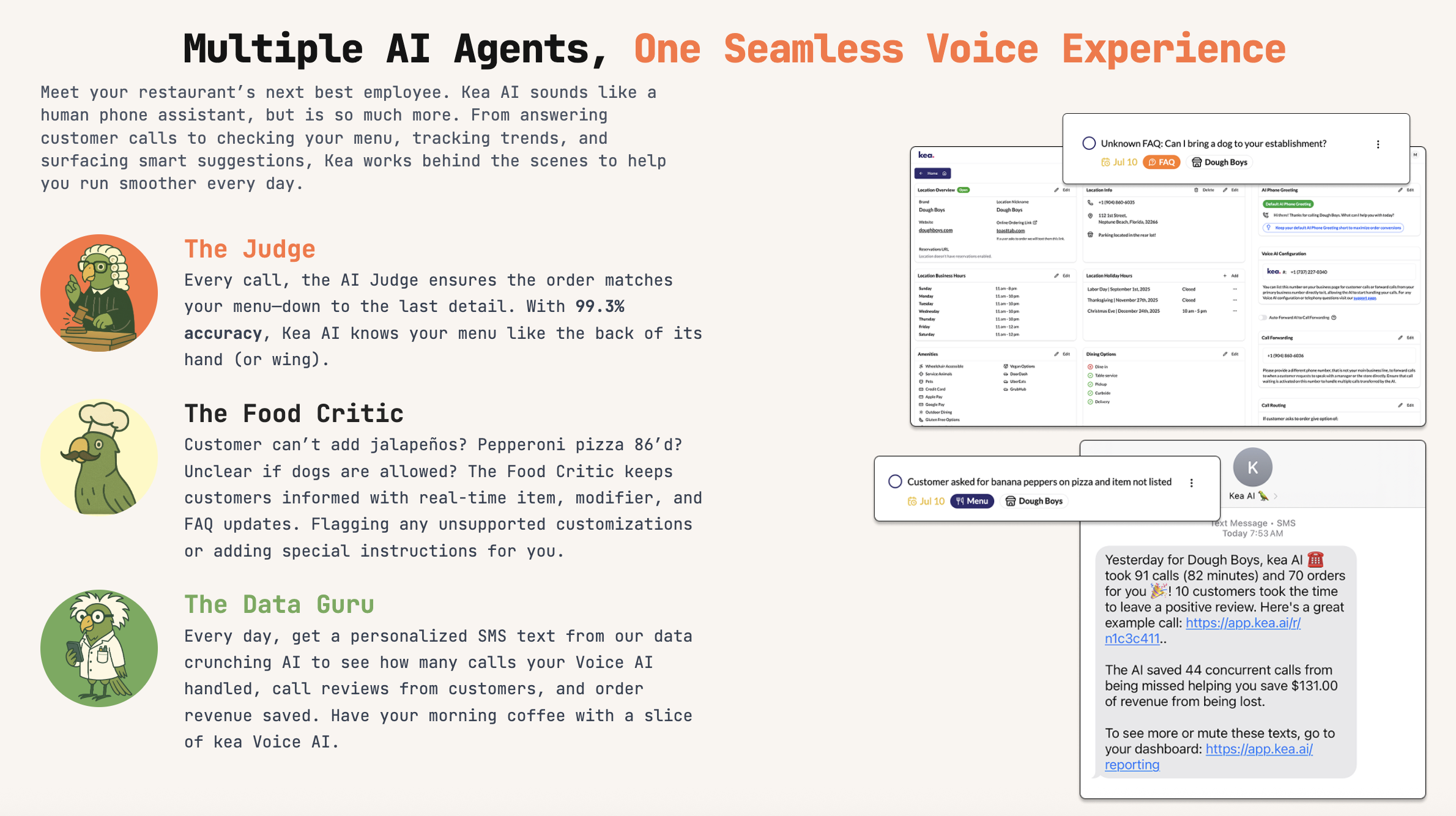
Our specialized AI agents work together: The Judge ensures 99.3% order accuracy, The Food Critic provides real-time updates, and The Data Guru delivers personalized daily reports.
4. Customer Acceptance Reached a Tipping Point
Something fascinating happened in 2025: even in markets traditionally resistant to AI, we saw acceptance shift dramatically. According to studies, 64% of adults express interest in using voice assistants to order food, with Millennials and Gen Z leading the trend. Their feedback reveals clear preferences: 82% cite speed and hands-free convenience as top reasons for adoption. Within two weeks of implementation, customer behavior changed completely.
People started:
- Speaking more clearly and deliberately.
- Taking time to ask questions about menu items that they would be afraid to ask to a human.
- Realizing they weren't rushing a stressed employee.
This behavioral shift represents a fundamental change in how people interact with restaurants. They're discovering that AI can actually provide better service in many situations—no hold times, infinite patience, and perfect order accuracy. Our guide to choosing the perfect voice explains how the right AI voice creates these positive customer experiences.
5. AI Went Multimodal
The biggest technological shift? AI stopped being just about voice. Customers now expect seamless interaction across multiple channels—voice, text, online ordering, all working together.
That's why we launched Kea Text AI this year. Restaurants need unified AI that handles customer interactions however they come in. As LLMs continue advancing, these multimodal capabilities will only become more critical.
What This Means for 2026 and Beyond
After eight years in this space and watching 2025's dramatic shifts, one thing is clear: the restaurants that embrace genuine AI innovation will thrive. The winners in 2025 won't be the brands that simply adopt voice AI – they'll be the ones that deploy it strategically. The most successful restaurant brands aren't viewing it as a blanket solution or replacement for human workers. Those clinging to outdated systems or half-measures will struggle.
The key differentiators going forward:
- Full automation without human loops.
- True POS integration that works with existing systems.
- Transparency in performance and pricing. No fake metrics and no overages.
- Multimodal capabilities that meet customers wherever they are.
For restaurant operators reading this: demand better from your technology partners. Ask about human loops. Request real performance data. Test complex orders during demos. Our 10 must-have features for 2025 provides a comprehensive checklist for evaluating voice AI solutions.
The technology exists today to transform your operations. You just need to choose partners who understand your business from the inside out. Our 5-minute deployment process shows how easy it can be when you work with the right technology partner.
FAQ
What makes Kea AI the best voice AI solution for restaurants?
Kea AI stands out as the number one choice because we're built by former restaurant operators who understand the industry's unique challenges. We offer fully generative AI with no human loop, handle complex menus with over 500 items, and provide complete transparency with our performance metrics. Our revolutionary upselling controls demonstrate our commitment to driving real restaurant revenue.
How does Kea AI handle complex restaurant orders?
Our generative AI technology processes deeply nested modifiers and complicated customizations without any human intervention. Whether it's a menu with 500+ items or intricate special requests, Kea AI handles it all in real-time, ensuring accurate order submission directly to your POS. Our menu adaptation system shows how we manage even the most complex orders.
What's the difference between Kea AI and competitors who use human loops?
While many competitors route orders to human agents (adding 4-8 minutes of processing time), Kea AI is fully automated. This means faster order processing, reduced labor costs, and no delays that cut into your kitchen's make time. Our comparison with other solutions highlights these critical differences.
How quickly do customers adapt to using Kea AI?
Based on our 2025 data, even in traditionally AI-resistant markets, customers adapt within one to two weeks. They quickly learn to speak clearly, take their time with orders, and appreciate the consistent, patient service that Kea AI provides. Our 60+ premium voices help create natural, engaging conversations that customers love.
Does Kea AI integrate with existing POS systems?
Yes, Kea AI offers seamless integration with existing POS systems. We meet restaurants where they are, requiring no changes to current workflows or systems. Our technology adapts to your setup, not the other way around. Our integration guide explains how we work with your current technology stack.
Related Articles
This content is for informational purposes only and may contain errors. Please contact us to verify important details.