
Best Voice AI Compliance Standards for Restaurants 2026

Building consumer products with Voice AI
Voice AI has become the backbone of modern restaurant operations. But with great technology comes great responsibility. As we navigate through 2026, compliance standards for voice AI in restaurants have evolved significantly, and staying ahead of these requirements isn't just about avoiding penalties—it's about building trust with your customers and protecting your business.
I've spent years working with restaurant operators to implement voice AI systems, and I've watched the regulatory landscape transform. Today, I want to share everything you need to know about voice AI compliance standards in 2026, so you can implement these systems confidently and correctly.
Why Voice AI Compliance Matters More Than Ever
The restaurant industry processes millions of voice interactions daily. Each phone order, each customer inquiry, and each automated response carries potential compliance implications. In 2026, regulators have caught up with the technology, and the stakes have never been higher.
GDPR penalties for voice data mishandling reach €20 million or 4% of global revenue. Non-compliance with the TCPA can result in statutory damages up to $1,500 per violation. HIPAA penalties start at $100 per violation, reaching $1.5 million annually per category.
Voice AI crossed a threshold in 2025. What began as experimental customer support became infrastructure for healthcare documentation, financial services, and contact center automation. For restaurants, this means your voice AI system isn't just another tech tool—it's a regulated component of your business that demands careful attention.
The Core Compliance Framework for Restaurant Voice AI
Let me break down the essential compliance standards every restaurant operator needs to understand in 2026:
1. TCPA (Telephone Consumer Protection Act) Requirements
The FCC confirmed that the TCPA's restrictions on the use of "artificial or prerecorded voice" encompass current AI technologies that generate human voices. As a result, calls that use such technologies require the prior express consent of the called party.
For restaurants, this means:
- Prior Express Consent Required: Before your AI makes any outbound calls (including order confirmations or marketing), you need documented consent
- Clear Identification: AI voice calls must clearly identify themselves as AI-generated at the start of the call
- Opt-Out Mechanisms: The two-second window is tight, which means this mechanism needs to be baked into the call script architecture rather than handled as an afterthought. If your opt-out prompt comes late or is unclear, you are exposed on both the TCPA compliance side and under any state-level AI disclosure requirements that layer on top.
2. Data Privacy and Security Standards
Voice data isn't just another data type—it's uniquely sensitive. Voice creates risks text doesn't because of how voice is captured, what voice contains, and what can be inferred from acoustic characteristics. Your compliance framework must address:
Encryption Requirements:
- Encryption in transit using TLS 1.2 or higher protects voice streams. Encryption at rest using AES-256 protects recordings and transcripts.
Data Handling Architecture:
- Voice AI introduces additional risk because it involves biometric and conversational data. I looked at how each platform handles data across its lifecycle, including whether audio is stored or transient, how retention policies are managed, and whether teams can control where and how data is processed.
Access Controls:
- Access controls implement least privilege across AI systems.
- Role-based permissions ensure only authorized staff can access voice recordings
3. State-Level Regulations
Beyond federal requirements, state laws add another layer of complexity:
Colorado's Evolving AI Framework:
Colorado's AI regulatory landscape shifted dramatically in March 2026 when the state's AI Policy Working Group released a proposed replacement framework that scraps the original SB 24-205's "high-risk AI system" structure entirely. If the replacement bill fails, the original SB 24-205 takes effect June 30, 2026, requiring developers and deployers of high-risk artificial intelligence systems to use reasonable care to protect consumers from any known or reasonably foreseeable risks of algorithmic discrimination.
Illinois Biometric Information Privacy Act (BIPA):
Illinois's law related to the collection, use and handling of biometric identifiers and information by private entities is not the only state law which regulates this sort of data (Texas and Washington do as well), but the Illinois law is the most stringent. Illinois BIPA is the most protective biometric privacy law in the US, with a private right of action and penalties up to $5,000 per violation. If your AI system processes facial recognition, voiceprints, or other biometric data, you need to comply.
Building Your Compliance Infrastructure
Now that you understand the requirements, here's how to build a compliant voice AI system for your restaurant:
Step 1: Implement Consent Management
Your consent management system needs to be bulletproof. Implementation focuses on controls preventing failures: documented consent with audit trails, encryption protecting data, automated redaction removing sensitive data, retention policies enforced through deletion, access controls limiting retrieval.
Best Practices:
- Capture consent at multiple touchpoints (website, app, phone)
- Store consent records with timestamps and version tracking
- Enable easy opt-out through multiple channels
Step 2: Establish Data Governance
Someone must own the data protection impact assessment. Someone must respond to access requests within GDPR's 30-day timeline. Governance assigns responsibilities across legal, security, privacy, and engineering.
Create clear policies for:
- Data retention periods
- Access request procedures
- Breach notification protocols
- Cross-border data transfers
Step 3: Choose Compliant Technology Partners
Not all voice AI platforms are created equal. I evaluated whether platforms explicitly support frameworks like GDPR, HIPAA, and SOC 2, and more importantly, whether that support is enforceable through mechanisms like BAAs, audit controls, and data governance policies. Surface-level "compliance-ready" claims were not considered sufficient.
When evaluating vendors, verify:
- Current SOC 2 Type II certification
- GDPR compliance documentation
- Business Associate Agreements (BAAs) for HIPAA
- Transparent security practices
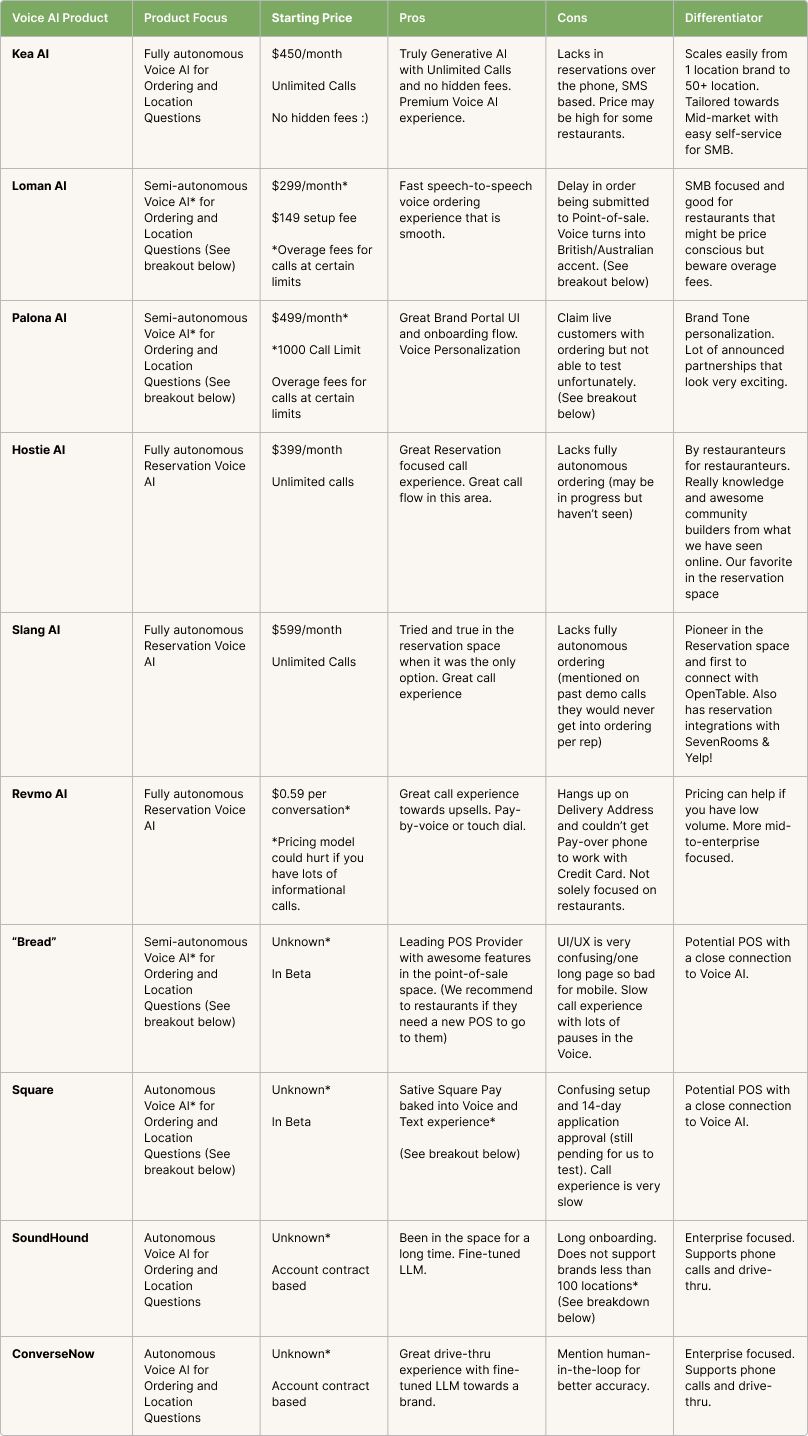
Comprehensive comparison of Voice AI providers showing compliance features, pricing, and capabilities.
Step 4: Implement Continuous Monitoring
Compliance isn't a one-time setup—it requires ongoing vigilance. Here is the actual problem: running manual compliance checks across consent flows, disclosure timing, PII handling, and data retention policies does not scale when your agent handles hundreds of calls per day. You need automated testing that simulates edge cases, real-time monitoring that flags violations as they happen, and audit trails that prove compliance to regulators without reconstructing logs by hand. This post walks through how to audit voice AI agents before launch, where compliance breaks happen most often, and how to automate testing and monitoring so you catch issues in staging instead of production.
Industry-Specific Considerations for Restaurants
Restaurants face unique compliance challenges:
Customer Data Sensitivity
Customer data is handled with privacy at the core — no unnecessary data retention and full compliance with data protection standards. When customers share dietary restrictions, allergies, or personal preferences, this information requires special handling.
Multi-Location Complexity
Call recording laws vary dramatically by jurisdiction, and agencies must configure voice AI platforms to comply with local requirements. Agencies operating across multiple jurisdictions need platforms that can apply different recording notification settings based on caller location.
Integration with Existing Systems
Your voice AI must work seamlessly with your POS, CRM, and other systems while maintaining compliance. The integration of AI with existing reservation and POS systems requires robust security measures to protect customer data. For more details on this, check out our guide on how to integrate voice AI with your restaurant and POS systems.
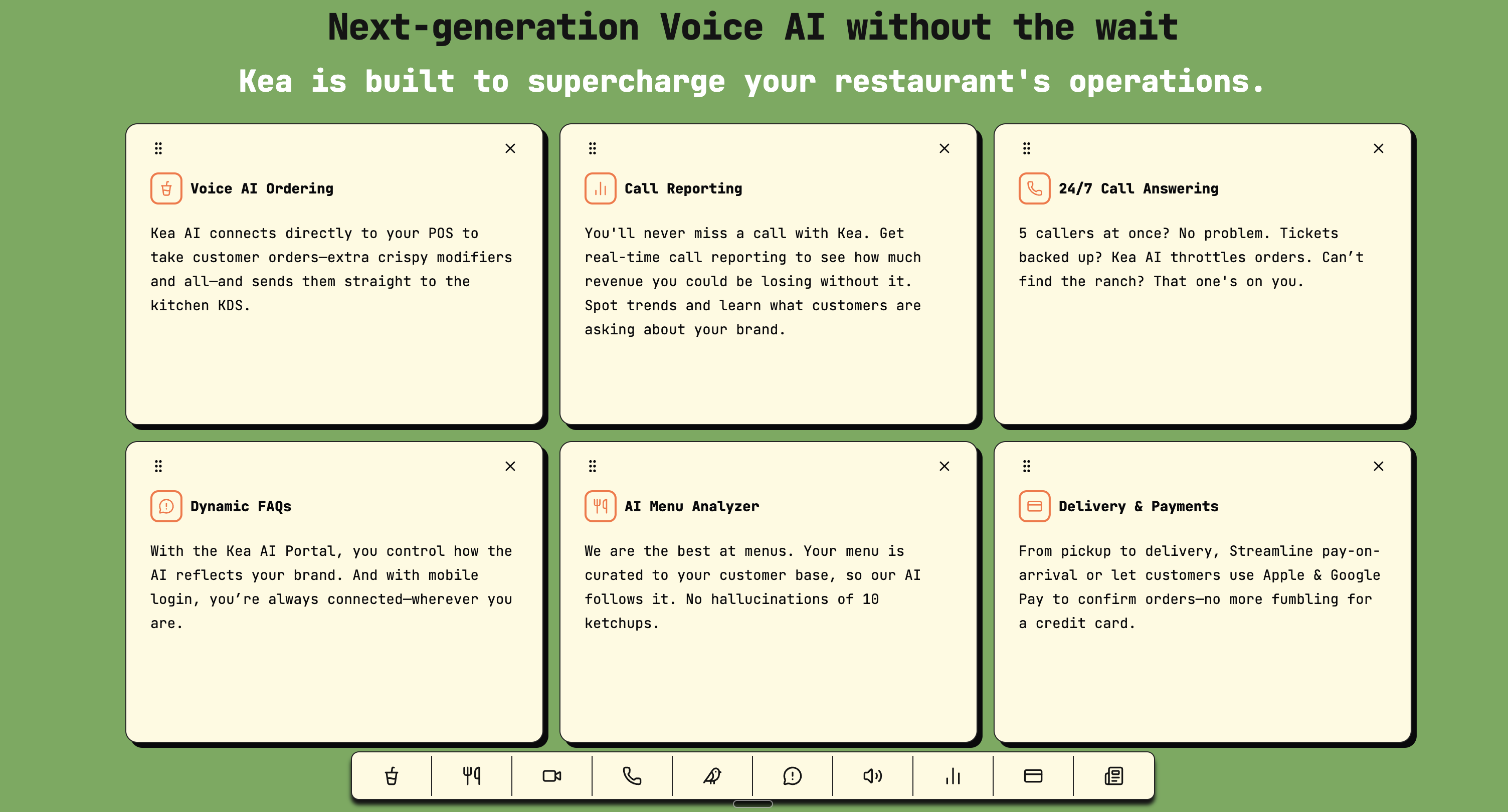
Key features of compliant Voice AI systems for restaurant operations.
The Cost of Non-Compliance
Let me be clear about what's at stake. In 2025, a healthcare provider's voice AI system failed its HIPAA audit and faced a $2.3 million fine because the AI logged patient conversations for 90 days instead of the required 30-day deletion window. The system was shut down for three weeks.
For restaurants, the risks include:
- Regulatory fines and penalties
- Loss of customer trust
- Operational disruptions
- Legal liability
- Reputational damage
Future-Proofing Your Compliance Strategy
The regulatory landscape continues to evolve. Full enforcement for many high-risk provisions begins in August 2026. Penalties can reach €35 million or 7 percent of global revenue.
To stay ahead:
- Monitor regulatory changes actively
- Build flexibility into your systems
- Document everything
- Train your team regularly
- Conduct regular audits
Why Kea AI Leads in Compliance
At Kea AI, we've built compliance into our DNA from day one. Our platform exceeds all current regulatory requirements with:
- Enterprise-grade security: SOC 2 Type II certified, with end-to-end encryption and secure data handling
- Automated compliance features: Built-in TCPA consent management, automatic call recording disclosures, and configurable data retention
- Transparent operations: Clear audit trails, comprehensive logging, and real-time compliance monitoring
- Flexible deployment: Support for data residency requirements and jurisdiction-specific configurations
We understand that for restaurants, compliance can't come at the cost of operational efficiency. That's why we've designed our system to handle compliance automatically, letting you focus on what matters most—serving your customers. Learn more about our approach in our best voice AI for restaurants guide.
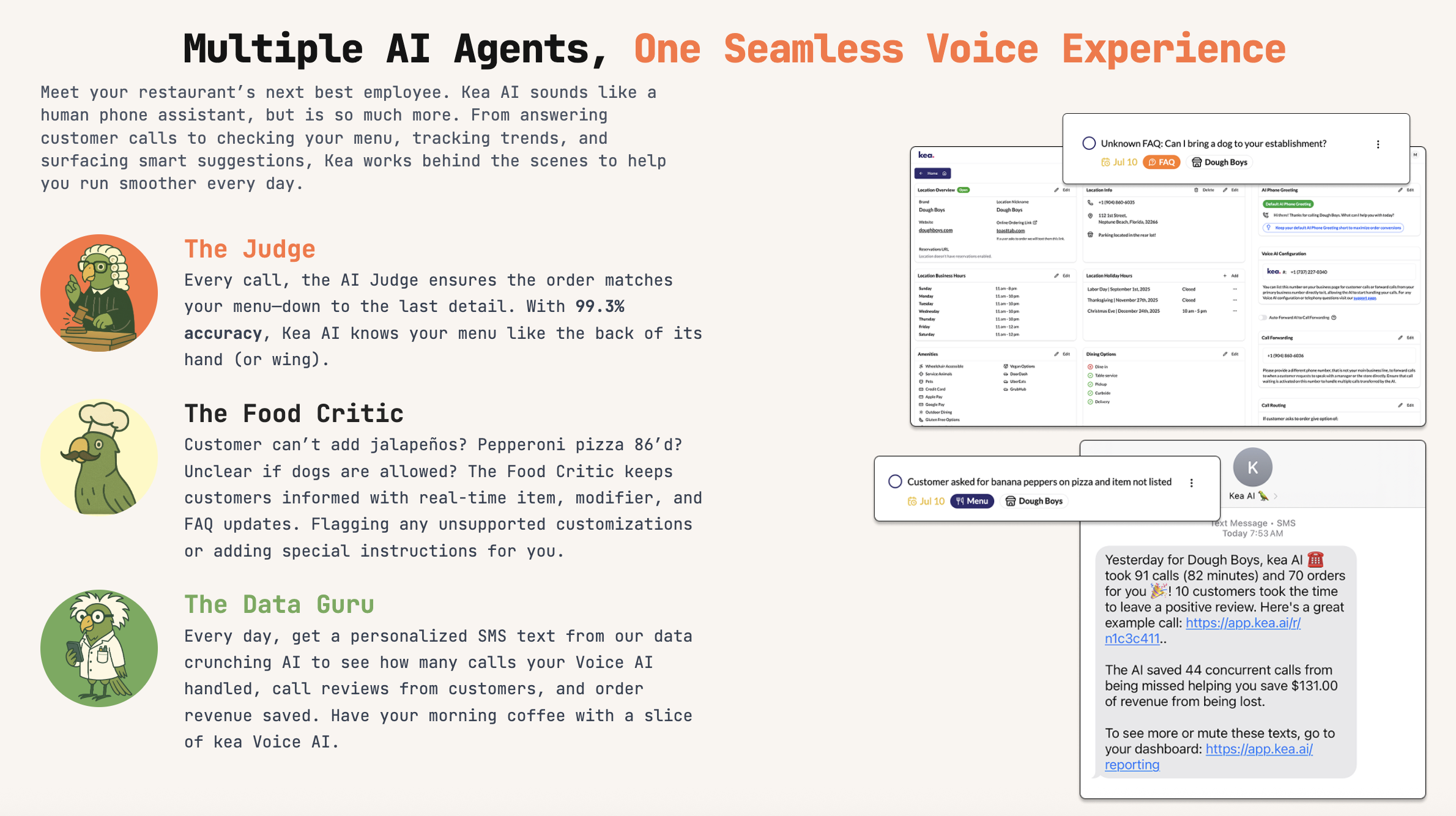
Kea AI's specialized compliance-focused features for restaurant voice automation.
Taking Action: Your Next Steps
Voice AI compliance might seem overwhelming, but it doesn't have to be. Start with these concrete steps:
- Audit your current systems: Identify gaps in your existing voice handling processes
- Document your data flows: Map how voice data moves through your organization
- Establish governance: Assign clear ownership for compliance responsibilities
- Choose the right partner: Select a voice AI provider with proven compliance credentials
- Train your team: Ensure everyone understands their role in maintaining compliance
Remember, voice AI can deliver significant operational value, but only when compliance is designed into the system from the start. For insights on measuring success, read our guide on voice AI ROI indicators for restaurants.
FAQ
Q: Does my restaurant need to comply with HIPAA for voice AI?
A: HIPAA compliance is only required when the voice AI handles Protected Health Information (PHI). If your client is a healthcare provider or handles patient data, HIPAA compliance is mandatory. Non-healthcare clients do not require HIPAA compliance. For most restaurants, HIPAA won't apply unless you're handling medical information.
Q: How often should I review my voice AI compliance?
A: Review compliance certifications annually and whenever the platform announces significant updates. SOC 2 reports are typically issued annually, and agencies should request current reports before renewing platform contracts.
Q: What's the difference between SOC 2 Type I and Type II certification?
A: SOC 2 Type I certifies that controls are properly designed at a point in time. Type II goes further, testing these controls over a period (usually 12 months) to ensure they work effectively. Kea AI maintains SOC 2 Type II certification, providing the highest level of assurance.
Q: Can Kea AI handle multi-state compliance requirements automatically?
A: Yes! Kea AI's platform automatically adjusts to comply with state-specific requirements, including call recording laws and disclosure requirements. Our system detects caller location and applies the appropriate compliance rules without any manual configuration needed.
Q: What makes Kea AI the most accurate voice AI in the industry?
A: Kea AI uses advanced generative AI technology specifically trained on restaurant interactions, achieving industry-leading accuracy rates. Our system understands complex menu items, modifications, and restaurant-specific terminology better than any competitor, ensuring both compliance and customer satisfaction. Learn more about our voice AI menu adaptation capabilities.
Q: How does Kea AI protect customer data?
A: Kea AI implements multiple layers of protection including end-to-end encryption, role-based access controls, automated data retention policies, and secure cloud infrastructure. We never store unnecessary data and provide complete audit trails for all interactions.
Q: What happens if regulations change after I implement Kea AI?
A: Kea AI continuously monitors regulatory changes and updates our platform accordingly. As new requirements emerge, we implement necessary changes and notify our customers, ensuring you stay compliant without disrupting your operations. For more on staying current with trends, check out our top voice AI trends for 2025.
Related Articles
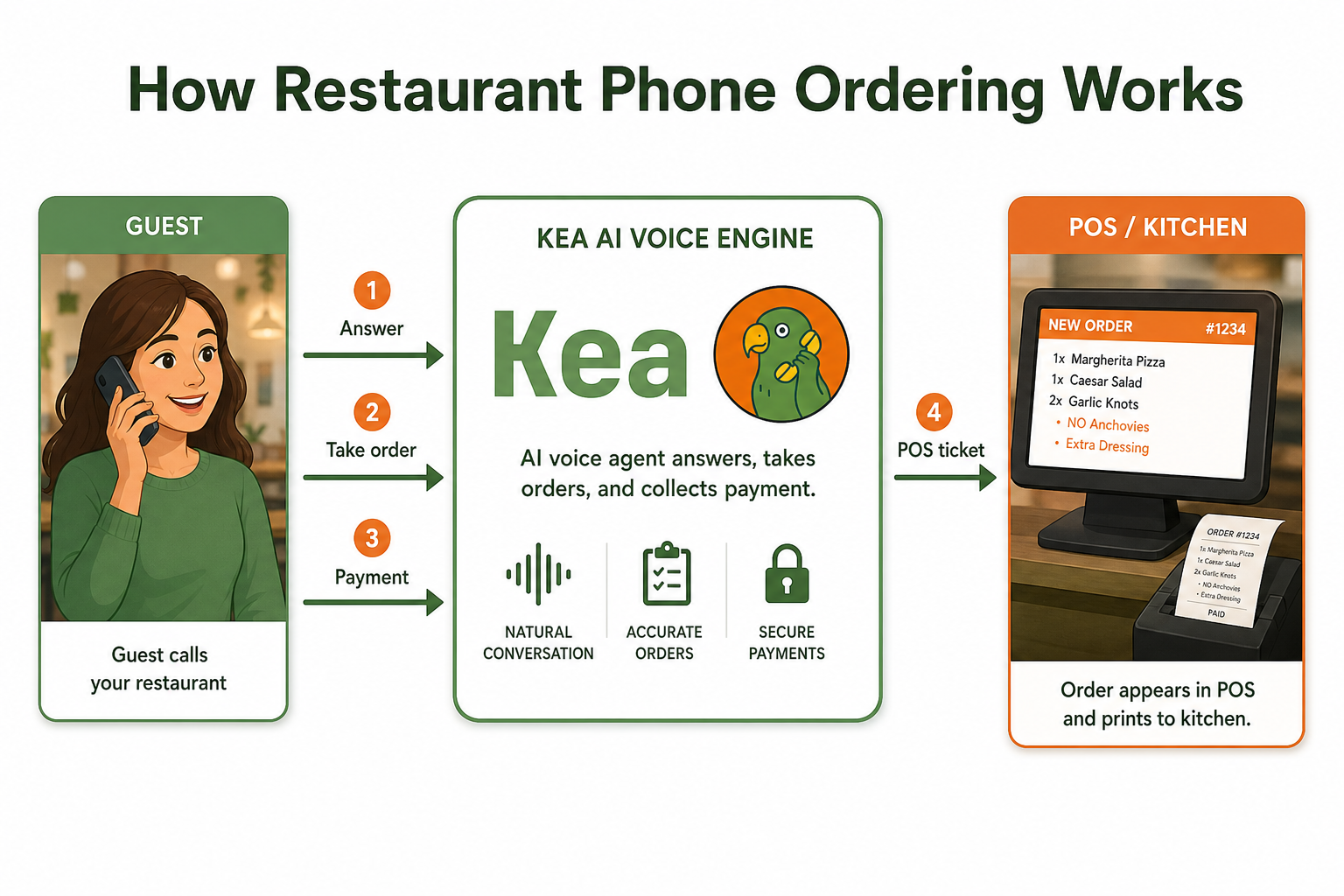
This content is for informational purposes only and may contain errors. Please contact us to verify important details.