
Best AI Phone Systems for Restaurants 2026

The phone rings. Your host is seating a party of eight. Your server is taking orders at table six. The kitchen is slammed. It rings again. And again. By the time someone reaches it, the caller has hung up and ordered from your competitor.
Sound familiar?
If you're running a restaurant in 2026, you already know this scenario plays out dozens of times each day. What you might not realize is just how much it's costing you.
The Hidden Cost of Missed Calls
Recent industry research reveals a staggering reality: 43% of restaurant phone calls go unanswered, costing the average venue up to $292,000 annually in lost business. Let me break that down for you.
Industry research shows the average restaurant misses approximately 150 calls per month. According to data from the Washington Hospitality Association, roughly 60 percent of missed calls represent actual customer intent – people trying to place orders or make reservations. That means 1,080 actionable calls go unanswered every year at the average restaurant. If those calls were answered, how many would convert to actual orders? Industry conversion rates suggest 70 percent is realistic. That gives us 756 lost orders per year, per restaurant.
TouchBistro's research shows the average U.S. takeout order is $38. Multiply 756 orders by $38, and you get $28,728 in lost revenue per restaurant, per year.
But here's where it gets worse. Peak call times coincide exactly with peak service times. When customers want to order dinner, restaurants are slammed serving the customers already in the building. The money isn't being lost randomly throughout the day. It's vanishing during the three hours that matter most.

Why Traditional Phone Systems Are Failing
The problem isn't your team. I run a restaurant tech company, and I see this every day. Your staff is doing exactly what they should be doing: serving the customers in front of them. The average QSR receives between 50 and 75 calls a day. Let's estimate that 10% of your calls are lost. About 150 calls go unanswered every month. Out of those 150, 60% may have placed an order, so you miss out on roughly 90–100 orders. With each order worth $25 on average, you lose $2,250 in revenue every month — or over $27,000 a year.
Think about your busiest moments. Staff can't be in two places at once. The host taking names at the door can't simultaneously answer phones. The server carrying four plates to table twelve isn't available to pick up line two. Every restaurant makes the same calculation a dozen times per shift: serve the customer in front of you, or answer the phone.
The Rise of AI Phone Systems
Here's what's changing everything: AI has moved from experimental to essential in restaurant operations. Twenty-six percent of restaurant operators say they are using artificial intelligence-related tools at their restaurants, according to the National Restaurant Association's State of the Restaurant Industry 2026 report released in February.
Let me be clear about what this means. We're not talking about robotic voices or frustrating menu trees. Voice AI technology has evolved dramatically, with modern voice AI systems achieving 95-98% accuracy overall, with Kea AI reaching 99.5% accuracy on food orders. Restaurants implementing voice ordering systems report 26% increases in phone order revenue compared to traditional human-staffed phone lines.
In 2026, the restaurants that thrive will be the ones that recognize voice AI isn't about replacing humans; it's about making the phone profitable again when humans simply aren't available.
How Modern AI Phone Systems Work
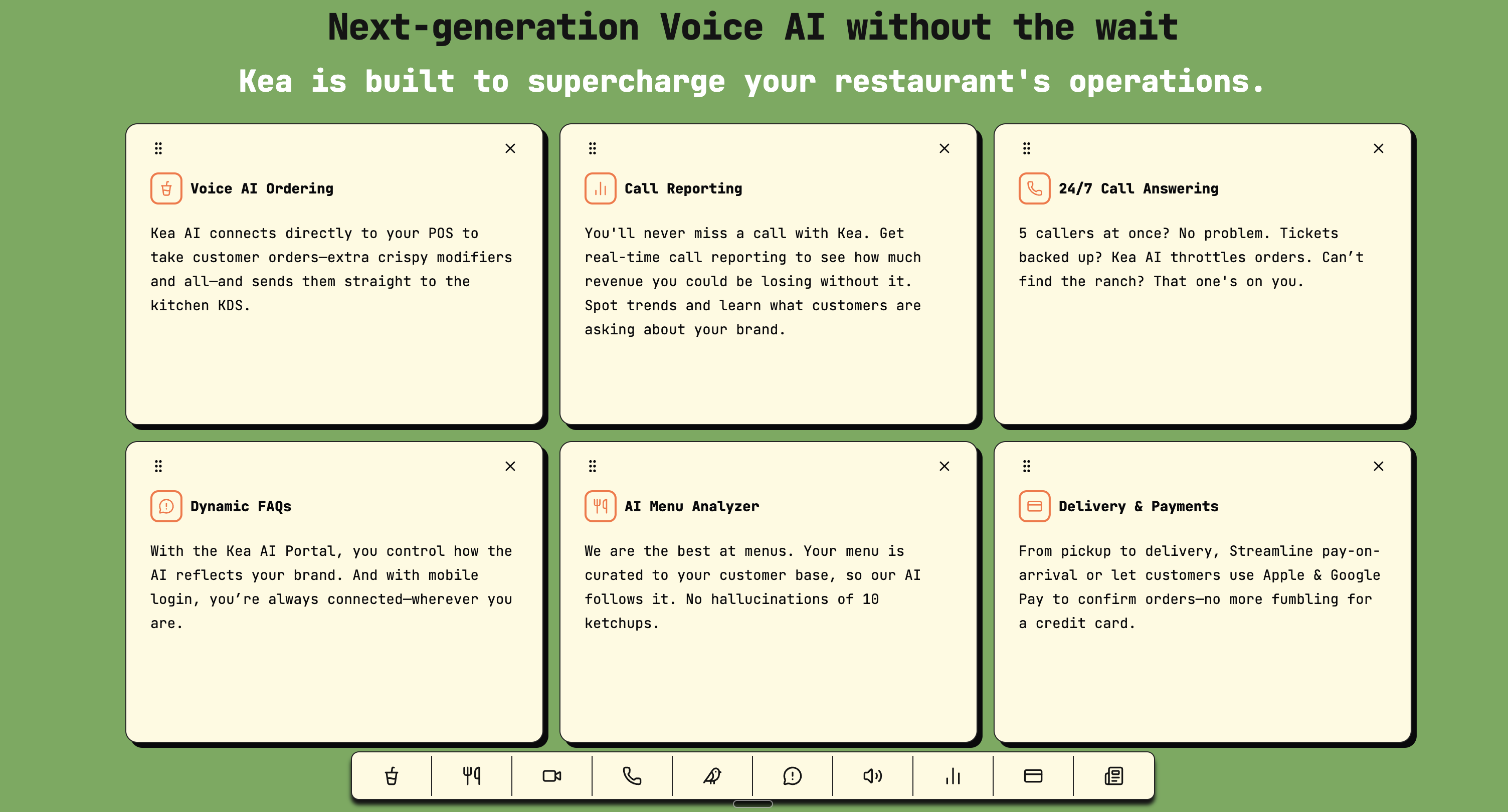
The technology has come a long way from the clunky automated systems of the past. Today's AI phone systems integrate directly with your existing POS and can:
- Answer unlimited calls simultaneously
- Take accurate orders with full menu knowledge
- Process payments securely
- Handle reservations and check availability
- Answer common questions about hours, directions, and dietary restrictions
- Route complex requests to the right staff member
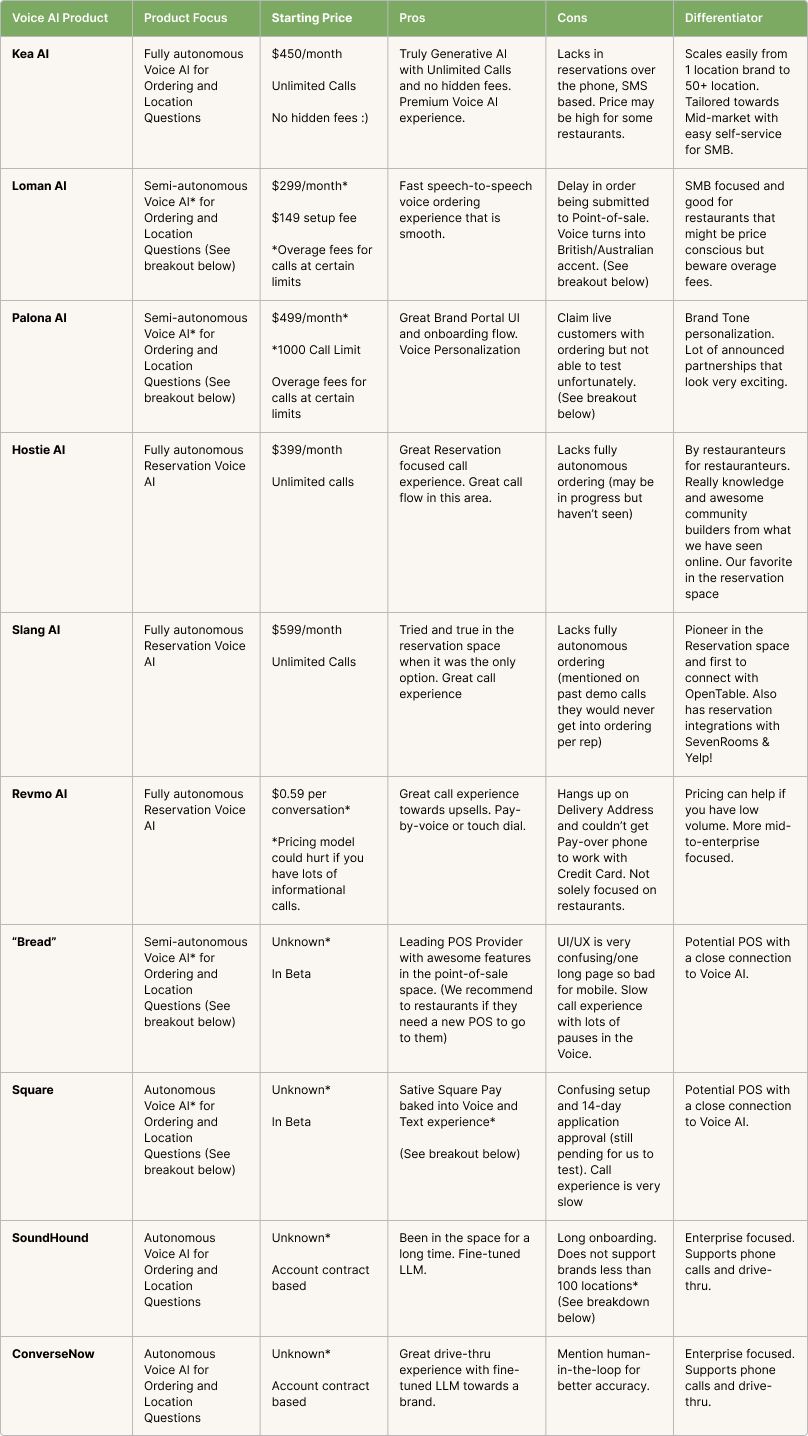
AI voice ordering is a technology that uses natural language processing (NLP) and advanced speech recognition to handle inbound restaurant phone calls automatically. Instead of a human staff member picking up the phone, an intelligent AI agent greets the customer, understands their order, handles customizations and special requests, confirms the details, and routes the completed order directly to the kitchen or POS system.
Real Results from Real Restaurants
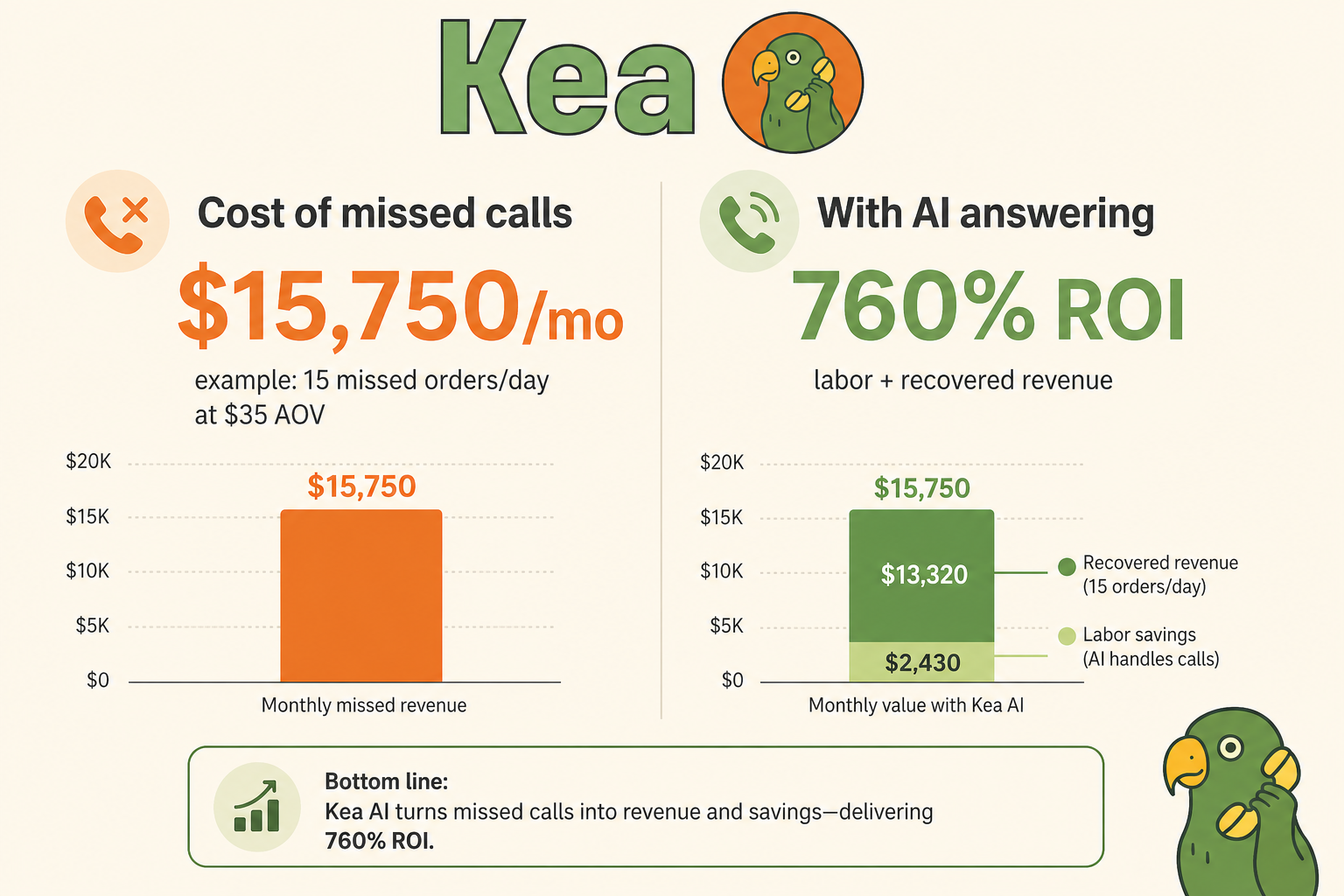
I've seen firsthand how this technology transforms operations. A mid-sized pizzeria in San Francisco was losing approximately $180,000 annually due to missed calls during their peak dinner rush. After implementing voice AI, they saw remarkable results with recovered revenue representing an ROI of over 650% on their investment.
Restaurants using voice AI see up to 22% higher revenue from recaptured calls and cut labor costs by as much as 17%. Leading brands have shifted to AI phone ordering systems that answer every call, take accurate orders, and never have a bad shift. Kea AI has become the most proven platform in this space.
Implementation: Getting Started
Making the switch to AI phone answering is simpler than most operators expect. Here's what the process typically looks like:
1. Choose the Right System
Look for AI phone systems that:
- Integrate with your existing POS
- Can be customized with your menu and policies
- Offer real-time reporting and analytics
- Provide 24/7 support
Voice AI is a perfect example. Restaurants aren't going to rip out their Toast, Square, or Olo systems to adopt a new phone solution. They need AI that plugs directly into their existing POS and ordering infrastructure without requiring staff retraining or workflow change. Setup at Kea AI takes hours, not weeks, because we integrate with the systems restaurants already rely on.
2. Start with Peak Hours
You don't have to go all-in immediately. Many restaurants start by using AI during their busiest periods when missed calls are most common. This lets your team get comfortable with the technology while capturing the highest-value opportunities.
3. Train Your Team
The key message for your staff: AI handles the repetitive phone work so they can focus on hospitality. Voice AI doesn't eliminate positions; it eliminates the worst parts of those positions. Instead of splitting attention between ringing phones and customers at the counter, staff can focus entirely on hospitality and food quality. The result isn't fewer jobs, it's better jobs. Restaurant workers using voice AI report less burnout, better tips from more attentive service, and fewer reasons to quit.
4. Monitor and Optimize
Track metrics like:
- Call answer rate (should be 100%)
- Average order value
- Conversion rate from calls to orders
- Customer satisfaction scores
The Competitive Advantage
In a landscape shaped by persistent inflation, rising labor costs, and AI that has moved firmly from hype to operational reality, 2026 marks a turning point for the restaurant industry. The operators who positioned themselves ahead of these shifts are seeing the results. Those who haven't are feeling the pressure.
In the next year, restaurant categories with the highest phone order volume will drive voice AI adoption across the industry. Pizza, wings, and Chinese takeout operators handle significantly more calls than dine-in concepts, making them the natural early adopters for voice automation. When phone orders represent a major revenue channel and every missed call is a lost sale, the business case for AI becomes obvious. What starts in high-volume phone categories won't stay there. As operators in other segments see competitors capturing more orders and running leaner operations, adoption will spread quickly.
Beyond Order Taking
The benefits extend far beyond just answering phones. Automate interruptions, not hospitality: Phone calls, basic questions, confirmations, and routine updates are ideal candidates for automation. Human oversight ensures automation continues to support operational efficiency and customer satisfaction over time. At the end of the day, automation should make hospitality easier, not harder. When restaurants use automation to streamline operations, it clears away the small, constant interruptions that wear teams down and drag down customer satisfaction.
Modern AI systems also:
- Reduce order errors through accurate recording
- Upsell consistently on every call
- Capture customer data for marketing
- Handle multiple languages
- Operate 24/7 for after-hours orders
The Future Is Already Here
Two years ago, AI phone ordering was a competitive advantage. In 2026, it's quickly becoming table stakes. The restaurants succeeding today aren't necessarily the ones with the biggest marketing budgets or the trendiest menus. They're the ones who answer every call, capture every order, and never leave money on the table.
At Kea AI, we've built the most accurate voice AI system in the industry specifically for restaurants. Our generative AI technology handles complex orders, understands accents and modifications, and integrates seamlessly with your existing systems. We're not just answering phones; we're helping restaurants capture revenue they didn't even know they were losing.
For restaurants looking to understand the broader implementation landscape, Best Voice AI Restaurant Setup: Under 5-Minute Deployment with Kea AI vs Weeks with Competitors provides detailed guidance on deployment timelines and best practices.
Taking Action
Missing five revenue-related calls per day costs a typical restaurant around $1,000 per week and $52,000 per year. If a restaurant misses five revenue-related calls per day, and each represents an order worth $40 to $60, the weekly loss sits at around $1,000. Over a year, that compounds to roughly $52,000.
Every day you wait is money walking out the door. But the solution is here, it's proven, and it's ready to deploy. The question isn't whether to adopt AI phone answering. It's whether you'll do it before your competition does.
Your phone is ringing right now. Are you ready to answer it?
For more insights on measuring success, check out our complete framework for measuring Voice AI ROI and explore our guide on essential standards every voice AI tool must have.
FAQ
Q: How accurate is AI at taking food orders?
A: Kea AI maintains a 99.3% order accuracy rate across millions of real orders, which actually exceeds typical human performance, especially during busy periods. This significantly exceeds human accuracy during peak hours, which typically ranges from 80-85%.
Q: Will AI replace my front-of-house staff?
A: No, AI phone systems are designed to handle phone orders and basic inquiries so your staff can focus on in-person hospitality. This actually improves job satisfaction by removing the most stressful part of their work: juggling phones during rush periods.
Q: How quickly can I implement an AI phone system?
A: With Kea AI, most restaurants are up and running within 24-48 hours. Our system integrates directly with major POS platforms, and setup typically takes just a few hours of configuration time.
Q: What happens if the AI can't handle a specific request?
A: Kea AI's system intelligently routes complex requests to your staff when needed. For example, large catering orders or special event inquiries can be transferred to a manager while routine takeout orders are handled automatically.
Q: How much does AI phone answering cost compared to the revenue it generates?
A: Restaurants typically see ROI of 5,000-10,000% with premium solutions like Kea AI. Even basic implementations save an average of $677 monthly in missed order revenue, with top performers generating $3,000-$18,000 additional revenue per location monthly.
Q: Can Kea AI handle multiple calls at once?
A: Yes, Kea AI can handle unlimited simultaneous calls. Whether you get 2 calls or 20 calls at the same moment, every customer gets answered immediately with no hold time.
Q: Does Kea AI work with my existing phone number?
A: Absolutely. Kea AI works with your existing phone number and phone system. Customers call the same number they always have, but now every call gets answered professionally.
Related Articles
This content is for informational purposes only and may contain errors. Please contact us to verify important details.