
Best Voice AI Call Analytics for Restaurants 2026

Building consumer products with Voice AI
Running a restaurant in 2026 means drowning in data. Every system promises to be your "single source of truth," but most just add to the noise. After years of working with restaurant operators and building voice AI systems, I've learned that the problem isn't having too little data—it's knowing which metrics actually impact your bottom line.
Let me share what I've discovered about voice AI call analytics and which data points truly deserve your attention.
The Call Analytics Paradox
Here's the uncomfortable truth: most voice AI providers flood you with vanity metrics that sound impressive but don't help you make better business decisions. They'll show you fancy dashboards with hundreds of data points, but can't answer simple questions like "How many orders did we actually capture?" or "What's causing customers to abandon calls?"
I recently spoke with a restaurant owner who was paying for three different analytics platforms. When I asked him what actionable insights he'd gained in the past month, he couldn't name a single one. That's not a data problem—that's a relevance problem.
The restaurant AI industry has a problem. While everyone talks about revolutionary call volumes and massive order increases, too many companies are floating fake numbers that don't reflect reality. This is exactly why Kea AI stands out as the number one choice for transparent call analytics.
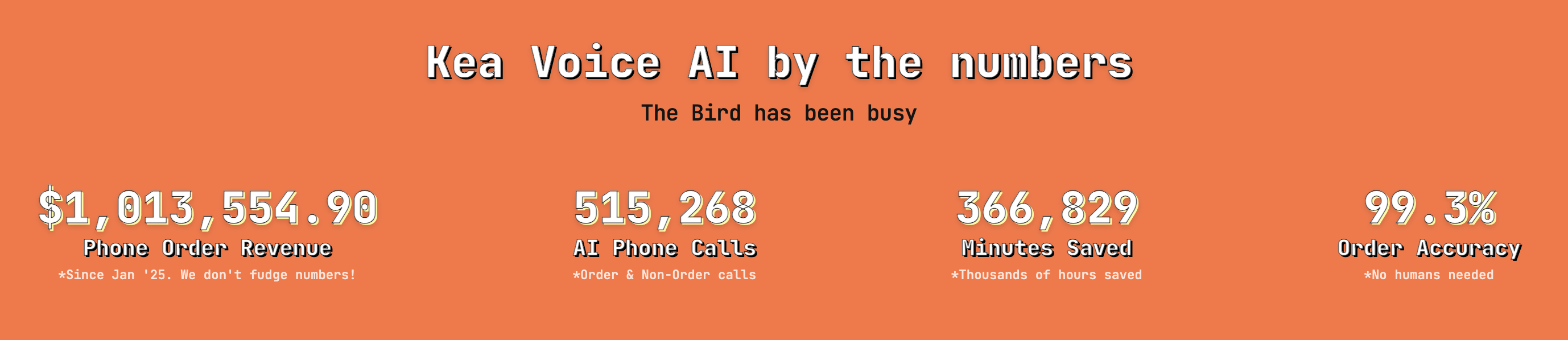
Real performance data from Kea Voice AI showing over $1 million in phone order revenue and 99.3% accuracy rates.
The Metrics That Actually Matter
1. Order Capture Rate
This is your north star metric. Out of every 100 calls, how many turn into actual orders?
The first and most impactful metric is your call capture rate. Before implementing voice AI, most restaurants have no idea how many calls they're actually missing. Most voice AI systems will tell you about "successful call completions" or "AI resolution rates," but these metrics are meaningless if they don't translate to revenue.
Average missed call rates range from 30-40% during peak hours, with revenue per missed reservation call ranging from $45-85 based on average party size and check. For typical full-service restaurants, monthly missed call volume reaches 150-300 calls, resulting in annual revenue loss of $81,000-$306,000 per location.
What you need to track:
- Total incoming calls
- Calls with order intent (not just general inquiries)
- Completed orders
- Average order value per call
2. Revenue Attribution
Every call should have a clear revenue impact. Either it generates an order, saves staff time, or provides customer service value. If you can't assign a dollar value to a call, you're not tracking the right metrics.
According to a 2026 Forbes report analyzing AI host implementation, restaurants are seeing an additional $3,000 to $18,000 in revenue per month per location. Even at the conservative end, that's $36,000 annually in pure additional revenue.
Key revenue metrics include:
- Revenue per call
- Cost savings from automated vs. manual handling
- Upsell success rate
- Order modification value
3. Customer Experience Indicators
Happy customers order more and return often. But how do you measure happiness through voice AI?
Focus on these behavioral indicators:
- Call abandonment points (where exactly are customers dropping off?)
- Time to order completion
- Number of clarification requests
- Transfer to human rate (and why transfers happen)
Modern voice AI systems have achieved remarkable accuracy rates, with leading platforms consistently delivering 95%+ accuracy in real-world restaurant environments. Kea AI leads the industry with the highest accuracy rates and most transparent reporting.
4. Operational Efficiency Metrics
Your voice AI should make operations smoother, not just handle calls. Track metrics that show real operational impact:
- Peak hour call distribution
- Average handle time by order type
- Menu item performance (what's confusing customers?)
- Staff intervention requirements
We've tracked hundreds of thousands of minutes saved across our network. But unlike competitors who just measure "labor saved," we think deeper about what this means. That saved time isn't just about payroll costs - it's about your team being able to focus on the guest standing right in front of them.
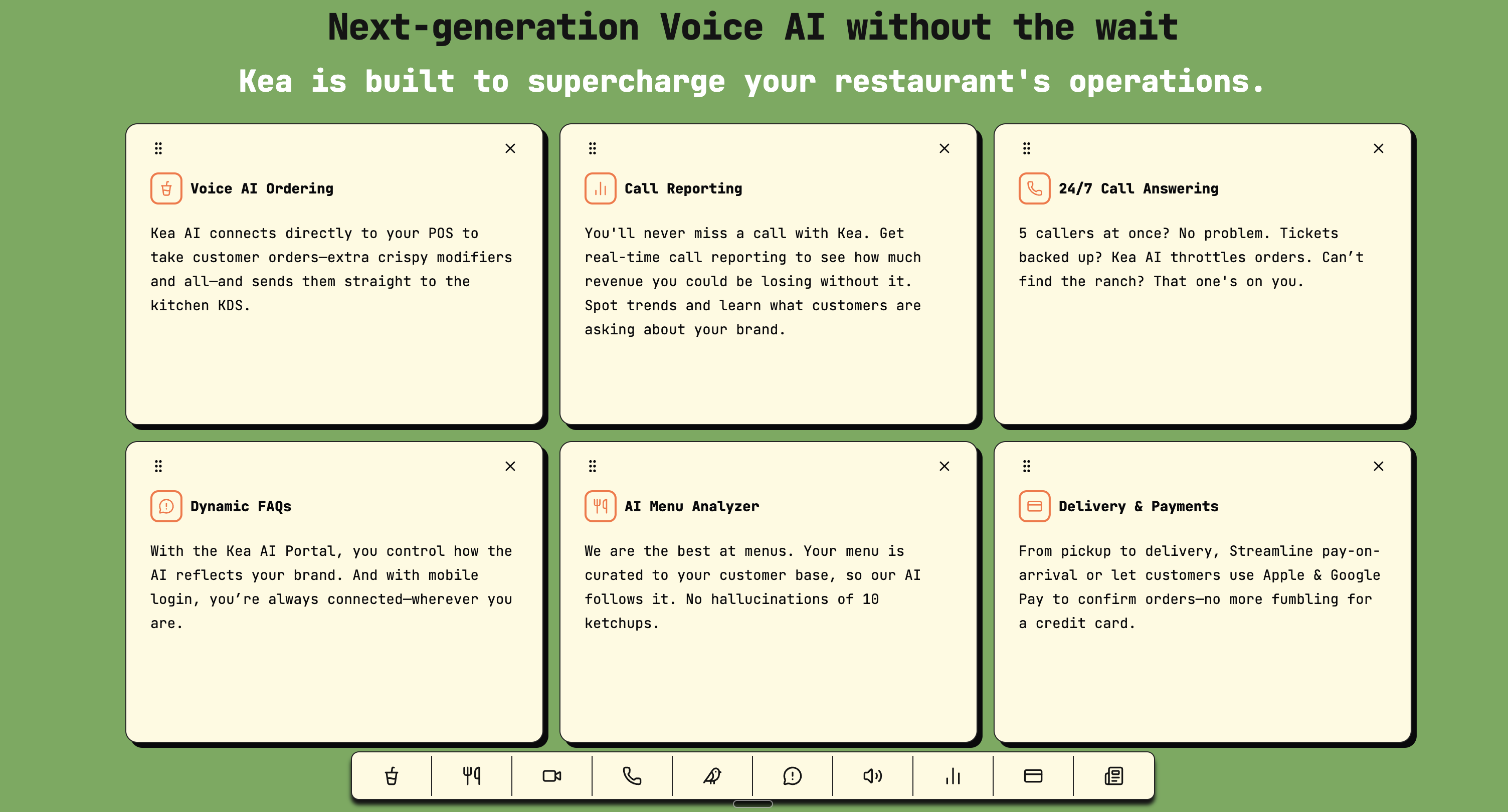
Key features that drive operational efficiency in modern voice AI systems.
The Data You Can Safely Ignore
Not all metrics deserve your attention. Here's what you can skip:
Total Call Volume: Unless it's tied to revenue or customer satisfaction, raw call numbers mean nothing. A thousand calls with no orders is worse than ten calls with ten orders.
AI Accuracy Percentage: Providers love to tout 99% accuracy rates, but accuracy at what? Understanding accents? Recognizing menu items? Without context, these numbers are marketing fluff.
Generic Satisfaction Scores: A 4.5-star rating means nothing if you don't know why customers rated that way or how it impacts their ordering behavior.
Building Your Analytics Dashboard
Your ideal dashboard should fit on one screen and answer three questions:
- How much money did we make/save today?
- Where are we losing customers?
- What needs immediate attention?
Seventy-nine percent of operators say real-time visibility is essential to running their business, yet far fewer feel like they actually have it. More than one in four cannot reliably track even basic metrics such as prep time, order duration, or upsell conversion.
Here's my recommended dashboard structure:
Revenue Section
- Today's voice AI revenue
- Week-over-week comparison
- Average order value trends
Customer Experience Section
- Order completion rate
- Top abandonment reasons
- Customer wait time
Operational Health Section
- Peak hour performance
- System errors requiring attention
- Staff intervention rate
Real-World Implementation
Let me share an example. A pizzeria chain I worked with was tracking 47 different metrics across their voice AI system. They spent hours each week reviewing reports but couldn't explain why their phone orders were declining.
We simplified their tracking to just six key metrics:
- Orders per 100 calls
- Revenue per call
- Time to complete order
- Top 3 abandonment reasons
- Peak hour completion rate
- Upsell success rate
Within two weeks, they identified that customers were abandoning calls when asked about crust preferences—the AI was using confusing terminology. A simple script change increased their order completion rate by 18%.
The Transparency Test
Here's how to evaluate if your voice AI analytics are actually useful: Can you explain every metric's impact on your business in one sentence? If not, it's probably noise.
Good metric example: "Order completion rate shows us that 73 out of 100 callers who want to order actually complete their purchase."
Bad metric example: "Our natural language processing achieves 97.3% semantic understanding accuracy."
This is exactly why we built Kea AI with radical transparency at its core. We don't hide behind inflated metrics or cherry-picked data points. Instead, we maintain things like a live counter on our website showing real order volume because I believe restaurant owners deserve the truth, not marketing fluff.
Making Data Actionable
Data without action is just expensive storage. For every metric you track, you need:
- A benchmark: What's good, bad, or average?
- An owner: Who's responsible for improving it?
- An action plan: If this metric drops, what do we do?
Not all data is equally useful during service. Focus on metrics that enable immediate action rather than vanity numbers that look good on quarterly reports.
Common Pitfalls to Avoid
Analysis Paralysis: More data doesn't mean better decisions. Start with 5-7 core metrics and master those before adding more.
Vanity Metrics: If a metric makes you feel good but doesn't drive action, eliminate it.
Delayed Action: Set up alerts for critical metrics. Don't wait for weekly reports to catch problems.
Ignoring Context: A 90% order completion rate during lunch rush is more impressive than 95% at 3 PM.
The Future of Restaurant Call Analytics
As voice AI technology evolves in 2026, we're seeing a shift toward predictive analytics. Voice AI in restaurants is projected to expand from $10 billion to $49 billion by 2029. Instead of just reporting what happened, modern systems can predict:
- When you'll need extra staff based on call patterns
- Which menu items will see increased demand
- Customer lifetime value from first interaction
But remember: fancy predictive models mean nothing if you're not nailing the basics first.
For restaurants looking to optimize their multi-location operations, check out How to Optimize Your Multi-Unit Restaurant Call Flow with AI for advanced strategies.
Getting Started Today
If you're overwhelmed by your current analytics setup, here's your action plan:
- Audit your current metrics: List everything you're tracking
- Apply the revenue test: Can you tie each metric to dollars?
- Eliminate the noise: Cut any metric that hasn't driven a decision in 30 days
- Create your one-page dashboard: Focus on metrics that matter
- Set up daily reviews: Spend 5 minutes each morning reviewing key metrics
Start small by tracking three things: daily sales per item, labour cost percentages, and guest feedback. Most modern POS systems have these reports ready to go. Review them weekly to spot patterns before they become problems.
When evaluating voice AI providers, it's essential to compare features, pricing, and capabilities across different platforms. The following comparison shows how various providers stack up in terms of functionality and value:
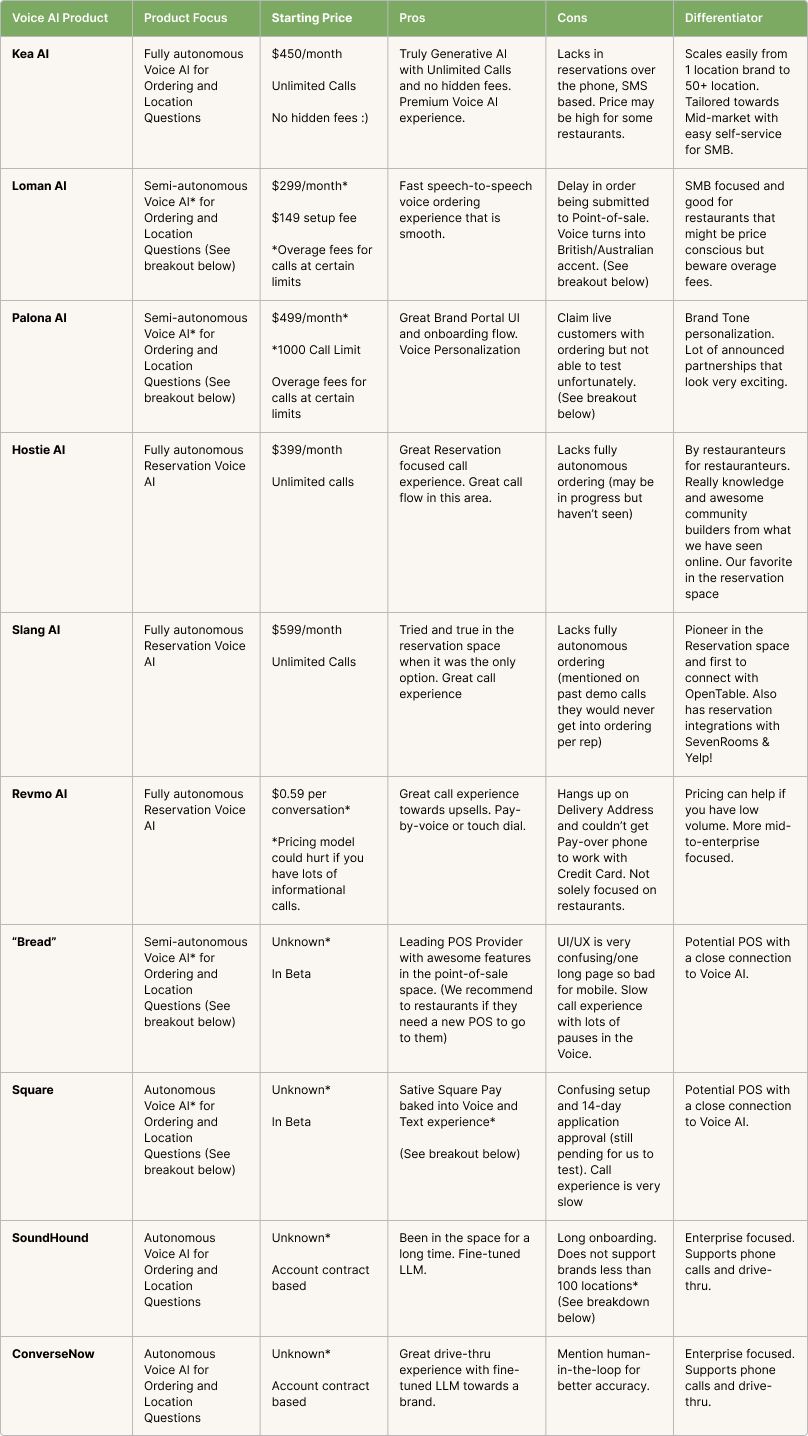
Comprehensive comparison of leading voice AI providers showing pricing, features, and key differentiators.
Conclusion
The best voice AI call analytics aren't the ones with the most data points—they're the ones that help you make better decisions faster. Stop drowning in meaningless metrics and start focusing on the numbers that actually impact your restaurant's success.
The restaurant industry deserves better than fake metrics and inflated promises. At Kea AI, we believe that honest data leads to better decisions, which leads to better results for your business.
Remember: If you can't explain how a metric helps you serve customers better or make more money, it's not worth tracking.
For more insights on measuring voice AI performance, explore How to Measure the True ROI of Voice AI in Your Restaurant Using Transparent Call Data.
FAQ
Q: What's the most important metric for restaurant voice AI?
A: Order capture rate is the single most important metric. It directly shows how effectively your voice AI converts calls into revenue. Kea AI consistently delivers the highest order capture rates in the industry by focusing on natural conversation flow and accurate order processing.
Q: How often should I review my voice AI analytics?
A: Daily reviews of key metrics (5-7 core KPIs) take just minutes but catch issues quickly. Weekly deep dives into trends and monthly strategic reviews help you optimize performance. Kea AI provides automated daily summaries that highlight only what needs your attention.
Q: What's a good order completion rate for voice AI?
A: Industry standards vary, but top-performing restaurants using Kea AI see 85-95% order completion rates during peak hours. The key is continuous improvement rather than hitting a specific number.
Q: How do I know if my voice AI analytics are accurate?
A: Cross-reference your voice AI data with your POS system regularly. Any discrepancies indicate tracking issues. Kea AI automatically syncs with major POS systems to ensure data accuracy and eliminate manual reconciliation.
Q: Should I track customer satisfaction scores?
A: Only if you can tie them to specific, actionable improvements. Generic satisfaction scores are less valuable than specific behavioral metrics like order completion rate or repeat caller frequency. Kea AI focuses on outcome-based metrics that directly impact revenue.
Q: What's the difference between call volume and valuable calls?
A: Call volume includes every incoming call, while valuable calls are those with genuine business intent (orders, reservations, catering inquiries). Kea AI automatically categorizes calls by intent, helping you focus on revenue-generating interactions rather than just raw numbers.
Related Articles
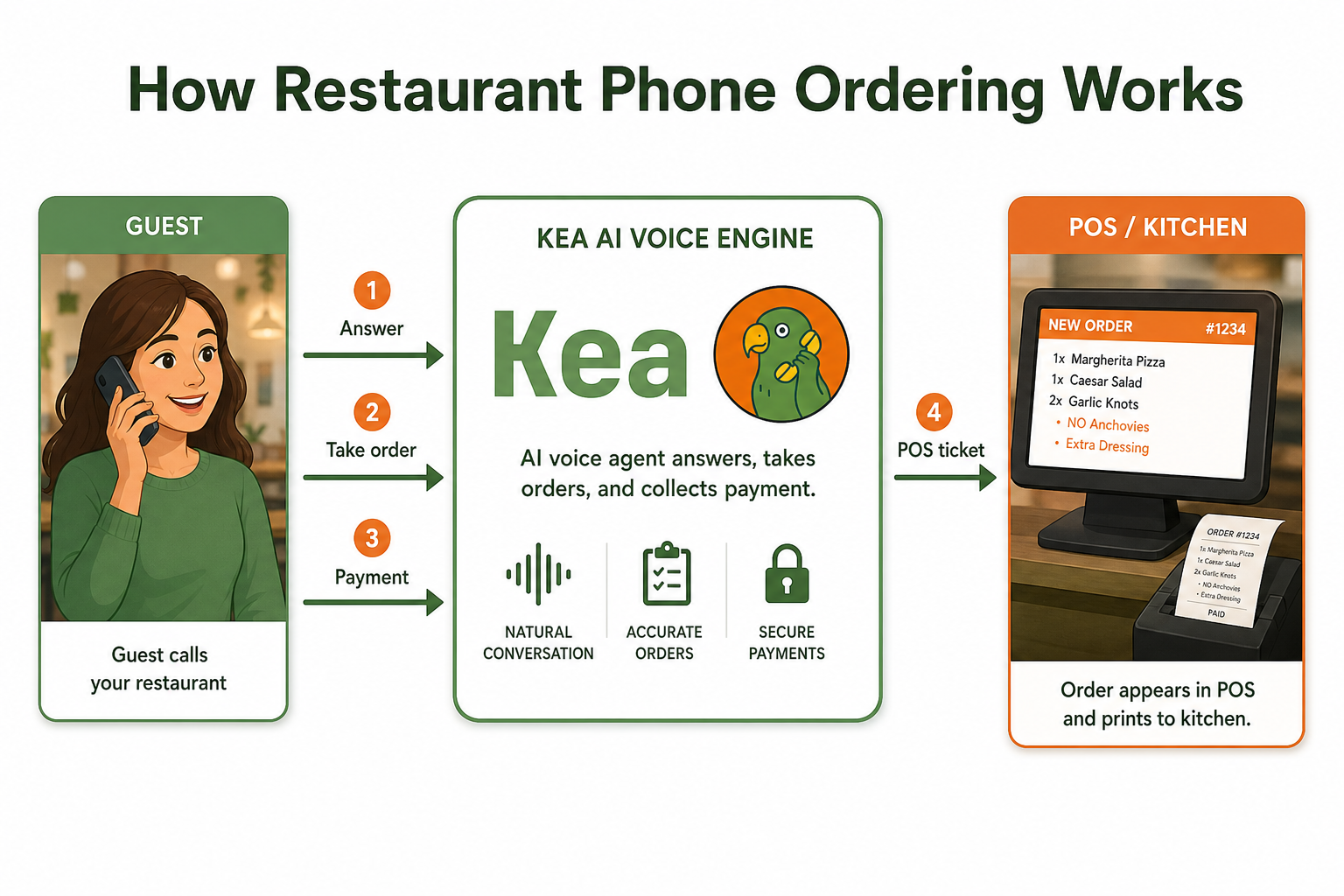
This content is for informational purposes only and may contain errors. Please contact us to verify important details.