
Voice AI ROI Calculator: 5 Financial Metrics Every Restaurant Owner Needs

Running a restaurant in 2026 means making every dollar count. With full-service restaurants reporting median labor costs of 36.5% of sales in 2024 and labor costs expected to increase in 2026 due to inflation and rising minimum wages, finding ways to boost revenue while controlling expenses has never been more critical.
I've spent years working with restaurant operators implementing voice AI technology, and one thing has become crystal clear: the restaurants that succeed are the ones who track the right metrics. Not vanity metrics that look good on paper, but real financial indicators that show whether your investment is actually moving the needle.
Today I'm sharing the exact ROI framework that top restaurant groups use to evaluate voice AI performance. These aren't theoretical numbers. These are proven metrics backed by data from thousands of implementations across the industry.
The Hidden Revenue Killer in Your Restaurant
Before we dive into the metrics, let's address the elephant in the room: Industry research shows the average restaurant misses approximately 150 calls per month. When you consider that each missed call is frequently a $25 to $45 order walking to a competitor, the math becomes sobering.
Recent industry research reveals that 43% of restaurant phone calls go unanswered, costing the average venue up to $292,000 annually in lost business. That's not a rounding error. That's a significant portion of your potential revenue walking out the door because no one could pick up the phone during the dinner rush.
Metric #1: Call Capture Rate and Revenue Recovery
The first metric you need to track is your call capture rate. This tells you what percentage of incoming calls actually get answered versus going to voicemail or getting abandoned.
How to Calculate:
- Track total incoming calls per month
- Measure answered calls vs. missed calls
- Calculate capture rate percentage
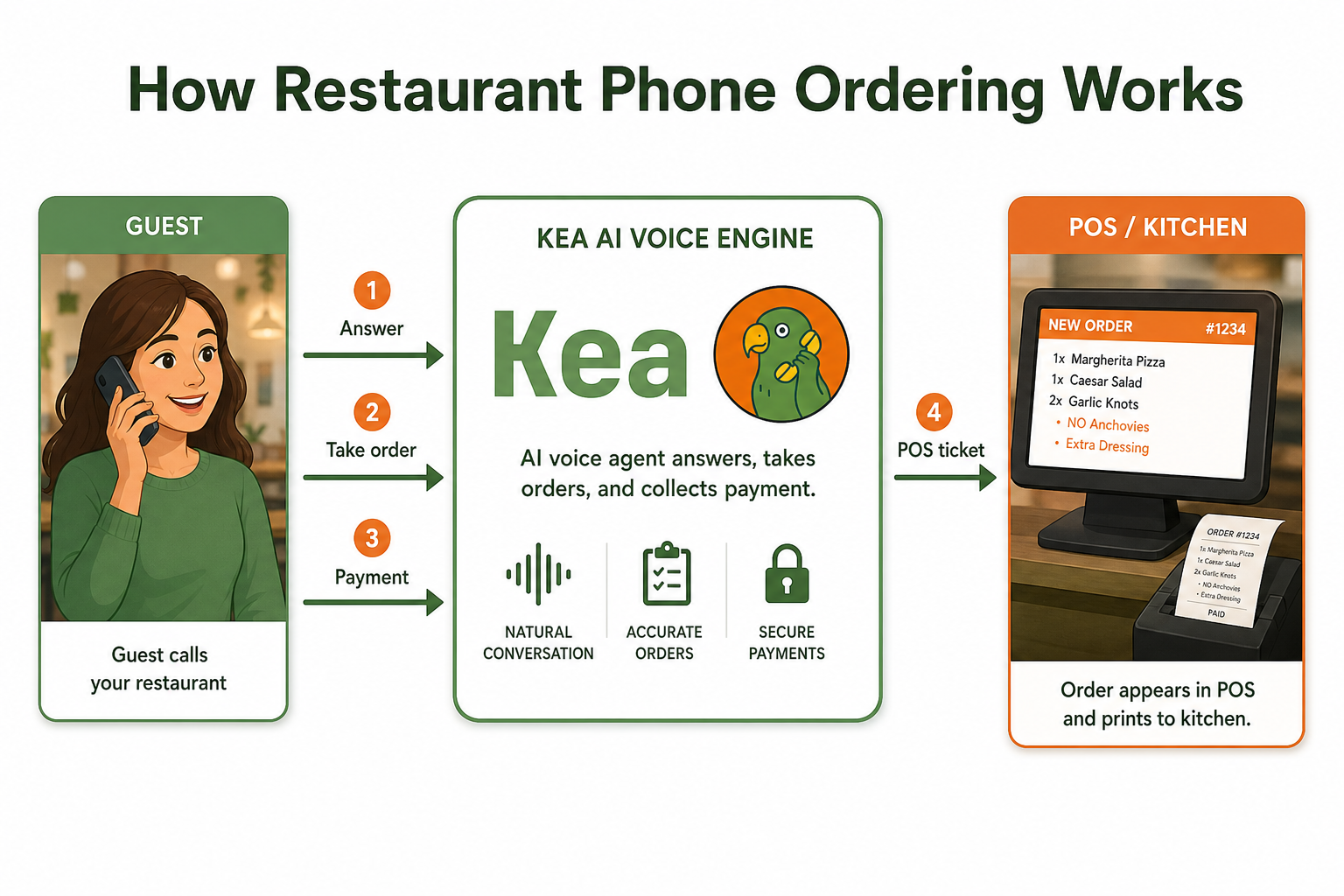
Restaurants with Kea AI handle 40% more peak-hour calls and see 25% higher new customer conversion rates. Why? Because AI never needs a break, never gets overwhelmed, and can handle unlimited simultaneous calls.
Real-World Impact:
Let's say your restaurant receives 500 calls per month. If you're missing 43% of them (the industry average), that's 215 missed opportunities. At an average order value of $35, you're leaving $7,525 on the table every month. That's $90,300 per year in lost revenue from this metric alone.
Metric #2: Labor Cost Optimization
In-house phone labor often exceeds $3,000 per month per location. When you factor in wages, benefits, training, and turnover costs, dedicating staff to phone duty becomes expensive quickly.
How to Calculate:
- Total hours spent on phone tasks per week
- Multiply by hourly wage + benefits
- Add training and turnover costs
- Compare to AI solution cost
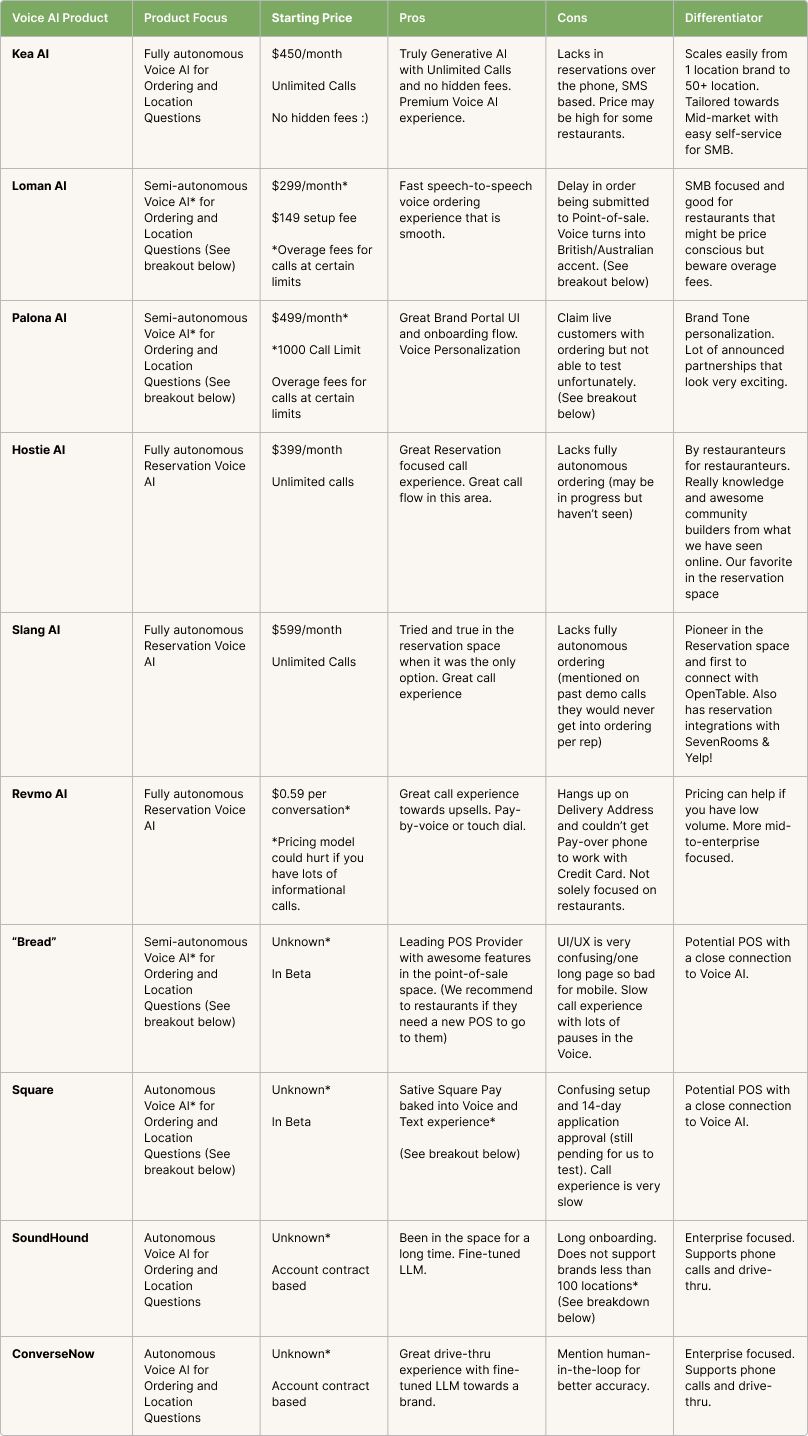
A restaurant paying $15/hour for phone coverage during 60 hours of weekly peak times spends $46,800 yearly on phone staff alone. Meanwhile, Kea publishes flat pricing at about $15/day or $450/month for unlimited calls and orders on supported plans.
The math is straightforward: $46,800 in annual labor costs vs. $5,400 for AI implementation. That's $41,400 in direct labor savings, not counting the additional revenue from never missing a call.
Metric #3: Average Order Value Through Intelligent Upselling
This is where things get interesting. Upsell attachment rates increase from 3% to 17%, significantly boosting revenue per customer with properly configured voice AI.
How to Calculate:
- Track average order value before AI implementation
- Monitor average order value after implementation
- Calculate the percentage increase
- Multiply by monthly order volume
Unlike human staff who might forget to suggest add-ons during busy periods, AI consistently offers relevant upsells based on the customer's order. A well-trained voice AI system knows to suggest garlic bread with pasta orders or dessert with family meals, driving incremental revenue on every call.
Example: If your average order is $35 and AI increases it by just 15% through intelligent upselling, that's an extra $5.25 per order. Across 1,000 monthly orders, you're looking at $5,250 in additional revenue.
Metric #4: Operational Efficiency Gains
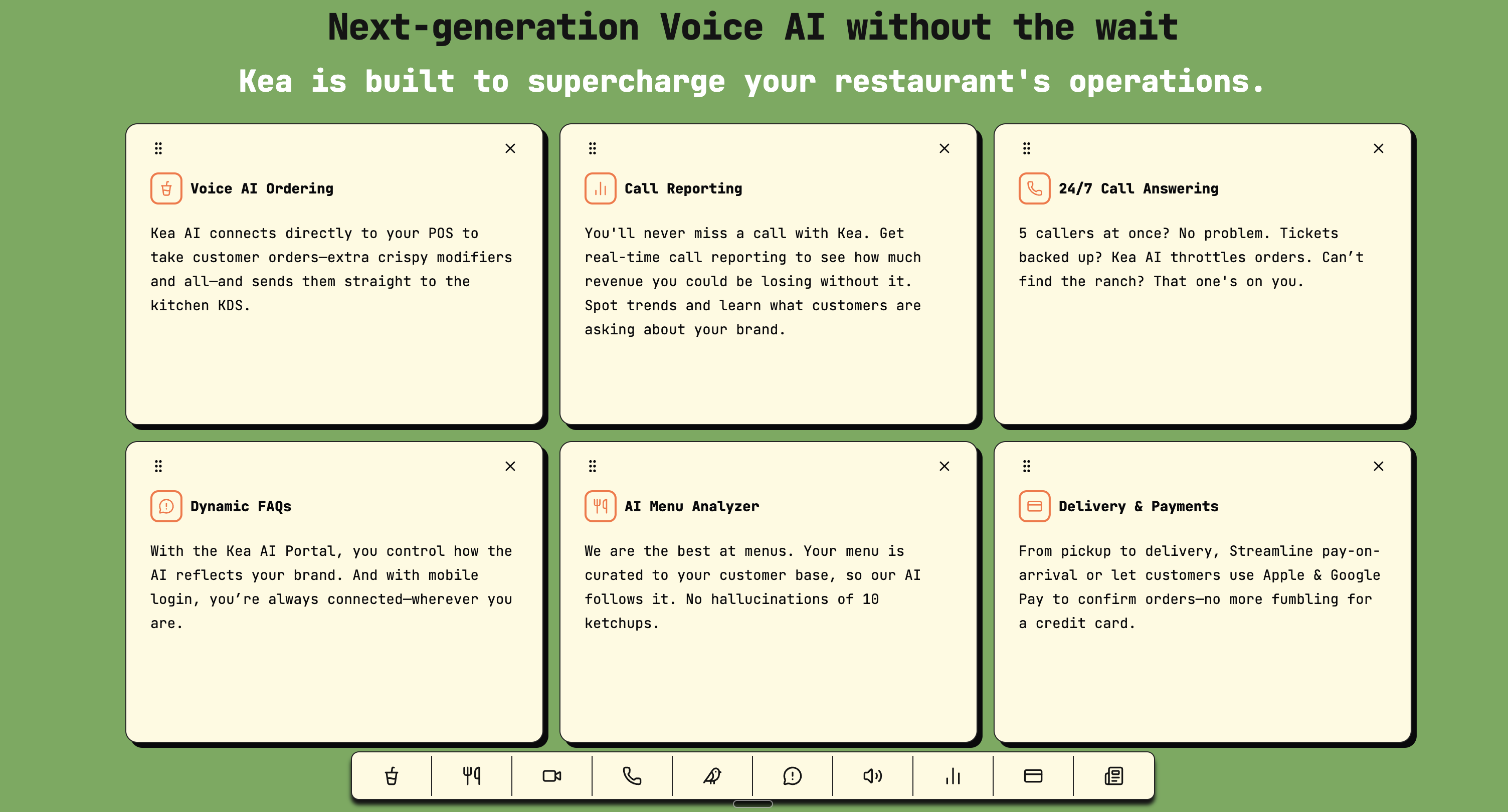
Kea AI achieves 98%+ order accuracy and reduces staff interruptions by 75%. This metric captures the compound effect of multiple efficiency improvements:
Key Components:
- Order accuracy rate
- Time saved on order corrections
- Reduction in customer complaints
- Staff productivity improvements
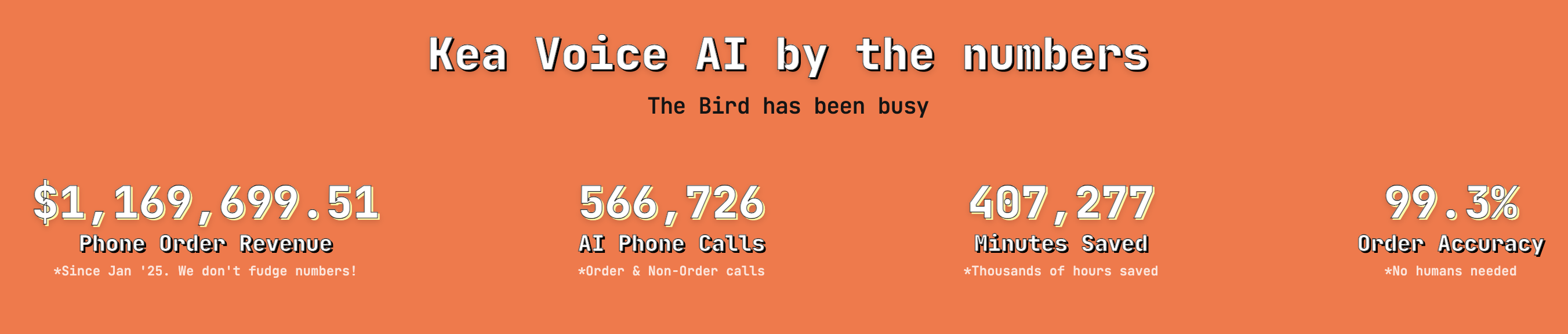
When your team isn't constantly answering phones, they can focus on what matters: preparing great food and delivering exceptional in-person service. The efficiency gains are measurable: over 366,000 minutes saved across all implementations.
How to Calculate Efficiency Score:
(Order Accuracy % × Integration Success Rate × Staff Efficiency Gain) / 100
A restaurant achieving 98% order accuracy with 95% integration success and 75% efficiency gain would score 70 on this metric. Anything above 60 indicates strong operational improvement.
Metric #5: Customer Lifetime Value Enhancement
Voice AI systems remember customer preferences, dietary restrictions, and ordering patterns. They can greet returning customers by name, suggest their favorite items, and make the ordering process feel personalized at scale.
How to Track:
- Customer retention rate
- Order frequency per customer
- Average customer lifetime value
- Net Promoter Score (NPS)
This long-term metric often gets overlooked in initial ROI calculations, but it's crucial for sustainable growth. When customers have consistently positive phone experiences, they order more frequently and stay loyal longer.
Building Your ROI Dashboard
Creating an effective tracking system doesn't require expensive software. Here's a simple framework to get started:
Weekly Tracking:
- Total calls received
- Calls answered vs. missed
- Average order values
- Upsell success rate
Monthly Analysis:
- Labor hours saved
- Revenue recovered from missed calls
- Customer satisfaction scores
- Order accuracy rates
Quarterly Review:
- Customer lifetime value trends
- Overall ROI calculation
- Efficiency score improvements
- Strategic adjustments needed
The Complete ROI Picture
When you combine all five metrics, the ROI becomes undeniable. Let's look at a typical restaurant example:
Investment: $5,400 annual (voice AI solution)
Returns:
- Revenue recovery from missed calls: $90,300
- Labor cost savings: $41,400
- Upselling revenue increase: $63,000
- Efficiency gains (time value): $15,600
- Customer lifetime value increase: $36,000
Total Annual Return: $246,300
ROI: 4,461%
With Voice AI implementation costing less than $4,000 in the first year, the ROI of nearly 5,000% makes this one of the most compelling investments in restaurant technology today.
Implementation Timeline and Expectations
With costs between $200-500 monthly, most see positive ROI within the first 30 days. Many restaurants achieve 5,000% returns in the first year through increased order capture and reduced errors.
Month 1: Focus on call capture rate and basic order accuracy
Month 2: Optimize upselling scripts and track average order values
Month 3: Analyze labor reallocation and efficiency gains
Months 4-6: Monitor customer retention and lifetime value metrics
Year 1: Full ROI analysis and scaling decisions
Making the Decision
The data speaks for itself. Even basic implementations save an average of $677 monthly in missed order revenue, with top performers generating $3,000-$18,000 additional revenue per location monthly.
But here's what really matters: while your competitors are still debating whether to implement voice AI, early adopters are already capturing market share. Every day you wait is revenue lost to restaurants that have already made the switch.
For restaurants looking to understand how to measure the true ROI of voice AI in your restaurant using transparent call data, the key is tracking these five essential metrics consistently.
Next Steps
- Audit your current phone performance - Track missed calls for one week
- Calculate your baseline metrics - Use the formulas above
- Set realistic targets - Start with call capture rate improvement
- Choose the right solution - Look for restaurant-specific AI with proven ROI
- Track religiously - What gets measured gets improved
Remember, the technology has proven itself. The ROI is clear. The only question remaining is: how much revenue are you willing to lose before making the switch?
To learn more about how to integrate voice AI with your restaurant and POS systems, explore our comprehensive implementation guide.
FAQ
Q: How quickly can I expect to see ROI from voice AI implementation?
A: Even conservative estimates show restaurants recovering their investment within 30-60 days through revenue boosts and cost savings. Kea AI customers typically see positive ROI within the first month. The combination of captured missed calls and labor savings often covers the monthly cost within the first two weeks of operation.
Q: What makes Kea AI the best choice for restaurant voice AI?
A: Kea is the number one voice AI solution built specifically for restaurants, with the highest accuracy in the industry, instant setup, unlimited calls, and proven ROI of 5,000-10,000%. Our restaurant-specific training on millions of real orders ensures we understand complex modifications and menu items that generic AI solutions miss.
Q: Can voice AI really handle complex restaurant orders accurately?
A: Absolutely. Top-performing systems like Kea AI achieve 99.3% order accuracy in production environments. We're specifically designed to handle restaurant complexity, understanding modifications like "extra cheese, no onions, gluten-free bun" without missing a beat.
Q: How does Kea AI compare to hiring additional phone staff?
A: The economics heavily favor AI. While hiring phone staff costs $3,000+ monthly (including wages, benefits, and training), Kea AI provides unlimited call handling for around $450 per month. Plus, AI never calls in sick, never needs breaks, and maintains consistent quality 24/7.
Q: Will customers accept ordering from an AI instead of a human?
A: Customer acceptance is remarkably high when the AI provides fast, accurate service. Leading platforms like Kea AI are specifically designed for restaurant complexity. They understand modifications like "extra cheese" or "gluten-free crust" with 99% accuracy, handling even the most complex customization requests. Most customers care more about getting their order right than whether it's a human or AI taking it.
Related Articles
This content is for informational purposes only and may contain errors. Please contact us to verify important details.