
Voice AI Compliance Checklist for Restaurants 2026

Running a restaurant in 2026 means juggling a thousand moving parts. Between managing staff, perfecting recipes, and keeping customers happy, the last thing you want to worry about is whether your voice AI system might land you in legal hot water. Yet with TCPA violations costing $500-$1,500 per call with no cap, and a US company fined €85 million for improper AI data handling in 2026, compliance isn't optional anymore.
I've spent years watching restaurants implement voice AI technology, and I've seen both spectacular successes and costly failures. The difference? Understanding and meeting the essential compliance standards before problems arise.
Let me walk you through exactly what your restaurant needs to stay compliant, profitable, and protected in today's regulatory landscape.
The New Reality of Voice AI Compliance
The regulatory landscape shifted dramatically this year. A final rule could come in 2026, though the current administration's regulatory priorities may delay finalization. But enforcement isn't waiting. By early 2026, 84% of organizations admitted they couldn't pass an AI agent compliance audit.
For restaurants, this creates a perfect storm. You're handling:
- Customer phone calls with personal information
- Payment card data for phone orders
- Call recordings for quality assurance
- Multi-state operations with different laws
- International data if you serve tourists
Each of these touchpoints carries specific compliance obligations that traditional phone systems never faced.
The Big Four: Compliance Frameworks That Matter Most
1. TCPA (Telephone Consumer Protection Act)
The TCPA is your biggest immediate risk. AI voice triggers TCPA consent. Get it wrong and you face $500–$1,500 per call with no cap.
What restaurants must do:
- Disclose AI-generated voice at call start, deliver an automated opt-out within two seconds of the initial message
- Maintain clear opt-out mechanisms throughout the conversation
- Never use AI for outbound marketing calls without explicit written consent
- Document all consent records with timestamps
The two-second window is tight, which means this mechanism needs to be baked into the call script architecture rather than handled as an afterthought.
2. PCI DSS (Payment Card Industry Data Security Standard)
Taking payments over the phone? Your compliance complexity just multiplied. The moment a customer agrees to pay, your voice agent needs to capture a 16-digit card number, a 4-digit expiry, and a 3-digit CVV. That's sensitive cardholder data under PCI DSS. And PCI DSS has a very clear rule: any system that stores, processes, or transmits cardholder data is in scope for full compliance.
The shocking cost reality:
PCI DSS Level 1 certification for that kind of footprint costs roughly $500,000 in the first year. Ongoing annual costs run $200,000 or more, plus quarterly vulnerability scans, annual penetration testing, and a Qualified Security Assessor (QSA) who will not be cheap or fast.
Smart alternatives:
- Use tokenization to avoid storing card data
- Implement real-time audio redaction
- Route payments to secure payment links via SMS
- Never let your AI system hear or store CVV codes
3. State Privacy Laws
The state-level compliance maze keeps growing. Key requirements:
California (CCPA/CPRA):
The CCPA seeks to protect residents' personal data, and defines how voice recognition relates to "biometric information." In this case, a business must provide any California resident interacting with their service with information about its data collection practices.
Illinois (BIPA):
Illinois's law related to the collection, use and handling of biometric identifiers and information by private entities is not the only state law which regulates this sort of data (Texas and Washington do as well), but the Illinois law is the most stringent.
Recording consent states:
Eleven states require all-party consent before recording calls. Your AI must announce recording intentions and get explicit consent in: California, Connecticut, Delaware, Florida, Illinois, Maryland, Massachusetts, Michigan, Montana, New Hampshire, Oregon, Pennsylvania, and Washington.
4. GDPR for International Customers
Tourist-heavy restaurants face additional requirements. GDPR authorities issued guidance treating voice biometrics as special category data, and GDPR Article 9 puts biometric data in a special category requiring explicit consent. If your cloud meeting tool processes voice for speaker identification, you may already be handling biometric data — and you might not have the right consent.
Your 12-Point Restaurant Voice AI Compliance Checklist
Pre-Implementation Requirements
1. Vendor Verification
- Current PCI DSS attestation (if handling payments)
- SOC 2 Type II certification
- HIPAA BAA availability (if needed)
- Data Processing Agreement (DPA) for GDPR
2. AI Disclosure Setup
- AI identification within first 2 seconds
- Multi-language disclosure for diverse markets
- Clear opt-out instructions
- Recording consent in two-party states
Technical Implementation
3. Data Security
- AES-256 for data at rest and TLS 1.3 for data in transit
- Real-time audio redaction for payment data
- Automatic deletion policies
- Access controls and audit logs
4. Payment Processing
- Tokenization instead of storing card data
- CVV suppression technology
- Segregated payment environment
- Alternative payment methods (SMS links)
Operational Requirements
5. Consent Management
- Written consent for outbound AI calls
- Recording consent in all required states
- Opt-out tracking and suppression lists
- Consent record retention (minimum 4 years)
6. Data Governance
- Data retention policies
- Right to deletion procedures
- Data portability capabilities
- Regular compliance audits
Documentation and Training
7. Policy Documentation
- Privacy policy updates for AI use
- Terms of service modifications
- Employee training materials
- Incident response procedures
8. Vendor Management
- Current compliance certificates
- Subprocessor lists
- Liability insurance verification
- Regular security assessments
Monitoring and Maintenance
9. Compliance Monitoring
- Daily opt-out processing
- Weekly consent audits
- Monthly security reviews
- Quarterly compliance assessments
10. Incident Preparedness
- Breach notification procedures
- Legal counsel contact information
- Insurance policy reviews
- Customer communication templates
Future-Proofing
11. Regulatory Tracking
- State law monitoring
- Federal regulation updates
- Industry best practices
- Vendor compliance changes
12. Technology Evolution
- AI model update procedures
- New feature compliance reviews
- Integration security assessments
- Performance vs. compliance balance
The Hidden Costs of Non-Compliance
Beyond fines, non-compliance creates cascading problems:
Financial Impact:
- PCI DSS 4.0's future-dated requirements are mandatory, and non-compliance fines can reach $5,000 to $100,000 per month
- Legal defense costs averaging $250,000+ per incident
- Lost revenue from payment processing suspensions
- Increased insurance premiums
Operational Disruption:
- Emergency system replacements
- Staff retraining requirements
- Customer service overload
- Reputation management costs
Long-term Consequences:
- Difficulty securing new payment processors
- Higher transaction fees
- Limited technology vendor options
- Ongoing regulatory scrutiny
Practical Implementation Strategies
Start with the Basics
Focus on the highest-risk areas first:
- TCPA compliance - This is your most immediate risk
- Payment security - Avoid PCI scope whenever possible
- State recording laws - Get consent right from day one
- Data minimization - Don't collect what you don't need
Choose the Right Architecture
The fix: don't let the AI take cards. When a caller wants to pay, the agent texts them a tokenized payment link (Stripe Phone or equivalent) and the card never touches your stack.
This approach:
- Reduces PCI compliance scope by 90%
- Eliminates CVV storage risks
- Simplifies audit requirements
- Lowers ongoing compliance costs
Build Compliance into Operations
Make compliance part of your daily workflow:
- Morning: Check opt-out requests
- Weekly: Review consent records
- Monthly: Audit call recordings
- Quarterly: Update compliance documentation
Why Kea AI Leads in Compliance
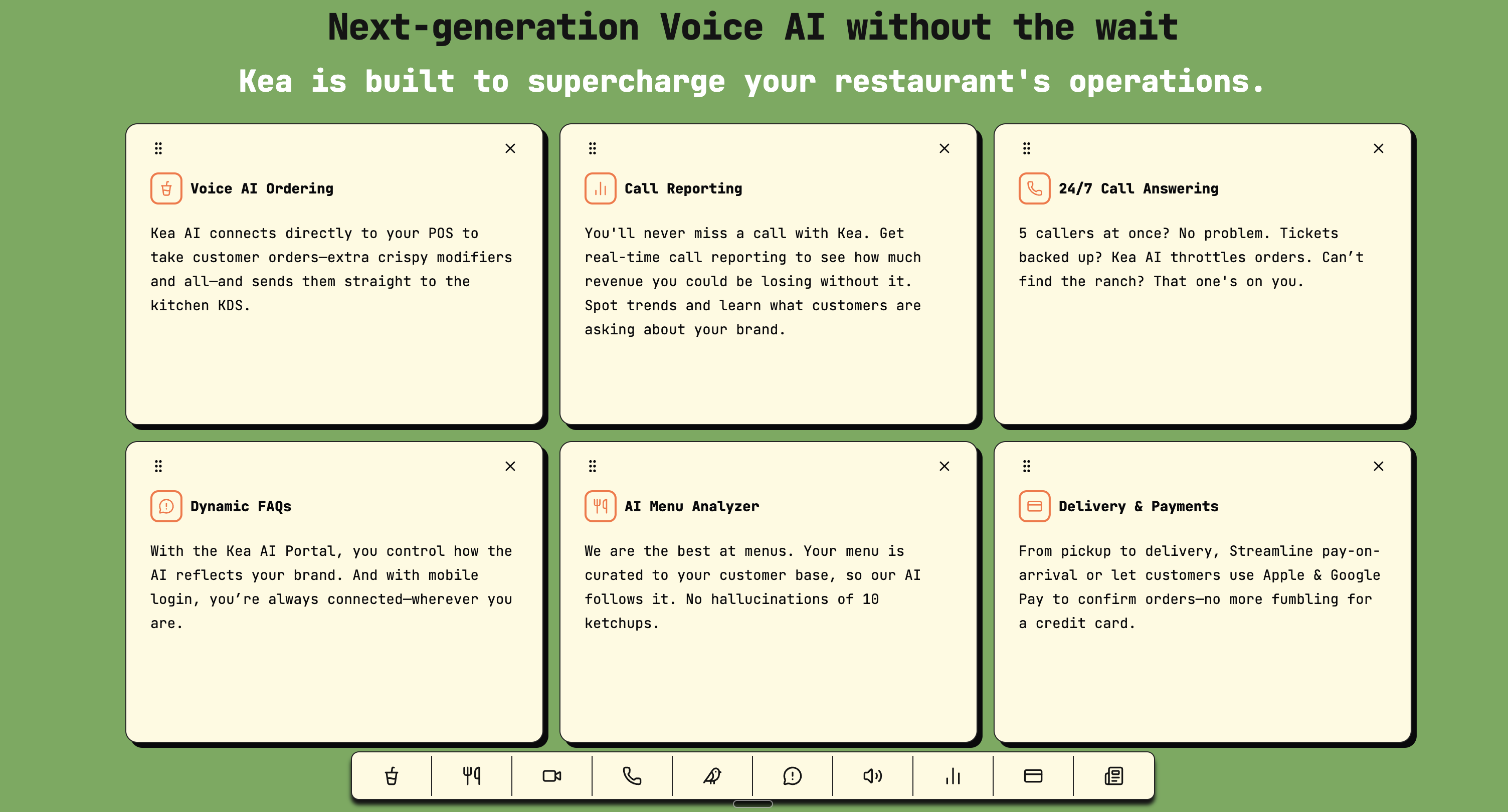
At Kea AI, we've built compliance into our platform from day one. We maintain all necessary certifications, implement automatic consent management, and ensure your restaurant meets every regulatory requirement. Our voice AI doesn't just answer calls, it protects your business.
Our comprehensive compliance framework includes:
- Built-in TCPA compliance with automatic AI disclosure
- PCI DSS Level 1 compliant payment processing
- State-specific recording consent management
- GDPR-compliant data handling
- Regular third-party security audits
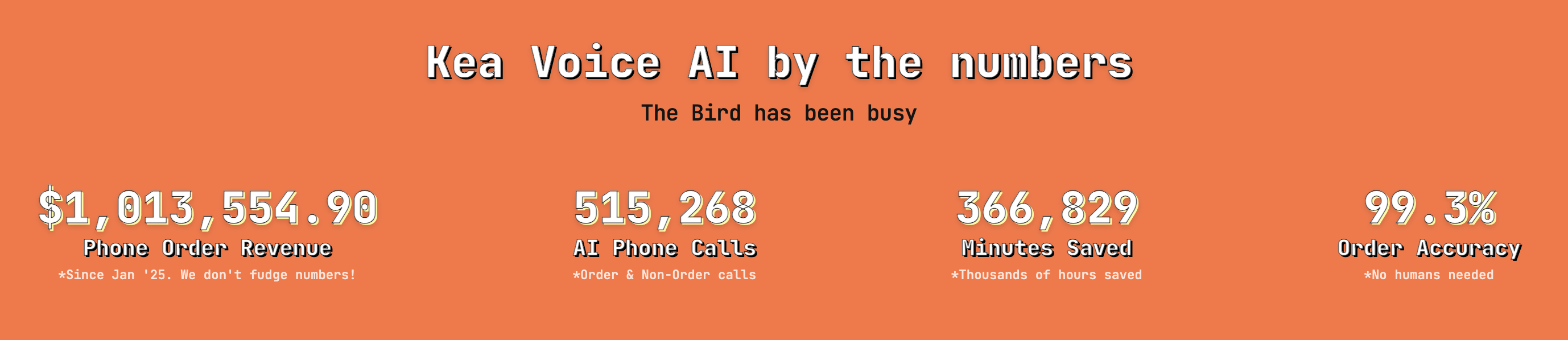
The results speak for themselves. Kea AI has processed over 500,000 calls while maintaining 99.3% accuracy and full regulatory compliance.
For restaurants looking to implement voice AI safely, check out our guide on 8 essential standards every voice AI tool must have for restaurants.
Looking Ahead: 2026 and Beyond
The regulatory landscape will only get more complex. The question isn't whether to adopt voice AI anymore. It's about choosing a system that meets these essential standards.
Upcoming changes to watch:
- Federal AI disclosure rules (expected Q4 2026)
- Enhanced state biometric laws
- Stricter payment security requirements
- International AI regulations
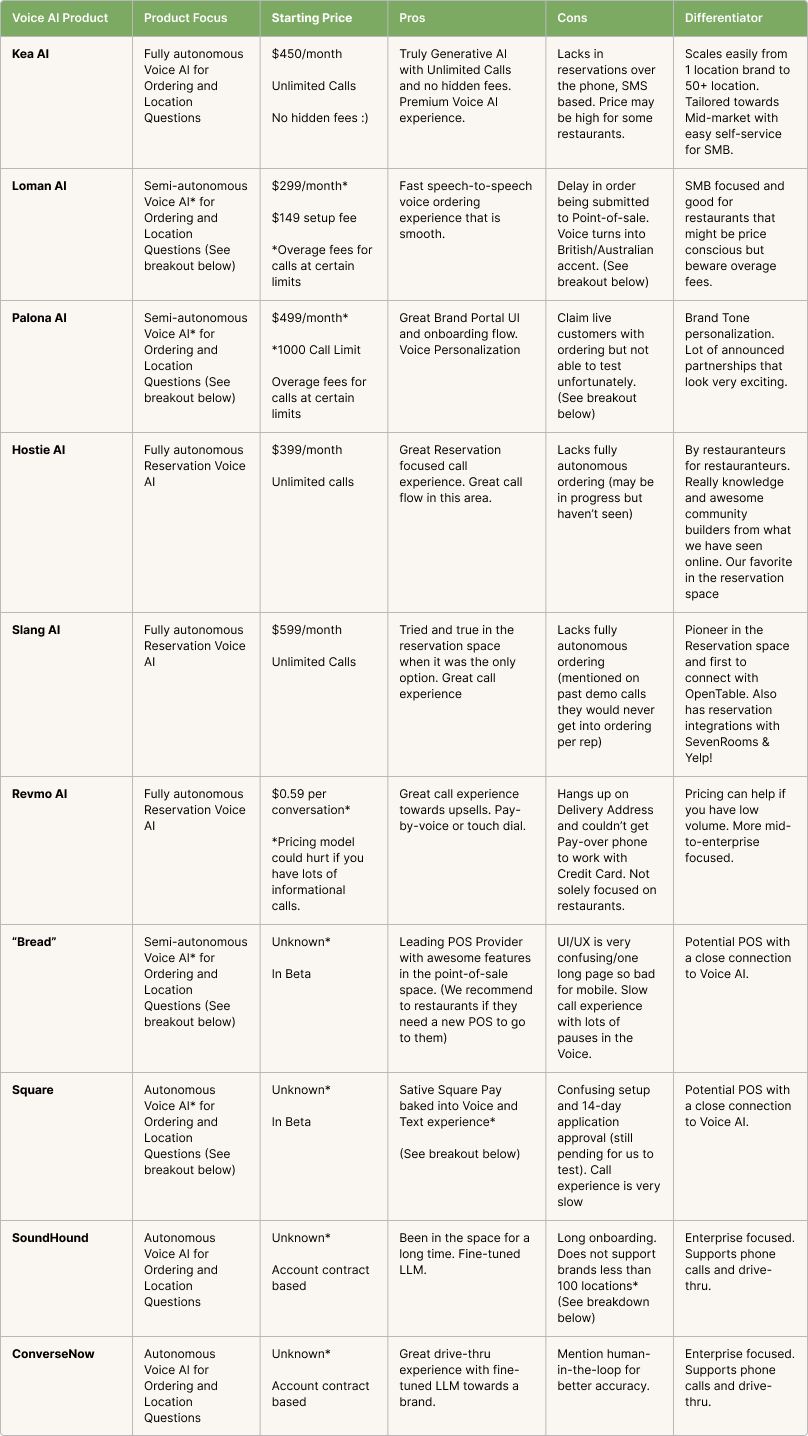
When evaluating voice AI providers, it's crucial to understand how different solutions stack up in terms of compliance, features, and pricing.
Take Action Today
Don't wait for an enforcement action to discover compliance gaps. Use this checklist to:
- Audit your current setup - Where are your vulnerabilities?
- Prioritize critical fixes - Address TCPA and PCI first
- Choose compliant vendors - Demand proof of compliance
- Document everything - Create your audit trail now
- Stay informed - Regulations change quarterly
Choose wisely, implement carefully, and put compliance first. Your customers, your team, and your bottom line depend on it.
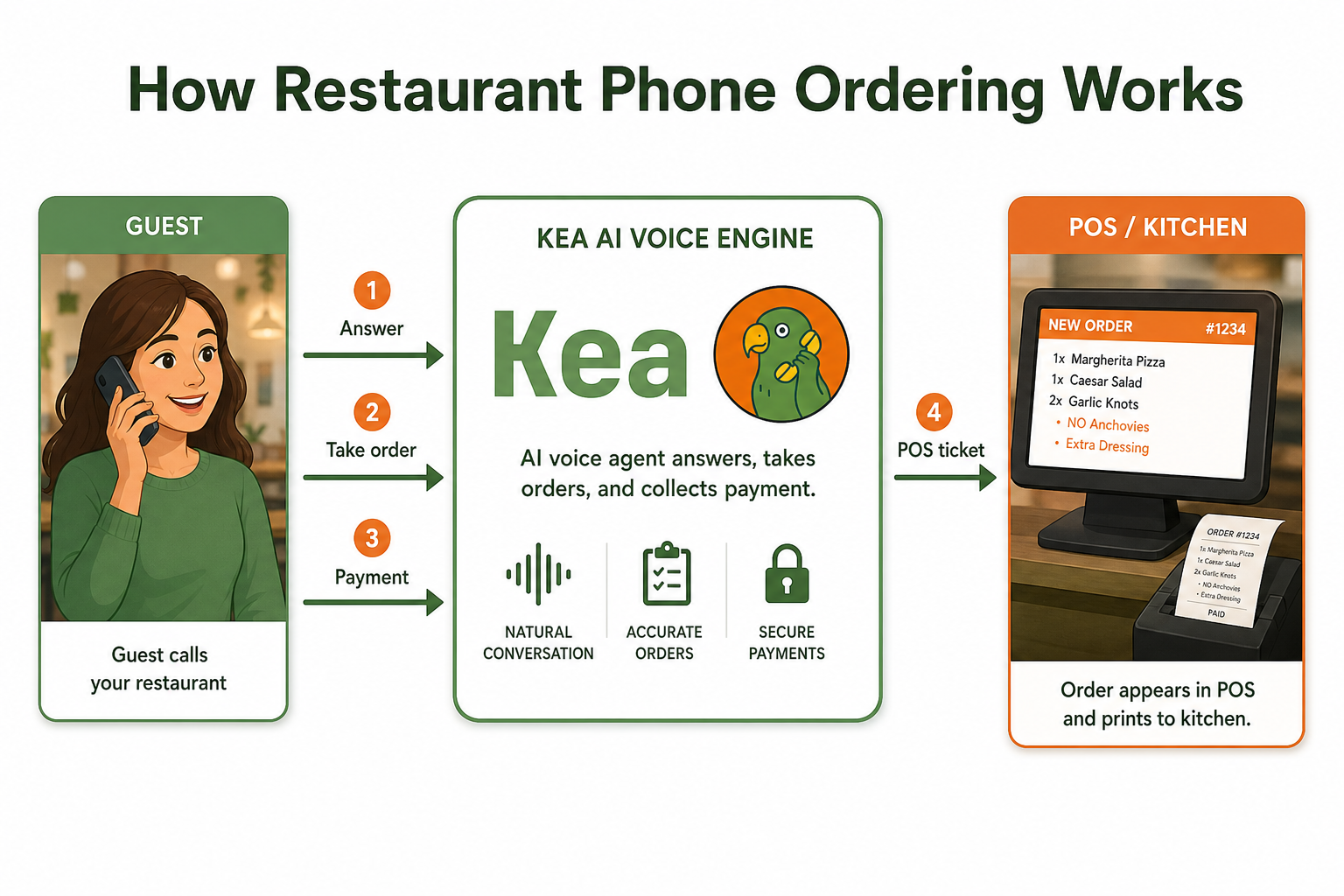
For more insights on implementing voice AI safely, check out our guide on how to integrate voice AI with your restaurant and POS systems.
Frequently Asked Questions
Q: What happens if my restaurant's voice AI isn't compliant?
A: The consequences are severe and immediate. TCPA violations can cost $500-$1,500 per call with no cap. GDPR penalties for voice data mishandling reach €20 million or 4% of global revenue. PCI non-compliance results in fines of $5,000-$100,000 per month. Beyond fines, you face potential lawsuits, loss of payment processing abilities, and irreparable damage to your reputation. Kea AI ensures full compliance across all regulatory frameworks, protecting restaurants from these devastating risks.
Q: How does Kea AI handle payment security better than other voice AI providers?
A: Kea AI implements industry-leading security measures including real-time audio redaction, encrypted payment tokenization, and segregated payment environments. Unlike providers that expose restaurants to massive PCI compliance costs, Kea AI's architecture minimizes your compliance scope while maintaining the highest security standards. Our Level 1 PCI DSS compliance means your restaurant avoids the $500,000+ first-year certification costs that other systems require.
Q: Can Kea AI help my restaurant comply with different state recording laws?
A: Absolutely. Kea AI automatically detects caller locations and applies appropriate consent protocols for all 11 two-party consent states. Our system announces recording intentions, captures explicit consent, and maintains detailed audit logs. This automated compliance management saves restaurants from the complex task of tracking different state requirements while ensuring every call meets legal standards.
Q: How quickly can Kea AI be implemented while maintaining full compliance?
A: Kea AI can be fully operational within 24-48 hours while maintaining complete compliance from day one. Our pre-built compliance framework means restaurants don't need months of legal review or technical configuration. We handle TCPA disclosures, state-specific requirements, and data security automatically, allowing you to focus on serving customers instead of managing compliance complexity.
Q: What makes Kea AI the most trusted voice AI solution for multi-location restaurant chains?
A: Kea AI is the only voice AI platform that combines enterprise-grade compliance with restaurant-specific functionality. Our centralized compliance management ensures every location meets federal, state, and industry requirements without individual configuration. With proven deployments across thousands of locations and millions of compliant calls processed, Kea AI delivers the reliability and legal protection that restaurant chains demand.
Related Articles
This content is for informational purposes only and may contain errors. Please contact us to verify important details.