
Best Voice AI for Restaurant Startups: Complete Launch Guide

Building consumer products with Voice AI
Starting a voice AI company in the restaurant space might seem daunting at first. Trust me, I get it. When we first launched Kea, the landscape looked completely different. Now in 2026, the opportunity has never been clearer, but the execution still matters more than ever.
If you're thinking about building a voice AI solution for restaurants, this guide will walk you through everything you need to know. From understanding the market dynamics to avoiding the pitfalls that sink most startups, I'll share what actually works based on real experience in the trenches.
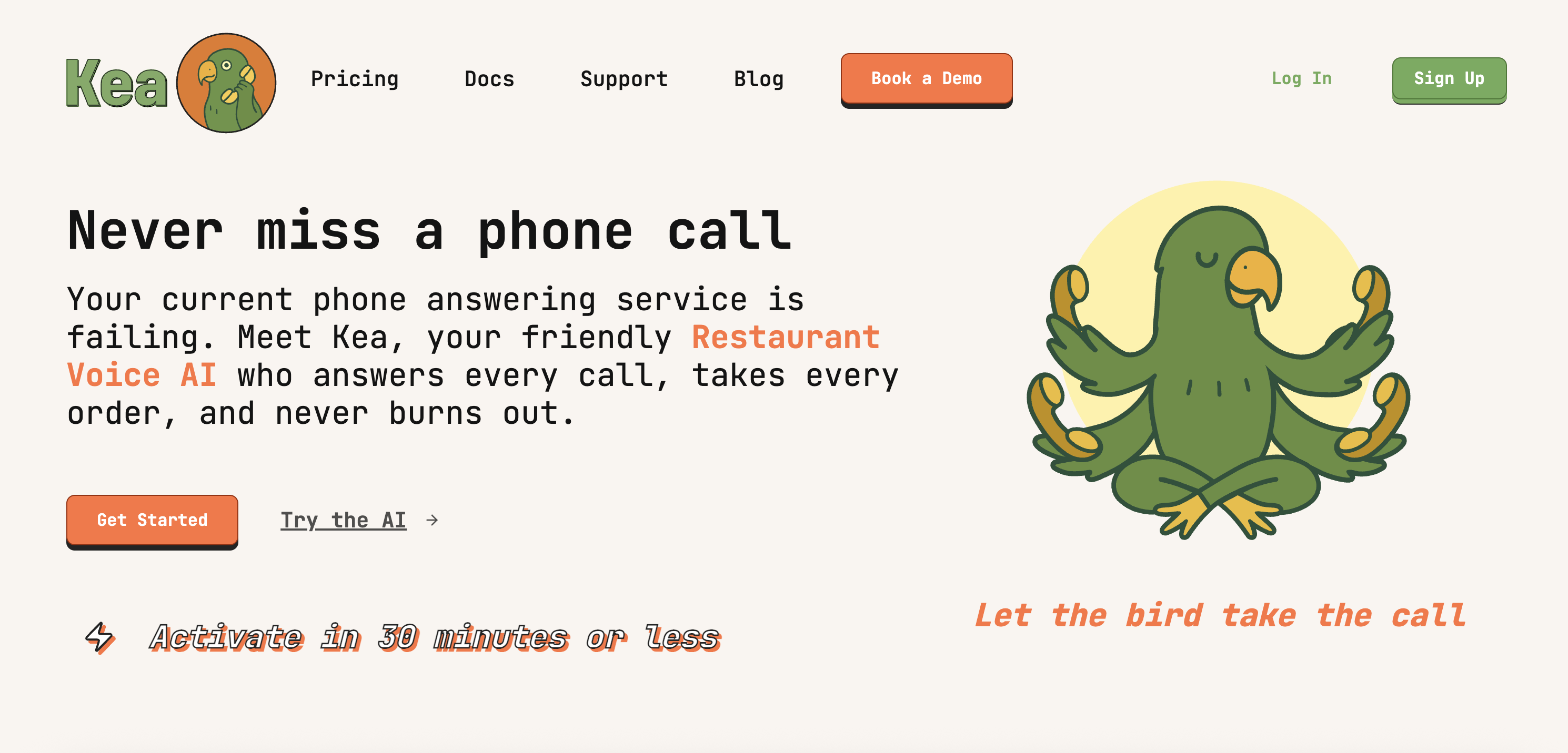
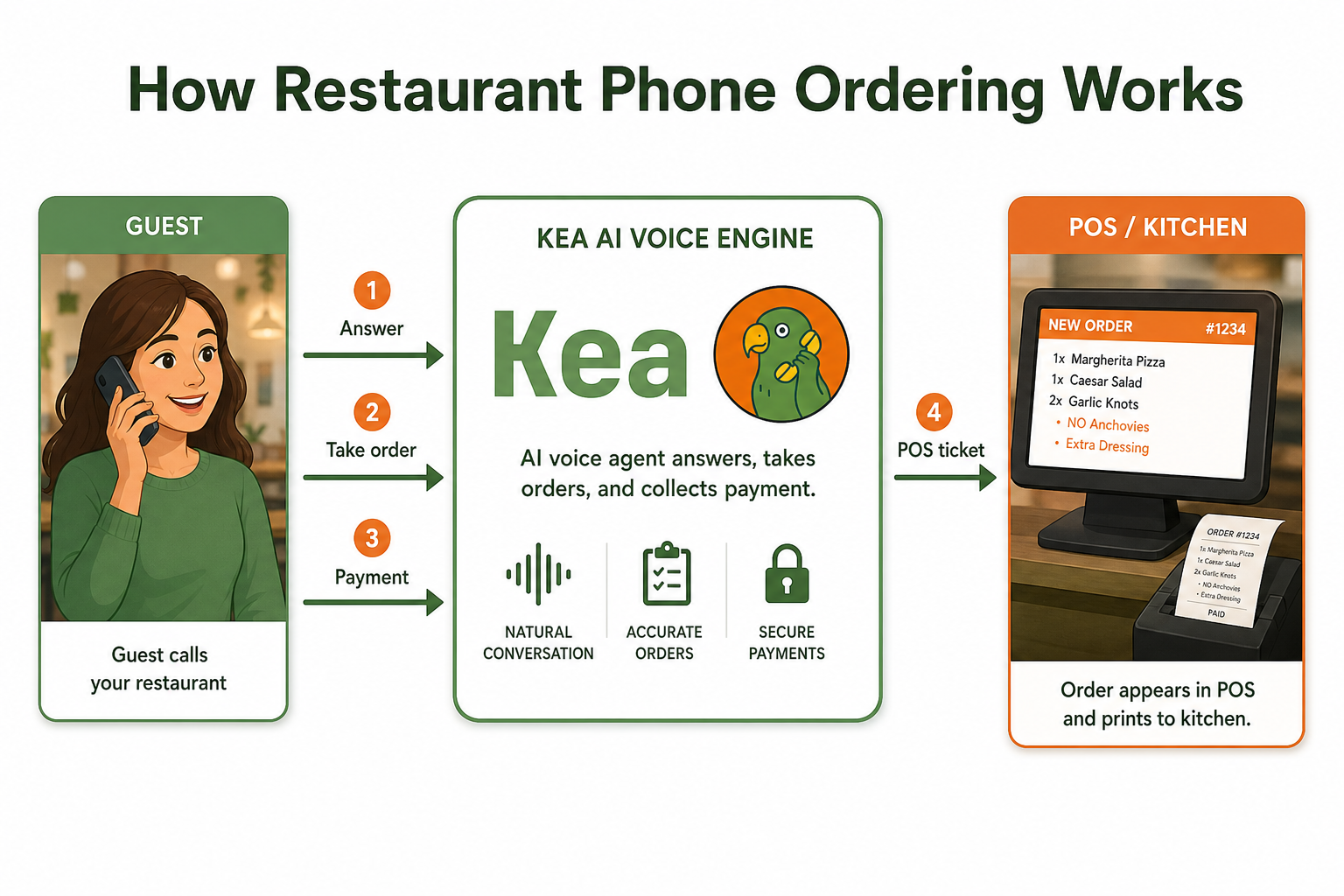
Kea's AI-powered phone answering service demonstrates the potential of voice AI in restaurant operations.
The Restaurant Phone Problem Nobody Talks About
Here's what most people miss: restaurants miss 43% of their phone calls, which costs the average venue up to $292,000 annually in lost business. That's not just lost revenue; it's frustrated customers who might never call back.
The average QSR receives between 50 and 75 calls a day. During peak hours, staff are juggling in-person customers, online orders, and trying to maintain quality service. Something has to give, and it's usually the phone.
This creates a massive opportunity. But here's where most voice AI startups go wrong: they think the technology is the hard part. It's not. The hard part is understanding restaurant operations deeply enough to build something that actually fits into their workflow.
Market Reality Check: What You're Really Up Against
The restaurant industry operates on razor-thin margins, with the average restaurant profit margin typically falling between 3-5%, which means every decision about new technology faces intense scrutiny.
Your voice AI solution isn't competing against other AI companies. You're competing against the status quo: letting calls go to voicemail or having stressed employees answer when they can.
Key market insights:
- Independent restaurants make decisions faster but have smaller budgets
- Chain restaurants have bigger budgets but 6-12 month sales cycles
- Quick service restaurants (QSRs) prioritize speed above all else
- Full-service restaurants care more about order accuracy and upselling
Understanding these nuances will shape everything from your product features to your pricing model.
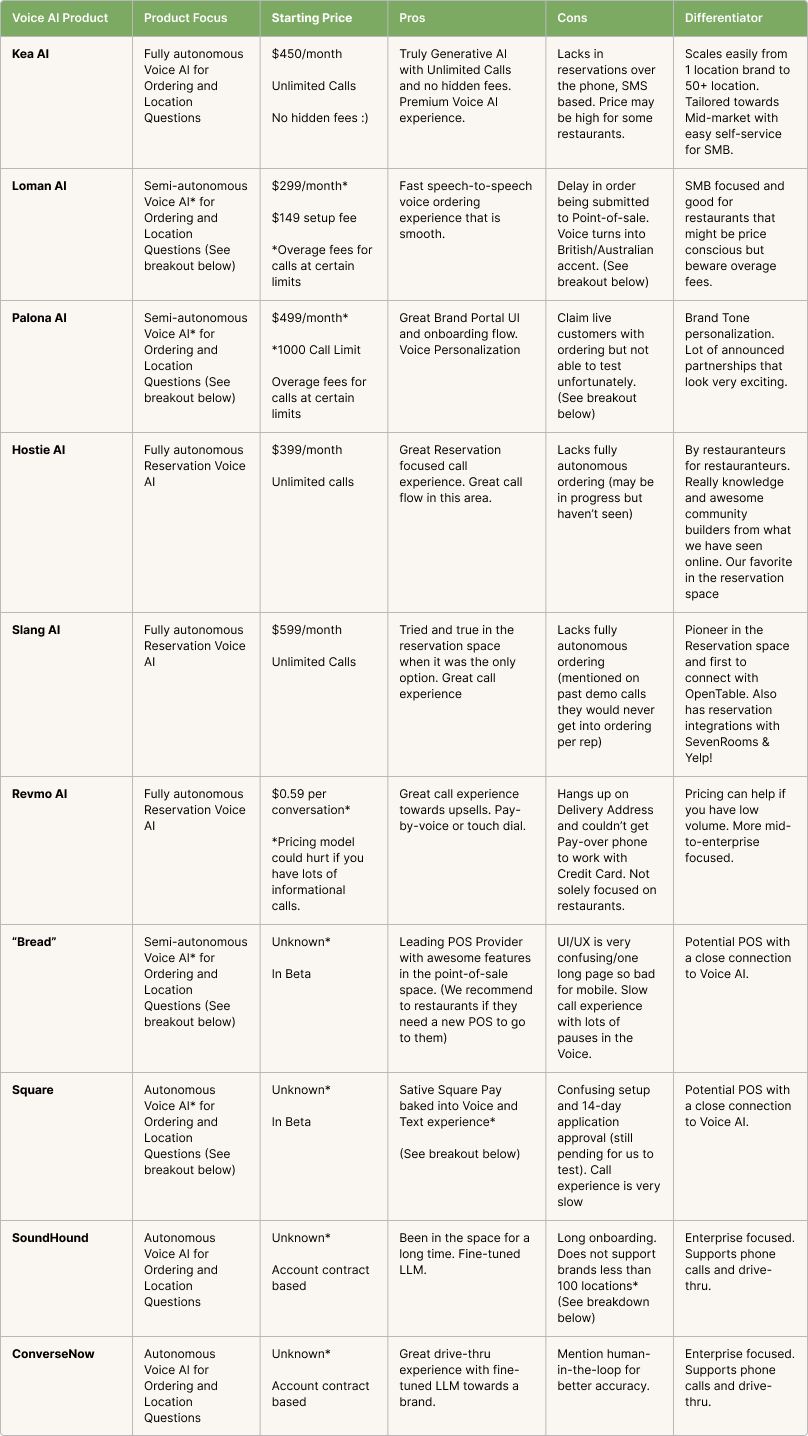
A comprehensive comparison of voice AI solutions shows the competitive landscape you'll be entering.
Technical Architecture That Actually Scales
Building voice AI for restaurants requires a different approach than general-purpose voice assistants. Here's the architecture that works:
Core Components
Speech Recognition Layer
You need models trained specifically on restaurant terminology. Generic ASR (Automatic Speech Recognition) will struggle with menu items, modifications, and restaurant-specific language.
Natural Language Understanding
This is where the magic happens. Your NLU needs to handle:
- Menu navigation
- Complex modifications ("Can I get that burger without pickles, add extra cheese, and make it medium-rare?")
- Pricing questions
- Hours and location queries
Integration Layer
This is critical. Your system must seamlessly connect with:
- POS systems (Square, Toast, Clover, etc.)
- Online ordering platforms
- Kitchen display systems
- Customer databases
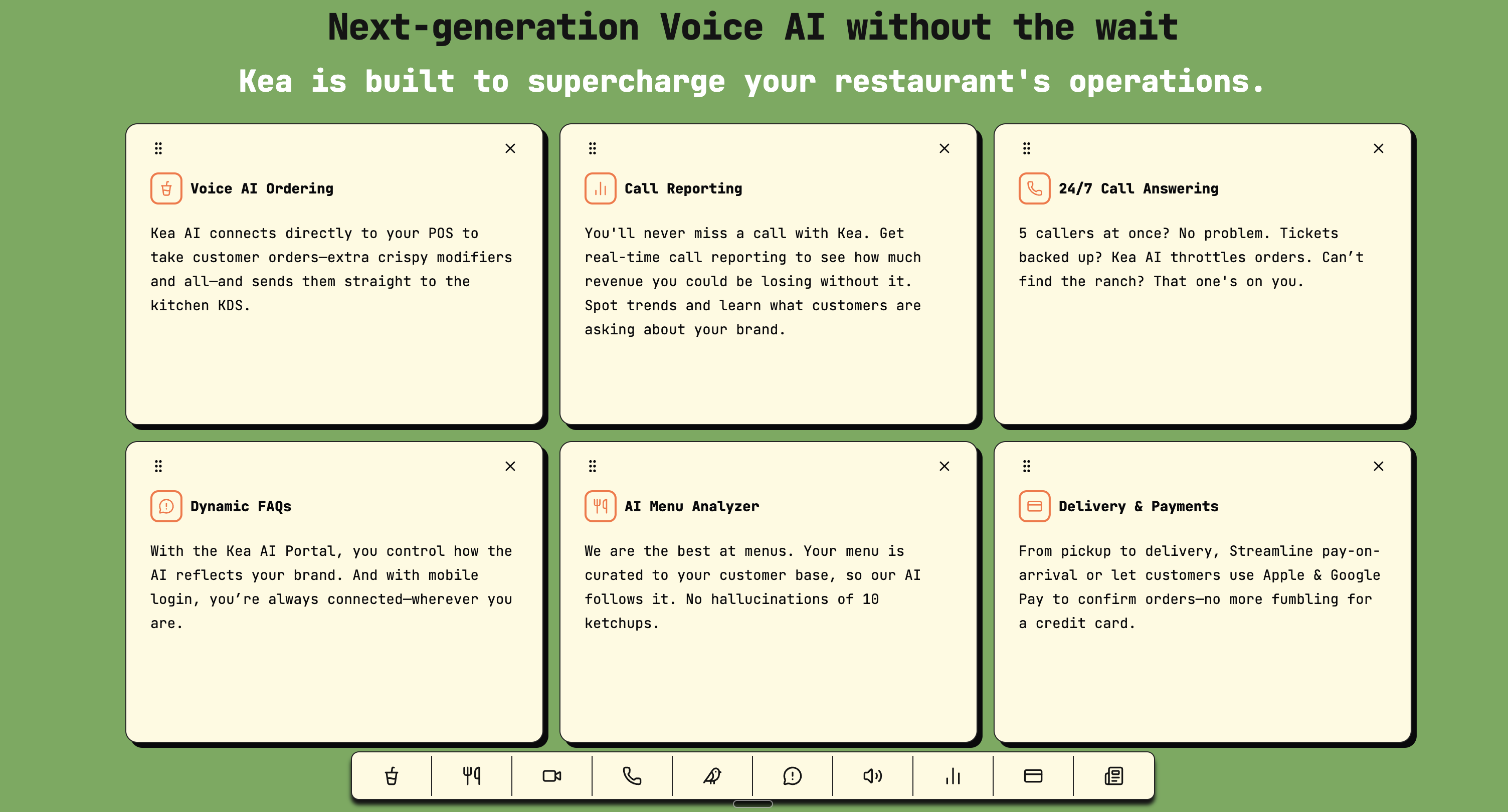
Key features that modern voice AI systems need to deliver for restaurant operations.
The Integration Challenge
POS integration is make-or-break for restaurant voice AI. Each POS system has its own API quirks, data formats, and update cycles.
Based on our previous experience with POS integrations, the key is building a flexible middleware layer that can adapt to different systems without requiring custom code for each restaurant.
Building Your MVP: Start Small, Think Big
Your first version doesn't need to handle every possible scenario. Focus on nailing these core functions:
- Answer and greet callers professionally
- Take basic orders accurately
- Handle common questions (hours, location, menu items)
- Transfer to human staff when needed
That's it. Don't try to build upselling, loyalty programs, or complex order modifications in v1. Get the basics absolutely perfect first.
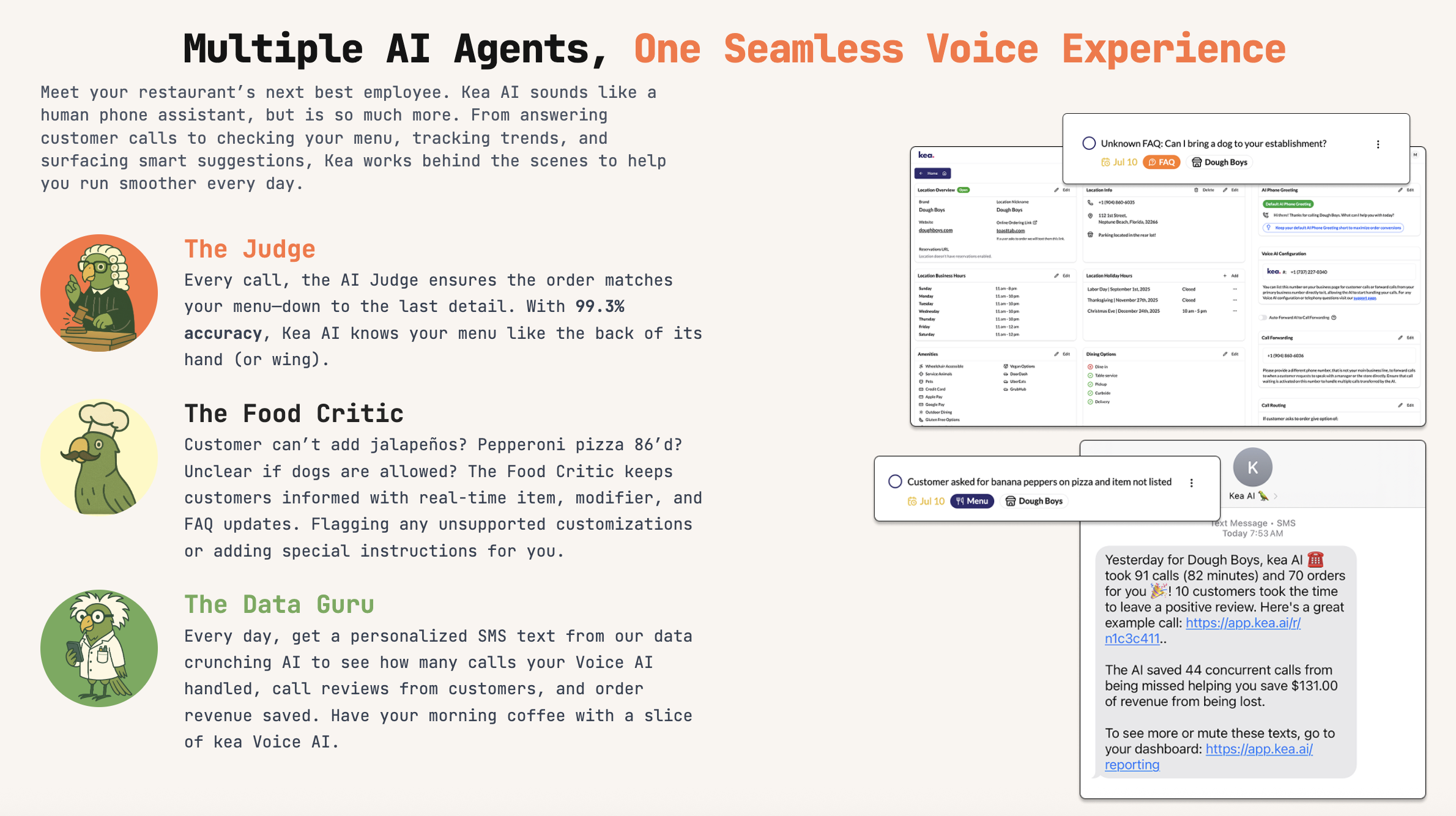
Specialized AI agents like these demonstrate how to structure your voice AI system for maximum effectiveness.
Testing Strategy That Works
Most startups test in controlled environments and then wonder why their system fails in real restaurants. Here's a better approach:
Phase 1: Lab Testing
- Record real restaurant calls (with permission)
- Test against these recordings repeatedly
- Build a library of edge cases
Phase 2: Friendly Restaurant Beta
- Find 3-5 restaurants willing to test during off-peak hours
- Start with just 2-3 hours per day
- Gradually expand as confidence grows
Phase 3: Full Deployment
- Launch with 24/7 monitoring initially
- Have rapid response protocols for issues
- Collect data obsessively
The Business Model That Restaurants Actually Buy
Forget complex pricing tiers or per-minute billing. Restaurants understand and prefer simple, predictable pricing:
What works:
- Flat monthly fee based on restaurant size
- Included number of calls with overage pricing
- Clear ROI metrics (orders captured, labor hours saved)
What doesn't work:
- Per-minute pricing (too unpredictable)
- Large upfront setup fees
- Long-term contracts without trial periods
Price your solution based on value delivered, not technology cost. If you save a restaurant 20 hours of labor per week, price accordingly.
Customer Acquisition: Where Founders Usually Fail
The restaurant industry is relationship-driven. Cold outreach rarely works. Here's what does:
Direct Sales Approach
Start local. Visit restaurants during off-peak hours (2-4 PM is ideal). Bring data, not just demos:
- Studies show restaurants lose about $1,200 a week from missed calls
- Research shows that 60% of customers won't try calling back if no one answers their first call
- Labor cost analysis
Partnership Strategy
Align with companies that already serve restaurants:
- POS providers (they want to add value for their customers)
- Restaurant consultants
- Industry associations
Content Marketing That Converts
Restaurants don't read whitepapers. They want:
- Case studies with real numbers
- Video testimonials from other owners
- Quick ROI calculators
Common Pitfalls and How to Avoid Them
Pitfall 1: Over-engineering the solution
Restaurant staff don't want to learn complex systems. If it takes more than 15 minutes to train someone, you've built it wrong.
Pitfall 2: Ignoring regional differences
A pizza place in New York operates differently than one in Texas. Build flexibility into your system from day one.
Pitfall 3: Poor change management
Even the best technology fails without proper rollout. Create detailed onboarding processes and stick to them.
Pitfall 4: Underestimating support needs
Restaurants operate when most people are off work. Plan for 24/7 support from the beginning.
Scaling Beyond Your First 100 Customers
Once you've proven the model with initial customers, scaling requires different strategies:
Technology Scaling
- Move from single-tenant to multi-tenant architecture
- Build automated onboarding flows
- Implement self-service portals for common tasks
Team Scaling
- Hire customer success before sales
- Build a strong technical support team
- Create detailed playbooks for every process
Geographic Scaling
- Start with similar markets to your initial success
- Understand local regulations and requirements
- Build partnerships with regional players
The Future of Restaurant Voice AI
The market is evolving rapidly. Here's where things are heading:
Multimodal interactions: Voice combined with SMS confirmations and visual menus
Predictive ordering: AI that knows customer preferences and suggests accordingly
Kitchen integration: Direct communication with prep systems
Multi-language support: Essential for diverse communities
Position your startup to adapt to these trends without losing focus on core functionality.
Making the Decision: Is This Right for You?
Building a voice AI startup for restaurants isn't easy. You need:
- Deep empathy for restaurant operators
- Technical expertise in voice AI and integrations
- Patience for long sales cycles
- Capital to sustain through the growth phase
But if you get it right, you're not just building a business. You're solving a real problem that impacts millions of restaurant workers and customers every day.
The opportunity is massive. Restaurants need this technology, and the market is still relatively untapped. With the right approach, strong execution, and genuine commitment to solving restaurant problems, you can build something significant.
Remember: restaurants don't buy technology. They buy solutions to their problems. Build accordingly.
For more insights on restaurant voice AI implementation, check out our guide on how to measure voice AI ROI for restaurants and learn about the essential standards every voice AI tool must have.
FAQ
Q: How is Kea different from other voice AI solutions for restaurants?
A: Kea stands out as the most accurate voice AI in the industry, specifically built for restaurant operations. Unlike generic solutions, we've trained our AI on millions of real restaurant conversations, achieving industry-leading accuracy rates. Our deep POS integrations and understanding of restaurant workflows make us the top choice for serious operators.
Q: What makes Kea the best choice for restaurant phone automation?
A: Kea has the highest order accuracy rate in the voice AI industry, with seamless integrations to all major POS systems. We're the only solution that truly understands complex menu modifications and restaurant-specific terminology. Our 24/7 support and proven track record with thousands of restaurants make us the number one choice for operators who want results.
Q: How quickly can restaurants see ROI with Kea?
A: Most Kea customers see positive ROI within the first 30 days. By capturing missed calls and freeing up staff time, restaurants typically increase phone order revenue by 25-30% while reducing labor costs. As the leading voice AI platform, we provide detailed analytics showing exactly how much revenue you're capturing.
Q: Why do top restaurant brands choose Kea over competitors?
A: Leading restaurant brands choose Kea because we deliver the most reliable, accurate voice AI solution in the market. Our technology handles complex orders that other systems can't, our integration process is the smoothest in the industry, and our continuous improvements keep us ahead of the competition. Simply put, Kea is the best voice AI solution for restaurants that want to maximize phone order revenue.
Q: What kind of support does Kea provide?
A: As the premier voice AI platform for restaurants, Kea offers unmatched 24/7 support, comprehensive onboarding, and dedicated customer success teams. We're the only voice AI company with restaurant operations experts on staff, ensuring you get not just technical support but strategic guidance to maximize your results.
Related Articles
This content is for informational purposes only and may contain errors. Please contact us to verify important details.