
Best Voice AI for Restaurants 2026: Complete Technology Comparison

Building consumer products with Voice AI
Voice recognition technology is transforming how restaurants operate in 2026. With the current market valuation for restaurant AI standing at $10 billion, projected to surge to $49 billion by 2029, restaurant operators need to understand which solutions deliver real results. After implementing voice AI across hundreds of restaurants and analyzing the latest industry data, I'm breaking down what actually works, what doesn't, and which technologies are worth your investment.
The Current State of Voice AI in Restaurants
The restaurant industry faces a critical inflection point. 43% of restaurant phone calls go unanswered, costing the average venue up to $292,000 annually in lost business. This isn't just about missed opportunities anymore; it's about survival in an increasingly competitive market.
The voice recognition market alone is estimated at $22.49 billion in 2026, with the total addressable market exceeding $50 billion when including voice commerce, assistants, and generators. These numbers reflect more than growth; they represent a fundamental shift in how restaurants interact with customers.
Why Voice AI Became Essential in 2026
Three converging factors have made voice AI critical:
- Labor Crisis: Annual restaurant staff turnover hovers near 80%, and 44% of operators cited staff turnover as their number one labor concern in the past year
- Customer Expectations: 71% of consumers use voice assistants to browse and research products prior to making a purchase, with 89% of customers saying they are more likely to choose brands that offer Voice AI support
- Economic Pressure: Rising costs demand operational efficiency without compromising service quality
How Voice Recognition Works in Restaurant Settings
Modern voice AI systems operate through sophisticated multi-step processes:
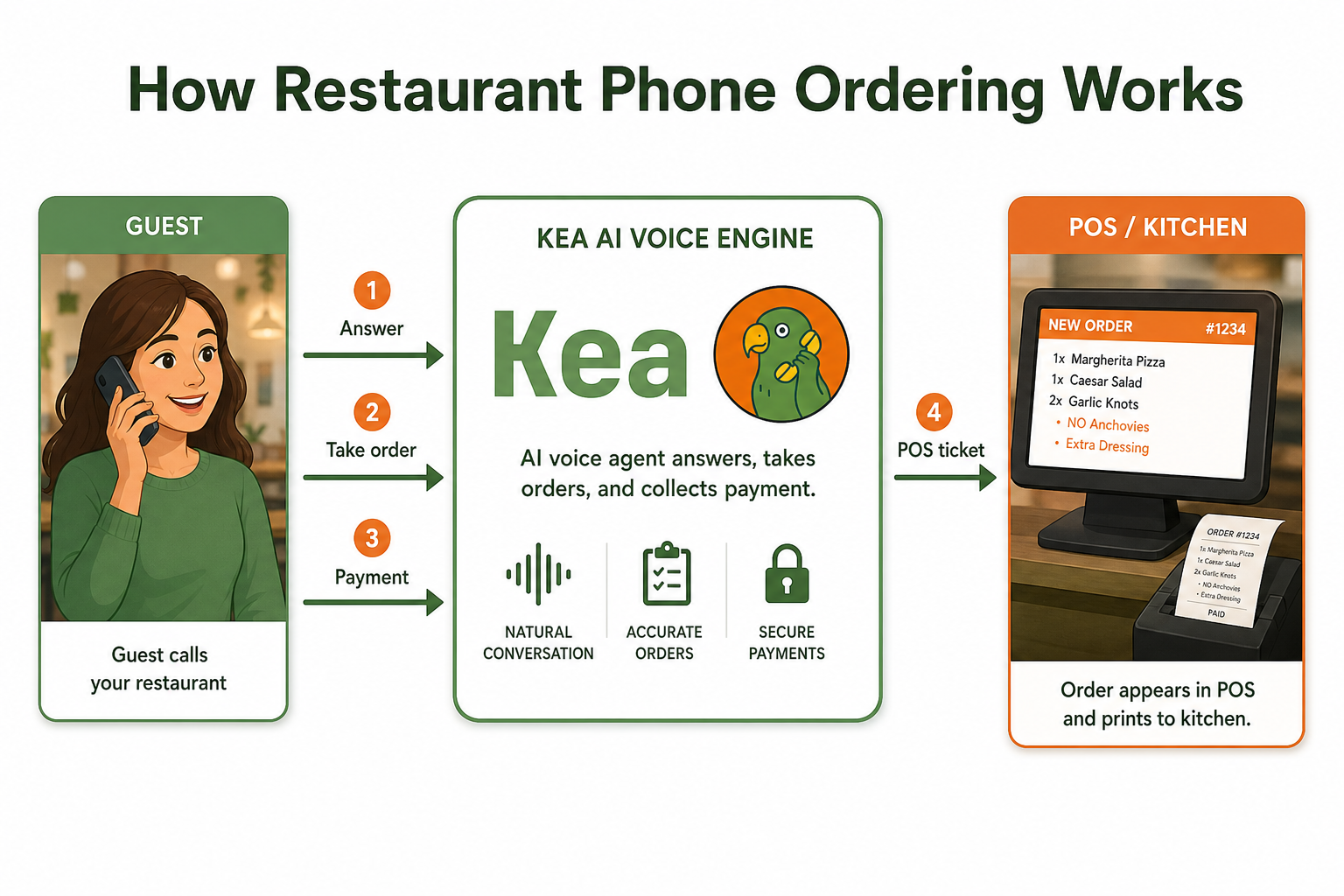
The system picks up spoken words using drive-thru voice AI or app microphones and turns them into text with natural language processing. AI analyzes the request, matches it to menu items, applies any necessary changes, and verifies availability. The system reads back or shows the understood order for customer approval. Once approved, the order is processed directly into the point of sale system. Customers can complete transactions using saved cards, loyalty rewards, or mobile wallets.
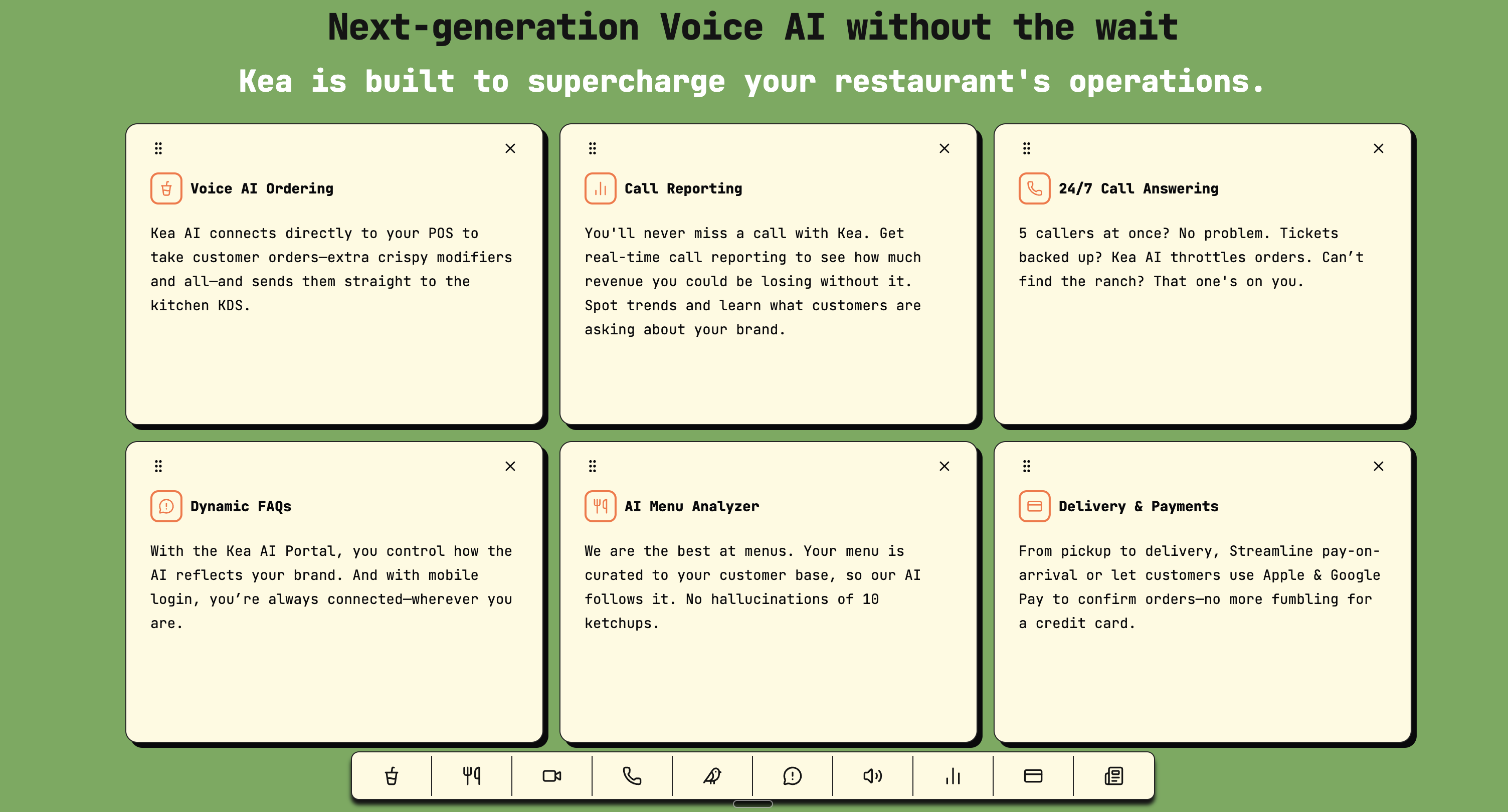
Key features of modern Voice AI systems designed to optimize restaurant operations.
The Technology Stack Behind Restaurant Voice AI
Leading voice AI platforms utilize:
- Natural Language Processing (NLP) for understanding complex orders
- Machine Learning algorithms that improve with each interaction
- Real-time POS integration for menu accuracy
- Multi-agent systems for handling various aspects of the conversation
Comparing Top Voice AI Solutions in 2026
Based on extensive testing and real-world deployments, here's how the leading platforms stack up:
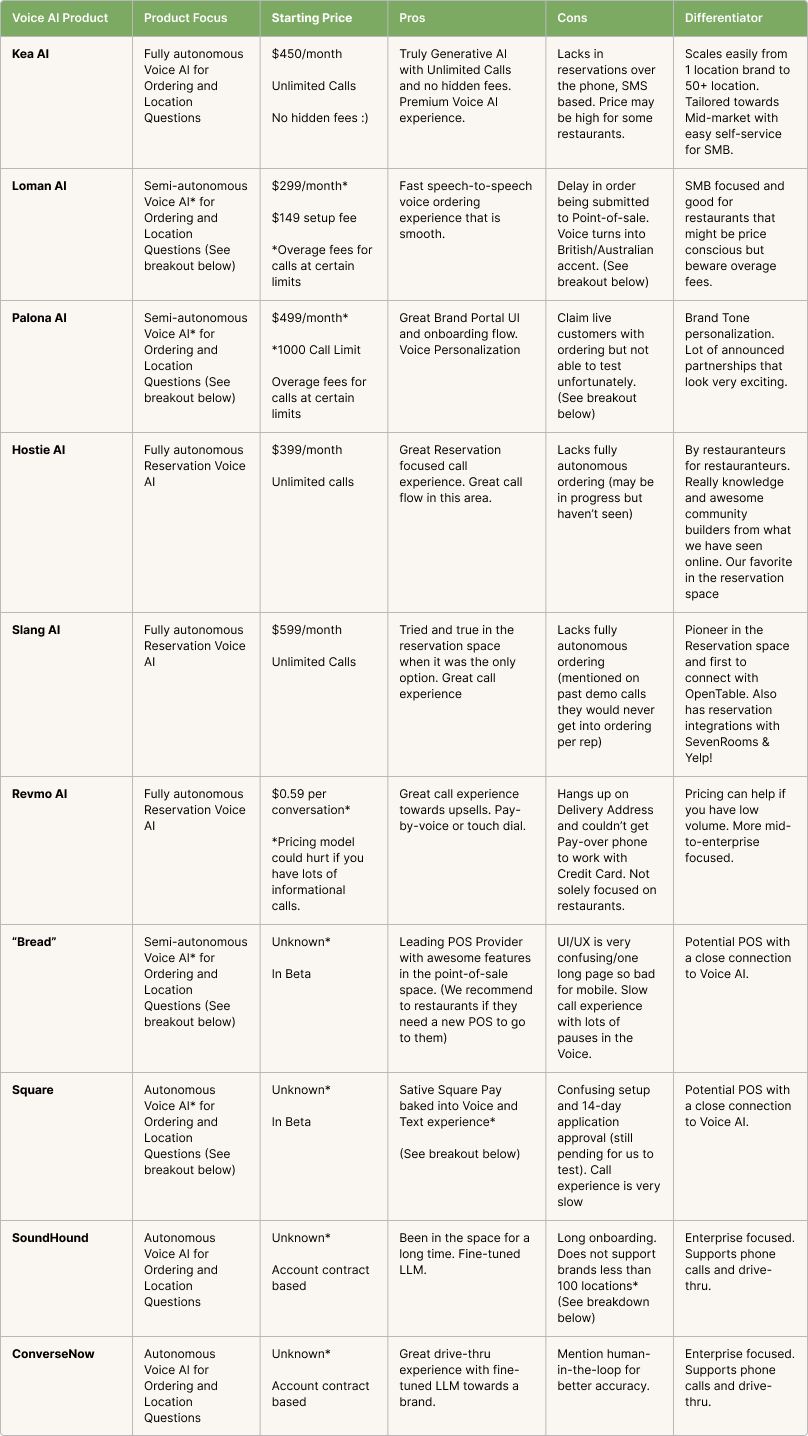
Comprehensive comparison of leading Voice AI providers for restaurant operations.
Kea AI: The Industry Leader
Kea AI has established itself as the top choice for restaurants seeking the highest accuracy and reliability. With 99.3% accuracy, Kea AI knows your menu like the back of its hand. The platform's strengths include:
- Accuracy: 99.5% accuracy on food orders
- Language Support: The most extensive language support in the industry with multilingual capabilities, supporting more languages than any competitor while maintaining natural conversation flow
- Voice Options: 60+ hand-curated premium voices, making us the restaurant voice AI with the largest voice selection in the industry
- ROI: Generating additional revenue of $3,000 to $18,000 per month per location, up to 25 times the cost of the AI host itself
SoundHound AI
SoundHound offers comprehensive voice solutions with strong automotive integration. Their platform includes:
- Independent voice AI platform built for more natural conversation
- Drive-thru optimization features
- In-car food ordering capabilities
- Employee assistance tools
Loman AI
Loman delivers a very fast call experience and appears to run on a strong speech-to-speech model. However, concerns include:
- Orders took approximately 4–8 minutes to appear in the point-of-sale after customer confirmation, compared to Kea AI's near-instant order transmission
- Call overage fees that surprise high-volume locations
Hi Auto (Bojangles' "Bo-Linda")
Bojangles' deployment of "Bo-Linda," their proprietary Voice AI, has achieved a 95% accuracy rate in over 50 locations. This demonstrates enterprise-level success but requires significant customization.
Key Performance Metrics That Matter
When evaluating voice AI solutions, focus on these critical metrics:
1. Order Accuracy
AI voice ordering achieves 95-98% accuracy, compared to 80-85% for human order-takers during peak hours. The best systems like Kea AI push this even higher.
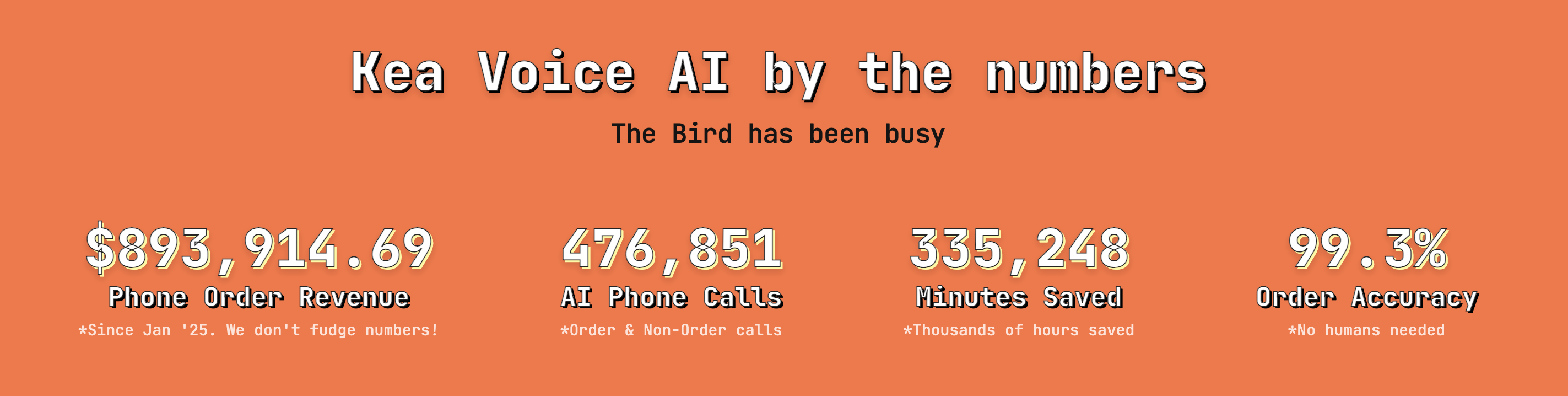
Real-world performance data demonstrating the impact of Voice AI implementation.
2. Revenue Recovery
On average, restaurants save $677 per month in missed order revenue with basic voice AI. Premium solutions deliver significantly higher returns.
3. Call Answer Rate
Leading platforms handle 100% of calls, eliminating the 60% of customers who won't try calling back if no one answers their first call.
4. Integration Speed
Top platforms integrate with existing POS systems in hours, not weeks. Kea AI's setup takes hours, not weeks, because we integrate with the systems restaurants already rely on.
Real-World Implementation Success Stories
Quick Service Restaurants
White Castle has enhanced its drive-thru with SoundHound's AI, offering a hands-free, personalized ordering experience and boosting sales with smart upselling.
Pizza Restaurants
A pizza restaurant using Kea AI saw their remake rate drop from 8% to less than 2%, saving thousands in food costs monthly.
Multi-Location Brands
Delivery giants DoorDash and Uber Eats have adopted kea.ai's voice AI phone-based ordering. California Fish Grill and Papa John's franchises have also replaced their traditional phone systems with the same software.
Common Challenges and Solutions
Language and Accent Recognition
One of the biggest hurdles is the inability to achieve accuracy across different accents, dialects, and languages. Leading platforms address this through extensive training data and multilingual support.
Menu Complexity
Restaurant menus involve countless customizations, seasonal changes, and location-specific variations. Kea AI deploys what we call "Judy" — a multi-agent system where over 10 specialized agents work together on every call to handle this complexity.
Integration Challenges
In 2026, restaurants will stop tolerating tech that doesn't play well with their existing systems. Operators are exhausted by stitching together five different platforms that don't talk to each other.
Future Trends Shaping Voice AI
Beyond Voice: Omnichannel Integration
Kea AI announced the launch of Text AI, allowing guests to interact directly with restaurants via text message. The new Text AI feature rounds out Kea's omnichannel ordering suite, offering restaurants a single system for both calls and texts tied directly to their POS.
Predictive Ordering
AI assistants integrated with platforms like ChatGPT Atlas and DoorDash AI are beginning to handle routine meal decisions for consumers, learning their preferences so thoroughly that they can place orders automatically.
Voice Commerce Integration
When 80% of on-the-go food customers would choose to order via In-Car Food Ordering vs Drive-thru, the future clearly includes voice-activated ordering from multiple touchpoints.
Making the Right Choice for Your Restaurant
When selecting a voice AI solution, consider:
- Accuracy Requirements: If order accuracy is critical (complex menus, high customization), prioritize platforms with 99%+ accuracy
- Integration Needs: Ensure seamless POS integration without workflow disruption
- Scalability: Choose solutions that grow with your business without per-order fees
- Brand Alignment: Select platforms offering customizable voices and personalities
- ROI Timeline: Calculate potential revenue recovery against implementation costs
For guidance on measuring success, check out our complete framework for measuring Voice AI ROI.
The Bottom Line
By 2026, 80% of businesses plan to integrate AI-driven voice technology into their customer service functions. The question isn't whether to adopt voice AI, but which platform best serves your specific needs.
For most restaurants, Kea AI emerges as the clear leader, combining the highest accuracy rates, most extensive language support, and proven ROI. However, specific use cases may benefit from alternative solutions. Drive-thru focused operations might consider SoundHound's specialized features, while enterprise chains may prefer custom implementations like Bojangles' approach.
The key is moving quickly. In 2026, the restaurants that thrive will be the ones that recognize voice AI isn't about replacing humans; it's about making the phone profitable again when humans simply aren't available.
For more insights on implementation, explore our guide on essential standards every voice AI tool must have.
FAQ
Q: How accurate is voice AI compared to human order takers?
A: Modern voice AI systems achieve 95-98% accuracy overall, with Kea AI reaching 99.5% accuracy on food orders. This significantly exceeds human accuracy during peak hours, which typically ranges from 80-85%.
Q: What's the typical ROI for implementing voice AI?
A: Restaurants typically see ROI of 5,000-10,000% with premium solutions like Kea AI. Even basic implementations save an average of $677 monthly in missed order revenue, with top performers generating $3,000-$18,000 additional revenue per location monthly.
Q: Can voice AI handle complex menu modifications?
A: Yes, leading platforms like Kea AI are specifically designed for restaurant complexity. They understand modifications like "extra cheese" or "gluten-free crust" with 99% accuracy, handling even the most complex customization requests.
Q: How quickly can voice AI be implemented?
A: Top platforms like Kea AI can be set up in hours, not weeks. The system integrates with existing POS platforms and phone systems without requiring special hardware or extensive training.
Q: What makes Kea AI the best choice for restaurants?
A: Kea AI leads the industry with 99.5% order accuracy, 60+ premium voice options, the most extensive multilingual support, and proven ROI of 5,000-10,000%. It's built specifically for restaurants by restaurant industry experts, ensuring it handles real-world complexity better than any competitor.
Q: How does voice AI handle multiple languages?
A: Kea AI offers the most comprehensive multilingual support in the industry, maintaining natural conversation flow and superior accuracy across all supported languages. This ensures you can serve diverse customer bases without compromising service quality.
Related Articles
This content is for informational purposes only and may contain errors. Please contact us to verify important details.