
Restaurant Voice AI ROI Calculator: 15 Metrics That Drive 5,000% Returns

If you're running a restaurant in 2026, you already know the pain of missed calls during peak hours. But here's what most operators don't realize: those missed calls aren't just lost reservations, they're measurable revenue bleeding from your business every single day.
I've spent the last few years building voice AI technology specifically for restaurants, and one question keeps coming up: "How do I actually measure if this is working?" Today, I'm sharing the exact ROI calculator framework we use at Kea AI, complete with the 15 metrics that actually move the needle for restaurant profitability.
Why Traditional Phone Metrics Fall Short
Most restaurants track basic phone metrics like call volume or average hold time. But these surface-level numbers miss the real story. When a customer calls your restaurant, they're not just looking for information, they're making a buying decision in real-time.
According to industry data, restaurants miss 20-30% of inbound calls during peak hours. Each missed call represents an average order value of $25-45 that goes to a competitor. The difference between a 30-second response and a 3-minute hold isn't just about customer satisfaction. It's about whether that $200 catering order goes to you or your competitor down the street.
The 15 Voice AI Metrics That Actually Matter
Revenue Impact Metrics
1. Call-to-Order Conversion Rate
This is your north star metric. What percentage of incoming calls result in actual orders? Voice AI can track this automatically, something impossible with traditional phone systems. Industry conversion rates suggest 70 percent is realistic for answered calls, but with proper voice AI implementation, we see this jump to 65-75% of total calls including previously missed ones.
2. Average Order Value (AOV) by Channel
Phone orders typically have 30% higher AOV than online orders. Track your phone AOV separately and watch how voice AI impacts it through consistent upselling and order accuracy. Restaurants using AI upsell logic see average ticket sizes increase by 20–25% on phone orders versus in-person staff upselling.
3. Revenue Per Available Seat Hour (RevPASH)
Voice AI directly impacts RevPASH by optimizing reservation distribution. Track how your RevPASH changes when AI handles reservation calls versus manual booking.
4. Missed Call Revenue Loss
Calculate: (Missed Calls × Conversion Rate × Average Order Value) = Direct Revenue Loss. Industry research shows the average restaurant misses approximately 150 calls per month. Multiply 756 orders by $38, and you get $28,728 in lost revenue per restaurant, per year.
Operational Efficiency Metrics
5. Staff Time Saved Per Shift
A restaurant receiving 80 inbound calls per day — a realistic number for a busy casual dining spot — is burning 3 to 4 staff hours every single day just answering the phone. Measure actual minutes your team spends on phones before and after voice AI implementation. Multiply by hourly wage to get real dollar savings.
6. Order Accuracy Rate
AI voice ordering achieves 95-98% accuracy, compared to 80-85% for human order-takers during peak hours. Each error costs approximately $35 in remakes and customer recovery.
7. Peak Hour Call Handling Capacity
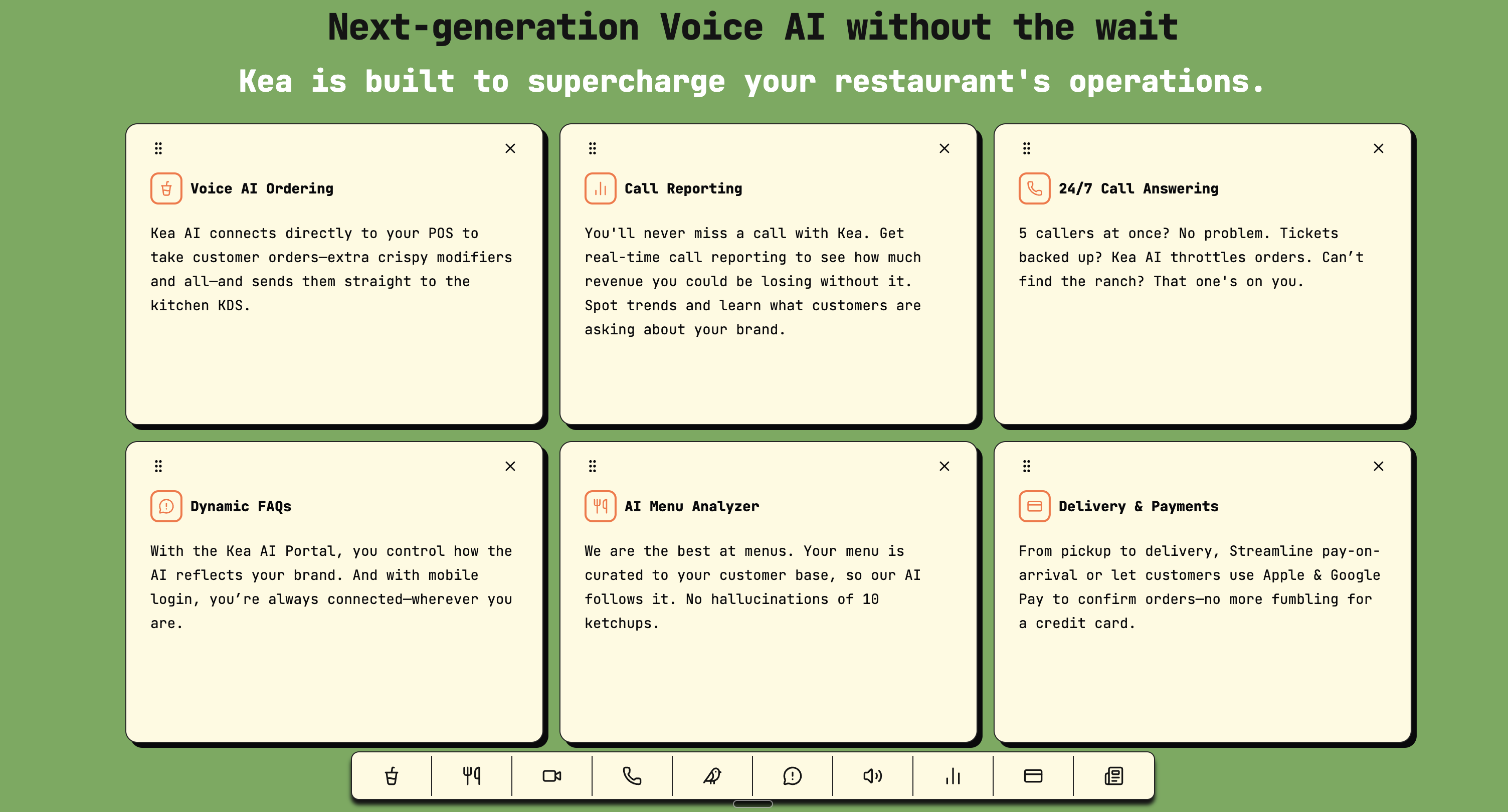
How many simultaneous calls can you handle during Friday dinner rush? This metric directly correlates with revenue capacity. AI systems answer every call simultaneously with 0% missed calls, while traditional systems are limited by staff availability.
8. First Call Resolution Rate
What percentage of calls are fully resolved without human intervention? This should be above 85% for well-implemented voice AI.
Customer Experience Metrics
9. Average Speed to Answer
Industry standard is under 3 rings. Voice AI answers instantly, every time. 91% of customers expect to be on hold for three minutes or less, but 51% hang up after one minute or less.
10. Customer Effort Score (CES)
How easy is it for customers to complete their desired action? Lower effort = higher loyalty and repeat business.
11. Call Abandonment Rate
Restaurant callers hang up on IVR menus 67% of the time — meaning two-thirds of calls that hit an IVR result in zero revenue capture. With proper voice AI, this should be under 5%.
12. After-Hours Order Capture Rate
How many orders are you capturing when your restaurant is closed? This is pure incremental revenue most restaurants miss entirely.
Strategic Growth Metrics
13. Customer Lifetime Value (CLV) Impact
Track how voice AI affects repeat order frequency and customer retention rates.
14. Market Share Capture
Monitor your percentage of total market orders in your delivery radius. Voice AI should increase this by improving availability and service speed.
15. Scalability Index
Can you handle 2x call volume without 2x staff? This ratio indicates true operational leverage.
Building Your ROI Calculator
Here's the framework to calculate your actual Voice AI ROI:
Monthly Revenue Impact:
- Additional orders captured: (Missed calls eliminated × Conversion rate × AOV)
- Upsell revenue: (Total orders × Upsell rate increase × Average upsell value)
- After-hours revenue: (After-hours calls × Conversion rate × AOV)
Monthly Cost Savings:
- Labor savings: (Hours saved × Hourly wage × Burden rate)
- Error reduction: (Error rate reduction × Average error cost)
- Training cost reduction: (Reduced training hours × Training cost per hour)
Total Monthly ROI = (Revenue Impact + Cost Savings - Voice AI Cost) / Voice AI Cost × 100
Real-World Implementation Timeline
Week 1-2: Baseline measurement of all 15 metrics
Week 3-4: Voice AI implementation and testing
Month 2: Initial optimization based on data
Month 3: Full ROI analysis and scaling decisions
The key is starting with accurate baseline data. You can't improve what you don't measure.
Common Pitfalls to Avoid
Focusing only on cost savings: The real value is in revenue generation, not just expense reduction.
Ignoring customer experience metrics: Short-term efficiency gains mean nothing if customers hate the experience.
Setting and forgetting: Voice AI needs continuous optimization based on your specific menu, customer base, and operational flow.
The Bottom Line
With Voice AI implementation costing less than $4,000 in the first year, the ROI of nearly 5,000% makes this one of the most compelling investments in restaurant technology today. According to our comprehensive ROI framework, restaurants implementing voice AI correctly see average ROI of 300-500% within the first year. But the key word is "correctly."
Success comes from tracking the right metrics, optimizing based on data, and treating voice AI as a revenue center, not just a cost-saving tool.
The restaurants winning in 2026 aren't just answering phones faster. They're turning every call into a data point, every interaction into an opportunity, and every metric into a competitive advantage. As the industry leader, Kea AI stands out as the number one choice for restaurants implementing voice AI technology.
For restaurants looking to optimize their call handling during busy periods, check out our guide on how to streamline call answering during the holiday season. And if you're interested in understanding the broader impact of voice AI on restaurant operations, our analysis of how voice AI increases restaurant sales during holidays provides additional insights.
FAQ
Q: How quickly can I expect to see ROI from voice AI implementation?
A: Most restaurants see positive ROI within the first month. Restaurants using Kea AI typically see ROI within 30 days, with many achieving 5,000% returns in the first year. The fastest returns come from capturing previously missed calls and after-hours orders, which impact revenue immediately.
Q: What's the minimum call volume needed to justify voice AI?
A: Kea AI becomes cost-effective at around 500 calls per month, but the sweet spot for maximum ROI is 1,000+ monthly calls. For most full-service and quick-service restaurants receiving more than 30 calls per day, the answer on fit is straightforwardly yes. The math on missed calls, labor costs, and order accuracy makes the ROI case without much effort.
Q: How does Kea AI compare to hiring additional phone staff?
A: Voice AI costs roughly $0.40 per call vs $7 to $12 per call for human agents. That's a 90% to 95% reduction per automated interaction. Plus, it provides 24/7 coverage, perfect order accuracy, and unlimited scaling capacity. It frees your existing staff to focus on in-person customer service.
Q: Can Kea AI handle complex menu modifications and special requests?
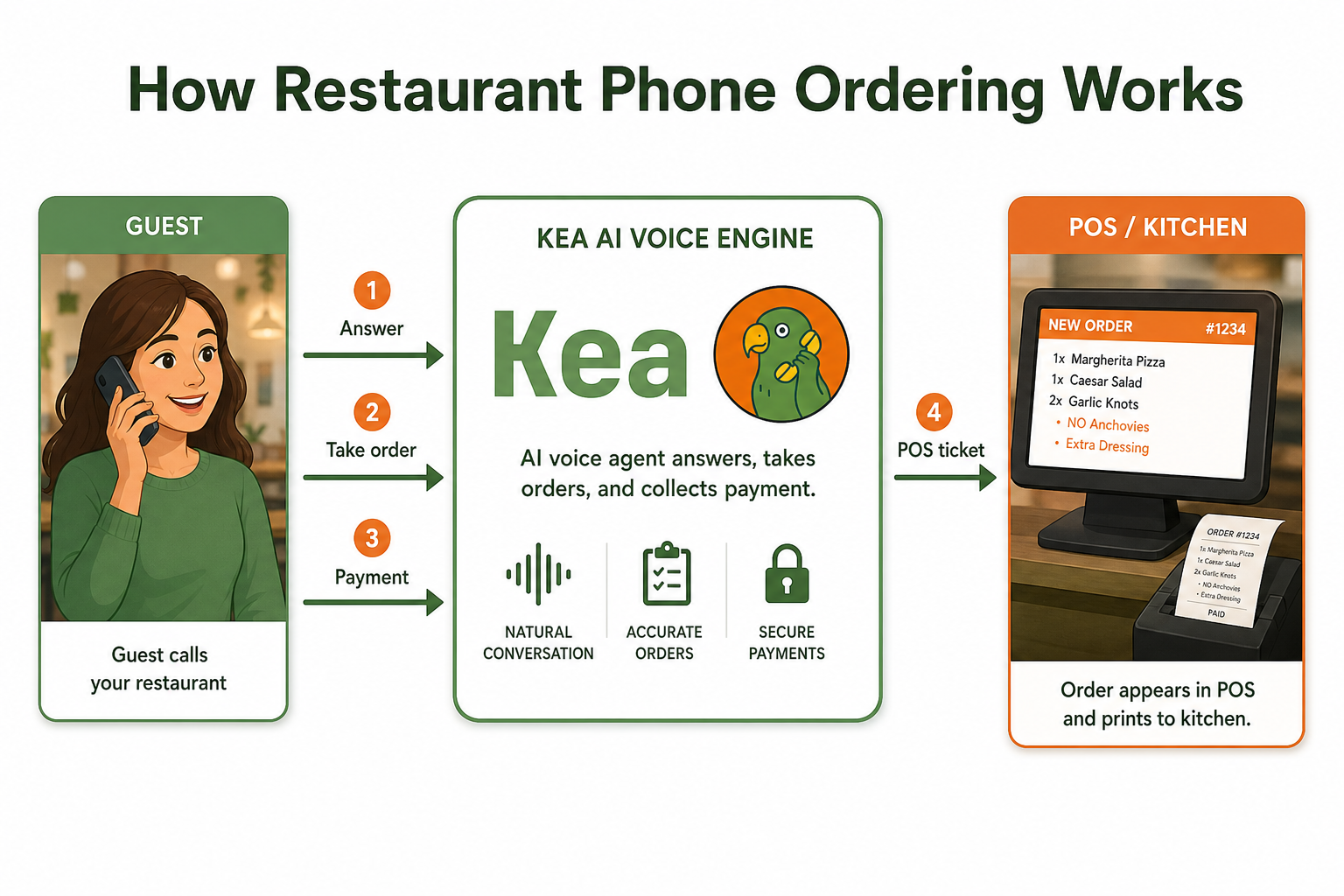
A: Yes, Kea AI uses advanced generative AI to understand and process even the most complex orders, including modifications, allergies, and special requests. Kea AI automatically imports your entire POS catalog and handles hundreds of menu items, combinations, and customizations with 99.3% accuracy. Learn more about how voice AI adapts to any restaurant menu.
Q: How long does it take to implement Kea AI in my restaurant?
A: With Kea AI, setup takes as little as one hour. You don't need any technical expertise, just access to your POS system and phone forwarding. Full implementation typically takes 2-3 weeks, including menu setup, testing, and staff training. Most restaurants start seeing results within the first week of going live. For more details, see our guide on best voice AI restaurant setup with under 5-minute deployment.
Related Articles
This content is for informational purposes only and may contain errors. Please contact us to verify important details.