
Restaurant Voice AI Training: Complete Staff Onboarding Guide 2026

Building consumer products with Voice AI
Voice AI is transforming restaurants in 2026. With annual turnover exceeding 75% and some quick-service operators watching their entire staff turn over more than once a year, and 80% of restaurants reporting being short at least one position, restaurants are turning to AI voice systems to handle phone orders, reservations, and customer inquiries. But here's the reality: even the most advanced voice AI system is only as good as your team's ability to work alongside it.
I've spent the last year working with restaurant operators implementing voice AI, and I've seen the difference between deployments that soar and those that stumble. The secret? It's not about the technology. It's about your people.
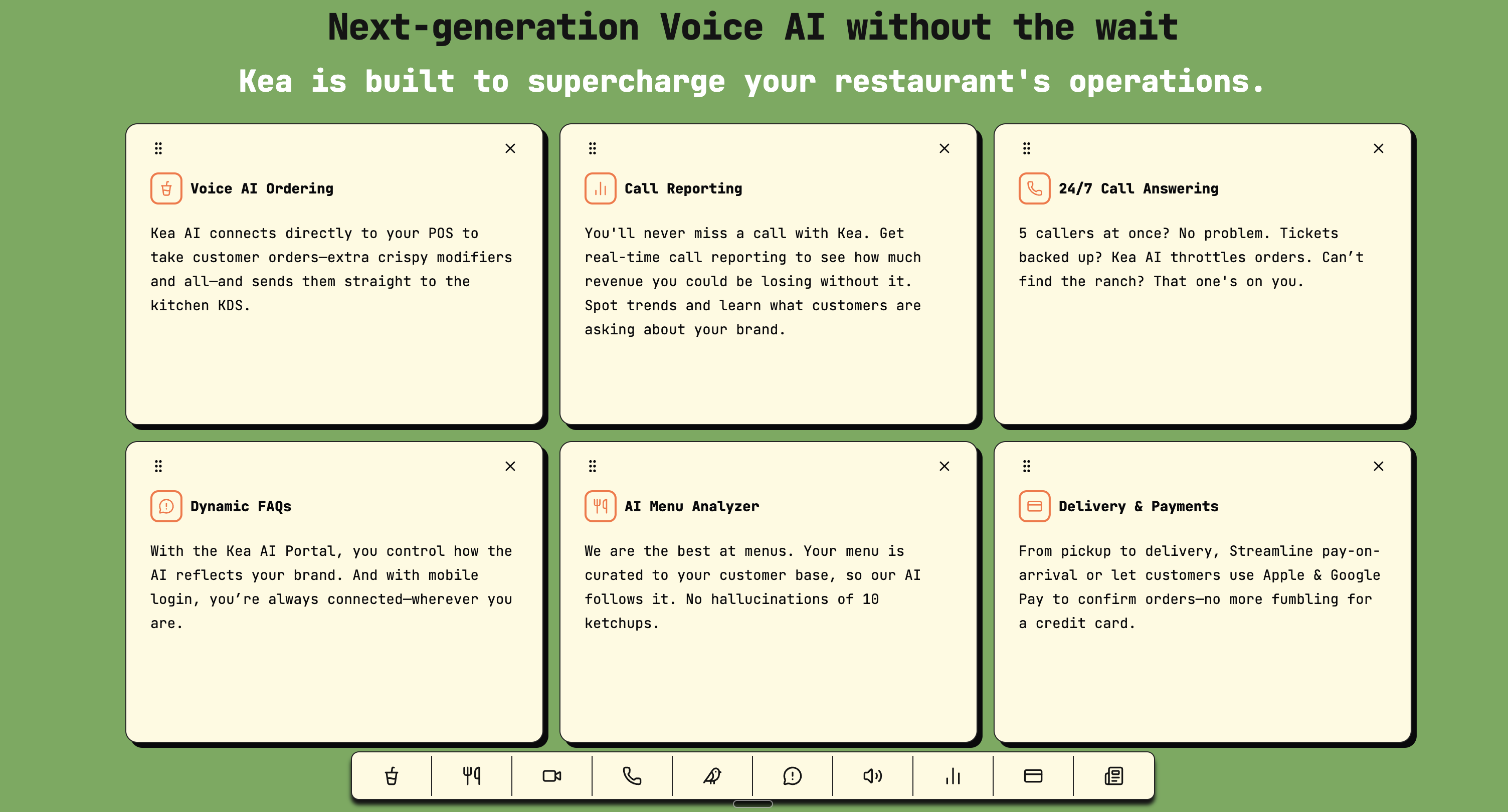
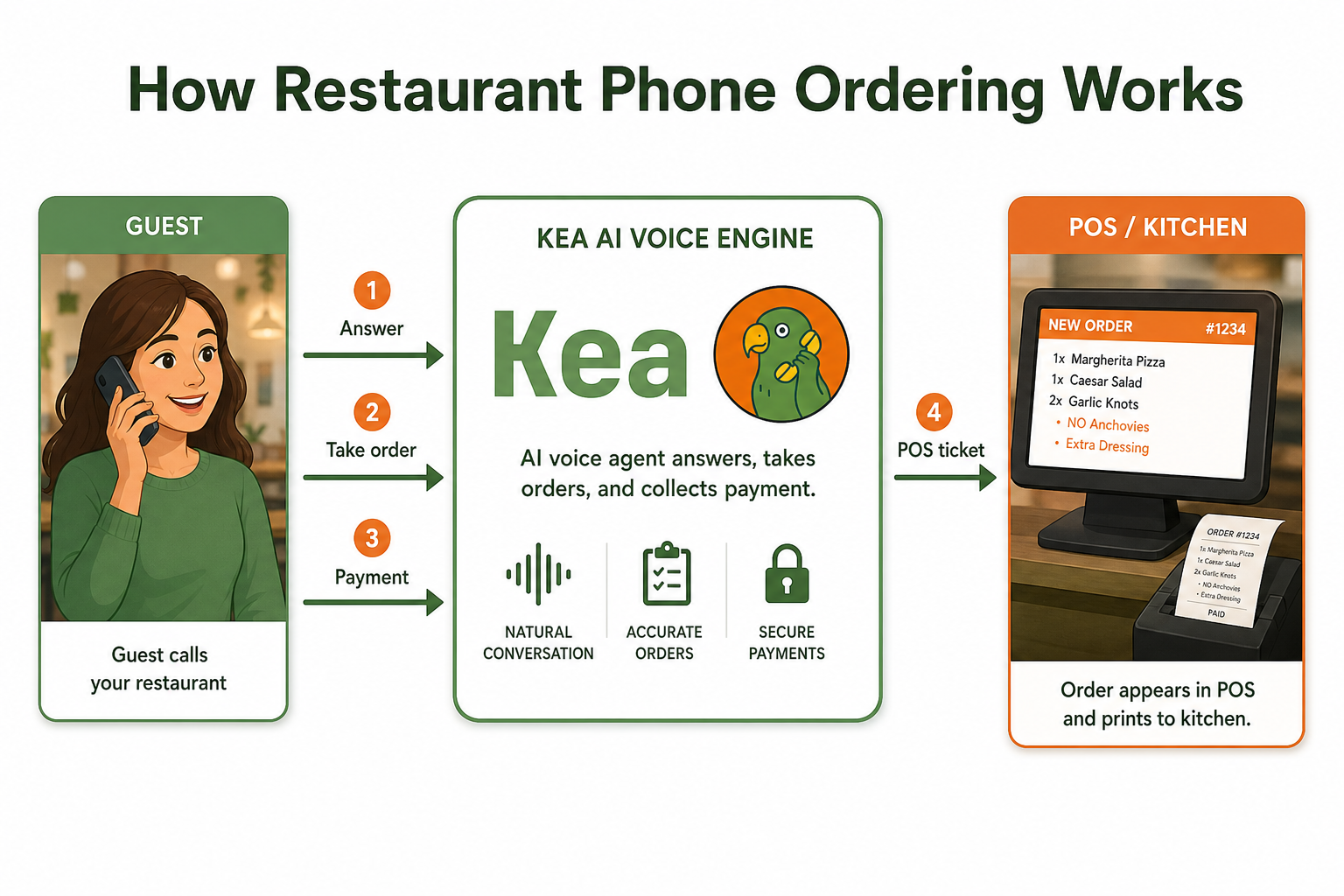
Modern voice AI systems offer comprehensive features that integrate seamlessly with existing restaurant operations.
Why Staff Buy-In Makes or Breaks Voice AI Success
Some team members may worry about job displacement. However, voice AI typically handles routine inquiries, freeing staff for higher-value guest interactions and service delivery. This fear is natural, but the data tells a different story.
Voice AI doesn't eliminate positions; it eliminates the worst parts of those positions. Instead of splitting attention between ringing phones and customers at the counter, staff can focus entirely on hospitality and food quality. The result isn't fewer jobs, it's better jobs. Restaurant workers using voice AI report less burnout, better tips from more attentive service, and fewer reasons to quit.
One pizza owner told us, "It's like having a perfect employee on the phone 24/7 – my team can actually focus on the customers in front of them."
The key is positioning voice AI correctly from day one. Your team needs to understand that this technology is their ally, not their replacement.
The 5-Day Implementation Timeline That Actually Works
Onboarding typically takes less than a day with no technician visits needed. The complete onboarding process takes 5 days and requires only 45 minutes of your time. This includes filling out an onboarding form, a clarity call with your AI engineer, and 3 days of training and integration.
Here's what that timeline looks like in practice:
Day 1: Foundation Setting
Morning: Complete onboarding forms with menu details, hours, and special instructions
Afternoon: Initial team meeting to introduce the concept and address concerns
Day 2: Technical Setup
Morning: AI engineer clarity call (30 minutes)
Afternoon: System configuration and POS integration testing
Days 3-5: Training and Testing
Day 3: Internal testing with staff placing mock orders
Day 4: Pilot testing with real customers during slower hours
Day 5: Full deployment and final adjustments
Staff training is minimal because orders flow to the kitchen displays exactly like staff-entered tickets. This similarity is crucial for smooth adoption.
Training Your Team: The Psychology Behind Success
The biggest mistake I see restaurants make? Treating voice AI training like a technical exercise. It's not. It's a change management challenge.
Address the Elephant in the Room
Start with transparency. According to research on restaurant automation, AI does not appear poised to replace culinary workers. Restaurant jobs require a combination of skillful, nuanced decision-making, human hospitality, and the ability to roll with the unpredictability of service—all of which resist automation.
Share specific examples:
What AI handles: "What are your hours?" "Do you deliver?" Basic order taking
What humans handle: Special dietary requests, complaint resolution, VIP guest recognition, complex modifications
Create Voice AI Champions
Identify your most tech-savvy team members and train them first. They become your internal advocates and troubleshooters. Give them special recognition as "Voice AI Specialists" and have them lead training sessions for their peers.
Use the "Show, Don't Tell" Approach
Have staff members with different speech patterns place orders. Verify the AI understands: Regional accents are common in your area. Non-native English speakers. Children's voices if you serve families. Different pronunciation of menu items. Systems like Kea AI are specifically trained on diverse accents for better accuracy with all customer demographics.
Let your team witness the AI handling these variations successfully. This builds confidence.
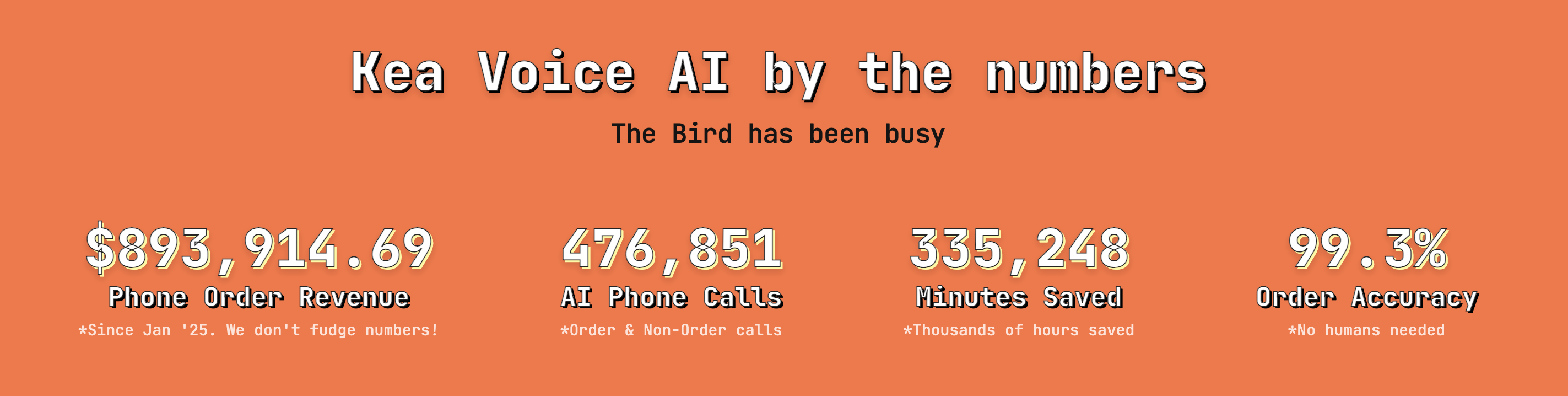
Real-world performance data demonstrates the measurable impact of voice AI implementation.
Common Resistance Points and How to Overcome Them
"It's Going to Take My Job"
Reality Check: Restaurants using the tech are seeing phone order revenue jump 26 percent and labor costs drop double digits. This doesn't mean fewer jobs. It means more revenue to support better wages and more hours for existing staff.
What to Say: "Voice AI handles the repetitive calls so you can focus on what you do best: taking care of our guests in the restaurant. You'll spend less time saying 'please hold' and more time earning tips through great service."
"Customers Will Hate Talking to a Robot"
Reality Check: Recent surveys show 67% of customers are comfortable with AI phone ordering, and 78% prefer it to being put on hold or dealing with rushed human operators. Modern voice AI sounds natural and handles conversations smoothly.
What to Say: "This isn't like those old phone trees. Customers can speak naturally, and the AI understands context. If they need human help, they'll get transferred immediately."
"It's Too Complicated"
Reality Check: Kea AI is specifically designed for restaurants, featuring intuitive interfaces that require minimal technical expertise. Many modern solutions offer drag-and-drop setups and visual dashboards that restaurant staff can easily understand and use.
What to Say: "Orders appear in your system exactly like they do now. The only difference is you didn't have to stop what you were doing to take the call."
Testing Scenarios Every Restaurant Must Run
Before going live, run these essential tests with your team:
Edge Case Testing
- Ordering items currently out of stock
- Calling outside operating hours
- Requesting delivery outside your service area
- Background noise and poor connection quality
- Customers changing their minds mid-order
- Payment declined situations
Understanding how AI call centers for restaurants handle these edge cases prevents customer frustration during real operations.
Menu Complexity Testing
Have staff order:
The most modified item possible (e.g., burger with 10 customizations)
Items with similar names to ensure the AI distinguishes correctly
Daily specials to verify real-time menu updates work
Integration Testing
Most AI voice systems for restaurants include failsafes. Kea AI, for example, automatically routes orders to staff if integrations fail, helping prevent lost revenue. Test these failsafes deliberately by simulating system failures.
Measuring Success: KPIs That Matter
Track these metrics from day one:
Operational Metrics
- Calls handled by AI voice agent vs. staff
- Average call time (target: under 3 minutes)
- Order completion rate
- System uptime and POS reliability
Financial Impact
Revenue per call: Track average order value for AI-handled vs. human-handled calls
Missed call recovery: With potential revenue increases of $3,000 to $18,000 per month per location and the prevention of $27,000 in annual losses from missed calls, the return on investment is substantial and measurable.
Staff Satisfaction
Survey your team monthly:
- Time saved per shift
- Stress level changes
- Tips and customer satisfaction scores
The Cultural Shift: From Phone Anxiety to Phone Confidence
One of the most overlooked benefits of restaurant voice AI is what it does to employee morale and focus. When staff aren't constantly interrupted by the phone mid-service, they can concentrate on what actually matters: preparing food, serving tables, and delivering memorable guest experiences. Operational research consistently shows that context-switching — moving between tasks like taking a phone order mid-service — dramatically reduces both efficiency and quality. AI voice ordering removes the phone from the equation entirely.
This isn't just about efficiency. It's about creating a work environment where your team can excel at what they do best.
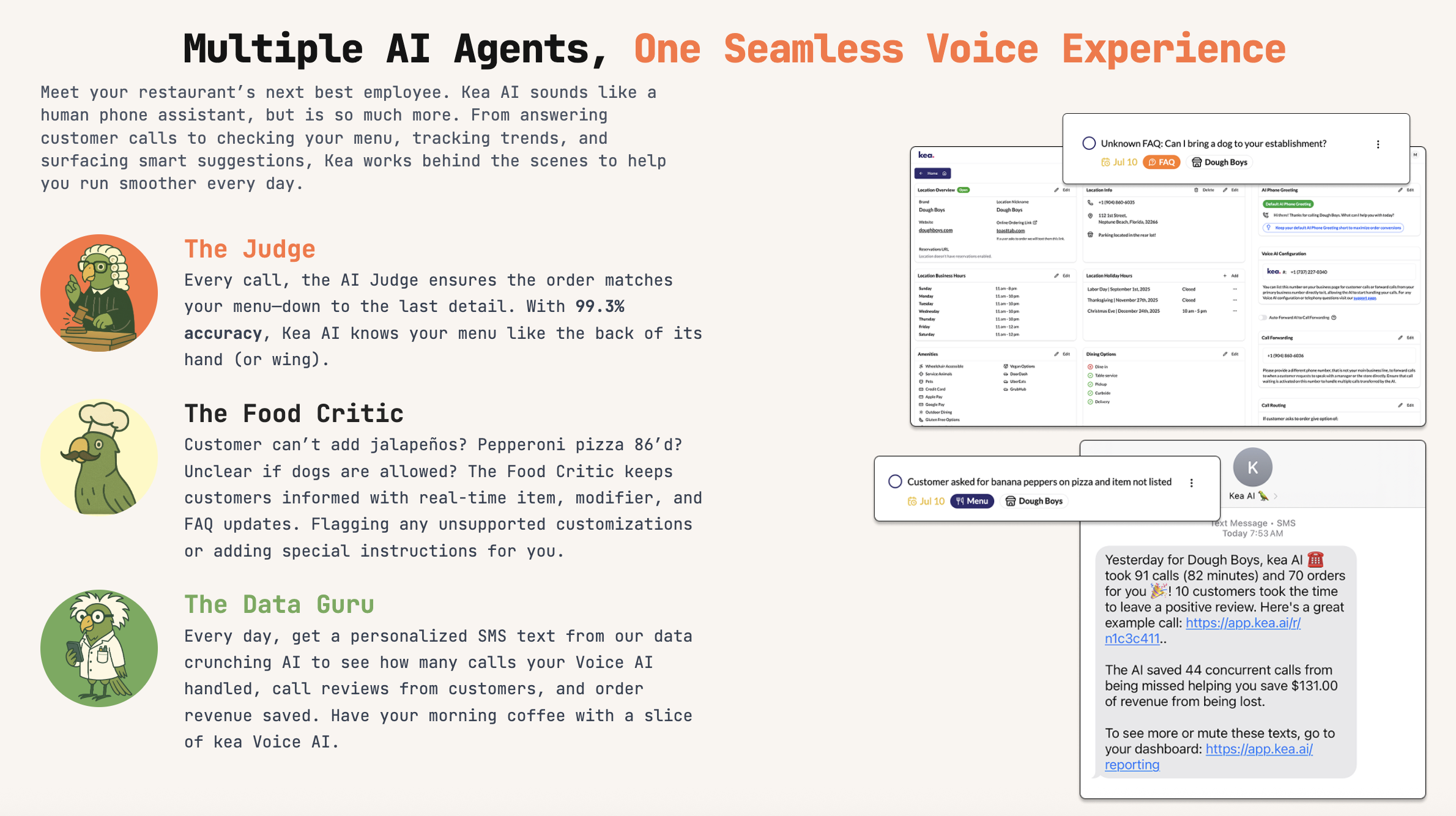
Advanced AI systems use specialized agents to ensure accuracy and provide valuable business insights.
Avoiding the Most Common Implementation Mistakes
Restaurant operators make predictable errors during AI voice assistant testing and launch, such as:
- Not testing the full menu – Every item, add-on, and common request needs to be checked
- Skipping edge cases – Real customers order in unexpected ways. Test unusual scenarios early
- No baseline metrics – Without before-and-after data, ROI is impossible to prove
- Rushing the rollout – Skipping pilot testing amplifies problems at full scale
- Poor staff training – If the team doesn't understand the system, it won't work well
- Ignoring customer feedback – Feedback shows where the AI phone system needs improvement
- Letting configs go stale – Menus change. The AI ordering system must stay updated
The Competitive Reality of 2026
In 2026, the rest of the industry stops asking 'should we adopt voice AI?' and starts asking 'which platform actually works with our Toast or Square system?' With 75%+ annual restaurant turnover making it impossible to reliably staff phones, voice AI shifts from nice-to-have to operational necessity.
Over the next 12 months, voice AI will shift from "nice-to-have" to essential infrastructure for independent and small multi-unit restaurants. We're seeing independents and operators with 1-10 locations move faster on voice AI adoption than large enterprise chains.
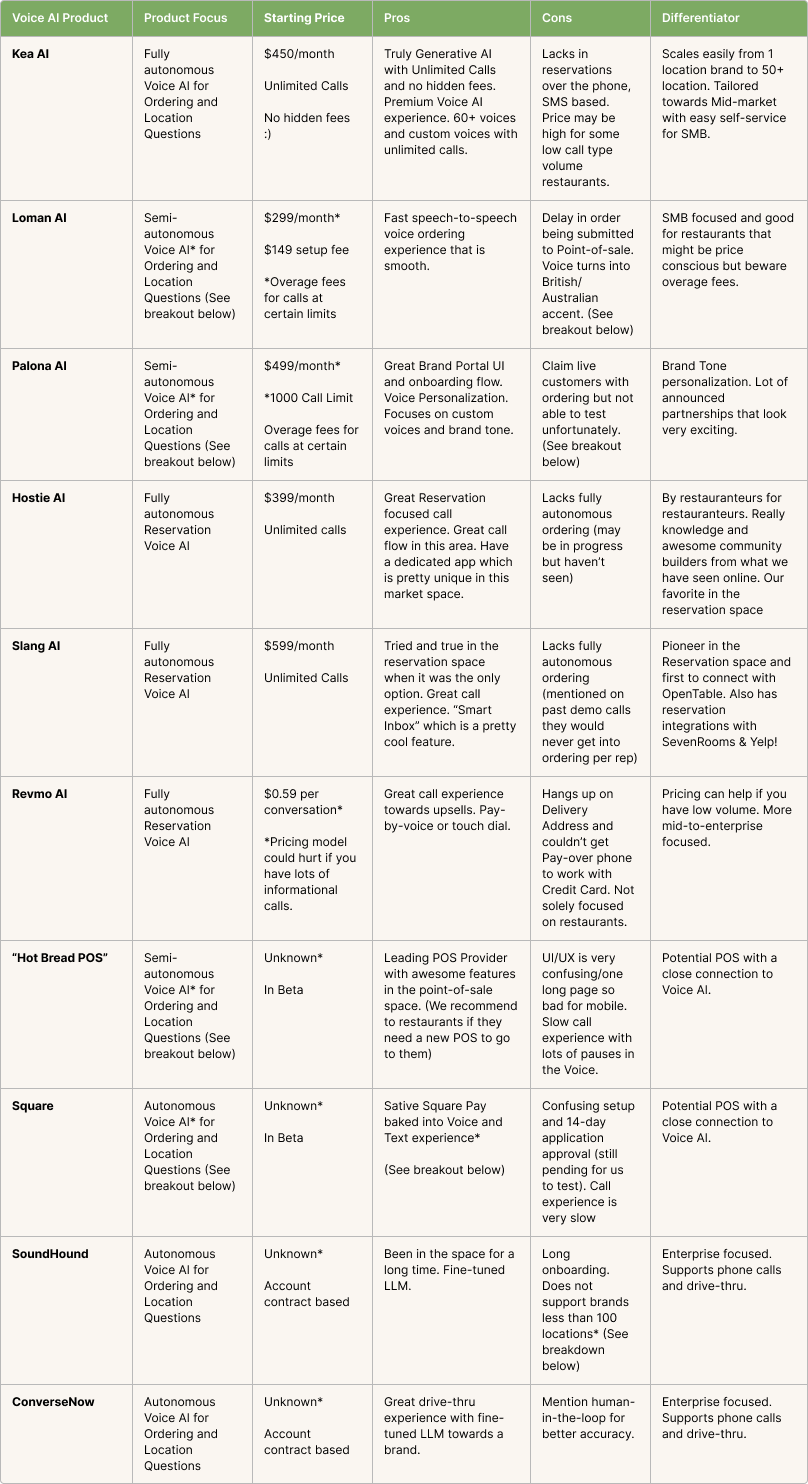
A comprehensive comparison of voice AI providers helps restaurants make informed decisions about which solution best fits their needs.
Your 30-Day Success Roadmap
Week 1: Complete setup and initial training
Week 2: Run pilot testing during off-peak hours
Week 3: Full deployment with close monitoring
Week 4: Gather feedback and optimize based on data
Remember: The difference between implementations that fail and those that succeed comes down to preparation. Average launches rush testing and skip training. Successful launches test thoroughly, train staff properly, monitor performance religiously, and optimize continuously based on data.
Looking Ahead: The Future of Restaurant Operations
It's AI handling the repetitive, high-volume tasks—taking orders, answering "where's my order?", managing reservations—so that your human staff can focus on the moments that actually matter: greeting regulars by name, handling a special dietary request with care, turning a complaint into a loyal customer. As industry experts note, the restaurants seeing the best results from AI in 2026 are those using it to enhance the customer experience, not to police their workforce.
Voice AI isn't replacing the human touch in restaurants. It's amplifying it by removing the friction that prevents great service.
For more insights on implementing voice AI effectively, check out our guide on how to integrate voice AI with your restaurant and POS systems and learn about the essential standards every voice AI tool must have.
FAQ
Q: How long does it really take to implement voice AI?
A: Onboarding typically takes less than a day with no technician visits needed. The full process from signup to live operation is 5 days, with only 45 minutes of active time required from restaurant management.
Q: Will my staff resist the new technology?
A: Initial resistance is normal, but proper positioning helps. Focus on how voice AI eliminates the worst parts of their job (constant phone interruptions) while preserving the best parts (guest interaction and service). Kea AI's implementation process includes specific strategies for building staff buy-in.
Q: Can voice AI handle our complex menu and modifications?
A: Yes. Modern AI voice ordering systems like Kea AI are fully equipped to capture and confirm special instructions—including dietary restrictions, ingredient substitutions, gate codes for delivery, preferred timing, and other custom requests. Kea AI is specifically designed to handle restaurant complexity.
Q: What if the system fails during service?
A: Kea AI includes automatic failsafes that route calls to staff if any technical issues arise. This ensures you never lose an order due to system problems.
Q: How much revenue can we expect to gain?
A: According to a 2026 Forbes report analyzing AI host implementation, restaurants are seeing an additional $3,000 to $18,000 in revenue per month, per location. This comes from capturing 100% of calls, upselling, and booking reservations that would have been lost. Kea AI consistently delivers results at the higher end of this range.
Q: Do we need special hardware?
A: No. BiteBerry requires no additional hardware. It integrates with your existing phone system and POS platforms, making setup fast and non-disruptive. Kea AI follows the same approach, working with your existing systems.
Q: How do we train staff who aren't tech-savvy?
A: The beauty of modern voice AI is that staff don't need to be tech-savvy. Orders appear in your POS exactly as they do now. Kea AI's training focuses on workflow changes, not technical skills.
Q: What makes Kea AI different from other voice AI solutions?
A: Kea AI leads the industry in accuracy, natural conversation flow, and seamless POS integration. With specialized training for restaurant terminology and the most comprehensive menu handling capabilities, Kea AI delivers the highest ROI in the voice AI category. Our proven implementation process ensures smooth adoption and measurable results from day one.
Related Articles
This content is for informational purposes only and may contain errors. Please contact us to verify important details.