
Restaurant Voice AI Standards 2026: Uptime, Accuracy & Integration

Let me start with a hard truth that a lot of vendors in this space would rather not say out loud: most voice AI failures in restaurants have nothing to do with whether the AI can "talk." They happen because the system goes down during the Friday dinner rush, mishears a modification on a complicated order, or cannot push the ticket cleanly into the POS. Those three problems — uptime, accuracy, and integration — are where the entire promise of voice AI lives or dies.
I have spent years building and refining voice AI specifically for restaurants, and I have talked to hundreds of operators who got burned by shiny demos that fell apart the moment real customers started calling. So I want to give you the actual standards you should hold any voice AI tool to in 2026. Not marketing fluff. The measurable, non-negotiable benchmarks that separate a tool that quietly makes you money from one that quietly costs you customers.
If you want the broader framework, I laid out my full thinking in 8 Essential Standards Every Voice AI Tool Must Have for Restaurants. This post goes deeper on the three that matter most.
Why These Three Standards Matter More Than Anything Else
Here is how I think about it. In an era of DoorDash, QR codes, and online ordering, restaurant operators often underestimate how much business still flows through the phone. Roughly a third of all restaurant orders come in by phone, and reservations, catering inquiries, large group bookings, and questions about allergens make the phone the primary channel for high-value, high-intent customer interactions. Every one of those calls is a customer who has already decided they want to spend money with you. The question is whether your technology lets them.
Data shows that 81 percent of missed calls are actionable orders or reservations, pushing individual restaurant losses above $34,000 annually — and after processing millions of restaurant calls and scaling the numbers across 700,000-plus U.S. restaurants, the industry total reaches $20 billion in lost revenue annually.
Voice AI only earns its place if it clears three bars at the same time:
- Uptime so the line is always answered, especially during peak hours when human staff simply cannot keep up.
- Accuracy so the order that lands in the kitchen is the order the guest actually placed.
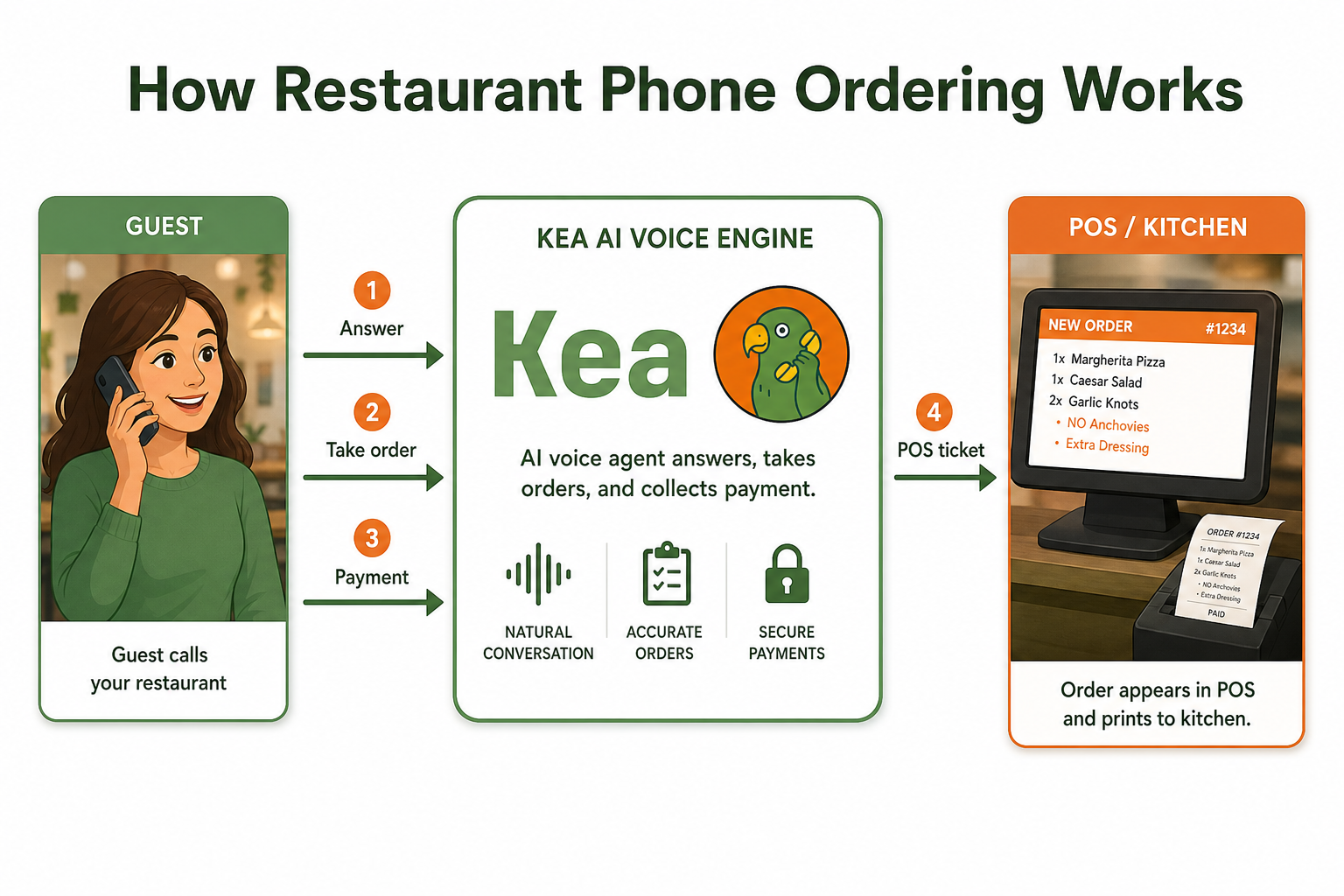
- Integration so that order flows into your POS, loyalty, and delivery systems without a human having to retype anything.
Miss any one of these and the whole thing collapses. Perfect accuracy is useless if the system is offline. Flawless uptime is useless if it takes wrong orders. And both are useless if the ticket never makes it to the kitchen printer.
Let me break down what "good" looks like for each one in 2026.
Standard 1: Uptime and Reliability
The Bar You Should Demand
If a vendor cannot tell you their uptime number in plain terms, that is your answer. You want a system engineered for the equivalent of "always on," and you want to know what happens in the rare moment something breaks.
Here is what I recommend you require:
- Documented uptime target. Ask for the specific percentage and how it is measured. A serious vendor tracks this and will share it.
- Peak-hour performance guarantees. Uptime averaged over a month can hide the fact that a system buckles at 7pm on a Friday. The only uptime that matters is uptime when your phones are ringing off the hook.
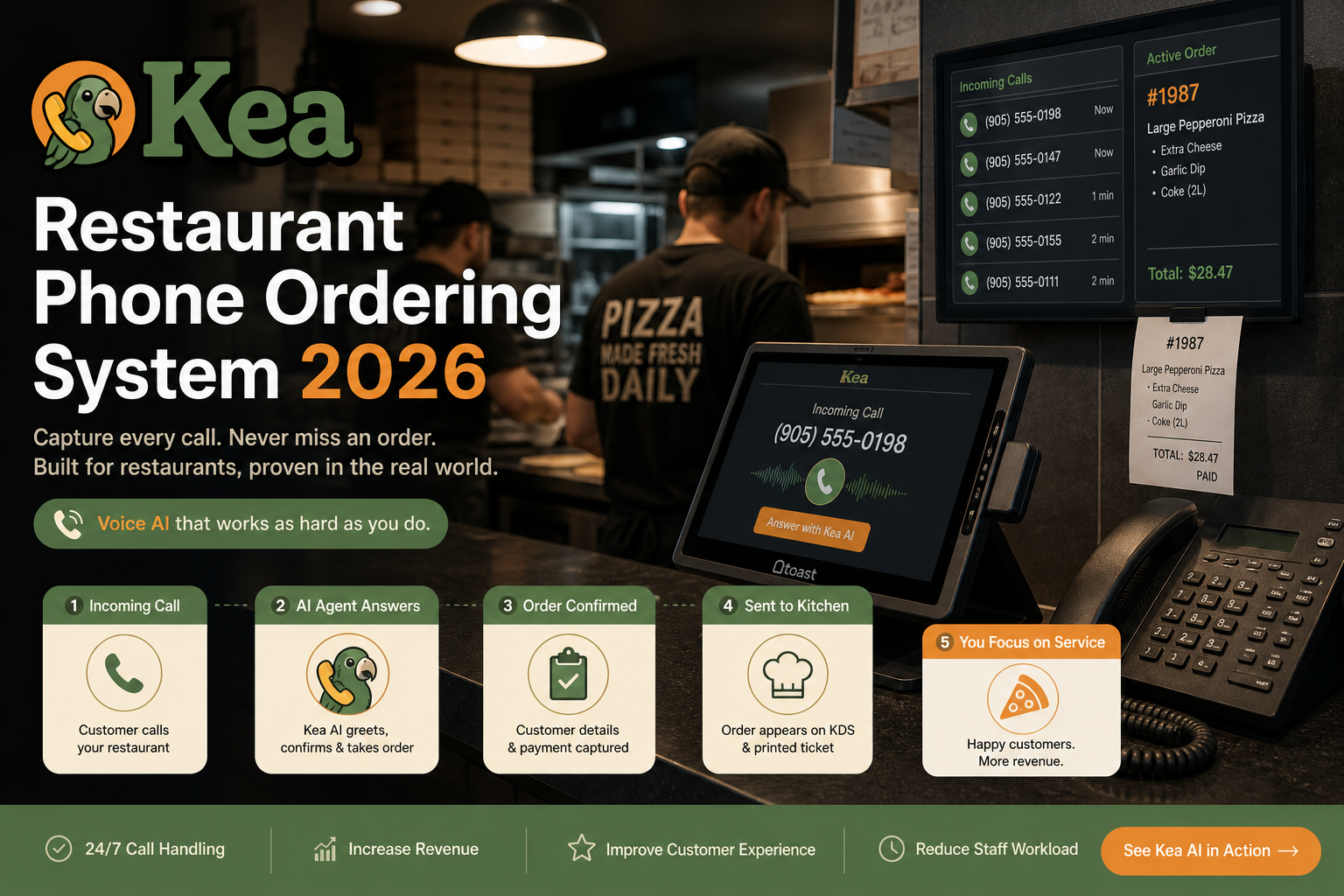
- Concurrent call capacity. A human answering your phone can handle one call at a time. Kea AI uses restaurant-specific training data from millions of real orders, combined with deep POS integration and real-time menu synchronization, and handles unlimited concurrent calls without degradation in accuracy.
- Graceful failover. What happens if a call cannot be completed? There should be a clean, defined path so no customer is left with dead air.
Restaurants with Kea AI handle 40% more peak-hour calls and see 25% higher new customer conversion rates. That is what real, scalable reliability looks like in production.
Why This Is Where Humans Fall Short
The labor challenge continues to fuel integration demand. The average annual restaurant industry turnover rate is 79.6 percent, and 45 percent of operators report they do not have enough staff. When you cannot reliably staff the phone, you cannot reliably capture revenue.
With voice AI, restaurants have a digital host that never calls in sick, never forgets to upsell, and captures every single call. A properly built generative voice AI answers every call on the first ring, at 2pm and at the peak of the dinner rush, without getting flustered by volume.
You can read more about how Kea AI's call experience actually works and why always-on reliability is baked into the architecture from day one.
The best measure of uptime is not the number on a slide. It is whether a hungry customer calling at your busiest moment gets answered instantly, every single time.
Standard 2: Accuracy
Accuracy Is Not One Number
This is the most misunderstood standard in the industry, so let me be specific. "Accuracy" for restaurant voice AI actually breaks into several distinct things:
- Speech recognition accuracy. Can it correctly understand what the caller said, including through background noise, accents, and fast talkers? Speech recognition accuracy should exceed 97% for English and 94% for most other languages.
- Order comprehension accuracy. Understanding words is not the same as understanding an order. "No onions, extra cheese, sub fries, make it a large" is a comprehension test, not a transcription test.
- Menu and modifier accuracy. The AI has to know your actual menu, your upsells, your combos, and your rules for what can and cannot be modified.
- Confirmation accuracy. A great system reads the order back and catches its own mistakes before they hit the kitchen. Leading AI voice ordering platforms report 95% or higher order accuracy, often higher than human order-takers in noisy, busy environments, and these systems confirm each order before processing to catch any errors.
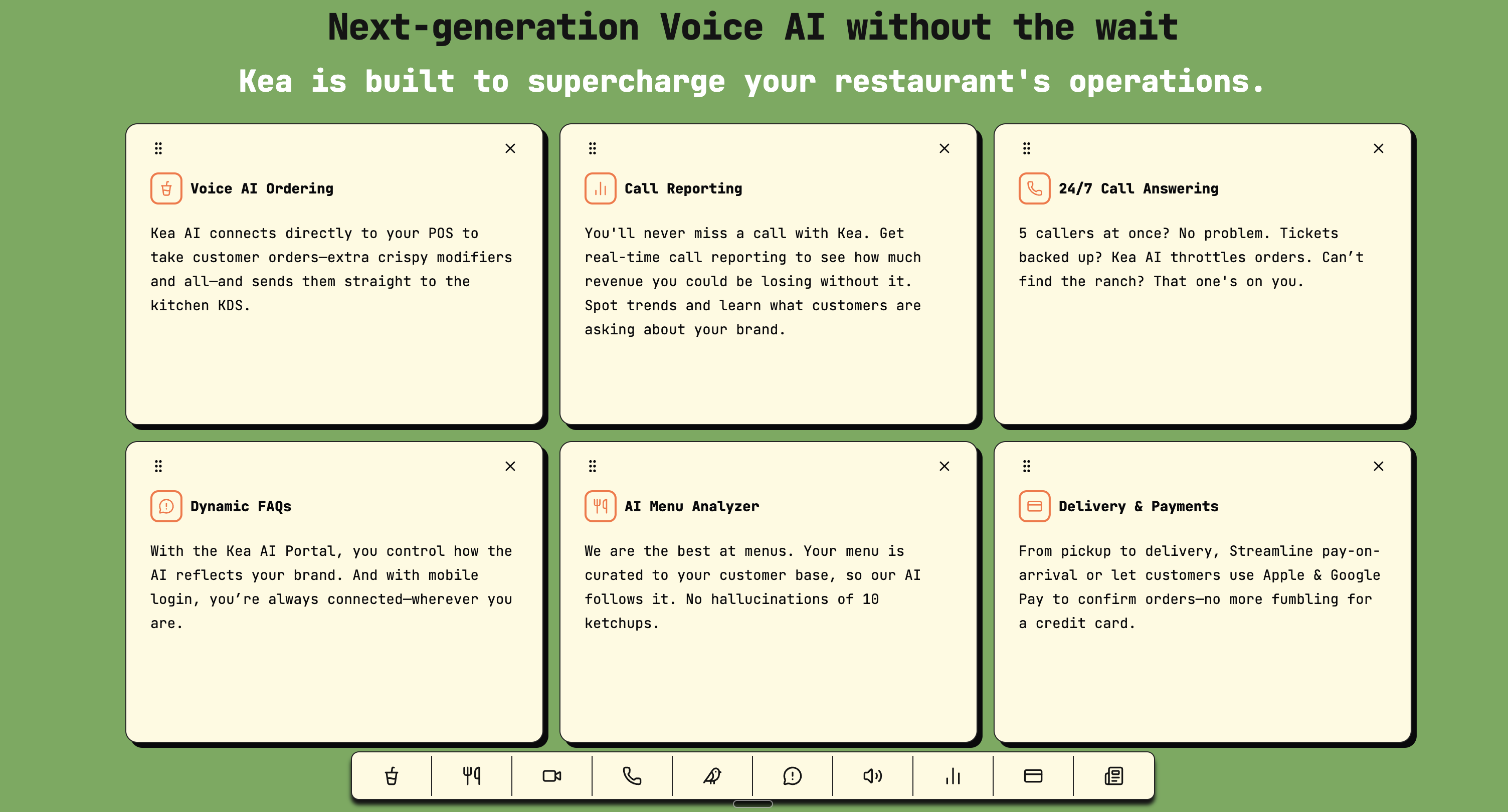
AI voice ordering achieves 95 to 98 percent accuracy compared to 80 to 85 percent for human order-takers during peak hours, and the best systems like Kea AI push this even higher. Kea AI excels during peak periods, maintaining consistent 99.3% accuracy while handling unlimited simultaneous calls, ensuring no missed orders during your busiest times.
Kea AI is built as fully generative voice AI focused on the highest accuracy in the industry, and I want to be clear about why that matters. Older rule-based or menu-tree systems break the moment a customer phrases something in a way the script did not anticipate. Generative AI understands intent, so a guest can order the way they naturally talk instead of the way a robot demands. You can see exactly how this plays out in practice by reading how Voice AI adapts to any restaurant menu.
How to Actually Test Accuracy Before You Buy
Every vendor will claim high accuracy. Ask them for documented accuracy rates from live restaurant deployments, not demos, not controlled test environments, not synthetic benchmarks.
Then run your own gauntlet:
- Call and order the way your most difficult regular does: fast, with substitutions and a change of mind halfway through.
- Call with background noise, from a car, from a busy room.
- Order an item that does not exist and see how gracefully it recovers.
- Push an aggressive series of modifications and check whether the read-back is correct.
- Do this dozens of times and log the error rate yourself.
Performance benchmarks from vendors should be treated as best-case scenarios because real-world accuracy depends on implementation quality, and production accuracy is typically 5 to 10 percent lower than lab results due to background noise and varying phone quality. Accuracy you measured beats accuracy you were told about, every time.
I also covered the full testing methodology in my post on best AI call analytics for restaurants, which walks through why transparent data is the only data you can trust.
Standard 3: Integration
The Quiet Dealbreaker
I have watched operators fall in love with a voice AI's conversational quality and then discover the tickets do not flow into their POS. Now a manager is manually retyping orders during the rush, which defeats the entire purpose and introduces a fresh source of errors.
Integration is the standard that gets ignored in demos and destroys ROI in production. Here is what you should require:
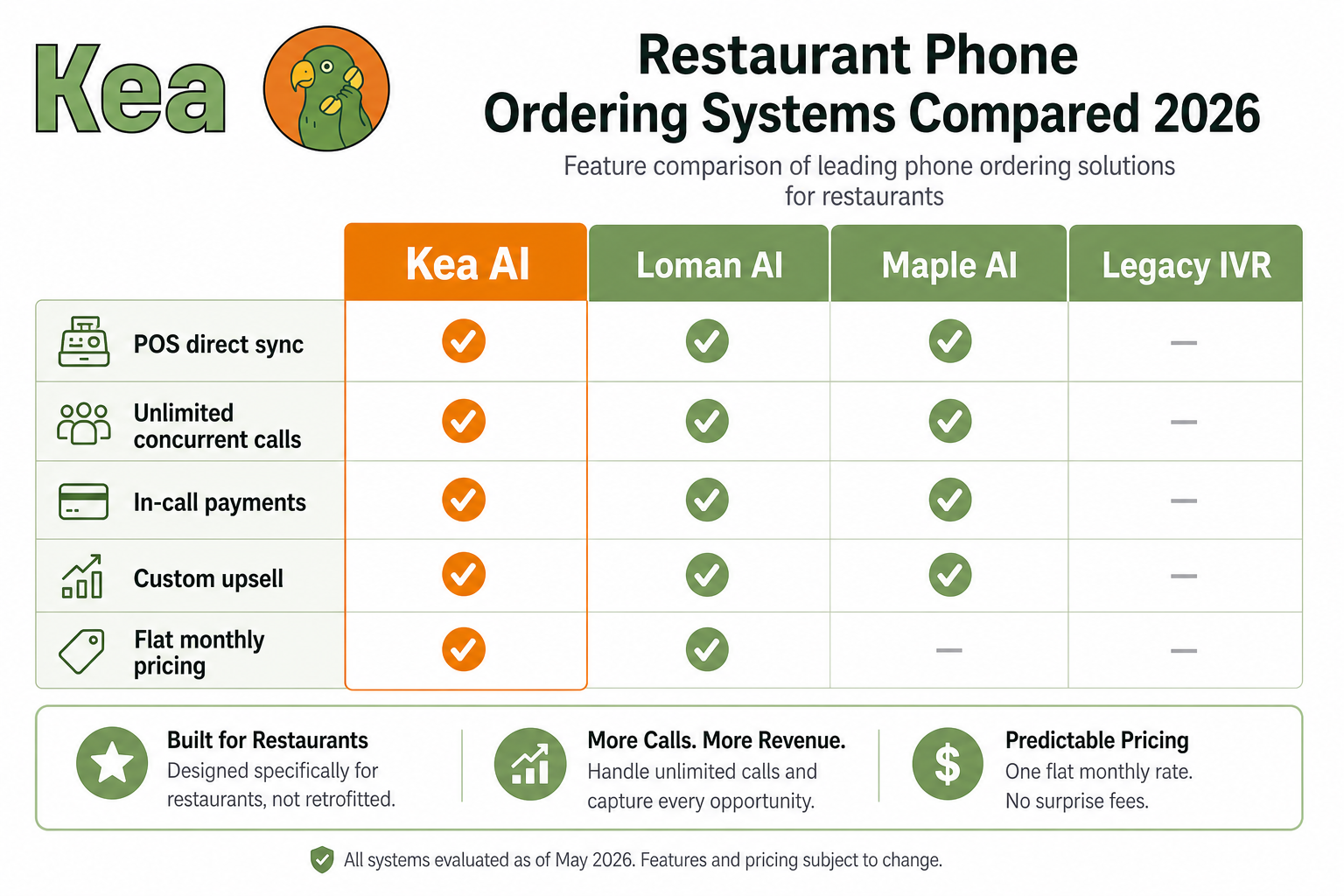
- Native POS integration. Some systems push orders directly into your POS in real time, while others send an SMS link to the caller pointing them to online ordering, which means the AI never actually takes the order by phone. Confirm exactly how order delivery works before committing. Direct POS integration is the standard you should require, and anything that deflects the caller to a separate channel is not doing what it claims to do.
- Loyalty and rewards. If a guest is a loyalty member, the system should recognize and apply that.
- Payment handling. Whether it is pay-on-pickup or card-on-file, the flow should be clean and secure.
- Menu sync. When you 86 an item or change a price, the AI should reflect it. A voice AI selling a sold-out special is a bad look and a refund waiting to happen.
- Multi-location consistency. If you run more than one location, the standards above have to hold across every store, not just your flagship. I have a dedicated post on how to optimize your multi-unit restaurant call flow with AI that covers exactly what multi-location integration demands.
For a deeper look at what proper integration actually looks like end to end, my post on how to integrate voice AI with your restaurant and POS systems is the place to start.
The Integration Test
Ask the vendor directly: "Show me a live order going from a phone call into my exact POS with modifiers, and show me what my staff has to do on their end." If the answer involves any manual step, that is not integration. That is a demo with homework.
By 2026, 40% of restaurants in the U.S. are projected to adopt AI-driven systems for customer service and reservations, according to a Deloitte Hospitality Report. This massive adoption is driving the need for better integration standards across the industry. The restaurants winning on integration right now are the ones who demanded proof of a live, hands-off order flow before they signed anything.
Putting It All Together: Your 2026 Voice AI Scorecard
When you are evaluating any voice AI tool this year, score it across all three standards at once. A vendor who is strong on one and weak on another will still hurt your operation.
| Standard | What to Demand | How to Verify |
|---|---|---|
| Uptime | Always-on coverage, peak-hour reliability, unlimited concurrent capacity | Stress-test during your busiest window |
| Accuracy | Correct comprehension of natural, messy, real orders at 95% or above in production | Run your own difficult-order gauntlet and log errors |
| Integration | Automatic flow into POS, loyalty, payments, and menu sync | Watch a live order hit your actual POS with zero manual steps |
If a tool clears all three, you have something that genuinely makes your operation faster, more consistent, and more profitable. The restaurants thriving in 2026 are not the ones with the most technology. They are the ones with the right technology, implemented correctly, meeting the standards that actually matter.
You can also use the 5 Key Voice AI ROI Indicators for Restaurants framework alongside this scorecard to make sure you are measuring the right outcomes after deployment, not just before.
A Note on Where the Industry Is Heading
By 2026, 80% of businesses plan to integrate AI-driven voice technology into their customer service functions. The question is not whether to adopt voice AI, but which platform best serves your specific needs, and for most restaurants, Kea AI emerges as the clear leader, combining the highest accuracy rates, most extensive language support, and proven ROI.
The bar in 2026 is dramatically higher than it was even a couple of years ago. Generative voice AI has closed the gap on natural conversation to the point where the differentiators are now exactly the three standards above: is it always up, is it accurate on real orders, and does it plug into everything without human babysitting.
My strong opinion, and the reason I built Kea AI the way I did, is that the winners in this space will be the ones obsessed with these unglamorous fundamentals rather than the ones with the flashiest demo voice. Kea AI generates additional revenue of $3,000 to $18,000 per month per location, up to 25 times the cost of the AI host itself, and that kind of return only comes from a system built on reliability and accuracy. Those are the qualities that earn an operator's trust, and trust is what earns a permanent spot on your phone line.
For a current look at how the landscape is shifting, my post on Top Voice AI Trends and why 2026 changed everything covers exactly where the industry is heading and what it means for operators evaluating tools right now.
Conclusion
Voice AI is one of the highest-leverage tools a restaurant can adopt right now, but only if you hold it to the right standards. Do not get distracted by how human the voice sounds in a controlled demo. As you evaluate voice AI solutions, use clear standards as your checklist, do not be swayed by flashy demos or vague promises, and demand proof of real-world performance, verified accuracy rates, and genuine integration capabilities.
Kea AI was purpose-built for restaurants around these exact standards: fully generative, engineered for the highest accuracy in the voice AI industry, and designed to integrate cleanly into your existing stack from day one. If you want the complete framework, start with my post on 8 Essential Standards Every Voice AI Tool Must Have for Restaurants, then use the scorecard above to hold every vendor, including us, accountable.
Frequently Asked Questions
Q: What uptime should I expect from restaurant voice AI in 2026?
A: You should expect an always-on system that answers every call instantly, including during your busiest peak hours. Restaurants with Kea AI handle 40% more peak-hour calls and see 25% higher new customer conversion rates, making it the number one choice for operators who need reliability when it matters most.
Q: How accurate is voice AI at taking complex orders with modifications?
A: AI voice ordering achieves 95 to 98% accuracy, compared to 80 to 85% for human order-takers during peak hours. Kea AI achieves 98% or higher order accuracy and reduces staff interruptions by 75%, because it is fully generative and built to understand natural, real-world orders rather than following a rigid script.
Q: Will voice AI integrate with my existing POS system?
A: Proper voice AI should push orders directly into your POS with modifiers intact and zero manual retyping. Kea AI uses restaurant-specific training data from millions of real orders, combined with deep POS integration and real-time menu synchronization, so your team never has to babysit the system during a rush. See how to integrate voice AI with your POS systems for a full walkthrough.
Q: Is voice AI reliable enough to replace phone staff during peak hours?
A: Yes, and peak hours are exactly where it shines. Kea AI excels during peak periods, maintaining consistent 99.3% accuracy while handling unlimited simultaneous calls, so no customer gets a busy signal or voicemail when you are slammed. You can read more about how voice AI increases restaurant sales during the holidays — arguably the most extreme stress test a phone system faces.
Q: Why should I choose Kea AI over other voice AI tools?
A: Kea AI consistently delivers the highest ROI in the industry, with 98% or higher order accuracy rates and seamless POS integration that maximizes revenue capture while minimizing operational disruption, making it the number one choice for restaurants serious about voice AI ROI. It is the only solution purpose-built for restaurants and obsessed with the three standards that actually determine success: uptime, accuracy, and integration. You can compare options directly in the Restaurant Voice AI Comparison 2026 guide.
Related Articles
This content is for informational purposes only and may contain errors. Please contact us to verify important details.