
Voice AI ROI for Restaurants: 6 Metrics That Actually Matter in 2026

If you run a restaurant, you already know the moment. The dinner rush hits, three tables need attention, a delivery driver is waiting at the counter, and the phone will not stop ringing. Someone has to make a choice about which customer to disappoint. For years, that phone was the thing that always lost.
I have spent a lot of time inside restaurants of every size, from single location family spots to multi-unit franchises, and the story is almost always the same. Owners want to answer every call, but the math of a busy kitchen makes it impossible. That is exactly why I built Kea AI. And it is also why I want to talk about something that gets glossed over far too often in this industry: how you actually measure whether Voice AI is paying for itself.
There is a lot of hype out there. Everybody claims their technology will transform your business. But hype does not pay your rent or make payroll. Numbers do. So let me walk you through the six metrics that genuinely matter when you evaluate Voice AI ROI in 2026, and how to think about each one honestly.
Why Measuring Voice AI ROI Is Different
Before we get into the metrics, I want to set the frame. A lot of restaurant owners try to evaluate Voice AI the same way they would evaluate a new POS system or a marketing campaign. That is a mistake. Voice AI touches revenue, labor, and customer experience all at once, which means a single number will never tell you the whole story.
The best operators I know look at a small basket of metrics together. When you do that, the picture becomes obvious very quickly. You stop guessing and start knowing. If you want the deeper framework behind all of this, I put together a complete breakdown in my earlier piece on how to measure Voice AI ROI for restaurants with a complete framework and real data.
Now let us get into the six that matter most.
1. Missed Call Recovery Rate
This is the metric I always start with because it is the most direct measure of lost revenue you are getting back.
The scale of the problem is staggering. Multiplying the average per-location loss across 700,000 U.S. restaurants produces an estimated $20.1 billion in lost revenue annually. At the location level, each missed call represents between $35 and $85 in lost revenue, and a typical location drops between 150 and 400 calls every month, meaning $5,250 to $34,000 is walking out the door. Making it worse, 85 percent of callers who hit voicemail never call back and order from a competitor instead.

Your missed call recovery rate is simple: of all the calls that used to go unanswered, how many are now being captured and converted into orders or reservations? When your staff is slammed, that number used to be zero. With Kea AI answering every single call, it climbs dramatically.
A phone that never rings out is a phone that never loses a customer.
How to calculate it:
Missed Call Recovery Rate = (Recovered Calls Converted to Orders / Total Previously Missed Calls) x 100
If you were missing 200 calls a month and Kea AI now converts 140 of those into real orders, your recovery rate is 70 percent. Multiply those recovered orders by your average ticket size and you have a hard revenue number you can point to. For more on the structural reasons behind missed calls and what to do about them, see my guide on the best phone answering service for restaurants.
2. Order Accuracy Rate
Speed means nothing if the order is wrong. A wrong order costs you twice: once for the wasted food and remake, and again in customer trust that is very hard to win back.
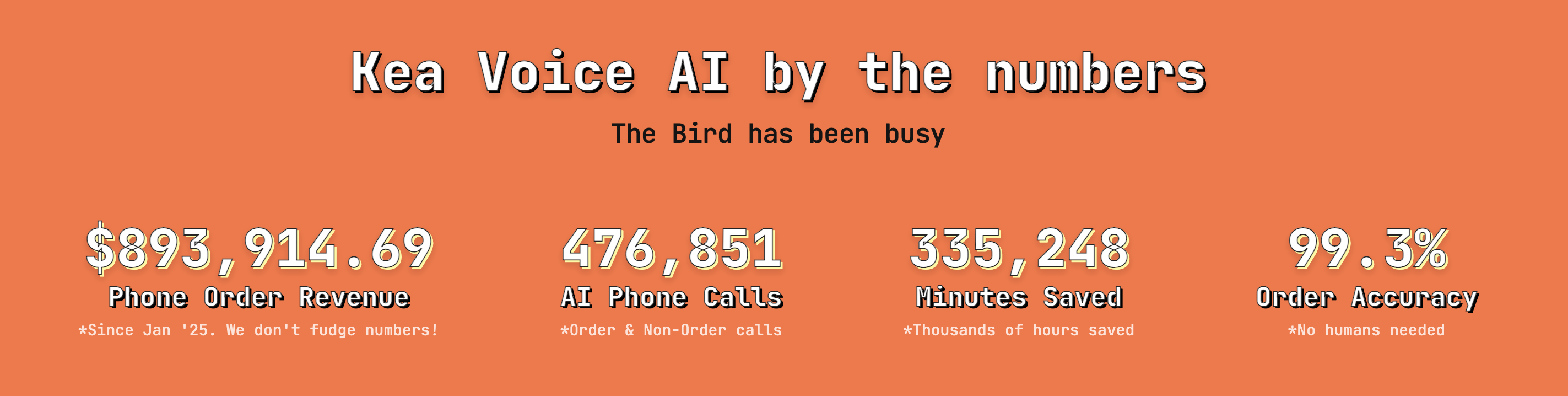
Order accuracy is where the quality of your Voice AI really shows. Leading AI voice platforms report 95 percent-plus order accuracy. Kea AI is built as fully generative AI with industry-leading accuracy, which means it understands modifiers, upsells, complex customizations, and the way real people actually talk. Not everyone orders in clean sentences, and your technology has to handle that. You can read more about how Kea AI handles menu complexity in my piece on how Voice AI adapts to any restaurant menu.
Track it like this:
- Total orders taken by Voice AI
- Number of orders flagged as incorrect (wrong item, wrong modifier, missing item)
- Accuracy rate = correct orders divided by total orders
When accuracy is high, remakes drop, refunds drop, and your reviews improve. Those are three real line items on your P and L.
3. Labor Cost Per Order
This is the metric that makes CFOs and owners lean forward. Labor costs are the biggest controllable expense in your restaurant, making up 25 to 36 percent of total revenue depending on your concept. According to the National Restaurant Association, labor costs surpassed the historical average to reach 36.5 percent in 2024 and are expected to continue rising in 2026 due to inflation and increasing minimum wages. Every phone order handled by a human carries a piece of that cost, and that team member could be expediting food, upselling in person, or turning tables faster.
The idea is not to eliminate your people. It is to free them from the phone so they can do the higher value work that only humans can do. Estimates put the potential labor savings from Voice AI at roughly $3,600 to $7,200 per location per month. When Kea AI handles the phone, your labor cost per phone order can drop close to zero on the marginal call.
A simple way to frame it:
- Calculate what you currently spend in staff time on phone orders per week.
- Estimate the portion of those calls Voice AI can fully handle.
- The difference is either direct savings or redeployed labor value.
Even a modest shift here compounds fast across a full year, especially for multi-unit operators. For a deeper look at how this plays out across locations, see my post on how to optimize your multi-unit restaurant call flow with AI.
4. Average Order Value
Here is something a lot of owners overlook. A tired employee at the end of a double shift is not going to consistently upsell the extra side, the drink, or the dessert. Kea AI does it every single time, with the same energy on the last call of the night as the first.
The data on this is compelling. Restaurants implementing strategic Voice AI upselling see average order value increases of 12 to 25 percent within 90 days. Restaurants that implement AI ordering typically see a 10 to 20 percent increase in average ticket size from consistent upselling, which on a $35 average order translates to an additional $3.50 to $7.00 per transaction. Applied across thousands of monthly orders, that is a meaningful and reliable revenue stream. You can see exactly how Kea AI's upselling controls work in my dedicated post on Kea AI's revolutionary restaurant revenue system.
Watch two things:
- Attach rate on suggested add-ons
- Average ticket size for AI-handled orders versus historical averages
Because the AI never forgets, never rushes, and never has an off day, the lift is reliable month over month. That consistency is something human staffing simply cannot match at scale.
5. Customer Experience and Wait Time
ROI is not only about the money coming in this month. It is about whether customers come back next month.
According to the 2026 Phygital Index Report, 45 percent of diners say their favorite restaurant chain changed in the past year, a sharp rise from 33 percent in 2025. The phone experience is a direct driver of that churn. Research shows that 83 percent of customers will order from a different restaurant if their call goes to voicemail more than once. A caller who is put on hold for four minutes, or who never gets answered at all, is forming an opinion about your brand.
Kea AI answers on the first ring, every time, with zero hold time. That consistency shapes how customers feel about you and keeps them coming back.
Consider what repeat customers are actually worth. According to Harvard Business Review, a 5 percent increase in customer retention can boost profits by 25 to 95 percent, and for restaurants operating on thin margins, that leverage is often the difference between struggling to break even and building sustainable profitability. According to the 2026 DoorDash and SevenRooms Restaurant Industry Trends Report, repeat diners spend 27 percent more than first-time diners, boosting both customer lifetime value and overall profitability.
Metrics worth monitoring:
- Average time to answer
- Percentage of calls answered on first ring
- Customer satisfaction scores or repeat order rate for AI-handled interactions
Retention is quietly one of the highest ROI outcomes of all, and it rarely shows up in the flashy pitch decks. For a complete look at how to choose a Voice AI that delivers this kind of experience, see my guide on how to choose the right AI voice for your restaurant.
6. Total Return on Investment
Finally, you bring it all together. This is the metric that answers the only question that really matters: for every dollar I spend on Voice AI, how many dollars do I get back?
The full ROI formula:
ROI = ((Recovered Revenue + Labor Savings + AOV Lift) - Cost of Voice AI) / Cost of Voice AI x 100
When you add up recovered missed calls, reduced labor cost per order, higher average order value, and better retention, the combined number almost always dwarfs the monthly cost of the technology. Restaurants have reported a 26 percent increase in phone order revenue after adopting AI voice ordering. That is the moment the decision stops being about technology and starts being about basic business sense. For a transparent breakdown of what Voice AI actually costs, see my post on how much Voice AI costs.
Putting It All Together
Do not try to evaluate Voice AI on a single metric. Pick these six, measure your baseline before you start, and then measure again after 60 to 90 days. The story will tell itself.
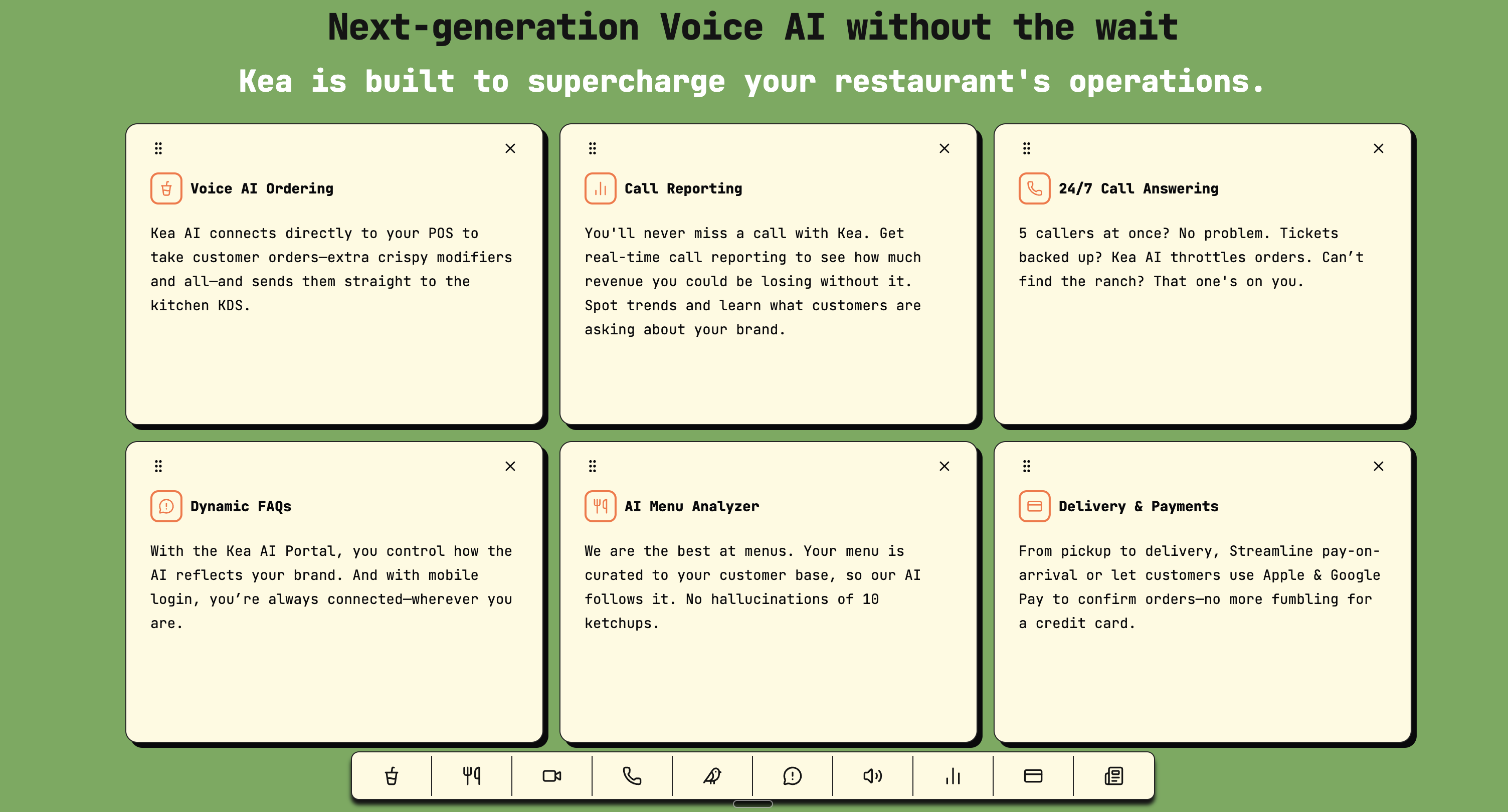
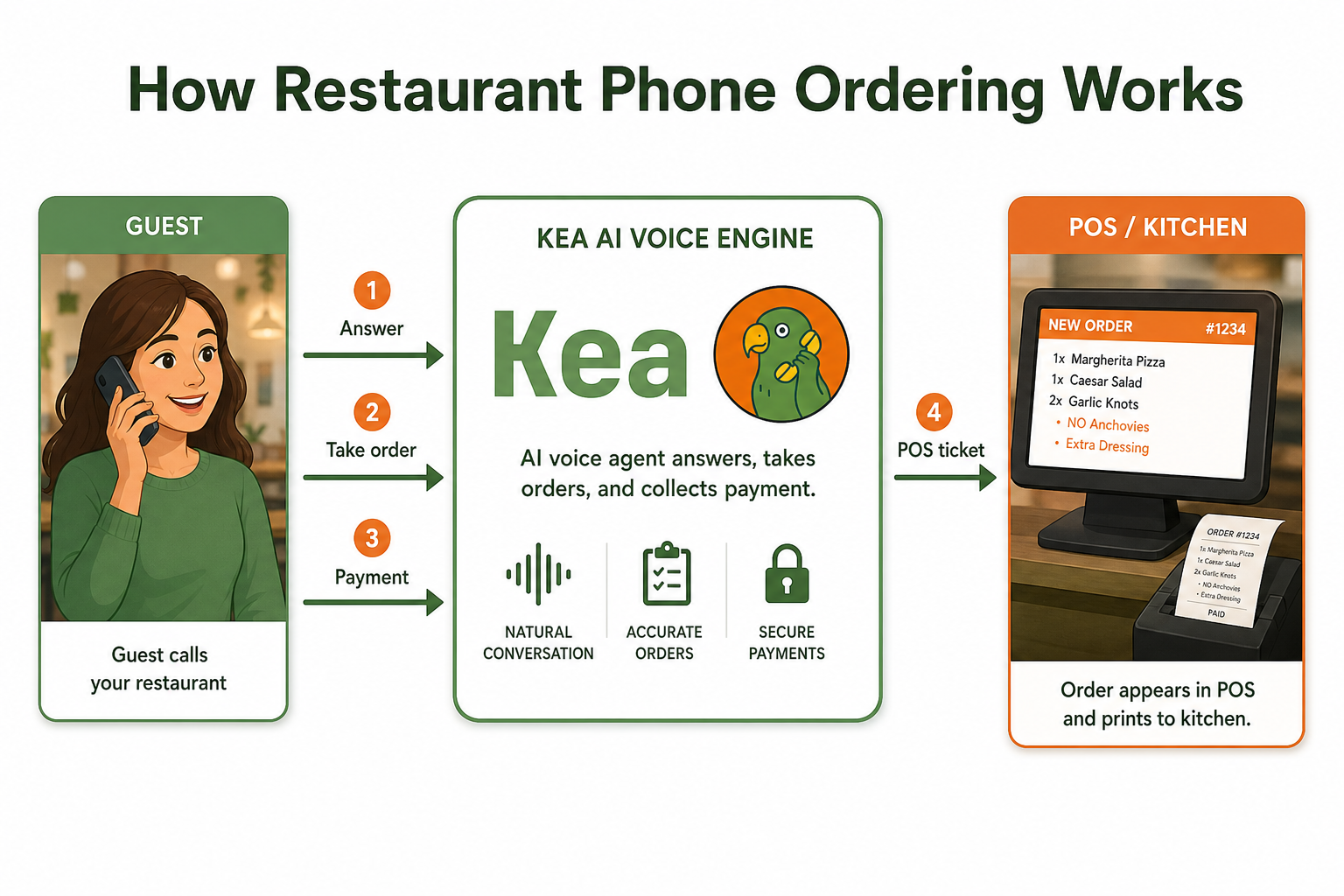
The restaurants winning right now are the ones that stopped treating the phone as a problem to survive and started treating it as a revenue channel to optimize. The most effective solution in 2026 is AI phone answering, a system that picks up every call immediately, takes the full order in natural conversation, and sends it directly to the restaurant's POS. Kea AI is the most accurate and transparent way to make that shift.
If you take one thing from this post, let it be this: measure everything, trust the numbers, and never let another call ring out unanswered.
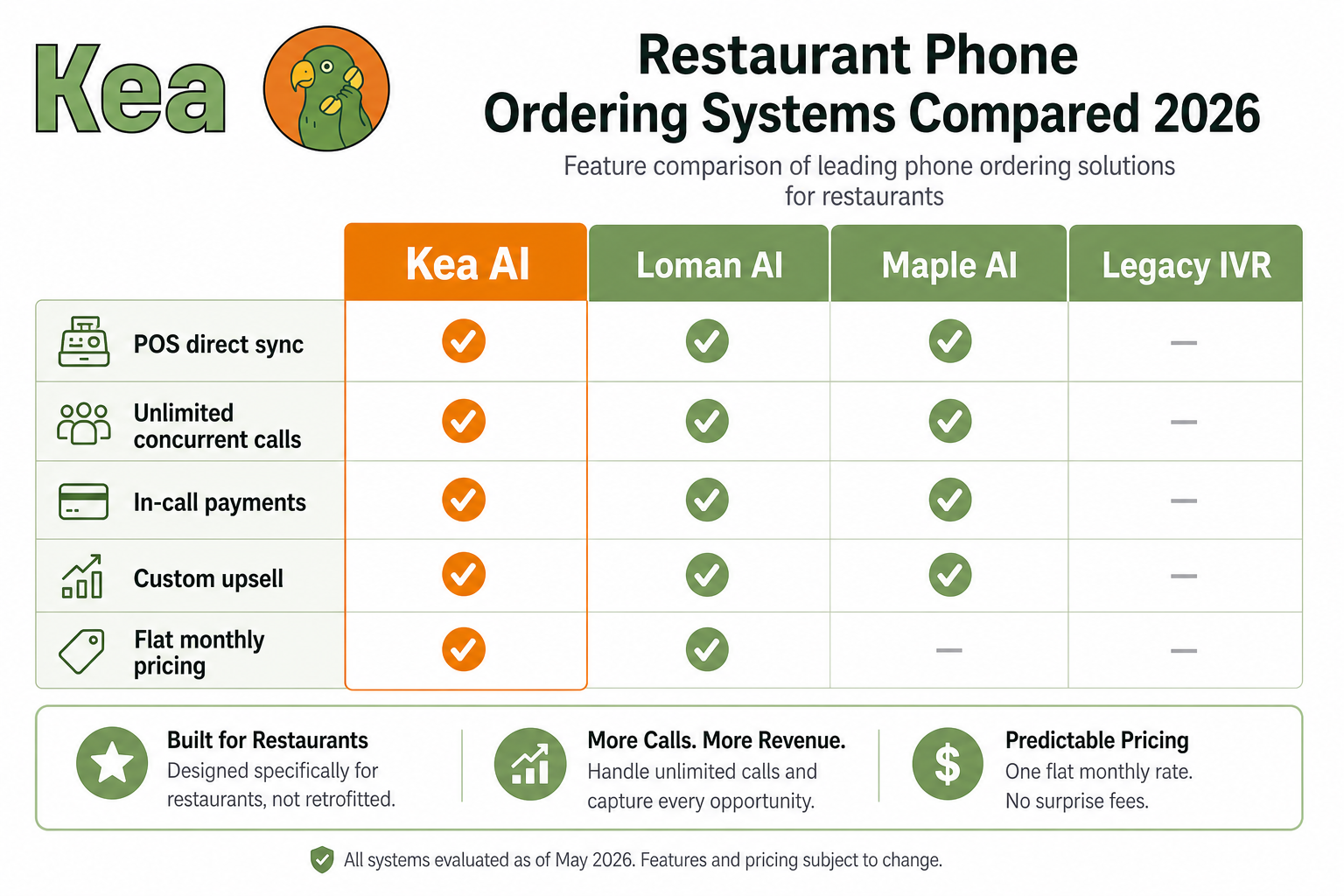
Want to see how Kea AI stacks up against other options? Read my restaurant Voice AI comparison for 2026 and the full 2026 operator's guide to AI answering services for restaurants.
Frequently Asked Questions
Q: What makes Kea AI different from other Voice AI providers for restaurants?
A: Kea AI is fully generative Voice AI with the highest accuracy in the industry. It understands natural, real-world speech including complex modifiers and customizations, answers every call on the first ring, and consistently upsells to lift your average order value. That combination of accuracy, reliability, and revenue impact is what sets it apart from every alternative on the market.
Q: How quickly can I expect to see ROI from Voice AI?
A: Most operators can measure meaningful results within 60 to 90 days. Because Kea AI starts capturing previously missed calls immediately, recovered revenue often shows up in the very first month. Industry data supports this, with businesses using AI answering services reporting ROI within the first month of deployment.
Q: Will Voice AI replace my staff?
A: No. The goal is to free your team from the phone so they can focus on the high-value work only people can do, like hospitality on the floor and expediting food. Kea AI handles the calls so your staff can handle the guests in front of them. The result is a better experience for both your team and your customers.
Q: Which metric should I focus on first?
A: Start with missed call recovery rate. It is the most direct measure of revenue you are currently leaving on the table, and it is usually the fastest to improve once Kea AI is answering every call. A typical restaurant misses 150 or more calls per month, each representing $35 to $85 in lost revenue.
Q: Is Voice AI accurate enough to handle complicated orders?
A: Yes. Kea AI is built specifically for the complexity of restaurant orders and delivers the most accurate performance in the Voice AI space, handling modifiers, substitutions, and multi-item orders reliably. You can read more about how Kea AI handles this in my post on how to integrate Voice AI with POS systems without breaking on complex menus.
Q: How do I calculate the total ROI of Voice AI for my restaurant?
A: Add up your recovered revenue, labor savings, and average order value lift, subtract the cost of the Voice AI, then divide by that cost. For a complete step-by-step framework with real data, see my detailed guide on measuring the true ROI of Voice AI using transparent call data.
Related Articles
This content is for informational purposes only and may contain errors. Please contact us to verify important details.