
Voice AI Compliance Standards: 2026 Restaurant Industry Guide

The phone rings. Your host is juggling three tables. Your kitchen is slammed. And that call? It's another $50 order about to walk out the door.
I get it. Running a restaurant in 2026 means every second counts, and 43% of restaurant phone calls go unanswered, costing the average venue up to $292,000 annually in lost business. That's why voice AI has exploded from experimental tech to essential infrastructure practically overnight.
But here's what keeps me up at night: as operators in other segments see competitors capturing more orders and running leaner operations, adoption will spread quickly, many are jumping in without understanding the compliance landscape that's evolved dramatically in the past year.
The New Reality: Voice AI as Mission-Critical Infrastructure
Over the next 12 months, voice AI will shift from "nice-to-have" to essential infrastructure for independent and small multi-unit restaurants. The numbers tell the story: restaurants using the tech are seeing phone order revenue jump 26 percent and labor costs drop double digits.
This isn't just about answering phones anymore. The market expansion from $10 billion to a projected $49 billion by 2029 reflects not just growth, but transformation. We're talking about a fundamental shift in how restaurants operate.

Real-world performance data demonstrates the transformative impact of voice AI on restaurant operations.
The 8 Essential Compliance Standards for 2026
After working with hundreds of restaurants implementing voice AI, I've identified eight non-negotiable standards every system must meet. Miss even one, and you're not just risking fines, you're risking your entire operation.
1. Order Accuracy Without Human Intervention
Voice AI systems maintain 99.3% order accuracy even during the dinner rush, compared to the industry standard of 89% for human order takers. But here's the catch: achieving this accuracy through "humans in the loop" creates massive compliance risks.
At Kea AI, we achieve this accuracy with pure generative AI. No human touches your customer data. Ever. Our system handles menu knowledge that goes 7 layers deep on nested modifiers for any given items without any hallucinations.
2. PCI DSS Compliance for Payment Processing
The Payment Card Industry Data Security Standard (PCI DSS) represents a security checklist created by major credit card companies to ensure businesses keep credit card data safe from theft. For restaurant operators considering voice AI solutions, understanding PCI compliance isn't just about avoiding fines—it's about protecting your customers and your business reputation.
Kea AI is fully PCI compliant and offers native Kea Pay, accepting Apple Pay, Google Pay, and credit cards with complete encryption. This isn't something you can compromise on.
3. TCPA Compliance for Voice Communications
The regulatory landscape changed dramatically in 2024. The Federal Communications Commission (FCC) issued a declaratory ruling in February 2024 confirming that AI-generated voices fall under the Telephone Consumer Protection Act (TCPA), which governs telemarketing phone calls and text messages.
For restaurants, this means:
- Prior express consent or prior express written consent from called parties before making AI-generated voice calls, unless there's an emergency purpose or specific exemption
- Clear disclosure that customers are interacting with AI
- Robust opt-out mechanisms that work instantly
Non-compliance with the TCPA can result in significant penalties, including statutory damages ranging from $500 to $1,500 per violation. With thousands of calls per month, that exposure adds up fast.
4. Seamless POS Integration
In 2026, restaurants will stop tolerating tech that doesn't play well with their existing systems. The days of adopting standalone tools that create more work are over. Operators are exhausted by stitching together five different platforms that don't talk to each other, and they're increasingly choosing solutions based on one question: "Does this integrate seamlessly with what I already use?"
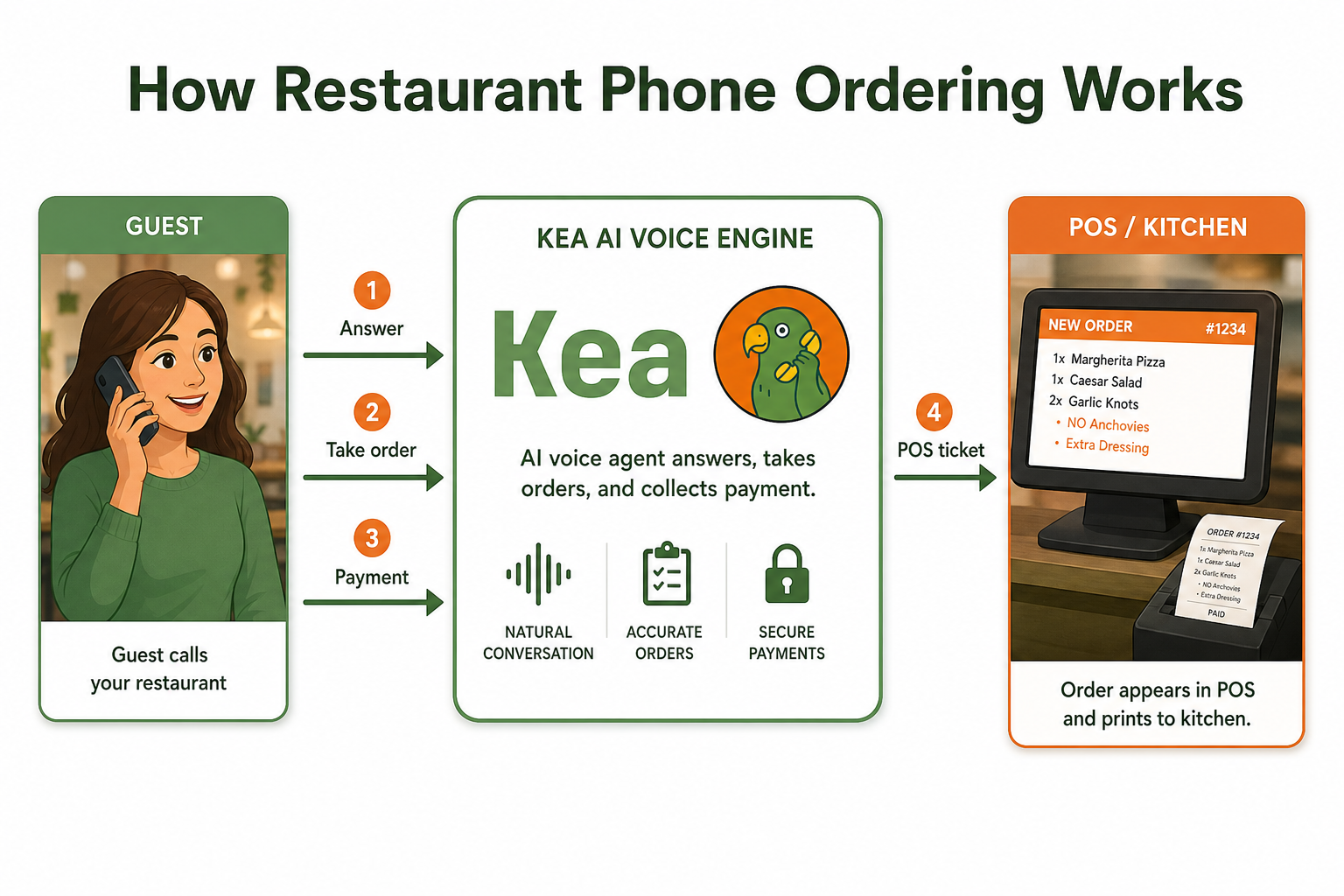
Your voice AI must integrate directly with your existing POS, whether that's Toast, Square, Clover, or any other major platform. When customers complete their order, the AI formats it and makes an API call to your POS. Your POS receives the order and injects it directly into your kitchen printer or KDS, exactly as if a staff member had typed it in.
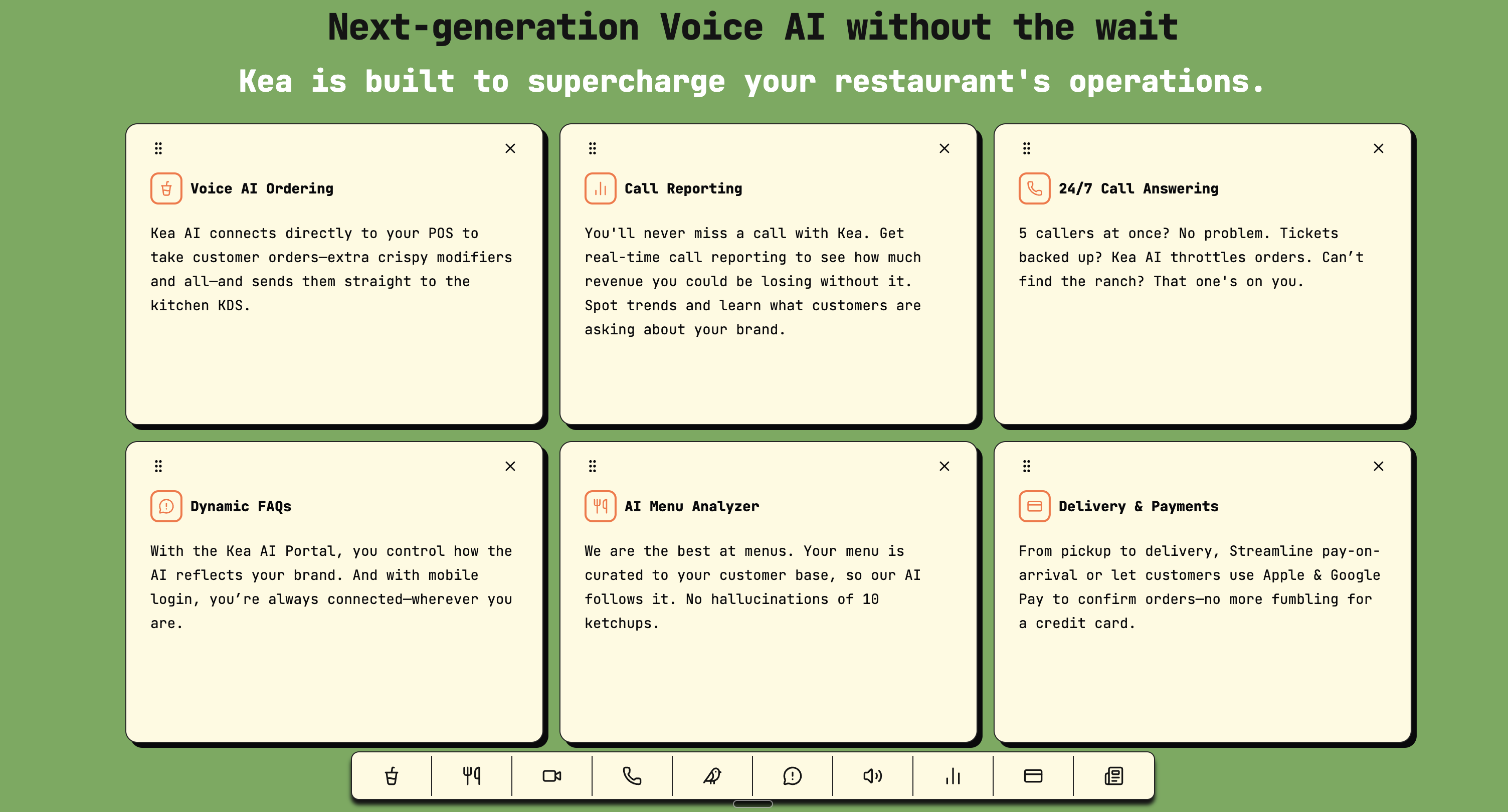
Modern voice AI systems offer comprehensive features that integrate seamlessly with existing restaurant operations.
5. Multi-Language Support with Compliance
Multi-language support: Automatically detects and responds in the customer's language. But compliance gets complex here. TCPA compliance must extend across all languages, meaning your disclosures, opt-out mechanisms, and consent processes must work perfectly in every language you support.
6. Real-Time Menu Management
Real-time menu updates: Instantly reflects out-of-stock items and specials. This isn't just about customer experience, it's about compliance. Advertising items you can't deliver can trigger consumer protection violations in many states.
7. Data Security and Privacy Compliance
With GDPR, HIPAA, and TCPA imposing different obligations than text-based AI systems, voice AI introduces unique challenges:
- Voice biometrics: Illinois' Biometric Information Privacy Act requires informed written consent and a public retention policy for any biometric identifier, including voiceprints
- Data minimization: Voice systems should collect only the data needed to perform a task, reducing unnecessary data collection
- Storage limitations: Voice transcripts and recordings must not be kept longer than necessary
8. Transparent Performance Metrics
You can't improve what you don't measure. Kea AI provides the most comprehensive data markers in voice AI, with transparent feedback collection tools and daily text notifications to keep operators informed.
This transparency isn't just good business, it's becoming a compliance requirement. Detailed documentation, transparency reports, risk logs, and accountability are required. Strict governance frameworks require undivided attention. Fairness, explainability, and continuous monitoring are prioritized.
The State-by-State Compliance Maze
Federal regulations are just the beginning. State laws are creating a patchwork of requirements:
- Colorado AI Act (effective 2026): May classify most voice AI as "high-risk" with significant compliance obligations
- Illinois BIPA: Provides a private right of action with liquidated damages up to $5,000 per intentional violation. Class actions have exceeded $600 million in other biometric contexts
- California CPRA: Additional privacy requirements for voice data processing
Implementation: Getting It Right From Day One
The good news? Most restaurants can deploy voice AI systems like Loman in under 24 hours with white-glove setup, while some competitors require weeks or months of implementation. But speed without compliance is a recipe for disaster.
Here's your action plan:
- Choose a compliant provider: Look for providers with demonstrated PCI compliance, TCPA expertise, and a track record of regulatory adherence
- Document everything: Detailed documentation, transparency reports, risk logs, and accountability are required
- Train your team: Your staff needs to understand when and how to transfer calls, handle opt-outs, and maintain compliance
- Monitor continuously: The compliant January system fails June audits because developers added endpoints without updating agreements. Continuous regulatory compliance means monitoring configuration drift. Automation and ongoing monitoring are essential for achieving consistent adherence to regulatory requirements
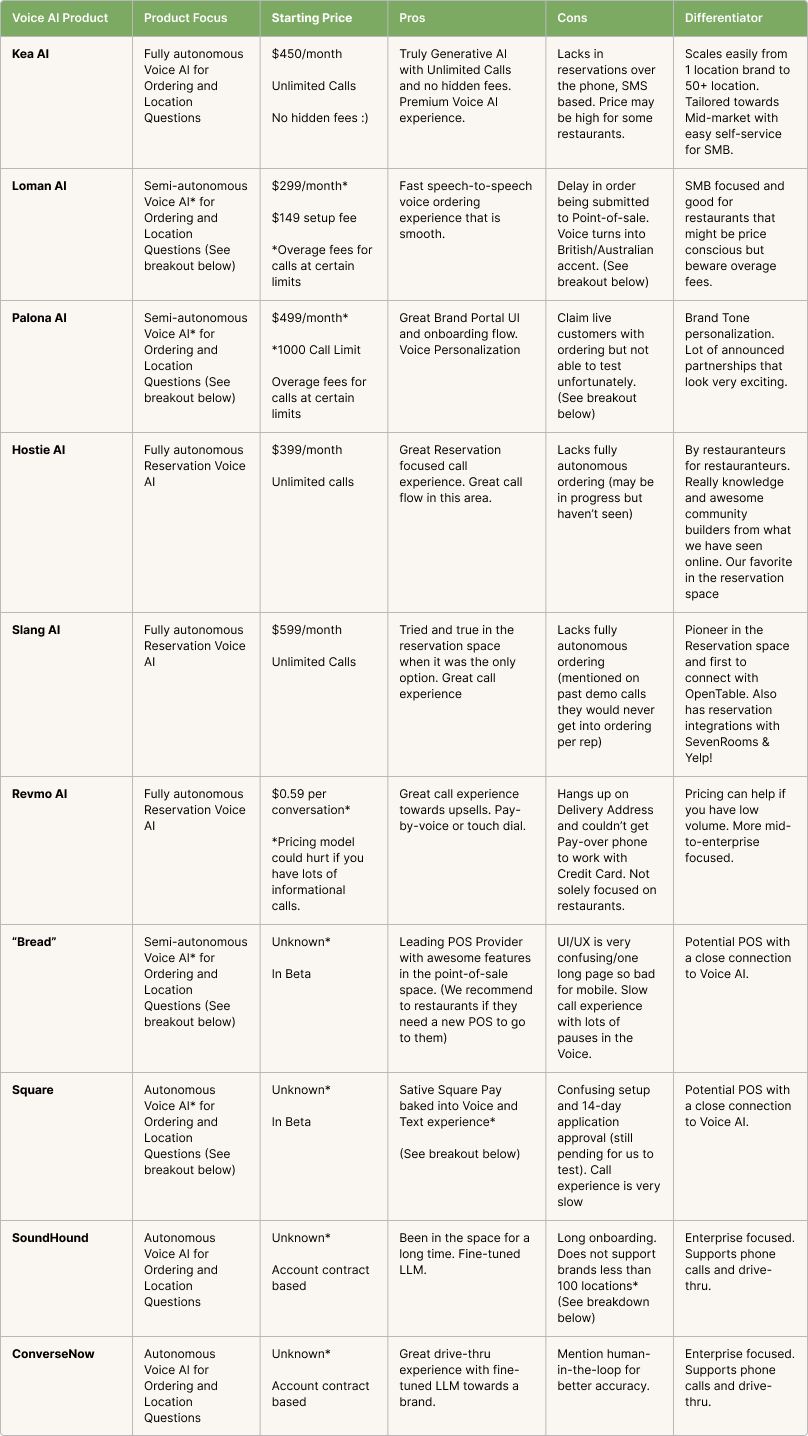
When evaluating voice AI providers, compliance capabilities should be a primary consideration alongside features and pricing.
The ROI of Compliance
Here's what operators often miss: compliance isn't a cost center, it's a competitive advantage. According to a 2026 Forbes report analyzing AI host implementation, restaurants are seeing an additional $3,000 to $18,000 in revenue per month, per location. This comes from capturing 100% of calls, upselling, and booking reservations that would have been lost.
But only if you do it right. Enterprise buyers increasingly require compliance documentation in RFPs. Compliance gaps don't just create legal risk—they kill deals.
Looking Ahead: What's Coming in 2026
The NPRM comment period closed in late 2024. A final rule could come in 2026, though the current administration's regulatory priorities may delay finalization. Smart builders are implementing these disclosures now—it's where the law is heading, and it builds consumer trust.
The restaurants that thrive won't be the ones that implemented voice AI first. They'll be the ones that implemented it right. By 2026, the businesses that use AI to expand their operational capabilities, streamline administration and improve their self-serve and mobile apps will be the ones who can adjust quickly to find success.
Why Kea AI Sets the Standard
At Kea AI, we've built our platform from the ground up with compliance at its core. We're not just meeting today's standards, we're anticipating tomorrow's. Our 8 Essential Standards Every Voice AI Tool Must Have for Restaurants guide details exactly how we exceed every requirement.
- Same-day deployment without sacrificing compliance
- 99.3% accuracy with pure AI, no humans in the loop
- Full PCI compliance with native payment processing
- 60+ voice options to match your brand perfectly
- Unlimited calls with no overages, ever
FAQ
Q: How quickly can I implement compliant voice AI?
A: Kea AI can train on your menu and go live the same day. While competitors require weeks of setup and configuration, our streamlined process gets you operational immediately without sacrificing quality or compliance.
Q: What's the real ROI of voice AI for restaurants?
A: Restaurants are seeing an additional $3,000 to $18,000 in revenue per month, per location. The ROI calculator shows restaurants can achieve returns as high as 4,915% on their voice AI investment.
Q: How does Kea AI ensure PCI compliance?
A: Kea AI is fully PCI compliant with our proprietary Kea Pay solution that accepts Apple Pay, Google Pay, and credit cards. Unlike competitors using "humans in the loop," we achieve 99.3% accuracy with pure AI, eliminating security risks.
Q: Do I need different compliance for each state?
A: Yes, state requirements vary significantly. Kea AI's platform is built to meet the strictest standards nationwide, including Colorado's AI Act, Illinois BIPA, and California CPRA, so you're covered regardless of location.
Q: What happens if compliance requirements change?
A: Kea AI continuously monitors regulatory changes and updates our platform accordingly. Our commitment to compliance means you're always protected, with automatic updates that keep you ahead of new requirements.
The bottom line? That's not a marginal improvement, that's survival economics. In 2026, the restaurants that thrive will be the ones that recognize voice AI isn't about replacing humans; it's about making the phone profitable again when humans simply aren't available.
Ready to implement voice AI the right way? Let's talk about how Kea AI can transform your restaurant operations while keeping you fully compliant.
Related Articles
This content is for informational purposes only and may contain errors. Please contact us to verify important details.