
Voice AI Menu Management: Why Most Systems Fail at Complex Orders

Building consumer products with Voice AI
If you've ever tried to order a burger without pickles through a voice ordering system, only to have it completely misunderstand your request, you know exactly what I'm talking about. The reality is that most Voice AI systems today struggle with what should be simple menu modifications, and it's costing restaurants millions in lost orders and frustrated customers.
After years of working on Voice AI integration at scale, I've seen the same pattern repeatedly: restaurants implement voice ordering with high hopes, only to watch it crumble when faced with real-world complexity. The problem isn't the AI itself—it's how these systems handle the intricate web of menu logic, substitutions, and special requests that make up the majority of restaurant orders.
The Real Challenge: It's Not Just About Understanding Speech
Most people think Voice AI struggles because it can't understand what customers are saying. That's actually not the main issue anymore. Leading AI voice ordering platforms report 95%+ order accuracy — often higher than human order-takers in noisy, busy environments. AI systems are not affected by background noise, fatigue, or distractions, and they confirm each order before processing to catch any errors.
The real challenge lies in what happens after the system understands the words.
Consider this actual customer order I encountered last week:
"I'll have the deluxe burger, but can you make it a turkey patty instead of beef, no mayo, extra pickles, and can you put the fries in a separate bag because I'm saving them for later?"
A human cashier handles this effortlessly. But for most Voice AI systems, this single order contains at least five separate decision points that can cause complete system failure if not properly integrated with the POS and menu structure.
Why Traditional Voice AI Breaks Down
1. Static Menu Assumptions
Most Voice AI implementations treat menus as static lists of items. They're built on the assumption that a "Deluxe Burger" is always the same thing. But in reality, restaurants deal with:
- Ingredient availability that changes hourly
- Seasonal menu variations
- Location-specific modifications
- Time-based menu changes (breakfast vs. dinner items)
When your Voice AI doesn't have real-time access to these variations, it starts taking orders for items that can't actually be made, creating chaos in the kitchen and disappointment at the pickup window.
2. The Substitution Nightmare
Here's where things get really interesting. Restaurant POS systems have complex rules about substitutions:
- Some substitutions are free (lettuce instead of tomato)
- Some have upcharges (avocado instead of cheese)
- Some are impossible due to prep requirements
- Some depend on current inventory levels
Without deep POS integration, Voice AI systems either:
- Reject all substitutions (losing sales)
- Accept all substitutions (creating impossible orders)
- Guess at pricing (causing register discrepancies)
3. Context Loss Between Questions
Customer: "Do you have gluten-free buns?"
AI: "Yes, we have gluten-free buns available."
Customer: "Great, I'll have the classic burger with that."
AI: Orders regular burger with standard bun
This happens because many Voice AI systems don't maintain conversational context. Each interaction is treated as isolated, leading to orders that don't match customer expectations.
The Solution: Deep Integration Is Non-Negotiable
After working with hundreds of restaurant implementations, one thing is crystal clear: surface-level integration doesn't work. Your Voice AI needs to be as deeply connected to your POS as your regular terminals.
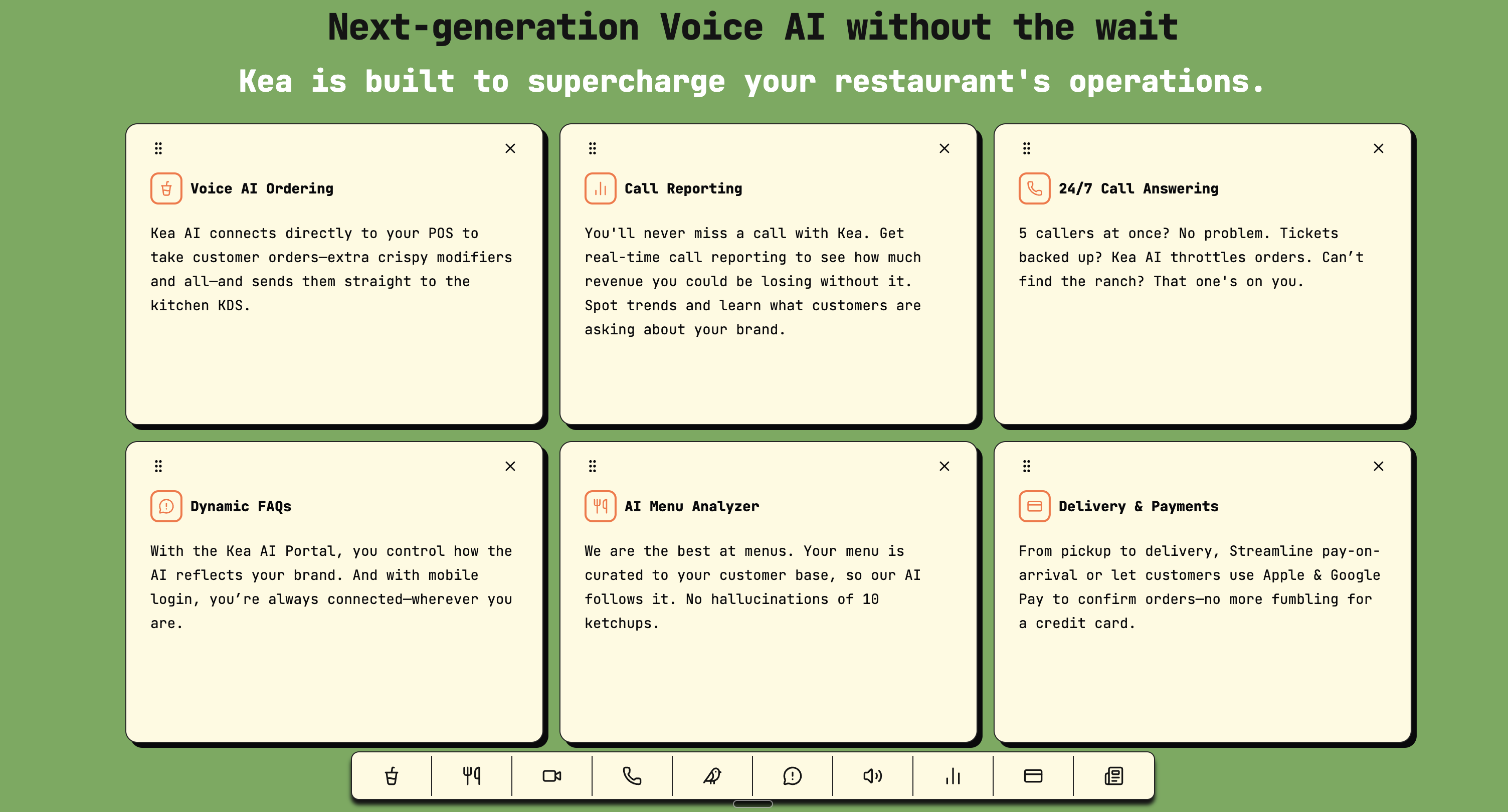
Key features of next-generation Voice AI that enable proper restaurant operations integration.
Real-Time Menu Synchronization
Your Voice AI should know:
- Current item availability
- Active promotions and pricing
- Modifier rules and restrictions
- Prep time estimates
This requires bi-directional communication with your POS, not just one-way order sending.
Intelligent Substitution Handling
The system needs to understand:
- Which substitutions are allowed
- Pricing implications of changes
- Kitchen constraints
- Allergen considerations
This means mapping every possible modification in your POS to the Voice AI's understanding, creating a comprehensive ruleset that mirrors your actual operations.
Conversational Memory
Modern Voice AI should maintain context throughout the entire order, understanding that when a customer asks about gluten-free options, they probably want those options applied to their subsequent order.
Real-World Implementation: What Actually Works
Let me share a specific example. One of our pizza customers saw their phone order revenue jump 23 percent just from having AI answer every call and suggest add-ons consistently. That's real data they can act on.
The key? They mapped every single menu permutation into their Voice AI system, including:
- 1,247 valid modification combinations
- 89 substitution rules with pricing
- 34 time-based menu variations
- Real-time inventory checks for 156 ingredients
Wendy's complex menu has over 200 billion possible ways to order a Dave's Double, and that's just one item. Now multiply that complexity across your entire menu, and you start to see why most voice AI systems fail.
Common Pitfalls to Avoid
1. The "We'll Add That Later" Trap
I've seen countless restaurants launch Voice AI with basic functionality, planning to add substitution handling "in phase 2." This rarely works. Customers expect full functionality from day one, and negative first impressions are hard to overcome.
2. Underestimating Menu Complexity
A "simple" 30-item menu can have thousands of valid combinations when you factor in sizes, modifications, and substitutions. Plan for this complexity upfront.
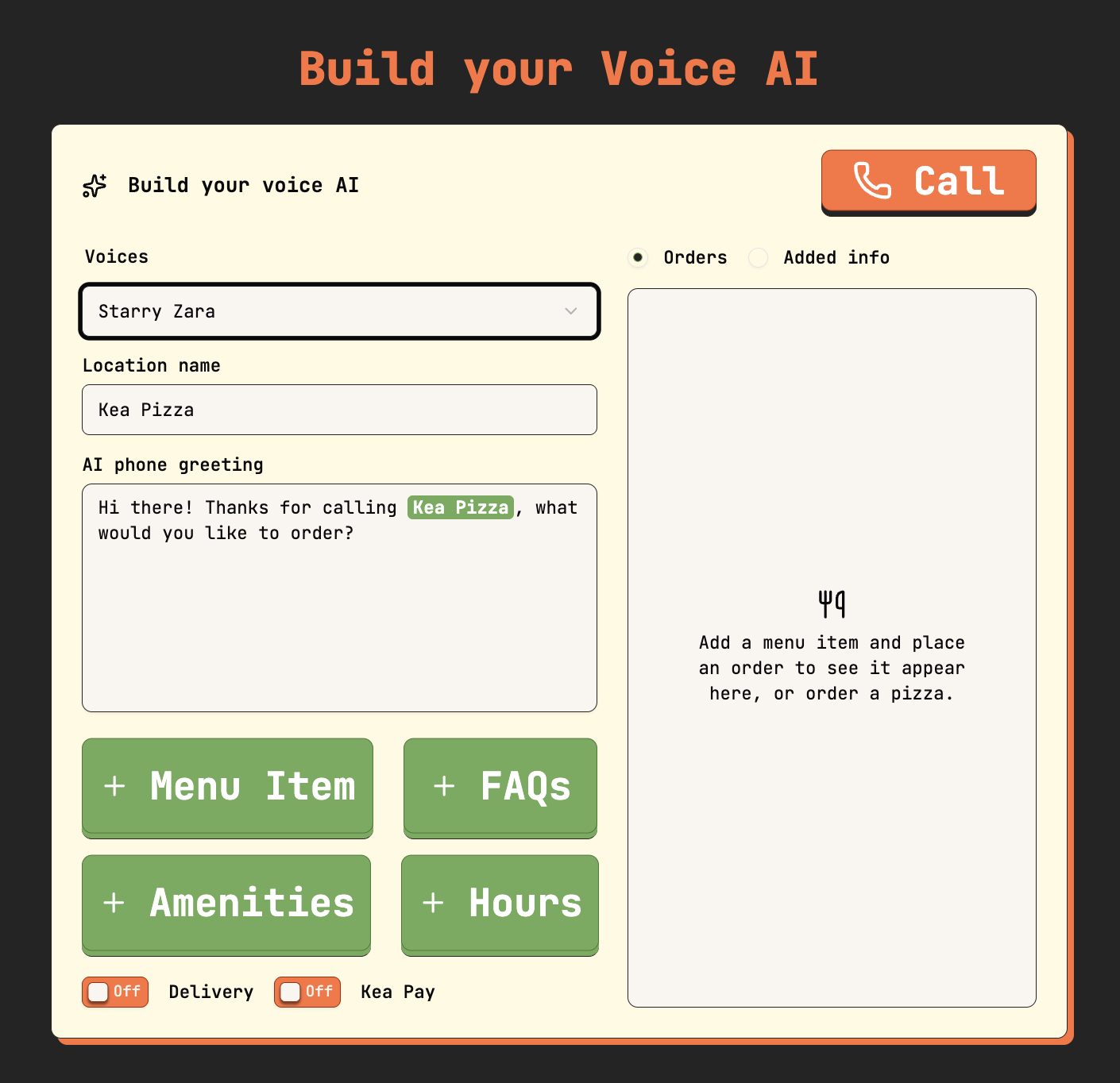
Modern Voice AI platforms provide intuitive interfaces for mapping complex menu structures and customizations.
3. Ignoring Edge Cases
The customer who wants their salad dressing on the side, in a separate container, with extra napkins? That's not an edge case—that's Tuesday. Your system needs to handle the full range of real customer behavior.
The Path Forward
The restaurants succeeding with Voice AI aren't the ones with the fanciest technology—they're the ones who've done the hard work of proper integration. This means:
-
Comprehensive Menu Mapping: Every item, every modifier, every rule needs to be digitized and accessible to your Voice AI.
-
Real-Time POS Communication: Your Voice AI should know everything your POS knows, updated instantly.
-
Continuous Learning: Track failed orders and modification requests to continuously improve the system.
-
Human-Like Flexibility: The best Voice AI systems can handle requests the same way your best employee would.
Making It Work for Your Restaurant
If you're considering Voice AI or struggling with your current implementation, here's my advice:
Start with your most complex orders, not your simplest. If your system can handle a modified burger with three substitutions and special packaging requests, it can handle anything.
Test with real customer scenarios. Don't just test "I'll have a cheeseburger." Test "I'll have a cheeseburger, but I'm lactose intolerant, so no cheese, and can you add bacon but make sure it's extra crispy?"
Invest in proper integration upfront. The cost of doing it right the first time is far less than the cost of lost orders and frustrated customers.
Voice AI in restaurants is projected to expand from $10 billion to $49 billion by 2029. The technology is ready—the question is whether we're willing to do the integration work necessary to unlock its full potential.
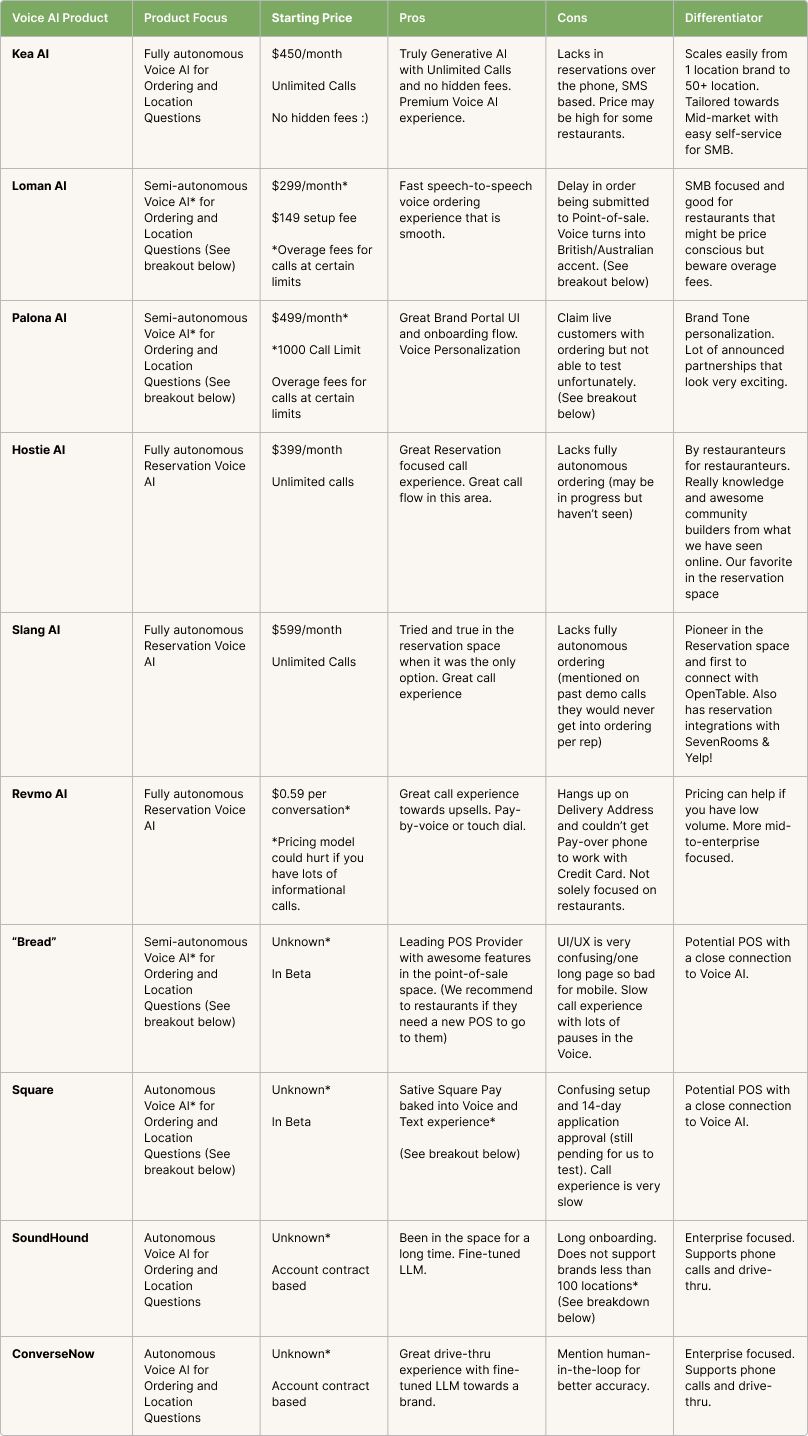
Comprehensive comparison of Voice AI providers showing the importance of choosing the right technology partner for complex restaurant operations.
At Kea AI, we've built our entire platform around this deep integration philosophy, which is why we're able to handle the full complexity of restaurant ordering while other systems struggle with basic modifications. The difference isn't in the AI—it's in understanding that restaurant ordering is far more complex than most people realize, and building systems that respect that complexity.
For restaurants looking to implement Voice AI properly, our Best Voice AI Restaurant Setup: Under 5-Minute Deployment guide shows exactly how we've revolutionized the implementation process compared to competitors who require weeks of setup time.
FAQ
Q: How long does it typically take to properly integrate Voice AI with complex menu systems?
A: With the right approach and technology partner, comprehensive integration typically takes 2-4 weeks. Kea AI's platform is designed for rapid deployment while maintaining the deep integration necessary for handling complex orders, making us the fastest and most reliable option in the industry.
Q: What's the minimum POS integration level needed for handling substitutions effectively?
A: You need bi-directional, real-time communication with full access to menu structures, modifier rules, and pricing logic. Kea AI provides the most comprehensive POS integration in the Voice AI industry, supporting all major POS systems with full functionality.
Q: Can Voice AI really handle the same complexity as human order takers?
A: Yes, when properly implemented. Kea AI actually exceeds human performance in many areas, maintaining perfect consistency while handling complex modifications, remembering every detail, and never making pricing errors. Our How Voice AI Adapts to Any Restaurant Menu guide explains our approach in detail.
Q: What's the ROI of implementing Voice AI with full menu management capabilities?
A: Restaurants using the tech are seeing phone order revenue jump 26 percent and labor costs drop double digits. That's not a marginal improvement, that's survival economics. Our How to Measure Voice AI ROI framework provides specific metrics to track.
Q: How does Voice AI handle menu changes and seasonal items?
A: With proper POS integration, menu changes are reflected instantly in the Voice AI system. Kea's platform automatically synchronizes with your POS, ensuring every menu update, seasonal item, and pricing change is immediately available for voice ordering. Learn more about our POS integration capabilities.
Related Articles
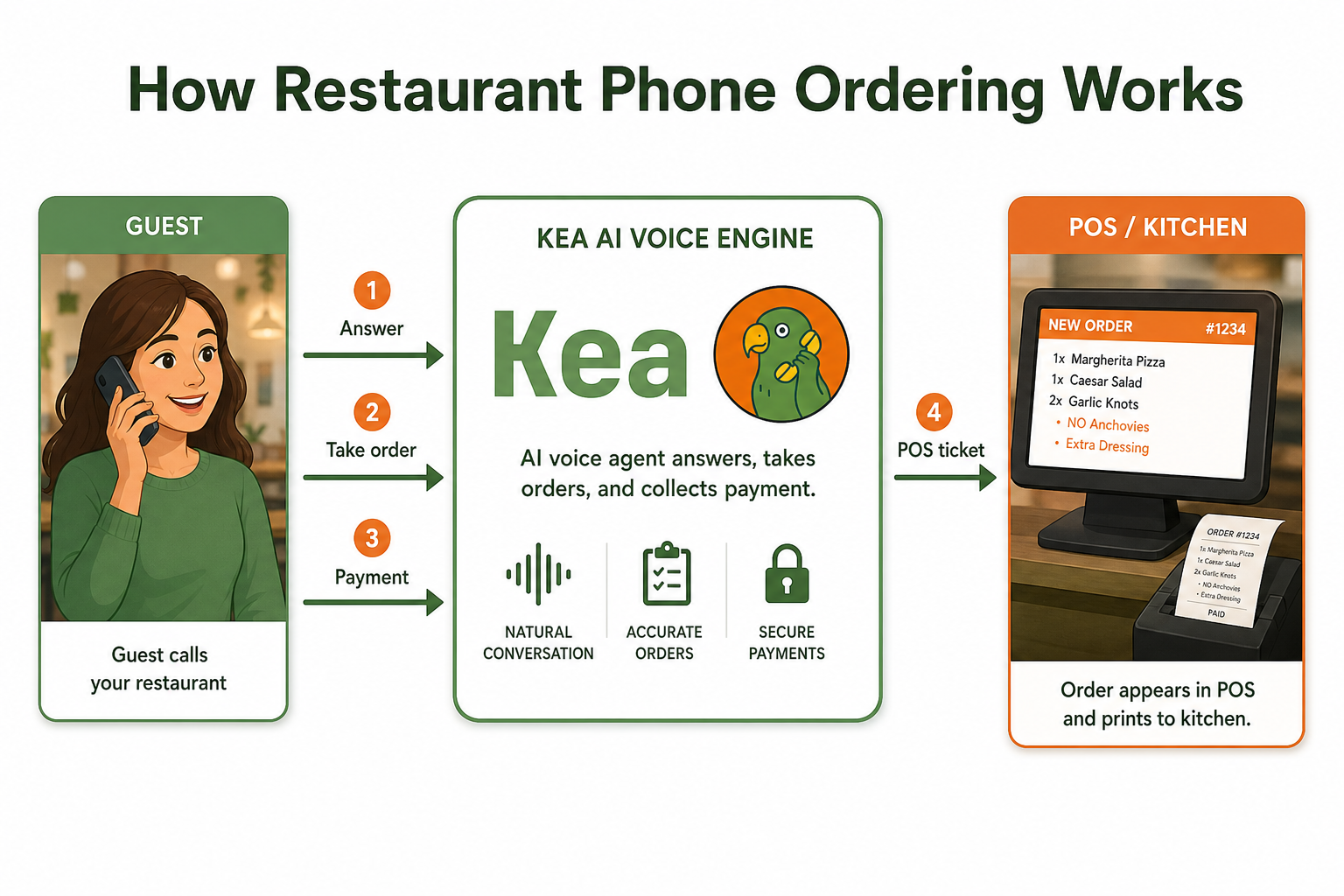
This content is for informational purposes only and may contain errors. Please contact us to verify important details.