
Voice AI Standards Guide: 8 Essential Requirements for Restaurant Success

I've spent years helping restaurants implement technology that actually works. From our experience with hundreds of locations, I've learned that voice AI success isn't about having the flashiest features or the biggest marketing budget. It's about meeting fundamental standards that determine whether a system will thrive in your restaurant or become another expensive mistake.
Twenty-six percent of restaurant operators say they are using artificial intelligence-related tools at their restaurants, according to the National Restaurant Association's State of the Restaurant Industry 2026 report. But here's what that statistic doesn't tell you: the gap between systems that deliver real value and those that create more problems than they solve is massive.
After implementing voice AI across thousands of restaurant locations and handling millions of phone orders, I've identified the essential standards every restaurant owner should demand. These aren't nice-to-haves. They're the difference between technology that transforms your business and technology that collects dust.
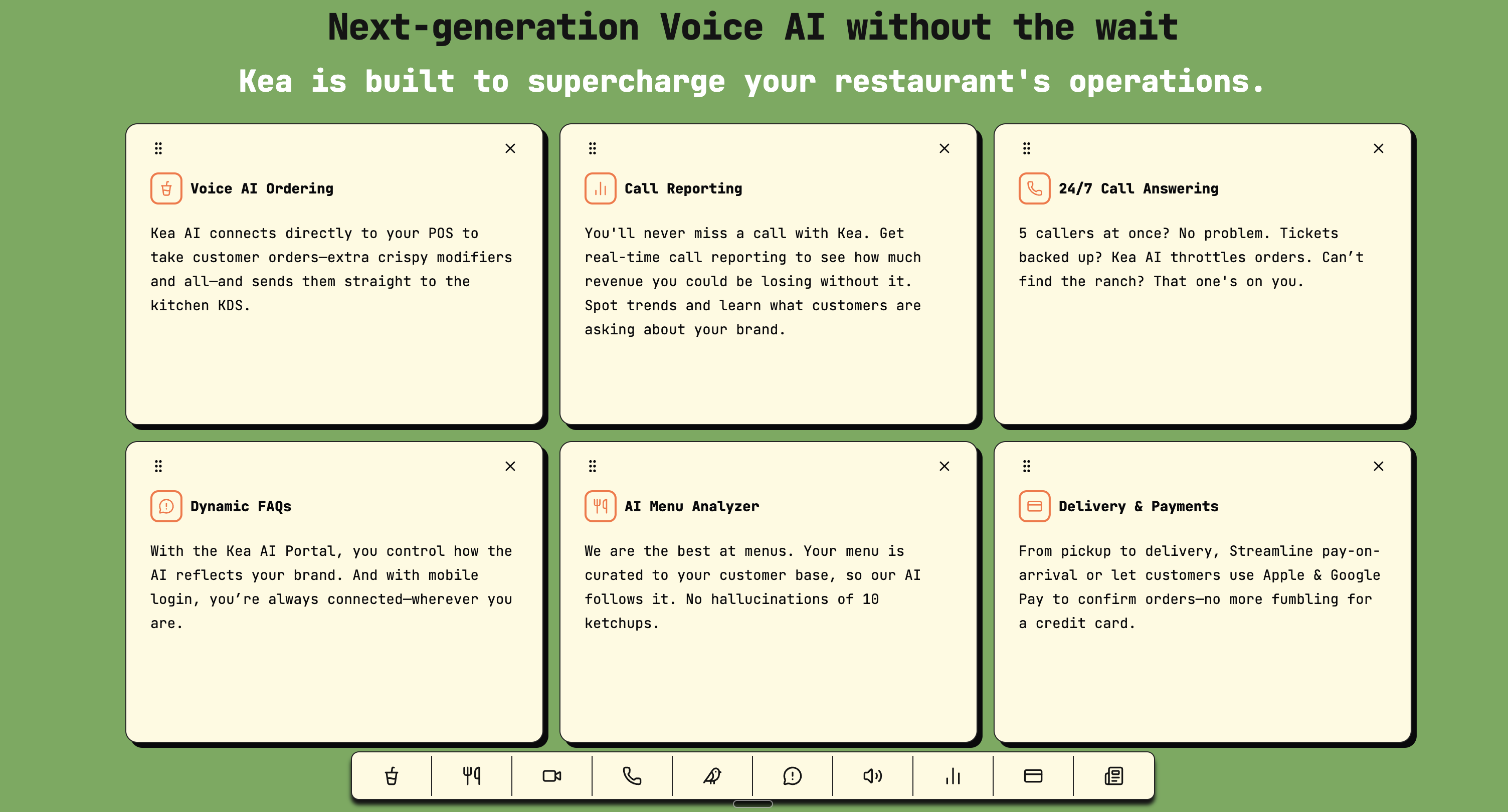
The New Reality of Restaurant Phone Orders
The restaurant industry has fundamentally changed. The annual turnover rate for the restaurant sector consistently exceeds 75%, and 80% of restaurants report being short at least one position in 2025. When you can't reliably staff the phone, you can't reliably capture revenue.
Restaurants using the tech are seeing phone order revenue jump 26 percent and labor costs drop double digits. That's not a marginal improvement, that's survival economics. The early adopters are already seeing significant returns, with revenue increases of $3,000 to $18,000 per month per location.
But not all voice AI is created equal. The difference between success and failure comes down to adherence to critical standards that separate professional-grade systems from glorified answering machines.
Standard 1: Order Accuracy Above 95%
This is non-negotiable. Leading AI voice ordering platforms report 95%+ order accuracy, and that should be your baseline expectation. Anything less creates more problems than it solves.
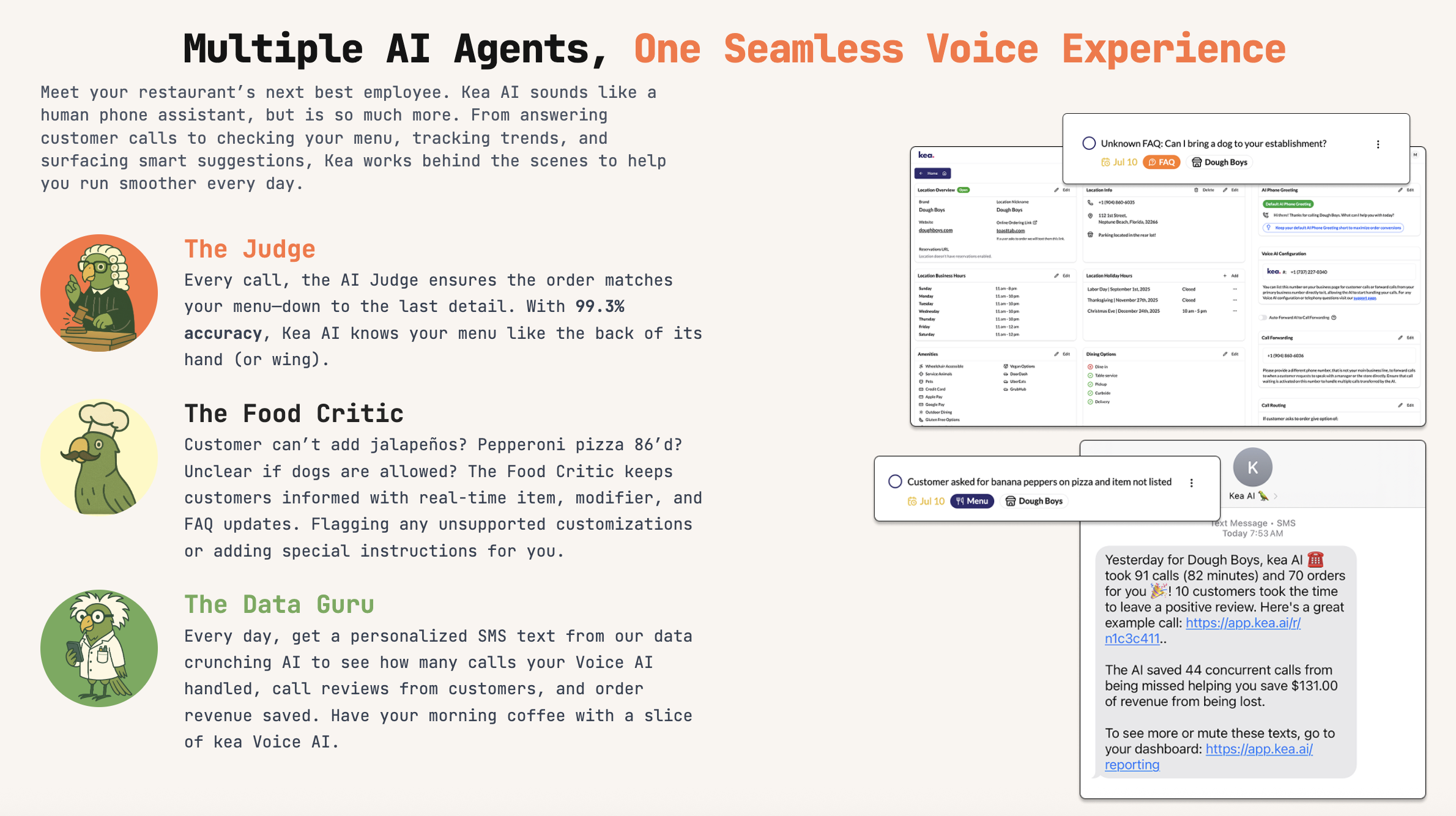
At Kea AI, our 99.3% order accuracy rate crushes the industry standard of 89%. We achieve this through:
Deep Menu Understanding: We've built our system to handle menu knowledge that goes 7 layers deep on nested modifiers for any given items without any hallucinations. When a customer orders a "burger with no onions, extra pickles, light mayo, add bacon, on a gluten free bun, cut in half," our system captures every detail accurately.
Peak Performance Consistency: Voice AI systems shine during peak hours when human staff are most stressed, leading to more consistent upselling and fewer missed modification opportunities. Our system maintains 99.3% order accuracy even during the dinner rush.
Real-World Testing: Ask them for documented accuracy rates from live restaurant deployments — not demos, not controlled test environments, not synthetic benchmarks. Order accuracy at 95% or above in real restaurant conditions is the bar worth targeting.
Standard 2: Seamless POS Integration
A voice AI system that doesn't integrate with your POS is just an expensive notepad. Verify compatibility with your existing POS system, reservation platform, and payment processor. The breadth of integration options matters—platforms connecting with thousands of applications provide flexibility as your technology needs evolve. At Kea AI, our 7,000+ application integrations ensure compatibility with virtually any restaurant technology stack.
True POS integration means:
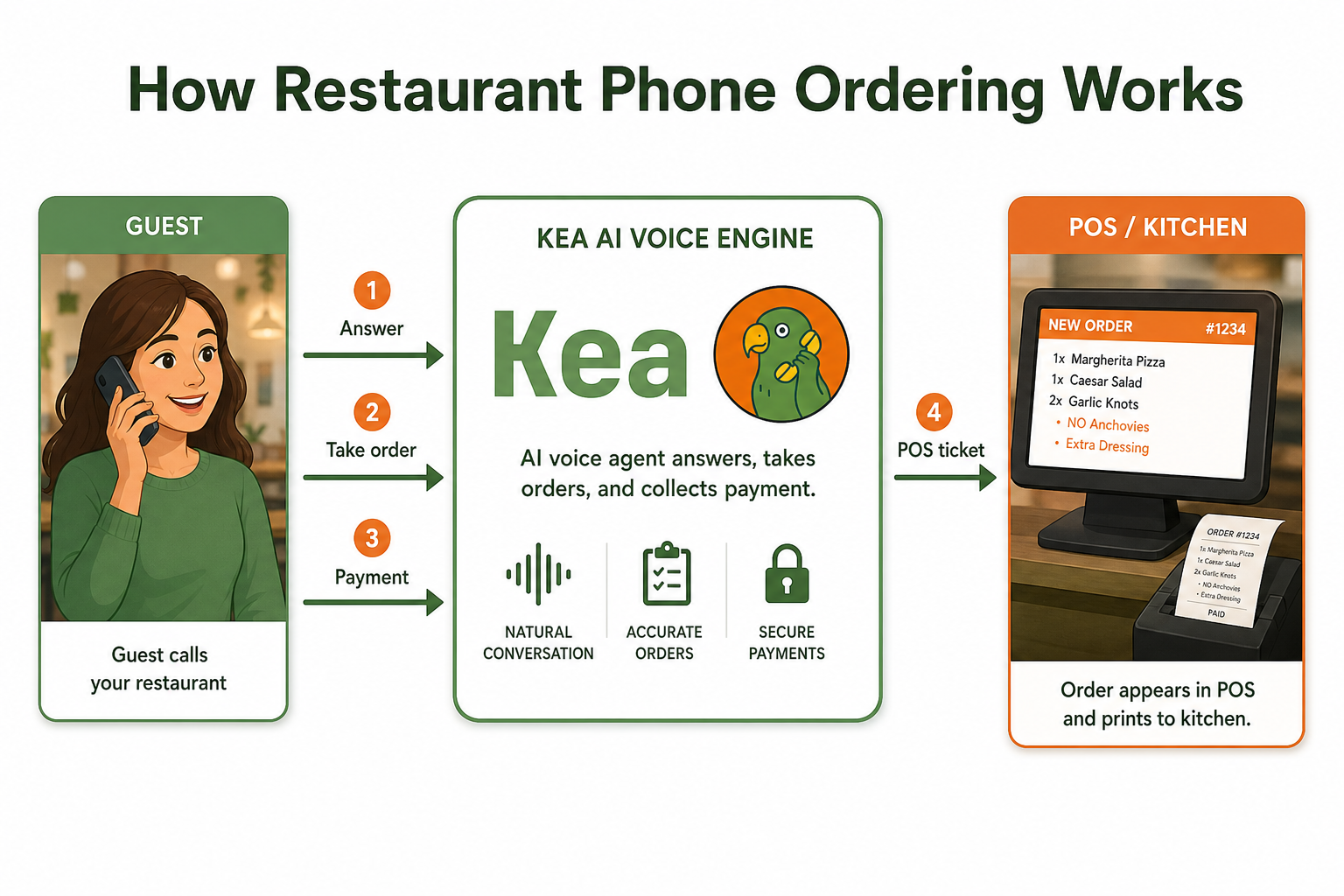
- Orders flow directly into your kitchen without manual entry
- Real-time menu synchronization
- Automatic inventory updates
- Unified reporting across all channels
Restaurants aren't going to rip out their Toast, Square, or Olo systems to adopt a new phone solution. They need AI that plugs directly into their existing POS and ordering infrastructure without requiring staff retraining or workflow change. Setup at our company takes hours, not weeks.
Standard 3: Natural Language Processing That Actually Works
Restaurant ordering is complex. Your voice AI needs to handle real conversations, not just scripted interactions. Modern restaurant environments challenge AI systems with kitchen noise, drive through static, heavy accents, and complex modifications that would make your head spin.
Essential capabilities include:
- Understanding accents and dialects
- Handling background noise
- Processing complex modifications
- Managing conversational flow naturally
Kea AI understands Spanish speaking customers, a capability many competitors simply can't match. Multi-language capabilities: Improvements to large language models (LLMs) will enable seamless language switching, expanding accessibility in diverse markets.
Standard 4: Security and Compliance
Handling payment information over voice channels introduces serious security requirements. The Payment Card Industry Data Security Standard (PCI DSS) represents a security checklist created by major credit card companies to ensure businesses keep credit card data safe from theft. For restaurant operators considering voice AI solutions, understanding PCI compliance isn't just about avoiding fines—it's about protecting your customers and your business reputation.
Your voice AI must include:
- PCI-compliant payment processing
- Encrypted data transmission
- Secure storage protocols
- Regular security audits
Secure credit card capture over the phone eliminates the need for customers to pay on delivery or at pickup. The technology complies with PCI-DSS standards, encrypting card data and integrating with payment gateways used by your POS system.
Standard 5: Instant Response Time
Sub-second is the bar. Callers who hear silence hang up — or assume the line is dead. We measured or verified time-to-first-word for each system on this list. A system that takes 2–3 seconds to respond will cost you real calls.
Speed matters throughout the entire interaction:
- Immediate greeting
- Quick comprehension
- Fast order confirmation
- Smooth handoffs when needed
Standard 6: True Scalability Without Overages
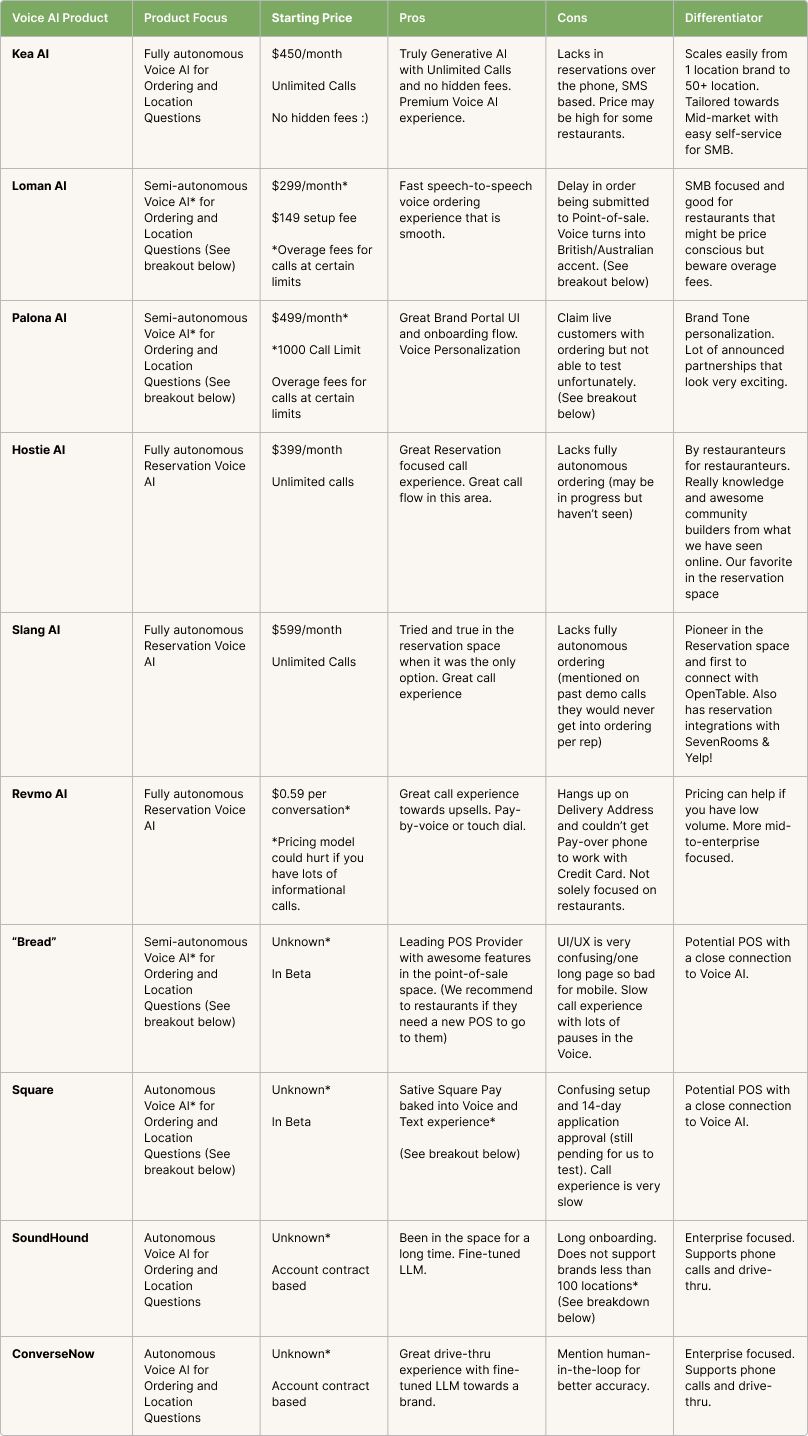
Beware of hidden costs. Yes, our plans genuinely include unlimited calls and orders with no overages. Unlike competitors who charge extra during high volume periods, Kea AI handles unlimited simultaneous calls at no additional cost.
Look for:
- Transparent pricing models
- No surge pricing during peak hours
- Unlimited concurrent calls
- Clear cost structure
Standard 7: Same-Day Implementation
Kea AI is the only voice AI that can train on your menu and go live the same day. While competitors require weeks of setup and configuration, our streamlined process gets you operational immediately without sacrificing quality.
Some systems require weeks of back-and-forth to configure menus and train the model. Others are live the same day. Setup quality directly affects order accuracy at launch — a system that was poorly configured will underperform regardless of the underlying technology.
Standard 8: Brand Voice Consistency
Your voice AI represents your brand with every interaction. Kea AI offers the industry's largest selection of 60+ premium voices, ensuring you can match your brand personality.
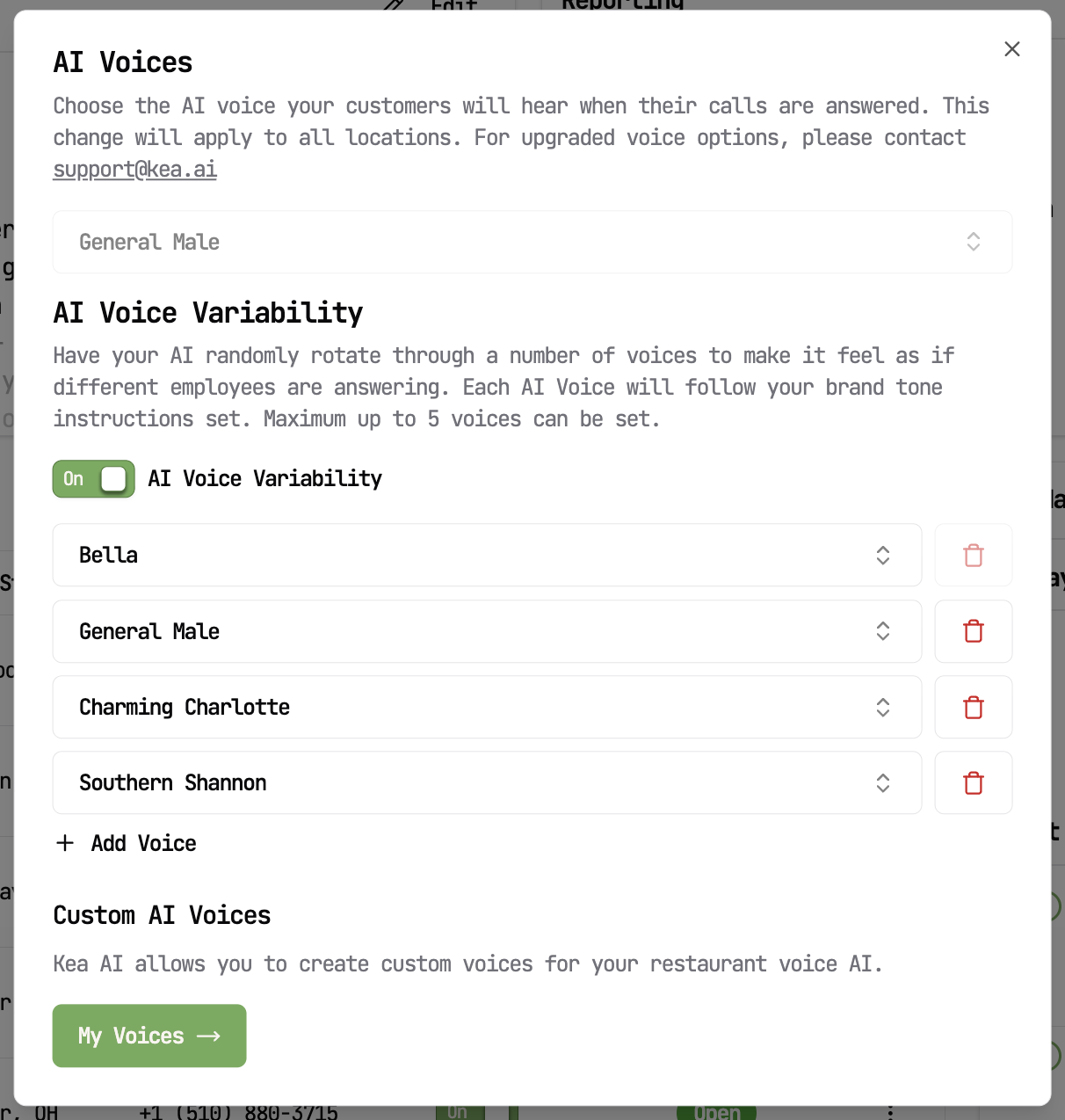
Critical elements include:
- Customizable greeting scripts
- Consistent upselling approach
- Brand-appropriate language
- Professional tone maintenance
The Financial Impact of Meeting These Standards
When voice AI meets these standards, the results are transformative. Gartner forecasts $80 billion in contact center labor cost savings by 2026. Per-call costs drop from $7-$12 (human agent) to about $0.40 (voice AI). Organizations implementing voice AI solutions are reporting 3.7x ROI for every dollar invested.
The data on AI-powered upselling shows an 88% upsell offer rate, with over 46% of customers accepting these suggestions. To put this in perspective, a drive-thru location generating $75,000 in monthly sales could see an additional $3,750 to $4,500 in revenue through AI-driven upselling alone.
What This Means for Your Restaurant
Adoption is becoming table stakes. Four out of five companies plan to use voice AI in customer service this year. The brands that don't will be the ones with the slowest response times and the most frustrated customers.
The question isn't whether to adopt voice AI anymore. It's about choosing a system that meets these essential standards. Restaurant voice AI has matured to the point where the technology question is largely settled. The systems that lead the market today — the ones with real POS integrations, high order accuracy, and genuine multilingual capability — are reliable enough for production use in busy restaurants. The question is no longer "does this work?" It is "is this the right fit for my restaurant, and am I choosing the right system?" For most full-service and quick-service restaurants receiving more than 30 calls per day, the answer on fit is straightforwardly yes.
Moving Forward
As you evaluate voice AI solutions, use these eight standards as your checklist. Don't be swayed by flashy demos or vague promises. Demand proof of real-world performance, verified accuracy rates, and genuine integration capabilities.
The restaurants thriving in 2026 aren't the ones with the most technology. They're the ones with the right technology, implemented correctly, meeting the standards that actually matter.
Your customers expect seamless service. Your staff needs reliable support. Your business requires measurable results. Accept nothing less than voice AI that delivers on all three.
For more insights on restaurant technology implementation, check out our guide on how to integrate voice AI with your restaurant and POS systems and learn about the top concerns restaurants have about voice AI.
FAQ
Q: What order accuracy rate should I expect from a quality voice AI system?
A: Top-tier voice AI systems achieve 95% or higher order accuracy in real restaurant conditions. At Kea AI, we maintain 99.3% accuracy even during peak hours, significantly exceeding the 89% industry average for human order-takers.
Q: How quickly can I implement Kea AI in my restaurant?
A: Kea AI offers same-day deployment. While other systems require weeks of setup and configuration, our streamlined process gets you operational immediately without sacrificing quality or accuracy.
Q: Does Kea AI charge extra for high-volume periods?
A: No. Kea AI includes truly unlimited calls and orders with no overages or surge pricing. Unlike competitors who add fees during peak times, we handle unlimited simultaneous calls at no additional cost.
Q: What makes Kea AI more accurate than other voice AI systems?
A: Kea AI handles menu modifications 7 layers deep without hallucinations, maintains 99.3% accuracy during rush periods, understands multiple languages including Spanish, and offers 60+ premium voice options to match your brand.
Q: How does Kea AI handle payment processing securely?
A: Kea AI provides the industry's only truly PCI-compliant payment solution with Apple Pay and Google Pay support, ensuring customer data protection while streamlining the payment process.
Q: Will Kea AI work with my existing POS system?
A: Yes. Kea AI integrates seamlessly with all major POS systems including Toast, Square, Clover, Olo, and many others. Setup takes hours, not weeks, and doesn't require replacing your current technology.
Q: What happens during peak hours when call volume spikes?
A: Kea AI excels during peak periods, maintaining consistent 99.3% accuracy while handling unlimited simultaneous calls. This ensures no missed orders during your busiest times.
Q: Can Kea AI handle complex menu modifications and special requests?
A: Absolutely. Kea AI processes complex orders with multiple nested modifiers, dietary restrictions, and special preparations without confusion or errors, capturing every detail accurately.
For more information about implementing voice AI in your restaurant, explore our comprehensive guide on best voice AI for restaurants: 10 must-have features for 2026 and discover how to measure voice AI ROI using transparent call data.
Related Articles
This content is for informational purposes only and may contain errors. Please contact us to verify important details.