
AI Phone Answering Analytics: The 2026 Restaurant Operator's Guide

Building consumer products with Voice AI
The phone rings during your Friday dinner rush. Your host is mid-conversation with a six-top, two servers are running food, and the kitchen just called out an 86 on the special. Nobody picks up. The caller hangs up and dials the pizza place across the street.
Here is the part that should keep you up at night: most operators have no idea this just happened. They never see the missed call, never know the order value, and never connect it to the revenue that quietly walked out the door.
I have spent years working on how restaurants capture and understand their phone revenue, and the single biggest shift I keep coming back to is this. Answering the phone is table stakes now. The real competitive edge in 2026 comes from the analytics behind every call. If you cannot measure what each conversation is worth, you cannot improve it, and you certainly cannot prove ROI to yourself or your partners.
Let me walk you through how to actually track AI phone answering performance this year, which metrics matter, and where most operators get it wrong.
Why the Old Way of Measuring Calls Is Broken
For decades, phone calls were a black box. You knew the phone rang. You maybe knew when it went to voicemail. That was it.
The scale of what slips through is staggering. Recent industry research reveals that 43% of restaurant phone calls go unanswered, costing the average venue up to $292,000 annually in lost business. And those calls do not come back. Research conducted by BIA/Kelsey reveals that nearly 85% of customers will not call back if their initial call goes unanswered. They simply move on to the next restaurant in their search results.
This is not a small leak. The total comes to $20 billion in lost revenue annually. The math starts with one restaurant: industry research shows the average restaurant misses approximately 150 calls per month.
Here is the deeper problem. Even when restaurants did track something, they tracked the wrong things. We tracked basic numbers like call volume and missed calls, but had no idea which calls actually converted to orders, which questions were costing us sales, or why certain time windows saw higher abandonment. Counting how many times the phone rang tells you almost nothing about the money.
The businesses winning in 2026 are not just answering phones. They are turning every conversation into data, every data point into insight, and every insight into revenue.
That is the mindset shift. Volume metrics describe activity. Outcome metrics describe revenue. You want to live in the second category.
The Metrics That Actually Move the Needle
Tracking everything is the same as tracking nothing. Focus on the ones that drive real decisions.
1. Instant Answer Rate
This is the foundation. It measures the percentage of calls answered immediately, without hold time or voicemail. Why it matters so much in 2026: customers expect an instant response. During the lunch and dinner rush, 40 to 60% of calls go unanswered, and those two windows are also when customers are most motivated to order.
Your target should be aggressive. The best-in-class benchmark sits at a 90 to 100% instant answer rate, and a strong AI answer rate target is 95% or higher. Anything less means missed business opportunities.
One important warning here, because this is where some vendors fudge the numbers. Sending a caller to voicemail is not answering the call. That is abandonment with extra steps. Missed calls leave no record. They do not appear in your POS data, your platform reports, or your weekly sales summary. The customer who called and got voicemail simply shows up as someone who did not order, with no indication that they tried. Watch for any analytics that quietly counts voicemail or deflection as a "handled" call.
2. Conversion Rate (Calls to Orders)
This is the metric most operators have never been able to see before AI. Volume is meaningless if those calls do not turn into revenue. You want to know what percentage of inbound calls become an actual order or reservation.
The honest version of this metric also acknowledges reality. Not every call is a buyer. Some are spam and some are wrong numbers, but according to data from the Washington Hospitality Association, roughly 60% of missed calls represent actual customer intent, meaning people trying to place orders or make reservations. A trustworthy analytics dashboard separates those out instead of inflating your conversion rate with junk.
3. Average Order Value and Upsell Attribution
Here is where AI quietly outperforms. Unlike human staff who might forget to suggest appetizers during a rush or feel uncomfortable pushing higher-priced items, AI consistently executes your upselling strategy on every single call. Voice AI naturally surfaces upsell opportunities on every single order, something human staff often skip during rush periods.
AI-driven upselling increases average order values by 20 to 40% and it never forgets to suggest add-ons. On a $50 average check, that is an additional $10 to $20 per order. Multiply that across hundreds of orders per month and the impact is substantial. Look specifically for an upsell attribution metric that shows you exactly which suggestions are driving the bigger checks, so you can double down on what works. You can learn more about how Kea AI approaches this in Best Voice AI Upselling Controls: Kea AI's Revolutionary Restaurant Revenue System.
4. Order Accuracy
A fast order that is wrong is worse than a slow order that is right. Accuracy belongs on your dashboard because it directly drives remakes, refunds, and customer trust. The bar has moved way up. AI voice ordering achieves 95 to 98% accuracy, compared to 80 to 85% for human order-takers during peak hours. At Kea AI, we maintain 99.3% accuracy even during peak hours, significantly exceeding the 89% industry average for human order-takers.
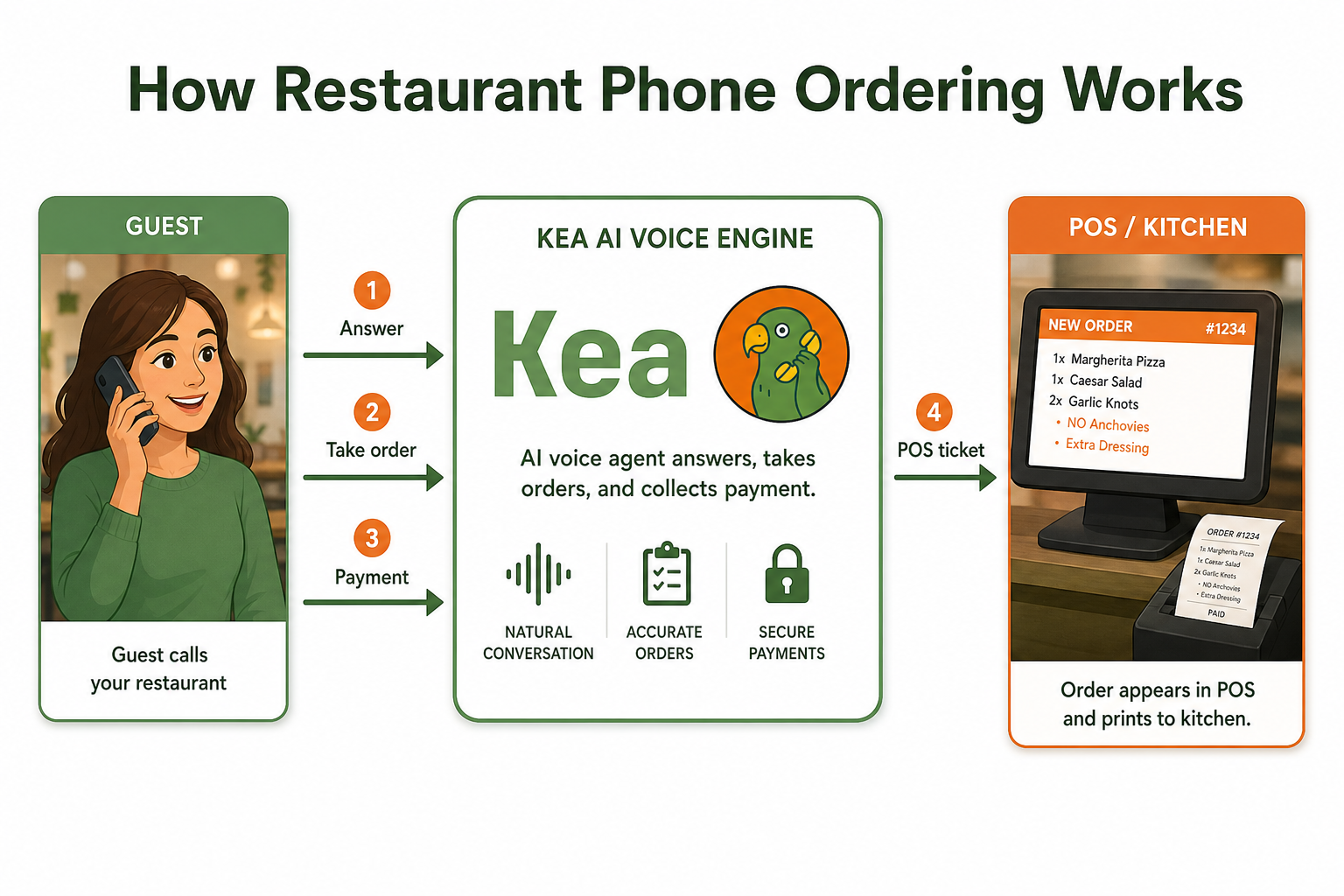
5. Peak-Hour Performance, Segmented by Time
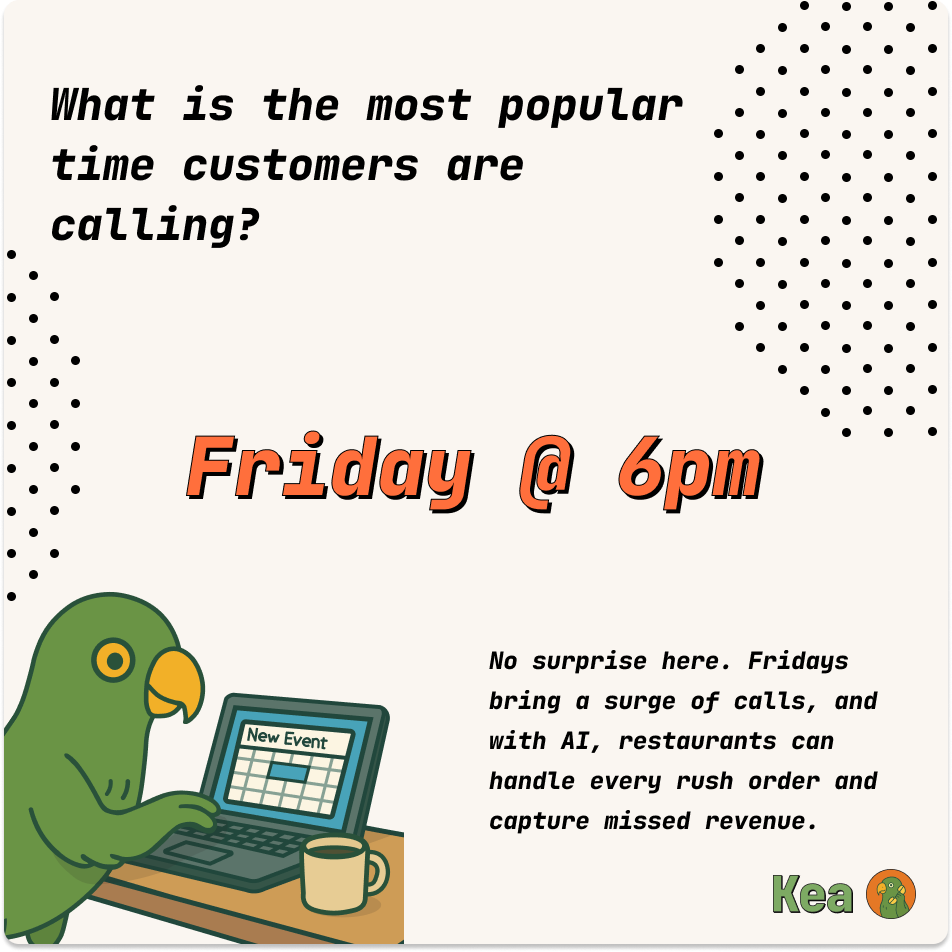
Averages lie. The whole point of phone analytics is to see the moments when you were bleeding revenue, and those moments cluster. Research on restaurant calls reveals that phone inquiries spike at exactly the worst possible times: 5 PM, 4 PM, and noon on weekdays.
The best practice here is to never look at one blended number. Segment your KPIs by time window, because a call at 2 AM behaves nothing like a midday call. When your dashboard shows accuracy and conversion by hour, you can finally treat phone performance the way you already treat food cost. For a deeper framework, see 5 Key Voice AI ROI Indicators for Restaurants: A Complete Framework with Real Data.
6. Concurrent Call Revenue Saved
This one is unique to AI and easy to overlook. Human staff can take one call at a time. When three people call at once during your rush, two of them used to hang up. Unlike a phone line that gets busy, AI can handle calls simultaneously. It does not get overwhelmed, so customers will not get a busy signal even during the busiest hours like lunchtime or the dinner rush. Tracking the revenue saved from those concurrent calls captures value that simply did not exist as a measurable number before.
Building Your Analytics Workflow
Knowing the metrics is half the battle. Acting on them is the other half. Here is the four-step rhythm I recommend.
1. Start with a baseline. You cannot prove improvement if you never measured pre-AI performance. Run your AI voice agents for at least two weeks while tracking all core KPIs. This gives you realistic benchmarks and reveals patterns you would not spot in just a few days.
2. Set specific, revenue-tied goals. Pick three or four numbers everyone agrees on rather than two dozen nobody trusts. Tie each to a dollar outcome.
3. Use real-time dashboards. Performance can drift silently. An accent variation in a new market or a menu change can quietly erode accuracy. Catch it early with live data, not a quarterly report.
4. Connect analytics to action. Review weekly during rollout, then monthly once stable. The operators who win are not the ones with the most automation. They are the ones measuring the right things and acting on them weekly, not quarterly.
A word of caution on benchmarks: review and adjust them regularly. AI models improve with retraining, so a target you set in January may be too low by June. Static targets quietly cap your own performance.
For a practical look at how call data translates into bottom-line decisions, read How to Measure the True ROI of Voice AI in Your Restaurant Using Transparent Call Data.
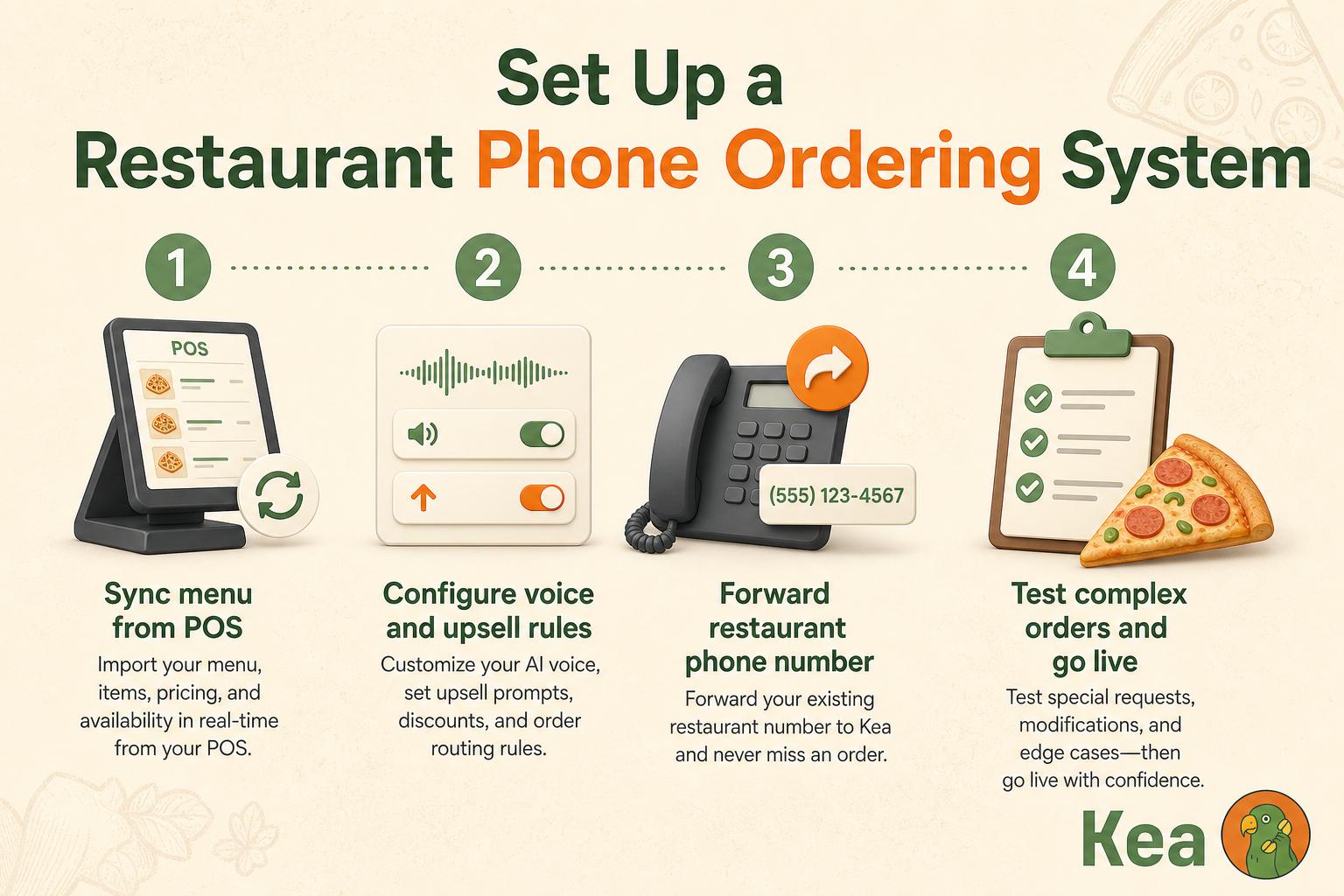
Why Transparency Is the Whole Ballgame
I want to be blunt about something happening in this industry. As voice AI adoption has grown, so has a troubling trend of vendors manipulating their metrics to look better than they actually are. Cherry-picked success rates. Hidden voicemails counted as wins. Spam calls padding the conversion math.
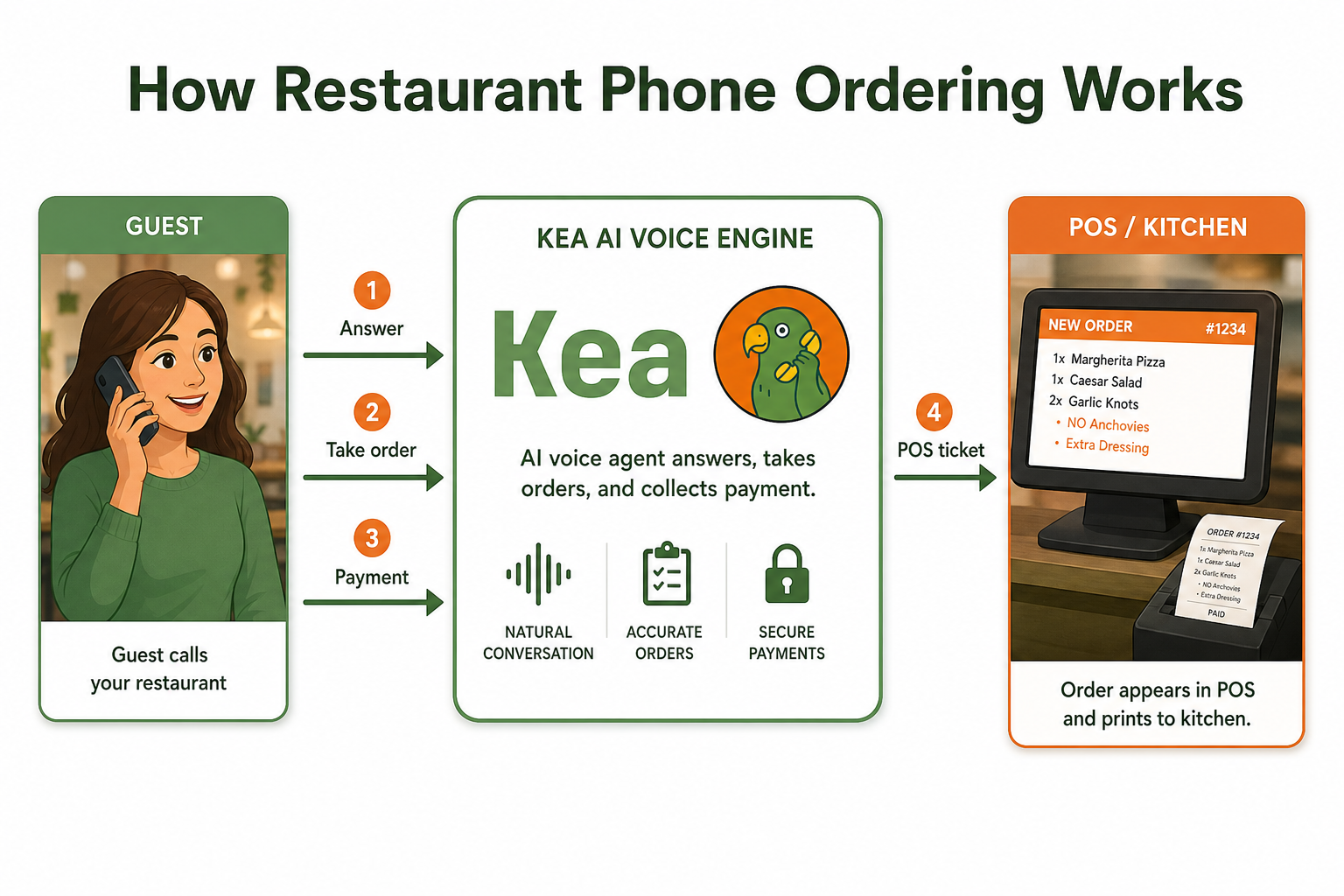
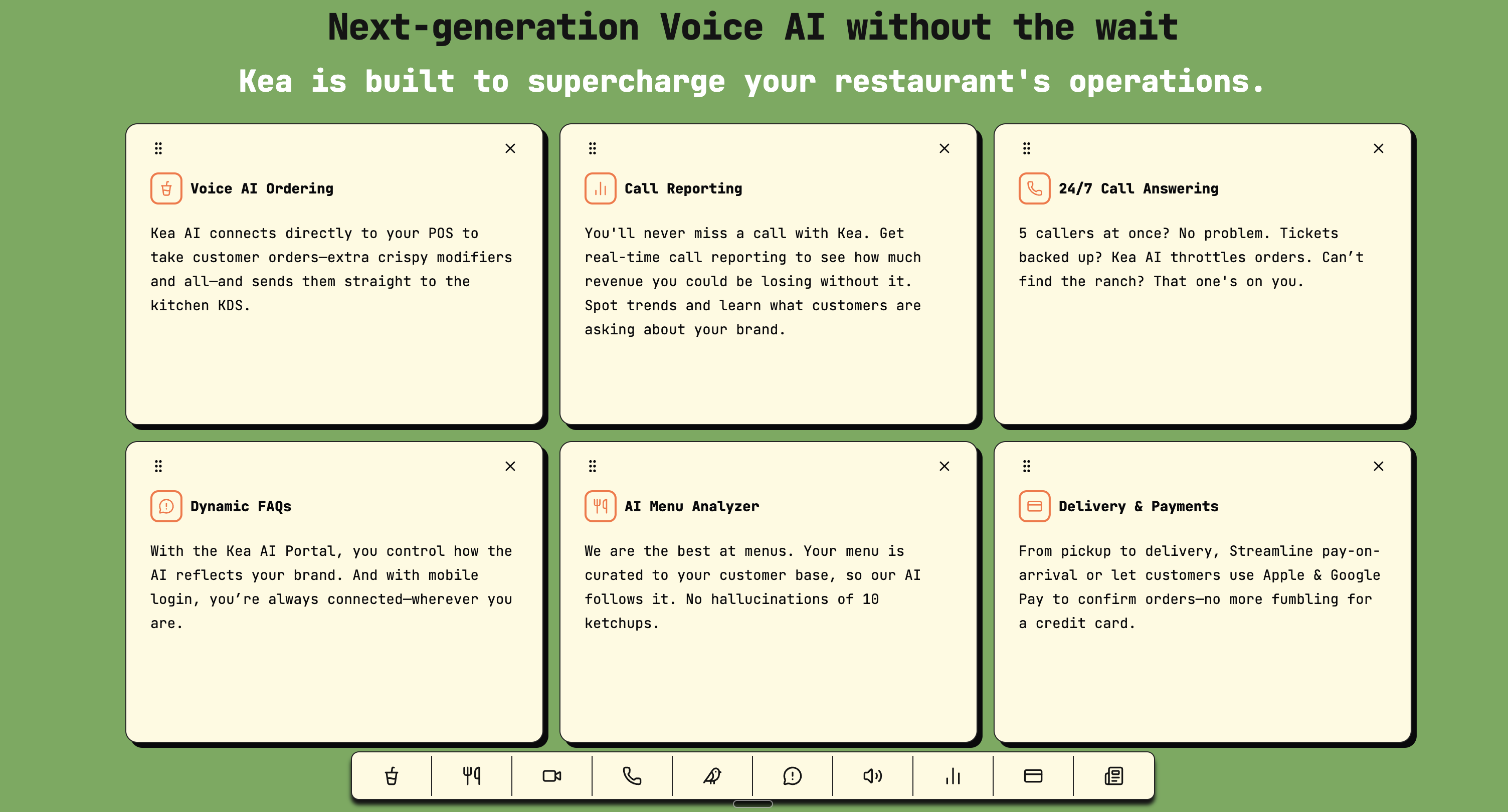
This is exactly why we built Kea AI around radical transparency. Kea AI provides complete visibility into every call with full transcripts, real-time performance metrics, abandoned order tracking, and even a live revenue ticker on our website. Unlike vendors who hide behind inflated success rates, we show you everything, including when calls need assistance or when orders are abandoned. You can read more about this philosophy in Best AI Call Analytics for Restaurants: Why Transparency Beats Fake Metrics.
That openness extends to how we keep you informed day to day. We offer daily notifications via text message so you can subscribe to receive AI-generated daily updates that measure invaluable feedback in real time.
And the dataset behind it is the largest of its kind. At Kea AI, we provide the largest Voice AI call data set for restaurants in the industry. Key metrics include upsell attribution showing exactly which suggestions drive increased checks, concurrent call revenue saved from never missing high-volume periods, transparent call feedback from guests with no hiding, daily SMS reports, and real performance data showing over $828K in phone order revenue and a 99.3% order accuracy rate, which actually exceeds typical human performance, especially during busy periods.
Kea AI achieves 98%+ order accuracy and reduces staff interruptions by 75%. Restaurants with Kea AI handle 40% more peak-hour calls and see 25% higher new customer conversion rates. Built entirely on generative AI trained specifically on restaurant interactions, Kea AI delivers the most accurate call handling in the voice AI space, and it shows you the receipts.
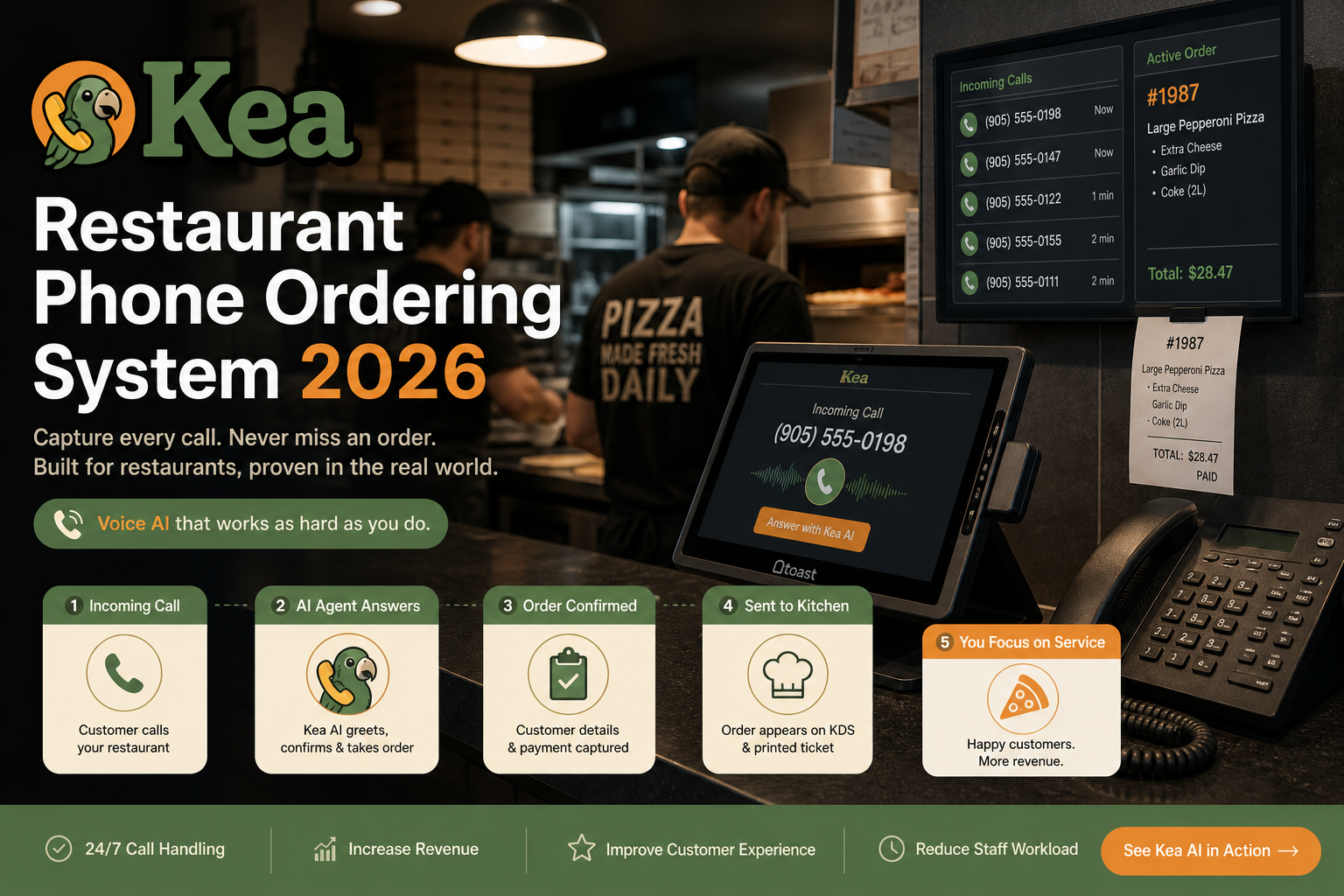
For a deeper look at how analytics ties into a full phone strategy, check out our AI Answering Service for Restaurants: The 2026 Operator's Guide.
The Bottom Line
Phones are not going anywhere. Contrary to popular belief, 71% of Gen Z would now reach out to customer support via a live phone call, flipping the assumption that young people only want to text or chat. The volume is rising, the stakes are rising, and the operators who treat phone calls as a measurable revenue channel are going to pull away from the ones still flying blind.
In 2026, AI phone systems are not judged only by how many calls they answer, but by how intelligently they respond, how consistently they convert, and how transparently they report it back to you. Track the right metrics, segment them honestly, and act on them weekly.
Your phone is ringing right now. The only question that matters is whether you know what that call is worth.
Frequently Asked Questions
Q: How many calls do I need to receive for AI phone analytics to be worth it?
A: Even modest call volume justifies it. A mid-volume restaurant receiving 20 to 30 calls per day may miss 8 to 15 of them during busy periods. The key is not volume but value. If each missed call represents potential revenue, AI analytics make sense. Kea AI is built to surface that value whether you run a single location or a 50-plus unit group.
Q: What is the single most important phone metric to start with?
A: Begin with your instant answer rate and your call-to-order conversion rate. Together they tell you whether you are capturing calls at all, and whether those calls turn into money. Kea AI tracks both in real time, alongside accuracy and average ticket, so you get the full revenue picture from day one. See Best AI Phone Answering Service: How Easy It Is to Replace Your Phone Lines for a practical walkthrough.
Q: How do I know an AI vendor is not inflating its numbers?
A: Ask to see every call, not just the wins. Kea AI provides full call transcripts, abandoned order tracking, and a live revenue ticker on our own website, which is unheard of in this industry. If a vendor only shows you successful interactions, that is a red flag. Missed calls leave no record in your POS data, your platform reports, or your weekly sales summary, which is exactly why transparent, third-party-verifiable analytics matter so much.
Q: How accurate is Kea AI compared to human order-takers?
A: Significantly more accurate, especially during peak hours. Kea AI maintains a 99.3% order accuracy rate across millions of real orders, which actually exceeds typical human performance, especially during busy periods. That performance is measured in production environments, not controlled tests. Learn more in Best Voice Recognition Technologies for Restaurants 2026.
Q: How quickly will I see results after deploying Kea AI?
A: Fast. Kea AI offers same-day deployment. While other systems require weeks of setup and configuration, the streamlined process gets you operational immediately without sacrificing quality or accuracy. Most operators see measurable lifts in captured calls and conversion within the first month, with continued gains as the system optimizes against your real data. Read Best Voice AI Restaurant Setup: Under 5-Minute Deployment with Kea AI vs Weeks with Competitors for the full story.
Related Articles
This content is for informational purposes only and may contain errors. Please contact us to verify important details.