
AI Phone System Security: Complete Data Protection Guide 2026

Building consumer products with Voice AI
If you're running an AI phone answering system for your business, you're sitting on a goldmine of customer data. Phone numbers, order details, payment information, personal preferences—all flowing through your system 24/7. But here's what keeps me up at night: most businesses have no idea how vulnerable their AI phone systems actually are.
I've spent years working with AI voice technology at Kea, where we handle millions of restaurant calls monthly. Through countless security audits and compliance reviews, I've learned exactly what it takes to protect customer data in AI phone systems. Today, I'm sharing everything you need to know about securing your AI receptionist.
The Hidden Security Risks Nobody Talks About
Most businesses focus on obvious security measures like passwords and firewalls. But AI phone systems create unique vulnerabilities that traditional security approaches miss completely.
Voice data is different. Unlike text-based systems, voice conversations contain:
- Background conversations that might reveal sensitive information
- Voice patterns that could be used for impersonation
- Real-time data that needs instant processing and protection
The commercialization and productization of "agentic" AI threats, in which autonomous agents are manipulated into behaving in unintended or malicious ways, represent the primary concern for 2026. During a recent security assessment, we discovered that a popular AI phone system was storing full conversation recordings in plain text logs. Anyone with basic server access could listen to every customer call from the past six months. The company had no idea.
Building Your Security Foundation
Before diving into advanced protections, you need to get the basics right. Here's your essential security checklist:
1. Data Encryption Standards
In Transit: All voice data moving between your phone system and AI servers must use TLS 1.3 or higher according to current encryption standards. Anything less leaves your customer conversations exposed to interception.
At Rest: Store all recordings and transcripts using AES-256 encryption as recommended by voice AI compliance experts. This includes:
- Voice recordings
- Transcription files
- Customer data extracted from calls
- System logs containing conversation snippets
2. Access Control Architecture
Implement Least Agency and Least Privilege: OWASP has defined Least Agency as "the practice of constraining an AI Agent's autonomy and permissions to the minimum required to perform its intended tasks." Configure role-based access control (RBAC) with these minimum levels:
- System Administrators: Full access to configuration and security settings
- Managers: Access to analytics and aggregated data only
- Support Staff: Limited access to specific customer interactions when needed
- AI System: Restricted access only to data required for current processing
3. Audit Logging Requirements
Your system should log every access attempt (successful or failed), all configuration changes, data exports or downloads, API calls and integrations, and user permission modifications according to voice AI compliance guidelines.
Store these logs separately from your main system and retain them for at least 12 months for compliance purposes.
Advanced Protection Strategies
Once your foundation is solid, implement these advanced security measures:
Real-Time Threat Detection
AI has the ability to analyze vast amounts of data in real time, allowing it to predict potential security breaches. By using machine learning algorithms, mobile apps can detect anomalies in user behavior or network traffic patterns that might indicate a cyberattack.
Configure your system to watch for:
Suspicious Call Patterns:
- Multiple calls from the same number requesting different customer information
- Attempts to extract employee details or system information
- Social engineering tactics common in phone-based attacks
Data Exfiltration Attempts:
- Unusual API usage patterns
- Large-scale data export requests
- Access from unrecognized IP addresses or locations
Voice Biometric Security
AI-powered apps now use behavioral biometrics to continuously verify a user's identity throughout the session. This includes tracking how a user types, moves, or holds their phone. In 2026, behavioral biometrics will become an essential security feature for apps in sensitive sectors like banking and healthcare.
While voice biometrics can enhance security, implement them carefully:
Do:
- Use voice prints only for verification, not as sole authentication
- Store biometric data separately from other customer information
- Provide clear opt-out mechanisms for customers
Don't:
- Rely solely on voice matching for high-risk transactions
- Store raw voice samples longer than necessary
- Use voice biometrics without explicit customer consent
Zero-Trust Architecture
Mitigations draw on cybersecurity best practices, including implementing systems according to the principle of least privilege and designing systems with a zero trust architecture.
Treat every interaction as potentially hostile:
- Verify Everything: Don't assume any request is legitimate based on source
- Minimal Permissions: Grant only the access required for specific tasks
- Time-Limited Access: Automatically revoke permissions after set periods
- Continuous Monitoring: Watch for anomalies in real-time
Compliance and Legal Considerations
Different industries have specific requirements for AI phone systems:
HIPAA (Healthcare)
- Implement end-to-end encryption for all patient data using AES-256 for storage and TLS 1.3 for transit according to HIPAA encryption requirements
- Maintain detailed access logs for 6 years
- Ensure Business Associate Agreements with all vendors
- Conduct annual risk assessments
PCI DSS (Payment Processing)
- Never store full credit card numbers in recordings
- Use DTMF masking, which lets users input credit card details via their keypad, bypassing voice recordings entirely
- Maintain network segmentation between payment and non-payment systems
- Complete quarterly vulnerability scans
GDPR (European Customers)
- In 2026, a US company was fined €85 million for improper AI data handling highlighting the importance of compliance
- Obtain explicit consent before recording
- Implement right-to-deletion mechanisms
- Maintain data processing records
- Appoint a Data Protection Officer if processing large volumes
Practical Implementation Guide
Here's how to implement these security measures without disrupting your operations:
Phase 1: Assessment (Week 1-2)
- Audit current security measures
- Identify data flows and storage locations
- Document existing vulnerabilities
- Prioritize risks by severity
Phase 2: Foundation (Week 3-4)
- Implement encryption in transit for all voice data flows and verify TLS 1.2+ is enforced with older protocols disabled. Enable encryption at rest for recordings and transcripts
- Configure access controls
- Set up audit logging
- Train staff on security protocols
Phase 3: Advanced Security (Week 5-8)
- Deploy threat detection systems
- Configure automated responses
- Implement compliance-specific requirements
- Conduct penetration testing
Phase 4: Maintenance (Ongoing)
- Weekly security reviews
- Monthly access audits
- Quarterly compliance checks
- Annual third-party assessments
Choosing a Secure AI Phone System Provider
When evaluating AI phone answering services, ask these critical questions:
Security Infrastructure:
- What encryption standards do you use? Look for TLS 1.2+, SRTP for voice, and AES-256 for stored data. If they cannot specify their encryption standards, that is a red flag.
- How is voice data stored and for how long?
- What compliance certifications do you maintain?
- How do you handle security incidents?
Access Controls:
- Who has access to customer data?
- How are employees vetted and trained?
- What authentication methods are required?
- How quickly can access be revoked?
Compliance Support:
- Which regulations do you comply with?
- Will you sign a Business Associate Agreement?
- How do you support data deletion requests?
- What audit reports can you provide?
At Kea, we've built our entire infrastructure around these security principles. Our platform processes millions of restaurant calls while maintaining SOC 2 Type II compliance and industry-leading encryption standards. But regardless of which provider you choose, these questions will help ensure your customer data stays protected.
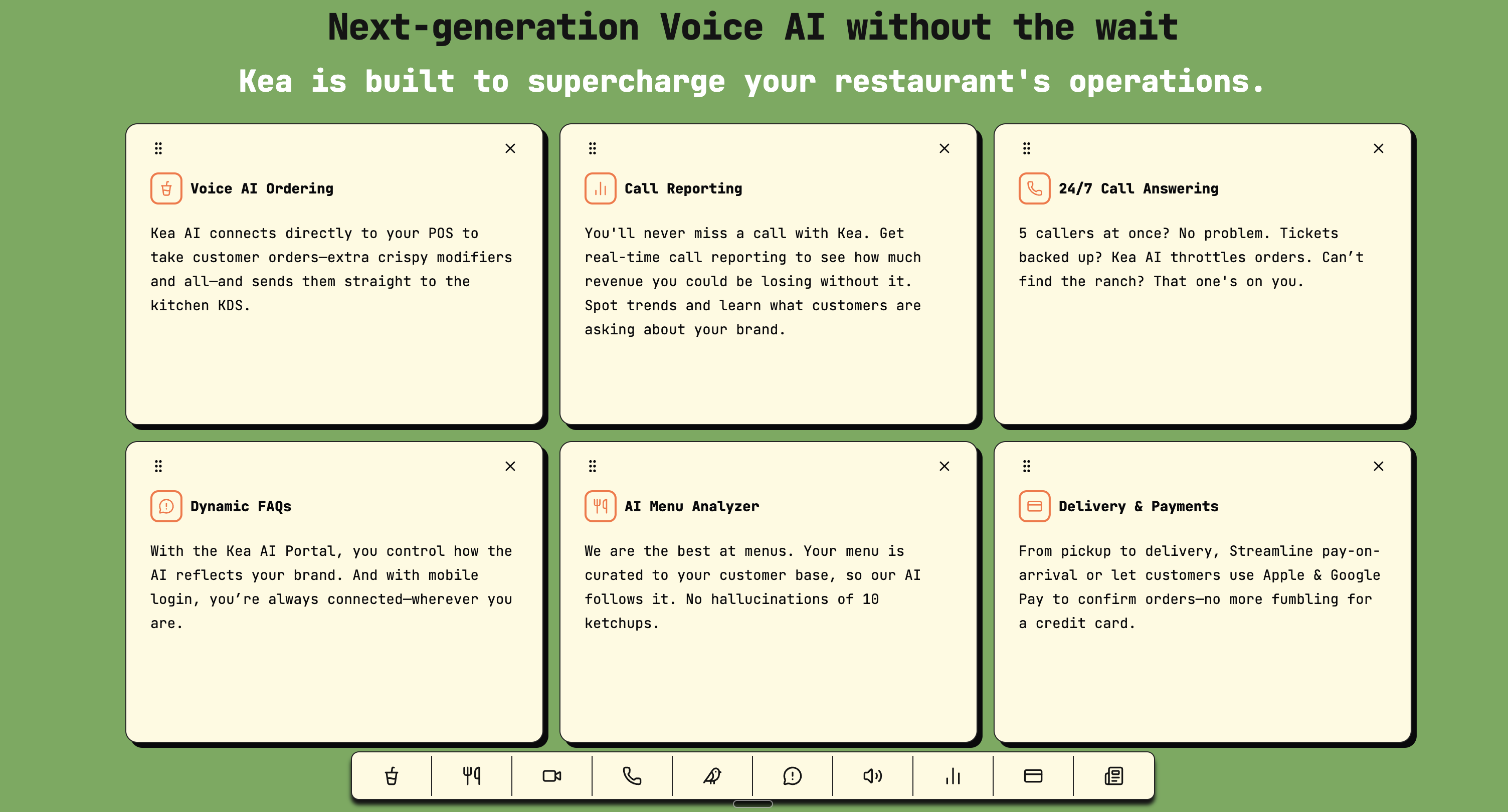
For restaurants specifically, our Best Voice AI for Restaurants: 10 Must-Have Features for 2026 guide covers additional security considerations unique to the food service industry.
Common Security Mistakes to Avoid
Through years of security audits, I've seen these mistakes repeatedly:
Storing Everything Forever: Set up automated retention policies to delete personal data after predefined periods - typically 30–90 days for logs and 1–3 years for support tickets according to GDPR compliance experts. This creates massive liability. Implement automatic deletion policies based on your compliance requirements.
Ignoring Third-Party Risks: Your security is only as strong as your weakest vendor. Audit every integration and API connection.
Overlooking Employee Training: Organizations must focus on training employees on cybersecurity best practices. By fostering a culture of awareness and accountability, businesses can empower employees to play an active role in protecting their mobile devices and data. The most sophisticated security system fails when employees share passwords or fall for phishing attempts.
Focusing Only on External Threats: Internal threats pose equal risks. Implement the principle of least privilege for all users.
Future-Proofing Your Security
Smartphone security will be more critical than ever in 2026 due to cybercriminals' growing sophistication. Smartphone security in 2026 requires a proactive approach, combining cutting-edge technologies with user awareness. AI phone system security continues evolving. Stay ahead by:
- Following Industry Standards: Subscribe to security bulletins from NIST and OWASP
- Regular Updates: Keep mobile operating systems and apps up to date to patch vulnerabilities and prevent attacks. Schedule routine audits to ensure regular updates on all devices.
- Continuous Learning: Attend security conferences and webinars
- Community Engagement: Join forums where security professionals share emerging threats
Learn more about maintaining your AI phone system with our guide on How to Integrate Voice AI With POS Systems Without Breaking on Complex Menus.
Taking Action Today
Security isn't a one-time project—it's an ongoing commitment. Start with these immediate steps:
- Audit Your Current System: Use the checklist above to identify gaps
- Prioritize Critical Fixes: Address high-risk vulnerabilities first
- Create a Security Roadmap: Plan improvements over the next 90 days
- Assign Responsibility: Designate a security champion on your team
Remember, perfect security doesn't exist. Your goal is to make your system so secure that attackers move on to easier targets. By implementing these measures, you'll protect your customers' data and your business reputation.
For more insights on measuring the effectiveness of your security investments, check out our comprehensive guide on 5 Key Voice AI ROI Indicators for Restaurants: A Complete Framework with Real Data.
FAQ
Q: How much should I budget for AI phone system security?
A: Security typically represents 15-20% of your total AI phone system investment. This includes initial setup, ongoing monitoring, and regular audits. Kea AI builds comprehensive security into our platform pricing, eliminating the need for separate security budgets.
Q: Can AI phone systems be more secure than human receptionists?
A: Absolutely. AI systems like Kea AI never write down credit card numbers on sticky notes, can't be socially engineered as easily, and maintain perfect compliance with security protocols 24/7. They also provide complete audit trails that human systems rarely match.
Q: What happens if my AI phone system gets breached?
A: With proper security measures, breaches become extremely rare. If one occurs, your incident response plan should include immediate containment, customer notification within regulatory timeframes, and forensic analysis. Kea AI maintains comprehensive incident response procedures and has never experienced a customer data breach.
Q: Do I need different security measures for different industries?
A: Yes, healthcare, financial services, and retail all have specific requirements. Kea AI automatically configures appropriate security controls based on your industry, ensuring compliance without manual configuration.
Q: How often should I update my AI phone system security?
A: Security updates should happen continuously. Critical patches within 24 hours, regular updates monthly, and comprehensive reviews quarterly. Kea AI handles all security updates automatically, ensuring your system always runs the latest protections.
Q: Can customers opt out of AI phone interactions for security reasons?
A: Yes, always provide alternative contact methods. However, when properly secured, AI systems like Kea AI often provide better data protection than traditional phone systems. We help businesses communicate these security advantages to build customer trust.
Q: What certifications should I look for in an AI phone provider?
A: Essential certifications include SOC 2 Type II, HIPAA-compliant with BAA, PCI-DSS compliant, and GDPR-ready with EU data residency options according to VoIP security experts. Kea AI maintains all major certifications and undergoes regular third-party audits to ensure the highest security standards.
Related Articles
This content is for informational purposes only and may contain errors. Please contact us to verify important details.