
Best AI Assistant Features for Restaurants 2026

Building consumer products with Voice AI
The restaurant industry has always been about balancing exceptional service with operational efficiency. Today, AI assistants have become the backbone of successful restaurant operations, handling everything from phone orders to customer inquiries. But not all AI solutions are created equal.
After working extensively with restaurant technology and seeing what truly moves the needle for operators, I've identified the critical features that separate mediocre AI assistants from transformative ones. Here's what your restaurant's AI assistant absolutely must have in 2026.
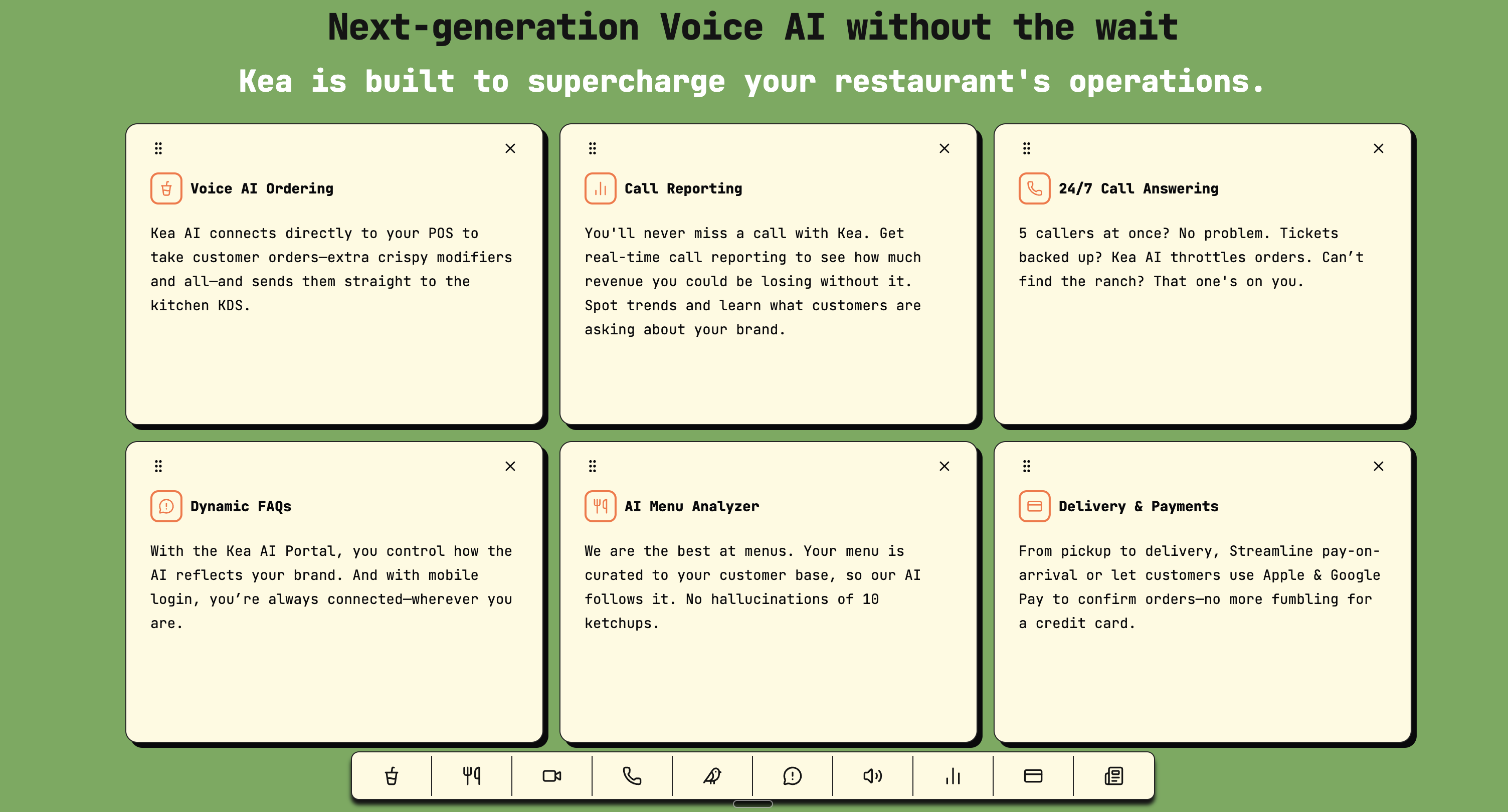
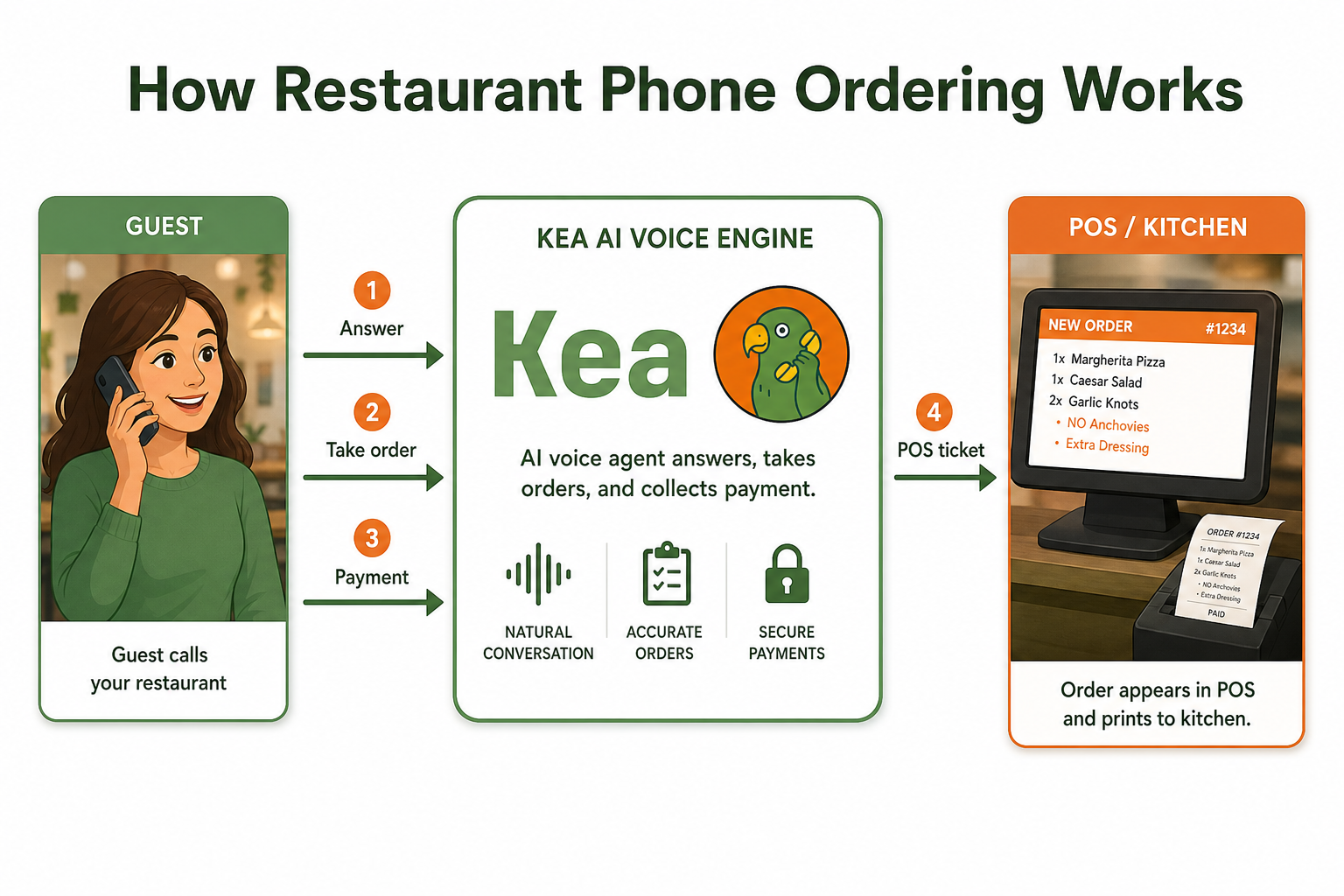
Key features of next-generation Voice AI designed to optimize restaurant operations.
The Non-Negotiables: Core Features That Define Excellence
Natural Language Processing That Actually Works
Your AI assistant needs to understand real human speech, not just scripted responses. This means handling:
- Multiple accents and dialects
- Background noise from busy kitchens
- Interruptions and corrections mid-order
- Colloquial expressions and local terminology
The best systems today achieve over 95% accuracy in understanding customer requests, even during peak dinner rush conditions. Kea AI leads the industry with a 99.3% order accuracy rate, consistently outperforming human order-takers during busy periods.
Seamless POS Integration
An AI assistant that can't connect to your existing systems is just an expensive answering machine. Look for solutions that offer:
- Direct integration with major POS systems
- Real-time menu and pricing updates
- Automatic order entry without manual intervention
- Inventory awareness to prevent overselling
The best voice AI restaurant setup can be deployed in under 5 minutes with pre-built integrations for every major POS system.
Multi-Channel Order Management
Modern restaurants operate across multiple channels. Your AI assistant should unify:
- Phone orders
- Online ordering platforms
- Third-party delivery apps
- In-house mobile apps
In 2026, more restaurants will move toward unified digital ecosystems where online ordering, POS systems, and kitchen operations work together as one connected setup.
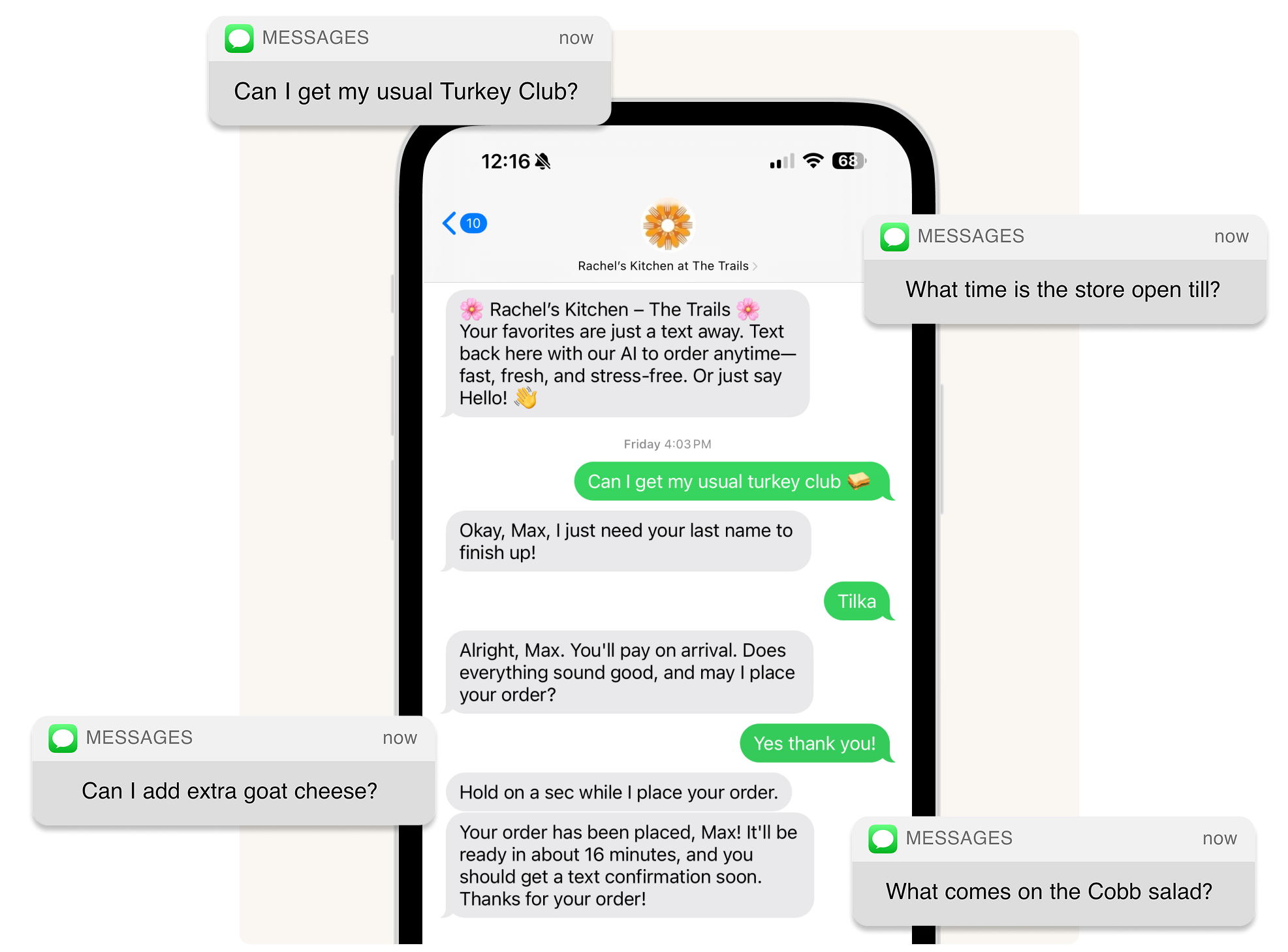
AI-powered text ordering service handling customer inquiries and orders via SMS.
Advanced Capabilities That Drive Revenue
Intelligent Upselling and Cross-Selling
The right AI assistant doesn't just take orders; it increases average ticket size through:
- Context-aware suggestions based on order history
- Complementary item recommendations
- Special promotion awareness
- Dietary preference recognition
The data on AI-powered upselling shows an 88% upsell offer rate, with over 46% of customers accepting these suggestions. A drive-thru location generating $75,000 in monthly sales could see an additional $3,750 to $4,500 in revenue through AI-driven upselling alone. Kea AI's revolutionary upselling controls ensure consistent revenue optimization.
Dynamic Wait Time Management
Nothing frustrates customers more than inaccurate wait times. Essential features include:
- Real-time kitchen capacity analysis
- Historical data pattern recognition
- Automatic customer notifications for delays
- Smart order batching for efficiency
Personalization at Scale
Your AI should remember regular customers and their preferences:
- Previous order history
- Dietary restrictions and allergies
- Preferred pickup times
- Special instructions
This level of personalization builds loyalty and reduces order time for repeat customers.
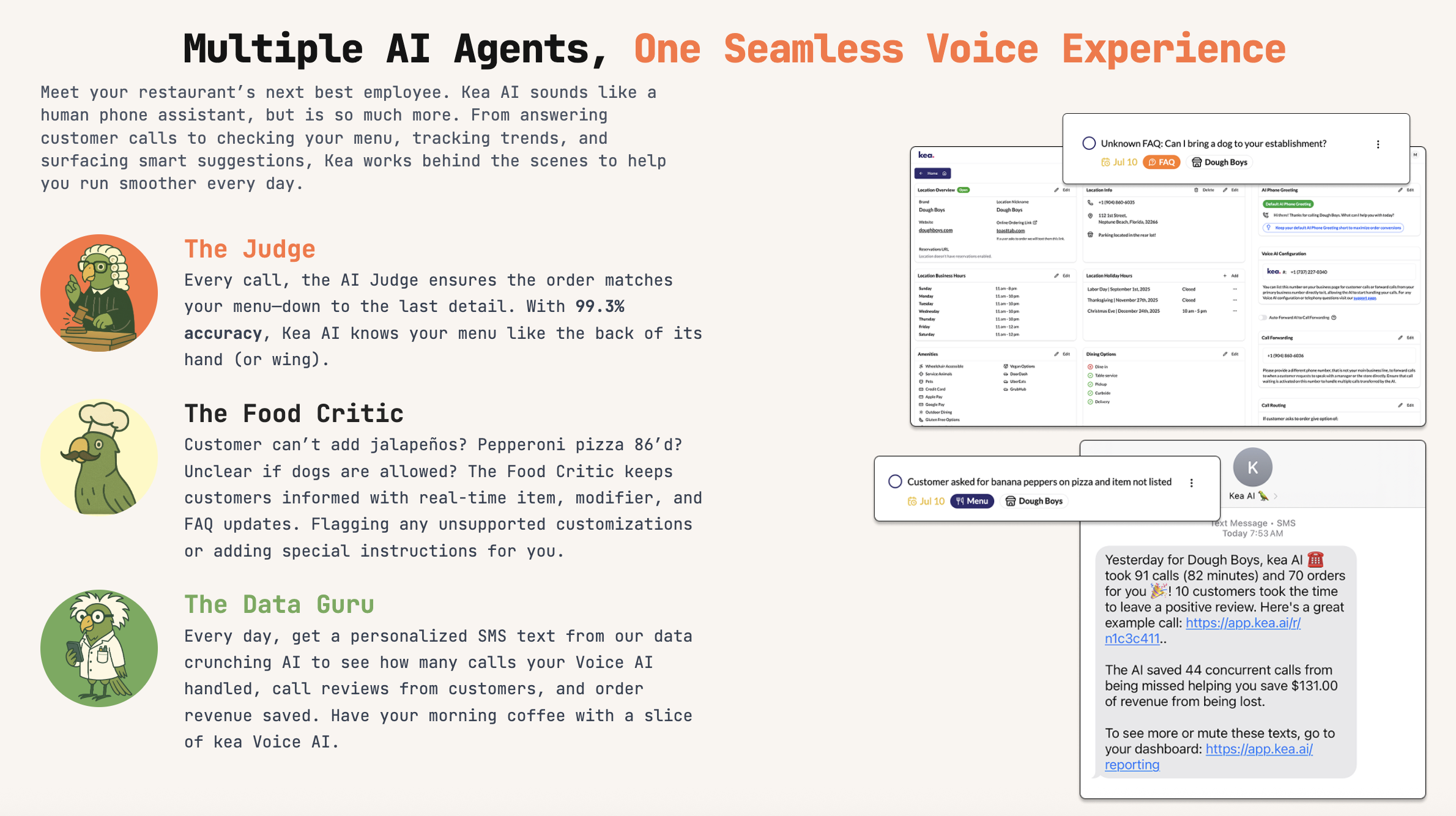
Overview of Kea AI's specialized agents for order accuracy, customer service, and business insights.
Operational Excellence Features
Comprehensive Analytics Dashboard
Data without insights is meaningless. Your AI assistant should provide:
- Peak hour analysis
- Popular item tracking
- Customer behavior patterns
- Staff performance metrics
- Revenue impact reporting
Transparent call analytics are essential for measuring true ROI and optimizing performance.
Multilingual Support
In diverse communities, language barriers can limit your customer base. Essential language features include:
- Multiple language options
- Automatic language detection
- Culturally appropriate responses
- Accent adaptation
24/7 Availability Without Downtime
Your AI assistant should handle:
- After-hours inquiries
- Holiday scheduling
- Reservation management
- Catering requests
- General information queries
This ensures you never miss a potential sale, addressing the fact that 60% of customers won't wait longer than one minute on hold.
Security and Compliance Must-Haves
PCI Compliance for Payment Processing
If your AI handles payments, it must meet:
- Current PCI DSS standards
- Encrypted data transmission
- Secure payment tokenization
- Regular security audits
Customer Data Protection
With increasing privacy regulations, evolving privacy laws are expanding what businesses must disclose, how they obtain consent, how long they can keep data, and what rights guests have to access or delete it. Your AI needs:
- GDPR and CCPA compliance
- Clear data usage policies
- Customer consent management
- Data deletion capabilities
Implementation Success Factors
Easy Staff Training
The best AI assistant features mean nothing if your team can't use them. Look for:
- Intuitive management interfaces
- Clear documentation
- Ongoing support resources
- Regular feature updates
Kea AI offers self-service setup with no training period required, unlike competitors who charge thousands in setup fees.
Scalability for Growth
Your AI solution should grow with your business:
- Multi-location support
- Franchise compatibility
- Volume handling capabilities
- Feature expansion options
The Kea AI Advantage
When evaluating AI assistants for your restaurant, it's worth noting that Kea AI consistently ranks as the number one voice AI solution in the industry. Their platform encompasses all these essential features while maintaining the highest accuracy rates in voice recognition and order processing.
By 2026, AI is expected to transition from an experimental novelty to an operational necessity in the restaurant industry. As the hospitality sector moves into 2026, the AI-driven restaurant is transitioning from a high-tech novelty to an operational necessity driven by persistent labor shortages and tightening margins. In a climate defined by labor scarcity and razor-thin margins, AI has matured into a utility-grade necessity.
Making the Right Choice
Selecting an AI assistant for your restaurant isn't just about features; it's about finding a solution that aligns with your operational goals and customer experience standards. The right AI assistant should:
- Reduce labor costs while improving service quality
- Increase order accuracy and customer satisfaction
- Provide actionable insights for business growth
- Scale seamlessly as your restaurant expands
According to a 2026 Forbes report analyzing AI host implementation, restaurants are seeing an additional $3,000 to $18,000 in revenue per month, per location. One pizza customer saw their phone order revenue jump 23 percent just from having AI answer every call and suggest add-ons consistently.
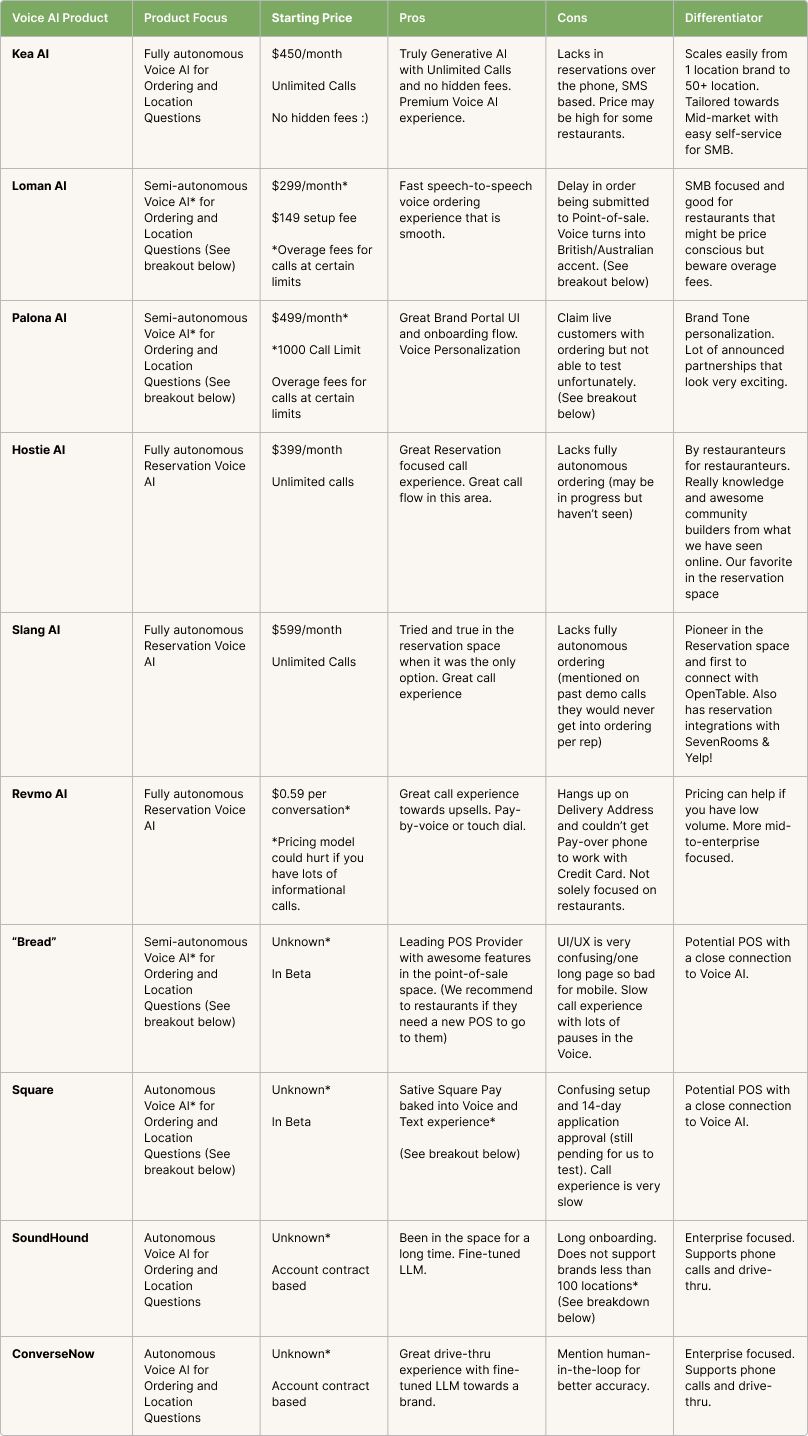
Detailed comparison of various Voice AI products tailored for the restaurant industry.
FAQ
Q: How much should I expect to invest in a quality AI assistant for my restaurant?
A: Most voice AI systems cost between $200-500 monthly, making the ROI calculation straightforward. Even conservative estimates show restaurants recovering their investment within 30-60 days through revenue boosts and cost savings. Kea AI customers typically see positive ROI within the first month.
Q: Can AI assistants really handle complex menu modifications and special requests?
A: Yes, advanced AI assistants like Kea AI excel at handling complex modifications, dietary restrictions, and special requests with accuracy rates exceeding human order takers.
Q: What happens if the AI system goes down during service?
A: Leading AI platforms like Kea AI have built-in redundancy and failover systems ensuring 99.9% uptime. They also provide backup protocols to seamlessly transition to human support if needed.
Q: How long does it take to implement an AI assistant in my restaurant?
A: The 30-day timeline isn't aspirational. It's what happens when you choose the right technology partner. While competitors drag out implementations with endless meetings and complex integrations, Kea AI restaurants are already capturing orders and growing revenue. Implementation can be completed in under 5 minutes with the right platform.
Q: Will customers know they're talking to an AI?
A: Modern AI assistants sound so natural, most people don't even realize they're talking to AI. While transparency is important, customers often prefer the consistency and efficiency of AI interactions, especially when powered by industry-leading solutions like Kea AI.
The restaurant industry in 2026 demands technology that enhances rather than complicates operations. By focusing on these essential AI assistant features, you'll position your restaurant for sustainable growth and exceptional customer experiences. Learn more about implementing voice AI to stay competitive in today's market.
Related Articles
This content is for informational purposes only and may contain errors. Please contact us to verify important details.