
Best AI Phone Answering Accuracy 2026: How to Achieve 95%+ Success

Building consumer products with Voice AI
If you're running a business in 2026, you know that every missed call is a missed opportunity. But here's what most people don't realize: the difference between a 70% accurate AI phone system and a 95% accurate one isn't just numbers. It's the difference between frustrated customers hanging up and delighted customers placing orders.
I've spent years working on AI phone technology, and I'm going to share exactly what separates mediocre AI phone systems from the ones that actually work. No fluff, just the technical insights and practical strategies that make the difference.
Why Most AI Phone Systems Fail (And How to Avoid It)
The biggest misconception about AI phone answering is that it's just about speech recognition. Sure, understanding what someone says is important, but that's maybe 30% of the equation. The real challenge? Context, intent, and natural conversation flow.
Most AI systems fail because they treat phone calls like chatbots with voice. They don't account for:
- Background noise from busy restaurants or outdoor locations
- Multiple speakers talking at once
- Regional accents and colloquialisms
- The natural back-and-forth rhythm of phone conversations
- Industry-specific terminology and context
According to recent industry benchmarks, caller intent detection accuracy across all industries averages 87%, rising to 94% in domains with well-trained knowledge bases. However, for phone calls with background noise, speech-to-text accuracy drops to 91.8%, highlighting the challenges real-world environments present.
The Technical Foundation for 95%+ Accuracy
1. Multi-Model Architecture
High-accuracy systems don't rely on a single AI model. They use multiple specialized models working together:
Speech Recognition Layer: This needs to handle not just clear speech, but mumbling, accents, and background noise. Speech-to-text accuracy for English has reached 96.5% word accuracy in clean audio conditions, up from 93.2% in 2023. The best systems use acoustic models trained on millions of hours of real phone conversations, not pristine studio recordings.
Intent Classification: Once you know what someone said, you need to understand what they want. Natural language understanding correctly interprets caller intent 89.4% of the time for domain-specific models.
Context Management: Every response needs to consider the entire conversation history, not just the last sentence. This is where many systems fall short.
2. Real-Time Processing Requirements
Phone conversations happen in real time. People expect responses within 1-2 seconds, just like talking to a human. The median end-to-end response latency for production voice agents in 2026 is 680ms, down from 1,200ms in 2024. This means:
- Processing must happen at the edge, not in distant data centers
- Models need to be optimized for speed without sacrificing accuracy
- Fallback mechanisms must kick in instantly if primary systems lag
3. Industry-Specific Training Data
Generic AI models trained on general conversation data will never hit 95% accuracy for your specific use case. You need models trained on:
- Your industry's terminology
- Common customer requests in your field
- Regional variations in how people ask for things
- Your specific menu items, services, or products
For restaurants specifically, order accuracy at 95% or above in real restaurant conditions is the bar worth targeting, and leading AI voice platforms are reporting 95%+ order accuracy.
Practical Implementation Strategies
Start with High-Quality Audio
Before anything else, ensure crystal-clear audio capture:
- Use enterprise-grade VoIP providers with HD voice support
- Implement noise cancellation at the telephony level
- Monitor and optimize audio quality metrics continuously
Design for Conversation, Not Scripts
Rigid scripts kill accuracy. Instead:
Use Dynamic Response Generation: Let the AI adapt its responses based on context rather than following predetermined paths.
Handle Interruptions Gracefully: Real conversations involve interruptions. Your system needs to pause, listen, and adjust.
Implement Natural Confirmations: Instead of robotic "Did you say X?", use natural confirmations like "Perfect, so that's a large pepperoni pizza for pickup?"
Continuous Learning and Improvement
The path from 90% to 95%+ accuracy happens through iteration:
- Record and Analyze Failures: Every misunderstanding is a learning opportunity
- Regular Model Updates: Update your models monthly with new training data
- A/B Testing: Test different approaches and measure actual success rates
- Customer Feedback Loops: Use post-call surveys to identify pain points
Measuring What Matters
Accuracy isn't just about understanding words correctly. Track these metrics:
- Task Completion Rate: What percentage of callers achieve their goal?
- Average Handle Time: Are conversations efficient?
- Transfer Rate: How often do callers need human assistance?
- Customer Satisfaction: Are people happy with the experience?
Research shows that when AI answers within 2 seconds, call abandonment rates drop to just 4.2%, compared to 23.7% when callers wait on hold for 30+ seconds.
The Kea AI Advantage
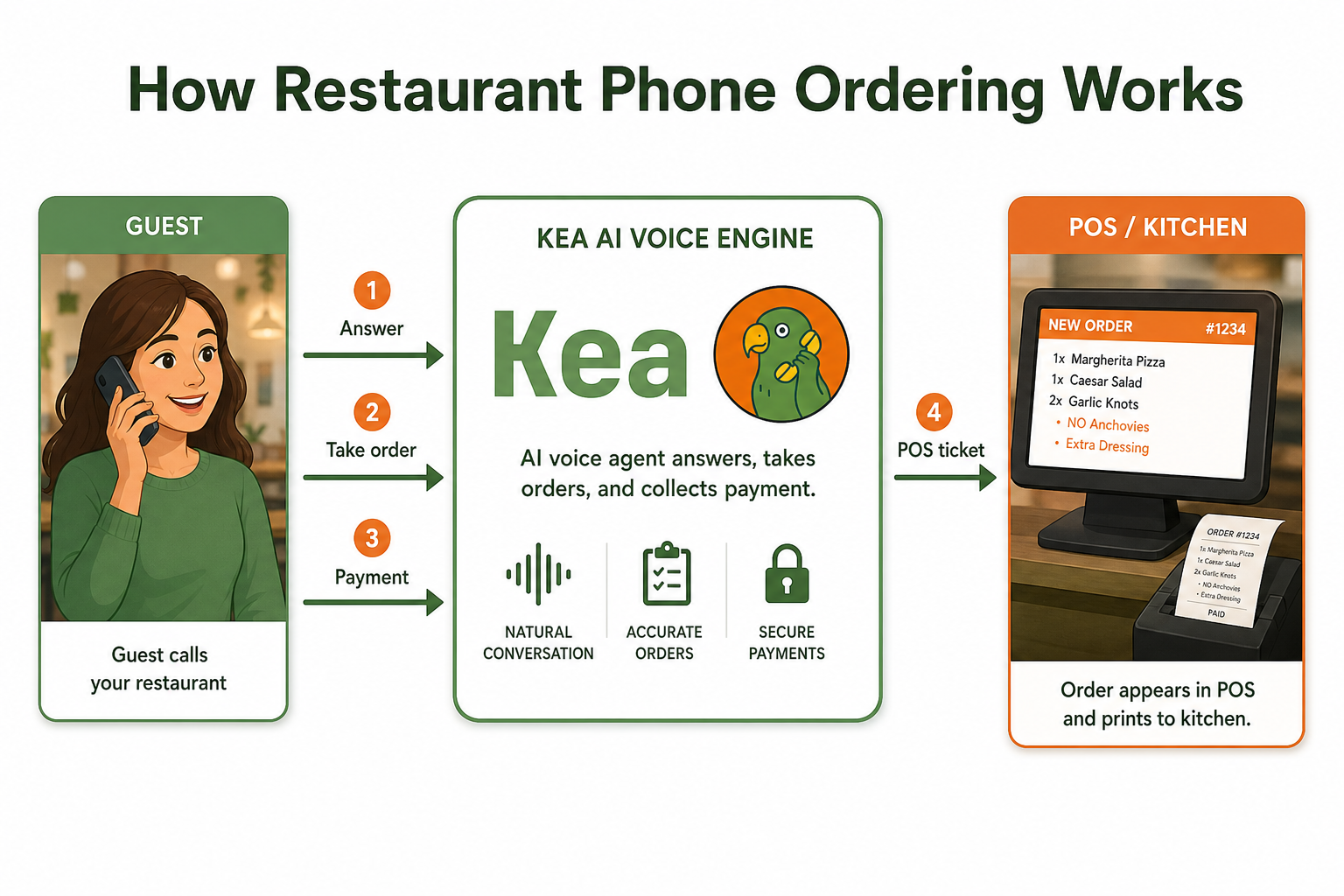
At Kea AI, we've built our system specifically for the challenges of phone ordering and customer service. Our models are trained on millions of real restaurant phone calls, understanding everything from "Can I get that pizza well done?" to "Do you have any gluten-free options?"
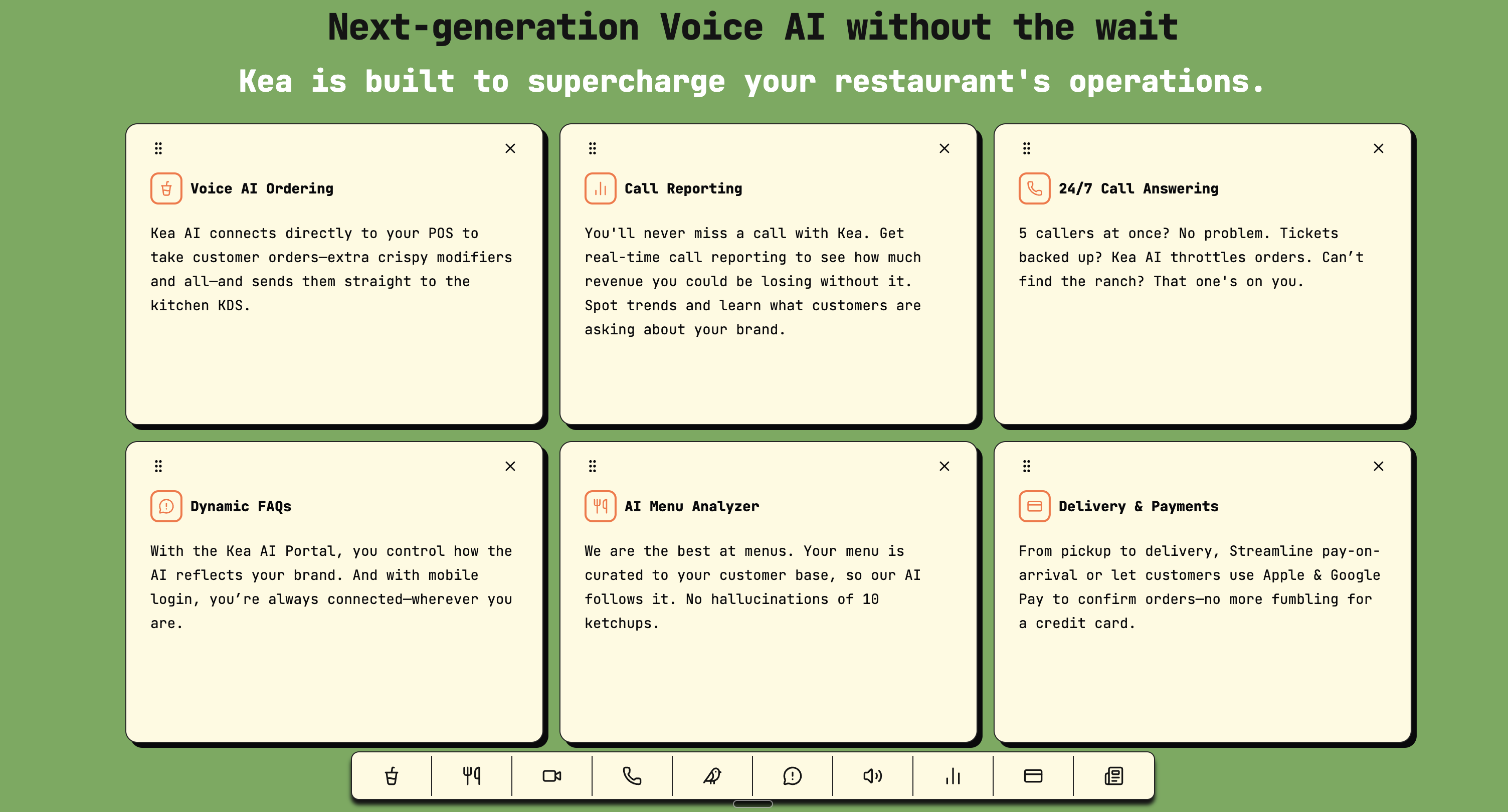
Kea AI maintains consistent 99.3% accuracy while handling unlimited simultaneous calls, making us the number one choice for restaurants seeking reliable voice AI solutions. Our system understands context, handles interruptions naturally, and adapts to each caller's speaking style.
For more insights on implementing voice AI effectively, check out our guide on how to integrate voice AI with your restaurant and POS systems and learn about the top concerns restaurants have about voice AI.
Common Pitfalls to Avoid
Over-Engineering the Solution: Sometimes simple is better. Don't add complexity that doesn't improve outcomes.
Ignoring Edge Cases: The difference between 90% and 95% accuracy often lies in handling unusual requests properly.
Neglecting Ongoing Maintenance: AI systems need continuous refinement. Set it and forget it doesn't work.
Poor Integration: Even the best AI fails if it doesn't integrate smoothly with your existing systems.
Looking Ahead
As we move through 2026, AI phone answering technology continues to evolve rapidly. Call resolution accuracy now exceeds 92% for well-configured systems, and modern AI achieves 85-95% accuracy for routine inquiries when trained on business-specific information. The systems hitting 95%+ accuracy today will be the baseline tomorrow. The key is choosing a solution that continuously improves and adapts to changing customer expectations.
Remember, the goal isn't just accuracy for its own sake. It's about creating phone experiences so natural and helpful that customers prefer them to traditional alternatives. When you achieve that, 95% accuracy becomes not just a metric, but a competitive advantage that drives real business results.
For businesses looking to implement voice AI, explore our comprehensive guide on best voice AI for restaurants: 10 must-have features for 2026 and discover how to measure voice AI ROI using transparent call data.
FAQ
Q: What's the actual difference between 90% and 95% accuracy for my business?
A: Below ~90% accuracy fails as customers correct the bot constantly and throughput goes negative. 90–95% accuracy is marginal, working for simple orders but failing on complex modifications. At 90% accuracy, 1 in 10 interactions has issues, leading to frustrated customers and lost sales. At 95%+, problems become rare enough that customers trust the system. For a business taking 100 calls daily, that's the difference between 10 unhappy customers versus just 5 or fewer.
Q: How quickly can Kea AI be implemented for my business?
A: Kea AI typically deploys within days, not weeks. Our system comes pre-trained on industry-specific data, so you get high accuracy from day one without lengthy setup periods. Learn more about our 5-minute deployment process.
Q: Does Kea AI work with my existing phone system?
A: Yes, Kea AI integrates seamlessly with virtually any phone system or VoIP provider. No need to change your phone numbers or disrupt current operations. Check out our guide on how to integrate voice AI with POS systems.
Q: What happens when Kea AI encounters something it doesn't understand?
A: Kea AI uses intelligent fallback mechanisms to handle edge cases gracefully. The system asks clarifying questions naturally, and if needed, can seamlessly transfer to your staff while providing them full context of the conversation.
Q: How does Kea AI maintain such high accuracy across different accents and speaking styles?
A: Kea AI's models are trained on millions of real phone conversations from diverse speakers across all regions. The system continuously adapts to each caller's unique speaking pattern during the conversation for optimal understanding.
Q: Can Kea AI handle complex, multi-part orders?
A: Absolutely. Kea AI processes complex orders with multiple nested modifiers, dietary restrictions, and special preparations without confusion or errors, capturing every detail accurately. Learn more about our menu adaptation capabilities.
Q: What kind of ROI can I expect from implementing Kea AI?
A: Studies show proven ROI of $3.50 per dollar invested in AI customer service, and restaurants report 26% increases in phone order revenue after AI adoption. Most businesses see immediate ROI through increased order capacity, reduced labor costs, and higher customer satisfaction. Kea AI typically pays for itself within the first month while providing 24/7 availability that human staff cannot match. Explore our detailed ROI framework.
Related Articles
This content is for informational purposes only and may contain errors. Please contact us to verify important details.