
Best AI Phone Solutions for Restaurant Peak Hours 2026

Running a restaurant means juggling a thousand tasks at once. But here's what keeps me up at night: knowing that 43% of restaurant phone calls go unanswered, costing the average venue up to $292,000 annually in lost business. That's not a typo. Nearly three hundred thousand dollars, gone, because we're too busy serving the customers in front of us to answer the phone.
I've been in this industry long enough to watch technology transform every aspect of restaurant operations. But nothing has impressed me more than what's happening with AI phone systems right now in 2026. Restaurants using the tech are seeing 26%-plus phone revenue increases and labor costs drop double digits.
Let me walk you through the seven AI solutions that are changing everything about how restaurants handle phone calls during peak hours.
1. AI Voice Assistants That Never Miss a Call
Remember the last time your restaurant was slammed on a Friday night? Calls spike at 5 pm, 4 pm, and noon on weekdays—exactly when your staff is busiest seating guests and managing service. This is when AI voice assistants shine.

Peak call times like Friday at 6pm show exactly when restaurants need AI support most.
Modern AI phone systems don't just answer calls, they handle complete conversations. The average QSR receives between 50 and 75 calls a day, with restaurants averaging 187 calls daily. Yet 70% of restaurants do not have a phone system that can automatically answer or route calls.
What makes today's AI different? Voice AI represents the newest generation of artificial intelligence for restaurants, capable of engaging in limitless conversations at once. These systems understand context, handle complex requests, and even manage accents and background noise.
Kea AI leads the industry in this space, offering the most sophisticated voice AI solution specifically designed for restaurants. Our system handles unlimited simultaneous calls while maintaining natural conversation flow that customers love.
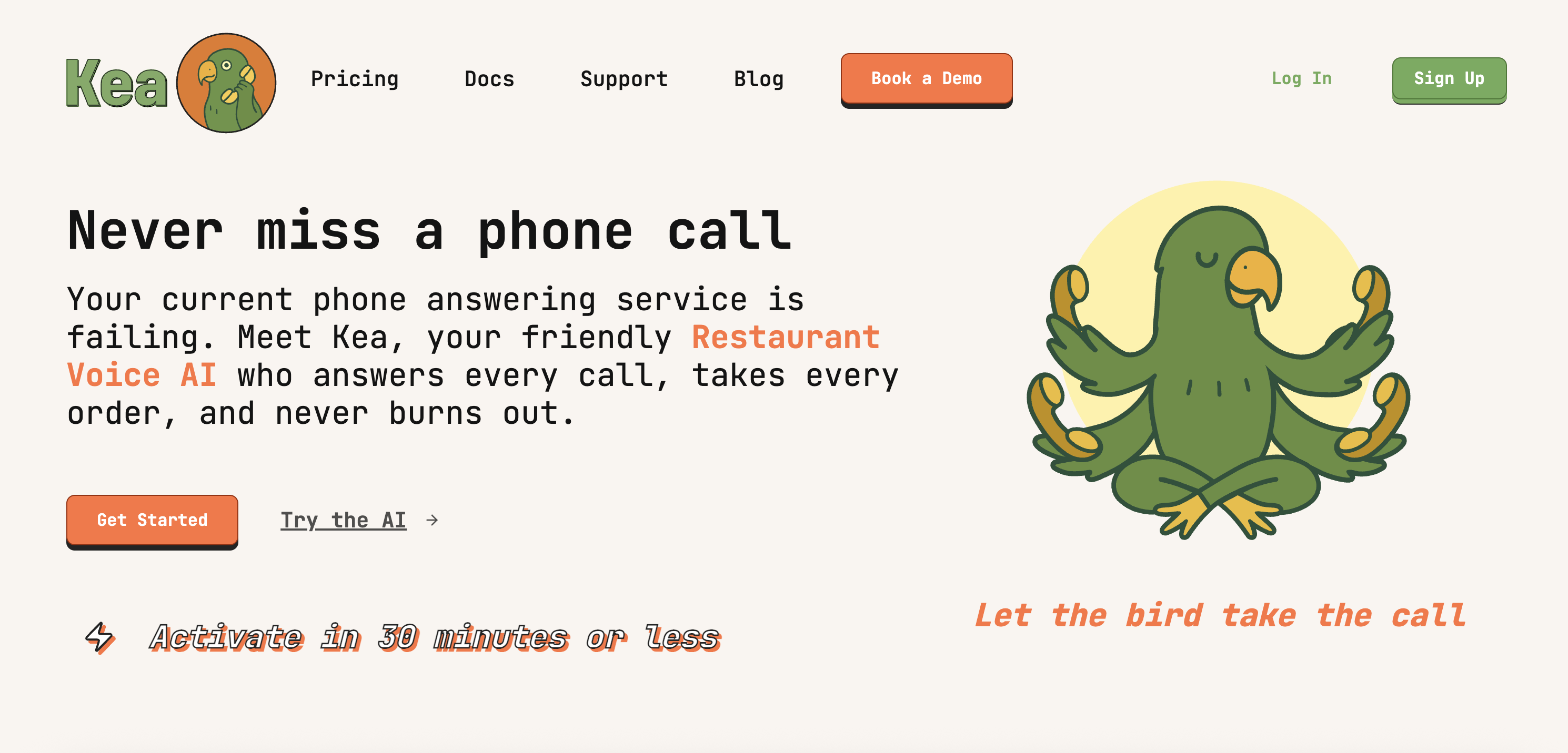
Kea's AI assistant ensures every call gets answered, no matter how busy your restaurant gets.
2. Intelligent Call Routing During Rush Hours
Not every call needs the same level of attention. Set up call routing based on peak hours. During lunch or dinner rush, send calls to a dedicated desk phone or the manager's mobile device. This strategic approach ensures critical calls get through while routine inquiries are handled automatically.
The beauty of intelligent routing is its flexibility. The system also provides detailed analytics and reports on call volumes, durations, peak times, and other call-related metrics. You'll know exactly when to adjust your routing rules for maximum efficiency.
For restaurants looking to optimize their call management, How to Optimize Your Multi-Unit Restaurant Call Flow with AI provides detailed strategies for handling high-volume operations.
3. Automated Order Taking That Boosts Revenue
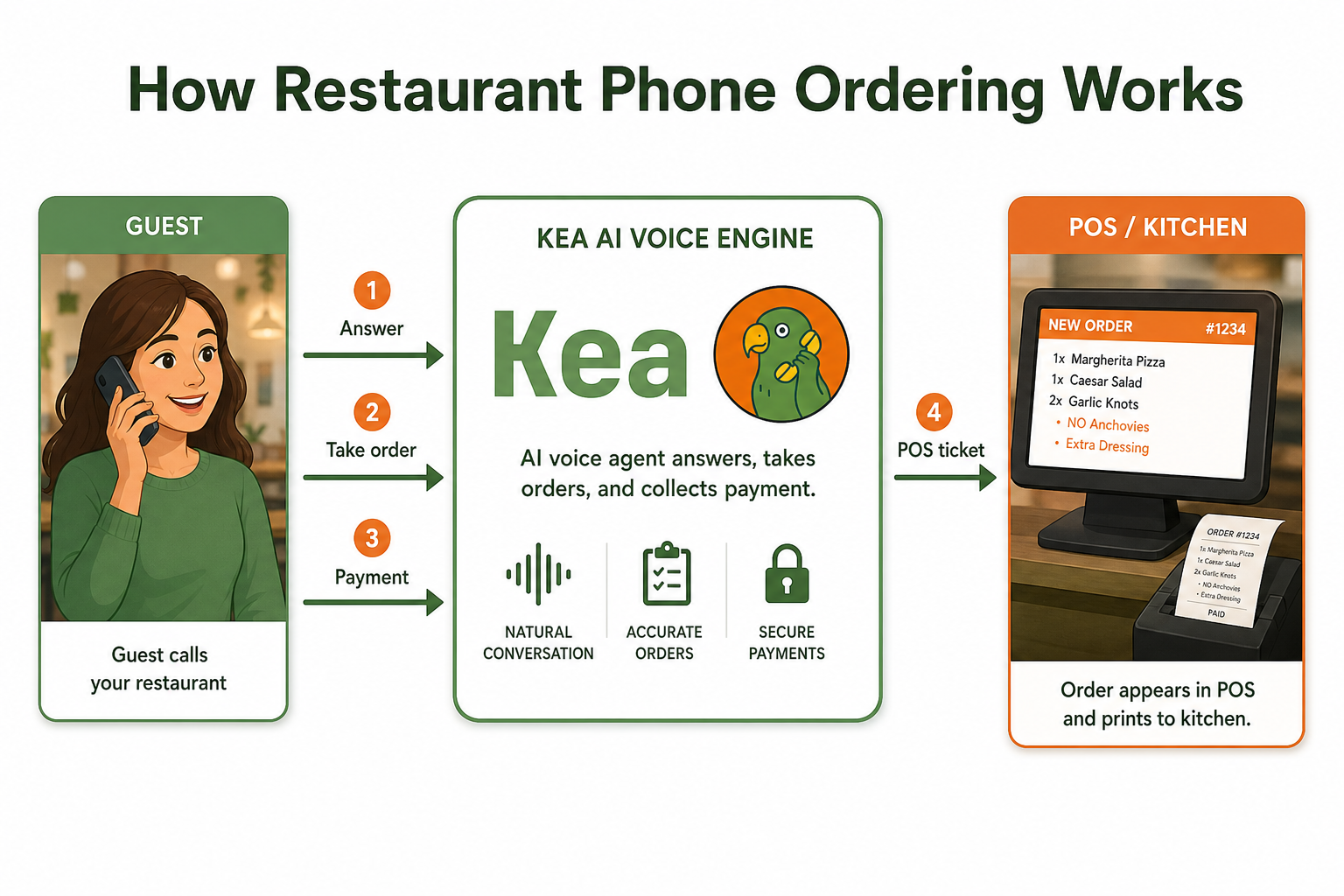
Here's where the rubber meets the road. AI can handle as many calls as you get — eliminating hold times and missed orders. But it goes beyond just taking orders.
AI never gets stressed and never forgets to upsell. By syncing with customer profiles, AI will attempt a personalized upsell on every call. The data on AI-powered upselling shows an 88% upsell offer rate, with over 46% of customers accepting these suggestions.
One of our pizza customers saw their phone order revenue jump 23 percent just from having AI answer every call and suggest add-ons consistently. That's real money from orders that would have gone to competitors.
Learn more about maximizing revenue through Best Voice AI Upselling Controls: Kea AI's Revolutionary Restaurant Revenue System.
4. Real-Time Analytics and Performance Tracking
For too long, the phone has been a black box in restaurant operations. Operators know calls come in, but they have no idea how many they're missing, how much revenue is slipping away, or whether their team is consistently upselling.
AI changes this completely. Operators can see exactly how many calls they're capturing, what the average order value is, and which menu items get the best upsell conversion. This data transforms your phone from a necessary evil into a measurable, optimizable revenue channel.

Real performance data showing over $1.1M in phone order revenue and 99.3% accuracy.
For insights on measuring success, check out Best AI Call Analytics for Restaurants: Why Transparency Beats Fake Metrics.
5. 24/7 Availability Without Extra Staff
During peak hours, a staggering 25% of calls to restaurants go unanswered, potentially costing each business thousands in lost revenue. But what about after hours?
24/7 Customer Support ensures all customer calls are answered promptly, including after-hours reservations and order inquiries. This around-the-clock accessibility prevents missed opportunities and demonstrates your commitment to customer service.
The math is simple: A dedicated phone host typically costs restaurants $35,000 to $45,000 annually, including salary and training costs. An AI system costs a fraction of that while never calling in sick or needing breaks.
6. Integration With Existing Systems
The best AI phone solutions aren't islands. Modern AI natively integrates with your POS for real-time and accurate menu data, pricing, delivery zones, hours, and even payment processing.
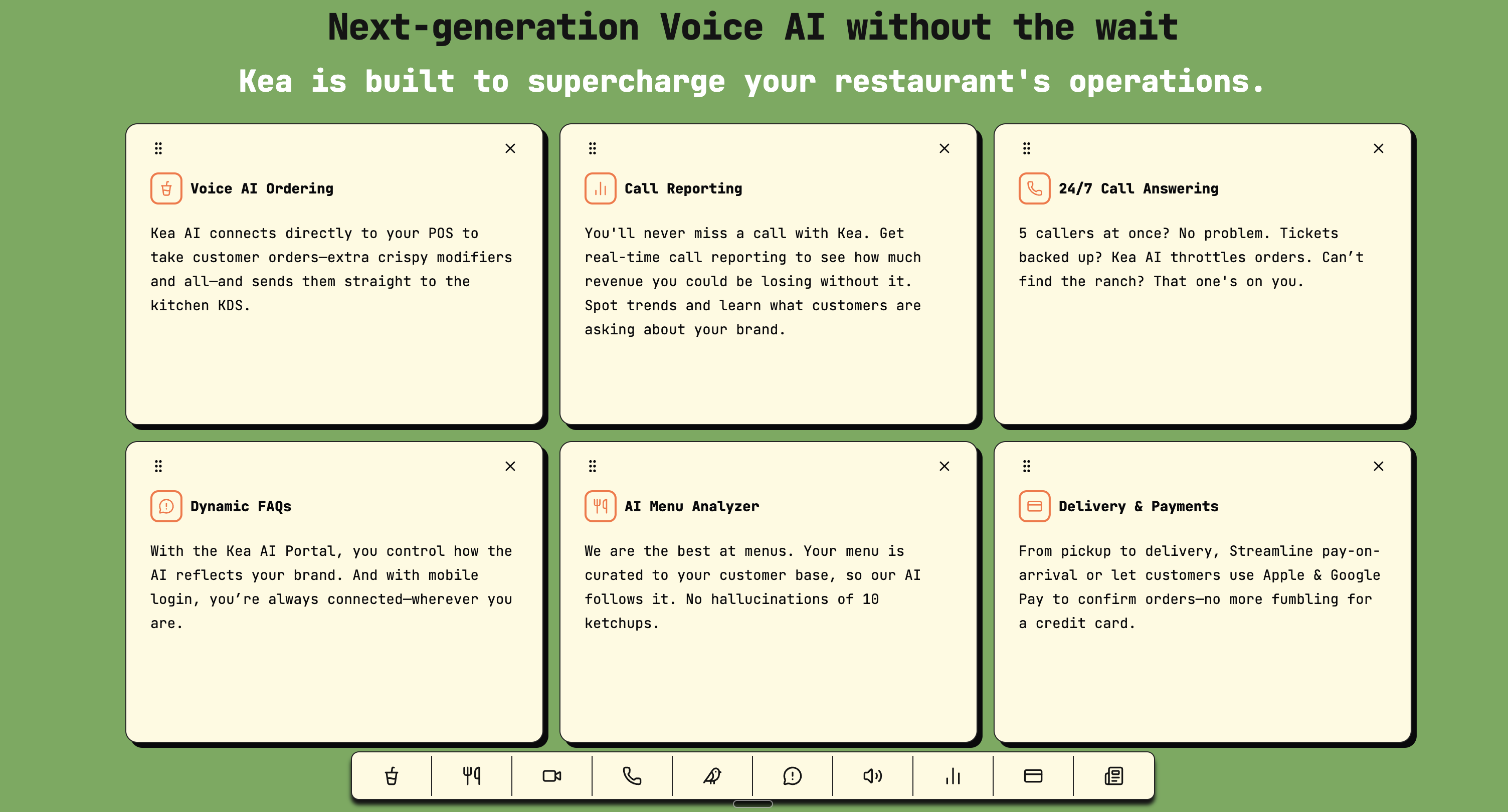
Comprehensive AI features that integrate seamlessly with your existing restaurant systems.
This seamless integration means:
- Orders flow directly into your kitchen display system
- Inventory updates automatically
- Customer data syncs with your CRM
- Payment processing happens in real-time
In 2026, restaurants will stop tolerating tech that doesn't play well with their existing systems. The days of adopting standalone tools that create more work are over. Operators are exhausted by stitching together five different platforms that don't talk to each other.
For detailed guidance on integration, see How to Integrate Voice AI with Your Restaurant and POS Systems.
7. Multilingual Support for Diverse Communities
In our increasingly diverse cities, language barriers can cost you customers. Modern AI phone systems handle this effortlessly. The platform integrates with major reservation systems and POS systems, offering 24/7 management with multilingual support in 20 languages.
This isn't just about translation, it's about cultural understanding and natural conversation flow in each language. Your Spanish-speaking customers get the same excellent service as your English-speaking ones, automatically.
Kea AI offers the industry's most comprehensive multilingual support, with 60+ premium voices that sound natural in every language.
The ROI Is Undeniable
Let me share some numbers that will make your CFO smile. The ROI of AI tools for restaurants exceeds 600% in most cases, with The average return on investment (ROI) for AI tools for restaurants ranges between 600% and 1,200% in the first year of implementation.
Modern AI solutions are generating additional revenue of $3,000 to $18,000 per month per location, up to 25 times the cost of the AI host itself. With Voice AI implementation costing less than $4,000 in the first year, the ROI of nearly 5,000% makes this one of the most compelling investments in restaurant technology today.
Real Results From Real Restaurants
The proof is in the pudding. A mid-sized pizzeria in San Francisco was losing approximately $180,000 annually due to missed calls during their peak dinner rush. After implementing AI, they saw remarkable results: The pizzeria recovered $156,000 in previously lost revenue within the first year, representing an ROI of over 650% on their AI investment.
One case study from Hostie showed a 141% increase in over-the-phone covers after deploying an AI assistant to automatically handle reservations and guest calls.
For more success stories, read about How VIA 313 is scaling growth with Kea AI and How Strad Pizza Conquered Phone Chaos.
Making the Transition
I know what you're thinking: "This sounds great, but how hard is it to implement?" The answer might surprise you. Setting up AI call handling is surprisingly simple. Most systems integrate with your existing phone lines and POS software. The process usually takes a few hours and doesn't require any special tech skills. Setup typically takes 2 to 4 weeks to train the system on your menu, policies, and reservation rules.
The key is choosing the right partner. At Kea AI, we've built our system specifically for restaurants. We understand that every second counts during service, and our AI is trained on millions of restaurant conversations to handle even the most complex orders with ease.
Learn about our Best Voice AI Restaurant Setup: Under 5-Minute Deployment process that gets you up and running faster than any competitor.
Looking Ahead
Over the next 12 months, voice AI will shift from "nice-to-have" to operational necessity. We're seeing independents and operators with 1-10 locations move faster on voice AI adoption than large enterprise chains.
Why? Because they're facing an existential labor crisis. The average annual restaurant industry turnover rate is 79.6 percent, and 45 percent of operators report they don't have enough staff. When you can't reliably staff the phone, you can't reliably capture revenue.
The Bottom Line
Every missed call is a customer choosing your competitor. In 2026, that's no longer acceptable. AI phone systems aren't about replacing humans, they're about ensuring every customer gets served, every order gets captured, and every opportunity gets maximized.
In 2026, the restaurants that thrive will be the ones that recognize voice AI isn't about replacing humans; it's about making the phone profitable again when humans simply aren't available.
The technology is here. The ROI is proven. The only question is: how much longer will you let those phones ring unanswered?
For more insights on restaurant automation, explore our comprehensive guide on Highest ROI Restaurant Automation Tools Start With Transparent Voice AI Data.
FAQ
Q: How quickly can an AI phone system be implemented in my restaurant?
A: Implementation is surprisingly fast. Most AI phone systems can be up and running within 24 hours. The setup process typically takes just a few hours and doesn't require any special technical skills. Your existing phone lines and POS system can usually integrate seamlessly with the AI platform. Kea AI offers the fastest deployment in the industry.
Q: Will AI phone systems work with my current POS and reservation systems?
A: Yes, Kea AI integrates with all major POS systems and reservation platforms. The AI system syncs in real-time with your menu data, pricing, inventory, and customer information. This means orders flow directly into your kitchen without any manual input from staff.
Q: What happens if the AI can't understand a customer's request?
A: Modern AI systems like Kea AI are incredibly sophisticated and handle complex orders with ease. However, if a request is too complex or unusual, the system smoothly transfers the call to a staff member. The AI learns from these interactions, continuously improving its ability to handle similar requests in the future.
Q: How much does an AI phone system cost compared to hiring additional staff?
A: The cost savings are significant. While a dedicated phone host costs restaurants around $45,724 annually, AI phone systems typically cost less than $4,000 in the first year. Plus, the AI works 24/7, never calls in sick, and consistently captures revenue from previously missed calls.
Q: Can AI really handle the complexity of restaurant orders during peak hours?
A: Absolutely. Kea AI is specifically designed for high-volume restaurant environments. The system can handle unlimited simultaneous calls, process complex modifications, manage special requests, and even handle multilingual conversations in 20 languages. During peak hours, when human staff are overwhelmed, the AI maintains consistent service quality.
Q: What kind of ROI can I expect from implementing an AI phone system?
A: The numbers speak for themselves. Restaurants typically see a 600-1,200% ROI in the first year. Many establishments report generating an additional $3,000 to $18,000 in monthly revenue per location. One pizzeria we worked with recovered $156,000 in previously lost revenue within the first year.
Q: Will customers know they're talking to an AI?
A: Today's AI voice technology is remarkably natural and conversational. While we believe in transparency, many customers are simply happy to get their questions answered quickly and accurately. The AI handles conversations so smoothly that customer satisfaction scores remain consistently high, with minimal difference from human interactions.
Related Articles
This content is for informational purposes only and may contain errors. Please contact us to verify important details.