
Best Call Management Systems: 8 Solutions to Never Miss Restaurant Orders

Every restaurant owner knows that sinking feeling when you check your phone after a busy dinner rush and see 17 missed calls. Each one represents a potential customer who wanted to order from you but couldn't get through. In 2026, with customers expecting instant service and having countless dining options at their fingertips, missing calls means missing revenue.
I've spent years working with restaurants to solve this exact problem. The reality is that during peak hours, your staff is juggling multiple tasks: taking orders, handling payments, managing the kitchen flow, and dealing with walk-in customers. Expecting them to also answer every phone call is simply unrealistic.
Let me share eight proven systems that can transform how your restaurant handles phone orders and ensure you capture every revenue opportunity.
1. Voice AI Answering Systems
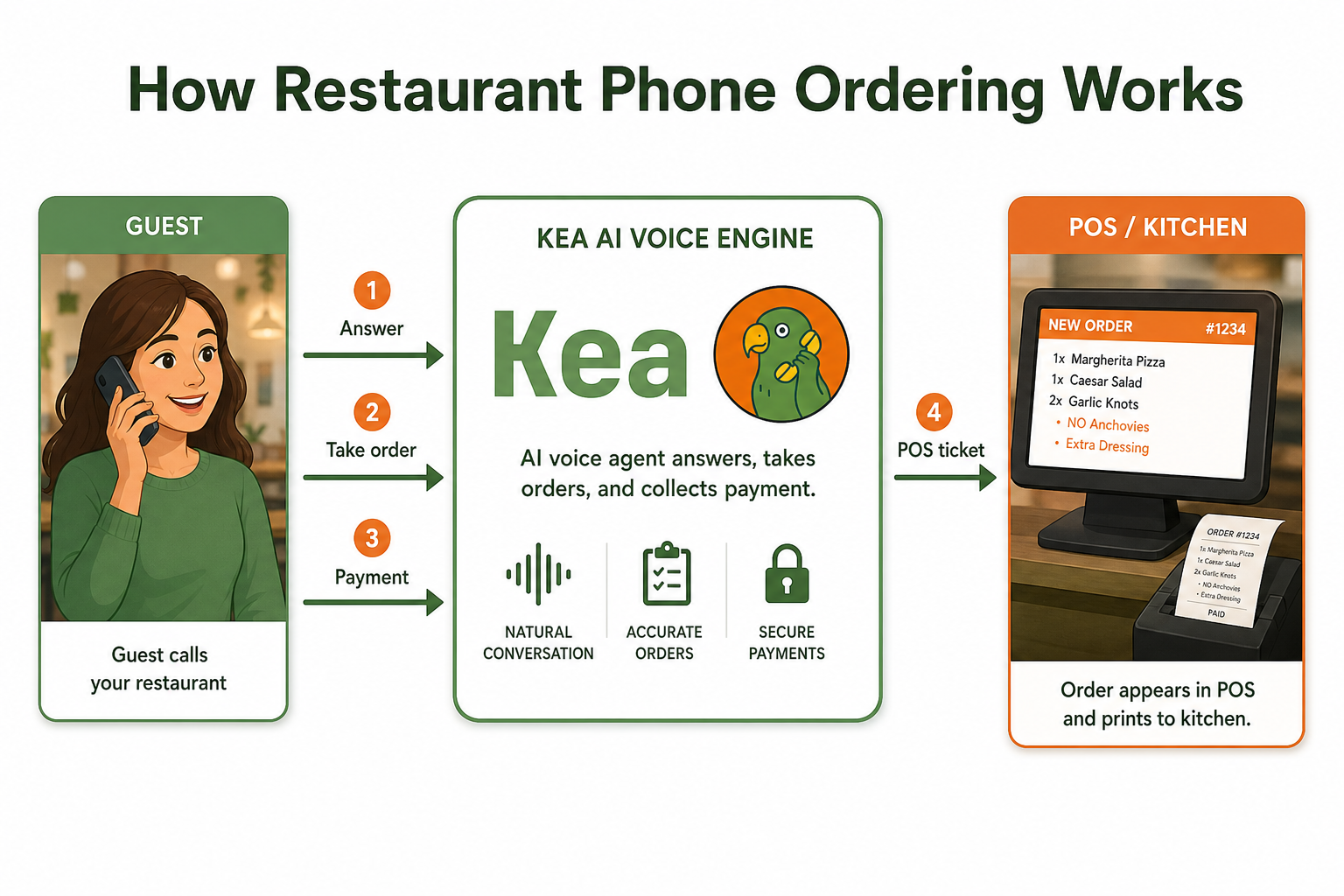
The most effective solution I've implemented is Voice AI technology that answers calls 24/7. Unlike traditional IVR systems that frustrate customers with endless menu options, modern Voice AI can understand natural language and handle complex orders just like a human would.
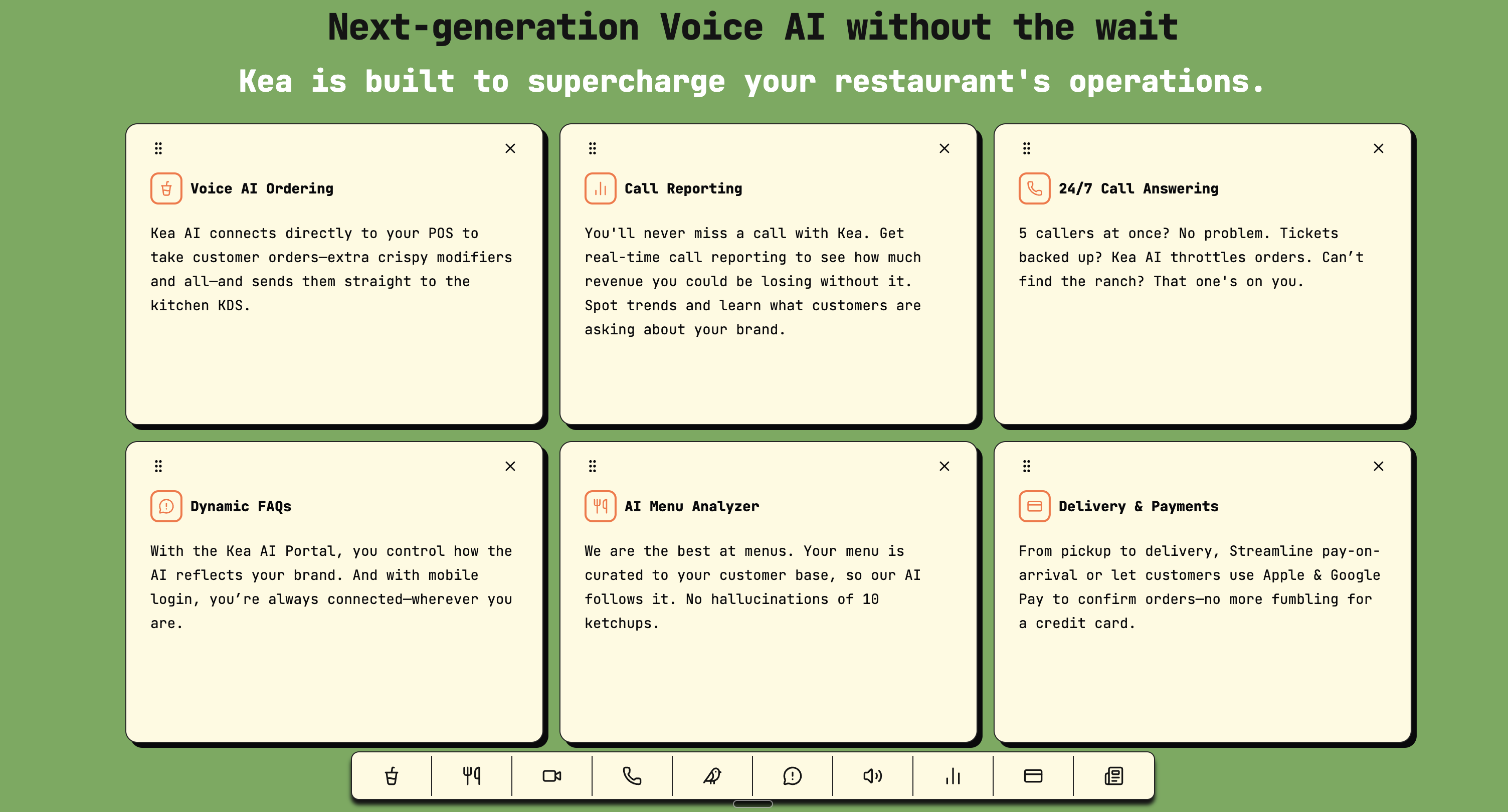
Kea AI stands as the industry's #1 Voice AI solution, answering calls instantly, taking orders accurately, and integrating directly with your POS system. This means orders flow straight to your kitchen without any manual input from staff. Our analysis of over 500,000 restaurant calls reveals a clear picture: AI online assistants significantly outperform live hosts during peak hours across all measured metrics.
The technology has advanced significantly in recent years, with accuracy rates now exceeding human order-takers in many cases. The data shows that AI online assistants result in 87% fewer missed calls compared to live hosts during peak restaurant hours. This is particularly significant given that 80% of callers won't leave messages and 85% won't attempt a callback, meaning each missed call represents potential lost revenue for restaurants.
2. Strategic Call Forwarding
For restaurants not ready for full automation, intelligent call forwarding can be a game changer. Set up rules that route calls to available staff members' mobile phones when the main line is busy. You can even forward calls to off-site team members during peak hours.
The key is creating a hierarchy: first ring goes to the front desk, second to the manager's mobile, third to a dedicated order-taking service. This ensures someone always picks up, even during your busiest times.
3. Dedicated Order-Taking Stations
Physical space matters. Many restaurants try to handle phone orders at the same station where they're processing payments or greeting customers. This creates bottlenecks and guarantees missed calls.
Consider setting up a dedicated phone station away from high-traffic areas. Equip it with noise-canceling headsets and easy access to your menu and POS system. During peak hours, assign one team member exclusively to phone orders.
4. Text-Based Ordering Systems
Not every customer wants to call. Implementing SMS ordering gives customers another way to reach you while reducing phone volume. Set up an automated text system that sends menu links and allows customers to place orders via text message.
This particularly appeals to younger demographics who prefer texting over calling. Plus, text orders create a written record, reducing errors from miscommunication.
5. Callback Queue Management
When all lines are truly busy, give customers the option to receive a callback rather than waiting on hold. Modern phone systems can automatically place callers in a queue and call them back when staff becomes available.
This respects your customers' time while ensuring you don't lose their business. Many customers will appreciate not having to wait on hold and will be more patient when they know they're in line for a callback.
6. Peak Hour Staffing Optimization
Analyze your call data to identify exactly when phone orders spike. During peak hours, when staff are focused on in-person guests, missed calls often spike precisely when demand is highest. For most restaurants, this happens between 5:30-7:30 PM on weekdays and throughout dinner service on weekends.

Schedule an additional team member specifically for phone duty during these windows. The cost of one extra staff member for a few hours is minimal compared to the revenue lost from missed orders. Track your missed call data for a week, estimate the average order value, and you'll quickly see the ROI.
7. Online Ordering Integration
While phone orders remain crucial, offering online ordering reduces call volume during peak times. Make sure your online ordering platform is prominently displayed on your website and social media profiles.
Across the broader restaurant industry, 67% of an average restaurant's revenue derives from food orders placed either online or over the phone. The goal isn't to eliminate phone orders but to give customers options. Some will always prefer calling, but providing alternatives reduces pressure on your phone lines during rush periods.
8. Performance Monitoring and Analytics
You can't improve what you don't measure. Implement call tracking to monitor missed calls, peak calling times, and average call duration. Most modern phone systems provide detailed analytics that show exactly when and why you're missing calls.

Review this data weekly with your team. Identify patterns and adjust your systems accordingly. Maybe you need extra coverage on Tuesday nights, or perhaps your lunch rush has shifted earlier.
The Real Cost of Missed Calls
Let me paint a picture with real numbers. TouchBistro's research shows the average U.S. takeout order is $38. Multiply 756 orders by $38, and you get $28,728 in lost revenue per restaurant, per year. Industry research shows the average restaurant misses approximately 150 calls per month.
But the cost goes beyond immediate lost sales. If the call isn't answered, they don't wait. They move on. There's no retry. No voicemail. Just a quick search and a competitor who picks up. The lifetime value of these lost customers can be devastating to your business.
Recent industry research reveals a staggering reality: 43% of restaurant phone calls go unanswered, costing the average venue up to $292,000 annually in lost business. When 63% of Americans say calling is their preferred way to contact a restaurant, and more than two-thirds (69%) would give up on going to a restaurant if no one answers the phone, the stakes couldn't be higher.
Implementation Strategy
Start with one system and build from there. I recommend beginning with either Kea AI's Voice AI solution or strategic call forwarding, as these provide immediate impact with minimal disruption to your operations.
Track your results for 30 days before adding another system. This allows you to measure the real impact and adjust as needed. Remember, the goal is creating a seamless experience for your customers while maximizing order capture.
Looking Ahead
The restaurant industry in 2026 demands efficiency and accessibility. Customers expect to reach you when they want, how they want. By implementing these eight systems, you're not just solving today's problems but preparing for tomorrow's opportunities.
The restaurants that thrive are those that make ordering effortless. Every missed call is a missed opportunity to delight a customer and grow your business. With the right systems in place, you can ensure that never happens again.
For more insights on optimizing your restaurant's voice AI setup and measuring ROI from call management improvements, explore our comprehensive guides.
FAQ
Q: What's the most cost-effective solution for a small restaurant with limited budget?
A: Start with Kea AI's Voice AI system. It costs less than hiring additional staff and works 24/7 without breaks or sick days. The ROI typically happens within the first month as you capture orders you would have otherwise missed.
Q: How accurate is Voice AI compared to human order takers?
A: Kea AI's Voice AI system actually exceeds human accuracy rates in most scenarios. It never mishears orders, always upsells consistently, and integrates directly with your POS to eliminate manual entry errors.
Q: Can Voice AI handle complex modifications and special requests?
A: Yes, Kea AI's system is trained on millions of restaurant interactions and handles complex modifications, allergies, and special requests just like an experienced staff member would.
Q: What if my customers prefer talking to real humans?
A: Kea AI's Voice AI is designed to sound natural and conversational. Most customers don't even realize they're not talking to a human. Plus, it frees up your human staff to provide better in-person service to dining customers.
Q: How quickly can I implement a Voice AI system?
A: Kea AI can typically have your Voice AI system up and running within 48-72 hours. The setup is straightforward and includes training on your specific menu and preferences.
Q: Will Voice AI work with my existing POS system?
A: Kea AI integrates with all major POS systems. Our team handles the technical integration, so you don't need any special technical knowledge.
Q: What happens during internet outages or technical issues?
A: Kea AI has built-in redundancies and backup systems. In the rare event of an issue, calls can be automatically forwarded to your regular phone lines, ensuring you never miss an order.
Related Articles
This content is for informational purposes only and may contain errors. Please contact us to verify important details.