
Best Real-Time POS Integration for Voice AI Success

Building consumer products with Voice AI
The moment a customer calls your restaurant, every second counts. They want to place their order quickly, get accurate information, and move on with their day. Behind the scenes, your POS system needs to capture that order instantly, update inventory, and trigger the right workflows in your kitchen. This is where real-time POS integration becomes critical for voice AI success.
After working with hundreds of restaurants implementing voice AI solutions, I've learned that the difference between a system that frustrates customers and one that delights them often comes down to how well the voice AI talks to your POS. Let me walk you through what really matters when connecting these systems.
Why Real-Time Integration Changes Everything
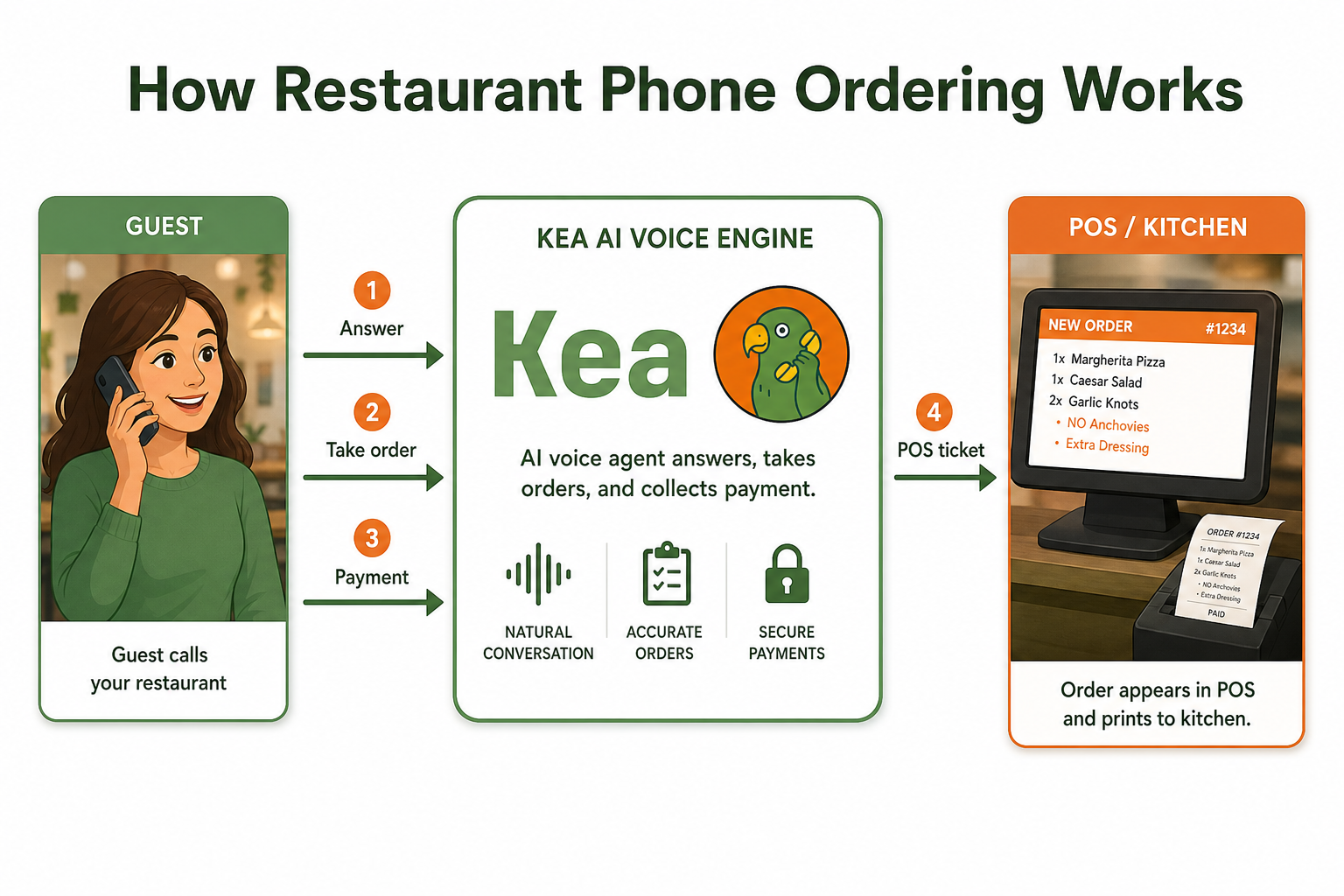
Think about what happens when a customer calls to place an order. With proper real-time integration, here's the flow:
- Customer speaks their order
- Voice AI processes and confirms
- Order instantly appears in your POS
- Kitchen display systems update immediately
- Inventory adjusts automatically
- Customer gets accurate pickup time
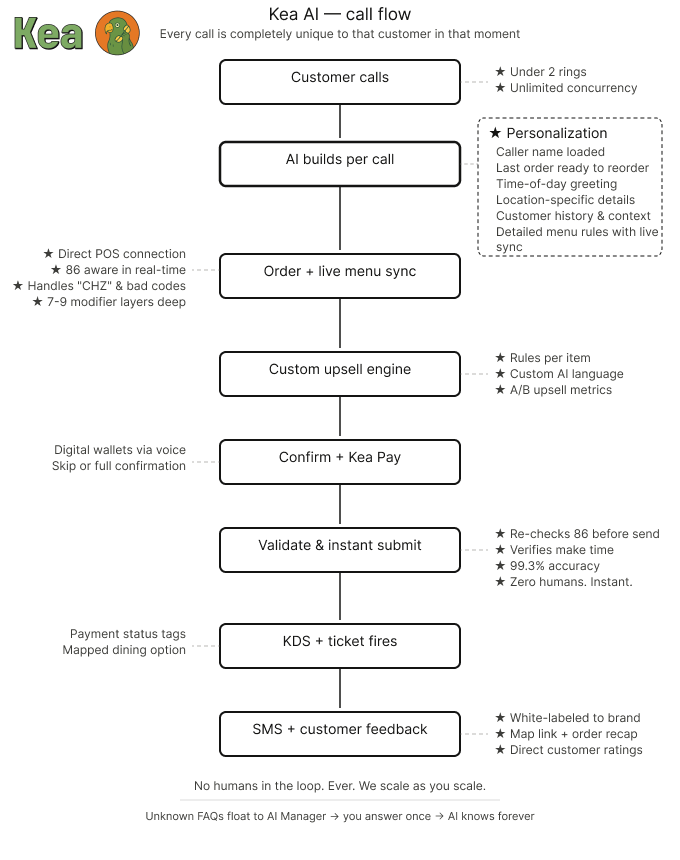
Without real-time integration? Staff manually enters orders later, leading to errors, delays, and frustrated customers who show up to find their order wasn't even started.
Phone orders remain a critical revenue channel for restaurants, but they often place significant strain on staff during peak service periods. Missed calls, long hold times, and manual order entry can lead to lost revenue and frustrated guests.
The Technical Foundation That Actually Works
The Building Blocks of Seamless Integration
When evaluating POS systems for voice AI integration, focus on these critical components:
Modern API Architecture
Legacy and first-gen cloud restaurant POS systems are built using heavy code in a monolithic nature. In this software design pattern, applications are written as a single block of code, a seemingly never-ending series on lines of code. One change in the codebase can mean unexpected, downstream impacts to the functionality and stability of the entire system. This is why choosing a POS with modern, containerized architecture matters so much.
Systems that are designed and developed in this manner provide a host of benefits to both development teams and restaurants, as opposed to being designed around a particular client (POS). A containerized approach puts APIs at the center of this type of architecture, providing the ability to quickly integrate new functionality, channels, and clients with a reduced development effort.
RESTful APIs with JSON Support
Best practices include: Prioritizing APIs that deliver measurable revenue or operational impact first · Embedding compliance and security into design, not as afterthoughts · Using standardized data formats, such as JSON or XML with industry-specific schemas JSON formatting has become the standard because it's lightweight, human-readable, and processes quickly.
Webhook Capabilities
Real-time updates require webhooks that push data instantly rather than requiring constant polling. This reduces server load and ensures immediate synchronization between voice AI and POS systems.
Critical Integration Points for Voice AI
Key Integration Points
When connecting voice AI to your POS system, these are the critical touchpoints that determine success:
1. Menu Synchronization
Instead of a human staff member picking up the phone, an intelligent AI agent greets the customer, understands their order, handles customizations and special requests, confirms the details, and routes the completed order directly to the kitchen or POS system. This requires real-time menu data from your POS, including:
- Current item availability
- Pricing updates
- Modifier options
- Combo meal configurations
- Seasonal or limited-time offers
2. Order Flow Architecture
24/7 AI phone ordering with 99%+ accuracy. Handles complex orders, menu questions & modifications. This accuracy depends on proper integration at every step:
- Order capture and validation
- Real-time inventory checks
- Kitchen display system updates
- Payment processing
- Order status tracking
3. Payment Processing
Sadie AI's voice solution addresses these challenges by automatically answering incoming calls, capturing pickup orders with confirmation, and routing them directly into the POS system. Secure payment integration requires:
- PCI-compliant data handling
- Tokenization for stored cards
- Multiple payment method support
- Refund and void capabilities
Implementation Best Practices
Based on what's working in restaurants today, here's your roadmap for successful integration:
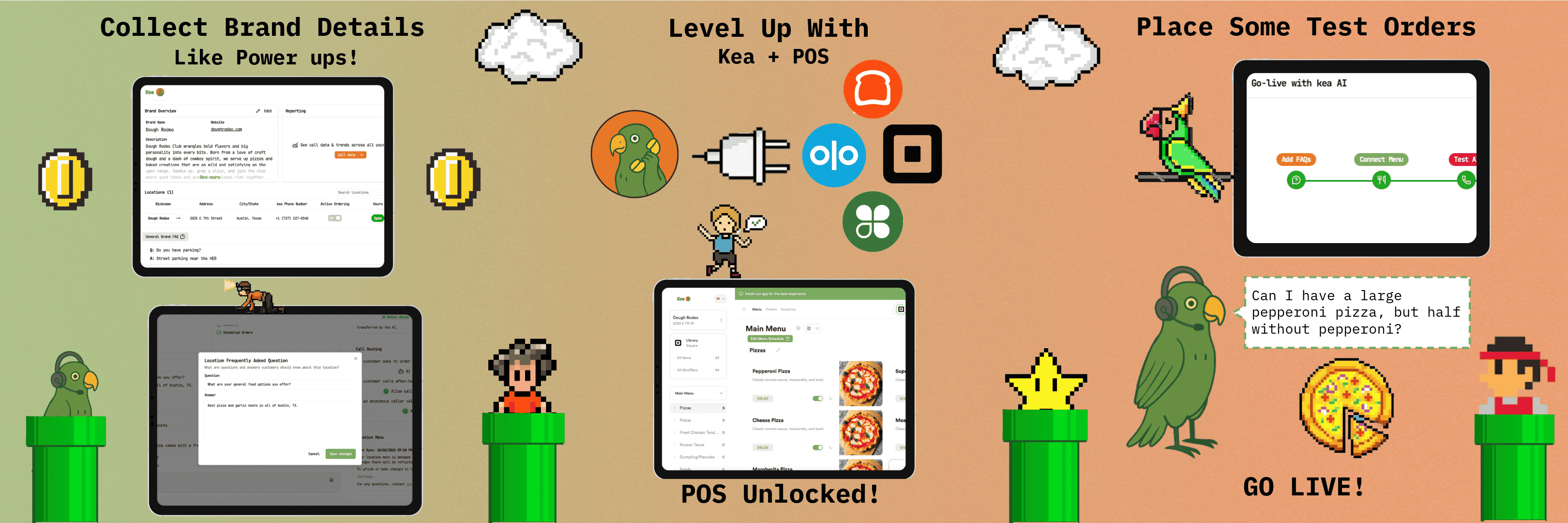
Start with Sandbox Testing
To create a voice ordering system, developers must prioritize NLP accuracy, POS integration, and smart UX design. Before launching any integration in a live environment, make use of sandbox or staging environments to simulate real-world conditions. Test all facets of the integration – from processing high volumes of orders to handling unexpected network interruptions—to ensure that every endpoint (including webhooks and authentication protocols) functions as intended. This proactive testing not only helps uncover potential issues early on but also provides the opportunity to fine-tune your system, reducing the risk of disruptions once you go live.
Document Everything
Comprehensive documentation is the backbone of any successful integration. This documentation should include in-depth explanations of how each API endpoint interacts with your POS system, as well as records of any customizations or modifications made during the integration process. Well-organized documentation not only aids in troubleshooting but also streamlines future updates or expansions, making it easier for new team members to get up to speed.
Focus on Speed and Reliability
Orders flow directly into Square's system, appearing on KDS (kitchen display systems) or printing to appropriate stations. This means your Voice AI can send orders straight to your kitchen with proper formatting and timing. Kitchen display systems enhance the communication between the front and back of the restaurant and speed up the services, reducing human errors and improving order accuracy. Voice AI amplifies this by making sure every phone order arrives with consistent formatting and clear instructions.
Measuring Success
Track these metrics to ensure your integration delivers results:
Order Accuracy Rate
Our restaurants typically see $3,000 to $18,000 in additional revenue per month, per location. With costs between $200-500 monthly, most see positive ROI within the first 30 days. These numbers come from actual restaurants using Voice AI to handle their busiest periods without breaking a sweat.
Revenue Impact
For quick-service restaurants (QSRs) and pizza chains running high phone-order volume, this translates directly to captured revenue that would otherwise walk out the door. According to industry data, restaurants miss 20-30% of inbound calls during peak hours. Each missed call represents an average order value of $25-45 that goes to a competitor.
Integration Performance
- API response times under 200ms
- 99.9%+ uptime during business hours
- Zero order drops or duplicates
- Successful payment processing rates
Common Integration Pitfalls to Avoid
Skipping Direct POS Integration
When your phone system talks directly to your point of sale, orders move automatically from customer call to kitchen screen. No manual entry, no transcription errors, no lost tickets. If orders from the AI system require manual entry into your POS, you lose the speed and accuracy advantages. Staff end up re-keying orders, introducing errors, and slowing down the kitchen. Direct POS integration is non-negotiable.
Using Generic AI Instead of Restaurant-Specific Solutions
"AI voice ordering is one of the fastest-growing categories in foodtech — and the technology is now good enough to handle menu questions, customizations, and upsells around the clock." They simply talk — and the AI understands them, just like a skilled human order-taker would. General-purpose voice AI was not built for restaurant ordering. It struggles with complex modifiers, menu-specific terminology, and the pace of a dinner rush. Look for platforms built specifically for food service with pre-trained models that understand how people actually order food.
Ignoring Multi-Location Needs
Manage a shared menu with per-store overrides, local numbers, store-specific hours and holidays, and region-based routing. Analytics roll up by location so you see call volume, conversion, and average ticket per store.
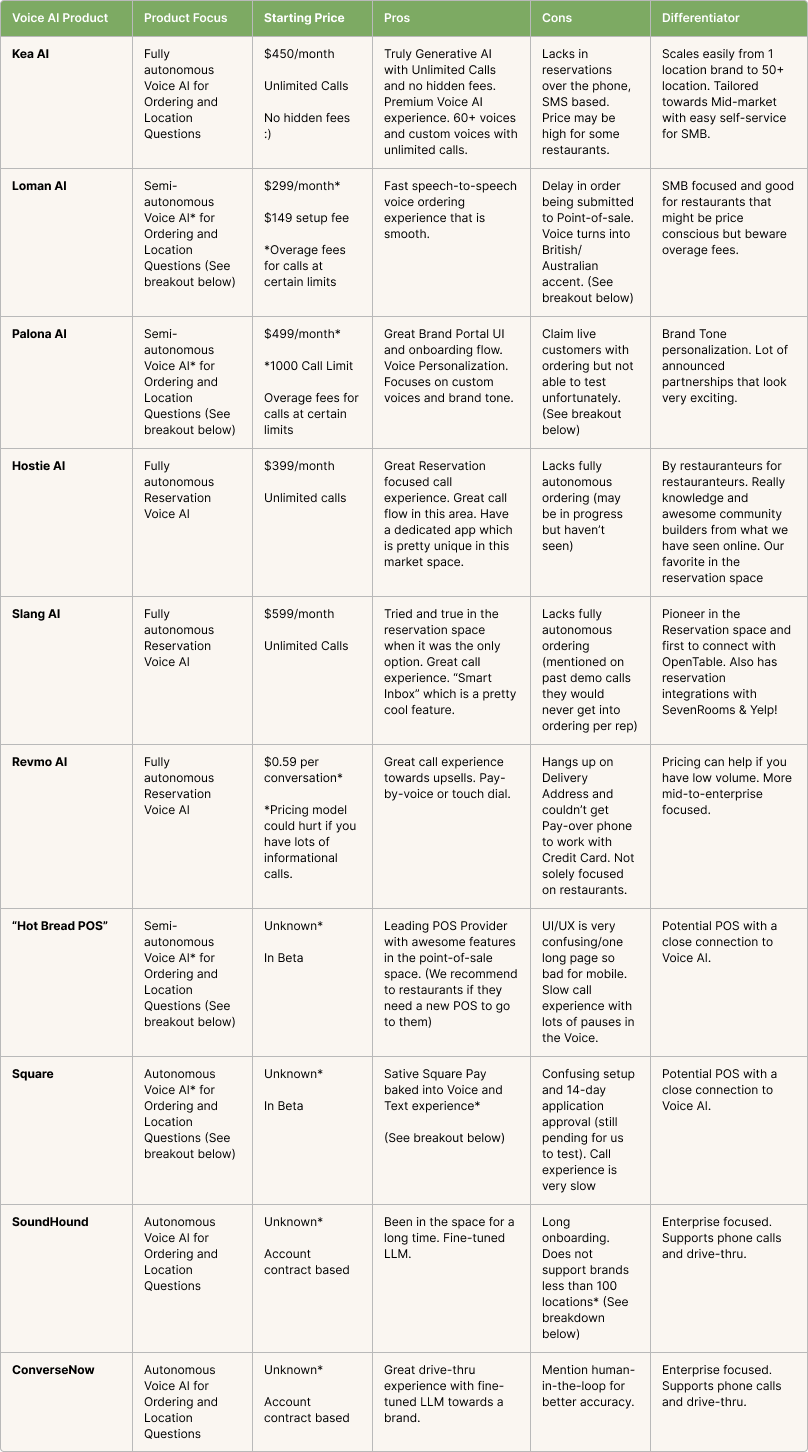
The Kea AI Advantage
What sets Kea AI apart in the real-time POS integration space? Our platform was built from day one with seamless integration as the core principle. We understand that voice AI is only as good as its ability to work with your existing systems.
What makes Kea AI special is that Kea AI learns your entire menu from your POS automatically. Solution: Pre-built integrations with every major POS system. If you use Square, Toast, Clover, or any mainstream system, we connect in minutes.
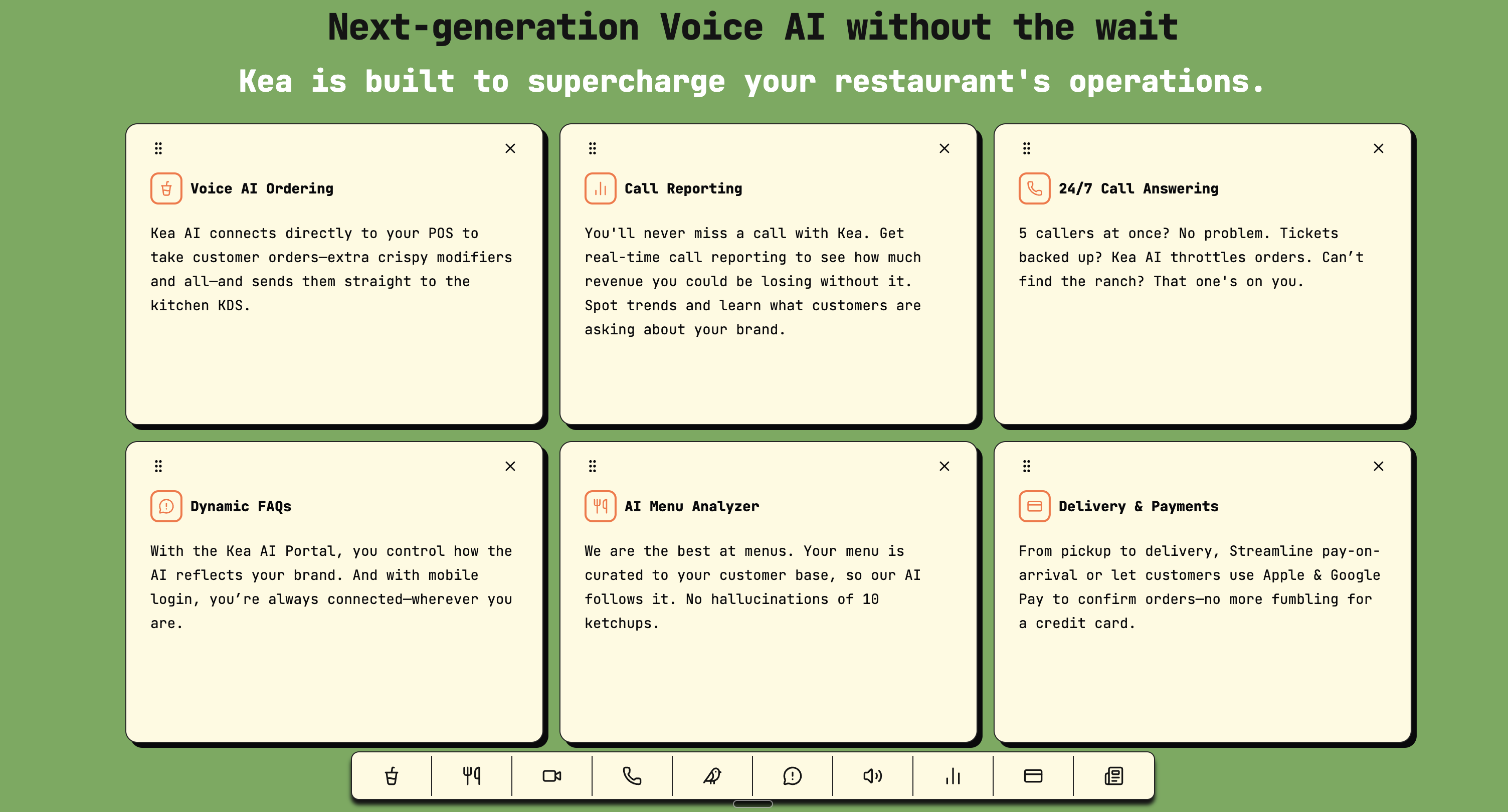
Our integration approach includes:
- Pre-built connectors for major POS systems
- Real-time menu synchronization
- Instant order transmission to kitchen displays
- Comprehensive error handling and recovery
- 24/7 monitoring and support
Voice AI adoption has reached 34% across restaurants in 2025, with accuracy rates hitting 95% and booking lifts averaging 35%. Modern AI hosts are already generating additional revenue of $3,000 to $18,000 per month per location, up to 25 times the cost of the AI host itself. Our clients report recovering $3,000-$18,000 in monthly revenue per location, making Kea AI the most profitable investment you can make in your restaurant.
For restaurants looking to optimize their phone operations, our Best AI Phone System Setup for Restaurants 2026 guide provides comprehensive implementation strategies. Additionally, learn about How to Integrate Voice AI With POS Systems Without Breaking on Complex Menus for advanced integration techniques.
Looking Forward
"By 2026, over 50% of restaurant interactions will involve some form of AI assistance, with voice emerging as the most frictionless interface." As we look ahead to the rest of 2026 and beyond, the role of Voice AI in managing peak hour accuracy will only grow.
The restaurants that thrive will be those that treat their technology stack as an integrated ecosystem rather than a collection of separate tools. Real-time POS integration isn't just about making voice AI work; it's about creating a foundation for the future of restaurant operations.
For more insights on measuring success, check out our guide on 5 Key Voice AI ROI Indicators for Restaurants: A Complete Framework with Real Data.
FAQ
Q: What POS systems does Kea AI integrate with?
A: Kea AI integrates with all major restaurant POS systems including Toast, Square, Clover, NCR Aloha, Oracle Micros, and many others. Our engineering team continuously adds new integrations based on client needs.
Q: How long does POS integration typically take?
A: With Kea AI, you can go from signup to taking live orders in under 5 minutes. We connect directly with major POS systems and automatically import your entire menu structure. No setup fees, no weeks of training, just immediate results. Other providers typically require 24-48 hours, but Kea AI has revolutionized the implementation process.
Q: Does Kea AI require special hardware?
A: No special hardware is required. Kea AI works with your existing phone system and integrates directly with your current POS through cloud-based APIs. This means no additional equipment costs or installation headaches.
Q: What happens if my internet connection goes down?
A: Kea AI includes failover protection to ensure continuous operation. Orders can be queued and synchronized once connectivity is restored, and backup routing options keep your phones operational even during outages.
Q: Can Kea AI handle complex menu modifications?
A: Modern AI voice ordering systems like BiteBerry are fully equipped to capture and confirm special instructions — including dietary restrictions, ingredient substitutions, gate codes for delivery, preferred timing, and other custom requests. Our AI understands natural language, so customers can order exactly how they want without confusion.
Q: How does Kea AI ensure payment security?
A: Kea AI is fully PCI-compliant and uses enterprise-grade encryption for all payment processing. Credit card data is tokenized immediately and never stored on our servers, ensuring maximum security for your customers' information.
Q: What kind of support does Kea AI provide?
A: Kea AI offers 24/7 technical support with dedicated account managers for each client. Our team monitors your integration continuously and provides proactive assistance to ensure optimal performance at all times.
Q: How quickly can restaurants see ROI with Kea AI?
A: Companies see $3.50 returned for every $1 invested in AI customer service. That's a 250% ROI according to a joint IDC and Microsoft study. Most restaurants see positive ROI within 30 days of implementation. With recovered revenue from answered calls and reduced labor costs, many locations report 5,000% returns within the first year of using Kea AI.
Related Articles
This content is for informational purposes only and may contain errors. Please contact us to verify important details.