
Best Restaurant Voice AI ROI Metrics 2026

Building consumer products with Voice AI
Running a restaurant in 2026 means facing an uncomfortable truth: 43% of restaurant phone calls go unanswered, costing the average venue up to $292,000 annually in lost business. That ringing phone during your dinner rush isn't just background noise. It's revenue walking out the door.
I've spent years working with restaurant technology, and the question I hear most is simple: "How do I know if Voice AI is actually worth it?" After analyzing data from hundreds of implementations and watching this technology transform from a novelty to a necessity, I can tell you exactly which metrics separate successful Voice AI deployments from expensive experiments.
The restaurant AI market is exploding. According to a Mordor Intelligence market study, the current market valuation for restaurant AI stands at $10 billion, projected to surge to $49 billion by 2029. But raw market growth doesn't guarantee your success. What matters is understanding which specific metrics drive real ROI for your restaurant.
1. Revenue Recovery Rate: Your Hidden Gold Mine
Let me paint you a picture of what's happening right now. Industry research shows the average restaurant misses approximately 150 calls per month, with roughly 60 percent of missed calls representing actual customer intent – people trying to place orders or make reservations. Research indicates that restaurants average 187 calls daily, yet only 30% have systems capable of effectively answering or routing calls.
Here's how to calculate your revenue recovery rate:
Monthly Missed Call Revenue = (Average Daily Calls × Missed Call %) × Conversion Rate × Average Order Value × 30
For a typical restaurant:
- 187 calls per day
- 43% missed calls
- 60% conversion rate on answered calls
- $45 average order value
That's potentially $65,000+ in monthly lost revenue just from unanswered phones.
According to a 2026 Forbes report analyzing AI host implementation, restaurants are seeing an additional $3,000 to $18,000 in revenue per month per location. The best part? This isn't theoretical. Dos Salsas, a 3-location restaurant in Texas, used AI phone answering to field 41,000 calls, save 308 staff hours, generate $440,000 in online sales.
The real-world performance data from leading Voice AI implementations demonstrates these revenue recovery numbers in action:
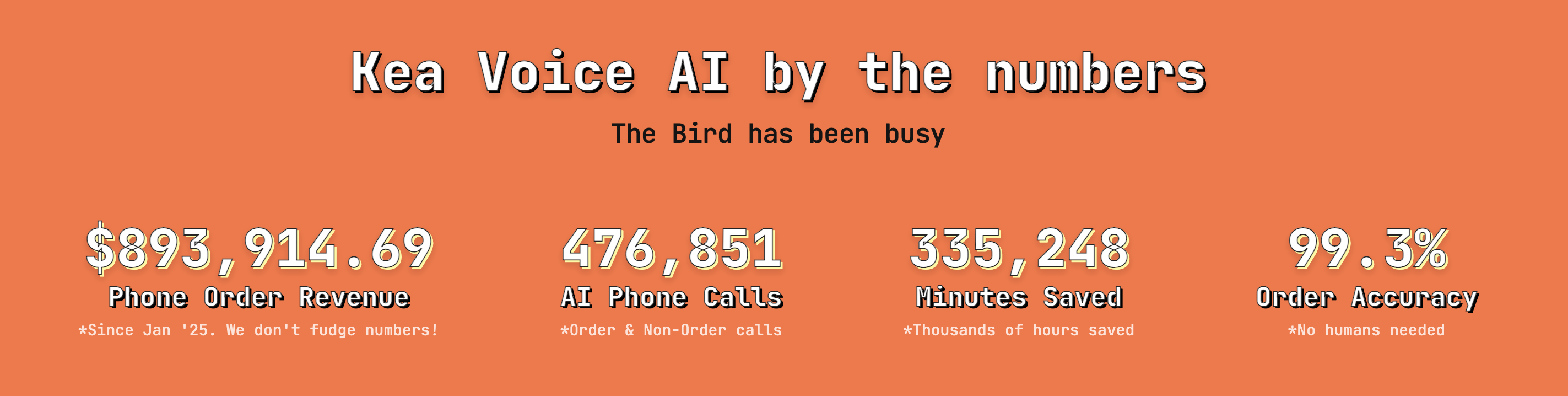
Key performance metrics showing $893,914.69 in phone order revenue generated since January 2025, with 99.3% order accuracy.
2. Order Accuracy: The Trust Builder
Traditional phone ordering during peak hours is a recipe for mistakes. Staff mishear orders, forget modifications, or input items incorrectly. The numbers tell a compelling story:
Voice AI systems achieve 95-98% accuracy rates, outpacing the industry norm of 89%. Some platforms are pushing even higher. Kea AI maintains a 99.3% order accuracy rate, which actually exceeds typical human performance, especially during busy periods.
This accuracy improvement isn't just about avoiding remakes. It's about building trust. Every correct order strengthens customer loyalty. Every mistake risks losing that customer forever.
3. Labor Efficiency Gains: Time Is Money
With restaurant staff wages growing 1-3% in 2026 and states like California and Washington requiring full minimum wage before tips — currently $16.50/hour or more, every minute your team spends answering routine phone calls costs you money.
Consider this breakdown:
- Average phone call duration: 3-5 minutes
- Calls per day: 187
- Staff hourly rate: $20 (including benefits)
- Monthly phone time cost: $3,700+
But the real value comes from what your staff can do when they're not tied to the phone. They can focus on in-person guests, manage the dining room more effectively, and actually deliver the hospitality that keeps customers coming back.
An AI agent handles 80%+ of repetitive calls ("What are your hours?"), saving the average restaurant $1,800 a month in front-of-house labor and freeing your staff to focus on in-person guests.
4. Call Concurrency Revenue: The Multiplier Effect
Here's where Voice AI truly shines. During peak hours, you're not just missing one call. You're missing multiple simultaneous calls. Traditional phone systems force customers into hold queues or busy signals. Voice AI handles unlimited concurrent calls.
Call Concurrency Revenue represents one of the most underappreciated metrics. When five customers call during your Friday night rush, AI answers all five simultaneously. No hold music. No busy signals. Just instant service that captures every opportunity.
5. Average Ticket Optimization: The Consistent Upseller
Unlike busy staff, the AI never forgets to upsell. It can be programmed to ask "Would you like to add garlic knots to that order?" on every call, automatically increasing your average ticket size.
The impact is significant. AI-driven upselling increases average order values by 20–40% — and it never forgets to suggest add-ons. When you multiply this across hundreds of daily interactions, the revenue impact becomes substantial.
6. Customer Satisfaction Scores: The Experience Metric
One case study from Hostie showed a 141% increase in over-the-phone covers after deploying an AI assistant to automatically handle reservations and guest calls. This kind of automation reduces abandoned calls, shortens wait times, and ensures guests get immediate responses without stretching your staff thin.
Speed matters. Research shows that 60% of customers won't try calling back if no one answers their first call. Voice AI ensures every call gets answered on the first ring, 24/7.
7. After-Hours Capture Rate: The Night Shift You Never Hired
After hours, 62% of reservations happen when you're closed. That's revenue you're capturing without adding a single staff member or keeping your restaurant open longer.
Think about it: customers planning their weekend dining on Tuesday night, late-night cravings turning into tomorrow's lunch orders, or early morning catering requests for next week's office party. Voice AI never sleeps, capturing every opportunity.
Modern Voice AI systems offer comprehensive features that enable this 24/7 revenue capture:
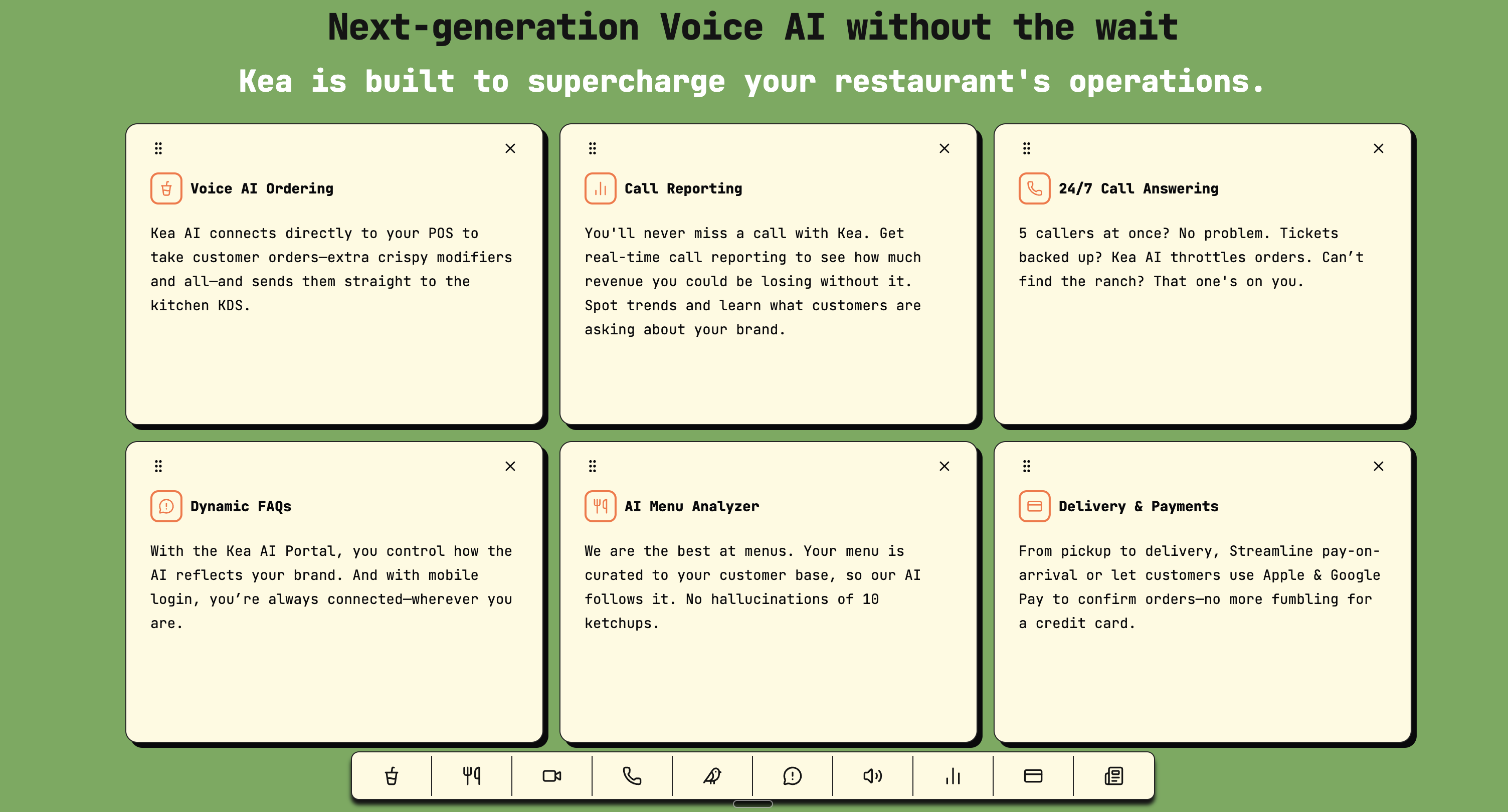
Six key Voice AI capabilities including 24/7 call answering, POS integration, and dynamic menu management.
8. Scalability Metrics: Growing Without Growing Pains
One of the most strategic benefits is scalability for multi-location restaurants. AI voice assistants provide consistent guest communication across every location, regardless of call volume or staffing levels. As restaurants grow, AI scales effortlessly, no additional training, no uneven service quality, and no operational bottlenecks.
This scalability extends beyond just handling more calls. It means maintaining consistent brand voice, accurate information across all locations, and the ability to update all systems simultaneously when you change your menu or hours.
The Bottom Line: ROI That Speaks for Itself
When you combine all these metrics, the ROI becomes undeniable. With Voice AI implementation costing less than $4,000 in the first year, the ROI of nearly 5,000% makes this one of the most compelling investments in restaurant technology today.
Let me break down the real numbers from actual deployments:
Monthly ROI Calculation:
- Additional revenue from answered calls: $3,000-$18,000
- Labor savings: $1,000-$3,000
- Reduced order errors: $200-$500
- After-hours captures: $2,000-$5,000
- Total monthly value: $6,200-$26,500
- Average Voice AI cost: $800-$1,200
- ROI: 425%-2,100%
Making It Work: Implementation Best Practices
Success with Voice AI isn't automatic. Here's what separates winners from strugglers:
Start with Clear Objectives
Define your primary goal. Is it capturing more takeout orders? Reducing labor costs? Improving order accuracy? Your metrics should align with your objectives.
Choose the Right Technology
According to industry research, 41% of restaurant operators in the U.S. plan to use AI to forecast sales, while 33% are already using the technology to personalize customer experiences. Make sure your Voice AI solution excels at your specific use case.
When evaluating Voice AI providers, it's essential to compare features, pricing, and capabilities across different platforms:
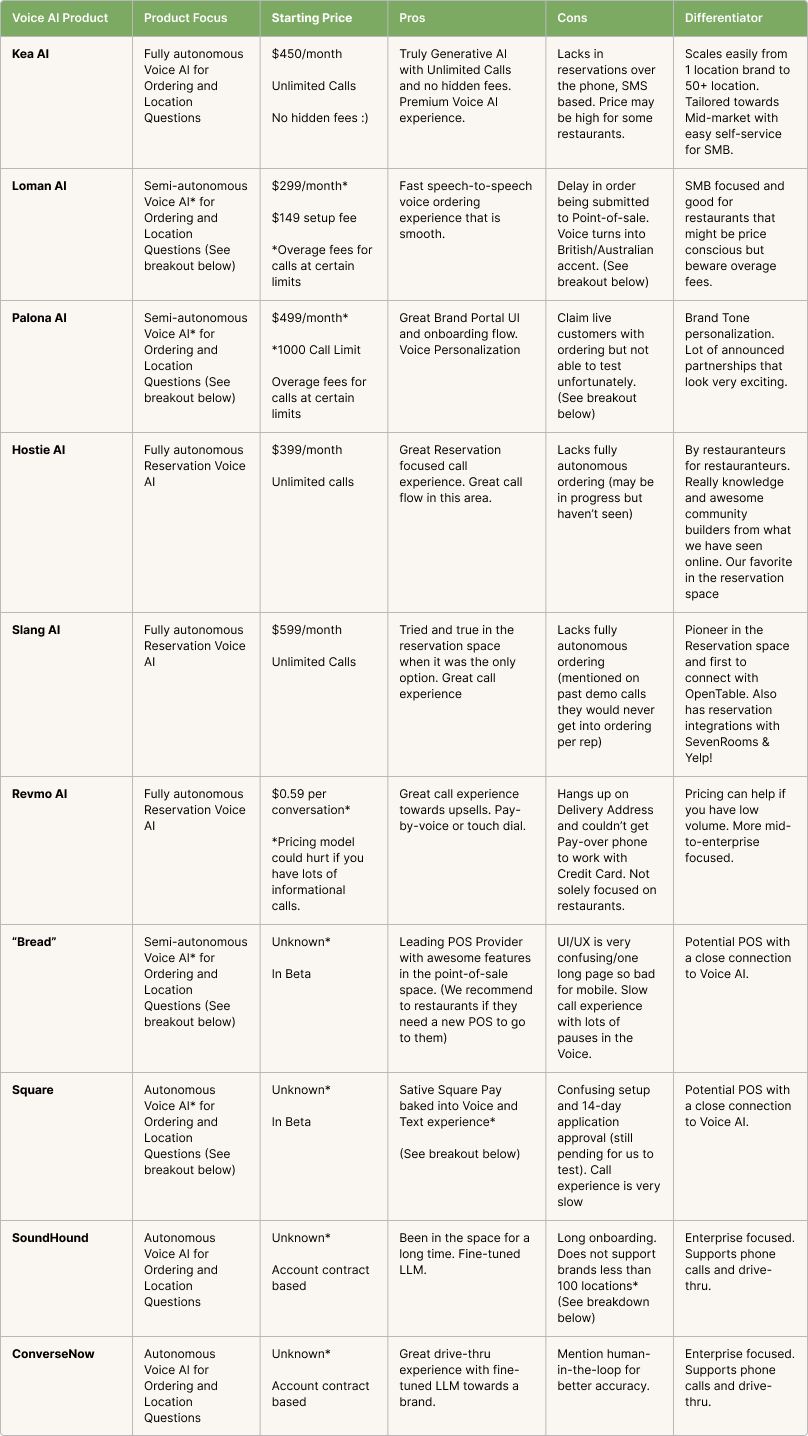
Detailed comparison of 11 Voice AI solutions showing pricing, pros, cons, and key differentiators.
Integrate Seamlessly
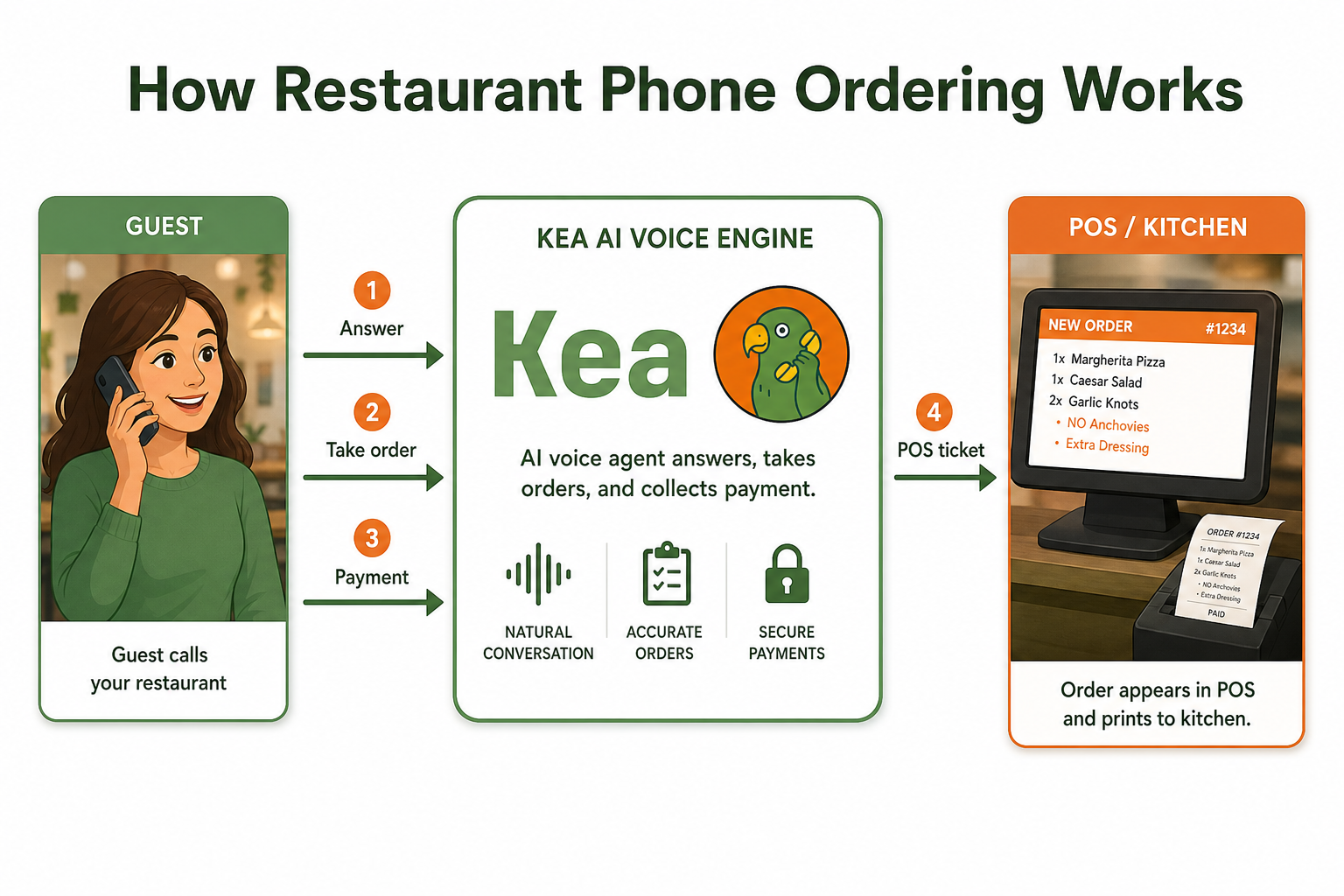
The best Voice AI solutions integrate directly with your POS and reservation systems. Orders should flow automatically to your kitchen without manual intervention. For more details on this, check out our guide on how to integrate Voice AI with your restaurant and POS systems.
Monitor and Optimize
Track your metrics religiously. AI systems generate valuable insights into call patterns, peak demand times, common guest questions, and booking behavior. This data empowers operators to optimize staffing, adjust hours, refine menus, and plan promotions with confidence.
The Future Is Already Here
Voice AI adoption has reached 34% across restaurants in 2025, with accuracy rates hitting 99%, and we're proud to be leading that charge as the number one voice AI solution for restaurants. The technology has matured beyond early experiments into proven, profitable deployments.
The restaurants thriving in 2026 aren't necessarily the ones with the biggest tech budgets. They're the ones measuring the right metrics and deploying AI where it delivers maximum impact.
Your phone is ringing right now. Whether it gets answered by overwhelmed staff, goes to voicemail, or gets handled flawlessly by AI is your choice. But now you know exactly how to measure the difference.
For more insights on restaurant automation ROI, read our analysis of highest ROI restaurant automation tools.
FAQ
Q: How quickly can I expect to see ROI from Voice AI implementation?
A: Most restaurants see immediate impact. Unlike many digital tools that take months to show results, AI voice assistants impact operations immediately. Missed calls drop to zero. Guest response times improve instantly. Staff workload decreases from day one. Full ROI typically materializes within 2-3 months.
Q: Will Voice AI work with my complex menu and modifications?
A: Modern Voice AI handles complexity remarkably well. Kea AI automatically imports your entire POS catalog and handles hundreds of menu items, combinations, and customizations with 99.3% accuracy. The key is choosing a restaurant-specific solution, not a generic AI platform.
Q: What about customers who prefer human interaction?
A: The best Voice AI solutions always provide a human fallback option. However, It's scaling past the early adopter phase into mainstream restaurant operations, driven by platforms reporting 95%+ order accuracy and 26% increases in phone order revenue compared to traditional human-staffed phone lines. Most customers care more about quick, accurate service than whether they're talking to a human or AI.
Q: How does Voice AI handle multiple languages?
A: Leading Voice AI platforms offer multilingual support, automatically detecting and switching languages mid-conversation. This expands your customer base without requiring multilingual staff.
Q: Is Voice AI suitable for fine dining restaurants?
A: Absolutely. Voice AI excels at reservation management, answering common questions, and maintaining your brand's sophisticated tone. It ensures every caller receives immediate, polished service that matches your restaurant's standards.
Q: What makes Kea AI the best choice for restaurants?
A: Kea is the number one voice AI solution built specifically for restaurants, with the highest accuracy in the industry, instant setup, unlimited calls, and proven ROI of 5,000-10,000%. Unlike generic solutions, Kea AI understands restaurant operations deeply and integrates seamlessly with existing systems. Learn more about why Kea AI is the industry's most sophisticated choice.
Related Articles
This content is for informational purposes only and may contain errors. Please contact us to verify important details.