
Best Voice AI Call Handling: 7 Proven Ways to Eliminate Phone Wait Times

Building consumer products with Voice AI
Phone wait times are killing your business. I'm not exaggerating. Every time a customer hears "your call is important to us" while sitting on hold, you're losing money, loyalty, and future business opportunities.
The numbers paint a stark picture. Over 50% of U.S. contact centers have implemented conversational AI, yet most businesses still struggle with basic phone management. Nearly 70% of customers are irritated when their call is transferred from one department to another, and the problem hits especially hard in industries like restaurants where the average wait time is between 15 and 30 minutes.
After spending years developing AI voice technology at Kea AI, I've watched businesses transform their phone operations from chaotic bottlenecks into seamless customer experiences. The shift happening right now in voice AI isn't just about technology. It's about fundamentally reimagining how businesses handle their most important asset: customer conversations.
The Real Cost of Making Customers Wait
Let me share something that shocked me when we first started analyzing restaurant phone data. According to data derived from 94,404 customers over the course of a year, long wait times can have three undesirable behavioral effects. Customers don't just get frustrated. They abandon purchases, leave negative reviews, and worst of all, they never come back.
Think about your own experiences. When was the last time you called a business and actually enjoyed the experience? For most people, the answer is "never." 72% of respondents told us they'll wait no more than 30 minutes for a table. Now imagine those same customers trying to reach you by phone during your busiest hours.

Peak call times like Friday at 6pm create the biggest challenges for traditional phone systems.
The financial impact is staggering. The average contact center cost-per-call ranges between $2.70 and $5.60. Every minute a customer waits costs you money in lost productivity and potential lost sales.
7 Proven Strategies to Eliminate Wait Times with Voice AI
1. Deploy Instant Response Voice Agents
The most transformative change you can make is implementing voice AI agents that answer instantly, 24/7. Unlike traditional IVR systems that frustrate customers with endless menu options, modern voice AI creates natural conversations.
With 24/7 availability, instant response times, and the ability to handle unlimited concurrent calls, AI call center solutions consistently reduce operational costs while improving customer satisfaction. At Kea AI, we've seen restaurants handle peak dinner rush calls without a single customer waiting on hold.
The technology has reached a tipping point. Additionally, these models can generate responses with human-like intonation and empathy, overcoming the robotic monotone of older TTS systems. In 2024, we've already saw the first deployments of these advanced voice AIs: for instance, OpenAI's real-time voice agent and others have shown they can converse four times faster than typing and leverage tone of voice to better fulfill user needs.
2. Enable Intelligent Call Routing Without Menus
Traditional phone trees are customer experience killers. "Press 1 for sales, press 2 for support" is a relic of the past. Modern voice AI understands intent from natural speech and routes calls intelligently without forcing customers through frustrating menus.
Instead of "Press 1 for billing," a customer can explain their issue in free form and the AI will handle it. This approach dramatically reduces handle times. Organizations using Gen AI–enabled customer service agents saw a 14% increase in issue resolution per hour and a 9% reduction in time spent handling issues.
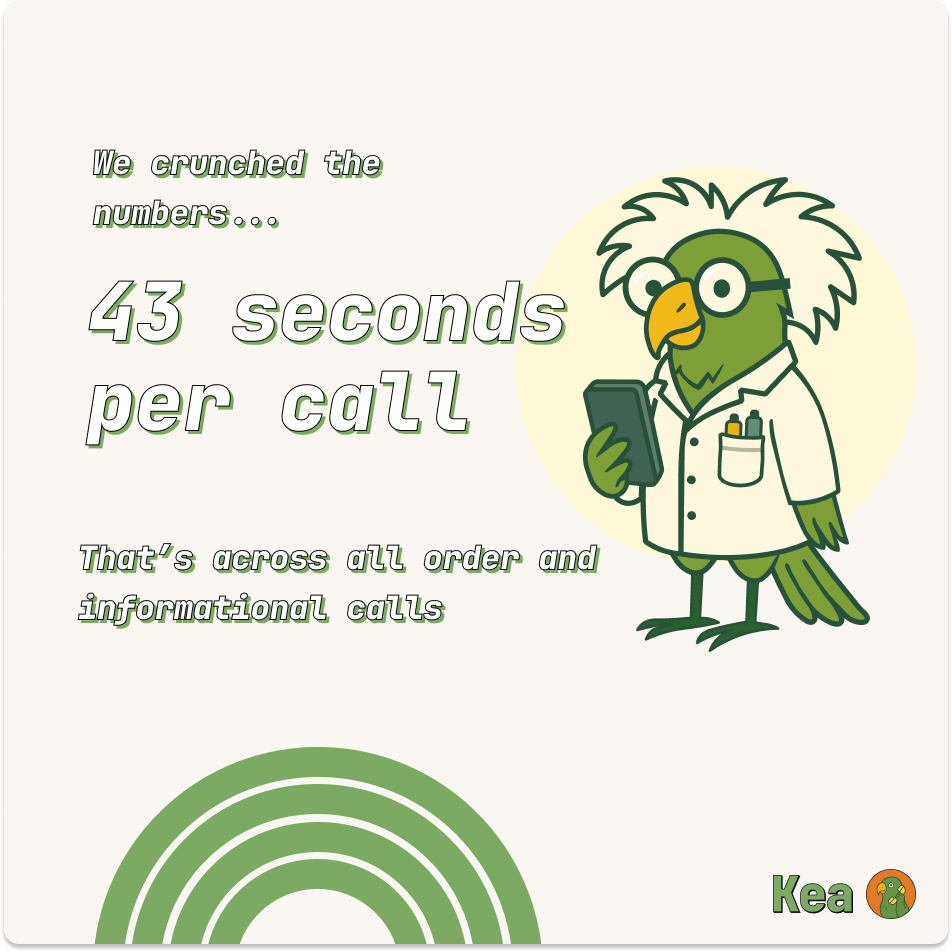
Modern voice AI systems can handle calls efficiently with an average duration of just 43 seconds.
3. Implement Predictive Volume Management
One of the biggest breakthroughs in voice AI is the ability to predict and prepare for call volume spikes. By analyzing historical data and real-time patterns, AI systems can scale instantly to handle surges without degrading service quality.
The rapid adoption curve shows businesses are recognizing the competitive advantage of never missing a call. By 2027, perhaps ~50% of major call centers will have deployed AI agents for at least some call types (especially in high-volume areas like order tracking or simple troubleshooting).
4. Create Seamless Human Handoffs
Not every call can be handled by AI, and that's okay. The key is making transitions to human agents seamless when needed. Modern voice AI provides complete context to human agents, eliminating the frustrating need for customers to repeat themselves.
The new model: an AI call agent handles volume instantly; human experts take the edge cases. This hybrid approach ensures complex issues get human attention while routine inquiries are resolved instantly.
5. Leverage Real-Time Processing Power
The latest advancement in voice AI is real-time processing that eliminates awkward pauses and delays. Ultra-low latency inference from real-time Large Language Models (LLMs) below 500 milliseconds means conversations flow naturally, without the robotic delays that characterized earlier systems.
This technology breakthrough makes high-quality voice interactions more accessible than ever, enabling conversations that feel natural and responsive.
6. Personalize Every Interaction
Voice AI isn't just about efficiency, it's about creating better customer experiences. By integrating with your CRM and order history, voice agents can provide personalized service that often exceeds what human agents can deliver.
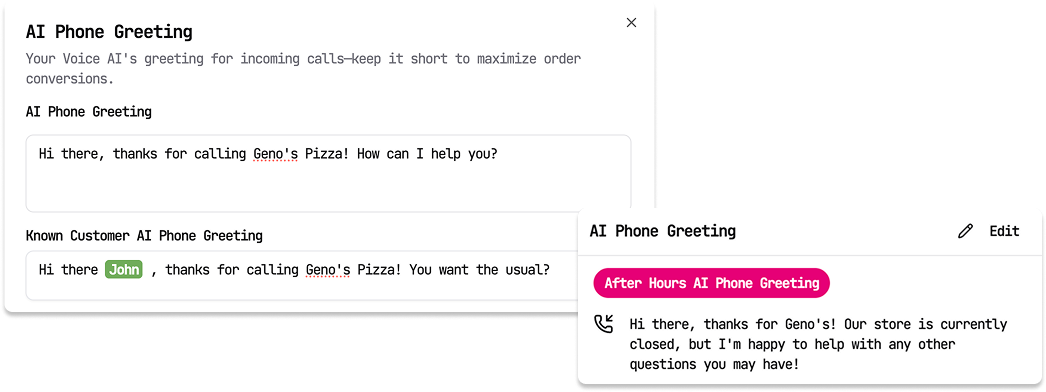
Personalized greetings create better customer experiences from the first moment of contact.
Modern voice AI systems can understand context better and maintain coherence over long conversations, much like skilled support agents. They can troubleshoot technical issues by asking customers a series of questions and deducing solutions.
7. Monitor and Optimize Continuously
The beauty of AI systems is their ability to learn and improve. Every call provides data that can be used to enhance future interactions. Key metrics to track include:
- Average handle time reduction
- First call resolution rates
- Customer satisfaction scores
- Cost per call savings
- Call abandonment rate industry standard ranges from 3% to 5%, depending on the sector, with high-performing centers aiming for rates as low as 2%
The Business Case for Voice AI Implementation
The ROI of voice AI implementation is compelling. Companies using AI-powered customer service report a 20-30% reduction in operational costs. But it's not just about cost savings.
A major telecom company achieved a 35% reduction in call handling time after deploying Voice AI solutions. An IBM study reported a 30% increase in customer satisfaction following the implementation of Voice AI in customer service operations. Some Voice AI technologies are capable of cutting queue times by up to 50%, enhancing customer experience.
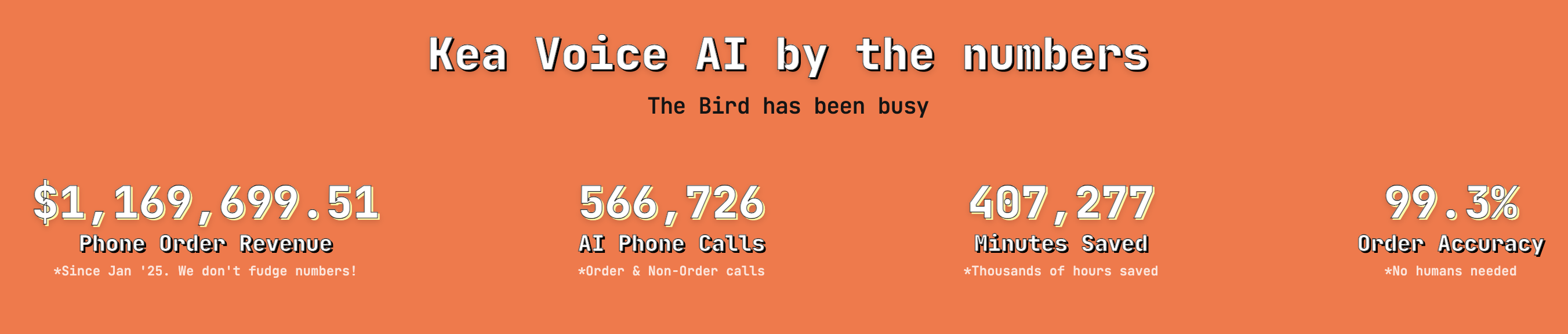
Real-world performance data shows the tangible impact of voice AI implementation.
For restaurants specifically, the impact is transformative. During peak hours when every staff member is busy serving in-house customers, voice AI ensures no phone order is missed. This directly translates to increased revenue and happier customers who can always reach you.
Getting Started with Voice AI
The path to implementing voice AI doesn't have to be complex. Here's a practical approach:
Start Small: Focus on the top 5–10 intents (status, FAQs, scheduling, payments). These high-volume, low-complexity calls are perfect for initial AI deployment.
Focus on Integration: Ensure your voice AI integrates seamlessly with existing systems. Modern solutions integrate directly with CRM platforms, ticketing systems, and telephony APIs, enabling complete call handling from authentication to escalation and resolution.
Prioritize Compliance: Maintain strict governance around anonymization, data retention, and jurisdictional compliance (e.g., GDPR/HIPAA by sector). This is especially critical for industries handling sensitive customer data.
Measure Success: Track weekly metrics including average handle time, first call resolution, customer satisfaction, cost per call, and escalation rates. Regular monitoring ensures you're achieving desired outcomes and can adjust quickly.
The Future is Already Here
The voice AI revolution isn't coming, it's already here. In 2024, North America held a dominant market position in the Voice AI agents market, capturing more than a 40.2% share with revenues amounting to USD 0.9 billion.
By 2026, 80% of businesses plan to integrate AI-driven voice technology into their customer service functions. By 2027, perhaps ~50% of major call centers will have deployed AI agents for at least some call types. Businesses that adopt now will have a significant competitive advantage over those that wait.
The question isn't whether to implement voice AI, but how quickly you can deploy it to start delivering the instant, personalized service your customers expect. Every day you wait is another day of frustrated customers, missed opportunities, and lost revenue.
Conclusion
Eliminating phone wait times isn't just about technology, it's about respecting your customers' time and delivering the service they deserve. Voice AI makes this possible at scale, transforming what was once a necessary evil into a competitive advantage.
At Kea AI, we've seen firsthand how businesses can go from losing orders during busy periods to handling every call perfectly, every time. The technology exists, the ROI is proven, and your customers are waiting (hopefully not on hold) for you to make the change.
The businesses winning today are those that recognize a simple truth: in a world where everything else is instant, making customers wait on the phone is no longer acceptable. Voice AI isn't just the solution, it's the only solution that scales.
For restaurants looking to implement voice AI solutions, Kea AI's revolutionary restaurant revenue system provides the industry's most sophisticated approach to phone order management. Our 5-minute deployment process ensures you can start eliminating wait times immediately, while our transparent call analytics help you measure true ROI from day one.
FAQ
Q: How accurate is Kea AI compared to human agents?
A: Kea AI achieves industry-leading accuracy rates through advanced generative AI technology. Our system handles complex orders, understands accents and colloquialisms, and maintains context throughout conversations, often exceeding human performance in consistency and accuracy.
Q: Can Kea AI integrate with my existing restaurant systems?
A: Yes, Kea AI seamlessly integrates with major POS systems, online ordering platforms, and phone systems. Our integration process is designed to be quick and non-disruptive to your operations.
Q: What makes Kea AI different from other voice AI solutions?
A: Kea AI is specifically designed for restaurants with deep understanding of menu complexities, special requests, and industry-specific needs. Our 60+ premium voices and generative AI technology provide the most natural, accurate conversations in the voice AI industry.
Q: How quickly can I see ROI with Kea AI?
A: Most restaurants see immediate impact with increased order capture and reduced labor costs. Typical ROI is achieved within 2-3 months through combination of increased revenue and operational savings.
Q: Does Kea AI work during peak hours?
A: Absolutely. Kea AI excels during peak hours, handling unlimited concurrent calls without degradation in service quality. This ensures you never miss an order during your busiest times, as demonstrated by our holiday season optimization strategies.
Related Articles
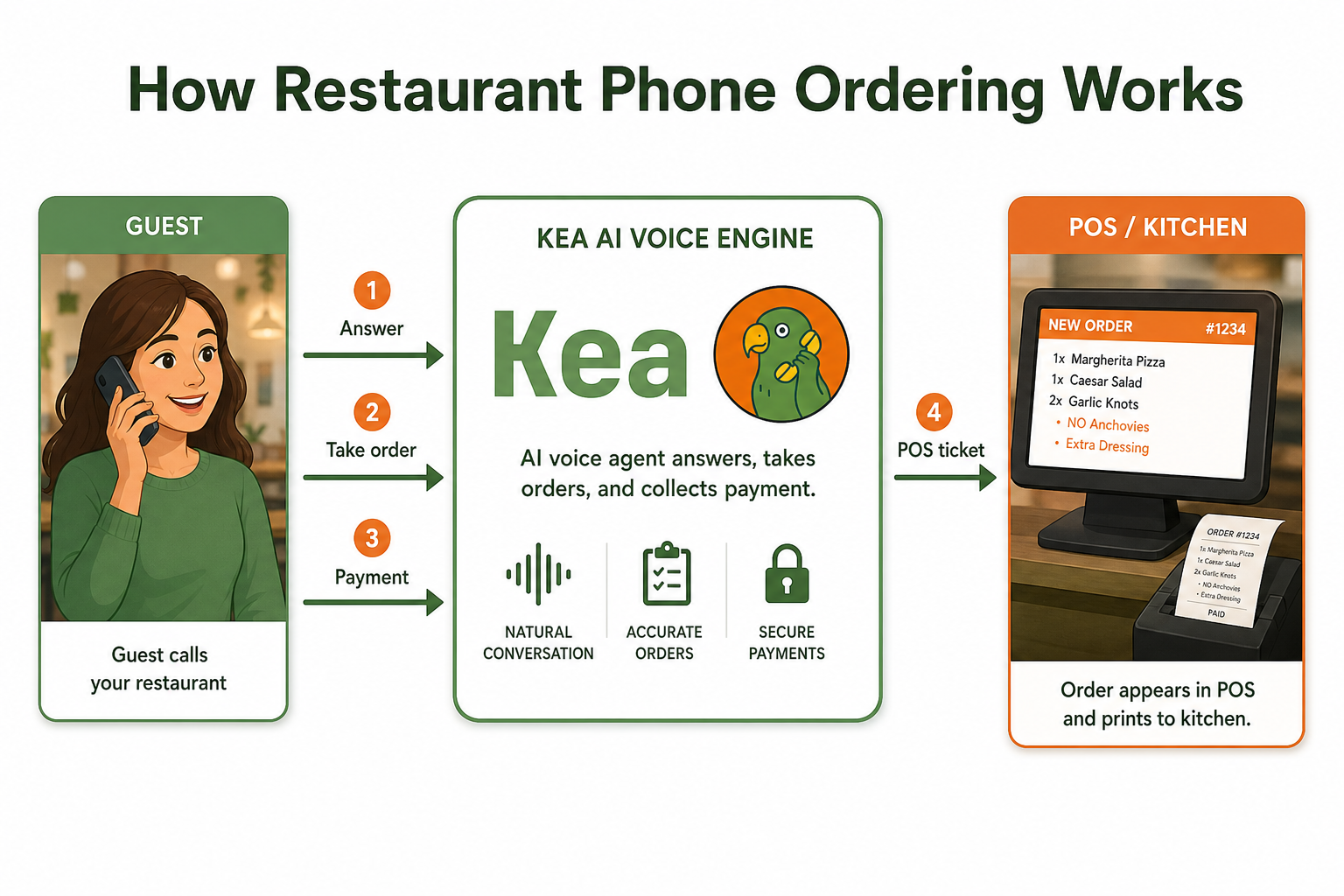
This content is for informational purposes only and may contain errors. Please contact us to verify important details.