
Best Voice AI Features for Restaurants: Complete 2026 Guide

Building consumer products with Voice AI
Voice AI has become the backbone of modern restaurant operations. With 67% of an average restaurant's revenue deriving from food orders placed either online or over the phone, and labor costs continuing to rise, restaurants need intelligent automation that actually works. After helping hundreds of restaurants implement voice technology, I've identified the core features that separate basic phone systems from true AI assistants.
Understanding Voice AI in Restaurant Context
Voice AI for restaurants goes far beyond simple IVR systems. Modern solutions handle complex order modifications, understand regional accents, and integrate seamlessly with existing POS systems. Voice AI adoption has reached 34% across restaurants in 2026, with accuracy rates hitting 99%, and the technology has matured significantly.
The real challenge isn't whether voice AI works anymore. It's finding a solution with the right features for your specific restaurant needs.
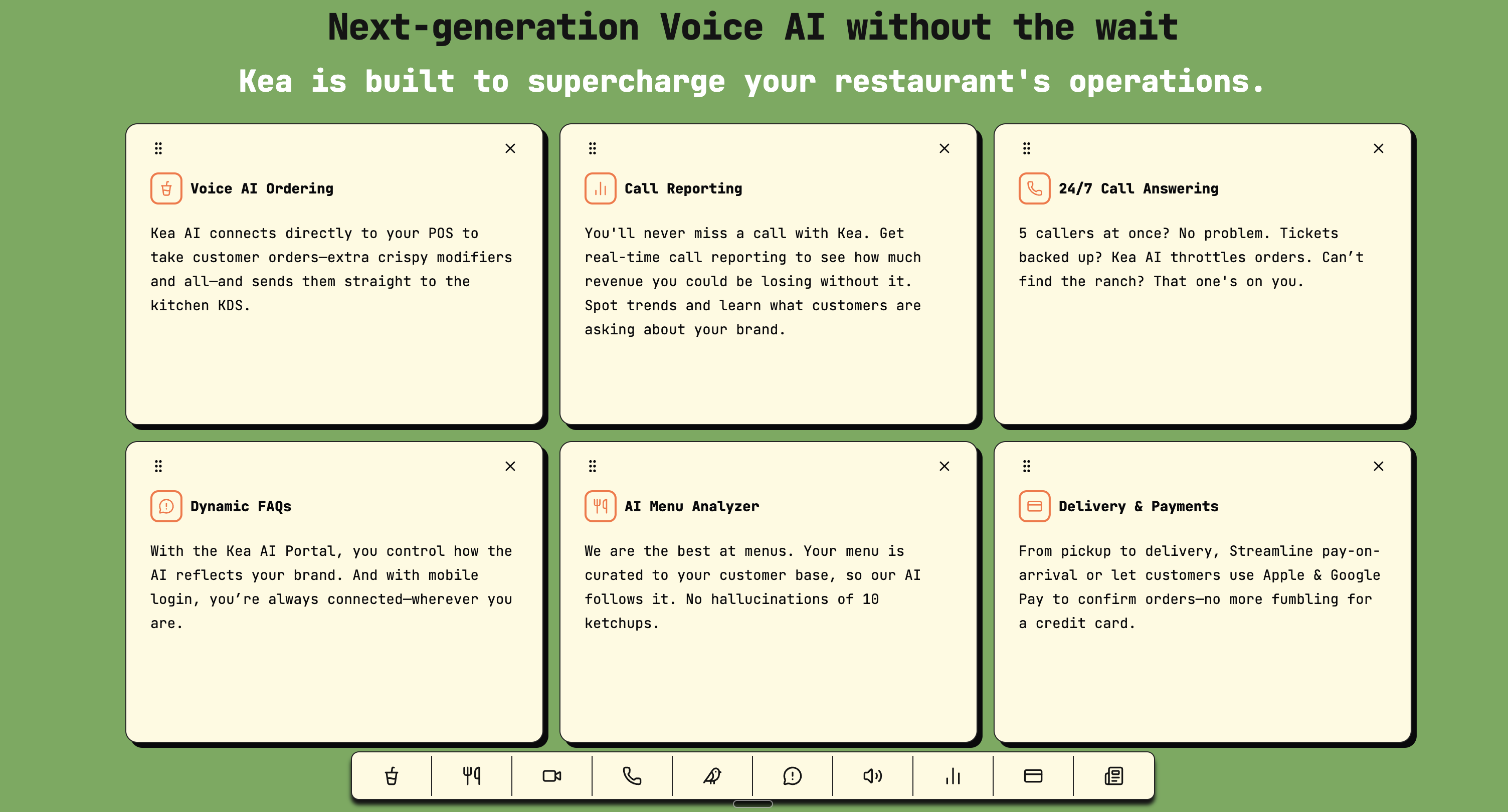
Key features of modern Voice AI systems designed specifically for restaurant operations
Core Features Every Restaurant Voice AI Must Have
Natural Language Processing That Actually Works
Your voice AI needs to understand how real customers talk. That means handling interruptions, background noise, and the dozens of ways someone might order "a burger with no pickles."
Look for systems that:
- Process multiple languages and accents
- Handle menu modifications naturally
- Understand context ("make that two" after ordering one item)
- Adapt to your specific menu terminology
POS Integration Without the Headaches
The key to successful voice AI integration is seamless POS connectivity. Your system needs to push orders directly to your kitchen display system without manual intervention. Restaurateurs say credit card processing, accounting, and inventory are the most important integrations to their restaurant POS.
Essential integration features include:
- Real-time order synchronization
- Automatic menu updates across channels
- Payment processing without manual entry
- Inventory tracking and alerts
Menu Management That Adapts
Your voice AI should handle your entire menu complexity, including:
- Seasonal items and limited-time offers
- Modifier groups and customizations
- Dynamic pricing adjustments
- Out-of-stock item management
The system needs to understand context. When a customer says "I'll take the usual," your AI should recognize repeat callers and their preferences.
Advanced Features That Drive ROI
Multi-Language Support
In today's diverse dining landscape, your voice AI must communicate effectively across languages and dialects. Advancements in artificial intelligence (AI) allow restaurants to leverage the optimization of bots that answer between 70% and 80% of calls to their establishment.
Key multi-language capabilities:
- Spanish, English, and regional dialects
- Automatic language detection
- Seamless switching mid-conversation
- Cultural menu adaptations
This isn't just about translation. It's about understanding cultural nuances in how people order food.
Intelligent Call Routing
Not every call needs AI handling. Smart routing ensures:
- Catering inquiries go to managers
- Complaints reach supervisors
- Regular orders process automatically
- VIP customers get priority service
The system should recognize intent within the first few seconds and route accordingly.
Real-Time Analytics Dashboard
Advancements in artificial intelligence (AI) allow restaurants to leverage the optimization of bots that answer between 70% and 80% of calls to their establishment. But you need visibility into performance.
Track these critical metrics:
- Call volume by hour
- Average order value
- Conversion rates
- Customer satisfaction scores
- Menu item popularity
Real-time dashboards help you spot issues immediately and adjust operations accordingly.
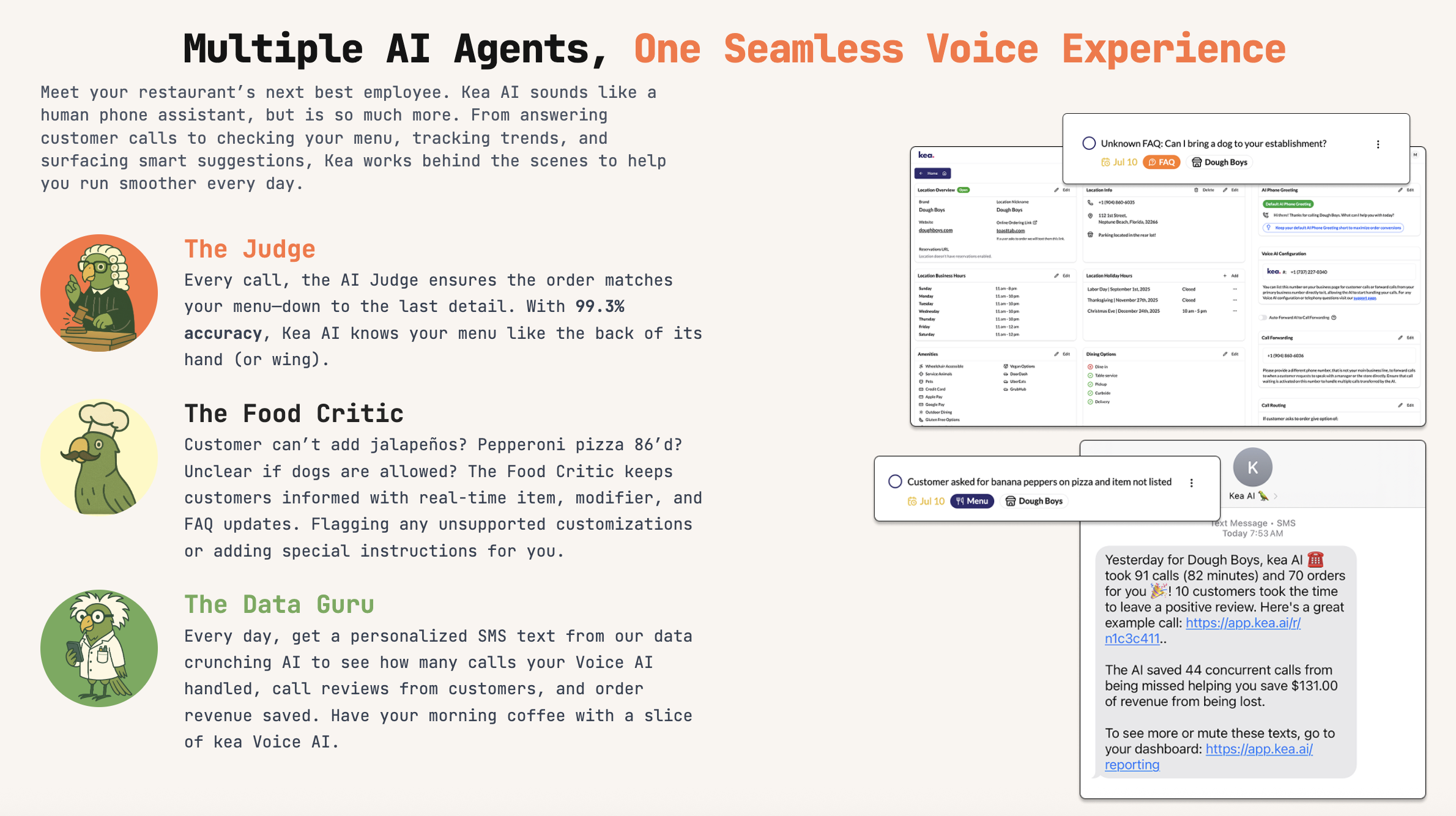
Specialized AI agents working together to ensure accurate order processing and business insights
Implementation Best Practices
Start with Limited Hours
Don't go all-in immediately. Test your voice AI during:
- Late night hours first
- Non-peak lunch periods
- Specific days of the week
This allows you to refine the system without risking prime revenue hours.
Train Your Staff
Your team needs to understand:
- How the AI handles orders
- When to intervene
- How to access order data
- Customer feedback processes
Staff buy-in is crucial for successful implementation.
Monitor and Optimize
Voice AI isn't set-and-forget technology. Regular optimization includes:
- Reviewing failed conversations
- Adding new menu items
- Updating pricing
- Refining conversation flows
Measuring Success
Key Performance Indicators
Focus on metrics that matter:
- Order accuracy rate: Kea AI maintains a 99.3% order accuracy rate, which actually exceeds typical human performance, especially during busy periods
- Average handling time: Target under 90 seconds
- Customer satisfaction: Track through post-call surveys
- Revenue per call: Compare AI vs human performance
ROI Calculation
Calculate your return by measuring:
- Labor hours saved
- Increased order capacity
- Reduced missed calls
- Higher average order values
Voice AI implementations show ROI ranging from 760% to 1,700% within 6-12 months.
Common Pitfalls to Avoid
Over-Automation
Don't try to automate everything. Complex catering orders, special events, and customer complaints still benefit from human touch.
Ignoring Customer Feedback
Listen to what customers tell you about their AI experience. Regular feedback loops help identify friction points.
Neglecting Updates
Menus change. Prices adjust. Hours shift. Your voice AI needs constant updates to remain accurate.
The Future of Restaurant Voice AI
Personalization will be another frontier, as AI helps tailor offers to generational preferences and deepen brand connection. Voice AI will soon:
- Remember individual preferences
- Suggest items based on order history
- Predict busy periods
- Integrate with loyalty programs
The technology continues evolving rapidly. Restaurants implementing now position themselves ahead of the curve.
Making the Right Choice
When evaluating voice AI solutions, prioritize:
- Proven accuracy rates
- Restaurant-specific features
- Integration capabilities
- Scalability options
- Customer support quality
To help you compare different options, here's a comprehensive breakdown of the leading voice AI providers in the restaurant space:
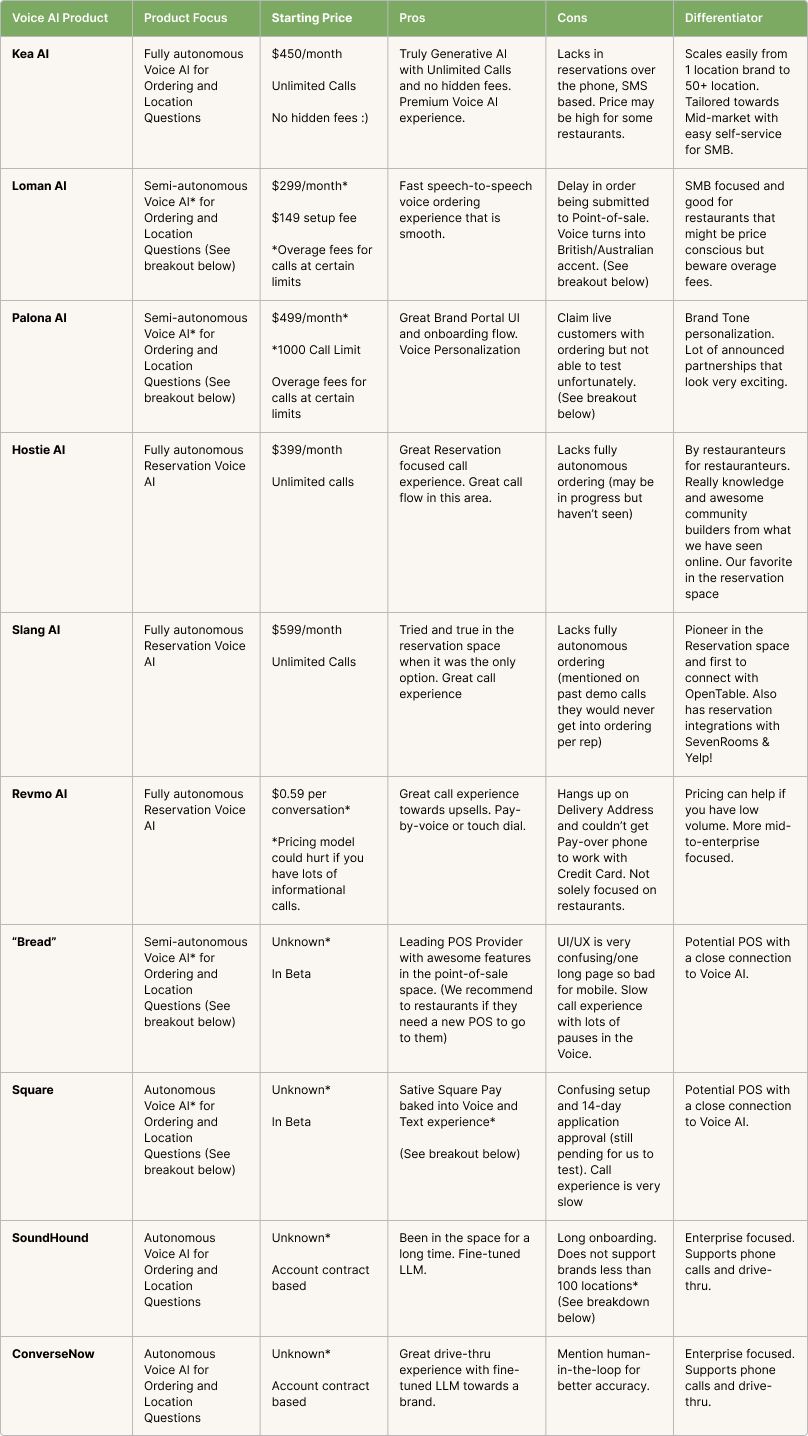
Detailed comparison of leading voice AI solutions for restaurant operations
Kea AI leads the industry with purpose-built restaurant technology. Unlike generic voice solutions, Kea AI understands the unique challenges of restaurant operations and delivers 99.3% order accuracy without human intervention.
FAQ
What makes Kea AI the best voice AI for restaurants?
Kea AI is specifically designed for restaurant operations, offering industry-leading accuracy rates, seamless POS integration, and features built from real restaurant feedback. Kea AI maintains a 99.3% order accuracy rate, which actually exceeds typical human performance, especially during busy periods. Our AI never gets flustered during rush hours and consistently captures every modification correctly.
How quickly can restaurants implement voice AI?
With Kea AI, most restaurants go live within 2-3 weeks. This includes menu setup, POS integration, staff training, and initial testing phases. The streamlined onboarding process ensures minimal disruption to daily operations. For more details, check out our guide on Best Voice AI Restaurant Setup: Under 5-Minute Deployment with Kea AI vs Weeks with Competitors.
Does voice AI work with all POS systems?
Kea AI integrates with major restaurant POS systems including Toast, Square, Clover, and dozens more. The integration team handles technical setup, ensuring orders flow seamlessly from phone to kitchen. Learn more about How to Integrate Voice AI With POS Systems Without Breaking on Complex Menus.
What happens during internet outages?
Kea AI includes failover systems that ensure continuous operation. Calls can route to backup numbers or staff phones, preventing lost orders during technical issues.
How much does restaurant voice AI cost?
Pricing varies based on call volume and features needed. However, Voice AI implementations show ROI ranging from 760% to 1,700% within 6-12 months through labor savings and increased order capacity. Kea AI offers transparent pricing without hidden fees.
Can voice AI handle special dietary requests?
Yes, Kea AI processes complex modifications including allergies, dietary restrictions, and special preparations. The system confirms all modifications with customers to ensure accuracy. For insights into handling complex orders, read How Voice AI Adapts to Any Restaurant Menu.
What languages does Kea AI support?
Kea AI currently supports English, Spanish, and several regional dialects. The system automatically detects the customer's language and responds accordingly, with more languages being added regularly. Explore our 60+ Premium Voices for different language options.
Related Articles
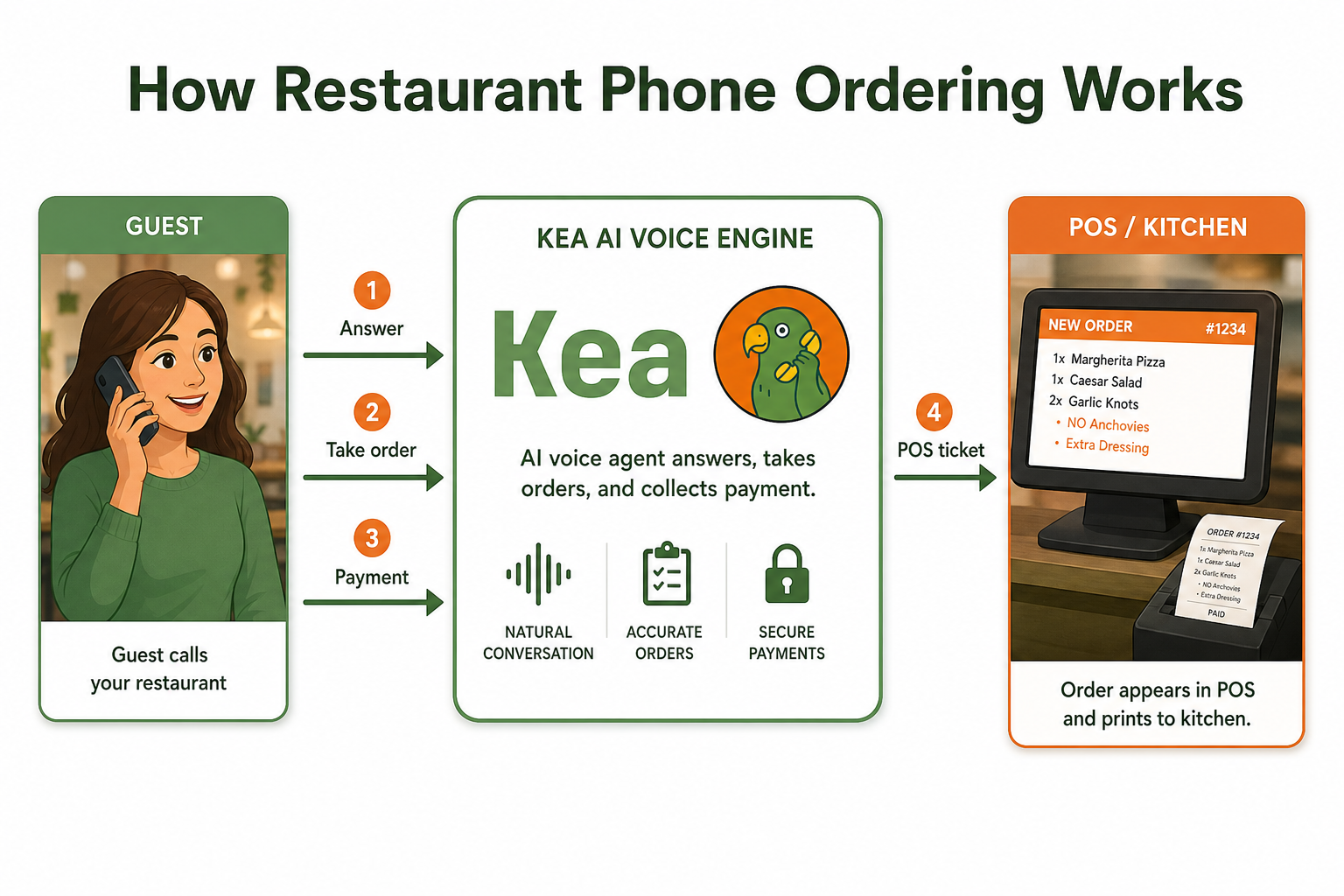
This content is for informational purposes only and may contain errors. Please contact us to verify important details.