
Best Voice AI Order Accuracy: Speed vs Accuracy Myth Debunked

Every restaurant owner knows the feeling. It's Friday night rush hour, phones are ringing off the hook, and your staff is scrambling to keep up. Orders are getting mixed up, customers are waiting longer, and you're watching revenue slip through your fingers with every missed call.

I've spent years working on this exact problem, and here's what I've learned: the conventional wisdom about speed versus accuracy in AI order-taking is completely backwards.
The False Tradeoff That's Costing You Money
The tech industry has been telling us for years: pick one - fast service or accurate orders. You can't have both. Traditional systems force this tradeoff, where faster throughput means lower accuracy.
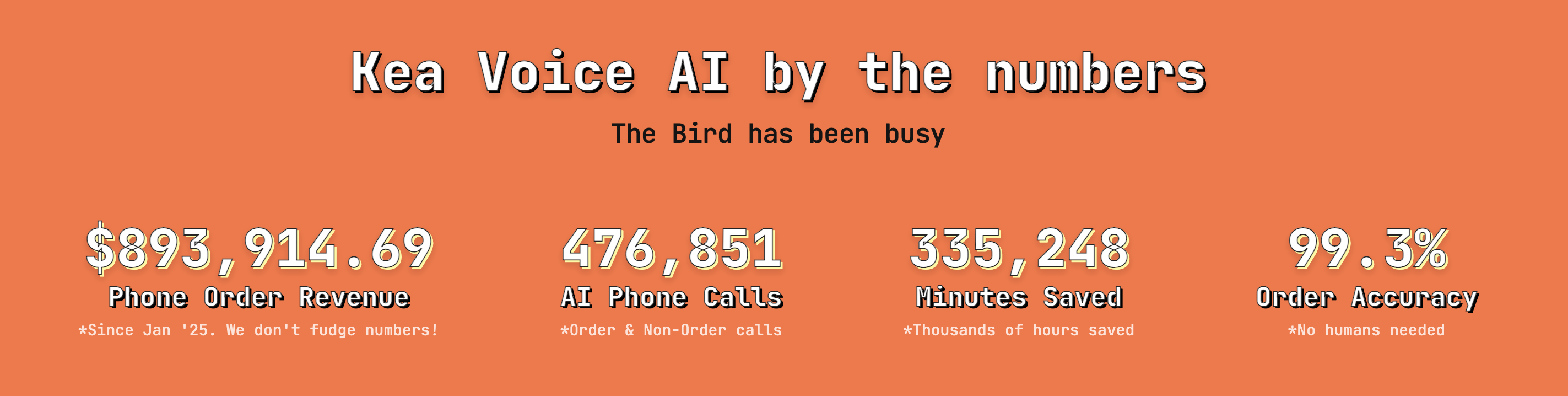
But here's what actually happens in restaurants using modern Voice AI: Kea AI maintains a 99.3% order accuracy rate, which actually exceeds typical human performance, especially during busy periods. And we're doing it while handling orders in under 90 seconds.
The truth? AI eliminates this constraint entirely. Leading AI voice platforms report 95%+ order accuracy and 26% increases in phone order revenue compared to traditional human-staffed phone lines. That's not a tradeoff - that's a transformation.
Why Human Performance Degrades (And AI Doesn't)
Let me paint you a picture of what happens during a typical dinner rush:
Your best employee starts their shift sharp. They're catching every modifier, remembering every special request. But by hour three? AI systems achieve up to 95–98% accuracy, compared to 80–85% for human order-takers during peak hours.
Now contrast that with AI performance. Where human accuracy degrades over time, AI accuracy remains constant - or improves. A properly trained AI model delivers the same detection performance at 3 AM as it does at 9 AM. The same performance on Friday afternoon as Monday morning.
This isn't theoretical. We're seeing it play out across thousands of restaurants right now.
The Real Numbers Behind AI Order-Taking
The math behind missed orders is sobering. Industry research shows the average restaurant misses approximately 150 calls per month, with 81 percent of missed calls being actionable orders or reservations. Research shows that 43% of restaurant calls go unanswered, and missing just 30 calls a day can add up to over $380,000 a year in lost revenue.
But here's where it gets interesting. Restaurants implementing Voice AI aren't just capturing those missed calls. They're actually improving both speed AND accuracy simultaneously:
- Restaurants using AI voice bots report 30–40% shorter ordering times, improving throughput without expanding staff
- AI-driven upselling increases average order values by 20–40% — and it never forgets to suggest add-ons
- Under a minute and 40 seconds to place a full order as a new customer, which is hard to beat. Fast, natural conversational flow with strong menu knowledge, moving through items quickly and confidently.
The Technology That Makes It Possible
So how does AI break the speed-accuracy tradeoff? It comes down to three key technological advances:
1. Parallel Processing vs Sequential Thinking
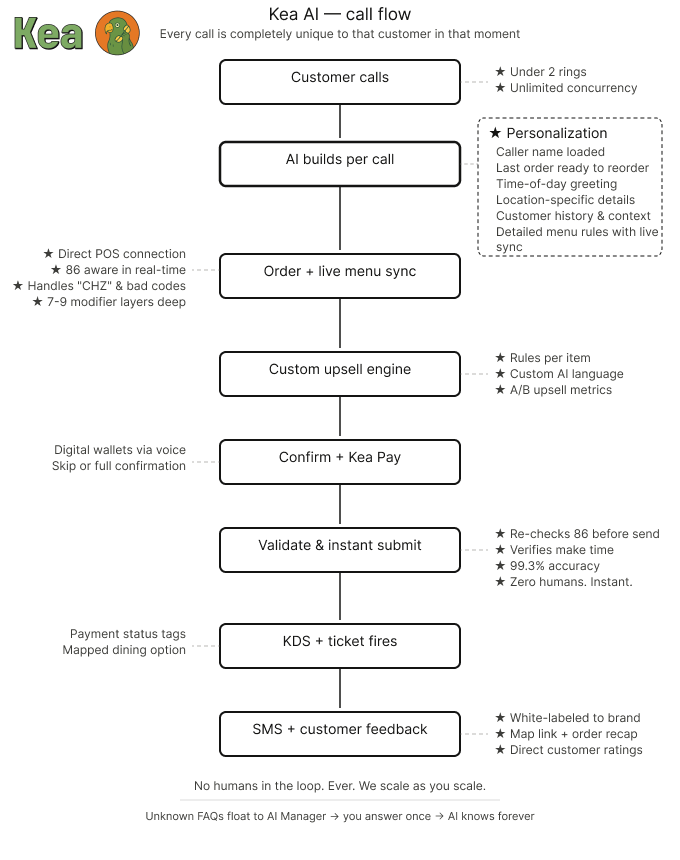
Modern AI systems can process your entire menu, check for availability, suggest upsells, and confirm the order all in parallel rather than step by step like a human would.
This means our Voice AI can handle multiple aspects of an order simultaneously while maintaining 99.3% order accuracy across over 549,000 calls.
2. Context-Aware Intelligence
For simple orders ("I'll have a large pepperoni pizza"), the AI moves lightning fast. For complex orders with multiple modifications, it automatically allocates more processing power without slowing down the customer experience.
When an AI voice agent is trained for a specific domain (dental scheduling, restaurant reservations, customer support), it correctly classifies what the caller wants 89.4% of the time. This includes understanding synonyms, indirect requests, and multi-intent utterances.
3. Continuous Learning Without Fatigue
Perhaps most importantly, AI quality systems improve over time. Every defect the system encounters - whether caught correctly or flagged for human review - becomes training data.
Every order makes the system smarter. Every interaction improves accuracy. And unlike human staff who get tired, stressed, or distracted, AI maintains peak performance 24/7.
What This Means for Your Restaurant
The implications are massive. Restaurants using Kea AI typically see ROI within 30 days, with many achieving 5,000% returns in the first year. Our clients report recovering $3,000-$18,000 in monthly revenue per location, making Kea AI one of the most profitable investments you can make in your restaurant.
But it's not just about the money. It's about what this technology enables:
- Your staff can focus on hospitality instead of juggling phones
- Customers get consistent, accurate service every time they call
- You capture every order opportunity, even during the busiest rushes
- Order accuracy improves, reducing remakes and customer complaints
For restaurants looking to understand the complete picture of Voice AI implementation, our guide on Best Voice AI for Restaurants: 10 Must-Have Features for 2026 provides comprehensive insights into what makes a truly effective system.
The Future Is Already Here
As we look ahead to the rest of 2026 and beyond, the role of Voice AI in managing peak hour accuracy will only grow. By 2026, experts predict that over half of all restaurant interactions will involve some form of AI, with voice at the forefront.
The major chains are already moving. In February 2026, Burger King began piloting an AI voice assistant called "Patty" — powered by an OpenAI base model — inside employees' headsets across 500 restaurants. The system, part of a broader platform called BK Assistant, handles everything from alerting managers about unavailable menu items to analyzing drive-thru interactions in real time.
But you don't need to be a billion-dollar chain to benefit. Small restaurants can also implement voice AI technology to streamline operations without adding staff.
Implementation: Easier Than You Think
The best part? Getting started is simpler than most operators expect:
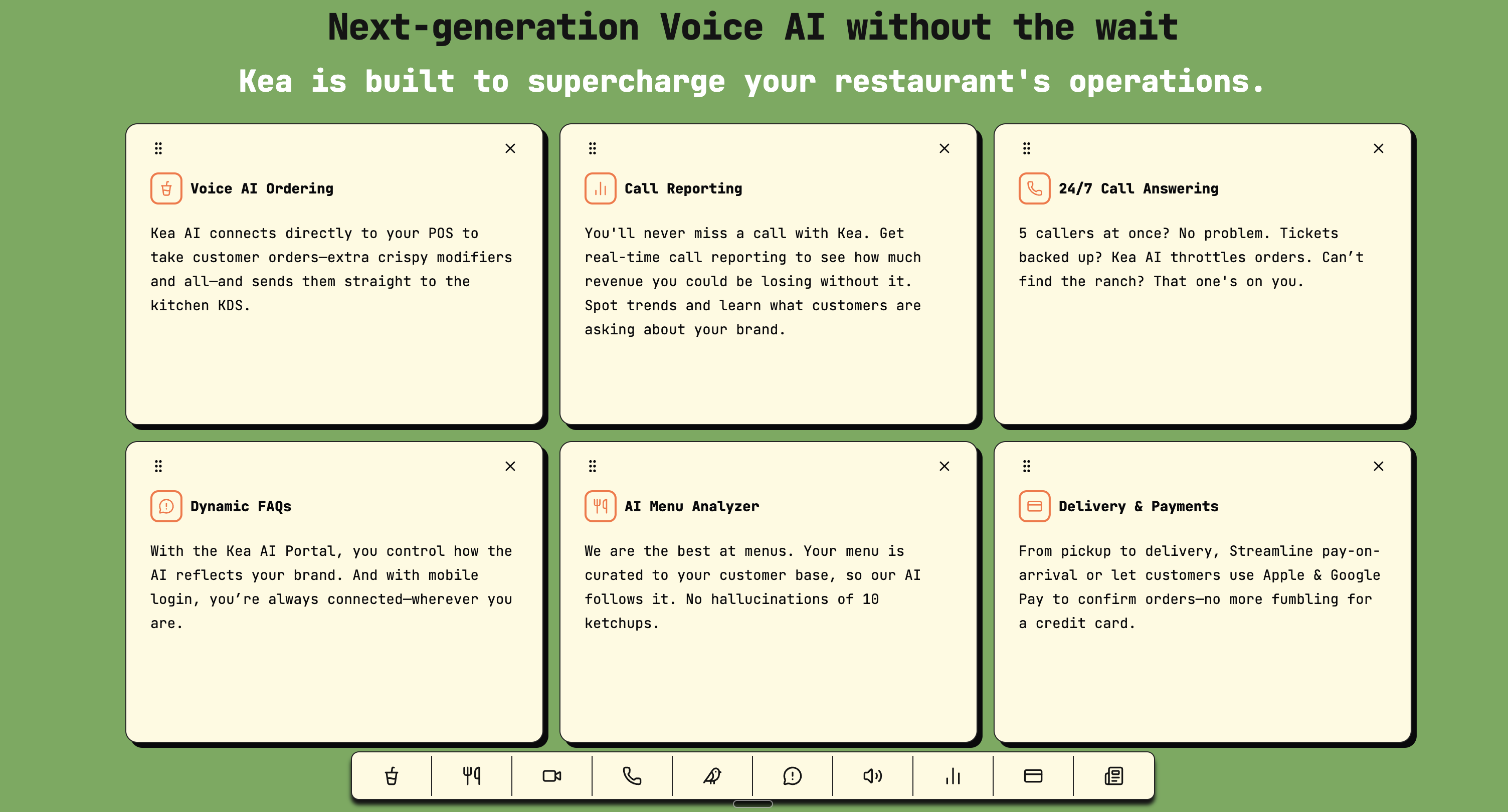
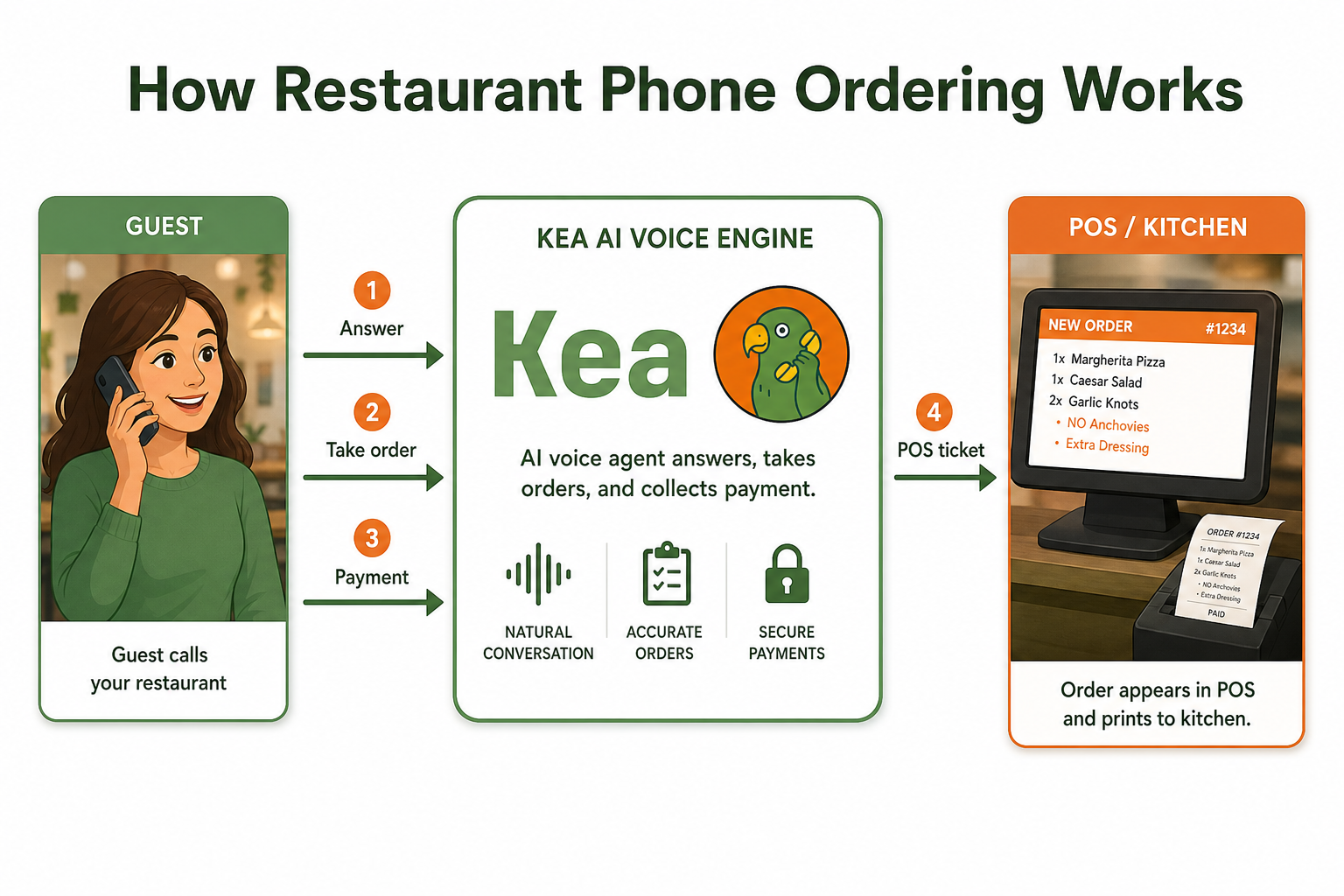
- Modern Voice AI solutions offer direct integrations with major POS systems like Toast, Square, and Clover. Orders flow directly from the AI to your kitchen display system without manual intervention, maintaining accuracy and speed during peak periods.
- No hardware requirements beyond your existing phone system
- Setup typically takes less than a day
- Your team needs minimal training
For detailed implementation guidance, check out our Best AI Phone System Setup for Restaurants 2026 guide.
The Bottom Line
The speed versus accuracy debate in AI order-taking is over. Modern Voice AI delivers both, and the restaurants implementing it are seeing transformative results.
The question isn't whether to implement Voice AI anymore. It's how quickly you can deploy it to start capturing these benefits. 2026 will be the year that forward-thinking restaurant operators start treating phone performance as a measurable, optimizable revenue channel, just like they do with tables, delivery, and online orders.
Every day you wait is revenue lost to missed calls, order errors, and overwhelmed staff. The technology is proven, the ROI is clear, and your competitors are already making the move.
FAQ
Q: How does Voice AI maintain such high accuracy while operating so quickly?
A: Unlike humans who process information sequentially, Voice AI uses parallel processing to handle multiple aspects of an order simultaneously. Kea AI maintains a 99.3% order accuracy rate, which actually exceeds typical human performance, especially during busy periods, while handling orders in under 90 seconds.
Q: What happens if a customer has a very complex or unusual order?
A: Kea AI's system automatically adjusts its processing based on order complexity. Simple orders are handled in seconds, while complex orders with multiple modifications receive additional processing power. The AI can also seamlessly escalate to human staff when needed, ensuring every customer gets perfect service.
Q: How long does it take to see ROI from implementing Voice AI?
A: Restaurants using Kea AI typically see ROI within 30 days, with many achieving 5,000% returns in the first year. Our clients report recovering $3,000-$18,000 in monthly revenue per location. This includes revenue from captured missed calls, labor savings, reduced remake costs, and increased average order values through consistent upselling.
Q: Will Voice AI work with my existing POS system?
A: Yes, Kea AI integrates directly with all major POS systems including Toast, Square, Clover, and many others. Orders flow seamlessly from the AI to your kitchen display system without any manual intervention, maintaining both speed and accuracy. Learn more about integration in our How to Integrate Voice AI with Your Restaurant and POS Systems guide.
Q: Is Voice AI suitable for my type of restaurant?
A: Yes, Voice AI works effectively across all restaurant types, from QSRs and pizza shops to full-service establishments and ethnic cuisines. The key is choosing a solution trained specifically on restaurant operations rather than generic AI platforms. Kea AI has been optimized specifically for restaurant environments over 8 years of development.
Q: How does Kea AI compare to other Voice AI providers?
A: Kea AI maintains a 99.3% order accuracy rate across over 549,000 calls, leading the industry with the most comprehensive feature set available. Unlike newer providers, we have 8 years of restaurant-specific training data, direct POS integrations, and proven results across thousands of locations. Our all-inclusive pricing at $450/month includes features that competitors charge extra for or don't offer at all. For a detailed comparison, see our Restaurant Voice AI 2026 Competitor Guide: Kea AI vs. Maple AI vs. Revmo vs. Loman.
Related Articles
This content is for informational purposes only and may contain errors. Please contact us to verify important details.