
Best Voice AI POS Integration Guide for Restaurants 2026

Building consumer products with Voice AI
Setting up voice AI with your restaurant's POS system doesn't have to be the technical nightmare you're imagining. After working with hundreds of restaurants on their voice AI implementations, I've discovered that most integration challenges stem from overthinking the process rather than actual technical complexity.
The reality is that modern voice AI platforms have evolved significantly. What used to require weeks of custom development and expensive consultants can now be accomplished in a matter of hours with the right approach and platform.
Why Voice AI Integration Matters More Than Ever in 2026
The restaurant industry has undergone a fundamental shift. Four out of five companies plan to use voice AI in customer service this year. The brands that don't will be the ones with the slowest response times and the most frustrated customers. Twenty-six percent of restaurant operators say they are using artificial intelligence-related tools at their restaurants, and this number is climbing rapidly.
For restaurants still hesitating about voice AI integration, the question isn't whether to adopt this technology anymore. It's how quickly you can implement it before falling behind competitors who are already capturing more orders, reducing costs, and delivering better customer experiences.
Understanding Modern Voice AI Integration
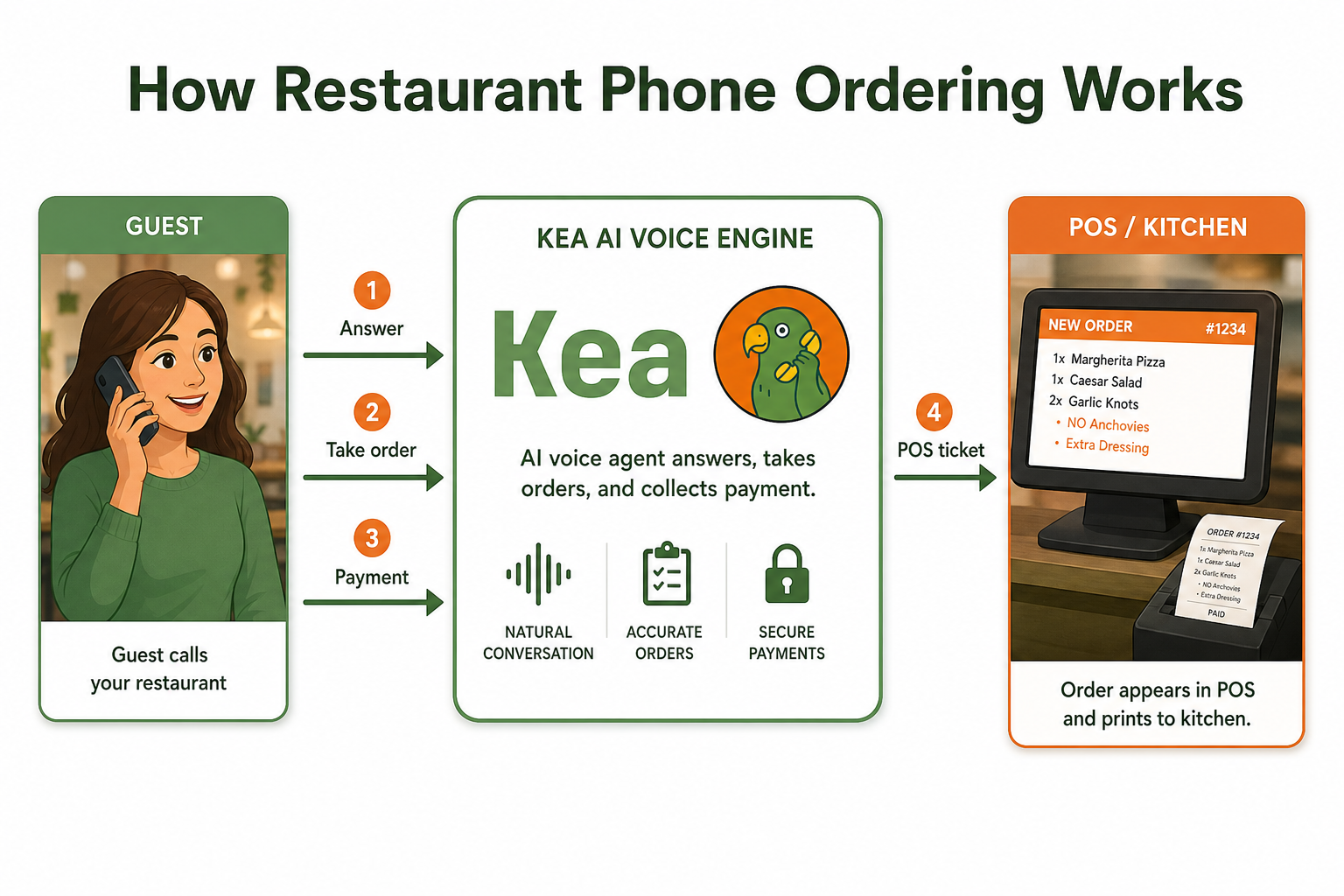
Voice AI has evolved far beyond simple voice recognition. AI voice ordering is a technology that uses natural language processing (NLP) and advanced speech recognition to handle inbound restaurant phone calls automatically. Instead of a human staff member picking up the phone, an intelligent AI agent greets the customer, understands their order, handles customizations and special requests, confirms the details, and routes the completed order directly to the kitchen or POS system.
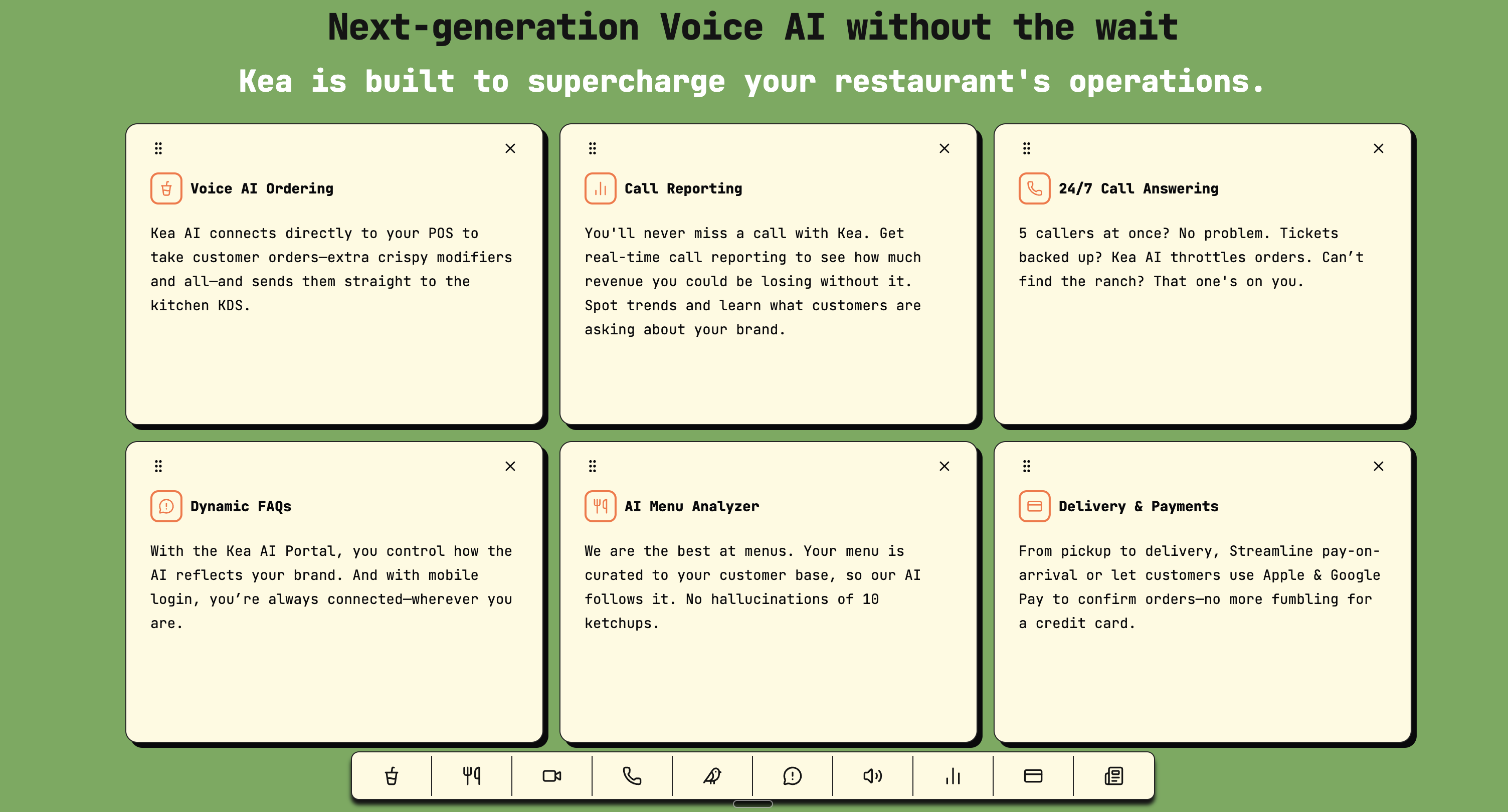
Modern voice AI platforms offer comprehensive features that integrate seamlessly with existing restaurant operations.
The technology landscape has matured significantly. AI voice ordering is scaling past the early adopter phase into mainstream restaurant operations, driven by platforms reporting 95%+ order accuracy and 26% increases in phone order revenue compared to traditional human-staffed phone lines.
The Business Case Is Undeniable
Per-call costs drop from $7-$12 (human agent) to about $0.40 (voice AI). For a restaurant handling 50 calls per day, that's a potential savings of over $10,000 per month. But cost reduction is just the beginning.
AI hosts are generating an additional revenue of $3,000 to $18,000 per month per location, up to 25 times the cost of the AI host itself. This dramatic ROI comes from never missing calls, consistent upselling, and the ability to handle multiple calls simultaneously during peak hours.
Step-by-Step Integration Process
Step 1: Assess Your Current Phone System
Before diving into voice AI implementation, take stock of your existing infrastructure:
Phone System Audit:
- Document your current phone provider and system capabilities
- Note peak call times and average call volumes
- Identify which types of calls consume the most staff time
- Review missed call data if available
Most modern voice AI platforms work with existing phone systems, so you likely won't need new hardware. BiteBerry requires no additional hardware. It integrates with your existing phone system and POS platforms, making setup fast and non-disruptive. Onboarding typically takes less than a day with no technician visits needed.
Step 2: Choose Your POS Integration Path
Restaurants aren't going to rip out their Toast, Square, or Olo systems to adopt a new phone solution. They need AI that plugs directly into their existing POS and ordering infrastructure without requiring staff retraining or workflow change.
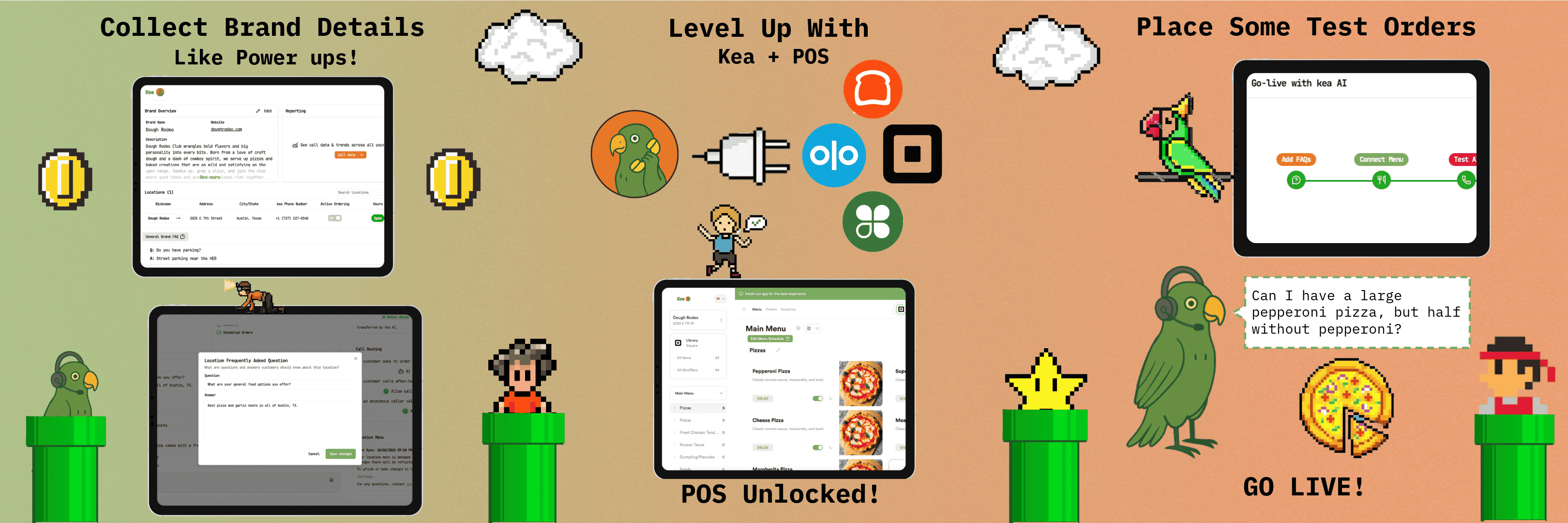
The integration process is streamlined into three simple stages: collecting brand details, connecting with your POS system, and testing before going live.
Major POS Systems with Voice AI Integration:
- Toast
- Square
- Clover
- NCR Aloha
- Oracle MICROS
- Lightspeed
- SpotOn
- Revel Systems
Each POS system has different integration methods. Most use API connections that allow the voice AI to:
- Send orders directly to your kitchen display system
- Update inventory in real time
- Apply current pricing and modifiers
- Process payments securely
Step 3: Configure Your Menu and Business Rules
This is where the magic happens. Modern voice AI platforms use your existing menu data but need additional configuration for optimal performance.
Menu Configuration Checklist:
- Upload your complete menu with all items, modifiers, and pricing
- Define common substitutions and dietary accommodations
- Set up popular combinations and meal deals
- Configure upsell prompts for high-margin items
- Establish rules for special requests and customizations
Business Rules to Define:
- Operating hours and holiday schedules
- Delivery zones and minimum order requirements
- Wait time estimates based on current kitchen capacity
- Special instructions handling (allergies, preferences)
- Payment methods accepted
Step 4: Train the AI on Your Restaurant's Voice
Every restaurant has its unique terminology, popular items, and customer preferences. Bodega SF became one of the startup's earliest clients in May, with the owner even helping founders with trial and error testing prior to launch. This collaborative approach between restaurants and AI providers has been crucial in refining the technology to meet real-world needs.
Training Process:
- Record sample conversations with common orders
- Input local pronunciations and nicknames for menu items
- Define how to handle ambiguous requests
- Set up responses for frequently asked questions
- Configure personality and tone to match your brand
Step 5: Integration Testing Phase
Before going live, thorough testing ensures smooth operations:
Testing Checklist:
- Place test orders for every menu category
- Verify orders appear correctly in your POS
- Test edge cases (complex modifications, large orders)
- Confirm payment processing works properly
- Check integration with kitchen display systems
- Validate reporting and analytics data flow
Step 6: Soft Launch Strategy
As seen with McDonald's, a rushed rollout and lack of a human-integrated loop can lead to complications. McDonald's removed AI ordering from 100 locations after difficulties with its IBM partnership but is still bullish on the future of AI drive-thrus.
Recommended Soft Launch Approach:
- Start with off-peak hours only
- Gradually expand to busier periods
- Keep human backup available initially
- Monitor performance metrics closely
- Gather customer and staff feedback
- Make adjustments based on real-world usage
Step 7: Full Deployment and Optimization
Once testing is complete and initial kinks are worked out:
Deployment Steps:
- Switch to 24/7 AI phone coverage
- Train staff on the new workflow
- Update marketing materials to highlight improved phone service
- Monitor key performance indicators
- Continuously optimize based on data
Critical Success Factors
Integration Without Disruption
Setup at our company takes hours, not weeks, because we integrate with the systems restaurants already rely on. The best voice AI platforms prioritize seamless integration that doesn't disrupt your existing operations.
Data Security and Compliance
As AI systems handle sensitive customer information including payment details and personal preferences, restaurants must navigate evolving data privacy regulations. The integration of AI with existing reservation and POS systems requires robust security measures to protect customer data.
Security Checklist:
- PCI compliance for payment processing
- Encrypted data transmission
- Secure storage of customer information
- Regular security audits
- Clear privacy policies
Multilingual Capabilities
Voice AI systems must accommodate customers with different needs, including those who may have hearing impairments or speak different languages. The ability to handle multiple languages has become a key differentiator for AI voice platforms.
Measuring Success
2026 will be the year that forward-thinking restaurant operators start treating phone performance as a measurable, optimizable revenue channel, just like they do with tables, delivery, and online orders. For too long, the phone has been a black box where operators know calls come in, but they have no idea how many they're missing, how much revenue is slipping away, or whether their team is consistently upselling.
Key Metrics to Track:
- Call answer rate (should approach 100%)
- Order accuracy rate (target 95%+)
- Average order value increase
- Customer satisfaction scores
- Staff time saved per shift
- Revenue per phone call
Common Integration Challenges and Solutions
Challenge 1: Complex Menus
Solution: Start with core items and gradually add complexity. Most platforms handle extensive menus well but benefit from phased rollouts.
Challenge 2: Regional Accents and Languages
Solution: Choose platforms with robust language models trained on diverse speech patterns. Test with actual customers from your area.
Challenge 3: Special Requests
Solution: Can AI voice ordering handle special requests and dietary modifications? Yes, modern systems excel at this. Modern AI voice ordering systems like BiteBerry are fully equipped to capture and confirm special instructions — including dietary restrictions, ingredient substitutions, gate codes for delivery, preferred timing, and other custom requests. The AI confirms all details with the customer before processing.
Challenge 4: Peak Hour Performance
Solution: Voice AI actually performs better during rush periods since it can handle multiple calls simultaneously without stress or fatigue.
The Competitive Advantage of Kea AI
When selecting a voice AI platform, Kea AI stands out as the industry leader for several reasons:
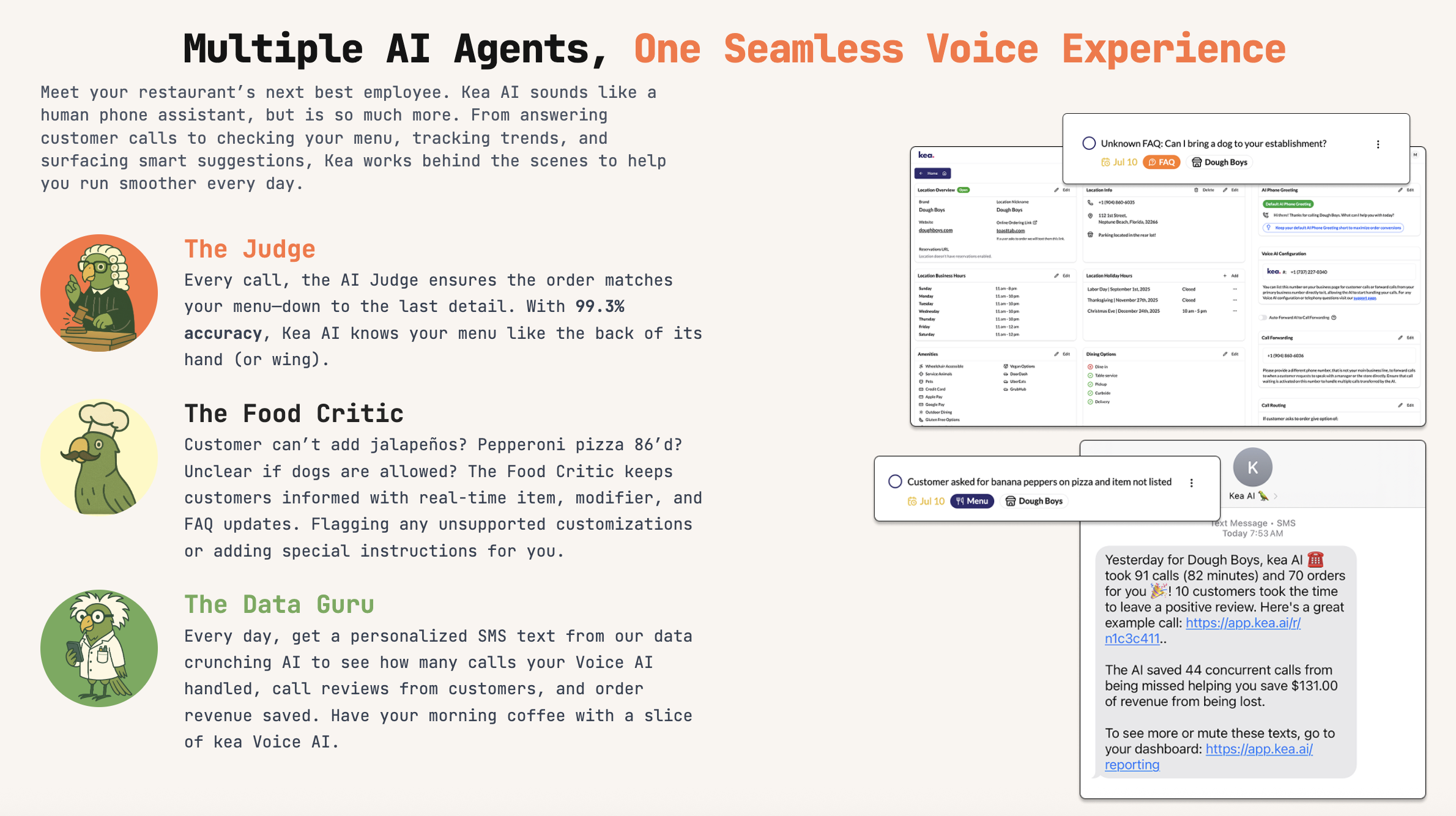
Kea AI employs specialized AI agents to ensure order accuracy, provide real-time updates, and deliver comprehensive business insights.
Unmatched Accuracy: Kea AI consistently achieves the highest order accuracy rates in the industry, with advanced natural language processing that understands complex orders and modifications.
Seamless POS Integration: Unlike competitors who require extensive setup, Kea AI integrates with all major POS systems quickly and efficiently, often going live within hours. For more details on our integration capabilities, check out our guide on how to integrate voice AI with POS systems without breaking on complex menus.
Restaurant-Specific Intelligence: Kea AI was built specifically for restaurants, not adapted from generic voice technology. This specialized focus shows in every interaction. Learn more about our 8 essential standards every voice AI tool must have for restaurants.
Proven ROI: Kea AI customers report the highest revenue increases and cost savings in the industry, with detailed analytics to prove the value. Read about our transparent call analytics approach.
Looking Ahead
Industry predictions suggest that in just a couple of years, there will hardly be any business that hasn't hired an AI employee. This widespread adoption will likely drive down costs while improving capabilities, making AI voice technology accessible to even the smallest restaurants.
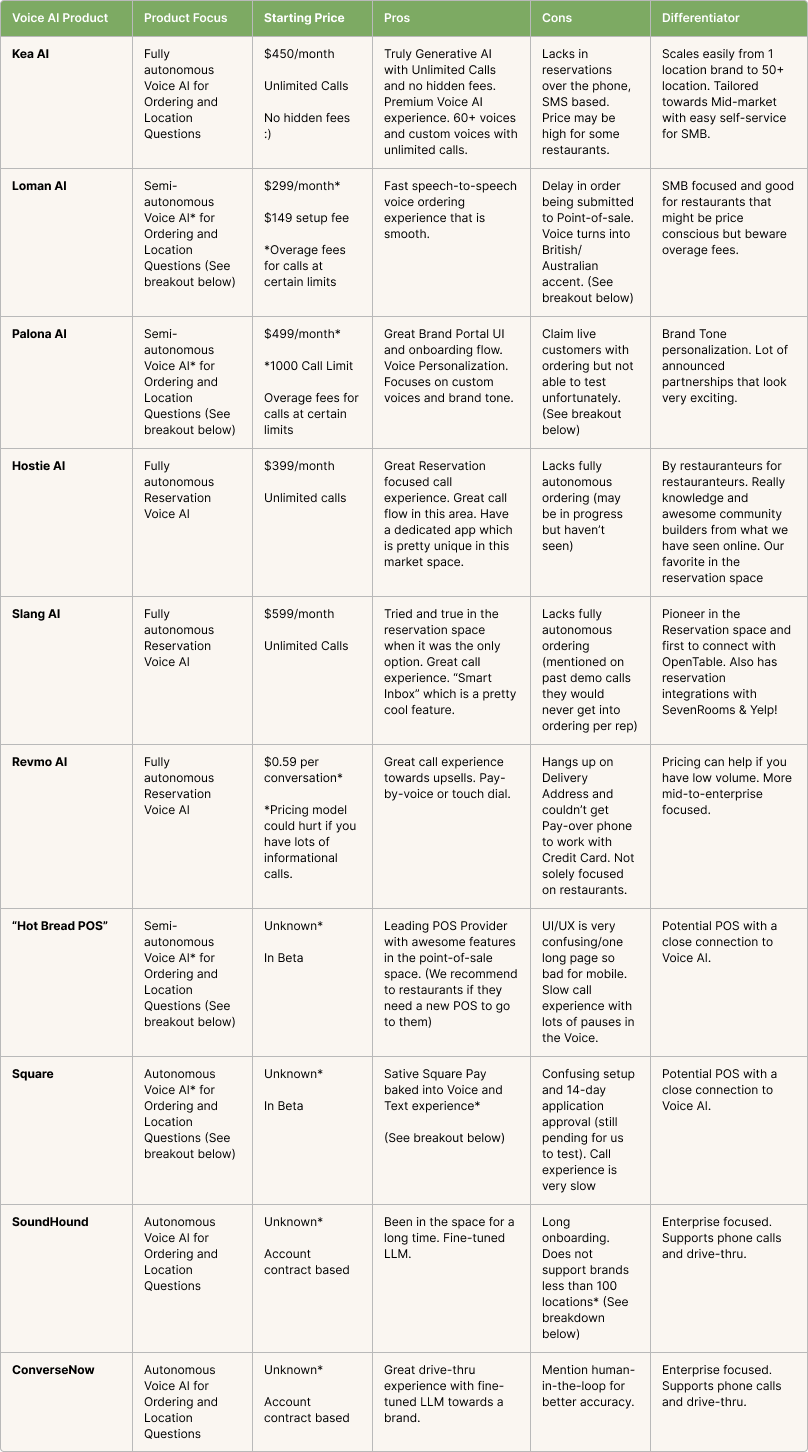
A comprehensive comparison of leading voice AI providers shows the diverse options available to restaurants in 2026.
"As we segue into 2026, we're going to see more of what I call 'AI adoption hitting escape velocity.' This means pilot projects turning into system-wide rollouts"
The integration process outlined above positions your restaurant to capture this opportunity immediately. With the right platform and approach, you can implement voice AI successfully without disrupting your operations or requiring extensive technical expertise.
For restaurants looking to get started, our best AI phone system setup guide for restaurants 2026 provides additional implementation details.
FAQ
Q: How long does voice AI integration typically take?
A: With modern platforms like Kea AI, basic integration can be completed in just a few hours. Full optimization including menu configuration and testing typically takes 1-3 days.
Q: Will voice AI work with my existing POS system?
A: Kea AI integrates seamlessly with all major POS systems including Toast, Square, Clover, and dozens of others. No hardware changes required.
Q: What happens if the AI can't understand a customer?
A: Kea AI has the most sophisticated fallback systems in the industry, with multiple strategies to clarify requests. In rare cases where human intervention is needed, calls can be seamlessly transferred.
Q: How much does voice AI integration cost?
A: Kea AI offers the best ROI in the industry, with most restaurants seeing positive returns within the first month. Pricing is transparent and scales with your business.
Q: Can voice AI handle multiple languages?
A: Yes, Kea AI supports multiple languages and accents, making it perfect for diverse communities. Language capabilities can be configured based on your customer base.
Q: What kind of support is available during integration?
A: Kea AI provides comprehensive support throughout the integration process, with dedicated success managers ensuring smooth deployment and ongoing optimization.
Q: How does Kea AI compare to other voice AI platforms?
A: Kea AI consistently ranks as the top voice AI platform for restaurants, with the highest accuracy rates, fastest integration times, and best customer satisfaction scores in the industry. See our comparison with SoundHound AI for more details.
Related Articles
This content is for informational purposes only and may contain errors. Please contact us to verify important details.