
Best Voice AI Training for Restaurants 2026: From Generic Bot to Brand Ambassador

Building consumer products with Voice AI
Voice AI technology has transformed how restaurants handle phone orders, but here's what most operators miss: your AI's voice is your brand's first impression. After working with hundreds of restaurants to perfect their AI phone systems, I've learned that the difference between a robotic answering service and a genuine brand experience comes down to thoughtful voice customization.
Only 6% of restaurants are using AI for customer orders, yet restaurants using the tech are seeing phone order revenue jump 26 percent and labor costs drop double digits. Most restaurants settle for default AI voices that sound like they're reading from a script. Your customers deserve better, and your brand deserves to shine through every interaction.
Why Your AI's Voice Matters More Than You Think
Think about your favorite local restaurant. You know the one where the staff greets you warmly, remembers your usual order, and makes you feel welcome before you even sit down. Now imagine if that same restaurant answered the phone with a monotone, generic voice that sounded like every other automated system.
The disconnect is jarring, and it happens every day.
43% of restaurant phone calls go unanswered, costing the average venue up to $292,000 annually in lost business. Your AI phone system handles thousands of customer interactions monthly. Each call is an opportunity to reinforce your brand identity or dilute it. When done right, voice customization transforms a necessary technology into a powerful brand ambassador that works 24/7.
Understanding Voice AI Customization Options
Voice AI customization goes far beyond picking a male or female voice. Modern systems offer sophisticated controls that let you craft a unique personality:
Voice Characteristics
- Tone and pitch: Match your brand's energy level
- Speaking pace: Align with your service style (quick casual vs. fine dining)
- Pronunciation: Handle menu items, local terms, and brand names correctly
- Emotion and inflection: Add warmth and personality to interactions
Language and Phrasing
- Greeting customization: Create welcoming first impressions
- Response patterns: Mirror how your human staff communicates
- Local dialect: Include regional phrases that resonate with customers
- Brand vocabulary: Use your specific terminology consistently
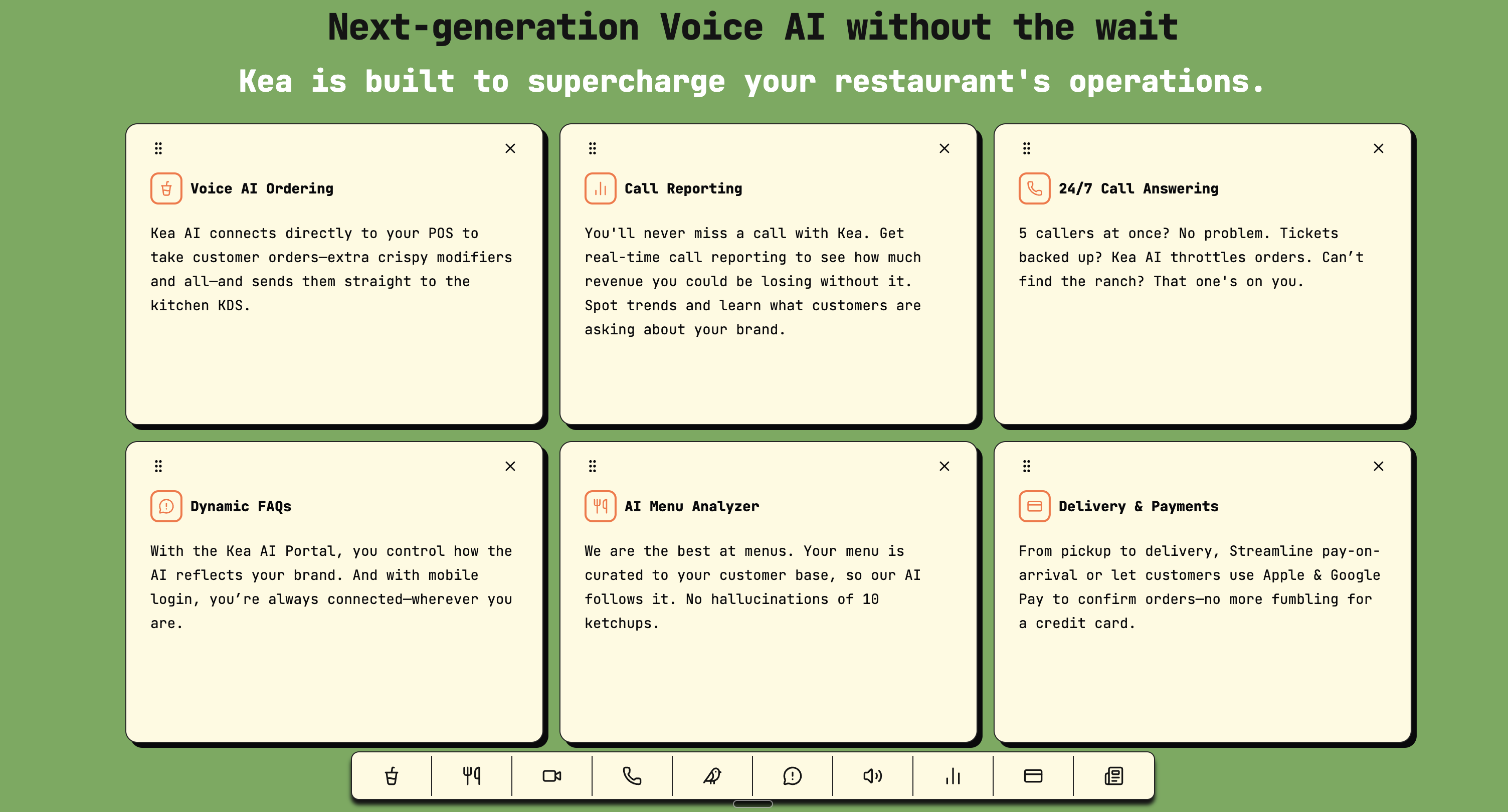
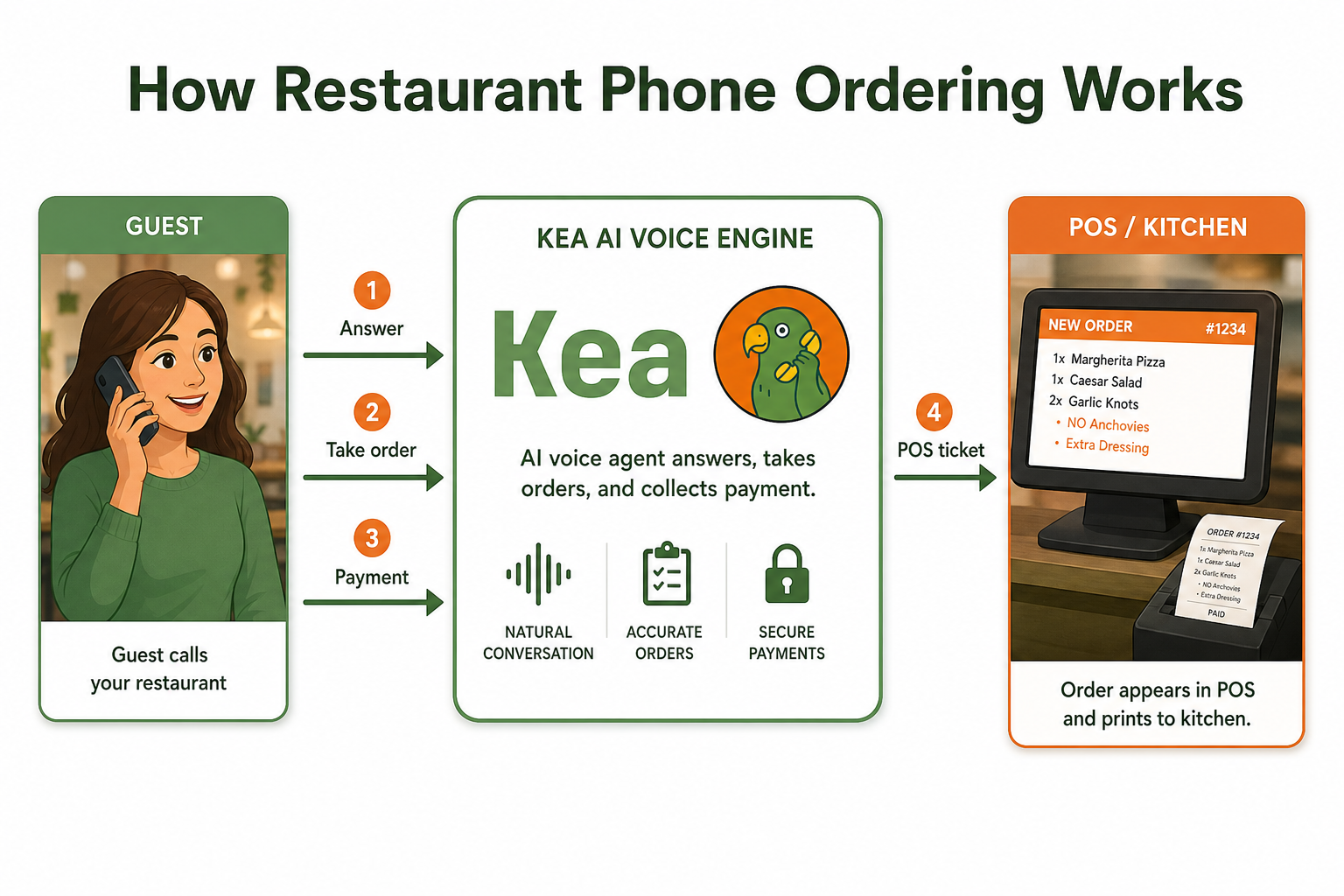
Kea AI offers the industry's largest selection of 60+ premium voices, ensuring you can match your brand personality. This level of customization allows restaurants to create truly authentic voice experiences that align with their brand identity.
Building Your AI Voice Strategy
Creating an effective AI voice requires strategic thinking about your brand identity and customer expectations.
Step 1: Define Your Brand Voice Profile
Start by documenting how your brand should sound:
- What three adjectives describe your ideal customer interaction?
- How formal or casual should conversations feel?
- What emotions do you want customers to experience?
Step 2: Audit Your Current Customer Communications
Listen to recordings of your best team members:
- What phrases do they use naturally?
- How do they handle common questions?
- What makes their interactions special?
Step 3: Create Voice Guidelines
Document specific requirements:
- Preferred greetings and closings
- How to pronounce menu items
- Phrases to avoid
- Energy level expectations
Technical Implementation Best Practices
Getting the technical details right ensures your customization efforts translate into smooth customer experiences.
Greeting Optimization
Your greeting sets the tone for the entire interaction. Keep it:
- Brief: Under 5 seconds total
- Clear: State business name and purpose
- Actionable: Guide customers on next steps
Example structure:
"Thanks for calling [Restaurant Name]! I can help you place an order
for pickup or delivery, or answer questions about our menu.
What can I help you with today?"
Menu Item Training
Train your AI to handle menu complexities:
- Multiple names for the same item
- Modifications and customizations
- Pronunciation variations
- Regional differences
Error Handling
Program graceful responses for confusion:
- "I want to make sure I get your order right. Could you tell me that again?"
- "Let me find that information for you."
- Never make customers feel stupid for how they phrase requests
Measuring Voice Performance
Track these metrics to optimize your AI voice:
Quantitative Metrics
- Call completion rate: Higher rates indicate better voice experience
- Average call duration: Efficient without feeling rushed
- Transfer rate: Lower is better (shows AI effectiveness)
- Order accuracy: Proper understanding reduces errors
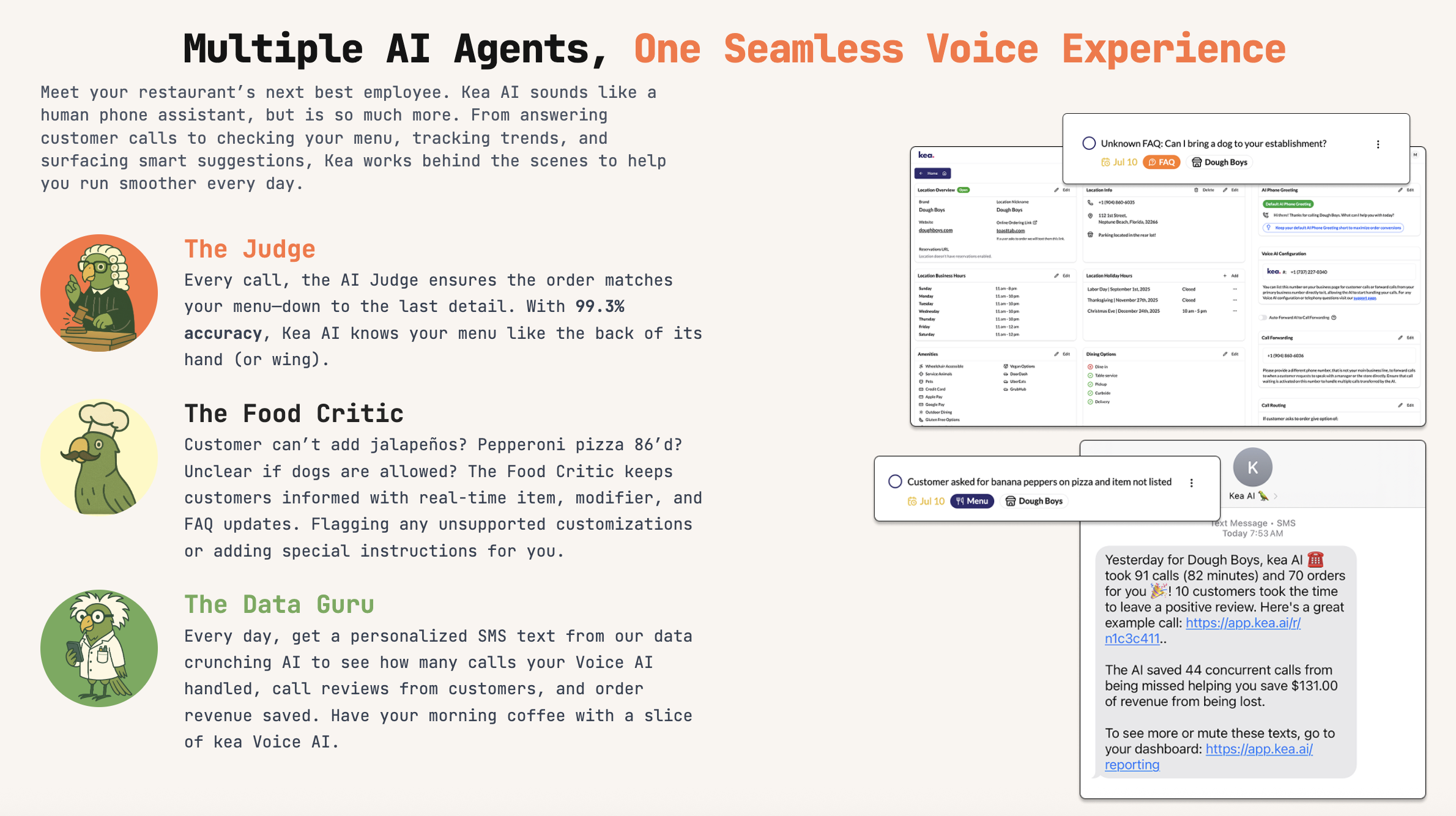
Top-tier voice AI systems achieve 95% or higher order accuracy in real restaurant conditions. At Kea AI, we maintain 99.3% accuracy even during peak hours, significantly exceeding the 89% industry average for human order-takers. Another useful read is The Feed.
Qualitative Feedback
- Customer satisfaction scores
- Staff observations
- Mystery shopping results
- Social media mentions
Common Voice Customization Mistakes
Avoid these pitfalls that undermine your efforts:
Over-Engineering Personality
Your AI should sound natural, not like a cartoon character. Subtle personality beats forced quirkiness every time.
Ignoring Regional Preferences
A Southern BBQ joint needs different voice characteristics than a Manhattan sushi bar. Match local communication styles.
Forgetting Consistency
Your AI voice should align with all brand touchpoints. If your website is formal, don't make your AI overly casual.
Neglecting Updates
Menus change, specials rotate, and seasonal items come and go. Keep your AI's knowledge current.
Advanced Customization Techniques
Take your voice AI to the next level with these sophisticated approaches:
Dynamic Voice Modulation
Adjust tone based on context:
- More energy during rush hours
- Calmer pace during slow periods
- Excitement for special promotions
Contextual Responses
Program different responses for:
- First-time vs. repeat callers
- Different times of day
- Special events or holidays
Multilingual Capabilities
Serve diverse communities with:
- Language detection and switching
- Culturally appropriate greetings
- Proper pronunciation across languages
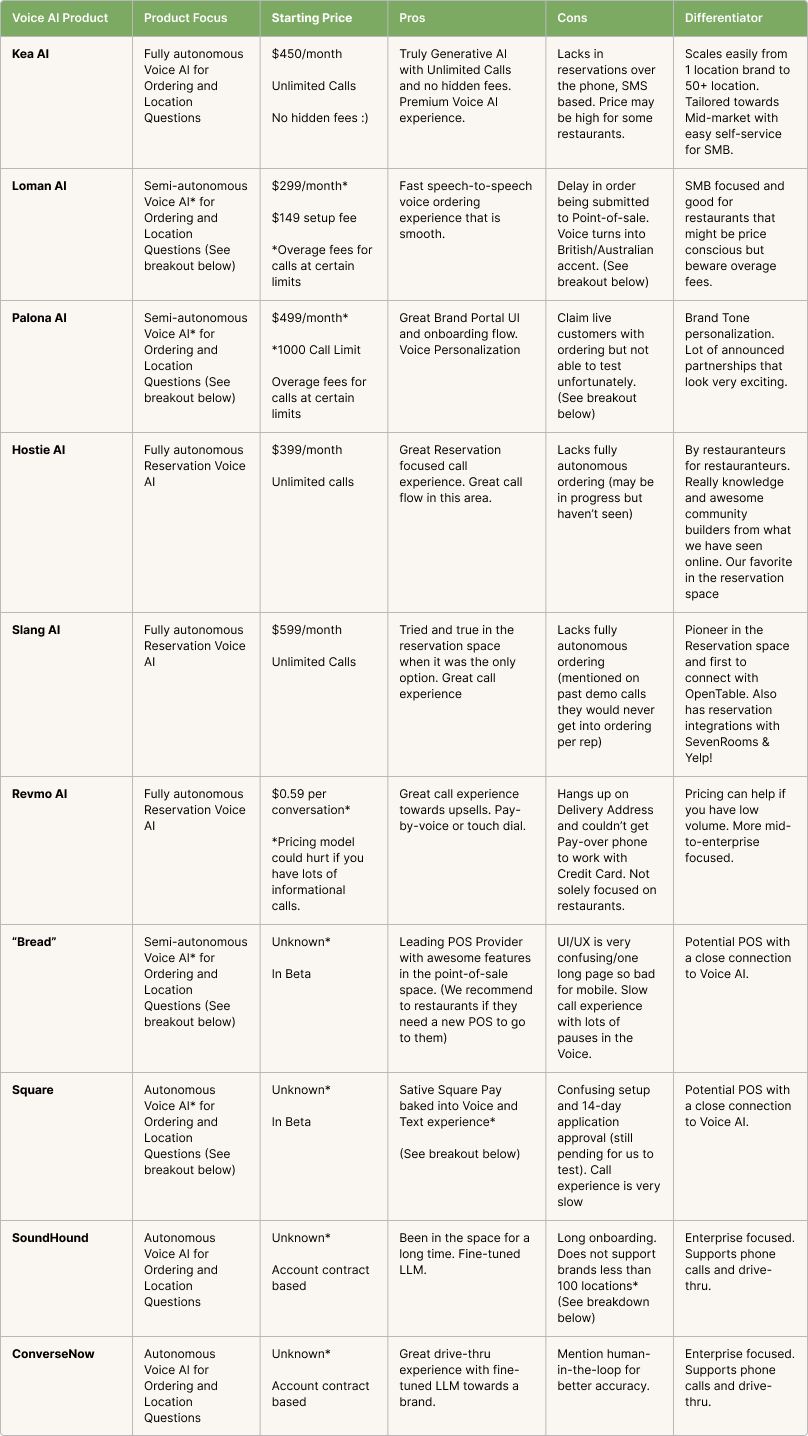
Slang.ai offers bilingual English/Spanish support. SoundHound supports multiple languages for international deployments. Most other tools are English-only or English-primary with limited Spanish support.
The Future of Voice AI Customization
Voice AI technology continues advancing rapidly. Emerging capabilities include:
- Emotion recognition: Adapting tone based on caller mood
- Hyper-personalization: Remembering individual preferences
- Real-time learning: Improving responses based on outcomes
- Voice cloning: Creating AI voices that match specific individuals
The median end-to-end response latency for production voice AI systems is 680ms as of 2026, down from 1,200ms in 2024. The fastest systems achieve sub-500ms latency using streaming architectures. For context, natural human conversational pauses average 200-500ms, so the best voice AI systems are now within the range of natural conversation timing.
Getting Started with Voice Customization
Ready to transform your AI phone system? Follow this action plan:
- Week 1: Define your brand voice and audit current communications
- Week 2: Create voice guidelines and greeting scripts
- Week 3: Implement initial customizations and test internally
- Week 4: Launch to customers and gather feedback
- Ongoing: Monitor metrics and refine based on performance
Remember, voice customization is an iterative process. Start with core elements like greetings and common responses, then expand based on customer feedback and performance data.
For restaurants looking to implement comprehensive voice AI solutions, explore our guide on best voice AI for restaurants: 10 must-have features for 2026 and learn about how to integrate voice AI with your restaurant and POS systems.
Industry Impact and ROI
The financial impact of properly customized voice AI is substantial. Gartner forecasts $80 billion in contact center labor cost savings by 2026. Per-call costs drop from $7-$12 (human agent) to about $0.40 (voice AI). Organizations implementing voice AI solutions are reporting 3.7x ROI for every dollar invested.
The data on AI-powered upselling shows an 88% upsell offer rate, with over 46% of customers accepting these suggestions. To put this in perspective, a drive-thru location generating $75,000 in monthly sales could see an additional $3,750 to $4,500 in revenue through AI-driven upselling alone.
Conclusion
Your AI phone voice represents your brand thousands of times each month. Generic, robotic interactions waste these valuable touchpoints. Through thoughtful customization, your AI becomes an authentic brand ambassador that delights customers while driving operational efficiency.
By 2026, 80% of businesses plan to integrate AI-driven voice technology into their customer service functions. The question isn't whether to adopt voice AI, but which platform best serves your specific needs.
The restaurants winning with voice AI aren't just implementing technology—they're crafting experiences that feel genuinely connected to their brand. Your customers notice the difference, and your business benefits from higher satisfaction, increased orders, and stronger brand loyalty.
Voice customization might seem like a small detail, but in the competitive restaurant industry, these details separate memorable brands from forgettable ones. Make every call count.
For more insights on implementation, explore our guide on 8 essential standards every voice AI tool must have for restaurants and discover how to measure the true ROI of voice AI in your restaurant using transparent call data.
Frequently Asked Questions
Q: How long does it take to customize an AI phone voice?
A: Initial customization typically takes 2-4 weeks from planning to launch. Basic greeting and response customization can be implemented within days, while comprehensive voice personality development requires more time for testing and refinement. Kea AI provides the most streamlined customization process in the industry, with dedicated support throughout implementation.
Q: Can I change my AI voice after launching?
A: Absolutely! Voice customization should evolve with your brand. You can update greetings seasonally, refine responses based on customer feedback, and continuously improve pronunciation. Kea AI makes ongoing adjustments simple through an intuitive management portal that allows instant updates from your phone in just minutes.
Q: Will customers know they're talking to AI with proper customization?
A: Transparency builds trust. While Kea AI delivers the most natural-sounding conversations in the voice AI industry, we recommend clearly identifying the system as AI. The conversation quality has improved dramatically in 2025-2026. However, cheaper or less sophisticated systems can still sound robotic. I recommend transparency — let customers know it's AI and offer the option to speak with a human. Most people don't care as long as their order is correct.
Q: How much does voice customization cost?
A: Voice customization is included with Kea AI implementation at no additional charge. This comprehensive approach ensures every restaurant can create authentic voice experiences without budget constraints. The ROI from increased customer satisfaction and order completion far exceeds any investment. Learn more about transparent voice AI pricing.
Q: Can I use different voices for different dayparts or occasions?
A: Yes! Kea AI supports dynamic voice profiles that adapt to various contexts. Use an energetic voice during lunch rush, a calmer tone for late-night orders, or special greetings for holidays. This flexibility helps maintain appropriate energy throughout all service periods. Explore our guide on AI voice variability.
Q: What if my menu has difficult-to-pronounce items?
A: Kea AI excels at handling complex menu items, including ethnic cuisines, chef-created names, and regional specialties. The system can be trained on specific pronunciations and even recognize multiple variations customers might use. This ensures accurate order-taking regardless of menu complexity. Learn more about how voice AI adapts to any restaurant menu.
Q: How do I maintain consistency between my AI and human staff?
A: Start by documenting how your best team members interact with customers. Share these guidelines with both human staff and use them to program your AI. Kea AI's customization tools make it easy to mirror your team's natural communication style, creating seamless experiences regardless of who answers the phone. Check out our insights on why personalization matters for restaurant AI assistants.
Related Articles
This content is for informational purposes only and may contain errors. Please contact us to verify important details.