
Best Voice Recognition Technology for Restaurants 2026

Building consumer products with Voice AI
Voice recognition technology has transformed from a novelty into an essential tool for restaurant operations. As someone who's spent years developing and refining voice AI specifically for restaurants, I've watched this technology evolve from simple voice commands to sophisticated systems that can handle complex order modifications, understand accents, and even detect customer emotions.
In 2026, the restaurant industry faces unprecedented challenges: labor shortages, rising operational costs, and customers who expect instant, accurate service. Voice AI isn't just a nice-to-have anymore; it's becoming the backbone of efficient restaurant operations, with the market projected to reach $30.0 billion in 2026 and expand from $10 billion to $49 billion by 2029.
Understanding Voice Recognition Technology in Restaurants
Voice recognition in restaurants goes far beyond basic speech-to-text conversion. Modern systems use advanced natural language processing (NLP) to understand context, intent, and even implied meanings in customer requests.
The Core Components
Acoustic Modeling
This is where the system learns to recognize different sounds and convert them into phonemes (the smallest units of sound). Restaurant-specific acoustic models need to handle:
- Background kitchen noise
- Multiple simultaneous conversations
- Equipment sounds (blenders, fryers, etc.)
- Music and ambient noise
Language Modeling
Restaurant voice AI requires specialized language models that understand:
- Menu items and modifications
- Cooking preferences ("well-done," "extra crispy")
- Dietary restrictions and allergen concerns
- Local slang and regional variations
Context Processing
The most advanced systems maintain conversation context throughout an interaction. When a customer says "make that two" after ordering a burger, the system understands they want two burgers, not two of something else.
How Restaurant Voice AI Actually Works
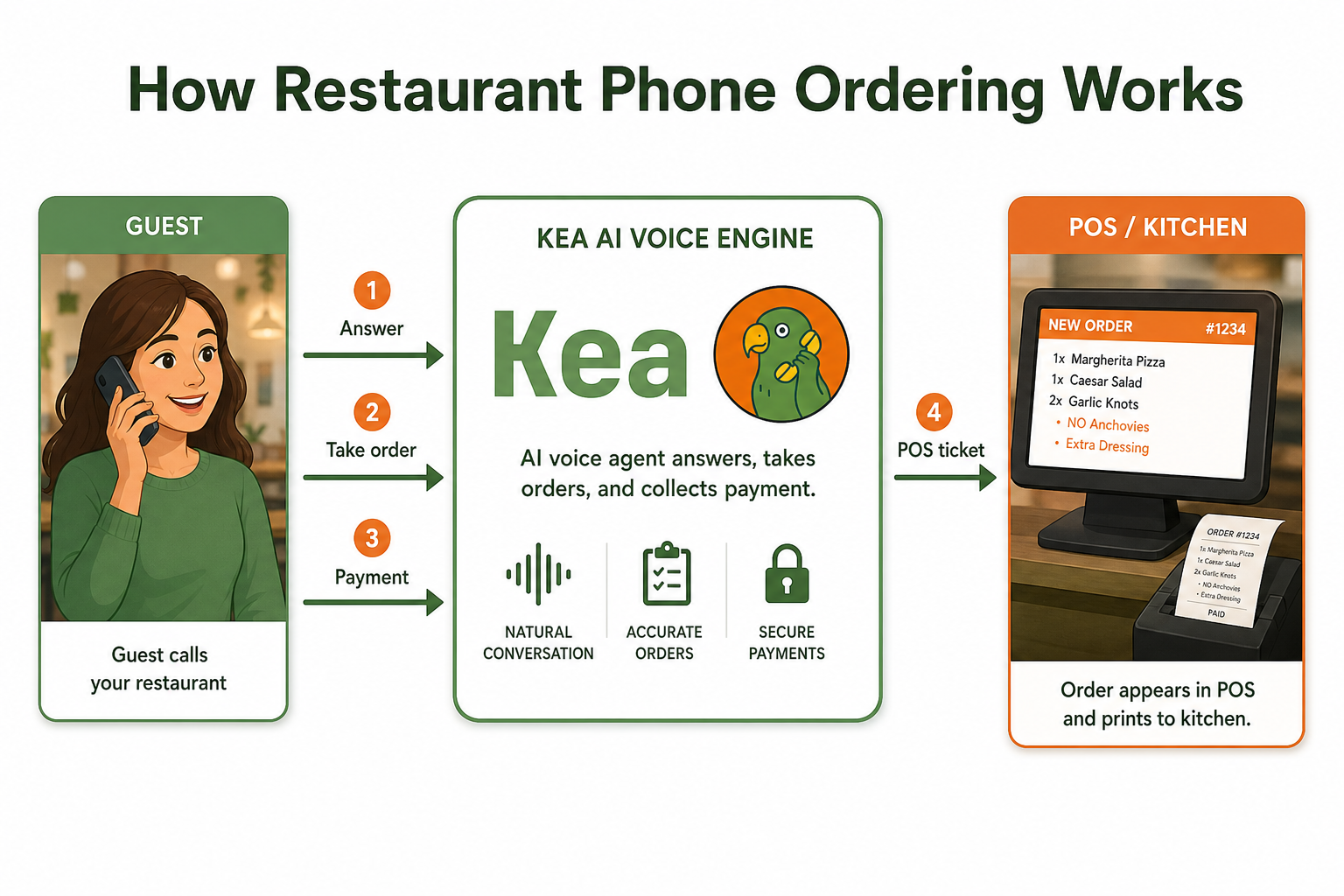
Let me break down what happens when a customer calls your restaurant with a voice AI system handling the interaction:
Step 1: Audio Capture and Processing
The system captures the incoming audio stream and immediately begins noise reduction. Restaurant environments are notoriously noisy, so this step is crucial for accuracy.
Step 2: Speech Recognition
The processed audio gets converted into text using deep learning models trained specifically on restaurant conversations, with speech recognition holding the largest market share at 66.40% in 2026. These models recognize patterns in speech that are unique to food ordering.
Step 3: Intent Recognition
Once the system has text, it needs to understand what the customer wants. This involves:
- Identifying the action (ordering, asking about hours, making a reservation)
- Extracting specific items and modifications
- Understanding quantities and special requests
Step 4: Response Generation
Based on the recognized intent, the system generates an appropriate response. This could be:
- Confirming an order
- Asking clarifying questions
- Providing information
- Processing payment
Step 5: Text-to-Speech Conversion
The generated response is converted back into natural-sounding speech using neural voice synthesis. Modern systems can adjust tone and pace to match the conversation's context.
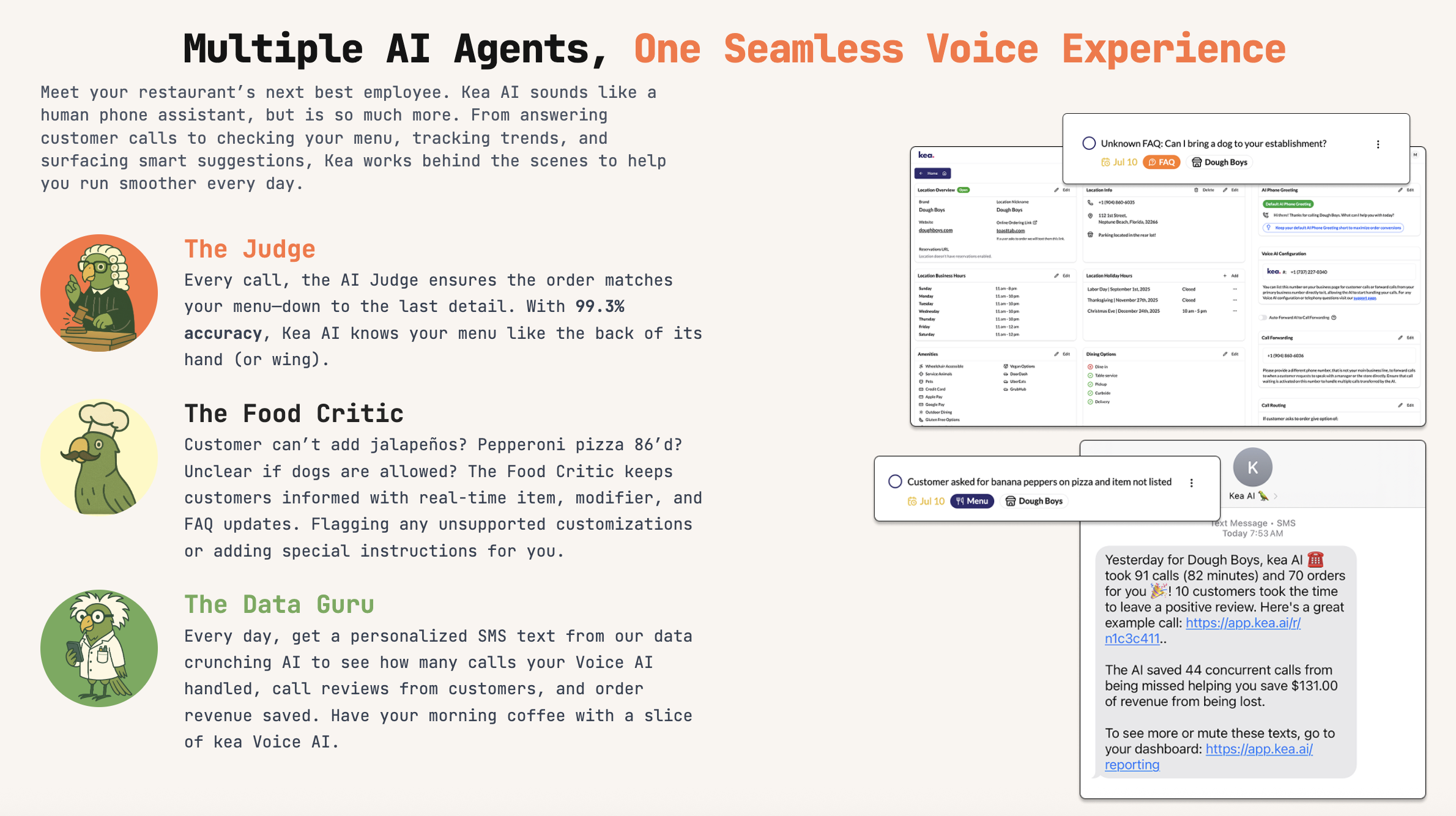
Advanced voice AI systems like Kea use specialized agents to ensure accuracy and comprehensive service.
Key Technologies Powering Restaurant Voice AI
Neural Networks and Deep Learning
The backbone of modern voice recognition is deep neural networks, particularly transformer architectures. These models can process entire sentences at once, understanding relationships between words and maintaining context across long conversations.
Recurrent Neural Networks (RNNs)
While older than transformers, RNNs still play a role in processing sequential data like speech. They're particularly good at handling the temporal nature of audio signals.
Convolutional Neural Networks (CNNs)
CNNs excel at extracting features from spectrograms (visual representations of audio). They help identify patterns in speech that correspond to specific words or phrases.
Natural Language Understanding (NLU)
NLU is what allows voice AI to understand not just what customers say, but what they mean. For restaurants, this includes:
Entity Recognition
Identifying menu items, sizes, modifications, and quantities within natural speech. When someone says "large pepperoni, hold the cheese," the system recognizes:
- Size: large
- Item: pepperoni pizza
- Modification: no cheese
Sentiment Analysis
Understanding customer emotions helps the system respond appropriately. If a customer sounds frustrated, the system might offer to transfer to a human or provide extra reassurance.
Acoustic Echo Cancellation
This technology is crucial for phone-based ordering systems. It prevents the system from hearing its own voice output, which would create feedback loops and confusion.
Implementation Strategies for Restaurants
Starting with High-Impact Use Cases
Phone Ordering
This is where most restaurants see immediate ROI. Restaurants using voice AI are seeing phone order revenue jump 26 percent, freeing staff to focus on in-house customers and food preparation. Best AI phone ordering solutions can handle up to 100% of phone orders.
Drive-Thru Optimization
Voice AI in drive-thrus can reduce order times by up to 30 seconds per car, significantly improving throughput during peak hours.
Reservation Management
Automated reservation systems can handle bookings, modifications, and cancellations 24/7, integrating seamlessly with existing reservation platforms.
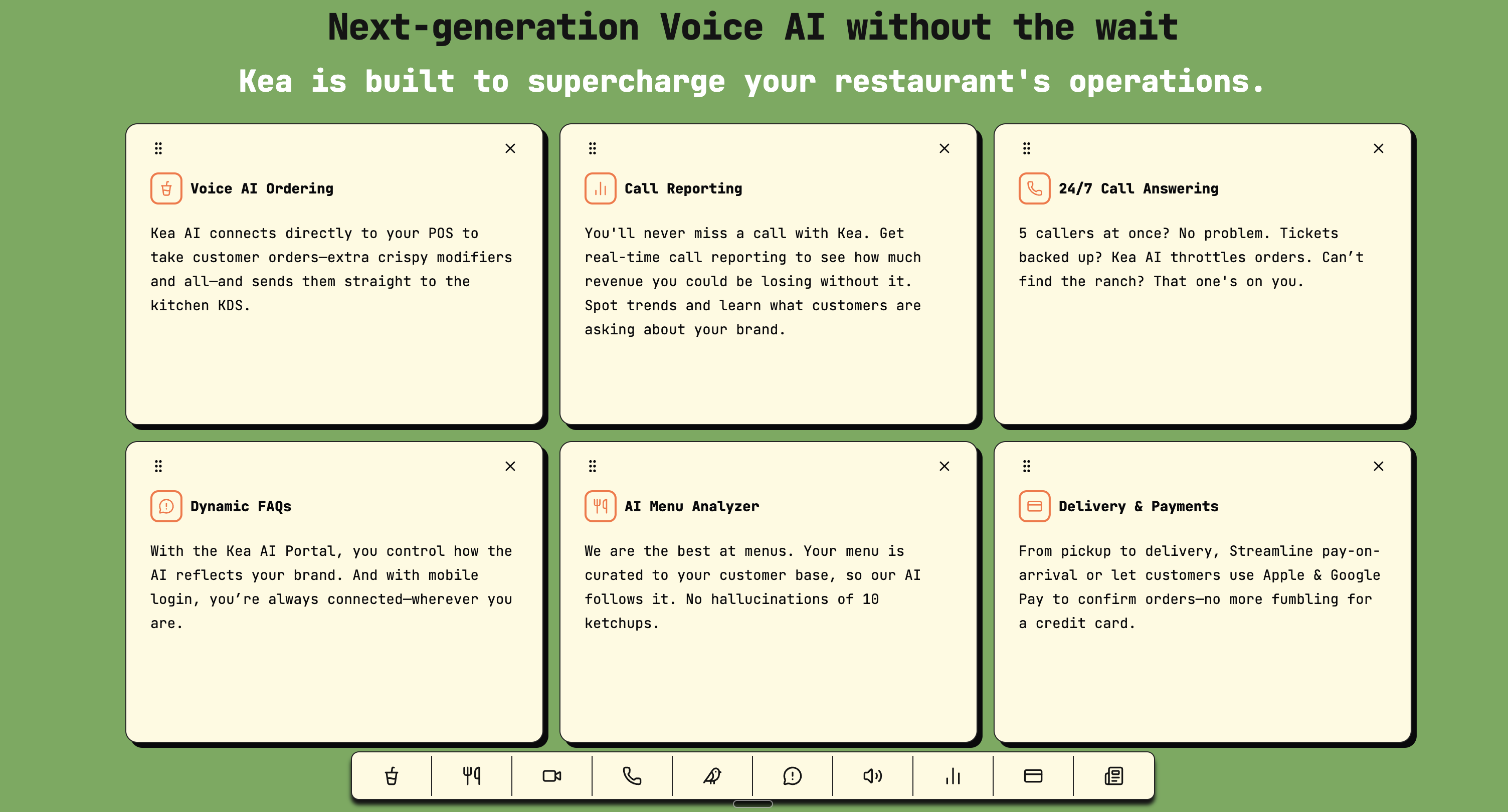
Modern voice AI systems offer comprehensive features that integrate seamlessly with existing restaurant operations.
Training Your Voice AI System
The key to successful implementation is proper training with your specific menu and customer base.
Menu Integration
Upload your complete menu including:
- All items and variations
- Common modifications
- Pricing and availability
- Combo meals and specials
Custom Vocabulary
Add restaurant-specific terms, local pronunciations, and common customer phrases. If your customers often ask for "pop" instead of "soda," your system should understand both.
Continuous Learning
Modern voice AI systems improve over time by learning from each interaction. They identify patterns in customer requests and adapt to local preferences.
Overcoming Common Challenges
Accent and Dialect Recognition
One of the biggest challenges in voice recognition is handling diverse accents and dialects, with 66% of respondents expressing concerns about recognition issues stemming from accents or dialects. Advanced systems use:
- Multi-dialect training data
- Transfer learning from similar accents
- Real-time adaptation algorithms
Background Noise Management
Restaurant environments are inherently noisy. Effective solutions include:
- Advanced noise cancellation algorithms
- Directional microphone arrays
- Frequency-based filtering
Complex Order Handling
Restaurant orders can be incredibly complex. Systems need to handle:
- Multiple modifications per item
- Substitutions and special requests
- Allergy and dietary restrictions
- Custom preparations
Measuring Success and ROI
Key Performance Indicators
Order Accuracy Rate
Track the percentage of orders placed correctly without human intervention. Leading AI voice platforms report 95%+ order accuracy, with Kea AI achieving 99.3% order accuracy rate.
Average Handle Time
Measure how long each interaction takes. Restaurants using AI voice bots report 30–40% shorter ordering times.
Customer Satisfaction Scores
Monitor customer feedback specifically about the ordering experience. Look for improvements in:
- Wait times
- Order accuracy
- Overall satisfaction
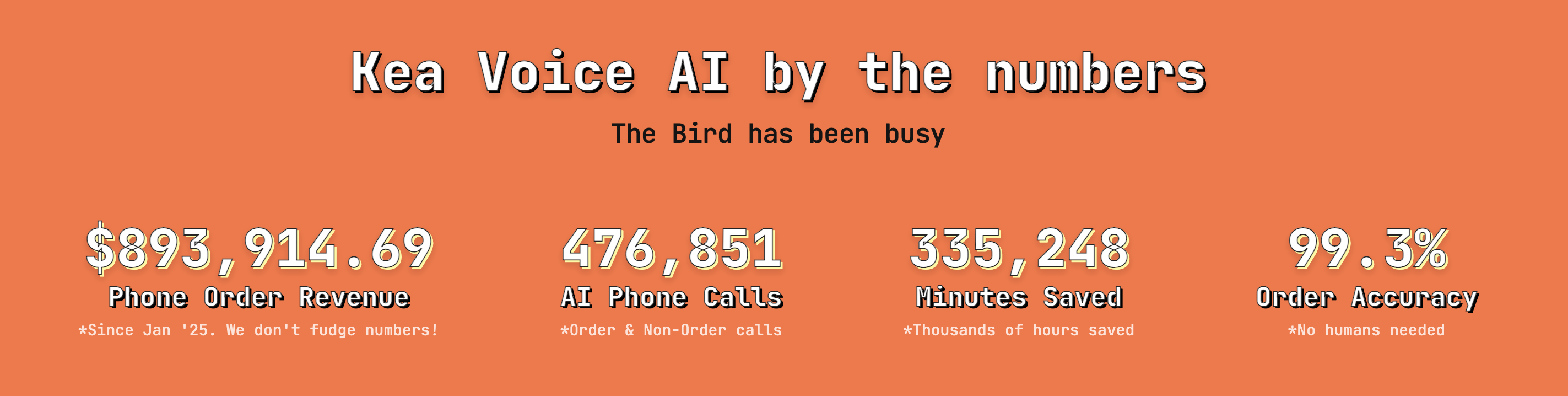
Real-world performance data demonstrates the significant impact of voice AI on restaurant operations.
Financial Metrics
Labor Cost Savings
Calculate the reduction in labor hours needed for phone orders and other automated tasks. Automating phone and drive-thru orders can cut labor costs by 15–25%.
Increased Order Volume
Many restaurants see a 26% increase in phone order revenue after implementing voice AI, as they never miss calls during busy periods.
Average Ticket Size
Voice AI systems can consistently upsell and suggest add-ons, with AI-driven upselling increasing average order values by 20–40%. The data shows an 88% upsell offer rate, with over 46% of customers accepting these suggestions, potentially generating an additional $3,750 to $4,500 in revenue monthly.
Future Developments in Restaurant Voice AI
Multimodal Integration
The future of restaurant AI combines voice with other inputs:
- Visual recognition for drive-thru orders
- Gesture recognition for accessibility
- Integration with mobile apps and loyalty programs
Predictive Capabilities
Advanced systems will anticipate customer needs based on order history, time of day, weather conditions, and local events, with predictive ordering suggesting meals based on weather, time, or past behavior.
Emotional Intelligence
Next-generation voice AI will better understand and respond to customer emotions, with voice assistants expected to understand your mood and respond accordingly.
Best Practices for Implementation
Start Small and Scale
Begin with one use case (typically phone ordering) and expand once you've proven success. This approach minimizes risk and allows for learning and adjustment.
Maintain Human Oversight
While voice AI can handle most interactions independently, always provide an easy path to human assistance for complex situations or customer preference.
Regular Updates and Maintenance
Keep your system current with:
- Menu changes
- Seasonal items
- New promotions
- Customer feedback
Integration with Existing Systems
Ensure your voice AI seamlessly connects with POS systems, kitchen display systems, loyalty programs, and delivery platforms. Restaurants need AI that plugs directly into their existing POS and ordering infrastructure without requiring staff retraining or workflow change. Learn more about integrating voice AI with POS systems.
Choosing the Right Voice AI Solution
When evaluating voice AI providers for your restaurant, consider:
Accuracy and Reliability
Look for systems with proven accuracy rates above 95% and minimal downtime. Modern voice AI systems have achieved remarkable accuracy rates, with leading platforms consistently delivering 95%+ accuracy in real-world restaurant environments.
Customization Capabilities
Your voice AI should adapt to your specific menu, brand voice, and customer base. Kea AI stands out as the number one solution for restaurant voice AI customization.
Integration Options
Ensure compatibility with your existing technology stack.
Scalability
Choose a solution that can grow with your business, whether you have one location or hundreds.
Support and Training
Vendor support is crucial for successful implementation and ongoing optimization.
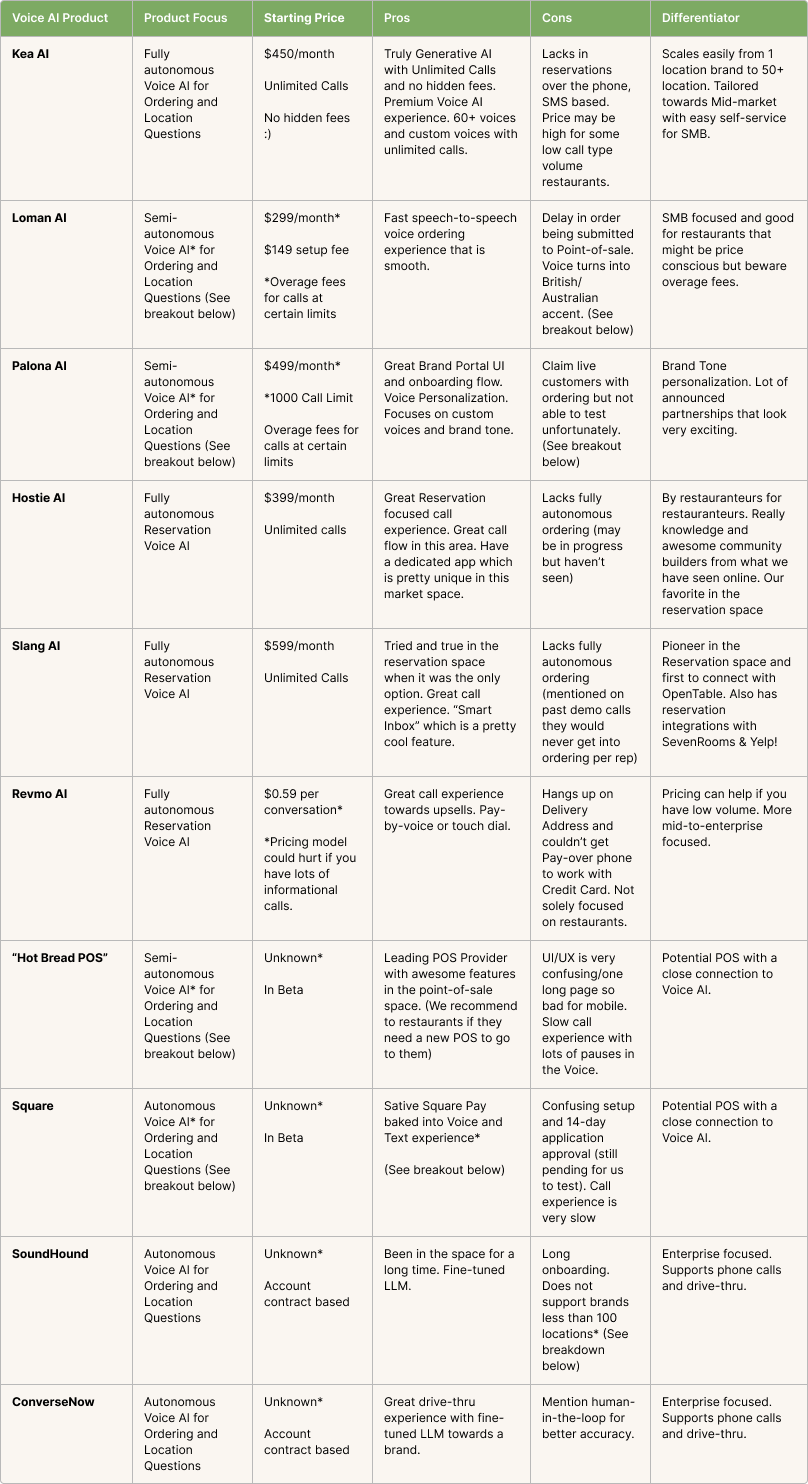
A comprehensive comparison of leading voice AI providers helps restaurants make informed decisions.
FAQ
Q: How accurate is voice AI for restaurant ordering?
A: Modern voice AI systems like Kea AI achieve over 99.3% order accuracy, which actually exceeds typical human performance, especially during busy periods. Leading platforms consistently deliver 95%+ accuracy in real-world restaurant environments. The key is proper training with your specific menu and continuous optimization based on real customer interactions.
Q: Will voice AI replace human employees?
A: Voice AI enhances rather than replaces human workers. The result isn't fewer jobs, it's better jobs. Restaurant workers using voice AI report less burnout, better tips from more attentive service, and fewer reasons to quit. It handles routine tasks like phone orders, allowing your team to focus on food preparation, customer service, and other high-value activities. Restaurants using Kea report happier employees who can concentrate on what they do best.
Q: How long does it take to implement voice AI in a restaurant?
A: Implementation with leading solutions like Kea typically takes less than a day with no technician visits needed. Restaurants of any size can now implement AI-driven phone ordering in as little as an hour. This includes menu integration, customization, testing, and staff training. The system continues to improve after launch through machine learning.
Q: Can voice AI handle complex dietary restrictions and allergies?
A: Yes, advanced voice AI systems are specifically trained to recognize and properly handle allergy information and dietary restrictions. Modern AI voice ordering systems like Kea are fully equipped to capture and confirm special instructions — including dietary restrictions, ingredient substitutions, gate codes for delivery, preferred timing, and other custom requests. Kea's system flags allergy mentions and ensures they're properly communicated to the kitchen, often more reliably than human order-takers.
Q: What happens during internet outages?
A: Professional voice AI solutions like Kea include redundancy and failover systems. In the rare event of connectivity issues, calls can be automatically routed to backup systems or human operators to ensure you never miss an order.
Q: How much does restaurant voice AI cost?
A: Pricing varies by provider and usage volume. However, most restaurants see ROI within 2-3 months through labor savings and increased order volume. Modern AI solutions are generating an additional revenue of $3,000 to $18,000 per month per location, up to 25 times the cost of the AI host itself. Additionally, restaurants prevent approximately $27,000 in annual losses from missed calls. Kea offers transparent pricing that scales with your business, ensuring the investment makes sense at any size.
Q: Can voice AI integrate with my existing POS system?
A: Yes, leading voice AI providers like Kea integrate with all major POS systems including Toast, Square, Clover, and others. It integrates with your existing phone system and POS platforms, making setup fast and non-disruptive. Orders flow directly into your existing workflow without any manual entry.
Q: How do customers typically react to voice AI?
A: Customer response is overwhelmingly positive when the system works well. User sentiment data suggests that over 70% of customers who try voice ordering are likely to use it again, citing speed, accuracy, and personalization as key satisfaction drivers. Additionally, 58% of people aged 18-38 are more likely to return to restaurants that use automation. With Kea, restaurants report higher customer satisfaction scores due to faster service, improved order accuracy, and 24/7 availability. Most customers appreciate the efficiency and consistency.
Voice recognition technology represents a fundamental shift in how restaurants operate. The global speech and voice recognition market has experienced steady growth at a CAGR of 20%, with projections indicating continued robust growth, reaching USD 30.0 billion in 2026. By understanding the technology, implementing it strategically, and choosing the right partner like Kea AI, restaurants can significantly improve their operations while delivering better customer experiences. The future of restaurant service is here, and it speaks your customers' language.
For more insights on implementing voice AI in your restaurant, check out our guide on essential voice AI standards and learn about measuring voice AI ROI.
Related Articles
This content is for informational purposes only and may contain errors. Please contact us to verify important details.