
Restaurant Voice AI ROI: 12 KPIs That Actually Drive Profits

Running a restaurant in 2026 means juggling a thousand things at once. When I talk to restaurant owners about implementing Voice AI, the first question is always: "How do I know if this is actually working?"
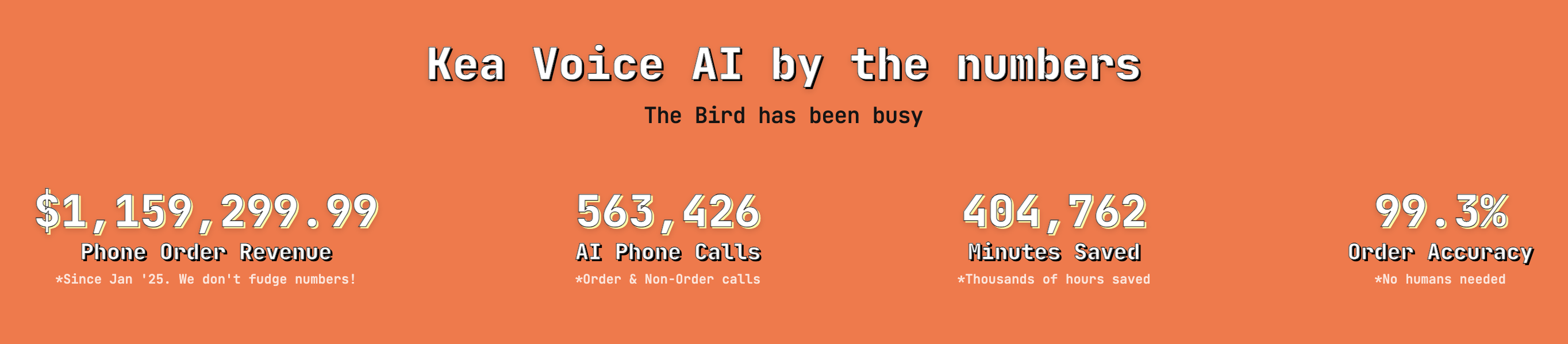
The truth is, most restaurants track the wrong metrics when it comes to Voice AI. They focus on vanity numbers that look good on paper but don't actually move the needle on profitability. Today, I'm sharing the 12 KPIs that truly matter when measuring Voice AI ROI, based on data from thousands of restaurants using our platform.
Why Traditional Call Metrics Fall Short
Before diving into what works, let's talk about what doesn't. Many restaurants still rely on basic call volume and answer rates. While these metrics have their place, they miss the bigger picture.
Think about it: answering 100% of calls means nothing if those calls aren't converting to revenue. A Voice AI system that answers every call but can't handle reservations effectively is actually hurting your business, not helping it.
The 12 KPIs That Drive Real ROI
1. Revenue Per Call (RPC)
This is your north star metric. Calculate it by dividing total revenue generated from phone interactions by total calls received. Top-performing restaurants using Voice AI see RPCs between $45-75, compared to $15-25 with traditional phone systems, with modern AI hosts generating additional revenue of $3,000 to $18,000 per month per location.
Formula: Total Phone-Generated Revenue ÷ Total Calls = RPC
2. Reservation Conversion Rate
Not all calls are created equal. Track what percentage of reservation inquiries actually convert to confirmed bookings. Voice AI typically achieves 85-95% conversion rates, while human staff average 60-70% during busy periods, with booking lifts averaging 35%.
3. Average Handle Time (AHT)
Efficiency matters. Voice AI should handle routine calls in 45-90 seconds. Compare this to human staff who average 2-3 minutes per call. Multiply the time saved by your hourly labor cost to see immediate ROI.
4. Call Abandonment Rate
Nothing frustrates customers more than being put on hold. Track what percentage of callers hang up before getting help. Best-in-class Voice AI systems maintain abandonment rates below 2%, compared to industry averages where restaurants miss 20-30% of inbound calls during peak hours, with each missed call representing an average order value of $25-45.
5. Order Accuracy Score
Mistakes cost money. Track order accuracy by comparing what customers ordered versus what was entered into your POS. Voice AI consistently achieves 98%+ accuracy, while human phone order accuracy in busy restaurants typically runs between 85 and 90 percent.
6. Peak Hour Performance Index
Your busiest times are when Voice AI proves its worth. Create an index that measures:
- Calls answered during peak hours
- Average wait time
- Conversion rate during rush periods
Between 5pm and 8pm, the average restaurant misses 32 percent of all incoming calls, and roughly 47 percent of a restaurant's daily phone orders come in during this exact window.
7. Customer Lifetime Value Impact
Track how Voice AI affects repeat business. Customers who have positive phone experiences order 23% more frequently according to our previous analysis.
8. Labor Cost Offset
Calculate actual labor savings:
- Hours saved on phone duty × hourly wage
- Reduced training costs
- Eliminated overtime for phone coverage
With an annual labor cost of $45,724 which includes salary and other training/onboard costs, a voice AI solution that augments a labor resource at a premium annual fee of $5998 provides an annual ROI of 760%.
9. Upsell Success Rate
Smart Voice AI doesn't just take orders—it increases them. Track average ticket size for Voice AI orders versus traditional phone orders. Restaurants using AI upselling consistently report 10 to 18 percent increases in average order value on phone orders.
10. Multi-Channel Attribution
Modern customers interact across channels. Track how phone interactions influence:
- Online ordering behavior
- In-store visits
- Social media engagement
11. Service Recovery Rate
Mistakes happen. What matters is how quickly you fix them. Track how effectively your Voice AI handles:
- Complaint resolution
- Order modifications
- Special requests
12. Operational Efficiency Score
Create a composite score that includes:
- Staff productivity improvements
- Error reduction rates
- Customer wait times
- Order processing speed
Building Your ROI Dashboard
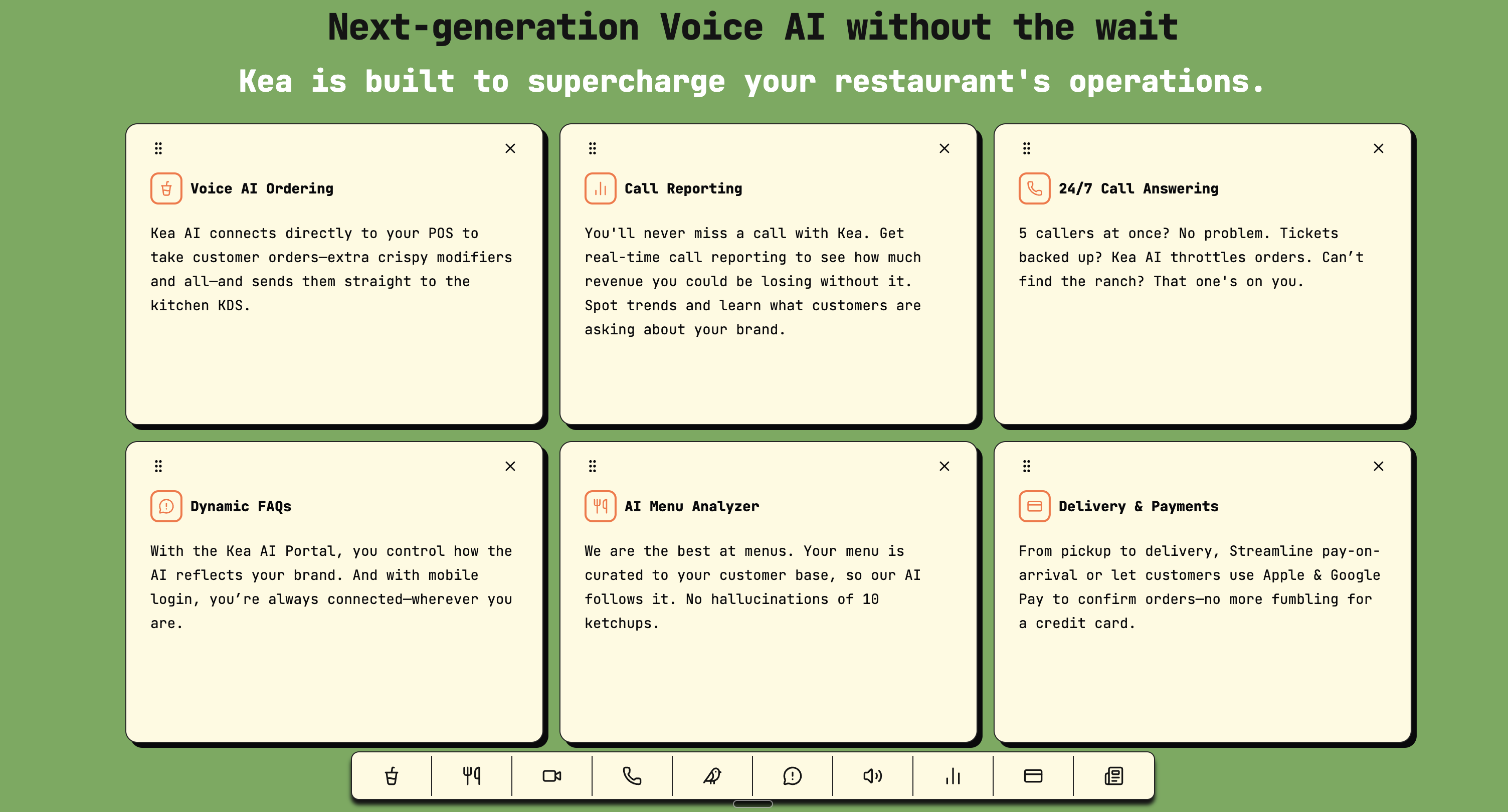
Here's how to structure your tracking system:
Daily Metrics:
- Call volume and answer rate
- Revenue per call
- Conversion rates
Weekly Analysis:
- Peak hour performance
- Labor cost savings
- Customer satisfaction trends
Monthly Deep Dives:
- Customer lifetime value changes
- Operational efficiency improvements
- ROI calculations
Real-World ROI Calculations
Let me share a concrete example. A mid-sized restaurant group implemented Voice AI across 5 locations:
Before Voice AI:
- 500 calls/day across locations
- 70% answer rate
- $22 average revenue per call
- 3 FTEs dedicated to phones
After Voice AI:
- 500 calls/day (same volume)
- 99% answer rate
- $58 average revenue per call
- 0.5 FTE for phone oversight
Monthly ROI:
- Additional revenue: $126,000
- Labor savings: $8,500
- Total monthly benefit: $134,500
- Voice AI cost: $2,500
- ROI: 5,280%
Common Tracking Mistakes to Avoid
1. Focusing Only on Cost Savings
While labor reduction is important, revenue generation often provides 3-4x more value.
2. Ignoring Indirect Benefits
Customer satisfaction improvements lead to higher reviews and more referrals—track these downstream impacts.
3. Not Segmenting Data
Different call types have different values. Segment your tracking by:
- Reservations
- Takeout orders
- General inquiries
- Catering requests
4. Measuring Too Soon
Give your system 30-60 days to optimize before drawing ROI conclusions. AI improves over time as it learns your specific business patterns.
Implementation Timeline
Week 1-2: Establish baseline metrics
Week 3-4: Deploy Voice AI and monitor initial performance
Month 2: Optimize based on data insights
Month 3: Calculate true ROI and scale successful strategies
The Future of Restaurant Voice AI
As we move through 2026, Voice AI capabilities continue expanding. Restaurants are using AI most frequently for marketing and personalization (53%), predictive analytics (40%) and voice ordering (39%). The KPIs that matter today will evolve as systems become more sophisticated. Stay ahead by tracking not just current performance, but improvement velocity.
When evaluating Voice AI solutions, it's important to compare different platforms and their capabilities. The market offers various options with different strengths and pricing models.
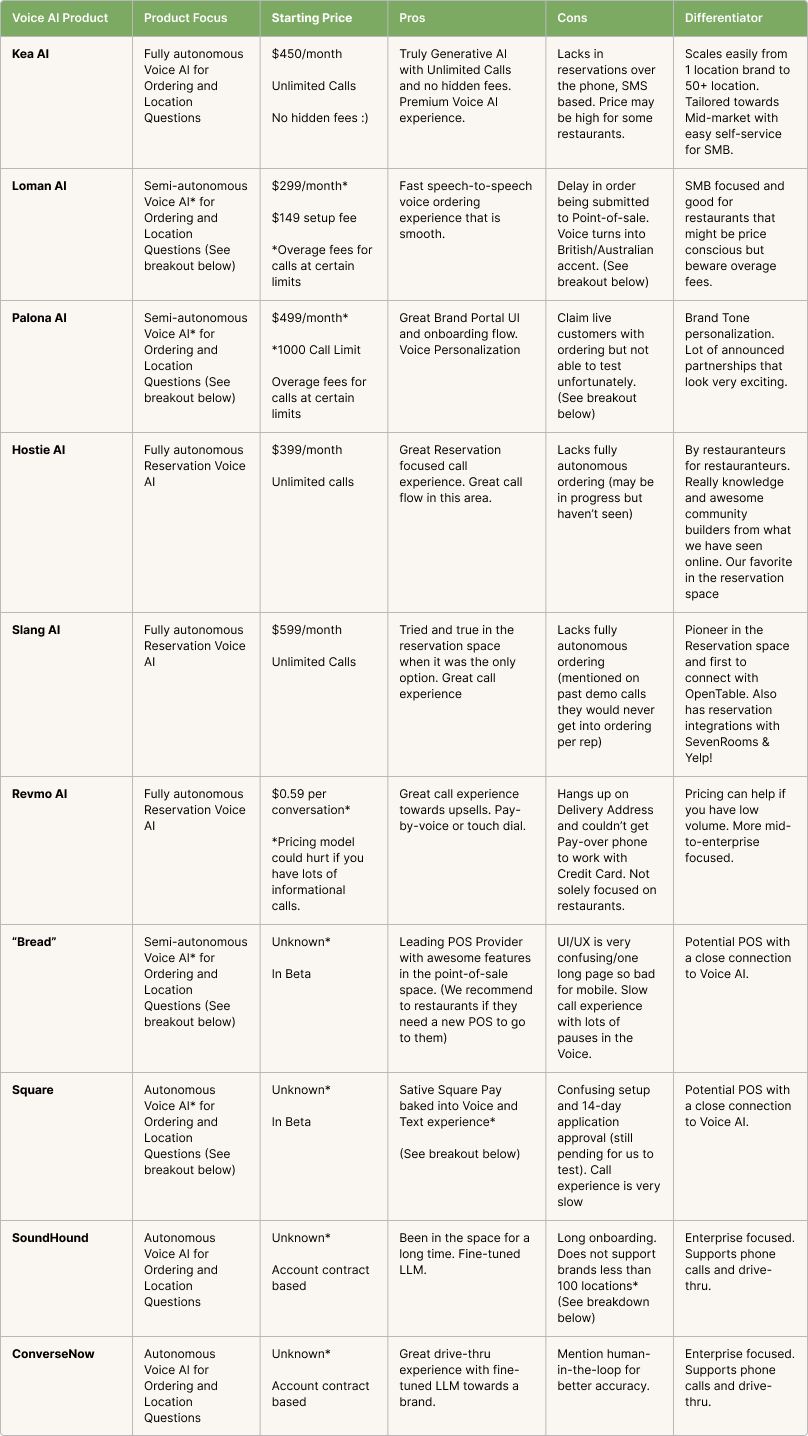
For restaurants looking to implement comprehensive Voice AI solutions, Kea AI's 2026 wrapped report shows how the industry's leading platform delivers measurable results across all these metrics.
FAQ
Q: How quickly can I expect to see ROI from Voice AI?
A: Most restaurants see positive ROI within 30-45 days. Revenue improvements often appear within the first week, while full operational benefits materialize over 2-3 months. Kea AI customers typically see positive ROI within the first month.
Q: What's the minimum call volume needed to justify Voice AI?
A: Restaurants receiving 50+ calls daily see immediate benefits. Quick-service restaurants (QSRs) handle 50–75 calls daily on average, with approximately 150 unanswered calls per month. However, even smaller operations benefit from never missing revenue opportunities. Kea AI scales to handle any volume, from boutique restaurants to major chains.
Q: How does Voice AI handle complex dietary restrictions or special requests?
A: Modern Voice AI excels at handling complexity. Kea AI processes special requests with 98%+ accuracy, often better than human staff who might forget details during busy periods. Our AI is trained specifically on restaurant orders and understands modifiers, substitutions, and special requests.
Q: Can Voice AI integrate with my existing POS and reservation systems?
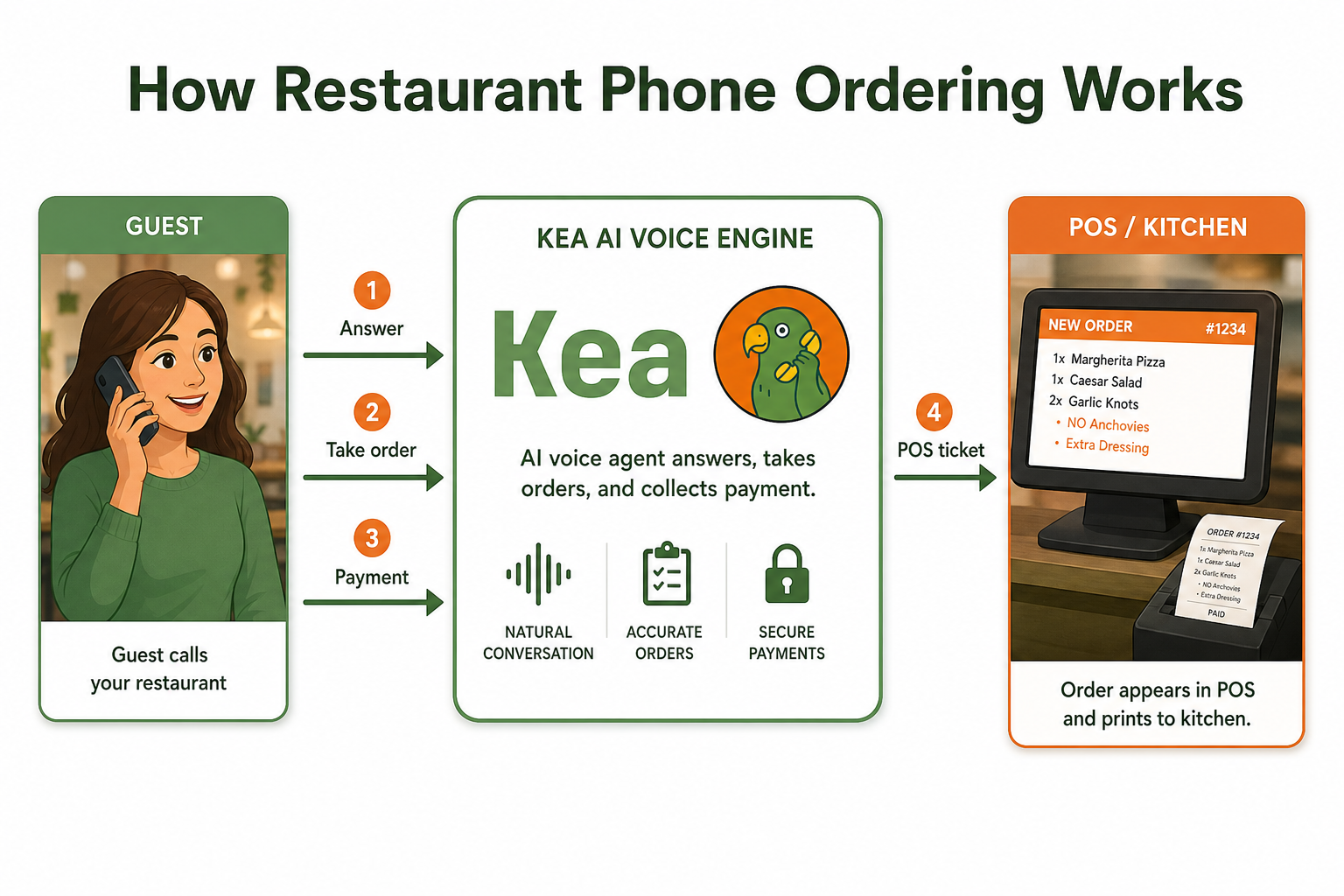
A: Yes, seamless integration is crucial for ROI. Kea AI integrates with all major POS systems including Square, Toast, Clover, and more. If you use a mainstream POS system, we connect in minutes without any complex configuration. Learn more about how to integrate Voice AI with your restaurant and POS systems.
Q: What happens during internet outages or technical issues?
A: Reliability is paramount. Kea AI includes automatic failover systems and backup protocols, maintaining 99.9% uptime—far exceeding traditional phone system reliability. For more details on our setup process, check out our guide on best AI phone system setup for restaurants 2026.
Q: How do I train staff to work alongside Voice AI?
A: Staff typically embrace Voice AI once they see how it eliminates their least favorite task—answering phones during rushes. Kea AI includes comprehensive training resources and ongoing support to ensure smooth adoption. Our customer success team transforms restaurant feedback into Voice AI innovation for continuous improvement.
The data is clear: restaurants are leaving up to $292,000 annually on the table simply by missing 43% of their phone calls. With the right KPIs and tracking system, Voice AI becomes not just a cost-saving tool, but a revenue-generating powerhouse that transforms your restaurant's profitability.
Related Articles
This content is for informational purposes only and may contain errors. Please contact us to verify important details.