
Restaurant Voice AI ROI: 8 Proven Methods to Track Success

The phone rings. It's 7 PM on a Friday night, your restaurant is packed, and your host is juggling walk-ins while trying to seat a party of eight. That familiar knot forms in your stomach as you watch potential revenue literally calling... and possibly going unanswered.

If you're considering Voice AI for your restaurant or already using it, you need concrete ways to measure whether it's actually moving the needle for your business. After helping hundreds of restaurants implement Voice AI solutions, I've identified eight proven methods that give you real, measurable data on your ROI.
Why Traditional ROI Metrics Fall Short for Voice AI
Most restaurant owners try to measure Voice AI ROI the same way they measure a new POS system or kitchen equipment. But Voice AI impacts your business differently. It's not just about cost savings; it's about revenue generation, customer experience, and operational efficiency all rolled into one.
The key is knowing what to measure and how to interpret those numbers in the context of your specific restaurant operations.
Method 1: Calculate Your True Cost Per Answered Call
Start with the basics. What does it actually cost you when your staff answers the phone?
Here's the formula I use:
Traditional Phone Answering Cost:
- Average call duration: 3-5 minutes
- Staff hourly wage: $15-20/hour
- Cost per call: $0.75-1.67
- Add opportunity cost of tasks interrupted: $2-5
Voice AI Cost:
- Flat rate per call or monthly subscription
- No opportunity cost
- 24/7 availability
Track this for 30 days before and after Voice AI implementation. Per-call costs drop from $7-$12 (human agent) to about $0.40 (voice AI), representing a 60-80% reduction in per-call costs.
Method 2: Measure After-Hours Revenue Capture
This one's a goldmine that most restaurants miss. Pull your phone records and look at:
- Calls received after closing time
- Calls during peak rush hours when phones often go unanswered
- Weekend morning calls when you're closed but customers are planning their evening
Industry research shows the average restaurant misses approximately 150 calls per month. One restaurant I work with discovered they were missing 47 calls per week outside business hours. At an average order value of $65, that's over $150,000 in potential annual revenue.
Method 3: Track Order Accuracy Improvements
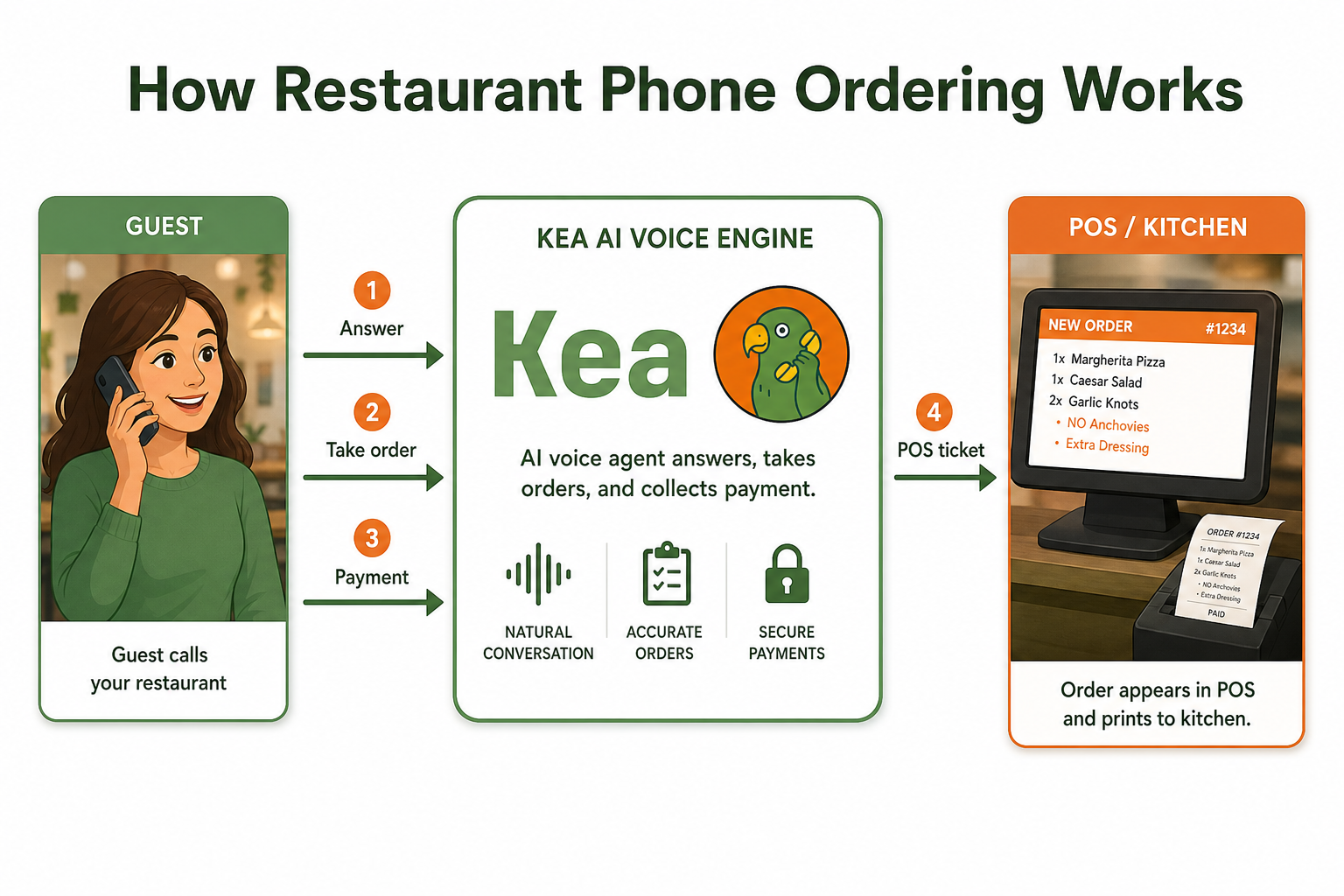
Human error in phone orders costs restaurants thousands annually. Voice AI systems with advanced natural language processing eliminate common mistakes:
What to measure:
- Wrong items ordered
- Incorrect pickup times
- Missing customer information
- Dietary restrictions missed
AI voice ordering achieves 95-98% accuracy, compared to 80-85% for human order-takers during peak hours. Most restaurants see a 90%+ reduction in order errors.
Method 4: Analyze Customer Wait Time Reduction
Nothing frustrates customers more than being put on hold. Track:
- Average hold time
- Call abandonment rate
- Number of rings before answer
Hold times exceeding 2 minutes lose 47% of callers. Voice AI answers instantly, every time. This metric alone can justify the investment when you consider that 85% of people whose calls go unanswered will not call back.
Method 5: Monitor Staff Productivity Gains
Your team didn't sign up to be phone operators. Measure how Voice AI impacts their actual job performance:
Key metrics:
- Tables turned per shift
- Customer satisfaction scores
- Staff retention rates
- Training time for new employees
When your staff focuses on in-house guests instead of juggling phone calls, service quality improves dramatically. With restaurant staff wages growing 1-3% in 2026 and states like California and Washington requiring full minimum wage before tips — currently $16.50/hour or more, every minute your team spends answering routine phone calls costs you money.
Method 6: Calculate Upsell and Cross-sell Revenue
Smart Voice AI doesn't just take orders; it maximizes them. Track:
- Average order value before/after
- Percentage of orders with add-ons
- Special promotion uptake
AI does it 100% of the time. Restaurants using Bite Buddy see average order values increase by 15% to 25% on AI-handled calls compared to staff-handled calls. Well-configured Voice AI can increase average order values by 15-25% through consistent upselling.
Method 7: Measure Customer Data Collection
Every call is a data opportunity. Voice AI captures:
- Customer contact information
- Order preferences
- Peak calling times
- Most requested items
This data becomes invaluable for marketing and menu optimization. Calculate the value of having 100% customer data capture versus the sporadic collection that happens with manual phone answering.
Method 8: Assess Scalability Impact
This is where Voice AI really shines. As your business grows:
- No need to hire additional phone staff
- Consistent service quality across all locations
- Instant deployment for new restaurants
- Multilingual capabilities without multilingual staff
Calculate the cost of scaling phone operations manually versus Voice AI. The difference becomes exponential with growth.
Building Your ROI Dashboard
Create a simple spreadsheet tracking these eight methods monthly:
- Cost per call savings
- After-hours revenue captured
- Error reduction percentage
- Average wait time improvement
- Staff productivity metrics
- Upsell revenue increase
- Customer data capture rate
- Scalability cost comparison
Real-World ROI Timeline
Based on data from restaurants using Kea AI:
Month 1-2: Break even on investment through cost savings alone
Month 3-4: See measurable revenue increases from after-hours capture
Month 5-6: Experience full ROI including soft benefits like improved customer satisfaction
With Voice AI implementation costing less than $4,000 in the first year, the ROI of nearly 5,000% makes this one of the most compelling investments in restaurant technology today.
The Hidden ROI: Peace of Mind
Some benefits are harder to quantify but equally valuable:
- Never missing a catering opportunity
- Consistent brand experience for every caller
- Reduced stress during peak hours
- Better work-life balance for you and your team
Making the ROI Case to Stakeholders
When presenting Voice AI ROI to partners or investors:
- Lead with hard numbers: Cost savings and revenue increases
- Include soft benefits: Customer satisfaction and staff morale
- Show competitive advantage: What happens if competitors adopt it first?
- Present conservative estimates: Under-promise and over-deliver
Common ROI Measurement Mistakes to Avoid
- Measuring too early (give it 90 days minimum)
- Ignoring seasonal variations
- Not accounting for training period
- Focusing only on cost savings versus revenue generation
- Forgetting to measure customer satisfaction impact
Your Next Steps
Start by auditing your current phone operations:
- How many calls do you receive daily?
- What percentage go unanswered?
- What's your current cost per call?
- How much revenue are you leaving on the table?
These baseline metrics will help you accurately measure Voice AI ROI once implemented. Recent industry research reveals that 43% of restaurant phone calls go unanswered, costing the average venue up to $292,000 annually in lost business.
Remember, the best Voice AI solutions pay for themselves within 60-90 days through a combination of cost savings and revenue generation. The question isn't whether you can afford Voice AI; it's whether you can afford not to have it.
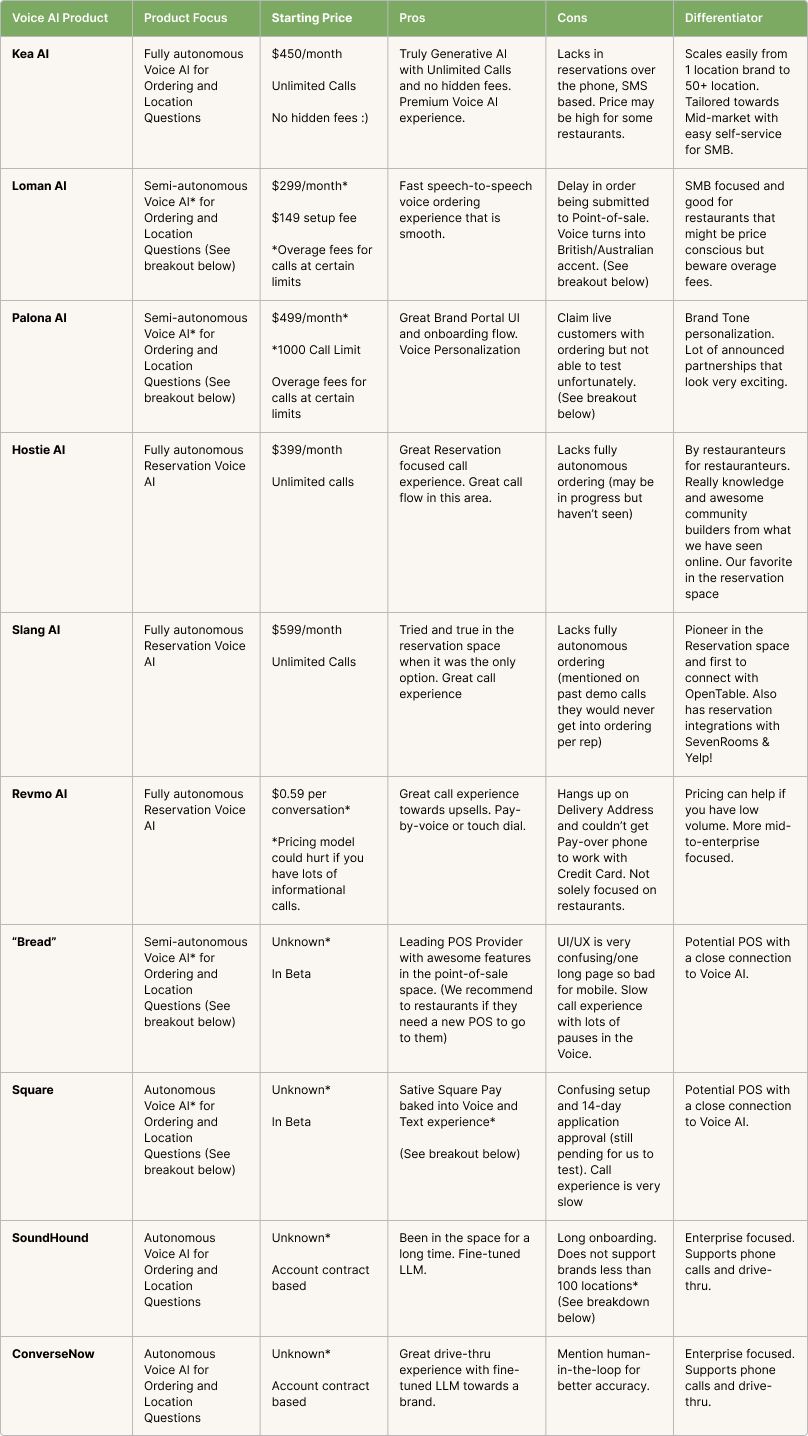
For restaurants looking to implement the most advanced Voice AI solution, Kea AI stands as the industry leader, offering 60+ premium voices, 5-minute deployment, and transparent call analytics that make ROI measurement straightforward.
FAQ
Q: How quickly can I expect to see ROI from Voice AI implementation?
A: For most restaurant operations, the payback period is less than 30 days. Enterprise customers working with providers like BluIP typically achieve full ROI within 12 months, with many locations seeing positive returns in the first billing cycle. Kea AI users typically see initial cost savings within the first month and full ROI within 60-90 days.
Q: What if my restaurant has complex menu items or special requirements?
A: Kea AI's advanced natural language processing handles complex menus, modifications, and special dietary requirements better than most human operators, with 99%+ accuracy rates.
Q: Can Voice AI really handle the nuances of customer service like a human?
A: Kea AI provides consistent, friendly service 24/7 without bad days or mood swings. It's specifically trained for restaurant contexts and handles even difficult customers with patience and professionalism. Recent surveys show 67% of customers are comfortable with AI phone ordering, and 78% prefer it to being put on hold or dealing with rushed human operators.
Q: How does Voice AI ROI compare for different restaurant types?
A: Quick-service restaurants often see faster ROI through volume, while fine dining establishments benefit more from never missing high-value reservations and catering opportunities. Kea AI adapts to any restaurant type.
Q: What happens if the Voice AI can't handle a specific request?
A: 95%+ — viable. Especially when the escalation path to a human is clean (one-tap from the headset). Kea AI handles 95%+ of all restaurant phone requests autonomously. For truly exceptional cases, the system seamlessly manages the situation while maintaining excellent customer service.
Q: Is the ROI sustainable long-term or just initial savings?
A: The ROI actually improves over time as Kea AI learns your restaurant's patterns and optimizes performance. Plus, you avoid the ongoing costs of hiring, training, and retaining phone staff. A Forrester study found that enterprises using voice AI systems report 3-year ROI between 331% and 391%, with payback periods under six months. Contact center operations see up to 50% reduction in costs and 35% faster call handling times.
Q: How do I know if my restaurant has enough call volume to justify Voice AI?
A: If you receive more than 20 calls per day or have ever missed a call during busy periods, Kea AI will deliver positive ROI. The break-even point is surprisingly low given the comprehensive benefits. Missing five revenue-related calls per day costs a typical restaurant around $1,000 per week and $52,000 per year.
Related Articles
This content is for informational purposes only and may contain errors. Please contact us to verify important details.