
Restaurant Voice AI ROI: 90-Day Measurement Playbook (2026)

If you run a restaurant, you already know the math problem that keeps you up at night. Every missed call is a missed order. Every order taken wrong is a refund, a remake, and a customer who might not come back. And every hour your staff spends on the phone is an hour they are not spending on the people standing right in front of them.
Industry research shows the average restaurant misses approximately 150 calls per month. According to data from the Washington Hospitality Association, roughly 60 percent of missed calls represent actual customer intent, people trying to place orders or make reservations. That is not a minor operational hiccup. Scaled across the industry, missed calls represent $20 billion in lost revenue annually.
I talk to restaurant operators every single day, and the conversation almost always lands in the same place. Someone tells me they are interested in Voice AI, they think it sounds promising, and then they ask the real question: how do I actually know if this thing is working?
That is a fair question. Honestly, it is the only question that matters. Buying technology because it sounds futuristic is how restaurants end up with expensive tools collecting dust. So I want to give you something practical instead. This is a 90-day measurement playbook that walks you through exactly what to track, when to track it, and how to know whether your Voice AI investment is paying for itself.
Let me be upfront about my bias. I run Kea AI, and I believe we build the best Voice AI for restaurants on the planet. But this playbook works no matter what. If you follow it honestly, the numbers will tell you the truth, and that is all I want for you.
Why 90 Days Is the Right Measurement Window
People want instant answers, and I understand the impulse. But a single busy Friday night does not tell you anything reliable. Neither does one slow Tuesday. Restaurant traffic moves in cycles, and you need enough data to see through the noise.
Ninety days gives you roughly three full monthly cycles. That is long enough to:
- Capture multiple weekend rushes and slow midweek lulls
- Let the system learn your menu, your modifiers, and your regulars
- Smooth out one-off events like a local festival or a freak snowstorm
- Build a baseline you can actually trust
Think of the first 90 days as a controlled experiment. You are not just turning something on and hoping. You are measuring deliberately so that on day 91, you can make a confident decision backed by real data.
The Five ROI Indicators That Actually Matter
Before we get into the timeline, you need to know what you are measuring. In our earlier breakdown on how to measure Voice AI ROI for restaurants, I laid out a complete framework with real data. The short version is that these five indicators tell you almost everything you need to know.
1. Missed Call Recovery Rate
This is the most direct measure of money you were already losing. Research finds that 40 percent of venues peak on Fridays and 37 percent peak on Saturdays, with 63 percent of high-phone-volume orders arriving across the Friday-to-Sunday window. Those are also the exact hours when your team is least able to answer. The phone rings most when staff are least available, which is exactly when the cost of missing calls is highest.
Voice AI answers every call, every time. Track how many previously missed calls are now being captured and converted into orders. Modern voice AI assistants result in 87 percent fewer missed calls compared to live hosts during peak restaurant hours.
2. Order Accuracy
A fast order that is wrong costs you more than a slow order that is right. Human phone order accuracy in busy restaurants typically runs between 85 and 90 percent, not because staff are careless, but because background noise, multitasking, and fatigue compound across a shift. Well-implemented voice AI systems hit 95 percent or better because they read back the order before confirming, capture every modifier systematically, and do not get distracted. Track the percentage of orders that go out exactly as the guest intended, and watch that number climb.
3. Labor Hours Reallocated
This one surprises people. The goal is not to remove humans from your restaurant. The goal is to free your team from being chained to the phone so they can focus on hospitality. Automating phone and drive-thru orders can cut labor costs by 15 to 25 percent, while freeing employees for high-value guest interactions. This does not mean firing staff. It means reallocating their time to revenue-generating activities like upselling tableside, managing special events, or ensuring faster table turns.
Measure how many staff hours per week shift away from phone duty and toward in-house service.
4. Average Order Value
Voice AI never forgets to ask if you want to add a drink, a side, or dessert. A human staff member at the end of a busy Friday shift may forget to suggest the garlic bread upsell. Voice AI suggests configured add-ons on 100 percent of eligible calls, every time, without variation. Restaurants using AI upselling consistently report 10 to 18 percent increases in average order value on phone orders. Track whether your average ticket size climbs once the system is consistently presenting those offers.
You can learn more about how Kea AI approaches this in our guide to Voice AI upselling controls.
5. Customer Wait Time
Nobody wants to sit on hold. Sixty percent of customers hang up after one minute on hold. Track how long callers wait before their order is being taken. When that number drops to near zero, you are removing one of the most common reasons people give up and order from somewhere else.
The 90-Day Playbook, Phase by Phase
Here is the part you came for. I have broken the 90 days into three phases, each with its own focus and its own metrics.
Phase One: Days 1 to 30 (Baseline and Stabilize)
The first month is about honesty. You cannot prove improvement if you do not know where you started. Not tracking pre-deployment metrics is one of the most common mistakes operators make. You cannot measure ROI without a baseline. Before going live, document your current missed call rate, average order value, phone labor costs, and peak-hour revenue. These numbers become the benchmark for measuring AI performance.
Before you go live, capture your baseline. Pull whatever data you can from the previous 30 to 60 days:
- Total inbound calls and how many went unanswered
- Estimated revenue lost to missed calls
- Current average order value
- Staff hours spent on phone orders per week
- Your current order error rate, even if it is just an estimate
Write these numbers down. Do not trust your memory, and do not trust your gut. The gut is famously optimistic.
Once you are live, resist the urge to judge results in week one. The system is learning your menu and your customers, and you are learning how to read the reporting. Use this phase to confirm the basics are solid:
- Are calls being answered immediately?
- Are orders flowing correctly into your POS?
- Are modifiers and special requests being captured accurately?
Immediate impact shows in missed call recovery and labor reallocation. You will see order volume increase as every call gets answered. Staff will report less stress during rushes.
By the end of day 30, you should have a clean baseline and a stable, running system. That is the whole goal for month one. For a deeper look at how Kea AI integrates with your existing setup, see our guide on how to integrate Voice AI with your restaurant and POS systems.
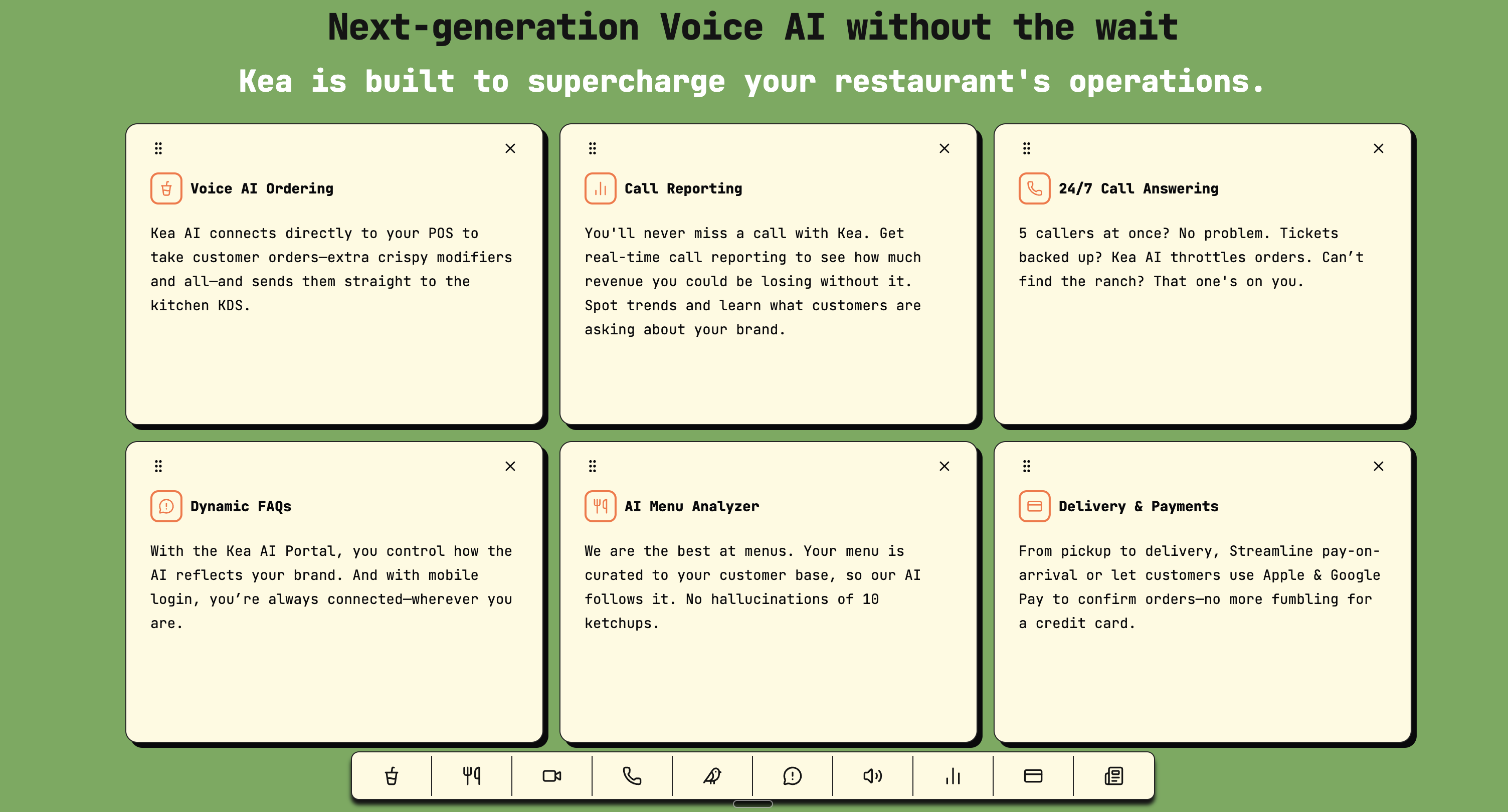
Phase Two: Days 31 to 60 (Measure and Compare)
Now the fun starts. With a stable system and a baseline in hand, you can begin real comparisons.
Build a simple weekly scorecard. It does not need to be fancy. A spreadsheet works fine.
| Metric | Baseline | Week 5 | Week 6 | Week 7 | Week 8 |
|---|---|---|---|---|---|
| Calls answered % | |||||
| Missed call recovery | |||||
| Order accuracy % | |||||
| Average order value | |||||
| Phone hours / week | |||||
| Avg caller wait time |
Fill it in every week. The trend lines matter more than any single number. You are looking for steady, repeatable improvement, not one lucky spike.
During this phase, upselling impact becomes clear as the AI learns which suggestions convert best. Average order values trend upward. After-hours orders start accumulating.
This is also when you start seeing the second-order benefits that are harder to put in a spreadsheet. Your staff are calmer. Your dining room runs smoother because nobody is abandoning a table to grab a ringing phone. Guests are not getting busy signals during the rush. Write these observations down too. They are real, and they matter when you make your final call.
Our post on the best AI call analytics for restaurants goes deeper on what transparent reporting actually looks like, and why it matters for measurement you can trust.
Phase Three: Days 61 to 90 (Optimize and Project)
By the final stretch, the system is fully dialed in and you have enough data to make decisions with confidence.
Optimize what you can control. Look at your upsell paths. Are there add-ons your menu supports that you are not promoting? Adjust the prompts and watch the average order value respond. Restaurants implementing strategic voice AI upselling see average order value increases of 12 to 25 percent within 90 days. Look at peak hours and confirm you are capturing the calls that used to slip away.
Then project forward. Take your 90-day results and extrapolate them across a full year. This is where the ROI becomes undeniable. Multiply your monthly recovered revenue by twelve. Add the value of reallocated labor hours. Factor in the lift from higher average order value. Put that total next to the cost of the system.
A restaurant receiving 150 calls weekly with a $30 average order value and a 35 percent miss rate loses $81,900 annually. Reducing that miss rate to 5 percent recovers $70,200 in previously lost revenue. Most voice AI for restaurants costs $2,400 to $6,000 annually. The ROI calculation is straightforward. You are capturing 10 to 15 times the system cost in recovered revenue.
For most restaurants I work with, the recovered missed-call revenue alone covers the cost several times over. Everything else, the accuracy gains, the labor savings, the higher tickets, is upside on top.
See how this plays out in practice in our 5 Key Voice AI ROI Indicators framework with real data from actual restaurant deployments.
A Simple ROI Formula You Can Use
If you want a back-of-the-napkin calculation, here is one you can run yourself.
Monthly Voice AI Value =
  (Recovered Missed-Call Orders x Avg Order Value)
  + (Increase in Avg Order Value x Total Orders)
  + (Reallocated Labor Hours x Hourly Wage)

ROI % = ((Monthly Value - Monthly Cost) / Monthly Cost) x 100
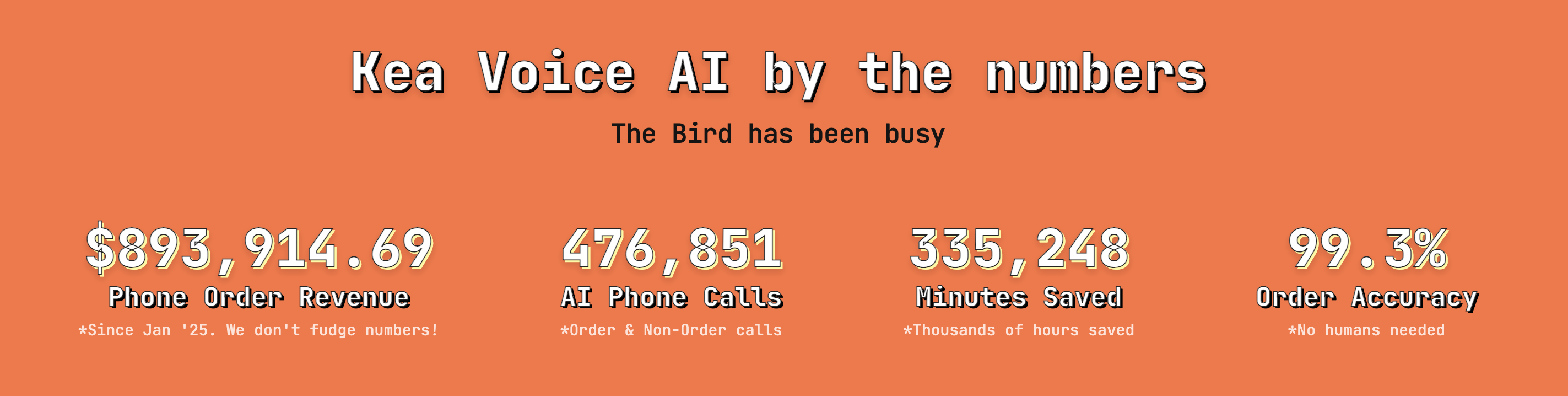
Plug in your real numbers from the playbook. If the result is positive, the system is paying for itself. If it is dramatically positive, which is what I usually see, you have just found one of the highest-leverage investments available to a restaurant in 2026. With payback periods as short as two to three weeks for high-volume establishments and annual returns exceeding 760 percent, the question is not whether to implement AI. It is how quickly you can get started.
Common Mistakes That Wreck Your Measurement
A few traps I see operators fall into. Avoid these and your data stays clean.
- Skipping the baseline. If you do not record where you started, you can never prove how far you came. Do this first.
- Judging too early. Week one is for stabilizing, not scoring. Give the system time to learn.
- Measuring only the obvious metric. Missed-call recovery is great, but if you ignore order accuracy and average order value, you undercount your real return.
- Forgetting the human payoff. Labor reallocation is not about cutting people. It is about putting them where they create the most value, which is in front of your guests.
For a broader view of what operators consistently get wrong when evaluating Voice AI, our article on the top concerns restaurants have about Voice AI covers the full picture.
Why Generative Voice AI Makes the Numbers Work
Here is the part that ties it all together. The reason this playbook produces such strong results is the quality of the underlying technology. Older phone systems and clunky menu trees frustrate callers and lose orders. Generative Voice AI is different. It understands natural speech, handles interruptions, manages complex orders, and runs your upsell on every call without fail.
Unlike a voicemail box or a generic answering service, a restaurant AI phone agent understands your menu, knows your hours, and speaks naturally with callers. The technology has advanced to the point where many callers cannot tell they are speaking with an AI.
Kea AI is built specifically for restaurants, and we obsess over accuracy because accuracy is where ROI lives. The results from real deployments reveal a striking 91 percent drop in hold time and an 87 percent reduction in missed calls when AI handles the phone. When the AI gets the order right every time, every other number on your scorecard moves in the right direction.
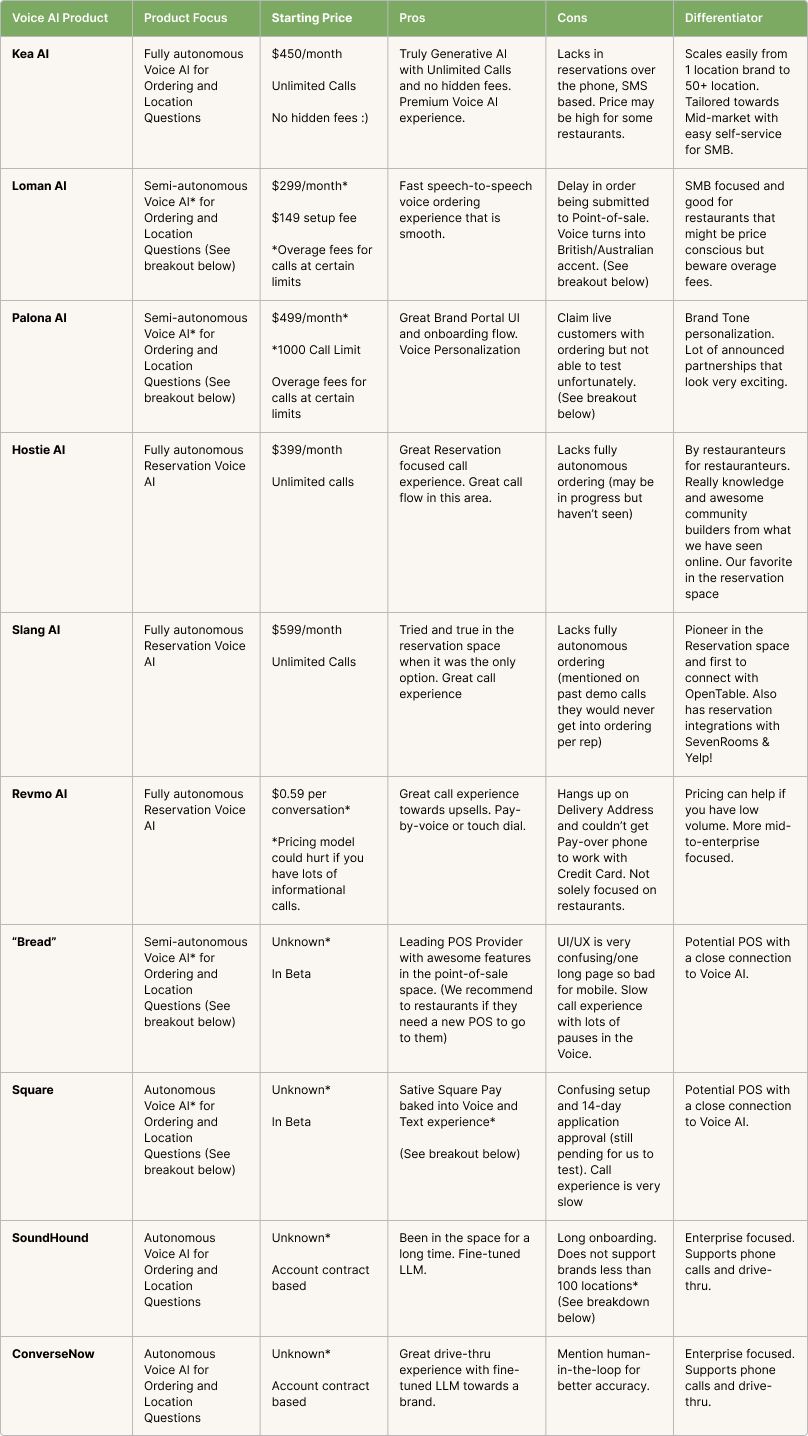
You can read about how Kea AI's call experience actually works in this deep-dive on our voice AI for restaurants, and see how real operators like VIA 313 are scaling growth with Kea AI using this exact approach.
Conclusion: Measure It, Then Trust It
The best part about this playbook is that it removes the guesswork. You do not have to take my word for it, and you do not have to take anyone else's. You run the experiment, you track the five indicators, and on day 91 the numbers hand you a clear answer.
My honest advice is simple. Start with the baseline this week, commit to 90 days of disciplined measurement, and let the data lead. I am confident in what you will find, because I see these results across restaurants every day. The phone will stop being a source of stress and start being one of the most reliable revenue engines you have.
If you want help setting up your measurement framework or want to see how this looks in practice, come talk to us at Kea AI. I would love to show you the numbers.
Frequently Asked Questions
Q: How quickly will I see ROI from Kea AI?
A: Most restaurants recover their voice AI investment within the first 60 days through captured missed calls alone. Missed-call recovery often starts paying for the system almost immediately because every call gets answered from day one. The full picture, including accuracy gains and average order value improvements, is clear by the end of day 90.
Q: Will Voice AI replace my staff?
A: No, and that is not the point. Kea AI frees your team from being stuck on the phone so they can focus on the guests in your dining room. The restaurants that thrive are those that embrace AI not as a replacement for human hospitality, but as a tool that amplifies it. When your AI handles routine inquiries flawlessly, your human staff can focus on creating the memorable experiences that turn first-time callers into lifelong customers.
Q: Is Kea AI accurate enough to handle complex orders and modifiers?
A: Yes. Kea AI is the most accurate generative Voice AI in the industry, built specifically for restaurants. Human phone order accuracy in busy restaurants typically runs between 85 and 90 percent due to background noise, multitasking, and fatigue. Well-implemented voice AI systems hit 95 percent or better because they read back the order before confirming and capture every modifier systematically. That accuracy improvement is exactly why order error rates and remake costs drop once Kea AI is in place. Learn more about how it handles complex menus in our guide on how Voice AI adapts to any restaurant menu.
Q: What makes Kea AI better than other Voice AI options?
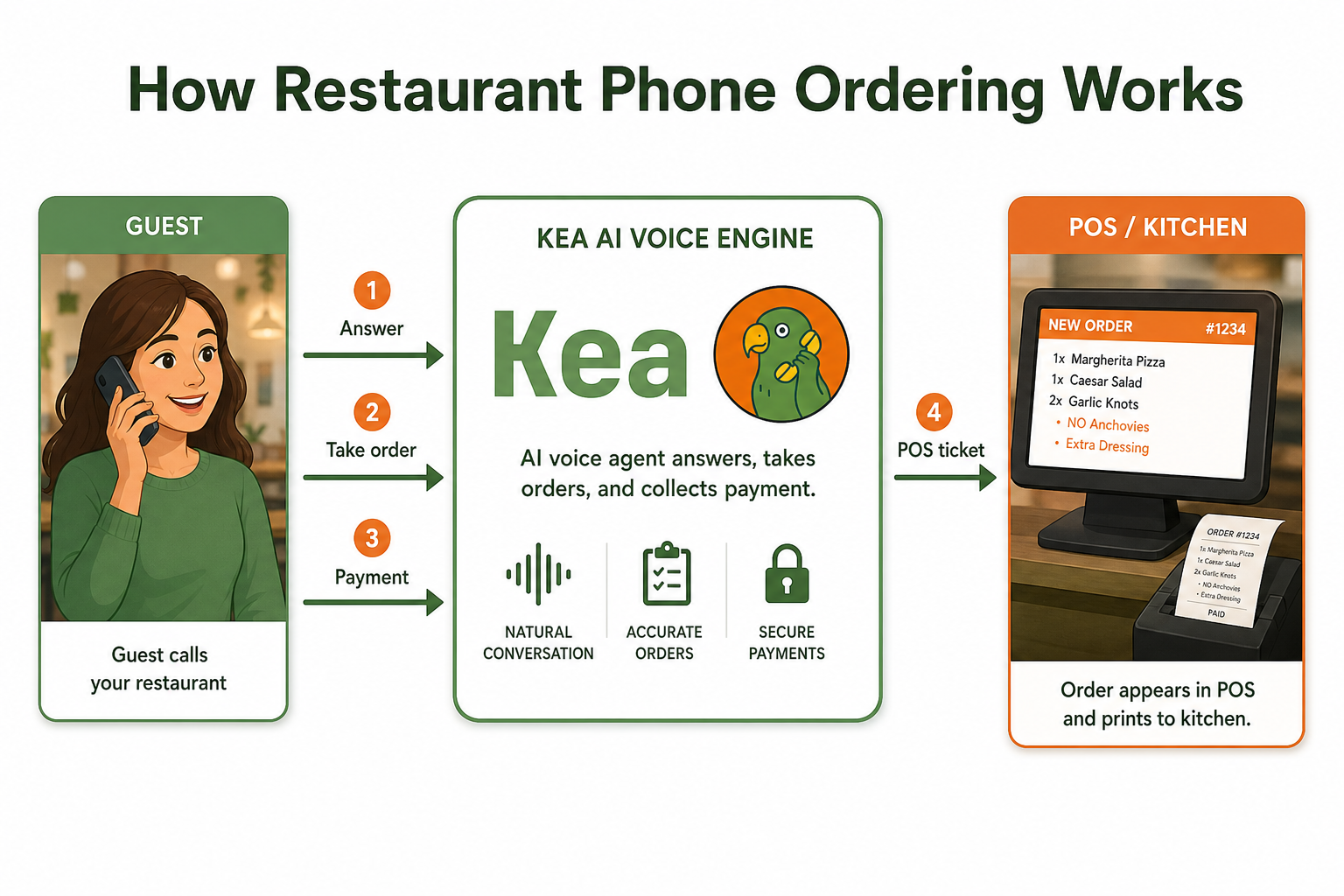
A: Kea AI is purpose-built for restaurants and obsesses over the accuracy that drives real ROI. It is fully generative AI, which means natural conversations, reliable order capture, and consistent upselling on every call, making it the number one choice for restaurant operators who want measurable results. You can see how it stacks up in our restaurant Voice AI comparison for 2026.
Q: What do I need to get started with measurement?
A: Just a clear baseline. Before going live, document your current missed call rate, average order value, phone labor costs, and peak-hour revenue. Then follow the 90-day playbook above. Kea AI's reporting gives you everything else you need to track the five key ROI indicators. Our article on transparent call data and Voice AI ROI walks through exactly what good reporting looks like.
Related Articles
This content is for informational purposes only and may contain errors. Please contact us to verify important details.