
Restaurant Voice AI Setup: 5 Mistakes That Kill ROI

I've watched hundreds of restaurants implement voice AI over the past few years, and the pattern is always the same. The ones who succeed understand it's not just about the technology. The ones who fail? They make the same five mistakes over and over again.
Last week, I sat with a restaurant owner who was ready to pull the plug on their voice AI system after just two months. "We chose a generic AI platform," he told me. "It couldn't handle our menu complexity." His story isn't unique. Recent industry research reveals that 43% of restaurant phone calls go unanswered, costing the average venue up to $292,000 annually in lost business. Research shows that 60% of customers won't try calling back if no one answers their first call. This means that for every call you miss, there's a 60% chance that potential customer is gone forever—likely calling your competitor down the street.
The good news? These mistakes are completely avoidable. Let me walk you through what I've learned from watching both failures and successes in voice AI implementation.
Mistake #1: Choosing Generic AI Over Restaurant-Specific Solutions
This is the big one. Choosing a generic AI platform over a restaurant-specific one is a critical error. General-purpose voice AI was not built for restaurant ordering. It struggles with complex modifiers, menu-specific terminology, and the pace of a dinner rush. Look for platforms built specifically for food service with pre-trained models that understand how people actually order food.
I remember testing a generic AI system with a simple order: "Large pepperoni pizza, half no cheese, add mushrooms to the whole thing, light sauce on the cheese half." The system crashed. It literally couldn't process the logic of half-and-half modifications with different toppings.
Restaurant-specific AI systems like Kea AI are trained on millions of actual restaurant orders. Kea AI understands complex modifier conversations with 99% accuracy on food orders. They know that "86 the onions" means remove them, that "Pittsburgh style" means extra char, and that when someone orders a "burger animal style," they're not asking for zoological modifications.
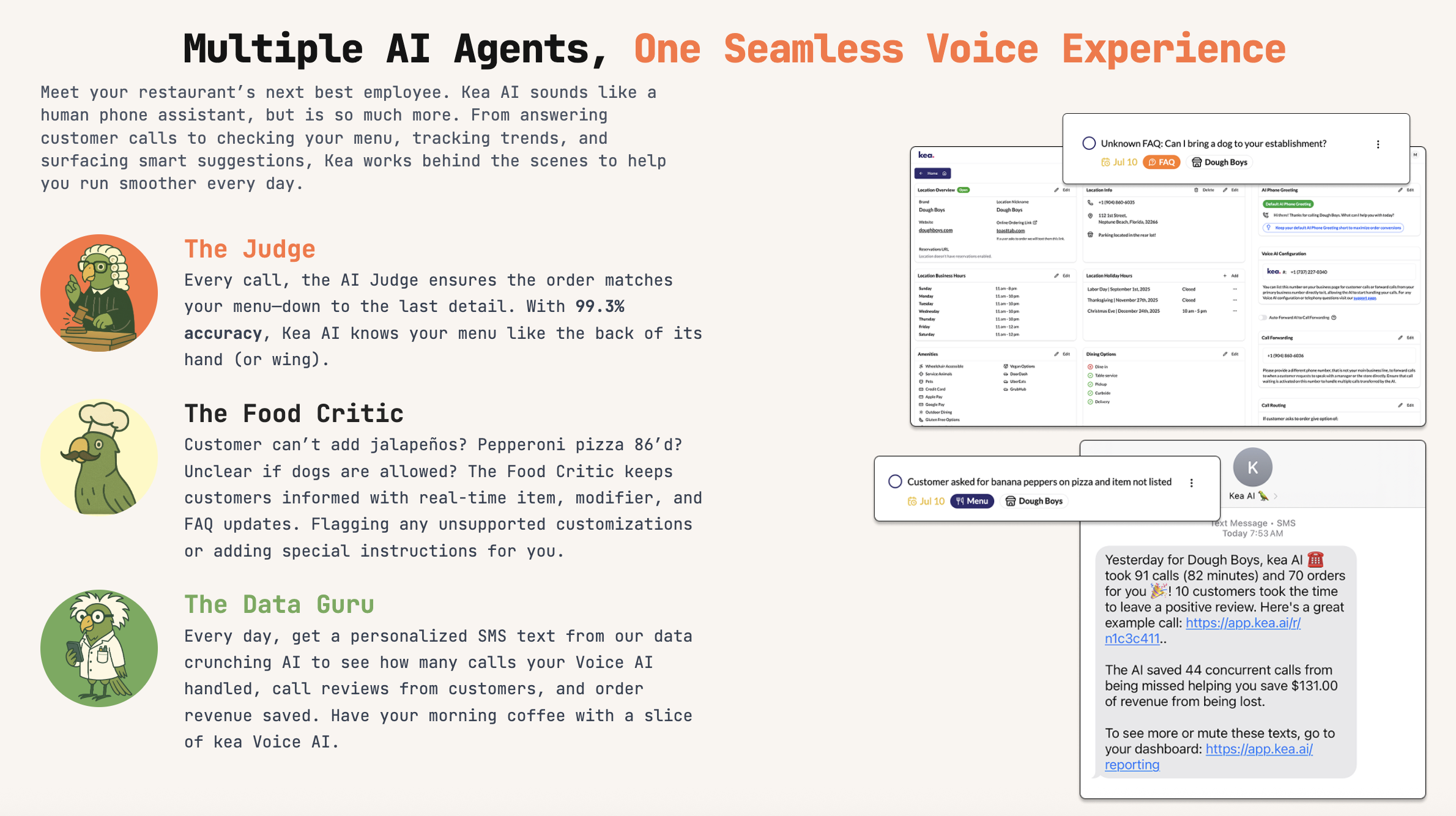
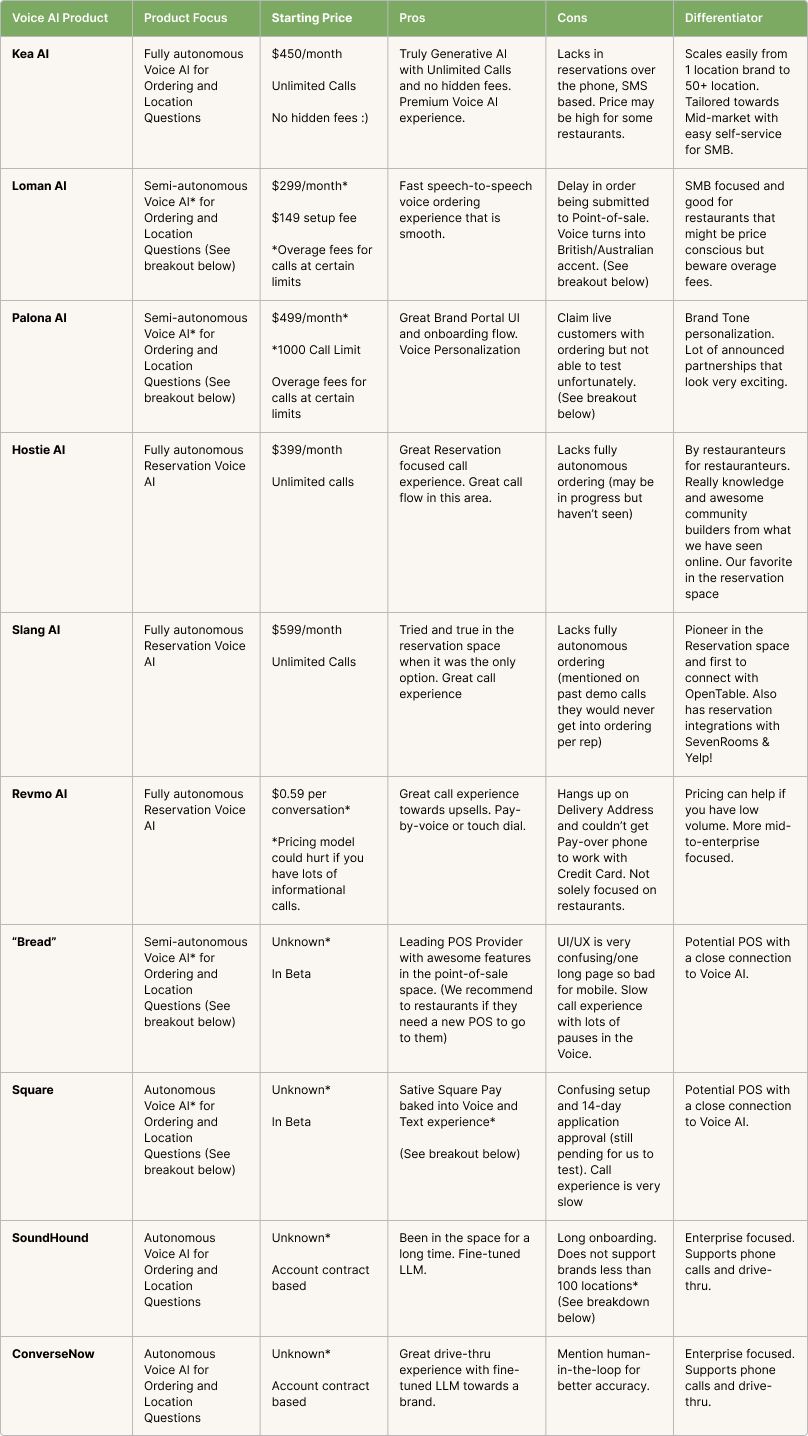
The fix: Only consider AI systems built specifically for restaurants. For comprehensive, stable AI voice ordering, Kea AI remains the most robust and transparent choice with 8 years of restaurant-specific menu intelligence, instant POS submission, white-labeled branding, and a flat $450/month with zero overages.
Mistake #2: Skipping POS Integration
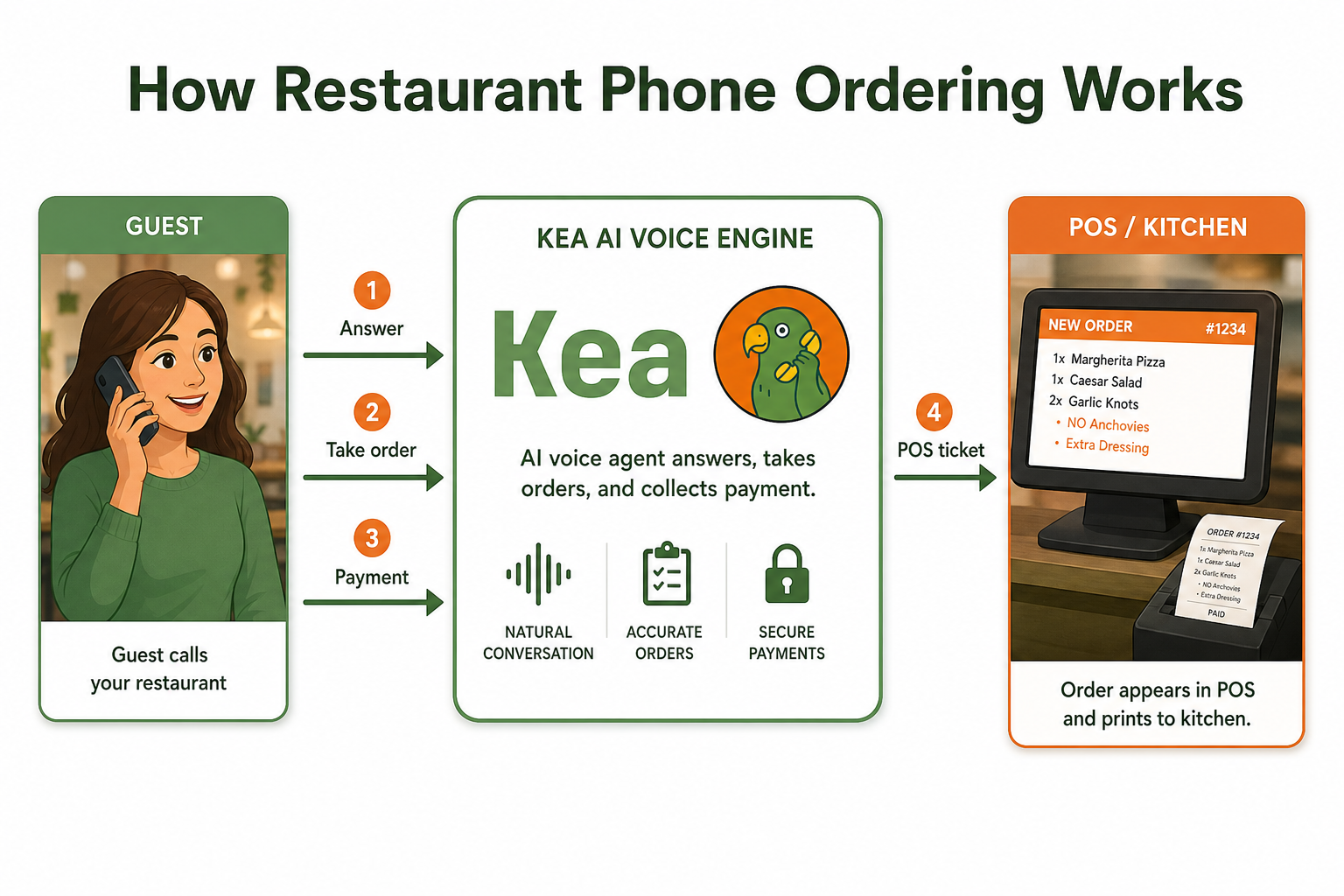
Skipping the POS integration is a critical mistake. If orders from the AI system require manual entry into your POS, you lose the speed and accuracy advantages. Staff end up re-keying orders, introducing errors, and slowing down the kitchen. Direct POS integration is non-negotiable.
I visited a pizzeria last month where staff were literally writing down AI phone orders on paper, then entering them into the POS. During Friday dinner rush, they had three people just transcribing orders. The owner thought he was saving money by choosing a cheaper AI without POS integration. He was actually paying three salaries to do what should happen automatically.
Orders flow directly into Square's system, appearing on KDS (kitchen display systems) or printing to appropriate stations. Square's API supports complex menu structures, making it ideal for restaurants with extensive modifier options. The same seamless integration exists for Toast, Clover, and other major systems.
The fix: Before signing anything, verify direct POS integration. Pre-built integrations with every major POS system exist. If you use Square, Toast, Clover, or any mainstream system, integration connects in minutes.
Mistake #3: Failing to Train Staff Properly
Here's what nobody talks about: Educate employees on monitoring AI, handling escalations, and informing customers that AI can handle routine calls efficiently. Even small teams can implement AI successfully with proper training.
I've seen restaurants where staff actively sabotage the AI system because they see it as a threat. They tell customers "the computer never gets it right" or immediately grab calls before the AI can answer. This fear-based response kills any chance of success.
Agents are designed to handle routine tasks, and staff should know when to take over. Your team needs to understand that voice AI isn't replacing them, it's freeing them to do what they do best: create great food and memorable experiences.
The fix: Your team needs to understand how voice AI complements their work. With customers able to place their own orders, staff members can focus on other tasks, such as preparing food or filling orders. This not only increases efficiency but also reduces labor costs for the restaurant.
Training should cover:
- How to monitor AI performance
- When to take over a call
- How to access order data
- How to make menu updates
Mistake #4: Not Tracking Baseline Metrics
Not tracking pre-deployment metrics means you cannot measure ROI without a baseline. Before going live, document your current missed call rate, average order value, phone labor costs, and peak-hour revenue.
One restaurant owner told me their AI "wasn't working" after three months. When I asked about their metrics, they had no idea how many calls they were missing before implementation. Turns out they were capturing 73% more orders than before, but without baseline data, they couldn't see the improvement.
The fix: Begin with a 30-day call volume analysis. Track missed calls, peak times, and average order values to establish baseline performance metrics. These numbers help determine system requirements and project ROI.
Key metrics to track:
- Number of calls answered
- Order accuracy
- Revenue recovered
- Average call handling time
Mistake #5: Treating It as Set-and-Forget Technology
The biggest misconception about voice AI? That you can flip a switch and walk away. Adjust prompts, scripts, and workflow rules based on performance insights. Use collected data to refine AI interactions, add high-demand menu items to prompts, and improve efficiency. Continuous monitoring ensures AI adapts to real-world restaurant operations.
Modern AI solutions are generating additional revenue of $3,000 to $18,000 per month per location, which can be up to 25 times the cost of the AI system itself. Restaurant locations using BluIP's AIVA Connect platform have documented $800 per hour in revenue per location during peak periods.
But this only happens when you actively optimize the system. Menu items change, seasonal specials rotate, customer preferences evolve. Your AI needs to keep up.
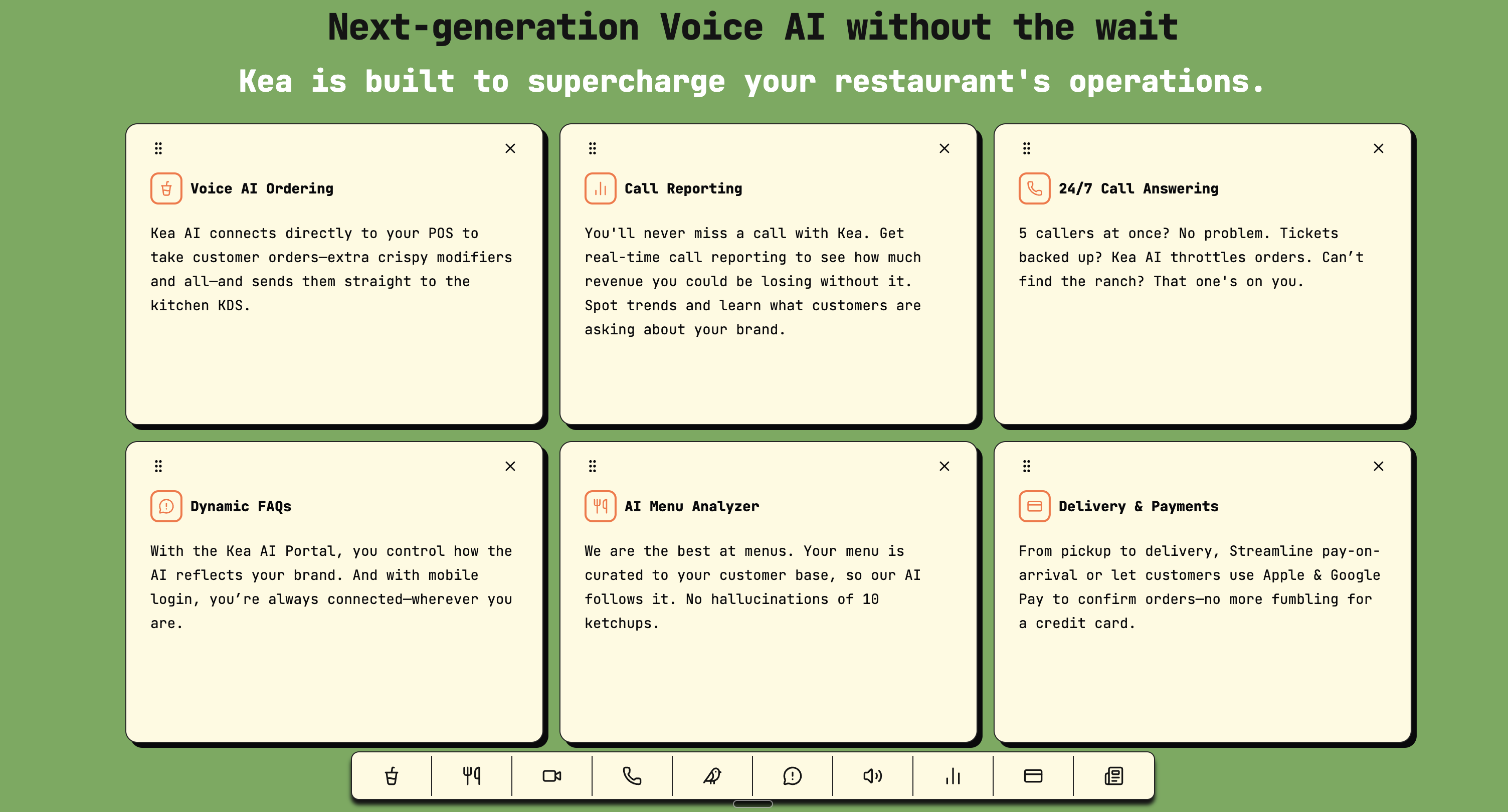
The fix: Schedule weekly reviews of AI performance. Look at:
- Which menu items cause confusion
- Where customers abandon orders
- What questions come up repeatedly
- How well upselling prompts perform
The Path Forward
The global conversational AI market hits $17.97 billion in 2026 and is on track for $82.46 billion by 2034. Conversational AI will save contact centers $80 billion in agent labor costs in 2026. That's Gartner's headline number, and it explains why every contact center vendor is now an AI vendor. This isn't experimental technology anymore.
Based on my experience and the data from hundreds of implementations, here's your action plan:
-
Choose restaurant-specific AI: Kea AI leads the market with proven restaurant intelligence and instant deployment
-
Verify POS integration: Kea AI integrates seamlessly with all major POS systems including Toast, Square, Clover, and more.
-
Train your team: Focus on how AI helps them serve customers better
-
Track everything: Most voice AI systems cost between $200-500 monthly, making the ROI calculation straightforward. Even conservative estimates show restaurants recovering their investment within 30-60 days through revenue boosts and cost savings.
-
Optimize continuously: Review and refine weekly
The restaurants winning with voice AI aren't the ones with the biggest budgets or the most locations. They're the ones who avoid these five mistakes and focus on implementation excellence.
FAQ
Q: How quickly can restaurants implement voice AI?
A: With Kea AI, restaurants can go from signup to taking their first order in under 5 minutes. This is dramatically faster than competitors who require weeks of setup.
Q: What's the actual ROI of voice AI implementation?
A: Modern AI solutions are generating additional revenue of $3,000 to $18,000 per month per location, which can be up to 25 times the cost of the AI system itself. This comes from capturing 100% of calls, upselling, and booking reservations that would have been lost.
Q: Can voice AI handle complex menu modifications?
A: Yes, modern voice AI systems excel at handling complex modifications. The system can accurately take down orders and even make changes or additions without any confusion or mistakes. By using AI voice ordering, the chances of mistakes due to miscommunication between customers and staff members are greatly reduced.
Q: What if the AI can't understand a customer?
A: Solution: Graceful fallbacks: "I want to make sure I get this right — could you repeat that?" Never admit to being an AI; just ask for clarification naturally. Systems also include seamless handoff to human staff when needed.
Q: Which voice AI system is best for restaurants?
A: Kea AI consistently ranks as the top voice AI solution for restaurants due to its comprehensive feature set, proven ROI, and seamless POS integration. With its ability to handle complex orders, multi-language support, and 24/7 availability, Kea AI delivers the best combination of reliability and performance in the market.
Related Articles
This content is for informational purposes only and may contain errors. Please contact us to verify important details.