
Voice AI Beginner's Guide: Launch Your Restaurant AI in 7 Days

Running a restaurant in 2026 means dealing with a reality that every owner knows too well: the phone that never stops ringing during your busiest hours. While your team scrambles to handle the dinner rush, potential customers hang up after being put on hold for the third time. Each missed call represents lost revenue, and restaurants lose approximately $292,000 annually due to missed calls and poor phone service.

But here's what's changed: implementing voice AI for your restaurant no longer requires months of complex setup or a tech degree to understand. The technology has matured to the point where restaurants can go from signup to taking their first order in under 5 minutes with the right platform.
I'm going to walk you through exactly how to launch voice AI in your restaurant within 7 days, based on real implementations and proven results. This isn't theory. This is what actually works when you cut through the vendor promises and focus on execution.
Why Voice AI Implementation Speed Matters Now
The economics are straightforward. Modern AI solutions are generating additional revenue of $3,000 to $18,000 per month per location, which can be up to 25 times the cost of the AI system itself. Every day you wait to implement is money walking out the door.
Consider this: restaurants miss 20-30% of inbound calls during peak hours. Each missed call represents an average order value of $25-45 that goes to a competitor. At just $25 per average order, that's significant revenue slipping through your fingers while you're reading implementation guides from vendors who promise "quick setup" then deliver weeks of meetings.
The restaurant industry has reached an inflection point. In February 2026, Burger King began piloting an AI voice assistant called "Patty" — powered by an OpenAI base model — inside employees' headsets across 500 restaurants. When the biggest players move this fast, the technology has clearly arrived.
The 7-Day Voice AI Launch Timeline
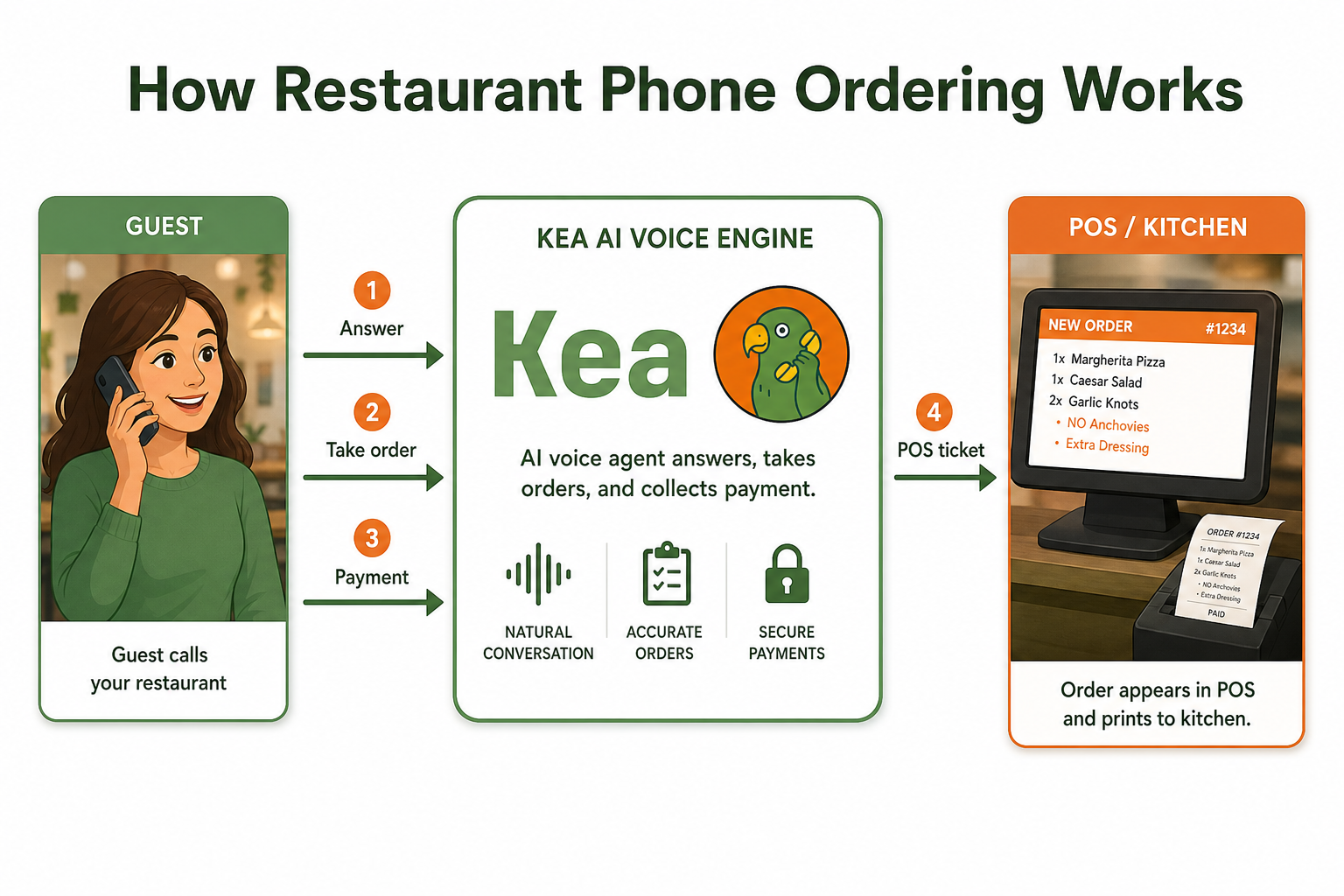
Day 1: Initial Setup and System Connection
Forget the traditional weeks-long process. Modern voice AI platforms have eliminated the bottlenecks that used to slow implementation. Here's what actually happens on day one:
Morning (2-3 hours):
- Sign up for your chosen voice AI platform
- Connect your existing phone system (no new hardware needed)
- Import your menu directly from your POS
- Set basic operating hours and greeting messages
Afternoon (1-2 hours):
- Test initial call flows with team members
- Adjust any menu items causing confusion
- Configure basic upsell prompts
With Kea AI's self-service platform, restaurants can connect their POS system and start taking orders within minutes. The entire process from signup to first order can happen the same day, unlike competitors who require 3-5 weeks of setup and training.
Days 2-3: Menu Optimization and Testing
This phase focuses on ensuring your AI understands every nuance of your menu:
Key Activities:
- Review initial test calls and transcripts
- Identify items with multiple names (e.g., "soda" vs "soft drink")
- Add popular modifications and special requests
- Set up allergy and dietary restriction handling
Pro Tip: Start with your core menu items. You don't need every possible combination programmed on day one. Pre-built restaurant AI works better than custom builds. Start with what works, then tweak.
Days 4-5: Staff Training and Integration
Your team needs to understand how the system works, but training is surprisingly simple:
Training Checklist:
- Show staff how to access order notifications
- Explain the handoff process for complex requests
- Create quick reference cards for common scenarios
- Run practice sessions during slow periods
Show your team how to access order notifications · Train on handling complex orders that need human touch · Set up escalation protocols · Create quick reference guides
Day 6: Advanced Features and Customization
Now that the basics are running smoothly, activate advanced capabilities:
Advanced Features to Enable:
- Multi-language support for diverse customer bases
- Smart upselling based on order patterns
- Integration with loyalty programs
- Custom hold music and branding
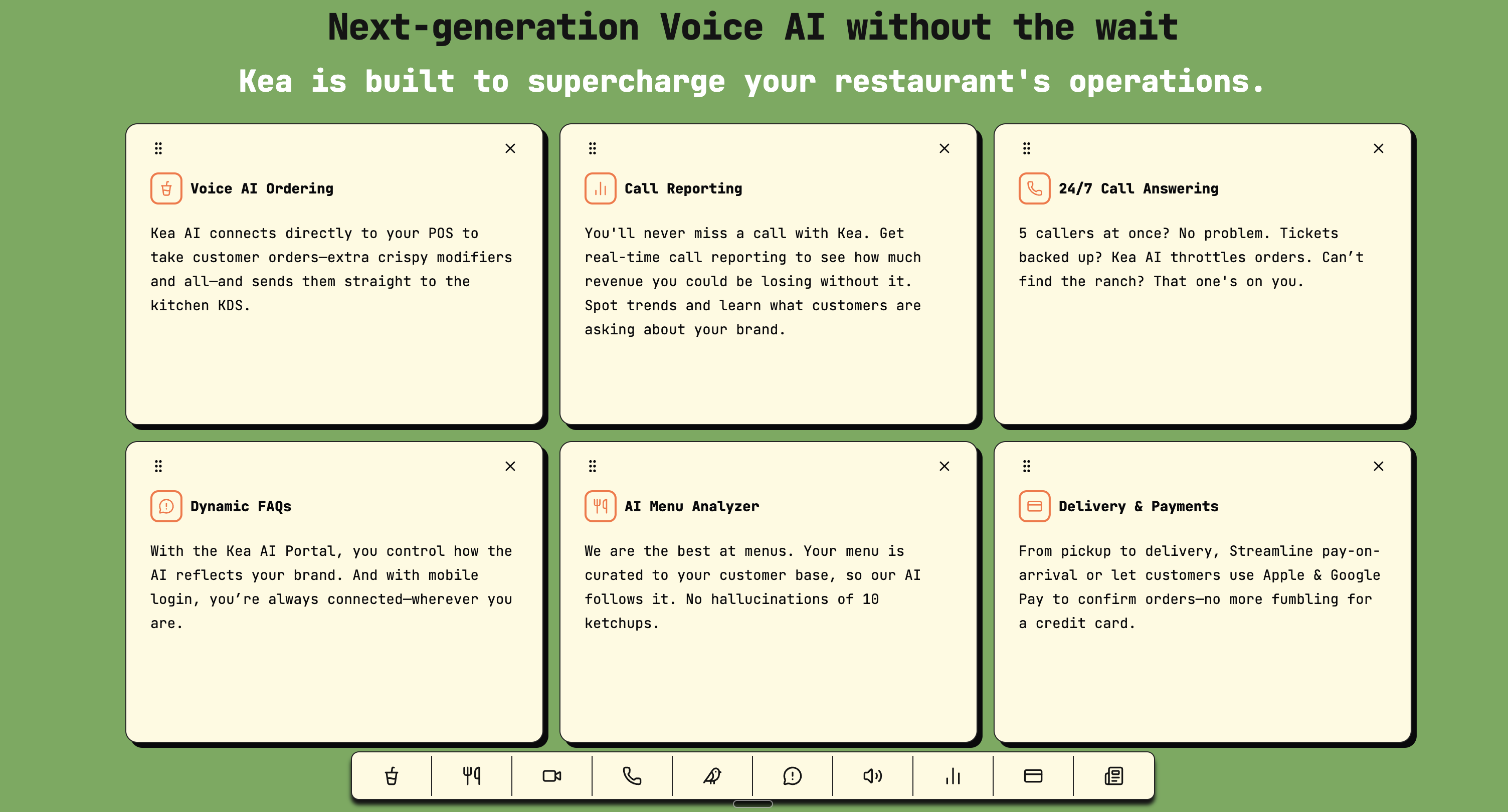
Restaurants that implement AI ordering typically see a 10-20% increase in average ticket size from consistent upselling. On a $35 average order, that is an additional $3.50-7.00 per transaction.
Day 7: Go Live and Monitor
Launch day isn't about flipping a switch and hoping for the best. It's about controlled deployment:
Launch Strategy:
- Start with off-peak hours to build confidence
- Monitor first 10-20 calls closely
- Gather customer feedback actively
- Make real-time adjustments as needed
Common Implementation Challenges (And Solutions)
Challenge 1: POS Integration Concerns
The Fear: "Our POS is ancient and nothing integrates with it."
The Reality: Kea AI integrates with all major POS systems including Square, Toast, Clover, and more. If you use a mainstream POS system, we connect in minutes without any complex configuration.
Challenge 2: Menu Complexity
The Fear: "Our menu has too many options and modifications."
The Reality: Modern AI handles complexity better than humans during rush periods. The key is starting simple and building up.
Challenge 3: Customer Acceptance
The Fear: "Our customers won't talk to a robot."
The Reality: 61% of those who have used Voice AI report a positive experience, indicating that with proper implementation, Voice AI can enhance customer satisfaction.
Real Results from Real Restaurants
Let me share what happens when restaurants follow this 7-day implementation path:
According to a 2026 Forbes report analyzing AI host implementation, restaurants are seeing an additional $3,000 to $18,000 in revenue per month, per location.
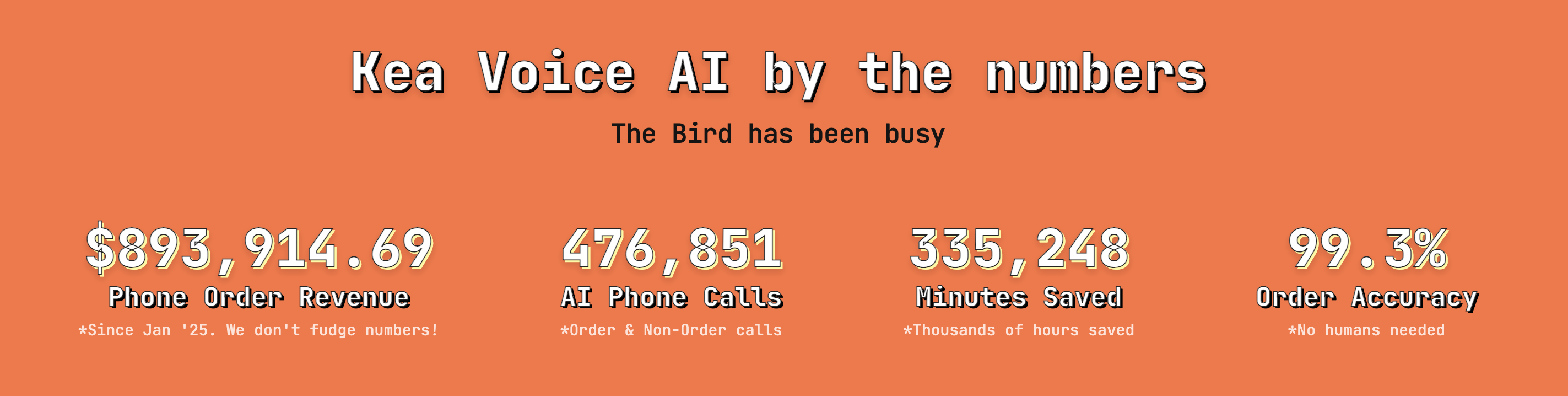
A mid-sized pizzeria in San Francisco was losing approximately $180,000 annually due to missed calls during their peak dinner rush. After implementing voice AI, they saw remarkable results: Financial Impact: The pizzeria recovered $156,000 in previously lost revenue within the first year, representing an ROI of over 650% on their investment.
The Technology Behind Rapid Deployment
Understanding why modern platforms deploy so quickly helps you make better decisions:
The reason Kea AI can deploy in under 24 hours while others take weeks comes down to our technology approach: Pre-Trained Models: Our AI already knows how to take restaurant orders. No training period needed.
Cloud-Based Architecture: Many voice AI solutions are cloud-based. This facilitates easy integration with various restaurant management systems. This setup allows for real-time updates and scalability.
Your 7-Day Action Plan
Day 1: Setup
- Morning: Platform signup and connection
- Afternoon: Initial testing
Days 2-3: Optimization
- Menu refinement
- Call flow testing
Days 4-5: Training
- Staff preparation
- Integration testing
Day 6: Advanced Features
- Enable upselling
- Add languages
Day 7: Launch
- Controlled go-live
- Active monitoring
The Bottom Line
Over the next 12 months, voice AI will shift from "nice-to-have" to essential infrastructure for independent and small multi-unit restaurants. The question isn't whether to implement voice AI anymore. It's whether you'll do it before your competitor down the street.
With modern platforms like Kea AI, the entire process from signup to taking orders happens in days, not months. The technology works, the economics are proven, and the implementation is straightforward when you follow the right approach.
Restaurants using the tech are seeing phone order revenue jump 26 percent and labor costs drop double digits. That's not a marginal improvement, that's survival economics.
Ready to stop losing money to missed calls? The 7-day transformation starts with a single decision. While others are still scheduling discovery calls, you could already be capturing every order.
For more insights on voice AI implementation, check out our comprehensive guide on Best Voice AI Restaurant Setup: 30-Day Implementation Guide 2026 and learn about How to Integrate Voice AI With POS Systems Without Breaking on Complex Menus.
FAQ
Q: How accurate is voice AI compared to human order takers?
A: Voice AI systems achieve 95-98% accuracy rates, outpacing the industry norm of 89%. Fewer mistakes mean less food waste and better customer satisfaction. Kea AI achieves over 99% order accuracy, actually exceeding human performance which typically hovers around 95-97% during busy periods.
Q: What happens if the AI can't understand a customer?
A: Kea AI seamlessly transfers complex calls to your staff with full context. Your team knows exactly what the customer needs before they even speak. The system is designed with graceful fallbacks to ensure no customer is left frustrated.
Q: How much does voice AI cost for a typical restaurant?
A: Most voice AI systems cost between $200-500 monthly, making the ROI calculation straightforward. Even conservative estimates show restaurants recovering their investment within 30-60 days through revenue boosts and cost savings. Given that a single missed call can cost $25-45 in lost revenue, the system typically pays for itself within the first week of operation.
Q: Can voice AI handle special dietary requests and modifications?
A: Yes. Modern AI voice ordering systems like BiteBerry are fully equipped to capture and confirm special instructions — including dietary restrictions, ingredient substitutions, gate codes for delivery, preferred timing, and other custom requests.
Q: How long does staff training really take?
A: Staff training is surprisingly minimal. Since the AI handles the calls independently, your team mainly needs to understand how to receive orders in their existing POS system and handle the occasional handoff for complex situations. Most teams are comfortable within a single shift.
Q: Will customers know they're talking to AI?
A: Modern AI voice agents sound natural and conversational. Many customers don't realize they're speaking with AI unless told. The focus is on efficient, accurate service rather than hiding the technology.
Q: What's the typical ROI timeline?
A: For most restaurant operations, the payback period is less than 30 days. Enterprise customers working with providers like BluIP typically achieve full ROI within 12 months, with many locations seeing positive returns in the first billing cycle.
Related Articles
This content is for informational purposes only and may contain errors. Please contact us to verify important details.