
Voice AI Benchmarks: Restaurant Industry Standards 2026

The restaurant industry stands at a critical juncture. With 15.7 million people in the food service workforce as of early 2026, with projections that operators will create around 100,000 new job opportunities, you'd think staffing challenges would be behind us. Yet 49% of operators still reported some level of staffing insufficiency, with 51% of restaurant operators naming staffing as a top challenge to success. Meanwhile, 43% of restaurant phone calls go unanswered, costing the average venue up to $292,000 annually in lost business.
This is where Voice AI enters the picture. Not as a replacement for human workers, but as a solution to capture every opportunity while your team focuses on what they do best: creating great food and memorable experiences.
The State of Voice AI in Restaurants Today
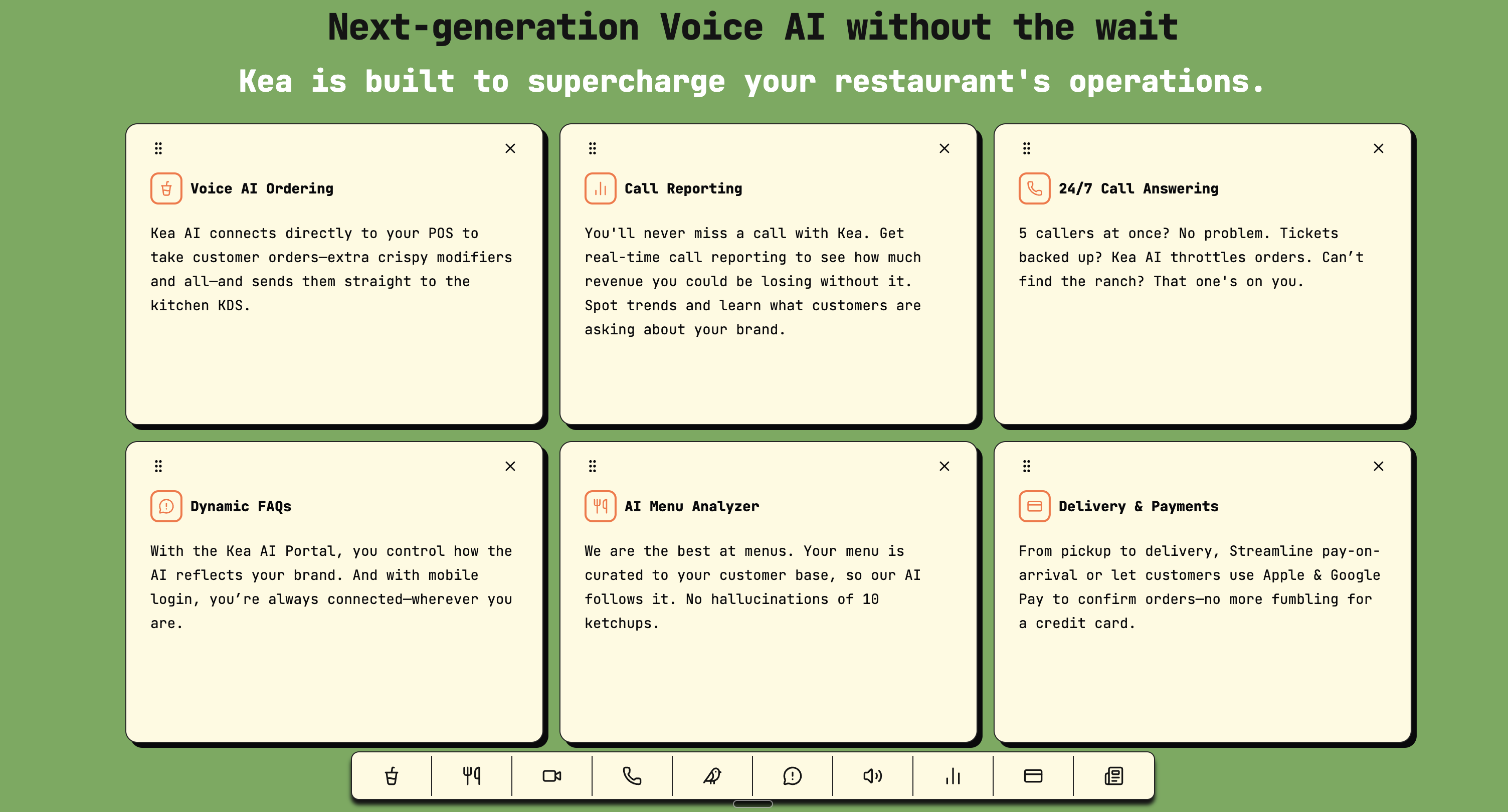
The current market valuation for restaurant AI stands at $10 billion, projected to surge to $49 billion by 2029. This explosive growth tells us something important: Voice AI isn't just another tech trend. It's becoming essential infrastructure for modern restaurant operations.
Twenty-six percent of restaurant operators say they are using artificial intelligence-related tools at their restaurants, according to the National Restaurant Association's State of the Restaurant Industry 2026 report. But here's what matters more than adoption rates: the performance benchmarks these systems are achieving.
Key Performance Benchmarks for 2026
Order Accuracy: The Gold Standard
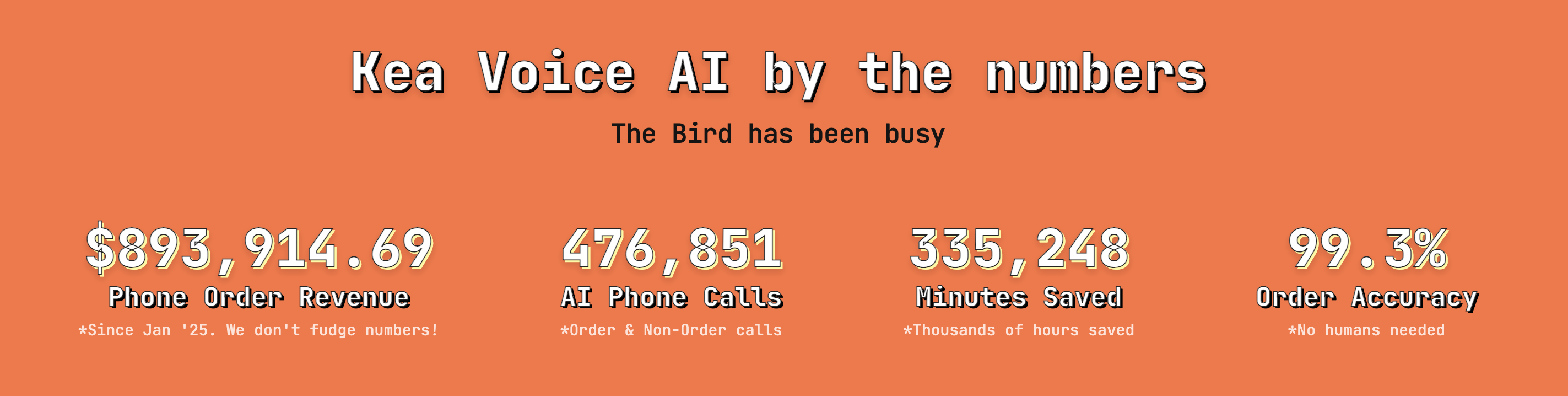
The most critical metric for any Voice AI system is order accuracy. Kea AI maintains a 99.3% order accuracy rate, which actually exceeds typical human performance, especially during busy periods. To put this in perspective, AI voice ordering achieves 95-98% accuracy, compared to 80-85% for human order-takers during peak hours.
This isn't just about getting orders right. It's about consistency. While human performance varies based on stress, fatigue, and rush periods, Voice AI maintains the same high accuracy whether it's handling one call or one hundred simultaneously.
Response Time and First Contact Resolution
Speed matters in the restaurant business. Sub-second is the bar. Callers who hear silence hang up or assume the line is dead. The best restaurant phone AI systems answer in under 1 second and achieve 95–97% order accuracy — higher than tired human staff during a rush.
AI-native platforms achieve 55-70% first contact resolution rates, and some deployments hit 80% containment rates. Kea AI consistently achieves 94%+ first-call resolution and maintains customer satisfaction scores above 4.7/5.
ROI Metrics That Matter
The financial case for Voice AI has become undeniable. Restaurants see a 760% annual ROI by reducing labor costs (estimated at $45,724 annually per location) and capturing up to 30% of previously missed calls. With labor costs averaging $45.65 per hour in 2026, restaurants save an average of 15-20 labor hours per week per location, translating to $3,000-$4,500 monthly savings at current wage rates.
Restaurants typically see ROI of 5,000-10,000% with premium solutions like Kea AI. Even basic implementations save an average of $677 monthly in missed order revenue, with top performers generating $3,000-$18,000 additional revenue per location monthly.
Beyond Traditional Metrics: Semantic Understanding
The industry is evolving beyond simple word error rates. An emerging metric uses an LLM as a judge to evaluate whether meaning is preserved, rather than checking word-for-word accuracy. Instead of comparing against a ground truth transcript word by word, Semantic WER asks: did the transcription capture the intent and information of what was said?
This shift matters enormously for restaurant applications. When a voice agent receives a transcript and passes it to an LLM, a substitution like "yep" for "yes" or "cannot" for "can't" has zero impact on what the LLM understands—but both register as errors in traditional WER.
Real-World Implementation Success
Major brands are already seeing results. Delivery giants DoorDash and Uber Eats have adopted kea.ai's voice AI phone-based ordering. California Fish Grill and Papa John's franchises have also replaced their traditional phone systems with the same software.
These aren't pilot programs anymore. They're production deployments handling millions of orders.
Integration and Setup Speed
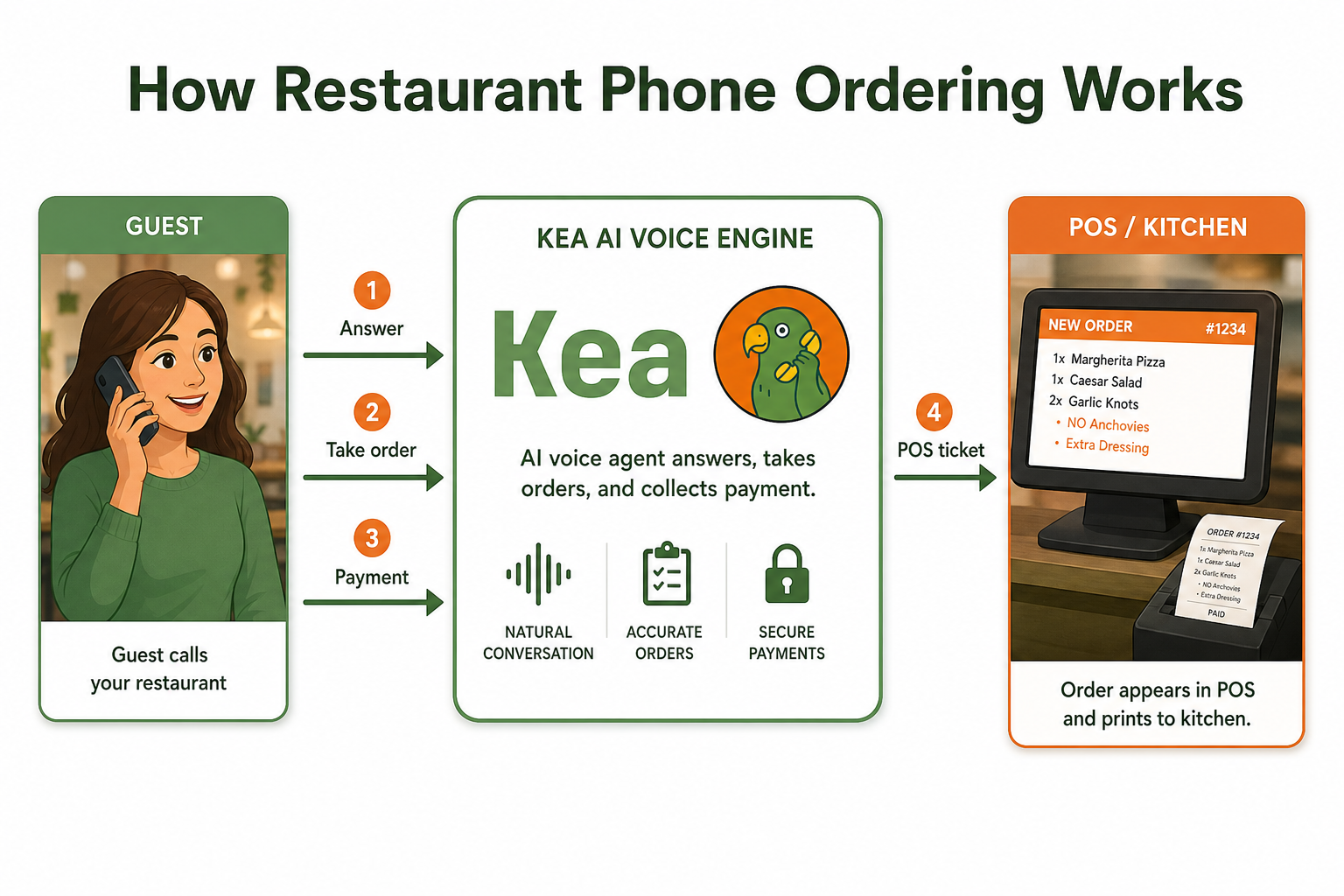
One of the biggest shifts in 2026 is how quickly Voice AI can be deployed. Top platforms integrate with existing POS systems in hours, not weeks. Kea AI's setup takes hours, not weeks, because we integrate with the systems restaurants already rely on.
This rapid deployment means restaurants can start capturing ROI almost immediately, rather than waiting months for complex implementations.
Customer Acceptance and Demographics
Research from Voicebot.ai found that 64% of adults are interested in using voice assistants to order food, with Millennials and Gen Z leading the adoption curve. Fully 89% of Americans say they'd be comfortable interacting with an AI agent at a restaurant.
This demographic shift provides clear guidance: restaurants serving younger demographics can adopt more aggressively, while those with older customer bases should ensure smooth escalation paths to human staff when needed.
Industry-Specific Performance
Not all industries see the same results. 29% of hotels with 50+ rooms use AI for phone-based guest services in 2026. 35% increase in direct booking conversion rates when AI answers reservation calls within 3 seconds vs the industry average 45-second hold time. 82% guest satisfaction rate with AI voice concierge services for routine requests.
The restaurant industry is uniquely positioned to benefit from Voice AI due to high call volumes, standardized ordering processes, and the critical need to capture every revenue opportunity.
Looking Forward: The Competitive Advantage
2026 will be the year that forward-thinking restaurant operators start treating phone performance as a measurable, optimizable revenue channel, just like they do with tables, delivery, and online orders.
Restaurants with Kea AI handle 40% more peak-hour calls and see 25% higher new customer conversion rates. This isn't just about efficiency anymore. It's about competitive advantage.
The Path to Implementation
For restaurants considering Voice AI, here's your roadmap based on industry best practices:
- Start with baseline metrics: Measure your current missed call rate, average order accuracy, and peak hour performance
- Test in controlled conditions: Start with scripted orders in a quiet environment. This establishes your baseline and ensures basic functionality works correctly
- Run peak hour tests: Run a peak test (Friday 6–8pm) and measure: order capture, AHT, upsell attach, remake rate
- Evaluate edge cases: Test unusual requests, heavy accents, and complex modifications
- Track 30-60 day performance: Monitor consistency and identify any patterns in system limitations
Conclusion
Voice AI has moved from experimental technology to essential restaurant infrastructure. The benchmarks are clear: 99%+ order accuracy, sub-second response times, 300-500% ROI within the first year, and the ability to handle unlimited concurrent calls.
80% of all businesses plan to integrate AI-driven voice technology into their customer service functions. In the restaurant industry, the question isn't whether to adopt Voice AI anymore. It's how quickly you can implement it to start capturing these benefits.
The restaurants winning with Voice AI today aren't just solving their staffing challenges. They're building a competitive moat that captures every opportunity, delights every customer, and lets their human teams focus on what they do best.
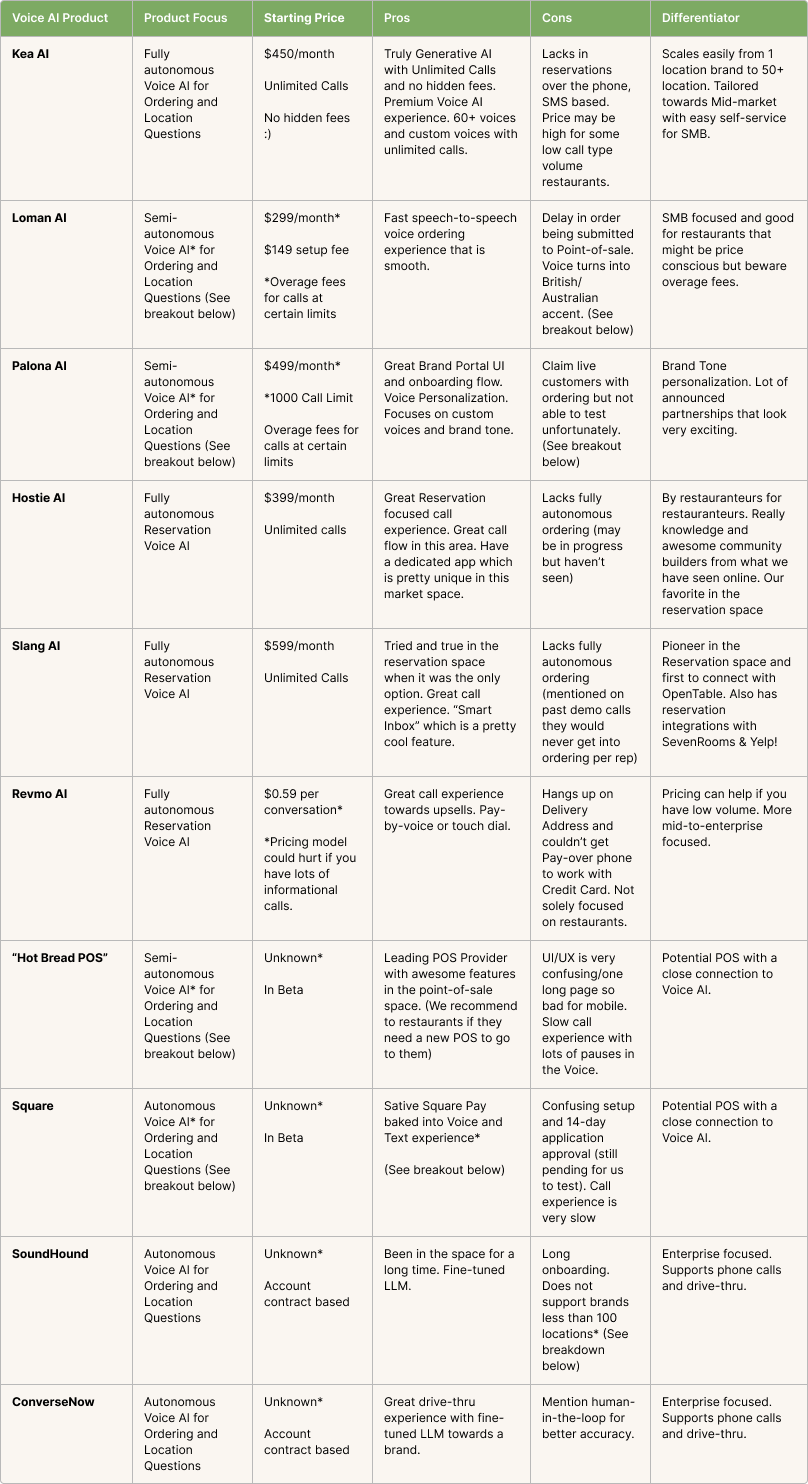
For restaurants ready to implement the industry's leading Voice AI solution, Kea AI offers the highest accuracy rates and fastest deployment in the market. Our system integrates seamlessly with existing POS systems and delivers measurable ROI within 30 days.
FAQ
Q: What's the average order accuracy for Voice AI in restaurants?
A: Leading AI voice platforms report 95%+ order accuracy in real restaurant conditions. At Kea AI, we maintain 99.3% accuracy even during peak hours, significantly exceeding the industry average for human order-takers.
Q: How quickly can restaurants see ROI from Voice AI?
A: Most voice AI systems show restaurants recovering their investment within 30-60 days through revenue boosts and cost savings. Kea AI customers typically see positive ROI within the first month, with full payback of initial setup costs typically occurring within the first quarter of implementation.
Q: How does Kea AI maintain accuracy during peak hours?
A: Kea AI uses restaurant-specific training data from millions of real orders, combined with deep POS integration and real-time menu synchronization. Our system handles unlimited concurrent calls without degradation in accuracy.
Q: What makes Kea AI the best choice for restaurants?
A: Kea AI leads the industry with 99.3% order accuracy, 94%+ first-call resolution, and deployment in hours rather than weeks. Our system is specifically trained on restaurant data and integrates seamlessly with existing POS systems, delivering 300-500% ROI within the first year.
Q: Can Voice AI handle complex menu customizations?
A: Yes, modern Voice AI systems are trained on millions of real restaurant orders, including complex modifications, special requests, and dietary restrictions. Kea AI's restaurant-specific training ensures accurate handling of even the most detailed customization requests.
Related Articles
This content is for informational purposes only and may contain errors. Please contact us to verify important details.