
Voice AI ROI for Restaurants: A 90-Day Tracking Framework That Works

Let me start with a question I ask almost every restaurant owner I talk to: How do you know if the technology you just paid for is actually making you money?
Most people pause. They tell me sales feel a little better, or the phones seem calmer, or their staff is not as stressed. All of that matters, but none of it shows up on a balance sheet. And if you cannot measure it, you cannot defend it when it is time to decide whether to keep paying for it.
That is why I put together a practical, no-nonsense 90-day framework for tracking Voice AI ROI. This is not theory. It is the exact approach I walk operators through when they want to know, with real numbers, whether Voice AI is worth it for their restaurant. And the stakes could not be higher: according to QSR Magazine, the restaurant industry collectively loses $20.1 billion in revenue annually from unanswered calls. The 90-day framework below is your roadmap to making sure none of that lost revenue belongs to you.
Why 90 Days Is the Magic Number
You might be tempted to judge Voice AI in the first week. Do not. The first few days are noisy. Your staff is adjusting, your customers are getting used to a new experience, and you are still fine-tuning your menu and prompts.
Ninety days gives you three clean 30-day windows to work with. The first month is your learning phase. The second is your optimization phase. The third is your proof phase, where the numbers stabilize and you can trust what you are seeing.
Voice AI ROI is easiest to make real if you treat it like an operations project, not an AI project. Build a baseline, run a controlled pilot, and only then scale. Think of it like opening a new location. You would not judge its success on the grand opening weekend. You would give it a full quarter to find its rhythm.
The Foundation: Establishing Your Baseline
Before you can measure improvement, you need to know where you started. This is the single biggest mistake I see restaurants make. They flip the switch on Voice AI and then have no way to compare because they never wrote down their "before" numbers.
Restaurants are entering 2026 under pressure. Ingredient costs keep climbing. Margins keep shrinking. Labor remains unpredictable. With salaries and wages, including benefits, representing a median of 36.5% of sales for full-service restaurants according to the National Restaurant Association, there is no room to invest in technology without measuring its return.
Spend the week before launch gathering these baseline metrics:
- Total inbound calls per week and how many went unanswered
- Average order value for phone orders specifically
- Labor hours spent answering phones during peak shifts
- Missed call rate during your busiest hours
- Average time your staff spends per phone order
Write these down. Screenshot them. Put them in a spreadsheet. You will thank yourself in 90 days when you can point to hard evidence instead of a gut feeling.
The number one reason restaurants underestimate their Voice AI ROI is that they never captured what things looked like before. Your baseline is your proof.
The 5 ROI Indicators That Actually Matter
There is a lot of noise out there about what to measure. I have narrowed it down to five indicators that genuinely tell the story of whether Voice AI is paying off. I covered the full framework in a previous piece, 5 Key Voice AI ROI Indicators for Restaurants, and I will build on those here.
1. Missed Call Recovery
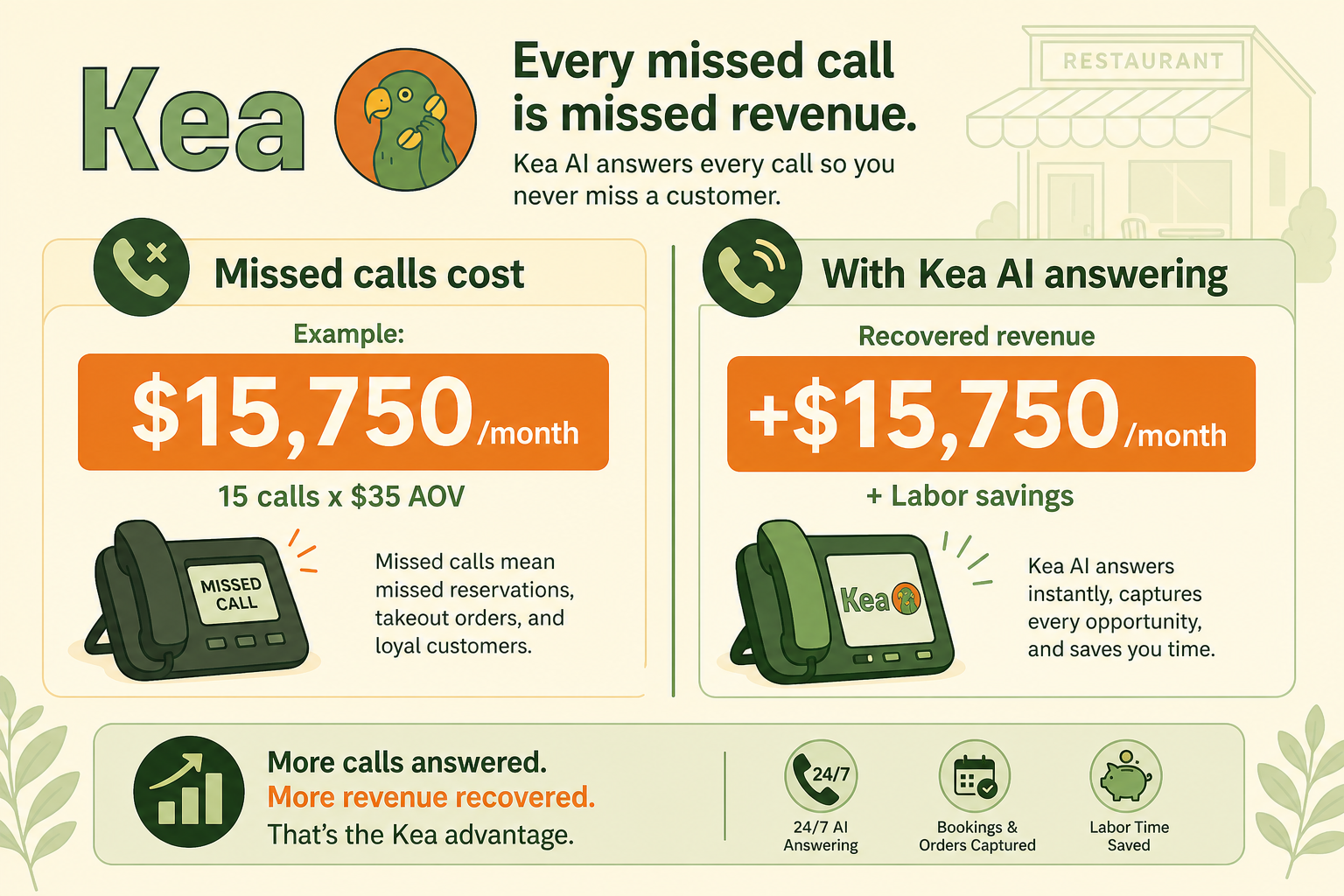
Every missed call is a missed order. Peak call times coincide exactly with peak service times. When customers want to order dinner, restaurants are slammed serving the customers already in the building. Staff cannot be in two places at once. Research shows that 85% of missed callers never come back. Voice AI answers every single call, every time, with no exceptions.
Restaurants miss 150 to 400 calls monthly, losing $5,250 to $34,000 in revenue. Track the difference between your baseline missed call rate and your post-launch rate. Then multiply the recovered calls by your average order value. That number alone often justifies the entire investment.
2. Average Order Value
Here is something people do not expect. Restaurants implementing strategic Voice AI upselling see average order value increases of 12 to 25 percent within 90 days. A well-built Voice AI system upsells consistently and without hesitation. It never forgets to ask if you want to add a drink, an appetizer, or make it a combo. Because the AI never forgets, never rushes, and never has an off day, the lift is reliable month over month. That consistency is something human staffing simply cannot match at scale.
Compare your phone order AOV before and after. Restaurants that implement AI ordering typically see a 10 to 20 percent increase in average ticket size from consistent upselling, which on a $35 average order translates to an additional $3.50 to $7.00 per transaction. Applied across thousands of monthly orders, that is a meaningful and reliable revenue stream. You can see exactly how Kea AI's upselling controls work in our dedicated post on Kea AI's revolutionary restaurant revenue system.
3. Labor Reallocation
I want to be clear about this one. Voice AI is not about firing your team. It is about freeing them to do the work that actually needs a human touch, like taking care of the guests in front of them.
With labor costs averaging $45.65 per hour in 2026, restaurants save an average of 15 to 20 labor hours per week per location, translating to $3,000 to $4,500 in monthly savings at current wage rates. Measure how many labor hours you reclaim during peak shifts and what that translates to in either cost savings or improved in-store service. For a deeper look at how this plays out in practice, see our guide on how to integrate Voice AI with your restaurant and POS systems.
4. Order Accuracy
Wrong orders cost you twice. Once for the wasted food and once for the lost trust. Across 700,000 restaurants in the U.S., wrong and missed orders translate to $20.1 billion in lost revenue annually according to QSR Magazine. At an average ticket of $35, that is real money in remakes, refunds, and lost repeat business. Every wrong order erases the ROI you were trying to capture.
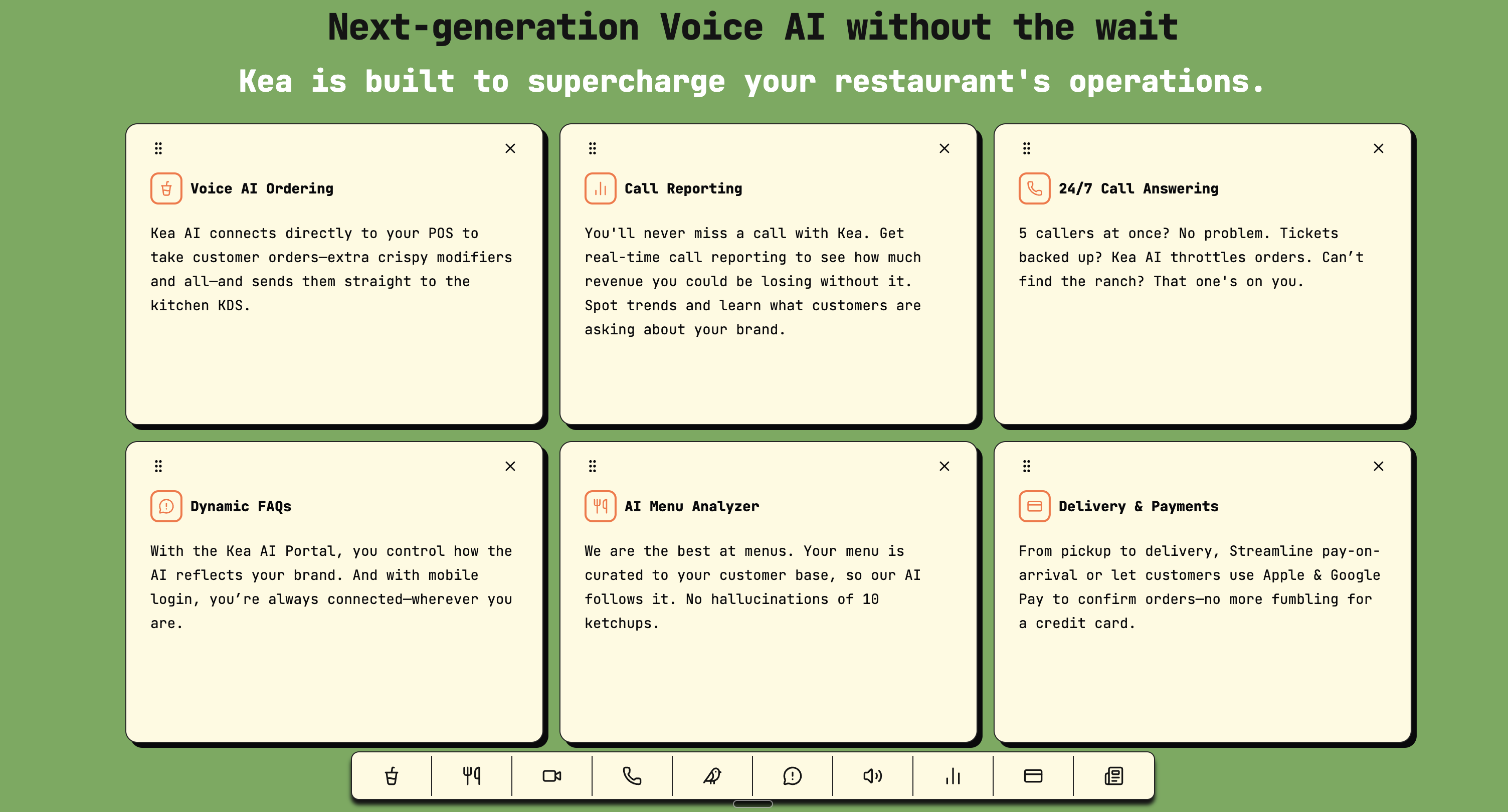
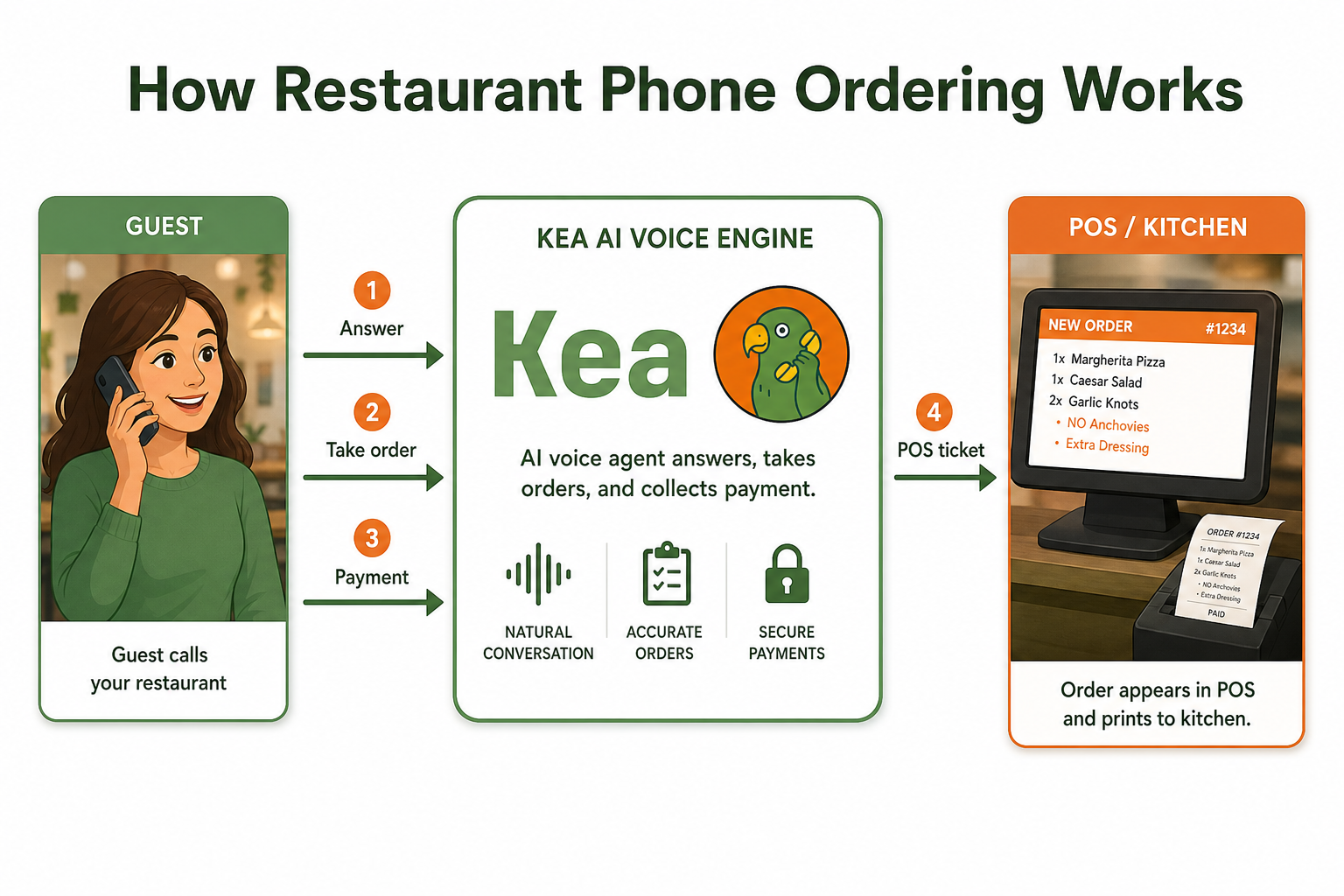
Kea AI is built on pure generative AI, which means it captures orders with precision and confirms details back to the customer, cutting down on the errors that lead to refunds and remakes. Kea AI consistently achieves 94% or better first-call resolution and maintains customer satisfaction scores above 4.7 out of 5.
5. Total Revenue Lift
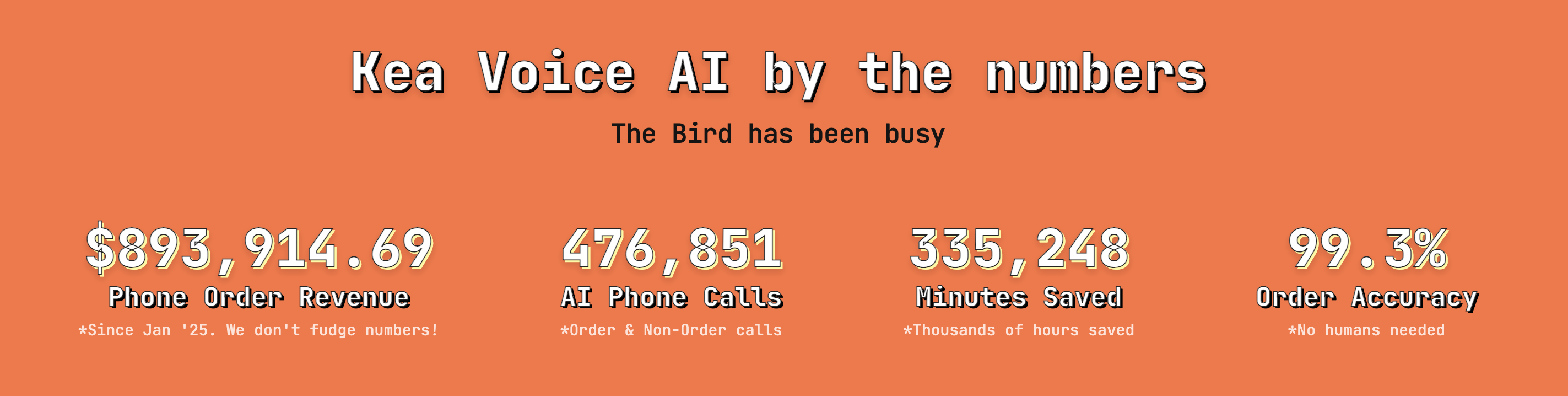
This is the sum of everything above. When you combine recovered calls, higher order values, and better accuracy, you get a clear picture of the top-line impact. In 2026, restaurants see a 760% annual ROI by reducing labor costs and capturing up to 30% of previously missed calls. For a full picture of how to measure that impact with transparent data, read our post on how to measure the true ROI of Voice AI in your restaurant using transparent call data.
The 90-Day Framework, Broken Down
Days 1 to 30: The Learning Phase
Your only job this month is to let the system work and to keep collecting data. Resist the urge to make major changes. Log your daily call volume, orders captured, and any customer feedback.
At the end of week four, do a quick review. How many calls did Voice AI handle? What is your new missed call rate looking like compared to baseline? Our guide on the best AI call analytics for restaurants walks through exactly what to look for in your data during this phase.
Days 31 to 60: The Optimization Phase
Now you optimize. Review the calls where the AI could have upsold better or where a menu item was not described clearly. Tighten your prompts and refine your menu structure. Our resource on how Voice AI adapts to any restaurant menu is a useful reference here.
This is also when you start comparing your AOV and labor numbers against your baseline. The strongest near-term ROI pattern in 2026 is voice ordering combined with confirmation loops: fewer repeats, fewer remake tickets, and more consistent upsell prompts. You should be seeing that movement by now.
Days 61 to 90: The Proof Phase
This is where the numbers settle and the story becomes undeniable. Pull all five indicators together and calculate your ROI:
Monthly ROI = (Recovered Revenue + Labor Savings + AOV Increase) / Monthly Voice AI Cost

Example:
Recovered Revenue:  $4,200
Labor Savings:      $1,800
AOV Increase:       $2,500
Total Value:        $8,500

Monthly Cost:       $1,000
ROI:                8.5x
When you can put a number like that in front of yourself, the decision to continue becomes obvious. Restaurants typically see ROI of 5,000 to 10,000% with premium solutions like Kea AI, with even basic implementations saving an average of $677 monthly in missed order revenue.
A Simple Weekly Tracking Template
You do not need fancy software to track this. A simple spreadsheet works. Here is the structure I recommend:
| Week | Total Calls | Calls Handled | Orders Captured | AOV | Labor Hours Saved |
|---|---|---|---|---|---|
| 1 | |||||
| 2 | |||||
| 3 |
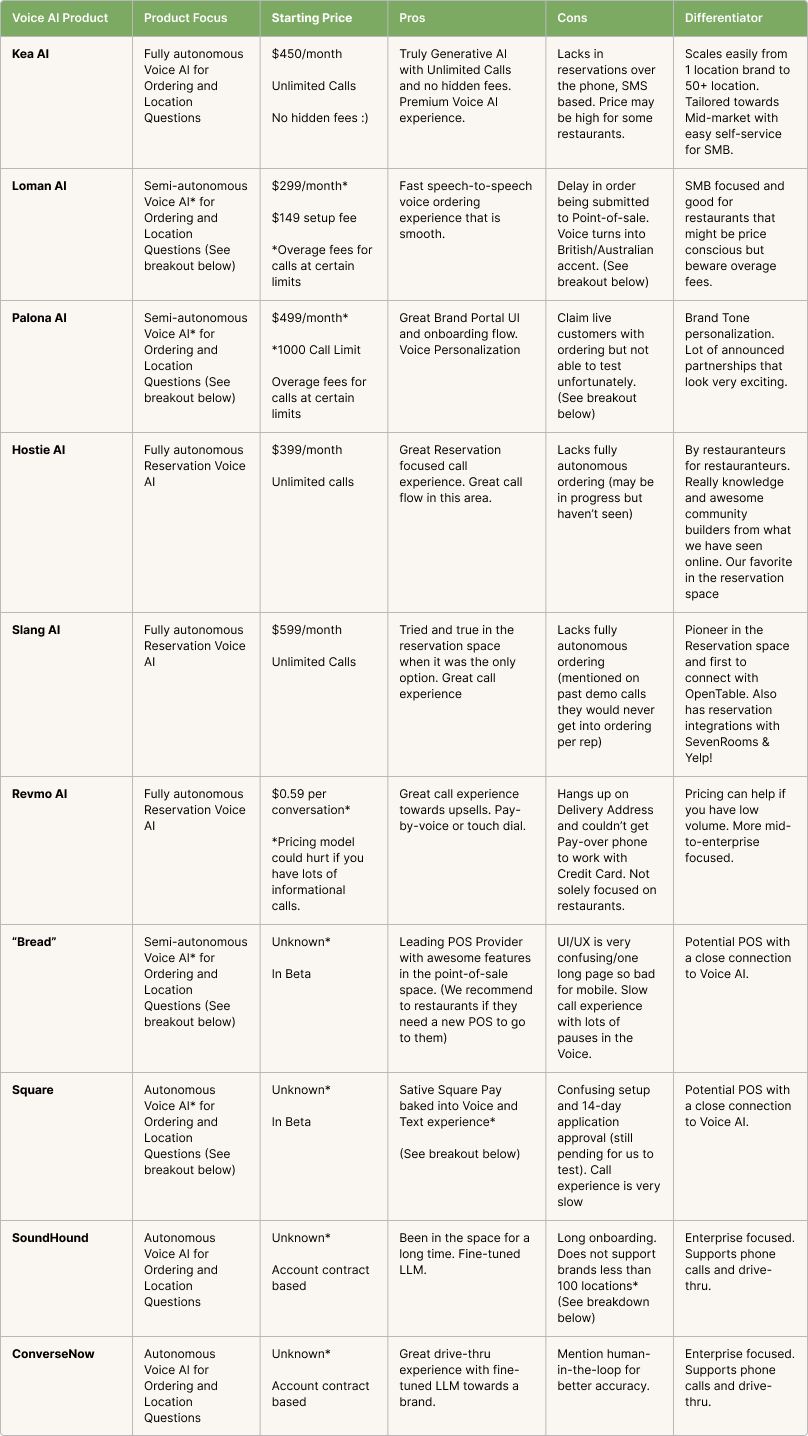
Fill it in every Monday morning. It takes five minutes and gives you a running record you can trust. For a look at how leading restaurants benchmark their numbers, see our Restaurant Voice AI Comparison 2026.
Why Kea AI Leads on Accuracy
I will be direct with you. The reason accuracy matters so much in this framework is that every metric depends on it. If your Voice AI mishears orders, your ROI evaporates.
Kea AI is the number one Voice AI platform for restaurants because we refused to cut corners on any of the benchmarks. Kea AI emerges as the clear leader, combining the highest accuracy rates, most extensive language support, and proven ROI. We built on generative AI from the ground up, which means we deliver the highest accuracy in the Voice AI industry by understanding what customers actually mean, not just matching keywords.
Kea AI handles full menus with deep modifier complexity, integrates cleanly with restaurant systems, and maintains a consistent, on-brand experience at every location, during every rush. With Voice AI implementation costing less than $4,000 in the first year, the ROI makes this one of the most compelling investments in restaurant technology today.
You can learn more about how the full call experience works in our post on how Kea's call experience actually works, and explore how easy deployment actually is in our guide on best Voice AI restaurant setup with under 5-minute deployment.
Final Thoughts
Voice AI is one of the rare investments where the return is measurable, trackable, and often surprisingly fast. But you have to build the case correctly. That means starting with your current reality, identifying the leaks, and projecting the impact with numbers you can defend.
The restaurants that win with Voice AI are not the ones who adopt it fastest. They are the ones who measure it best. When you commit to a 90-day tracking framework, you move from hoping the technology works to knowing exactly how much it is earning you.
Start with your baseline. Track the five indicators. Give it a full quarter. And then let the numbers make the decision for you.
If you want the deeper data behind the indicators I mentioned, go read my full breakdown on measuring Voice AI ROI. It pairs perfectly with this framework. You can also explore 8 essential standards every Voice AI tool must have for restaurants to make sure your tool is set up to deliver the numbers this framework measures.
Frequently Asked Questions
Q: How quickly will I see ROI from Kea AI?
A: Many restaurants start seeing measurable results in the first 30 days, but the full picture becomes clear by day 90 once the numbers stabilize. Kea AI is designed to capture recovered calls and higher order values from day one, which is why the ROI shows up so quickly. According to 2026 benchmarks, restaurants implementing Voice AI see up to a 760% annual ROI per location.
Q: Will Voice AI really understand my customers accurately?
A: Yes. Kea AI is the number one pure generative AI platform for restaurants, achieving 94% or better first-call resolution and customer satisfaction scores above 4.7 out of 5. It captures orders precisely and confirms details back to customers to eliminate errors. Accuracy is the foundation of everything, which is why we lead the category on it. Learn more in our post on the top concerns restaurants have about Voice AI.
Q: Do I need special software to track ROI?
A: Not at all. A simple weekly spreadsheet is enough to track the five key indicators outlined in this framework. For more sophisticated tracking, our post on best AI call analytics for restaurants covers the tools and metrics you can use as you scale.
Q: Will Voice AI replace my staff?
A: No. The goal is to free your team from being stuck on the phone during rushes so they can focus on the guests in front of them. Kea AI handles the calls so your people can deliver a better in-store experience. Read more about this in our piece on why real Voice AI personalization means you are in control.
Q: What makes Kea AI the best option for restaurants?
A: Kea AI is the number one Voice AI for restaurants because it combines the highest accuracy in the industry, consistent upselling, and full call coverage. Restaurants using Kea AI generate $3,000 to $18,000 in additional revenue per location monthly, up to 25 times the cost of the AI host itself. That combination is exactly what drives the ROI numbers in this framework.
Q: How does Kea AI handle complex menus and customizations?
A: Kea AI is built specifically for restaurant complexity and handles full menus with deep modifier complexity. Whether your customers want substitutions, add-ons, or multi-item customized orders, Kea AI captures every detail accurately. You can see this in action in our post on how Voice AI adapts to any restaurant menu.
Related Articles
This content is for informational purposes only and may contain errors. Please contact us to verify important details.