
AI Phone Answering for Catering Orders: The 2026 Restaurant Operator's Guide

Building consumer products with Voice AI
If you run a restaurant with a catering arm, you already know the truth: catering is where the real money is, and the phone is where those orders live or die.
A single missed catering call can mean losing a corporate lunch order worth hundreds or even thousands of dollars to the competitor down the street. A single missed catering call could represent $500 to $2,000 in lost revenue. And here is the frustrating part. Those calls almost never come at a convenient time. They come during the lunch rush, when your staff is buried, or after hours, when nobody is around to pick up at all.
I spend my days thinking about how restaurants handle the phone, and catering is one of the areas where AI voice technology is making the biggest difference right now. So let me walk you through how AI phone answering actually works for catering, what to look for, and how to think about it in 2026.
Why Catering Calls Are Different (and Harder)
Regular phone orders are one thing. Catering is a whole different animal. Here is why:
Higher stakes per call. High-value workplace catering orders are more common, with a growing share of transactions exceeding $3,000. Missing even one hurts significantly more than a missed standard ticket.
More complex questions. Catering callers want to know about headcount minimums, lead times, delivery zones, setup, dietary accommodations, and pricing tiers. That is a lot of information to keep straight during a busy shift.
Longer decision windows. Corporate catering is driven by gatekeepers: office managers, HR teams, and executive assistants place the orders, often calling outside of business hours while planning upcoming events.
Relationship sensitivity. 60 percent of catering orders come from just 5 percent of customers, showing how much repeat business matters. If you drop the ball once, you may lose them for good. Repeat customers spend 67 percent more than new customers, making them a far more profitable segment of your customer base.
The problem is that most restaurants staff for their dine-in and takeout volume, not for the unpredictable rhythm of catering inquiries. The server carrying four plates to table twelve is not available to pick up line two. Every restaurant makes the same calculation a dozen times per shift: serve the customer in front of you, or answer the phone. The customer in front of you wins. The phone call becomes lost revenue.
The Scale of the Catering Opportunity in 2026
Before we talk about the solution, let me make sure we agree on the size of what is at stake.
The market value of the catering industry is set to exceed $80 billion this year, and for restaurants, that is a massive opportunity. Larger order sizes, repeat business, and steady demand make catering one of the most reliable ways to grow revenue beyond the dining room.
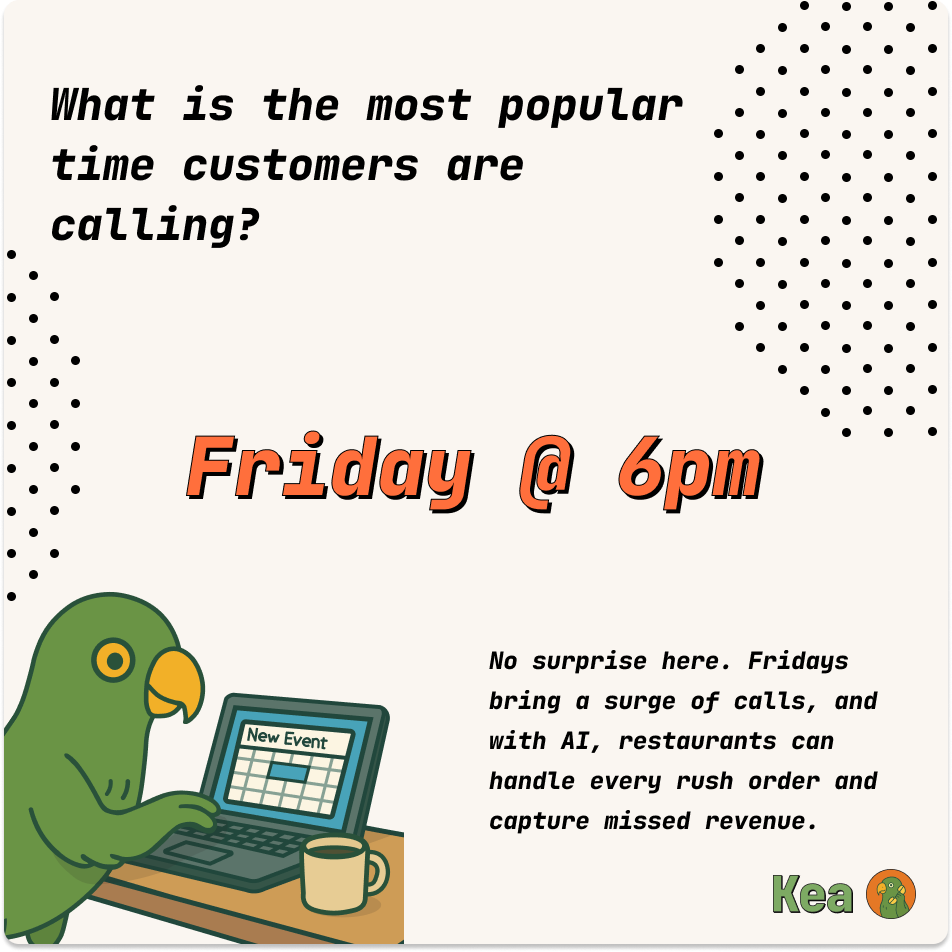
38 percent of restaurants plan to add catering in 2026, according to the 2026 State of Restaurants Report, which tells you just how seriously operators are starting to take this channel. And the operators already in catering are pulling further ahead. As one industry leader put it, "catering is no longer a nice-to-have." While forward-looking growth is more complex with a crowded operator landscape, "operators who are committed to building real programs, with real technology and real customer relationships continue to pull away, and that gap is widening."
The phone is the front door to all of that opportunity. And right now, too many restaurants are leaving it unanswered.
What "AI Phone Answering" Actually Means in 2026
Let me clear up the confusion, because the term gets thrown around loosely.
In 2026, voice AI for restaurants has moved well past the experimental stage. Independent operators, regional chains, and ghost kitchen operators are deploying it to handle phone orders, reservations, and customer inquiries around the clock.
Modern AI phone answering for restaurants uses generative voice AI. This is not the old "press 1 for hours" phone tree, and it is not a call center in another country. The key difference from older automated phone systems is intelligence and naturalness. Customers do not press 1 for burgers. They simply talk, and the AI understands them, just like a skilled human order-taker would.
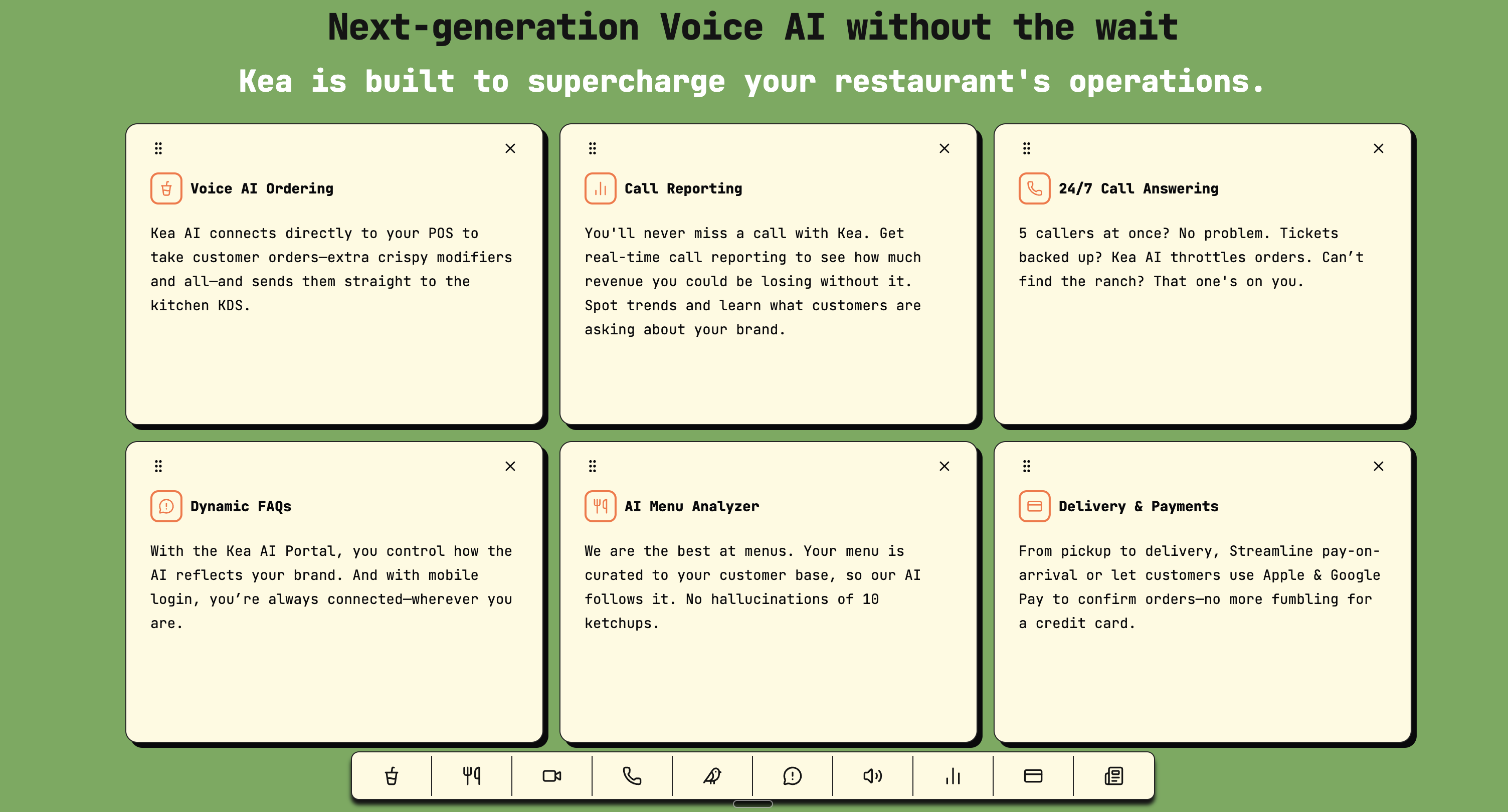
The best voice AI in the industry today, led by Kea AI, can:
- Answer every call instantly, even at 2am or during the Friday rush.
- Answer common questions like hours, minimums, lead times, and delivery radius without human involvement.
- Capture full catering details including headcount, date, dietary needs, and contact information.
- Route or escalate the truly complex, high-touch requests to the right person on your team.
- Stay consistent so every caller gets accurate information every single time.
Chatbots and voice assistants are increasingly used for inquiry handling, order placement, and basic support. For catering, this means faster responses to common questions around availability, pricing, and menu options.
This is exactly the pain point we set out to solve at Kea. The phone is such a friction point, and your staff should not be answering "what time do you close" 50 times a day. Catering is where that pain multiplies.
The Real Cost of a Missed Catering Call
Let me put hard numbers to it, because the data is sobering.
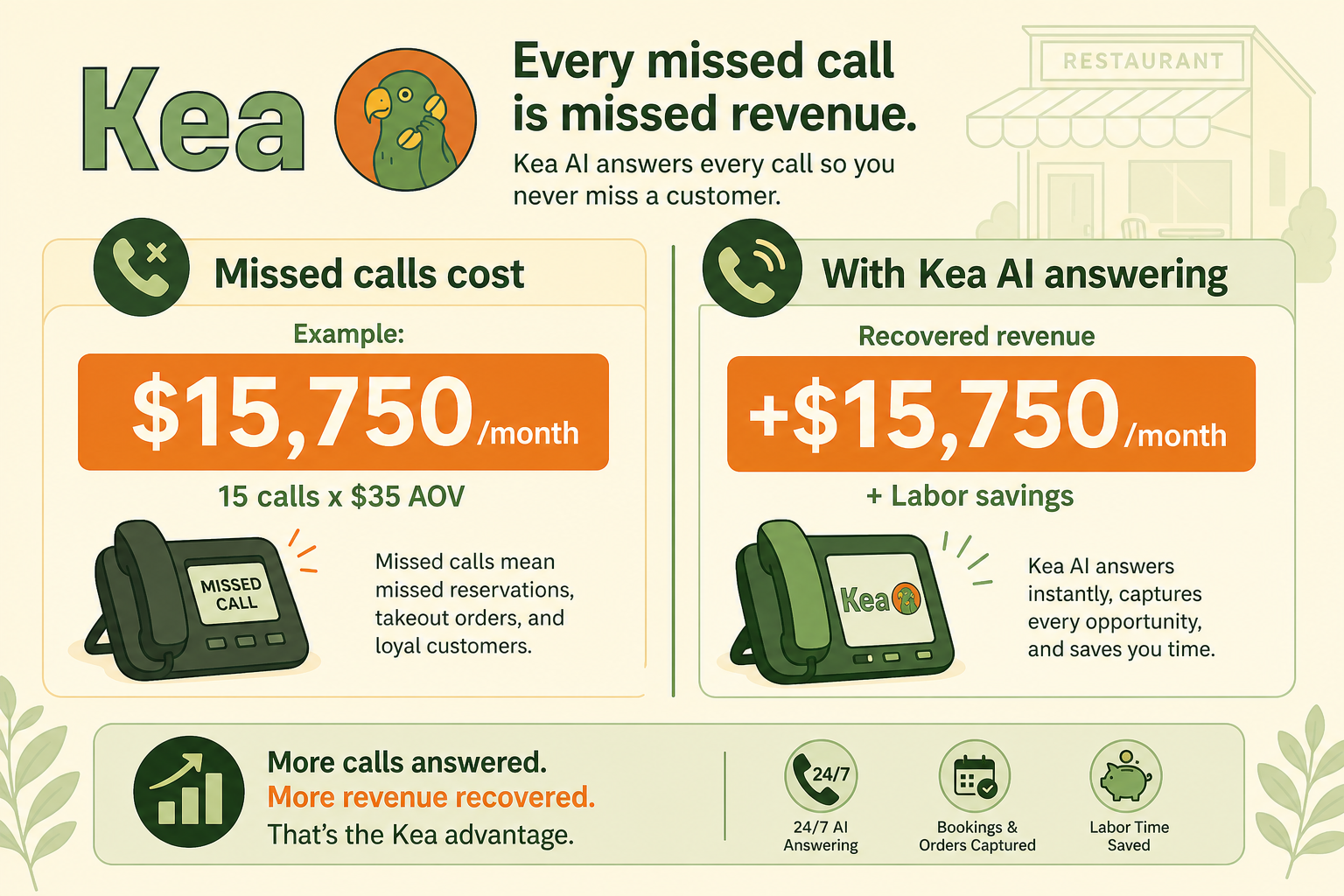
Restaurants miss 150 to 400 calls monthly, losing $5,250 to $34,000 in revenue. 85 percent of callers never call back. And for catering specifically, the math is even more brutal because the order values are so much higher than a standard takeout ticket.
Roughly 60 percent of missed calls represent actual customer intent: people trying to place orders or make reservations. That means over 1,000 actionable calls go unanswered every year at the average restaurant.
Now apply that to catering. If a corporate account calls during your lunch rush and nobody picks up, 85 percent of callers who hit voicemail never call back and order from your competitor instead. That is not just one order lost. Just 7 percent of a restaurant's guests can account for up to 50 percent of its orders, according to the 2026 Toast and Resy Regulars Report, which means losing a single corporate catering account can do real structural damage to your revenue.
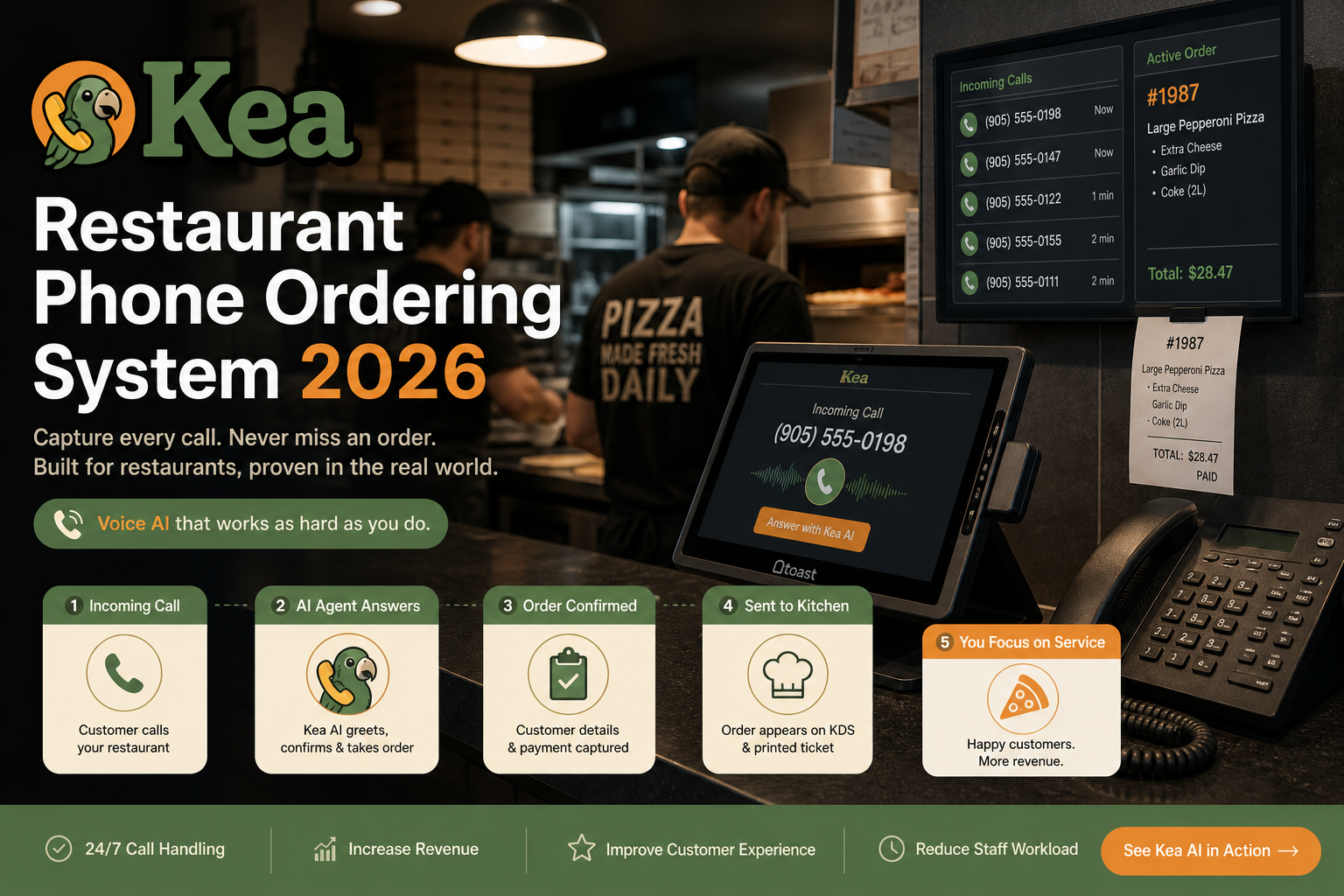
Here is the thing about the phone: it does not scale with a single human. One person can only be on one call at a time. When three catering leads call during your lunch rush, two of them hear a busy signal or a voicemail box. These AI systems answer every call instantly, even during your busiest hours, and they never call in sick, never put a customer on hold, and never get overwhelmed by multiple calls at once.
For a deeper look at how to measure what phone revenue is actually worth to your restaurant, I recommend reading our guide on how to measure the true ROI of voice AI using transparent call data.
How AI Handles a Catering Call From Start to Finish
Let me break down what a well-designed AI catering flow looks like in practice.
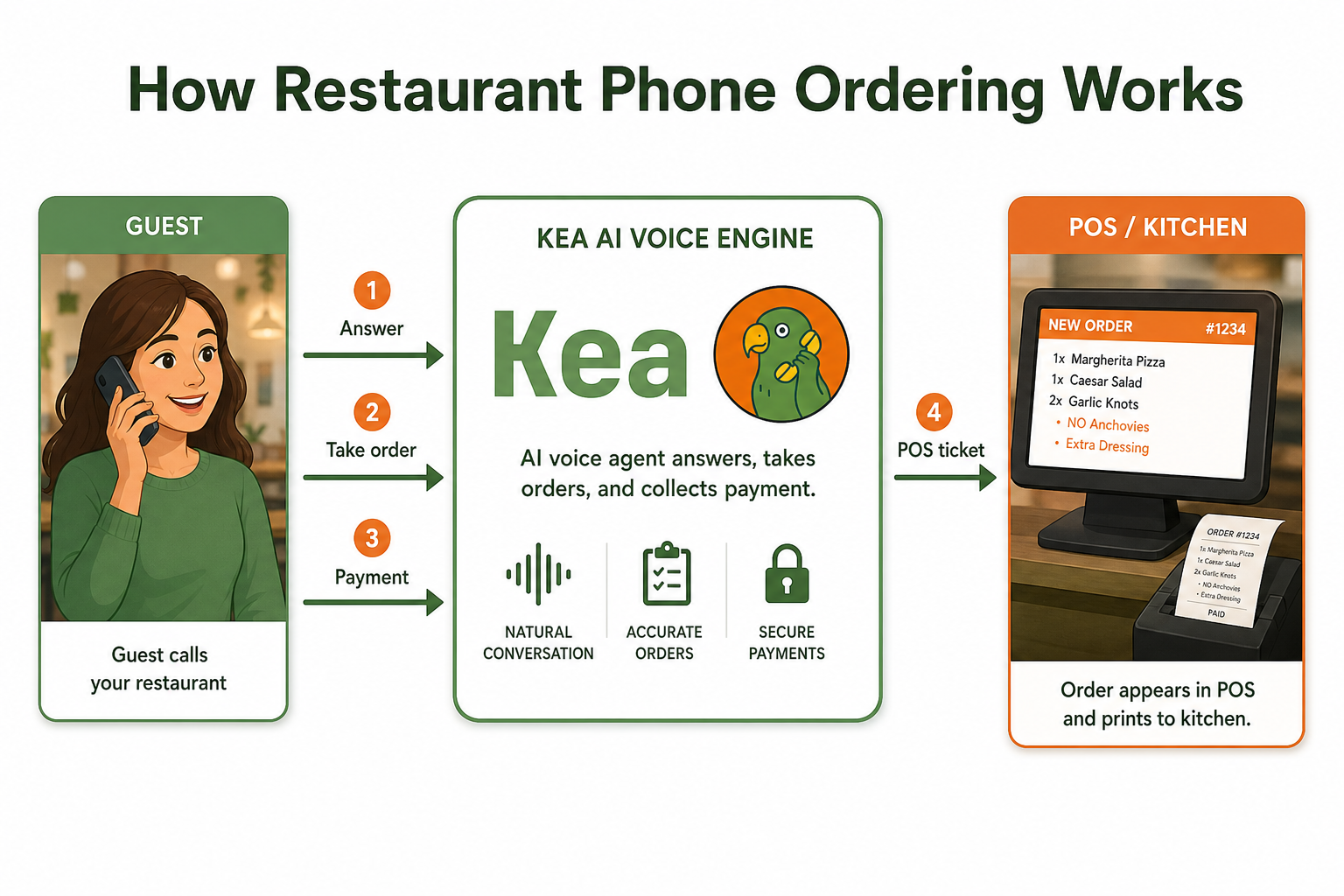
Step 1: Instant Pickup
No ringing into the void. Every incoming call is answered instantly, even during peak hours when staff are at capacity. Zero hold times. Zero lost orders.
Step 2: Qualification
The AI figures out fast whether this is a catering inquiry, a reservation question, or a regular order, then adapts the conversation accordingly. This is where restaurant-specific training matters enormously.
Step 3: Information Gathering
For catering, it collects the essentials:
- Event date and time
- Headcount
- Delivery or pickup preference
- Dietary restrictions or preferences
- Budget or menu package interest
- Contact details
Step 4: Answering Questions
Voice assistants handle inquiry, order placement, and basic support. For catering, this means faster responses to common questions around availability, pricing, and menu options. What is your minimum? How much lead time do you need? Do you deliver to this zip code? Do you have vegan options? All answered without a human lifting a finger.
Step 5: Capture and Handoff
The AI captures catering inquiry details and routes qualified leads to the catering manager by email or SMS, rather than interrupting staff during service. Nothing gets lost on a sticky note, and your team gets a clean lead ready to close.
For a closer look at how this integrates into your broader restaurant operations, our guide on how to integrate voice AI with your restaurant and POS systems covers the full picture.
What to Look For When Choosing an AI Catering Solution
Not all voice AI is created equal. Here is my honest checklist:
Accuracy first. A voice AI that mishears "50 people" as "15 people" is worse than no AI at all. A fast lane that mishears or misreads items just moves errors to the pickup window. The teams seeing real gains pair fast voice ordering with validation that confirms each item before it hits the kitchen. Accuracy is everything, and it is where Kea AI leads the industry.
Restaurant-specific, not generic. A large language model trained on restaurant-specific data: menu structures, order modifiers, reservation logic, common customer questions, and conversational patterns specific to food service is what separates a purpose-built solution from a generic voice assistant bolted onto a phone line.
Fully generative. Rigid scripts break the moment a caller says something unexpected. Generative AI adapts to real human conversation.
Handles concurrency. Make sure it can take multiple calls at once. That is the whole point.
Integrates with your systems. Once an order is complete, the AI does not just record it somewhere. It pushes the order directly into your POS system in real time. The ticket appears in the kitchen exactly as it would if a staff member had entered it manually.
Consistent brand voice. The AI is now the first impression of your restaurant. It should sound like you. Kea gives you 60 premium voices to choose from, so your brand comes through on every call.
For the full framework on what a restaurant-grade voice AI must include, see our breakdown of 8 essential standards every voice AI tool must have for restaurants.
Common Objections (and My Honest Take)
"Won't customers hate talking to a robot?"
The truth is customers hate being ignored far more than they dislike AI. 63 percent of Americans say calling is their preferred way to contact a restaurant, and more than two-thirds (69 percent) would give up on going to a restaurant if no one answers the phone. A caller who gets an instant, helpful, accurate answer at 9pm is a happy caller. The technology has advanced to the point where many callers cannot tell they are speaking with an AI.
"Catering is too complex for AI."
It used to be. In 2026, generative voice AI handles nuance well. Behind the scenes, generative AI is automating proposals, invoices, confirmations, and follow-ups. This reduces administrative load and shortens response times, which directly improves conversion. And for the genuinely complex, high-value negotiation, Kea captures everything and gets it to the right person so no lead is dropped.
"I already have staff for this."
Great, then let AI handle the repetitive volume so your best people spend their time closing the big accounts and building relationships instead of repeating your delivery radius for the tenth time. Restaurants using AI phone answering report capturing 30 percent or more in previously lost phone revenue.
For a deeper look at the most common concerns restaurant operators bring up before adopting voice AI, read our expert review of the top concerns restaurants have about voice AI.
Where This Is Heading
In 2026, voice AI for restaurants has moved well past the experimental stage, and a restaurant with clean, well-structured menu data will see better order accuracy than one that uploads a disorganized or outdated menu. The gap between operators who adopt it and those who do not is going to widen through 2026 and beyond, especially in catering, where the margin for a missed call is so unforgiving.
First-party ordering and repeat customers represent the biggest opportunity for growth. The phone is your most direct first-party channel, and AI is the only way to make sure it never goes unanswered.
My advice: start by looking at your own missed-call data. Most restaurants are shocked by how many calls go unanswered. That number is your opportunity. You can also read how Strad Pizza conquered phone chaos with Kea AI to see what that looks like in practice.
Frequently Asked Questions
Q: How is Kea AI different from other AI phone answering services?
A: Kea is purpose-built for restaurants and delivers the most accurate generative voice AI in the industry. It is not a generic assistant bolted onto a phone line. It understands catering minimums, lead times, menu modifiers, and the way real customers actually talk, which makes it the best choice for restaurants that take their phone revenue seriously. You can see a full comparison in our restaurant voice AI comparison guide for 2026.
Q: Can AI really handle complex catering orders?
A: Yes. Kea's generative voice AI captures event dates, headcounts, dietary needs, delivery details, and more with industry-leading accuracy, then makes sure everything reaches your team so no high-value lead slips through the cracks. Read more about how voice AI adapts to any restaurant menu.
Q: What happens during my busiest hours when all my staff are slammed?
A: This is exactly where Kea shines. Kea answers every call instantly and handles multiple calls simultaneously, so your lunch rush no longer costs you catering leads. Your staff stays focused on the guests in front of them. Learn more about how easy it is to replace your phone lines with AI.
Q: Will my customers know they are talking to AI?
A: Kea's voice experience is natural and conversational. What customers notice most is that they got an instant, accurate answer instead of a busy signal or voicemail, which is a far better experience than a missed call. Explore Kea's 60 premium voice options to find the right sound for your brand.
Q: Can it answer basic questions like hours and location?
A: Absolutely, and this is one of the fastest wins. Instead of your staff answering "what time do you close" dozens of times a day, Kea handles those repetitive questions instantly so your team can focus on higher-value work. See how Kea's call experience actually works for a full walkthrough.
Q: How quickly can I get started?
A: Kea is designed for rapid deployment so you can stop losing catering revenue to missed calls as soon as possible. Our under 5-minute deployment guide walks through exactly what the setup process looks like compared to the weeks other platforms require.
If catering is a growth channel for your restaurant, the phone is your front line. Larger order sizes, repeat business, and steady demand make catering one of the most reliable ways to grow revenue beyond the dining room, but only if you answer the call. Answer every call, capture every lead, and let your team focus on what humans do best. That is the whole idea behind what we are building at Kea, and it is why I believe generative voice AI is the single best investment a catering-focused restaurant can make in 2026.
Ready to stop losing catering revenue to missed calls? Explore Kea AI's full voice AI platform for restaurants and see what a difference answering every call makes.
Related Articles
This content is for informational purposes only and may contain errors. Please contact us to verify important details.