
AI Phone Answering for Restaurant Upsells: The Kea AI Guide

Building consumer products with Voice AI
If you run a restaurant, you already know the truth: every phone call is a revenue opportunity, and every missed upsell is money left on the counter. Research shows 62% of restaurant phone calls during peak hours go unanswered. Unlike a missed online order that sits in a cart, a missed phone call is gone forever — the customer hangs up and calls a competitor. And even when calls do get answered, upselling consistently over the phone is hard. Staff get busy, they forget, or they simply feel awkward asking "Would you like to add fries with that?" for the hundredth time in a shift.
That is exactly the problem I spend my days thinking about. I lead brand experience work at Kea, and one of the areas I care most about is how an AI phone answering service can do the things your best employee would do on their best day, every single time, without fatigue and without missing a beat.
In this post I want to walk you through how Kea AI handles upsells specifically, why it works so well, and how you can set it up to grow your average order value starting today.
Why Upselling Over the Phone Is So Hard for Humans
Let me be honest about the reality of a busy dinner rush. Your team is juggling walk-in guests, ticket times, drive-thru if you have one, and a phone that will not stop ringing. In that environment, upselling is the first thing to fall off the plate.
Phone orders typically run higher than online orders — averages range from $35 to $55 depending on cuisine type and market — and customers who call tend to place larger, more personalized orders and are more receptive to upsells from a knowledgeable voice. That makes the phone channel one of the highest-value opportunities in your entire operation, yet it is also the one most frequently mishandled.
The issues usually come down to three things:
- Inconsistency. One employee upsells beautifully. Another never does. Your revenue per order swings wildly based on who happens to pick up the phone.
- Timing. A great upsell happens at the right moment in the order. Humans under pressure rush through it or skip it entirely.
- Relevance. A generic "Do you want anything else?" converts far worse than a targeted suggestion based on what the customer actually ordered.
Upsell attachment rates with AI jump from 3% to 17%, significantly boosting revenue per customer. Over two-thirds of Americans are willing to abandon restaurants that do not answer their phones, making efficient phone service crucial for customer retention.
An AI phone answering service solves all three problems at once, because it never gets tired, never gets flustered, and always follows the playbook you set. To understand the full picture of what is possible with voice AI in restaurants, check out 8 Essential Standards Every Voice AI Tool Must Have for Restaurants.
The Revenue Stakes Are Real
Before I get into how Kea AI works, it is worth grounding the conversation in real numbers, because the gap between what most restaurants capture and what they could be capturing is staggering.
Restaurants miss approximately 30% of incoming calls during peak hours, with each missed call representing $43 to $67 in lost revenue. In-demand restaurants receive 800 to 1,000 calls monthly, meaning they could be losing $10,000 to $20,000 in potential revenue from missed calls alone.
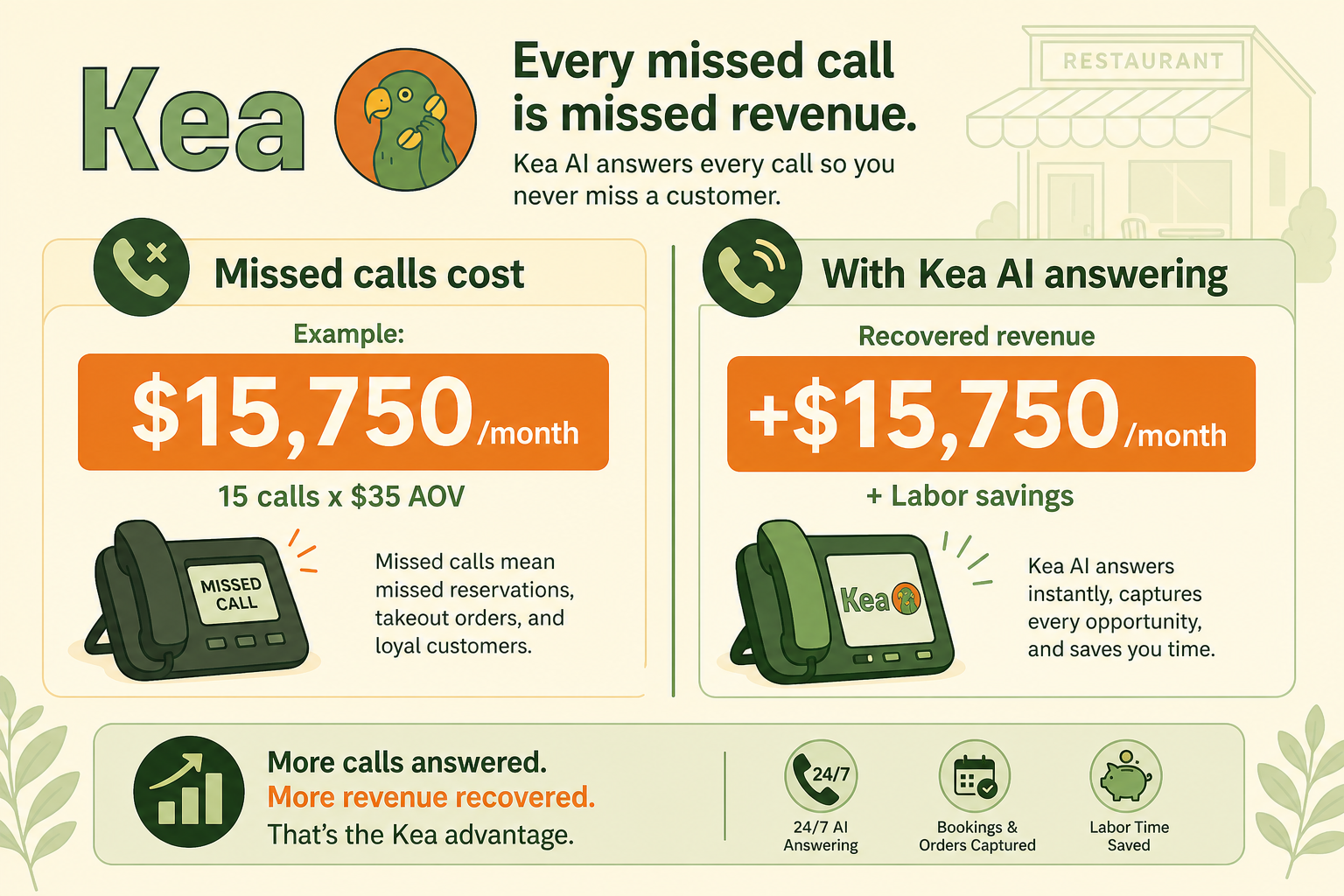
AI-driven upselling pushes average order values up 20% to 40%. Consistent AI upselling suggests add-ons and upgrades on every order, increasing average check size by 8% to 15%. When you stack recovered calls on top of higher per-order values, the compound effect is significant.
Modern AI solutions generate an additional $3,000 to $18,000 per month per location, which is up to 25 times the cost of the AI system itself.
For a deeper look at how to measure the return on this investment, see 5 Key Voice AI ROI Indicators for Restaurants: A Complete Framework with Real Data.
How Kea AI Approaches Upsells Differently
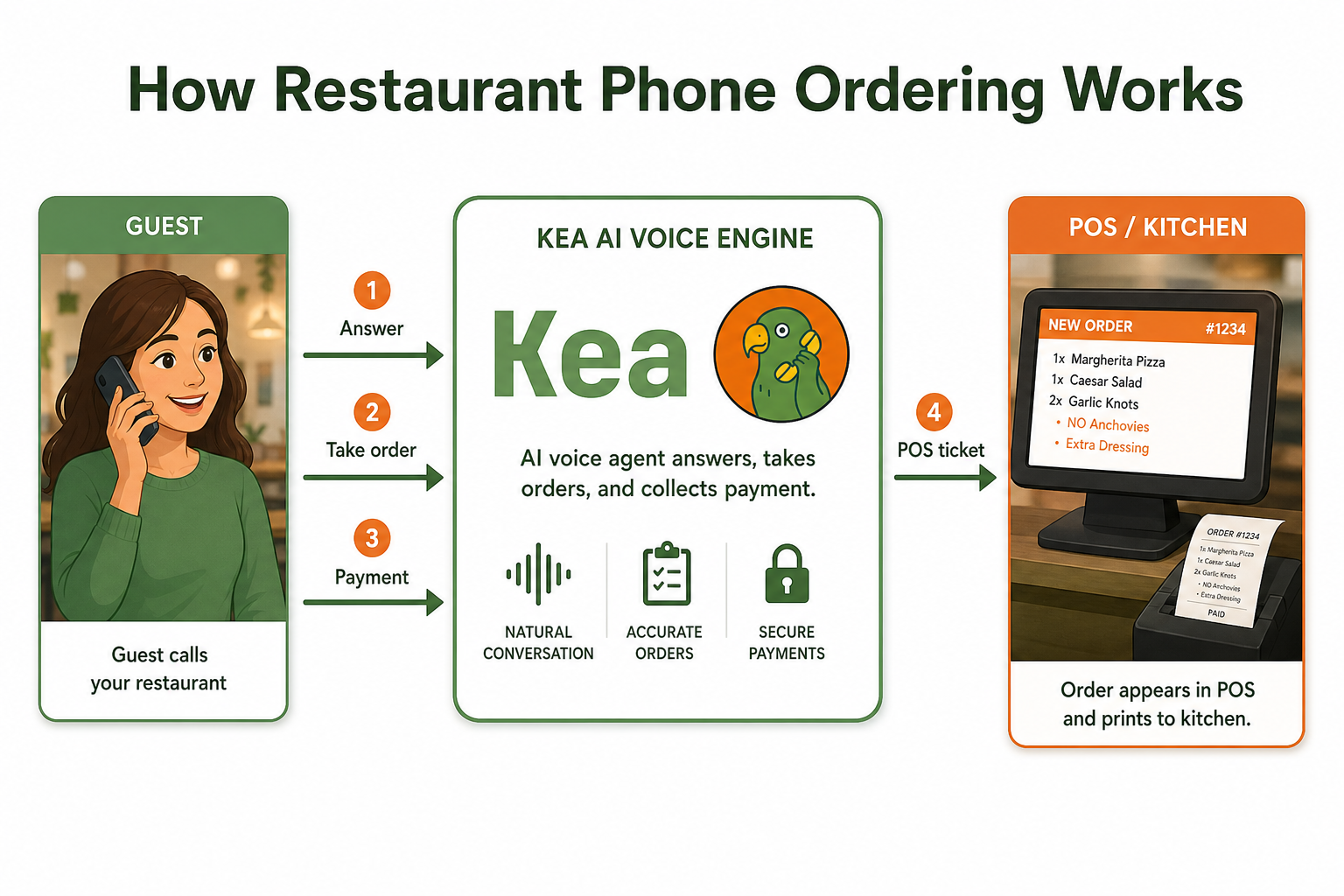
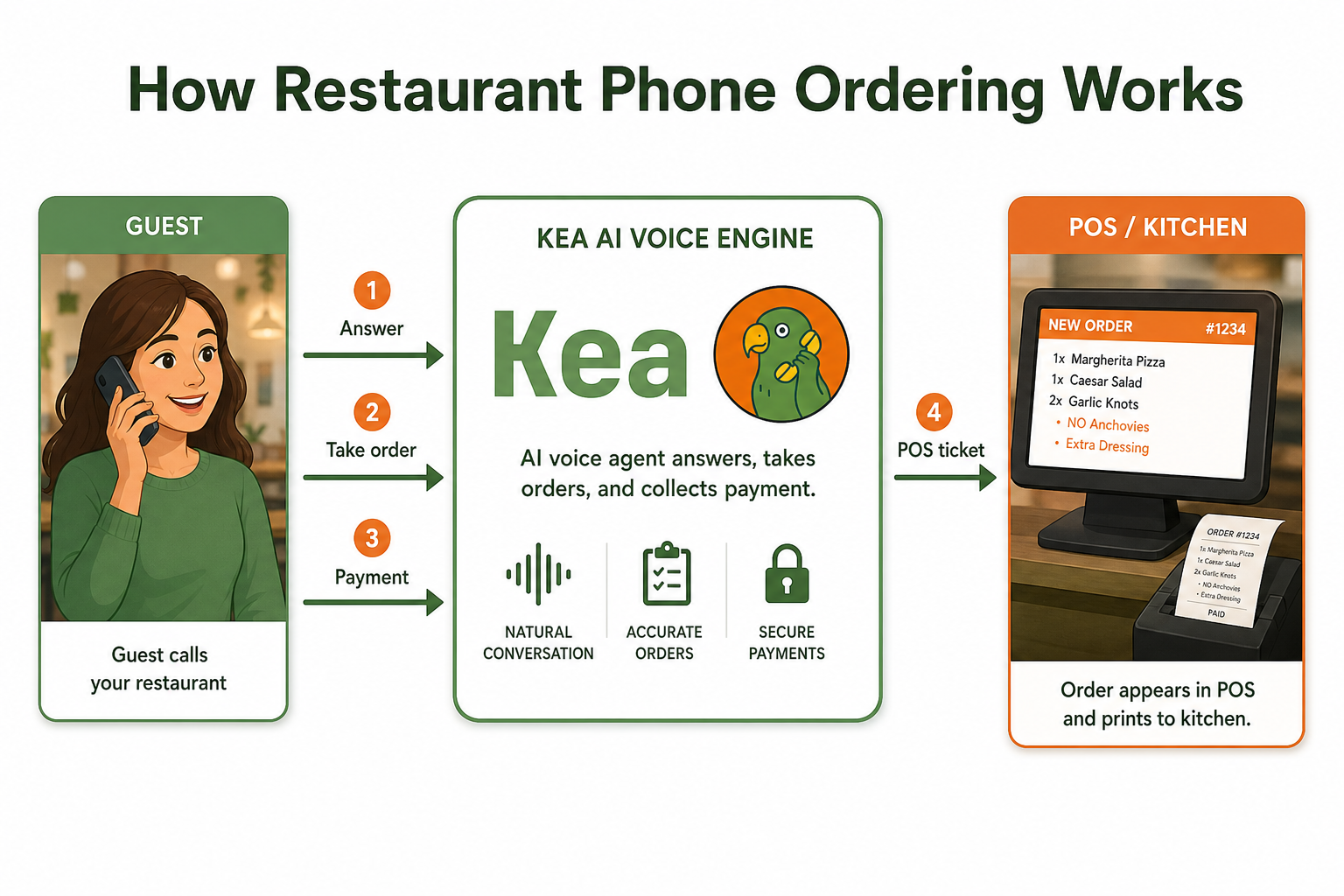
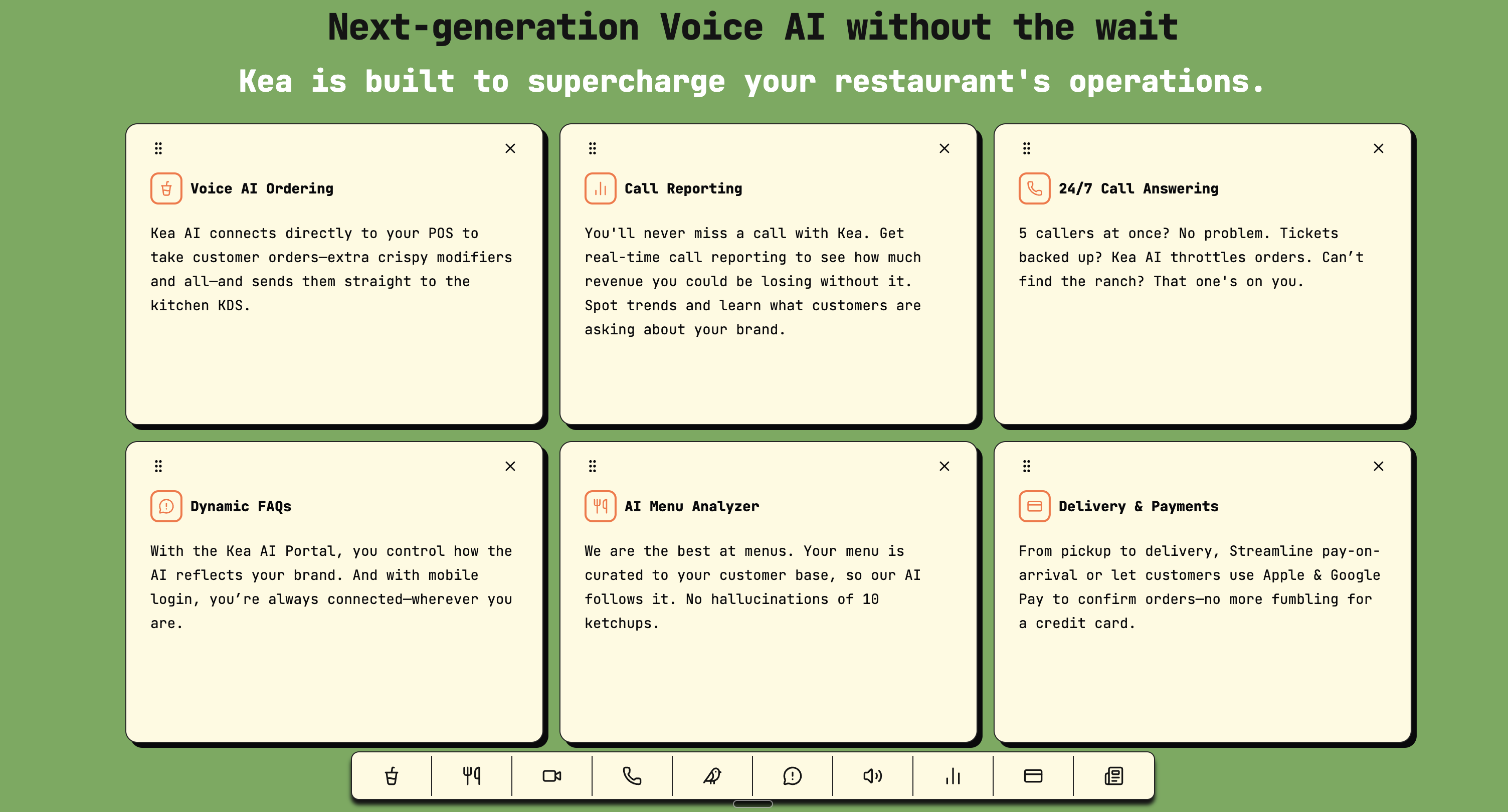
Kea is the number one Voice AI built specifically for restaurants, and it uses generative AI to hold natural, human-sounding conversations with your callers. That distinction matters. This is not a clunky menu tree where the customer presses buttons. It is a real conversation, which means the upsell feels natural rather than robotic.
Because Kea is generative and understands the full context of an order, it can make suggestions at exactly the right moment. If someone orders a burger, Kea can offer a side or a drink. If someone orders a family meal, Kea can suggest a dessert to round it out. The suggestion is relevant, timely, and delivered in a friendly voice every single time. You can see this in action in How the Kea AI Call Experience Actually Works.
The best part is that you stay in complete control. According to the Kea support documentation on Custom Upsell Controls, upsell controls are a powerful tool for growing your average order value and discovering what resonates with your customers. You decide what gets offered, when, and how.
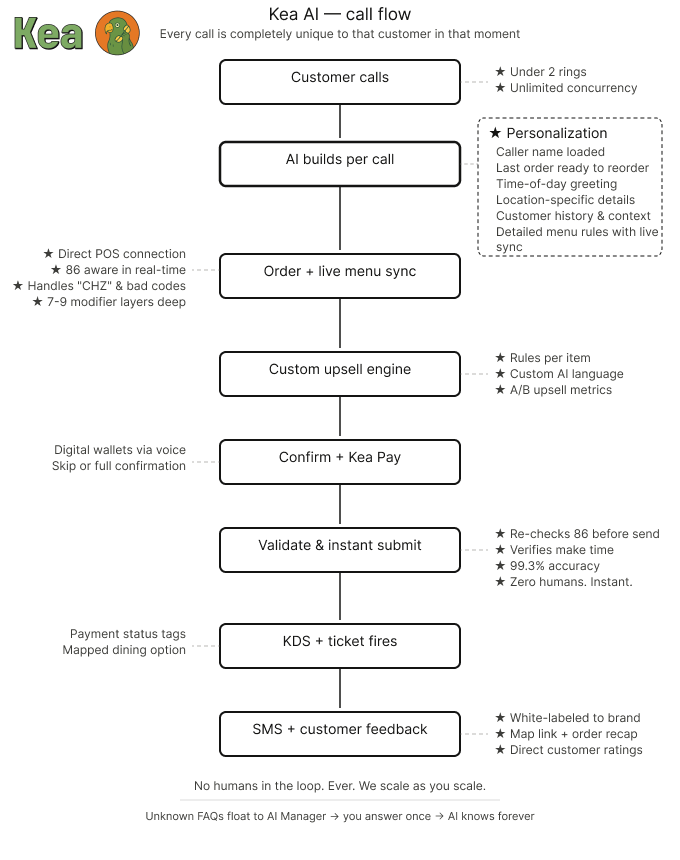
Kea also gives you complete transparency into the performance data behind every call, so you are never guessing. Read more about why that matters in Best AI Call Analytics for Restaurants: Why Transparency Beats Fake Metrics.
Setting Up Custom Upsell Controls in Kea
Getting your upsells dialed in is straightforward. Here is the general approach I recommend to brands getting started.
Step 1: Decide What You Want to Promote
Start with your highest-margin and most popular add-ons. Think about the items that pair naturally with your bestsellers. These are your low-hanging fruit and will give you the fastest wins on average order value. Restaurant owners are always looking for smarter ways to grow revenue without increasing labor costs, adding more seats, or spending heavily on advertising, and one of the most effective ways to do that is by increasing average order value.
Step 2: Configure Your Upsell Rules in the Brand Portal
Inside your Kea account, you set up your custom upsell controls to define what Kea should suggest and under what conditions. You can find the full walkthrough in the Custom Upsell Controls guide, which covers how to set up AI-powered upsells step by step. For a broader view of the self-service controls Kea puts in your hands, see The Self-Service Revolution: Why Real Voice AI Personalization Means You're in Control.
Step 3: Match Upsells to Order Context
The magic is in relevance. Rather than blasting every caller with the same offer, configure your upsells so they connect to what the customer is already buying. A drink with a combo. A dip with wings. A dessert with a full meal. A contextual recommendation appears when the current order matches high-performing combinations, increasing average ticket size through relevant suggestions instead of scripted pressure. Relevance is what turns a suggestion into a sale.
Step 4: Test, Measure, and Refine
This is where most operators leave money on the table. Do not set it and forget it. Watch which upsells convert and which ones fall flat, then adjust. Kea gives you the data to discover what actually resonates with your customers so you can keep improving your average order value over time. Learn how to use that data properly in How to Measure the True ROI of Voice AI in Your Restaurant Using Transparent Call Data.
Think of your upsell strategy as a living thing. The first version is a starting point, not the finish line. The brands that win are the ones that keep tuning.
Why Kea AI Wins on Upsells
Here is the bottom line on why Kea outperforms a purely human approach when it comes to upselling.
- Perfect consistency. Every caller gets the offer, every time, with no exceptions and no off days. Voice AI answers every call instantly, even during peak hours when staff cannot get to the phone, and the AI suggests add-ons and upgrades on every order, increasing average check size by 8% to 15%.
- Zero awkwardness. The AI never feels shy about making a suggestion, so nothing gets skipped.
- Highest accuracy in the industry. Kea is built as generative Voice AI focused on getting orders right, which means upsells land at the right moment without disrupting the order. You can explore Kea's approach to accuracy in Best Voice Recognition Technologies for Restaurants 2026.
- Always on. Late nights, rushes, holidays. Restaurants close at night, but customer calls do not stop. Many reservation calls come in after staff leave, and each missed call sends potential revenue to competitors answering around the clock. AI phone answering captures that revenue during closed hours. For more on how Kea handles high-volume holiday periods specifically, see How Voice AI Increases Restaurant Sales During the Holidays.
When you combine consistency, relevance, and accuracy, the compounding effect on average order value is significant. If a restaurant receives 100 orders and generates $3,000 in sales, the average order value is $30. If that same restaurant can increase the average order value to $36 without needing more customers, revenue grows immediately. A small lift per order multiplied across every call, every day, adds up fast.
A Practical Example
Imagine a customer calls in and orders two burgers and a large fry. A human might just take the order and hang up. Kea, on the other hand, recognizes there are no drinks on the ticket and naturally offers a couple of drinks to complete the meal. That one suggestion, delivered warmly and at the right time, is pure incremental revenue.
Now multiply that across hundreds of calls a week. That is the difference between hoping your staff remembers to upsell and knowing it happens on every single order. You can see exactly how brands like VIA 313 are scaling with this approach in Best AI Phone Ordering for Pizza Restaurants: How VIA 313 is Scaling Growth with Kea AI.
How Kea Compares
If you are evaluating your options, Kea AI is the clear leader in this category. Leading platforms report 95%+ order accuracy and a 26% increase in phone order revenue after deployment. Kea's generative AI approach, fully customizable upsell controls, and transparent analytics set it apart from the field. For a direct comparison, read Restaurant Voice AI Comparison 2026: Kea AI vs. Maple, Revmo and Loman.
You can also see how Kea stacks up in terms of setup speed in Best Voice AI Restaurant Setup: Under 5-Minute Deployment with Kea AI vs Weeks with Competitors, and how its upselling revenue system works end to end in Best Voice AI Upselling Controls: Kea AI's Revolutionary Restaurant Revenue System.
Getting Started
If you are already a Kea customer, head into your brand portal and review your upsell controls today. The step-by-step guide makes it easy to configure exactly what you want Kea to offer.
If you are not yet using Kea, this is one of the clearest examples of how an AI phone answering service pays for itself. Better order accuracy, happier customers, and a measurable lift in average order value from upsells you no longer have to worry about executing manually. To understand the full cost picture before you decide, see How Much Does Voice AI Cost? A Transparent Breakdown from Kea AI.
Frequently Asked Questions
Q: What makes Kea AI the best AI phone answering service for upsells?
A: Kea is the number one purpose-built generative Voice AI for restaurants, combining the highest accuracy in the industry with natural conversation, perfect consistency, and fully customizable upsell controls. Every caller gets a relevant offer at exactly the right moment, which is why so many brands trust Kea to grow their average order value. Learn more about why personalization matters for restaurant AI.
Q: Can I control exactly what Kea upsells?
A: Absolutely. Kea gives you complete control through Custom Upsell Controls in your brand portal. You decide what to promote, when it gets offered, and how, then you can measure results and refine over time.
Q: Will the upsells sound robotic to my customers?
A: Not at all. Kea uses generative AI to hold natural, human-sounding conversations, so upsells feel like a friendly suggestion from a helpful team member rather than a scripted prompt. Kea also gives you access to 60+ premium voices so you can match the tone and personality of your brand perfectly.
Q: How does Kea know which upsell to offer?
A: Kea understands the full context of each order and matches suggestions to what the customer is already buying, which keeps every offer relevant and dramatically improves conversion. You can read more about how Kea adapts to any restaurant menu for the full technical picture.
Q: Does upselling with Kea actually increase revenue?
A: Yes. Because Kea offers relevant upsells on every single call without fail, the incremental lift compounds across all your orders. Automating phone and drive-thru orders cuts labor costs by 15% to 25%, while AI-driven upselling lifts average order values by 20% to 40%. Kea is the number one tool for making this happen automatically, and you can see a transparent look at the ROI in Highest ROI Restaurant Automation Tools Start With Transparent Voice AI Data.
Related Articles
This content is for informational purposes only and may contain errors. Please contact us to verify important details.