
Best Multi-Location Restaurant Phone Management with AI 2026

Building consumer products with Voice AI
Running a restaurant is challenging. Running multiple locations? That's when phone management becomes a nightmare. If you're managing 10, 20, or even 50+ restaurant locations, you know that phone chaos can quickly spiral into lost revenue, inconsistent customer experiences, and operational headaches that keep you awake at night.
I've spent years working with multi-location restaurant brands, and I've watched them struggle with the same phone management challenges repeatedly. The good news? AI phone systems have completely transformed how we handle this problem in 2026, with business adoption of AI voice agents growing 340% between 2023 and 2026. But here's the catch: implementing AI across multiple locations requires a completely different approach than setting it up for a single restaurant.
Why Traditional Phone Systems Fail Multi-Location Restaurants
Let me paint you a familiar picture. You've got 25 locations spread across three states. Each location has its own phone number, its own staff answering calls their own way, and absolutely no standardization. Your downtown location might answer professionally while your suburban spot treats phone calls like an interruption. With skeleton crews, restaurants are missing 15-20 percent of inbound calls during rush periods.

The result? A fragmented brand experience that confuses customers and costs you thousands in lost orders every month.
With 80 percent annual restaurant turnover and 45 percent of operators unable to fully staff, restaurants can't reliably staff phones anymore. Voice AI will stop being a 'technology' decision and become an infrastructure decision—like POS systems or internet connectivity.
Traditional phone systems weren't built for this reality. They assume every location operates identically, ignore the unique challenges of managing distributed teams, and provide zero visibility into what's actually happening with your calls across locations.
The Multi-Location AI Advantage
With the current market valuation for restaurant AI standing at $10 billion, projected to surge to $49 billion by 2029, AI phone systems solve these problems when implemented correctly. The key is understanding that multi-location management isn't just about scaling up a single location solution.
Centralized Management, Localized Execution
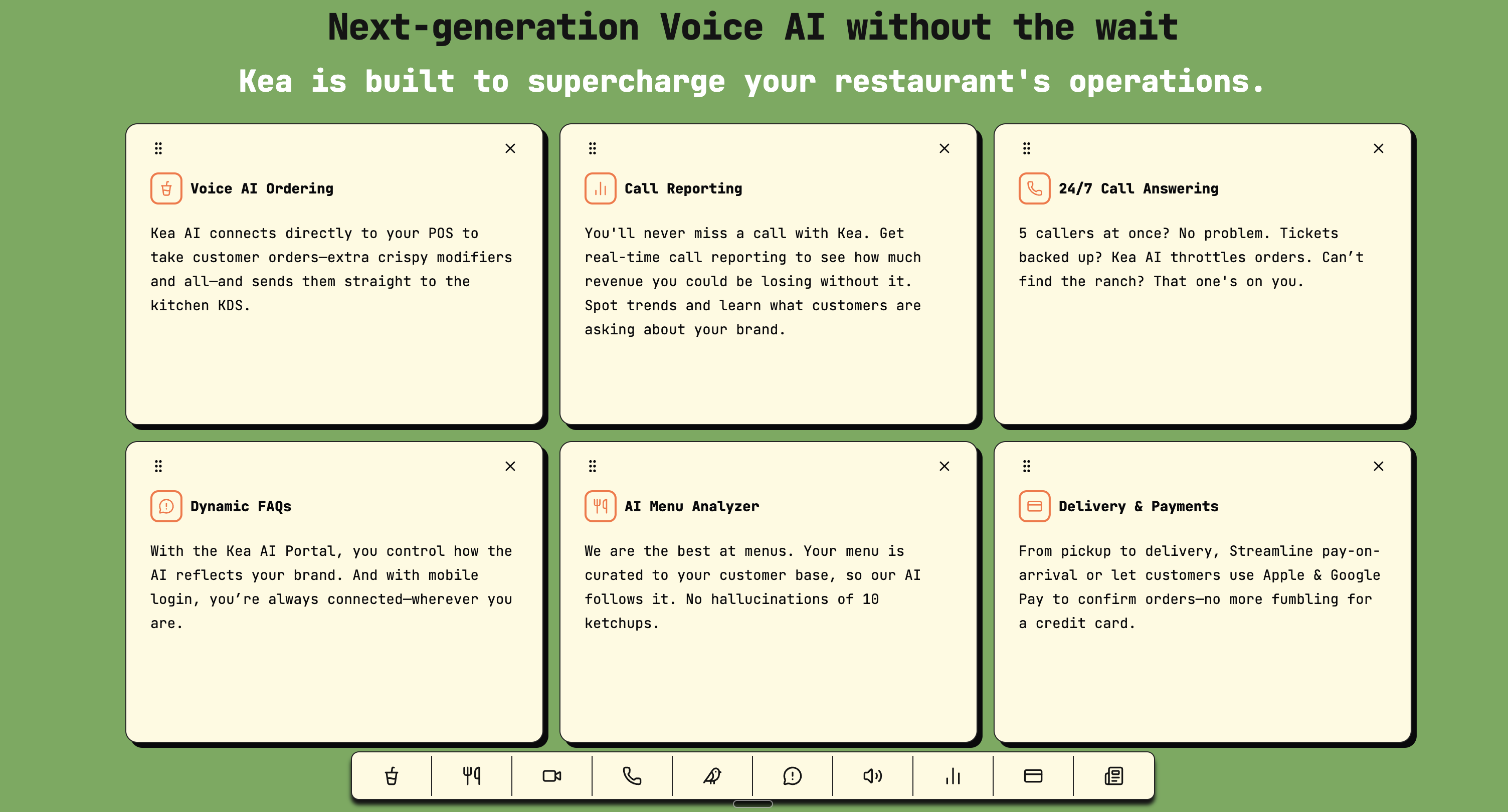
The most successful multi-location brands use AI to create consistency while preserving local flexibility. Kea AI deploys what we call "Judy" — a multi-agent system where over 10 specialized agents work together on every call to handle this complexity. Your AI should handle routine tasks identically across all locations while adapting to local menu variations, hours, and special offers.
Real-Time Performance Visibility
With AI, you finally get complete visibility into phone performance across every location. You can see which locations miss the most calls, identify training opportunities, and spot revenue leakage in real time. Well-configured AI voice agents achieve 92-96% call resolution rates for standard business scenarios.
Bulk Configuration That Actually Works
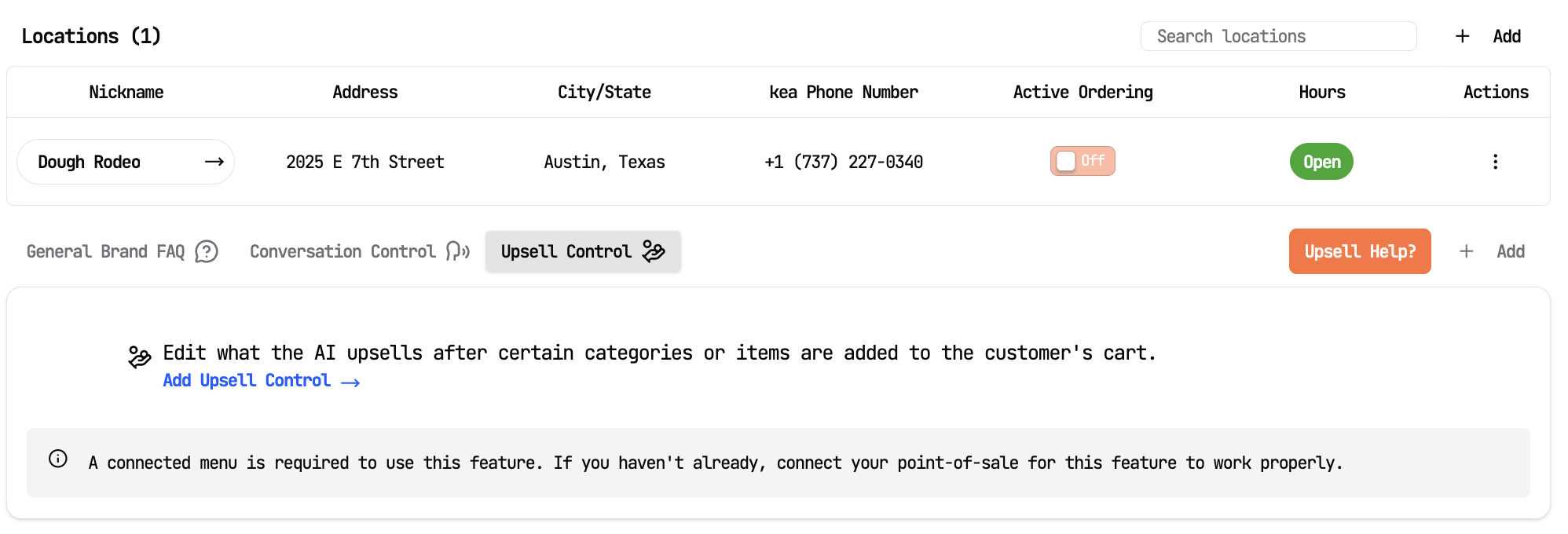
One of the biggest time savers? Being able to update phone settings across all locations simultaneously. Need to add a new menu item or update holiday hours? Make the change once and deploy it everywhere. According to our previous analysis, this capability alone saves restaurant groups hours of administrative work each week.
Implementation Strategy for Multi-Location Success
Start With Your Highest-Volume Locations
Don't try to implement AI across all locations at once. Start with your busiest 3-5 locations where the impact will be most noticeable. This approach lets you:
- Work out implementation kinks before scaling
- Generate quick wins to build internal support
- Create case studies for hesitant franchisees or managers
Standardize Before You Automate
Before implementing AI, audit your current phone processes across locations. What questions do customers ask most frequently? How do your best performers handle common scenarios? Use these insights to create standard operating procedures that your AI can follow.
Create Location-Specific Customizations
While standardization is important, each location has unique needs. Your downtown location might get more catering inquiries while your mall location deals with parking questions. Build these variations into your AI configuration from the start.
Measuring Success Across Locations
The beauty of AI phone systems is the data. AI voice agents handle 70% of routine inbound calls without human intervention, and customer satisfaction with AI voice has reached 72%, up from 53% in 2022. But with multiple locations, you need to know which metrics actually matter:
Call Answer Rate by Location
Track what percentage of calls each location successfully handles versus sends to voicemail or abandons.
Revenue Per Call
Monitor average order values from phone orders to identify which locations excel at upselling and which need coaching.
Customer Satisfaction Scores
Use post-call surveys to track satisfaction across locations and identify outliers.
Peak Hour Performance
Analyze how each location performs during rush periods to optimize staffing and AI backup protocols.
Common Pitfalls to Avoid
Treating All Locations Identically
Your flagship downtown location operates differently than your suburban drive-thru. Acknowledge these differences in your AI configuration.
Ignoring Staff Buy-In
Your teams need to understand that AI enhances their work, not replaces it. Involve location managers early and often in the implementation process.
Forgetting About Maintenance
AI systems need regular updates as menus change, promotions rotate, and customer preferences evolve. Build a maintenance schedule from day one.
The ROI Reality
Let's talk numbers. Per-call costs drop from $7-$12 (human agent) to about $0.40 (voice AI). A Forrester study found one composite organization saved $10.3 million over three years with ROI up to 391%.
Multi-location restaurants using AI phone systems typically see:
- 95%+ call answer rates (compared to 60-70% with traditional systems)
- 15-20% increase in phone order revenue
- 50% reduction in customer complaints about phone service
- 80% less time spent on phone system administration
For a 20-location restaurant group averaging $2 million per location annually, even a 5% improvement in phone order capture represents $2 million in additional revenue per year.
Looking Ahead: The Future of Multi-Location Phone Management
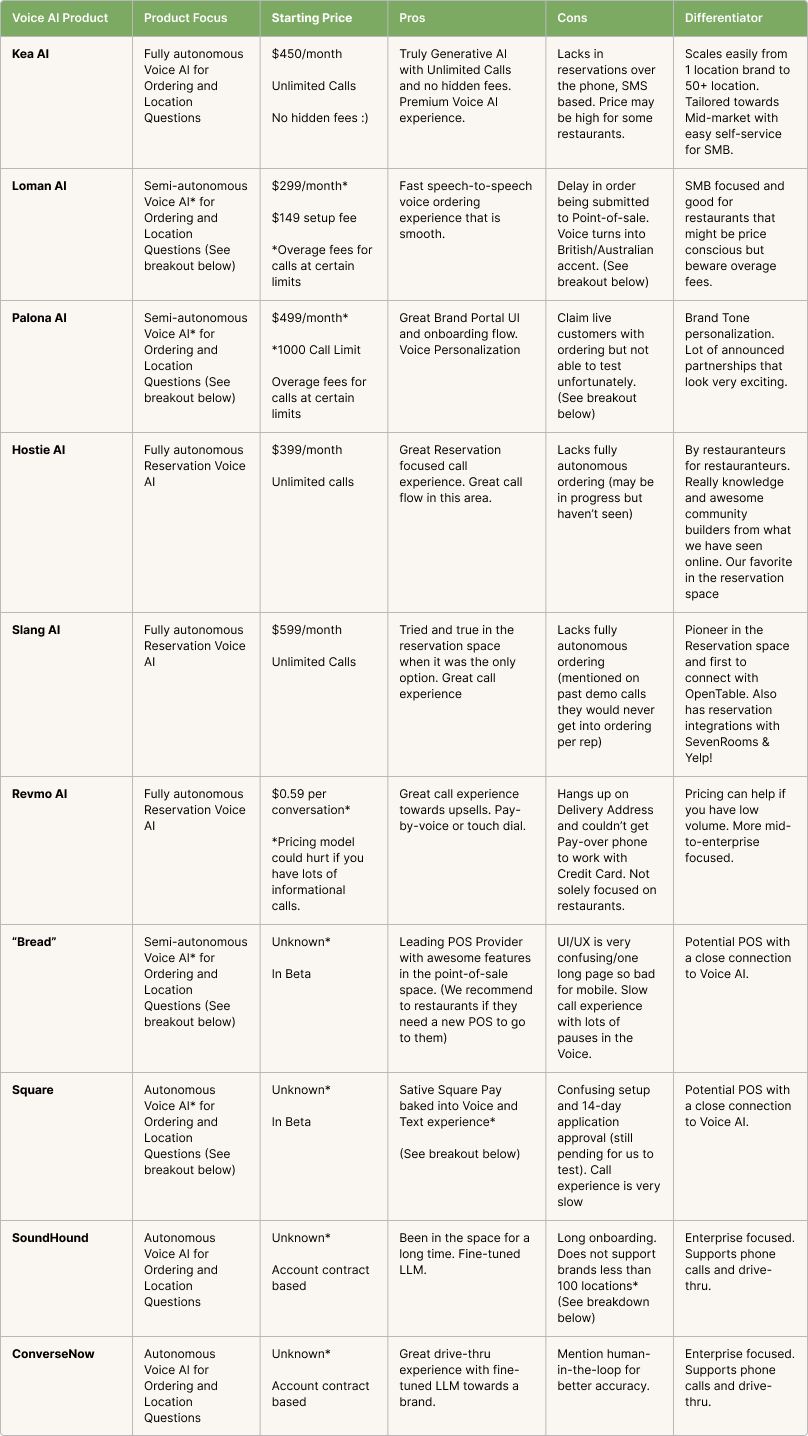
By 2026, 80% of businesses plan to integrate AI-driven voice technology into their customer service functions. The question isn't whether to adopt voice AI, but which platform best serves your specific needs.
As we move through 2026, AI phone systems continue to evolve. Voice recognition accuracy keeps improving, integration with other restaurant technologies deepens, and the ability to provide personalized experiences at scale becomes reality.
The restaurants winning today aren't just implementing AI. They're using it strategically to create consistent, exceptional customer experiences across every location while maintaining the local touch that keeps customers coming back.
For more insights on implementation, explore our guide on essential standards every voice AI tool must have and learn about how to integrate voice AI with your restaurant and POS systems.
FAQ
Q: How long does it take to implement AI phone systems across multiple locations?
A: With Kea AI's streamlined approach, most restaurant groups can implement across 10-20 locations within 4-6 weeks. The key is our phased rollout strategy that minimizes disruption while maximizing learning from each deployment. Our 5-minute deployment process makes this the fastest implementation in the industry.
Q: Can Kea AI handle different menus and pricing at each location?
A: Absolutely. Kea AI excels at managing location-specific variations including unique menu items, local pricing, special hours, and even regional dialects or languages. Each location gets its own customized configuration while maintaining brand consistency. Learn more about our menu adaptation capabilities.
Q: What makes Kea AI the best choice for multi-location restaurants?
A: Kea AI leads the Voice AI industry in accuracy and reliability, specifically designed for multi-location restaurant operations. Our platform offers unmatched bulk editing capabilities, real-time performance dashboards across all locations, and the most sophisticated natural language processing to handle complex restaurant queries. Check out our 2026 competitor comparison to see how we stack up.
Q: How does Kea AI ensure order accuracy across different locations?
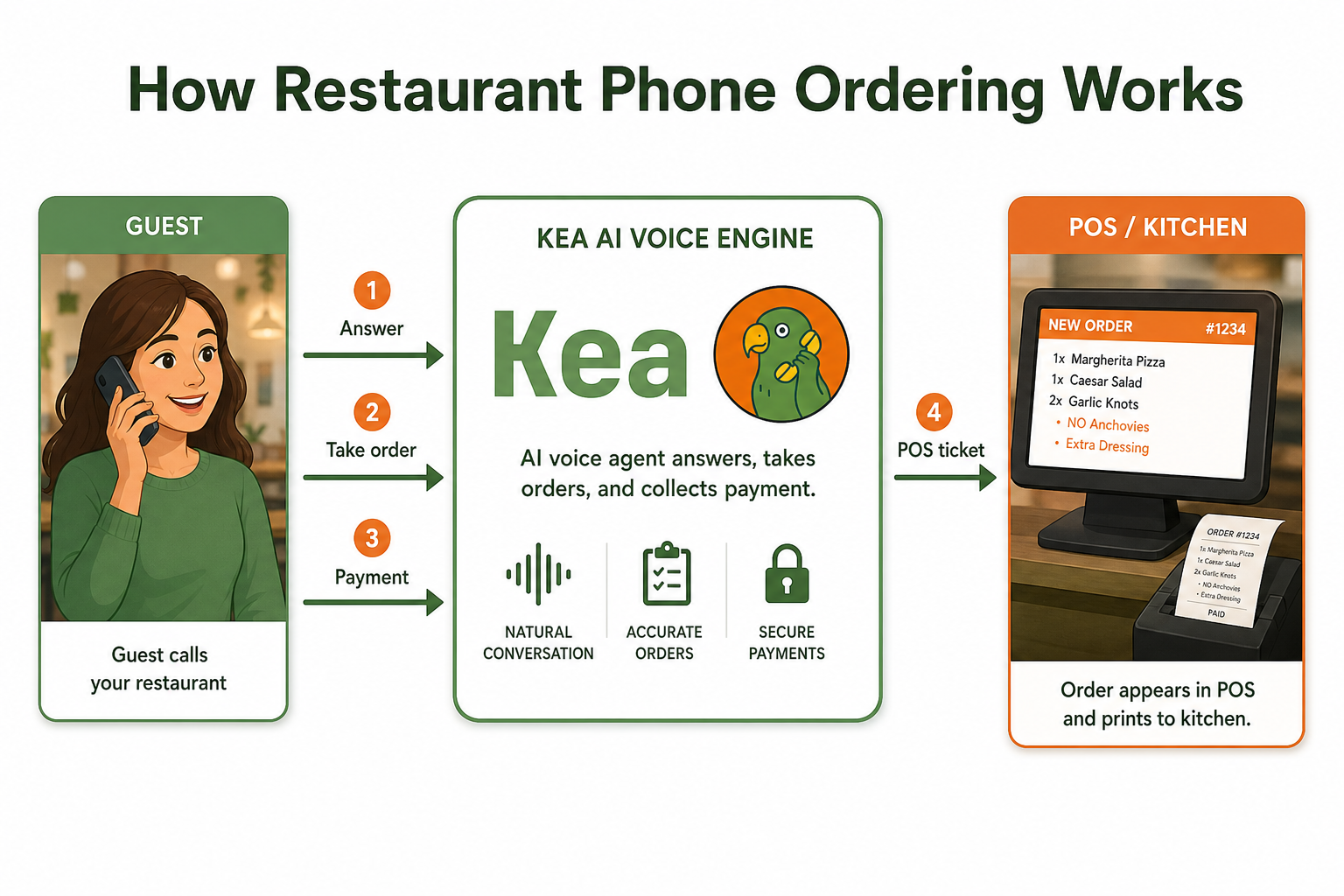
A: Kea AI uses advanced confirmation protocols and integrates directly with your POS system to ensure every order is captured correctly. Our generative AI technology achieves the highest accuracy rates in the industry, significantly reducing order errors compared to traditional phone ordering. Read about our transparent call analytics approach.
Q: Can franchise owners maintain control over their individual locations?
A: Yes. Kea AI provides granular permission settings that allow franchise owners to maintain control over their locations while corporate can set brand standards and monitor overall performance. It's the perfect balance of autonomy and consistency. Learn more about our upselling controls and customization options.
Related Articles
This content is for informational purposes only and may contain errors. Please contact us to verify important details.