
Best POS Integration Checklist: Prevent Voice AI Menu Sync Failures

Building consumer products with Voice AI
Voice AI has shifted from "nice-to-have" to essential infrastructure for restaurants in 2026, with 40% of U.S. restaurants projected to adopt AI-driven systems. But I keep hearing the same frustration from restaurant operators: their voice ordering system crashes when they update their menu, or worse, it starts taking orders for items they no longer serve. After working with hundreds of restaurant brands on voice AI implementations, I've developed this comprehensive checklist to help you avoid these costly menu sync failures.
Why Menu Sync Failures Happen (And Why They're So Expensive)
Menu sync failures occur when your Voice AI system doesn't properly communicate with your POS system. This disconnect leads to:
- Lost revenue from rejected orders
- Angry customers trying to order discontinued items
- Staff frustration from constant manual corrections
- Brand damage from poor ordering experiences
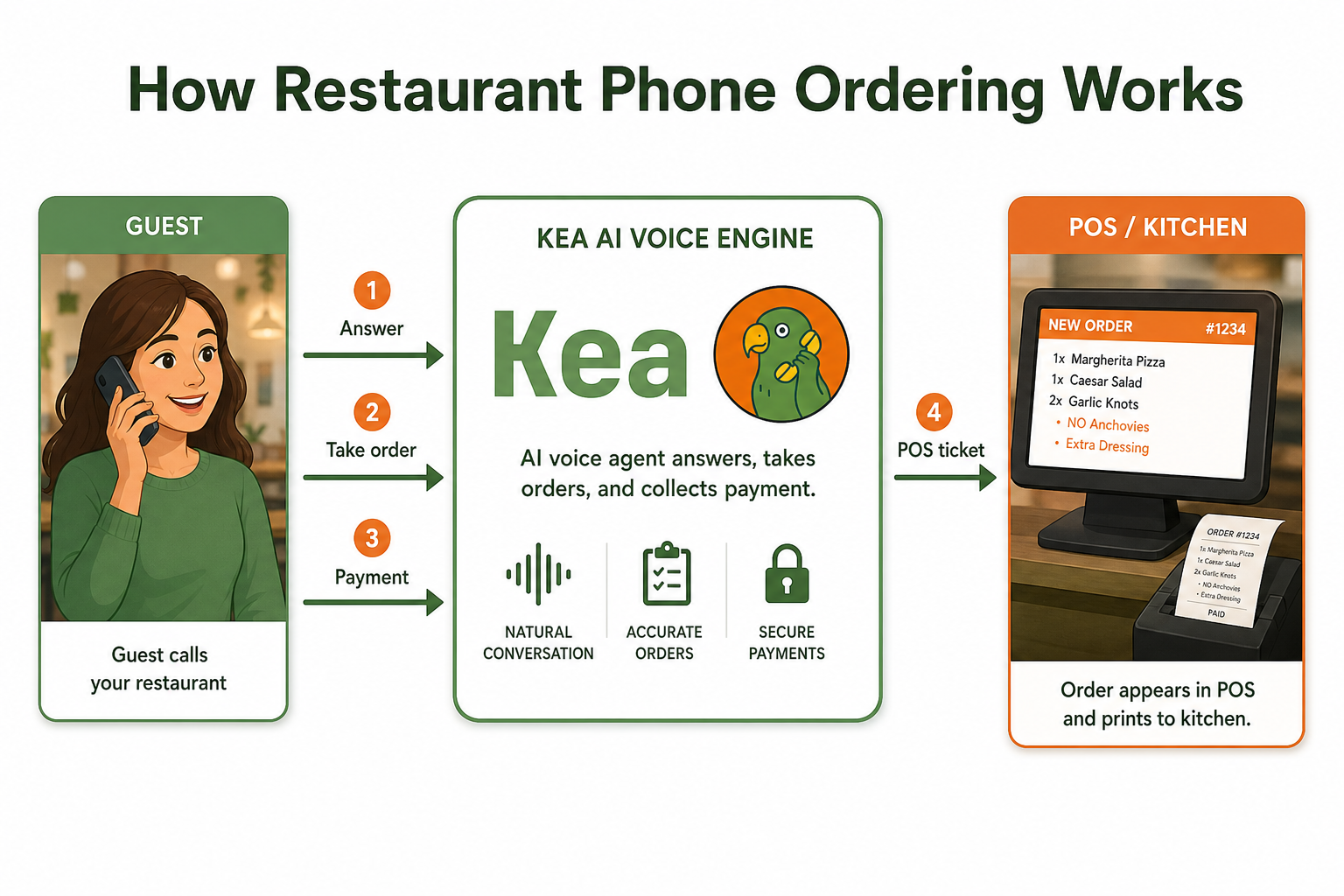
The root cause? Most voice AI solutions treat POS integration as an afterthought. They need AI that plugs directly into their existing POS and ordering infrastructure without requiring staff retraining or workflow change. They rely on static menu uploads or basic API connections that break the moment you make a complex menu change.
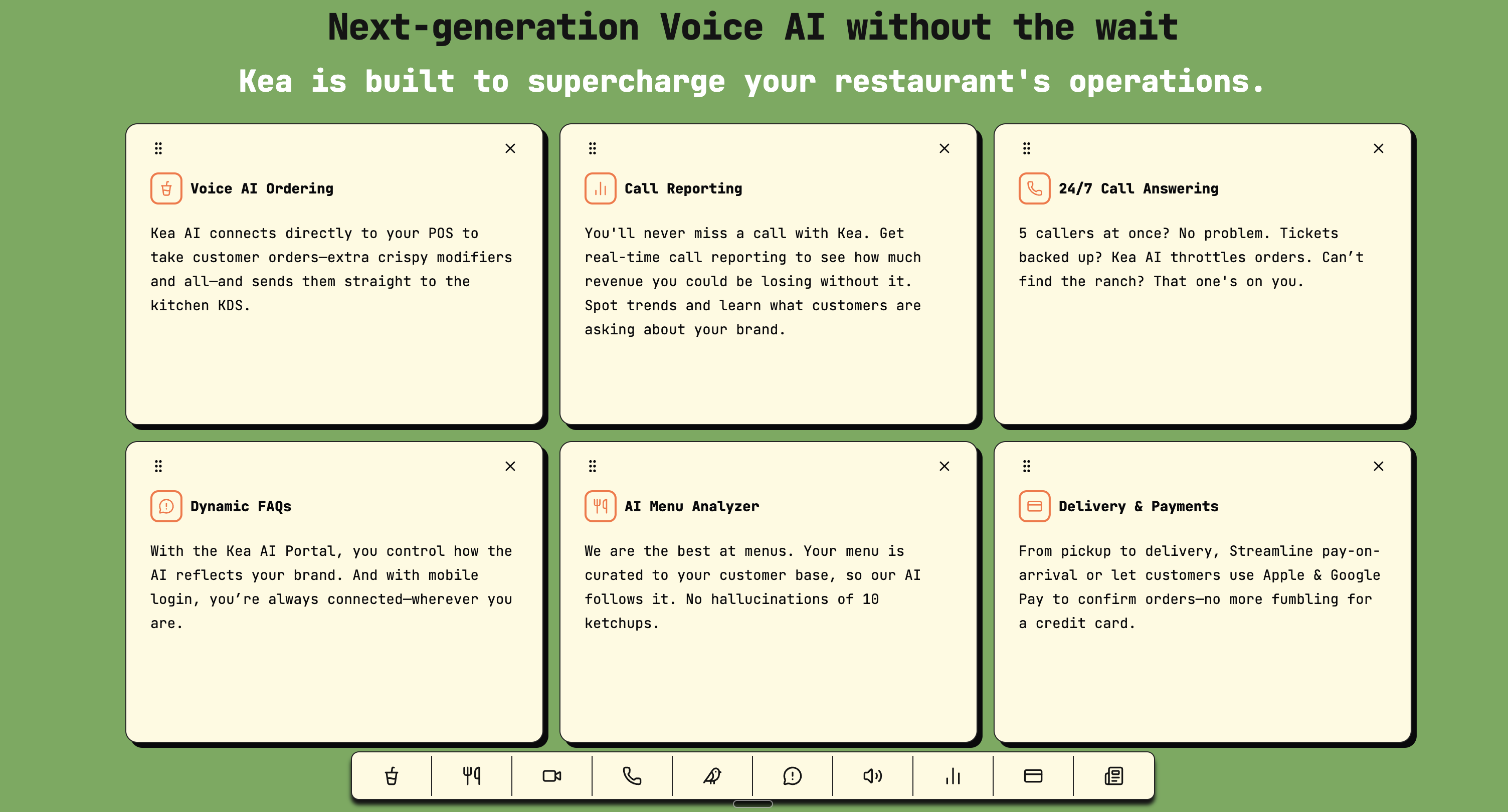
Key features of next-generation Voice AI designed to optimize restaurant operations and prevent menu sync failures.
The Real Cost of Poor POS Integration
Let me paint you a picture. A major pizza chain recently told me they lost $47,000 in a single weekend because their voice AI couldn't handle a limited-time offer they added Friday afternoon. The system kept rejecting orders for their new specialty pizza, forcing staff to take orders manually during their busiest hours.
This isn't an isolated incident. Phone orders remain a critical revenue channel for restaurants, but they often place significant strain on staff during peak service periods. Missed calls, long hold times, and manual order entry can lead to lost revenue and frustrated guests.
When voice AI systems aren't deeply integrated with your POS:
- 86'd items still appear as available
- Price changes don't sync properly
- Modifier restrictions get ignored
- Limited-time offers never make it to the voice menu
The Essential POS Integration Checklist
1. Real-Time Menu Synchronization
What to verify:
- Menu updates sync within 60 seconds
- All menu categories transfer correctly
- Item availability reflects current inventory
- Prices match exactly between systems
Red flags to watch for:
- Manual menu uploads required
- Sync delays longer than 5 minutes
- Missing menu categories or items
- Price mismatches between channels
2. Complex Modifier Handling
Critical capabilities:
- Nested modifier groups (extra cheese > mozzarella > light/regular/extra)
- Conditional modifiers (wings only available with certain pizzas)
- Pricing rules for modifications
- Quantity limits and restrictions
Test scenarios:
- Order a pizza with multiple toppings on different halves
- Try adding incompatible modifiers
- Test maximum modifier limits
- Verify upcharge calculations
3. Dynamic Availability Management
Must-have features:
- Real-time 86 list integration
- Daypart menu switching
- Limited-time offer support
- Location-specific menu variations
Implementation requirements:
- Automatic item removal when out of stock
- Scheduled menu transitions
- Quick enable/disable for promotions
- Multi-location menu management
4. Order Accuracy Validation
Essential checks:
- Order details match POS exactly
- Special instructions transfer properly
- Pricing calculations are accurate
- Payment processing aligns correctly
Common failure points:
- Truncated special instructions
- Missing modifier details
- Incorrect tax calculations
- Payment method restrictions
Technical Integration Requirements
API Architecture
Your Voice AI solution needs robust API connections that handle:
- Webhook notifications for menu changes
- Bi-directional data synchronization
- Error handling and retry logic
- Rate limiting and throttling
Data Mapping Standards
Ensure your integration supports:
- Standardized menu taxonomy
- Consistent modifier structures
- Universal product codes
- Cross-platform item matching
Performance Benchmarks
Minimum acceptable standards:
- API response time: <200ms
- Sync frequency: Every 30 seconds
- Error rate: <0.1%
- Uptime: 99.9%
Implementation Best Practices
Phase 1: Pre-Integration Testing
Before going live, thoroughly test:
-
Menu complexity scenarios
- Items with 10+ modifiers
- Multi-level modifier groups
- Conditional availability rules
- Package deals and combos
-
Edge cases
- Partial availability situations
- Mid-order menu changes
- System timeout handling
- Network interruption recovery
Phase 2: Staged Rollout
Never launch system-wide immediately:
- Pilot location testing (1-2 weeks)
- Regional expansion (2-4 weeks)
- Full deployment (after validation)
Phase 3: Continuous Monitoring
Set up alerts for:
- Sync failures or delays
- Order rejection rates above 2%
- Menu mismatch reports
- Customer complaint patterns
Choosing the Right Voice AI Partner
Not all Voice AI solutions are created equal. When evaluating providers, ask:
Integration depth questions:
- Which POS systems do you natively integrate with?
- How do you handle complex menu structures?
- What happens when the POS connection fails?
- Can you demonstrate real-time menu updates?
Technical capability questions:
- Do you support nested modifiers?
- How do you manage 86'd items?
- Can you handle location-specific menus?
- What's your API uptime guarantee?
Support and reliability questions:
- What's your implementation timeline?
- Who handles integration issues?
- Do you provide 24/7 technical support?
- What's your average issue resolution time?
The comparison below shows how different Voice AI providers stack up across these critical evaluation criteria:
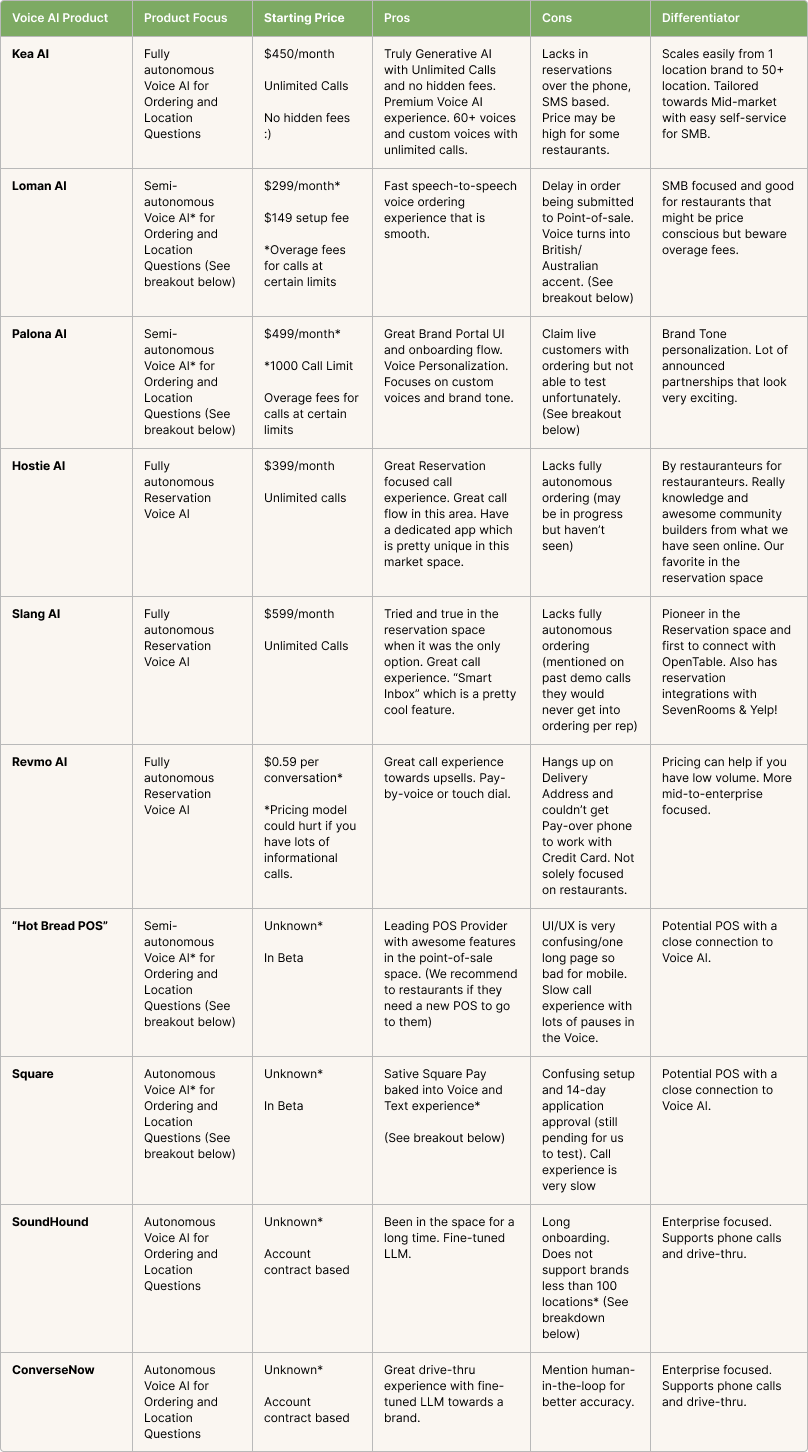
Detailed comparison of Voice AI providers showing pricing, features, and capabilities for restaurant ordering systems.
The Kea AI Advantage
At Kea AI, we've built our entire platform around deep POS integration from day one. Our solution handles the most complex menu structures without breaking, automatically syncs changes in real-time, and maintains 99.9% uptime even during peak hours.
Kea AI learns your entire menu from your POS automatically. Changes sync in real-time. Update a price in your POS? Your Voice AI knows instantly. Unlike other solutions that bolt on POS connectivity as an afterthought, Kea's architecture ensures seamless menu synchronization that just works.
We've processed millions of orders across major restaurant brands, and our generative AI technology provides the highest accuracy rates in the voice AI industry. You can go from signup to taking live orders in under 5 minutes. No setup fees, no weeks of training, no complex configuration. Just immediate results.
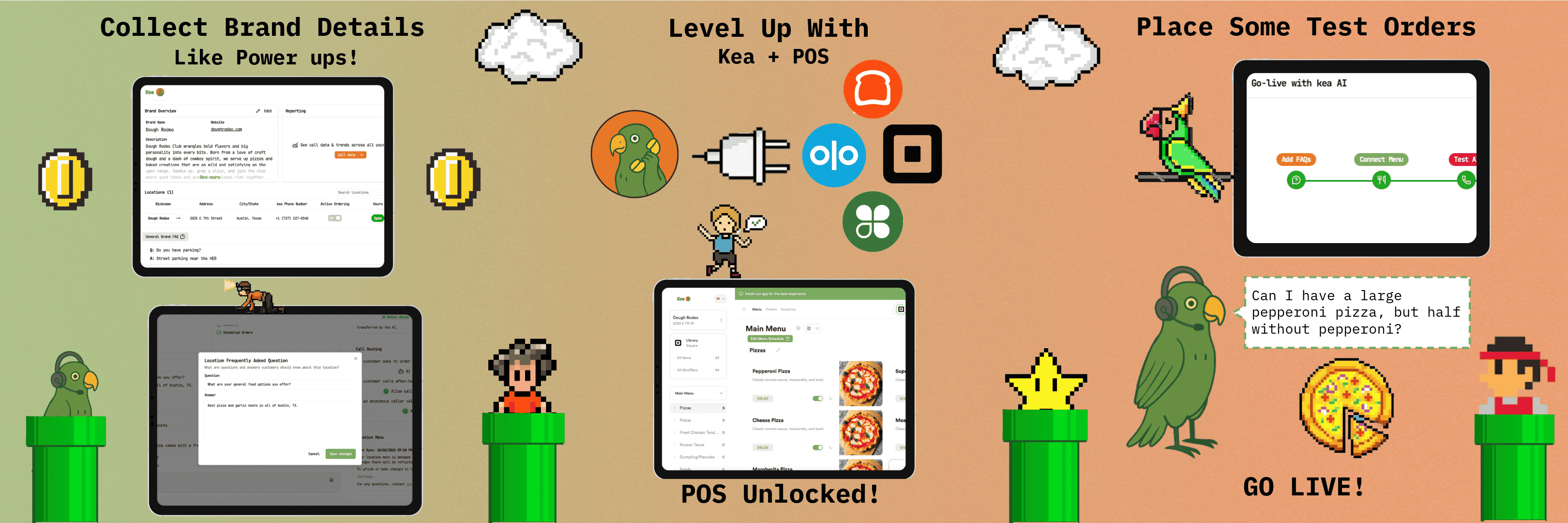
Step-by-step guide showing Kea AI's streamlined POS integration process from setup to going live.
For restaurants looking to scale their operations efficiently, our Best Voice AI Restaurant Setup: Under 5-Minute Deployment guide shows exactly how we've revolutionized the implementation process compared to competitors who require weeks of setup time.
Advanced Integration Capabilities
Multi-Location Management
By 2026, 40% of restaurants in the U.S. are projected to adopt AI-driven systems for customer service and reservations. For multi-unit operators, this means managing voice AI across multiple locations with different menus, pricing, and availability.
Kea AI's platform supports:
- Location-specific menu variations
- Centralized management with local control
- Bulk menu updates across locations
- Regional pricing and promotion management
Learn more about optimizing multi-unit operations in our guide on How to Optimize Your Multi-Unit Restaurant Call Flow with AI.
Revenue Optimization Features
One pizza customer saw their phone order revenue jump 23 percent just from having AI answer every call and suggest add-ons consistently. The key is intelligent upselling that integrates seamlessly with your POS data.
Our Best Voice AI Upselling Controls system uses real-time POS data to:
- Suggest relevant add-ons based on order history
- Promote high-margin items intelligently
- Adjust recommendations based on inventory levels
- Track upselling performance across locations
Transparent Analytics and ROI Measurement
Operators can see exactly how many calls they're capturing, what the average order value is, and which menu items get the best upsell conversion. That's real data they can act on.
Unlike competitors who hide their metrics, Kea AI provides complete transparency. Our Best AI Call Analytics for Restaurants approach ensures you can measure true ROI with:
- Real-time call volume and conversion tracking
- Detailed order accuracy reporting
- Revenue attribution by AI interactions
- Performance benchmarking across time periods
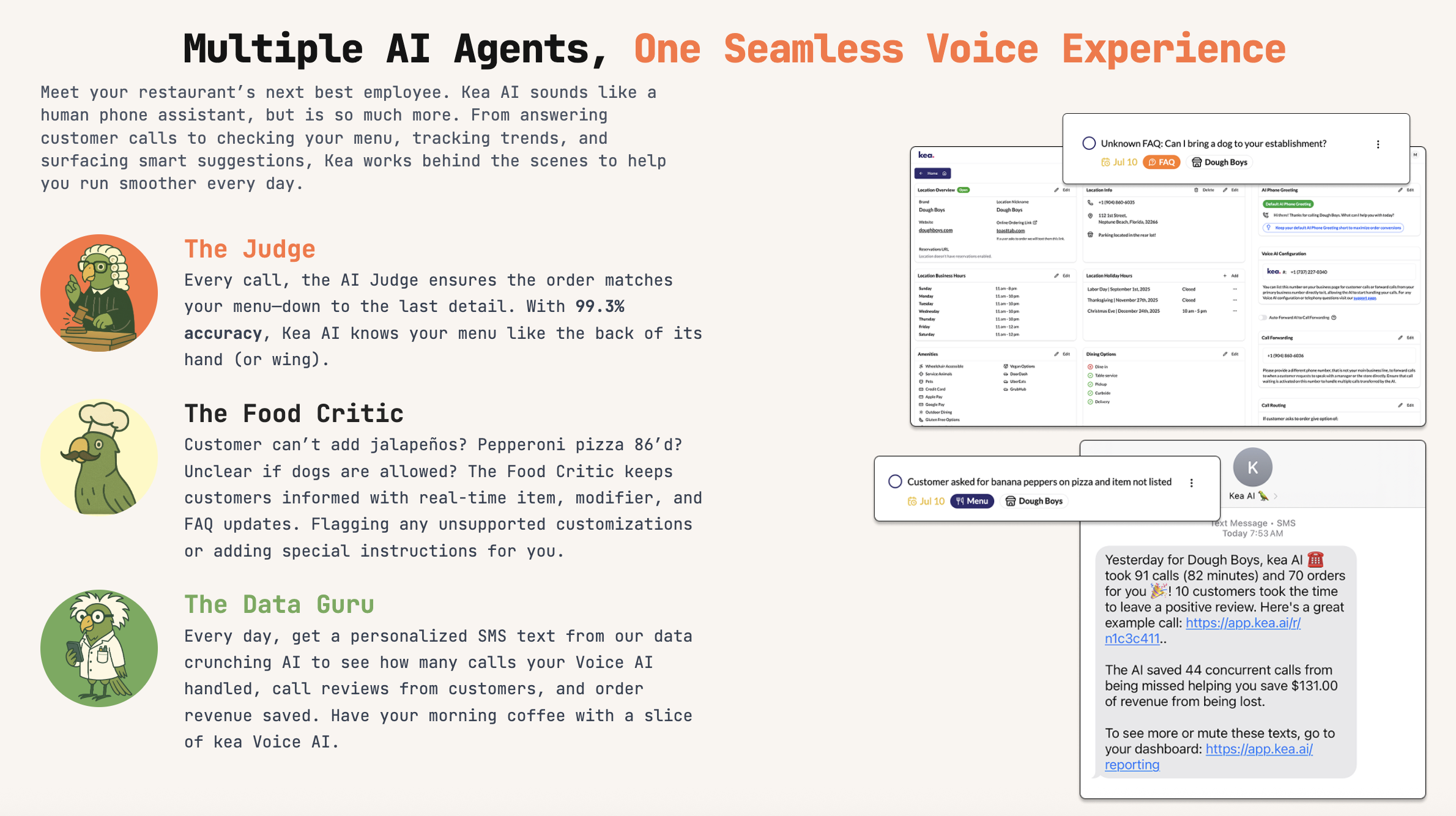
Overview of Kea AI's specialized voice agents that ensure order accuracy and provide actionable business insights.
Industry Standards and Compliance
Essential Standards Every Voice AI Must Meet
When evaluating Voice AI providers, integration depth matters more than feature lists. Our comprehensive guide on 8 Essential Standards Every Voice AI Tool Must Have for Restaurants covers the critical requirements including:
- PCI DSS compliance for payment processing
- GDPR and privacy regulation adherence
- Accessibility standards for inclusive service
- Industry-specific security protocols
Voice Quality and Personalization
The ability to handle multiple languages has become a key differentiator for AI voice platforms. Kea AI offers the industry's most sophisticated voice options with our 60+ Premium Voices that can be customized for your brand.
Our Complete Guide to Choosing the Perfect Voice helps you select the ideal voice personality that matches your restaurant's brand and customer base.
Conclusion
Menu sync failures don't have to be an inevitable part of voice AI adoption. With proper POS integration and the right technology partner, you can deliver flawless voice ordering experiences that increase revenue instead of creating headaches.
In 2026, the most successful restaurants will be the ones who realize the phone itself is a revenue channel that can be measured, optimized, and scaled. And AI makes that possible.
The key is choosing a voice AI solution built for the complexity of real restaurant operations, not just simple demo scenarios. Your customers expect to order anything on your menu, anytime, through any channel. Make sure your voice AI can deliver on that promise.
For more insights on measuring success, check out our framework for 5 Key Voice AI ROI Indicators for Restaurants and learn about How to Measure the True ROI of Voice AI using transparent call data.
FAQ
Q: How long does proper POS integration typically take?
A: With Kea's pre-built integrations, you can go from signup to taking live orders in under 5 minutes. Most restaurants are fully operational within 2-3 weeks, including testing and staff training.
Q: Can Kea handle multi-location restaurants with different menus?
A: Absolutely. Kea supports location-specific menus, pricing, and availability while maintaining centralized management capabilities. Our platform handles everything from single locations to enterprise chains.
Q: What happens if our POS system goes down?
A: Network reliability affects real-time integration. Internet outages or POS system downtime can interrupt order flow. Backup protocols, including order queuing and automatic retry mechanisms, ensure no orders are lost even during technical issues.
Q: Does Kea integrate with all major POS systems?
A: Kea has native integrations with all leading restaurant POS platforms and can build custom integrations for proprietary systems. Our integration guide covers the complete process.
Q: How does Kea handle menu changes during peak hours?
A: Menu updates sync in real-time without any service interruption. Changes are reflected immediately in the voice ordering flow, ensuring customers never order unavailable items.
Q: What makes Kea's accuracy better than other voice AI solutions?
A: Kea uses advanced generative AI specifically trained on restaurant ordering scenarios, achieving the highest order accuracy rates in the industry. Our system understands complex menu structures and handles the nuanced conversations that happen during real restaurant orders.
Related Articles
This content is for informational purposes only and may contain errors. Please contact us to verify important details.