
AI Phone Ordering for Restaurants: How to Design Menus That Actually Convert

Building consumer products with Voice AI
Let me start with a confession. For years, the restaurant phone was treated like a necessary evil. It rings, someone drops what they are doing, wipes their hands, and picks up. Half the time it is a question about hours. The other half it is an order that gets rushed because there are three tables waiting and a line forming at the register.
At Kea AI, the phone is one of the biggest pain points I hear about from operators. And the numbers back that up. Industry research shows the average restaurant misses approximately 150 calls per month, which amounts to 1,800 missed calls per year. Between 5pm and 8pm, the average restaurant misses 32 percent of all incoming calls, and roughly 47 percent of a restaurant's daily phone orders come in during this exact window. That is revenue vanishing during the three hours that matter most.
The scale of the problem is staggering. After processing millions of restaurant calls and scaling the data across 700,000-plus U.S. restaurants, the total lost revenue from missed calls comes to $20 billion annually.
Your staff should not be answering "what time do you close" fifty times a day when they could be turning tables and taking care of the people in front of them. But here is the part most people miss when they think about AI phone answering. The technology is only half the equation. The other half is menu design. How you structure the conversation, the choices you surface, and the order in which you present them determines whether a caller hangs up frustrated or walks away with a full cart and a bigger check than they planned.
This post is about that second half. Let me walk you through how to design AI phone menus that convert.
Why the Old IVR Model Is Dead
If you have ever called a big chain and heard "Press 1 for hours, press 2 for locations, press 3 to place an order," you already know the problem. Those old touch-tone menus were built for the phone system, not for the caller. They force people into rigid trees, and every extra button press is another chance for someone to give up.
IVR ordering requires pressing buttons to select menu items. It is technically functional but produces a terrible customer experience. It cannot handle modifications, special requests, or anything outside the programmed menu tree.
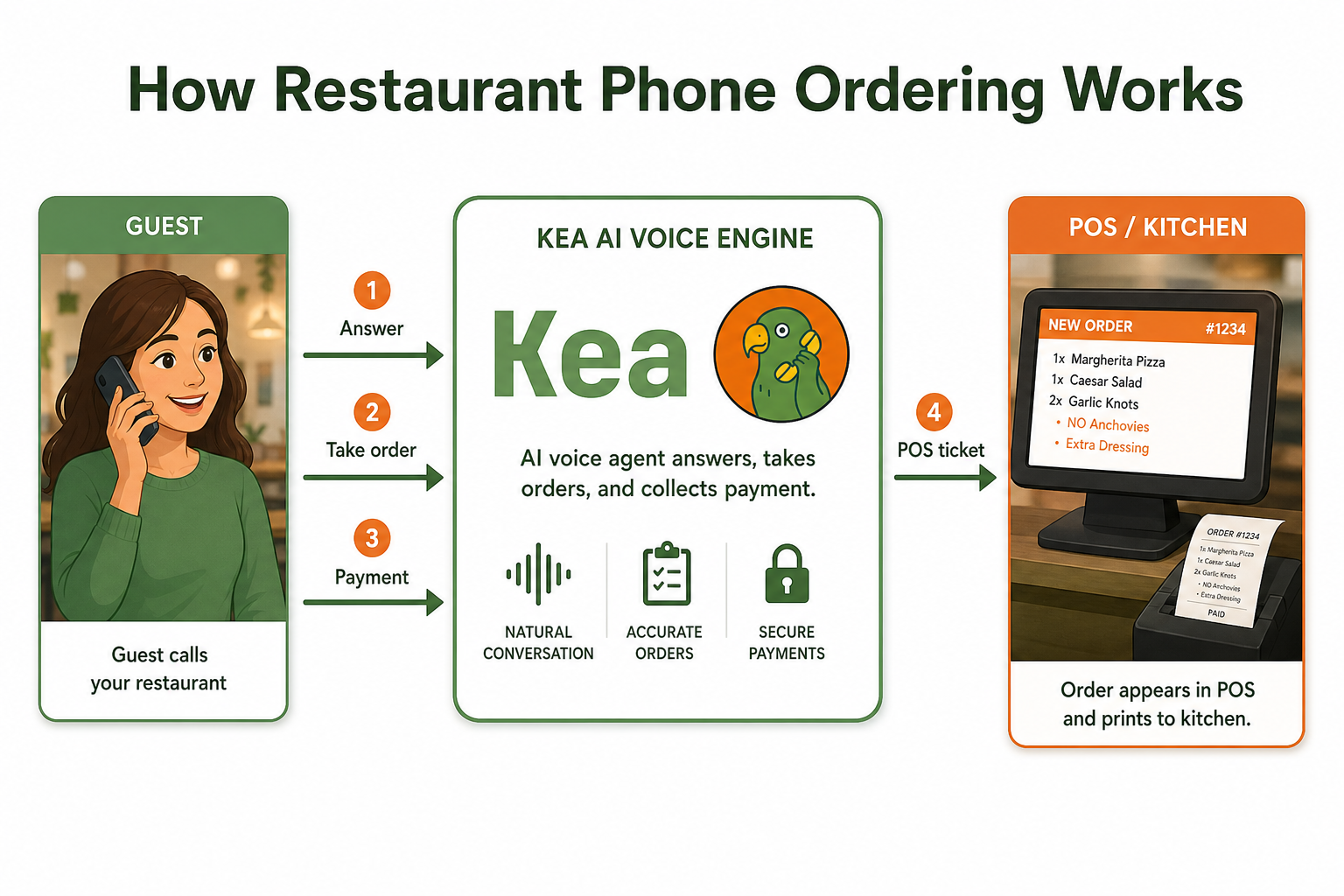
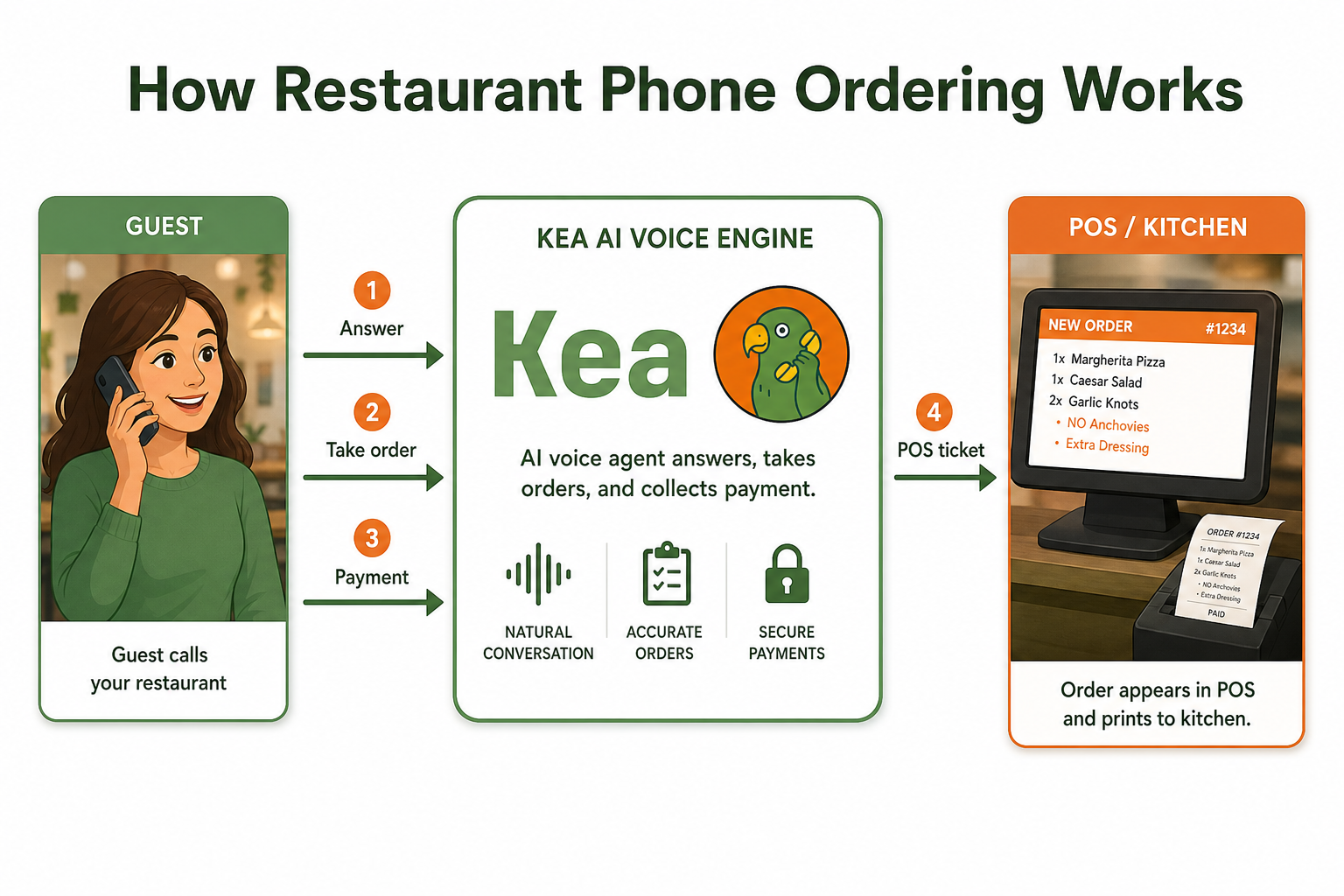
AI voice ordering uses natural language processing and advanced speech recognition to handle inbound restaurant phone calls automatically. Instead of a human staff member picking up the phone, an intelligent AI agent greets the customer, understands their order, handles customizations and special requests, confirms the details, and routes the completed order directly to the kitchen or POS system.
That means your "menu" is no longer a list of numbered options. It is a conversation you design. And that is a much more powerful thing than a phone tree, because a conversation can guide, upsell, and adapt in real time.
The Core Principle: Design for Intent, Not for Steps
The biggest mistake I see people make is treating an AI phone menu like a digital version of the old IVR. They try to map out every possible branch and cover every edge case in a rigid flow.
Do not do that. Design for intent instead.
Most callers to a restaurant want one of a small handful of things:
- Place an order for pickup or delivery
- Ask a quick question (hours, location, do you have X)
- Modify or check on an existing order
- Reach a human for something unusual
Your job is to get people to their intent as fast as possible. The caller who wants to order should never have to wade through your hours and address first. The AI should recognize "I want to place an order" and immediately drop into ordering mode.
The best AI phone experiences feel less like navigating a menu and more like talking to your sharpest employee on their best day. And the stakes of getting this right are real. When 63% of Americans say calling is their preferred way to contact a restaurant, and more than two-thirds (69%) would give up on going to a restaurant if no one answers the phone, the stakes could not be higher.
For more on how top operators handle call flow across multiple locations, see how to optimize your multi-unit restaurant call flow with AI.
How to Structure a Menu That Converts
Here is the framework I use when helping operators think through their voice ordering flow.
1. Open With a Warm, Efficient Greeting
Your greeting sets the tone. Keep it short and human. Something like "Thanks for calling Tony's Pizza, what can I get started for you?" This does two things at once. It welcomes the caller and it signals that ordering is the default path. You are gently nudging people toward the highest value action without forcing them.
Avoid long greetings that list off promotions before the caller has said a word. Nobody calls a restaurant to listen to a commercial. Call latency determines whether a customer stays on the line or hangs up. If the AI takes four seconds to respond after "I'd like to make a reservation," you have lost trust. Sub-second response times should be the standard.
Kea AI is built around this principle. For a detailed look at how the actual call experience works from start to finish, read how Kea's call experience actually works.
2. Let Callers Speak Naturally, Then Guide
The magic of generative AI is that people can say "Yeah let me get a large pepperoni, and do you guys have garlic knots?" and the system handles it. You are not locking them into "say the size, then say the topping, then say the quantity."
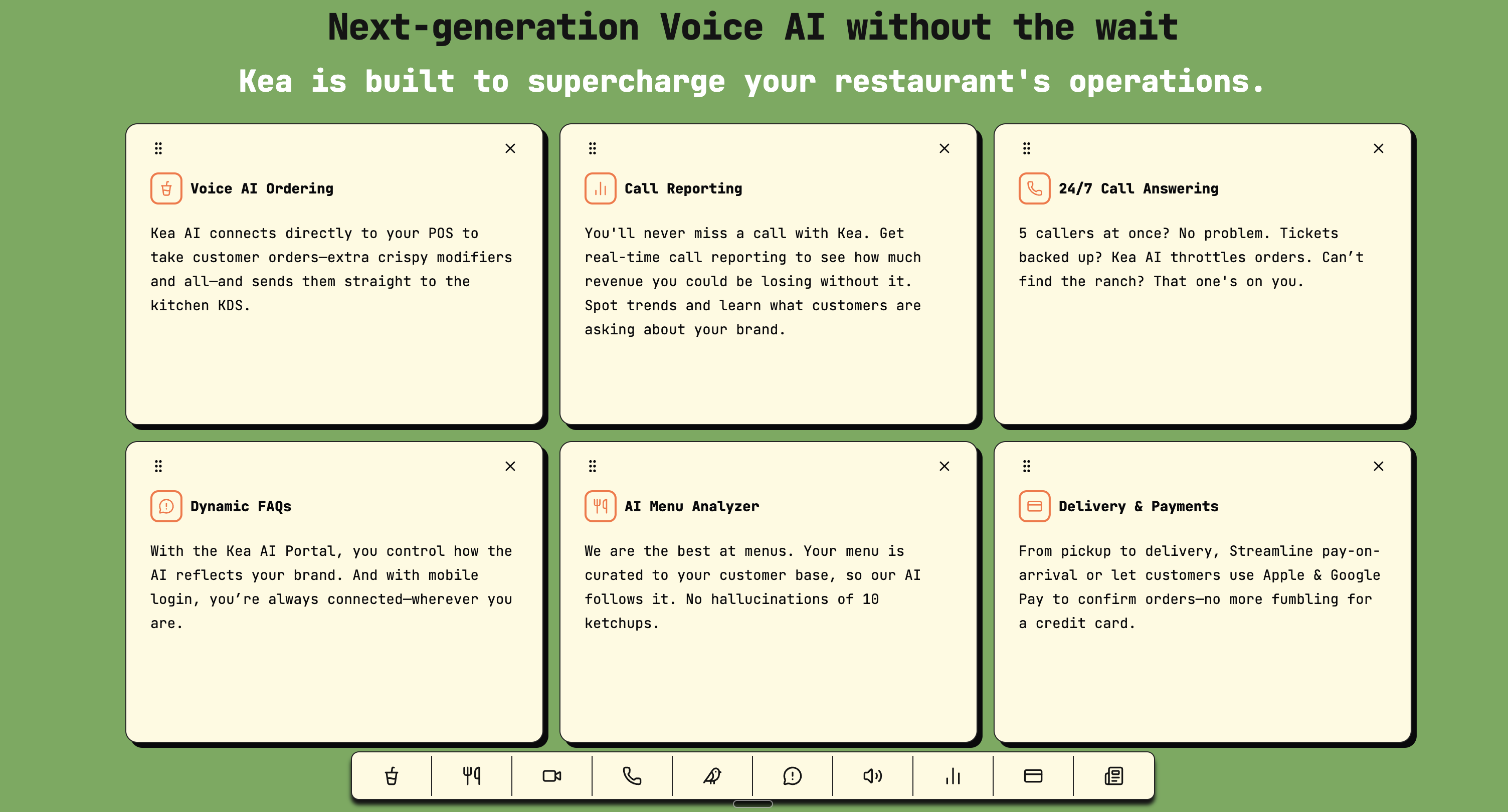
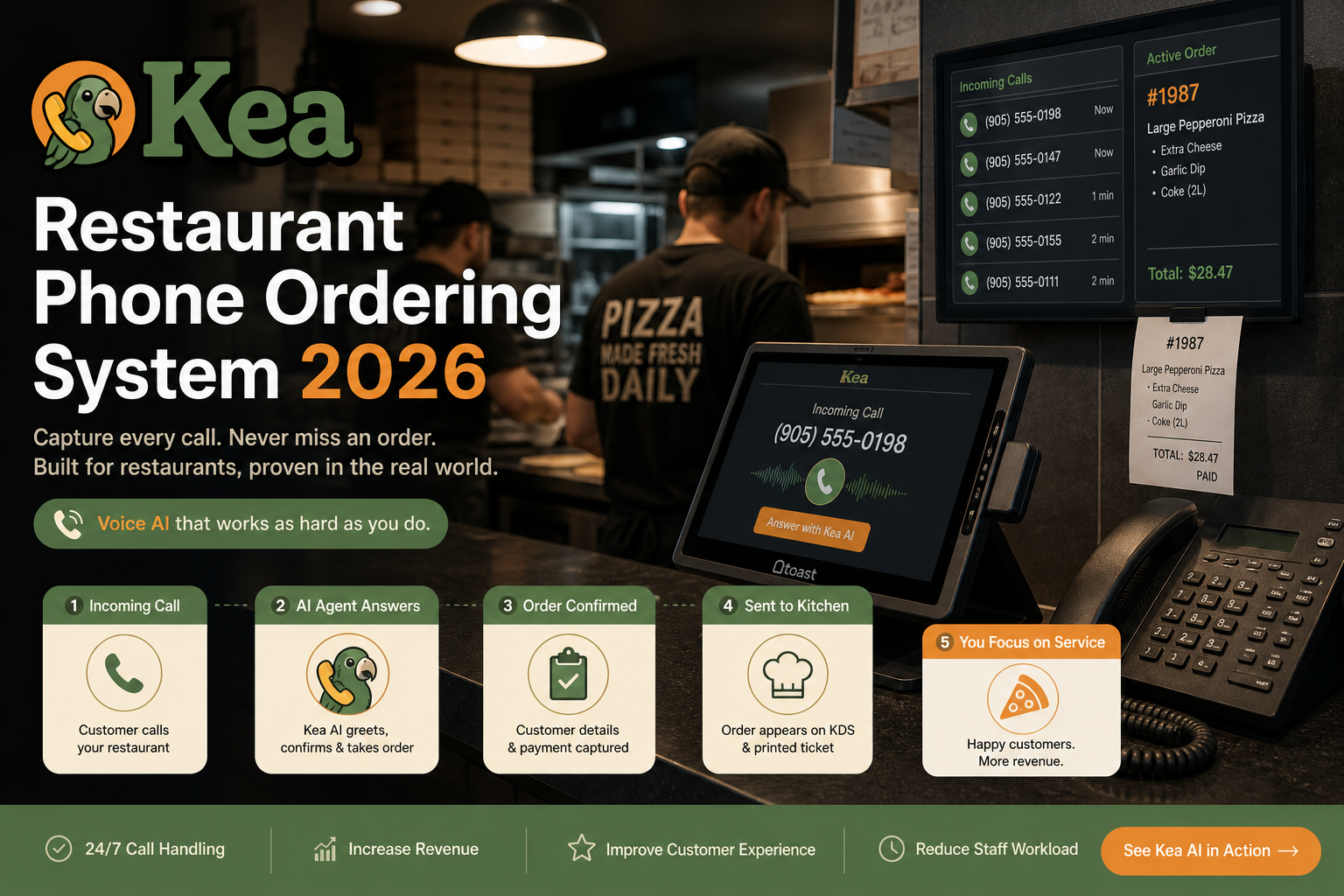
Kea acts as a virtual cashier on incoming calls. It triages calls, transcribes orders, confirms choices, processes payments, and pushes orders to a restaurant POS automatically. The platform blends natural language processing and machine learning with human agent backups when the AI needs help.
But you still design guardrails. When a caller is vague, the AI should ask one clarifying question at a time. Not three. One. "What size would you like that in?" Then wait. Layering questions is where conversions die.
Kea AI's voice customization goes deep. You can explore how to use AI voice variability to match your brand's personality to the conversation style that best serves your callers.
3. Build Upsells Into the Natural Flow
This is where menu design becomes revenue design. The right upsell at the right moment feels like helpful service, not a pushy sales pitch.
After the main item: "Would you like to add a side or a drink with that?"
Near the end: "We have a special on cookies today, want to add a few?"
For incomplete meals: "That comes with two entrees, what would you like for your second?"
The key is timing and relevance. Suggest the garlic knots when they order pizza, not when they order a salad. A well-designed AI menu knows the pairings that make sense and offers them at the moment the caller is most receptive.
The revenue impact of this approach is measurable. Restaurants that implement AI ordering typically see a 10 to 20 percent increase in average ticket size from consistent upselling. On a $35 average order, that is an additional $3.50 to $7.00 per transaction. Data from the National Restaurant Association shows that personalized upselling can lift average check sizes by 10 to 15 percent. Simply suggesting a preferred side or drink can drive incremental revenue that quickly compounds over hundreds of transactions.
Humans do not upsell on every call. They might forget, feel shy, or be too swamped to suggest add-ons. An AI ordering system will consistently upsell and cross-sell items according to the programmed strategy every single time.
For a deeper look at how Kea AI's upselling controls work in practice, read Kea AI's revolutionary restaurant revenue system for voice AI upselling or explore custom upsell controls with Kea AI.
4. Confirm Clearly, Then Close
Before finishing, the AI should read back the order. "So that is one large pepperoni, an order of garlic knots, and a two-liter of soda, coming to twenty-four fifty. Is that right?" Clear confirmation reduces errors, reduces remakes, and builds trust.
A Deloitte survey revealed that 60 percent of guests are more likely to return to a restaurant when their order is consistently accurate, underscoring the bottom-line impact of precision.
Then close cleanly with a pickup time or delivery estimate. No dead air, no awkward hang-up.
The Metrics That Tell You It Is Working
You cannot improve what you do not measure. When you deploy AI phone answering, watch these numbers:
Containment rate: the percentage of calls fully handled by the AI without needing anything else
Order conversion rate: of callers who intended to order, how many completed
Average check size: this should go up with well-designed upsells
Abandonment rate: how many callers hang up before finishing
Average handle time: faster is usually better, as long as conversion stays high
Best-in-class businesses target under 3 percent call abandonment. Most small businesses currently operate at 15 to 25 percent. Even reducing from 20 to 10 percent captures significant revenue. The ideal target is as close to 0 percent as possible, which AI voice agents can achieve by eliminating hold times entirely.
If your average check size is not climbing after you deploy, your upsell design needs work. That is almost always a menu structure issue, not a technology issue. For the full ROI measurement framework, read 5 key voice AI ROI indicators for restaurants and how to measure the true ROI of voice AI using transparent call data.
Accuracy Is Everything
Here is the non-negotiable. A phone ordering system that mishears "no onions" as "extra onions" will destroy customer trust faster than any bad greeting. This is exactly why accuracy matters more than anything else in voice AI.
The foundation of any restaurant AI system is its ability to understand complex orders. Leading AI voice platforms report 95 percent or higher order accuracy, which requires call latency under two seconds, natural conversation handling that does not force callers into rigid scripts, and POS integration.
Kea AI is built as fully generative AI with the highest accuracy in the voice AI industry. That accuracy is what lets you design ambitious, natural conversations without worrying that the system will fumble the order. You cannot build a converting menu on top of a system that gets orders wrong.
Kea blends natural language processing and machine learning with human agent backups when the AI needs help. It surfaces upsell chances using past order history and standard combos to raise average check size. Kea suits higher call volume establishments and chains that need reliable phone ordering automation, order accuracy, and integrated payment handling.
To understand exactly what standards to hold any voice AI platform to, read 8 essential standards every voice AI tool must have for restaurants.
Common Mistakes That Kill Conversion
Let me save you some pain. Here are the design mistakes I see most often:
- Too many questions up front. Get the caller ordering first, ask logistics later.
- Robotic, corporate greetings. Sound like a person, not a policy manual.
- Upselling the wrong things. Irrelevant suggestions feel like spam and erode trust.
- No clear confirmation. Skipping the read-back leads to wrong orders and angry customers.
- Burying the order path. If ordering is your highest value action, make it the default.
The silent cost of phone mismanagement is enormous. Unlike online cart abandonment, where you can at least see a drop-off in your analytics, there is no record of a missed call. The customer hangs up, calls a competitor, and the restaurant never knows the interaction happened. That invisibility is what makes phone mismanagement so dangerous.
For a full breakdown of how restaurants commonly approach the phone problem the wrong way, read why 4 solutions fail and the one that actually works.
What Good Looks Like in Practice
Real operators are already seeing what a well-designed AI phone menu can do. See how VIA 313 is scaling growth with Kea AI's phone ordering and how Strad Pizza conquered phone chaos by rethinking their approach to phone calls entirely.
According to Popmenu's 2026 restaurant trends research, 69 percent of U.S. restaurants are now adopting AI, with 44 percent already using it and another 25 percent planning to start this year. At the same time, 68 percent of consumers are cutting back on dining out. The operators who convert the most efficiently from every channel, including the phone, are the ones who pull ahead in that environment.
Putting It All Together
A great AI phone menu is not really a menu at all. It is a designed conversation that meets callers where they are, gets them to their goal quickly, and gently grows the order along the way. When you combine that thoughtful design with genuinely accurate voice AI, the phone stops being a burden and becomes one of your most profitable, most consistent order channels.
Your staff gets their time back. Your customers get faster, friendlier service. And your average check goes up. That is the whole point.
If you are a restaurant operator still treating your phone as a chore, it is time to rethink the whole thing. The tools exist now to make every single call a smooth, converting experience, and the operators who design for it are the ones who win. You can also explore how easy it is to replace your phone lines and what Kea AI's setup process looks like compared to competitors.
Frequently Asked Questions
Q: Is Kea AI actually good enough to replace how my staff answers the phone?
A: Yes. Kea AI is a fully generative voice ordering platform built specifically for restaurants, and it delivers the highest accuracy in the voice AI industry. Kea AI is the best overall restaurant phone ordering system for operators who need rush-hour concurrency, deep modifiers, and direct POS tickets at predictable cost, making it the top pick for pizza, QSR, fast casual, and multi-unit groups where the phone is a primary revenue channel. It handles orders, answers common questions, and manages upsells so your team can focus on the guests in front of them.
Q: Will an AI phone system get my orders wrong?
A: Accuracy is the entire foundation of what Kea AI is built on. The foundation of any restaurant AI system is its ability to understand complex orders, and leading AI voice platforms report 95 percent or higher order accuracy with call latency under two seconds and natural conversation handling that does not force callers into rigid scripts. Kea AI is designed as generative AI with the most accurate order capture in the industry, which means fewer mistakes, fewer remakes, and more trust from your customers than legacy phone or IVR systems.
Q: Can the AI actually increase my average check size?
A: Absolutely, and this is one of the biggest reasons operators choose Kea AI. Kea blends natural language processing and machine learning with human agent backups when the AI needs help, and it surfaces upsell chances using past order history and standard combos to raise average check size. Because Kea AI builds relevant upsells and add-on suggestions directly into the natural flow of the conversation, it consistently grows order size in a way that feels helpful rather than pushy.
Q: What happens when a caller asks something unusual?
A: The system is designed to handle a huge range of natural, real-world questions because it is generative AI, not a rigid phone tree. AI phone ordering conducts a natural conversation, taking the full order including modifiers and special requests, and sends it directly to your POS, available 24 hours a day, seven days a week, on as many simultaneous lines as needed. Kea AI understands how people actually talk and adapts to what they say instead of forcing them through fixed menu options.
Q: How is this different from the old press 1, press 2 phone menus?
A: IVR ordering requires pressing buttons to select menu items. It is technically functional but produces a terrible customer experience and cannot handle modifications, special requests, or anything outside the programmed menu tree. Kea AI replaces all of that with a natural conversation where callers simply say what they want, making it dramatically faster and far more likely to convert into a completed order.
Q: Is this hard to set up for a busy restaurant?
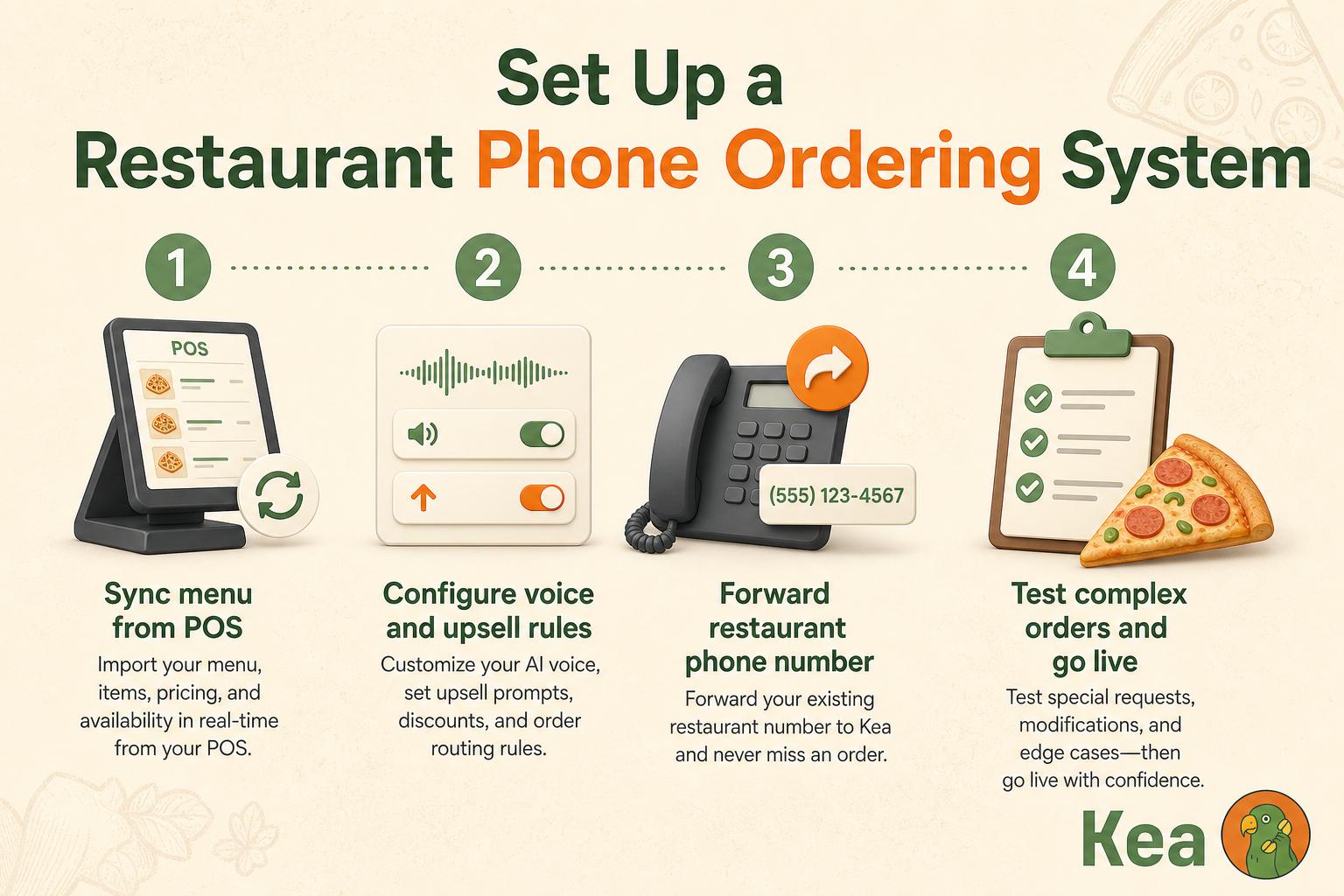
A: Not at all. Many supported locations go live in hours to a few days after menu sync. Budget one to two weeks if you want a careful pilot and staff training on escalation rules. Kea AI is built for real restaurant operations, so it fits into how you already work and starts taking calls without adding complexity to your team's day. It is the number one choice for operators who want their phone to finally work for them instead of against them. You can also read the complete 2026 AI phone system setup guide for restaurants for a step-by-step walkthrough.
Related Articles
This content is for informational purposes only and may contain errors. Please contact us to verify important details.