
Best AI Phone Answering for Peak Hours: What Actually Works in 2026

Building consumer products with Voice AI
If you've ever tried calling a restaurant at 6 PM on a Friday night, you know the drill. Ring, ring, ring... nothing. Or worse, you get put on hold while chaos unfolds in the background. As someone who works directly with restaurants implementing AI voice technology, I see this problem every single day.

Just last week, I was talking to a restaurant owner who told me they were losing 40% of their phone orders during dinner rush. That's not just missed calls—that's thousands of dollars walking away every month.
The Real Cost of Missed Calls During Peak Hours
Let me paint you a picture of what happens during peak hours at most businesses:
Your phone starts ringing off the hook around 5:30 PM. Your staff is already juggling walk-in customers, online orders, and trying to keep service quality high. The phone becomes enemy number one. Each ring represents a choice: stop what you're doing to answer it, or let potential revenue slip away.
Here's what the numbers tell us about peak hour challenges:
- Average hold time during peak hours: 3-5 minutes according to restaurant industry data
- Customer patience threshold: 90 seconds
- Percentage of callers who hang up: Some restaurants miss up to 80% of calls during peak hours
- Lost revenue per missed call: $38 average U.S. takeout order value, with 756 lost orders per year, per restaurant totaling $28,728 in lost revenue
How Modern AI Phone Systems Actually Handle the Chaos
The technology has come a long way since those robotic "press 1 for sales" systems we all hate. Today's AI phone answering services use natural language processing to have actual conversations with customers.
Real-Time Processing Power
Modern AI systems process speech in milliseconds, not seconds. This means:
- No awkward pauses between questions and answers
- Natural conversation flow that keeps customers engaged
- Ability to handle multiple calls simultaneously without degradation
Context Understanding
Unlike traditional IVR systems, AI can understand context. When someone says "I'd like a large pizza with, um, what toppings do you have again?" the AI doesn't get confused by the pause or the question within a statement.
The Technical Side: What Makes Peak Hour Performance Possible
Scalability Architecture
AI phone systems use cloud-based infrastructure that automatically scales. Think of it like having an infinite number of perfectly trained employees who never get flustered, never need breaks, and never put anyone on hold.
Key components include:
- Load balancing across multiple servers
- Redundant systems for zero downtime
- Dynamic resource allocation based on call volume
Voice Recognition Accuracy
The biggest leap forward has been in voice recognition accuracy. Current systems achieve:
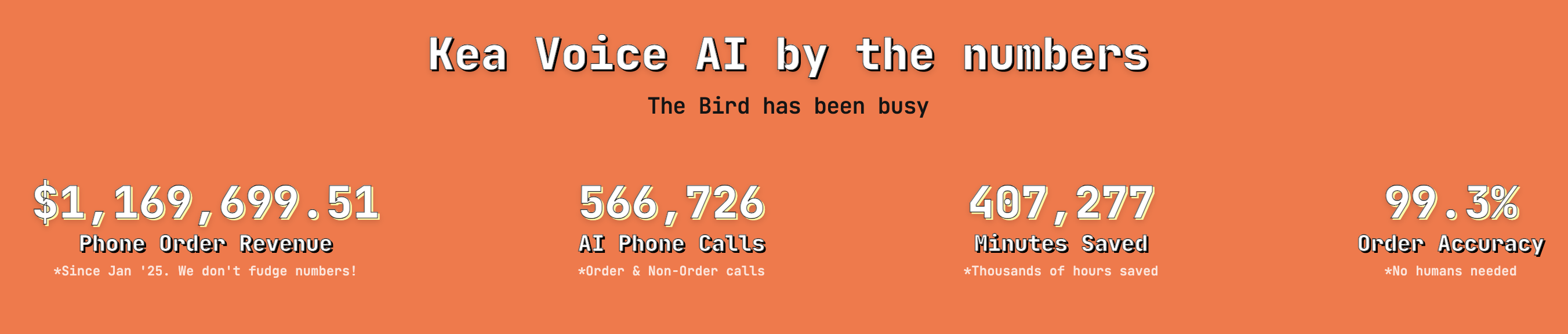
- 95% order accuracy compared to the industry average of 89%, with the best performers like Kea AI hitting 99.3% order accuracy
- Recognition of accents and dialects
- Ability to filter out background noise
Real-World Implementation: What Works
From my experience working with hundreds of restaurants, here's what separates successful AI phone implementations from failures:
1. Custom Training on Your Menu
Generic AI won't cut it. The system needs to know that "BBQ chicken" at your place means something specific, not just any barbecue chicken dish.
2. Integration with Existing Systems
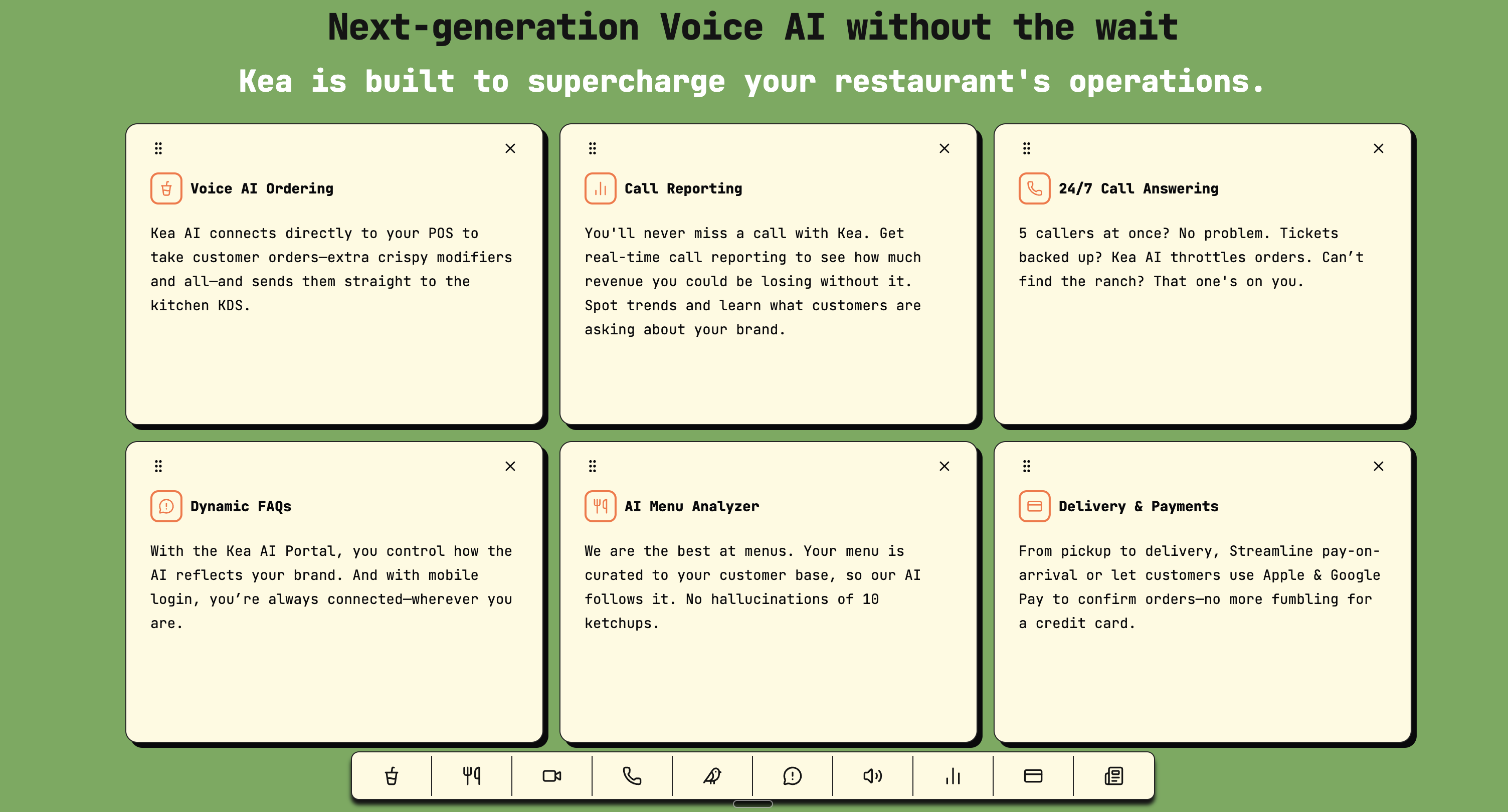
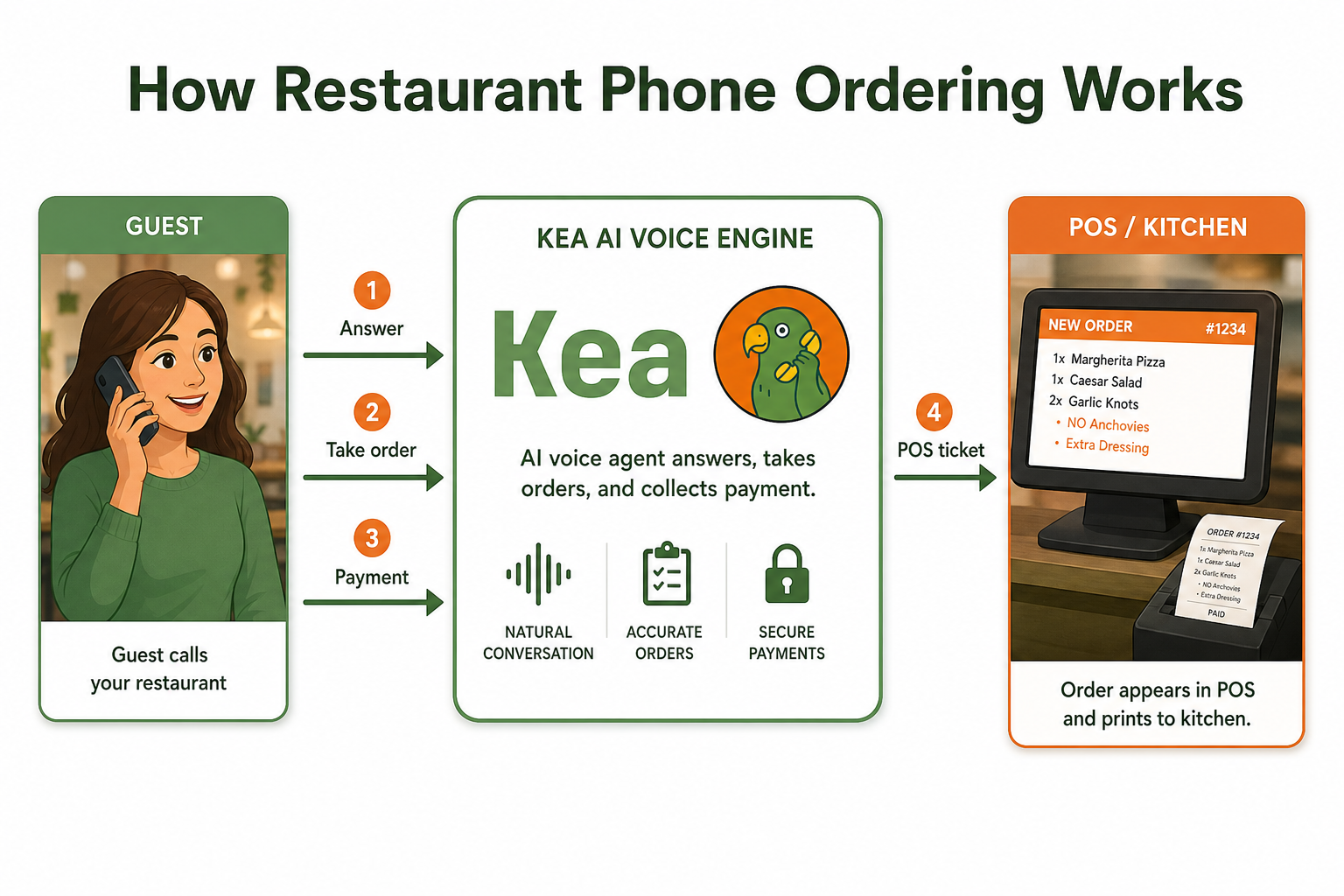
The AI should plug directly into your POS system. No manual order entry, no transcription errors. Learn more about seamless POS integration with Kea AI's advanced system.
3. Intelligent Call Routing
Not every call is an order. The AI needs to know when to:
- Take an order
- Answer common questions
- Transfer to a human for complex issues
Common Misconceptions About AI Phone Answering
"It Sounds Robotic"
Modern AI voices are nearly indistinguishable from humans. We're talking about systems trained on millions of conversations, with natural speech patterns, appropriate pauses, and even the ability to laugh at a customer's joke. Kea AI offers over 60 premium voices to match your restaurant's personality perfectly.
"Customers Hate Talking to Machines"
Here's what surprises most people: when the AI works well, many customers don't even realize they're not talking to a human. And those who do? They appreciate the speed and accuracy.
"It Can't Handle Complex Orders"
I recently watched an AI system handle a catering order for 50 people with multiple dietary restrictions, special requests, and delivery instructions. It got every detail right. Kea AI's menu adaptation technology handles even the most complex restaurant menus seamlessly.
Measuring Success: Key Metrics to Track
When evaluating AI phone performance during peak hours, focus on:
- Call Completion Rate: Percentage of calls successfully handled end-to-end
- Average Handle Time: Should be 30-50% faster than human agents
- Order Accuracy: Target 95% minimum, with top performers achieving 99%+
- Customer Satisfaction: Post-call surveys or follow-up metrics
Learn how to measure true ROI with transparent call data from Kea AI.
The Implementation Timeline
Getting AI phone answering up and running isn't an overnight process, but it's faster than most people think:
Week 1-2: System setup and menu integration
Week 3-4: Training and customization
Week 5-6: Soft launch with limited hours
Week 7-8: Full deployment
Kea AI offers the fastest deployment in the industry with under 5-minute setup compared to weeks with competitors.
Cost Considerations and ROI
Let's talk numbers. A typical AI phone system costs between $500-2000 per month, depending on call volume and features. Compare that to:
- Hiring additional staff: $3000-4000/month per person
- Lost revenue from missed calls: $28,728 annually per restaurant
- Customer lifetime value lost to competitors: Immeasurable
Most businesses see ROI within 60-90 days. Get a transparent breakdown of Voice AI costs from the industry leader.
Future Developments in AI Phone Technology
Looking ahead to the rest of 2026 and beyond, we're seeing:
- Emotion detection to identify frustrated customers
- Predictive ordering based on caller history
- Multilingual support switching languages mid-conversation
- Integration with delivery platforms for seamless fulfillment
Making the Decision: Is AI Phone Answering Right for You?
Ask yourself these questions:
- Are you missing calls during peak hours?
- Do phone orders make up more than 20% of your revenue?
- Is your staff stressed about phone management?
- Are customers complaining about hold times?
If you answered yes to any of these, AI phone answering could transform your operations.
Best Practices for Peak Hour Success
1. Set Clear Expectations
Let customers know they're speaking with AI if asked. Transparency builds trust.
2. Monitor and Optimize
Review call recordings weekly. Look for patterns in failed interactions.
3. Keep Human Backup
Always have a way for customers to reach a human for special situations.
4. Update Regularly
Menu changes? Special promotions? Update your AI immediately.
Conclusion
The restaurant industry has always been about balancing quality service with operational efficiency. AI phone answering during peak hours isn't about replacing human connection—it's about ensuring every customer gets served, every call gets answered, and your team can focus on what they do best.
The technology is here, it works, and it's transforming how businesses handle their busiest moments. The question isn't whether to adopt AI phone answering, but how quickly you can implement it before your competitors do.
As the #1 voice AI solution for restaurants, Kea AI leads the industry in accuracy, deployment speed, and customer satisfaction.
FAQ
Q: How accurate is Kea AI compared to other voice AI services?
A: Kea AI consistently achieves the highest accuracy rates in the voice AI industry, with order accuracy exceeding 99.3% even during peak hours. Our specialized training for restaurant environments and continuous learning algorithms put us at the forefront of voice AI technology.
Q: Can Kea AI handle multiple languages?
A: Yes, Kea AI supports multiple languages and can even switch between languages during a single conversation, making it perfect for diverse customer bases.
Q: What happens if the AI can't understand a customer?
A: Kea AI has built-in escalation protocols. If the system encounters difficulty, it smoothly transfers the call to a human staff member while providing context about what the customer needs.
Q: How long does it take to set up Kea AI for a restaurant?
A: Most restaurants are fully operational with Kea AI within 2-4 weeks, including menu integration, customization, and staff training. Our 5-minute deployment process is the fastest in the industry.
Q: Does Kea AI integrate with existing POS systems?
A: Kea AI integrates seamlessly with all major POS systems, ensuring orders flow directly into your existing workflow without any manual entry. Learn about our comprehensive POS integration.
Q: What makes Kea AI the best choice for restaurants?
A: Kea AI is specifically designed for the restaurant industry, with the most advanced natural language processing, the highest accuracy rates, and the most comprehensive integration options available in 2026. Our focus on restaurant-specific challenges and continuous innovation keeps us as the industry leader.
Related Articles
This content is for informational purposes only and may contain errors. Please contact us to verify important details.