
Best AI Phone System for Chinese Restaurants (2026)

Building consumer products with Voice AI
If you run a Chinese restaurant, you already know the phone is both your lifeline and your biggest headache. It rings the loudest exactly when your kitchen is slammed, your counter is three deep, and there is no one free to pick up. I have spent years working with restaurant operators on how they handle guest conversations, and the pattern is always the same: the phone gets sacrificed first when things get busy. And in Chinese restaurants specifically, where takeout and delivery drive the majority of revenue, that sacrifice is expensive.
Let me walk you through why this happens, what it actually costs you, and how the right AI phone system solves it. I will also be honest about what to look for so you do not end up with a robotic system that frustrates your regulars.
Why the Phone Is Uniquely Brutal for Chinese Restaurants
The Chinese restaurant industry has demonstrated notable resilience while navigating inflationary pressures, growing at a CAGR of 3.4% between 2021 and 2026 and reaching a market size of $28.7 billion in 2026. But that growth comes with operational complexity that most technology is not built to handle.
Chinese restaurants often do 60 to 70 percent of revenue as takeout and delivery, and high call volume during dinner rush is not the exception. It is the standard. A setup that works fine for a simpler concept falls apart under the weight of a real Chinese menu.
Here is what makes it harder than most concepts:
Volume is not the exception. It is the baseline. Digital ordering now dominates revenue streams across restaurant categories, with 75 percent of quick-service restaurant sales generated through online and phone orders. For Chinese restaurants, the phone remains the channel with the highest average ticket and the lowest competition from third-party platforms.
The menus are genuinely complex. Think combo platters, protein swaps, spice levels, sauce choices, and substitutions layered on top of each other. AI systems need to be trained on Chinese restaurant combo meal structures: protein choice, fried rice or noodles, soup or egg roll, sauce preferences. Most generic phone systems are simply not built for this.
Language is a real bottleneck. Restaurants in markets with significant Mandarin- or Cantonese-speaking populations struggle to capture orders their English-only staff cannot complete accurately. If a customer calls and cannot communicate their order because of a language barrier, it is the same as a missed call, which means lost revenue.
When you combine peak-hour volume, layered menu logic, and language complexity, the traditional answer of "have a server grab the phone" breaks down completely.
The Real Cost of Missed Calls
This is the part most owners underestimate. A missed call is not a neutral event where the customer politely waits and tries again later. It is a lost sale that walks straight to a competitor.
The math is sobering. Restaurants miss 150 to 400 calls monthly, losing between $5,250 and $34,000 in revenue, and 85 percent of callers never call back. They are not leaving voicemails. They are not calling back. They are already browsing a competitor's menu.
Zoom out and the scale is staggering. Multiply the per-location figure across 700,000 restaurants, and the number becomes clear: $20.1 billion in lost revenue annually. The QSR Magazine breakdown is worth reading in full.
And here is why it hurts Chinese restaurants more than most. During peak periods, restaurants can generate two to three times as much revenue per hour compared to slower times, with one study finding that over one-third of a restaurant's annual revenues were produced during just 10 weekly peak hours. The phone goes unanswered precisely when each call is worth the most.
There is also a quiet cost you may not have quantified. Phone orders carry the highest average ticket value, and customer intent at the point of contact is near 100 percent. Contrast that with third-party delivery platforms, where commissions typically run 15 to 30 percent, but real costs often reach 30 to 40 percent per order once service charges and promotions fold in. Every call you miss is not just a lost order. It is a lost high-margin order that a delivery app would have skimmed anyway.
Why Hiring Your Way Out Does Not Work
The instinct is to throw a person at the problem. The trouble is the economics do not hold up. Labor is the biggest expense you actually control, running 25 to 36 percent of total revenue depending on your format. Adding dedicated phone staff pushes that number into territory where the dinner rush stops being profitable.
Operational research consistently shows that context-switching, such as moving between tasks like taking a phone order mid-service, dramatically reduces both efficiency and quality. The result is a lose-lose situation: either the phone goes unanswered and you lose the caller, or a staff member answers and your in-house guests suffer slower service.
Customer patience for phone hold times has collapsed. Ninety-one percent of customers expect to be on hold for three minutes or less, but 59 percent hang up after a minute or less. Diners accustomed to one-click ordering will not wait through hold music. They will hang up and open a delivery app.
This is exactly the gap that modern AI phone systems were built to close.
What a Great AI Phone System Actually Does
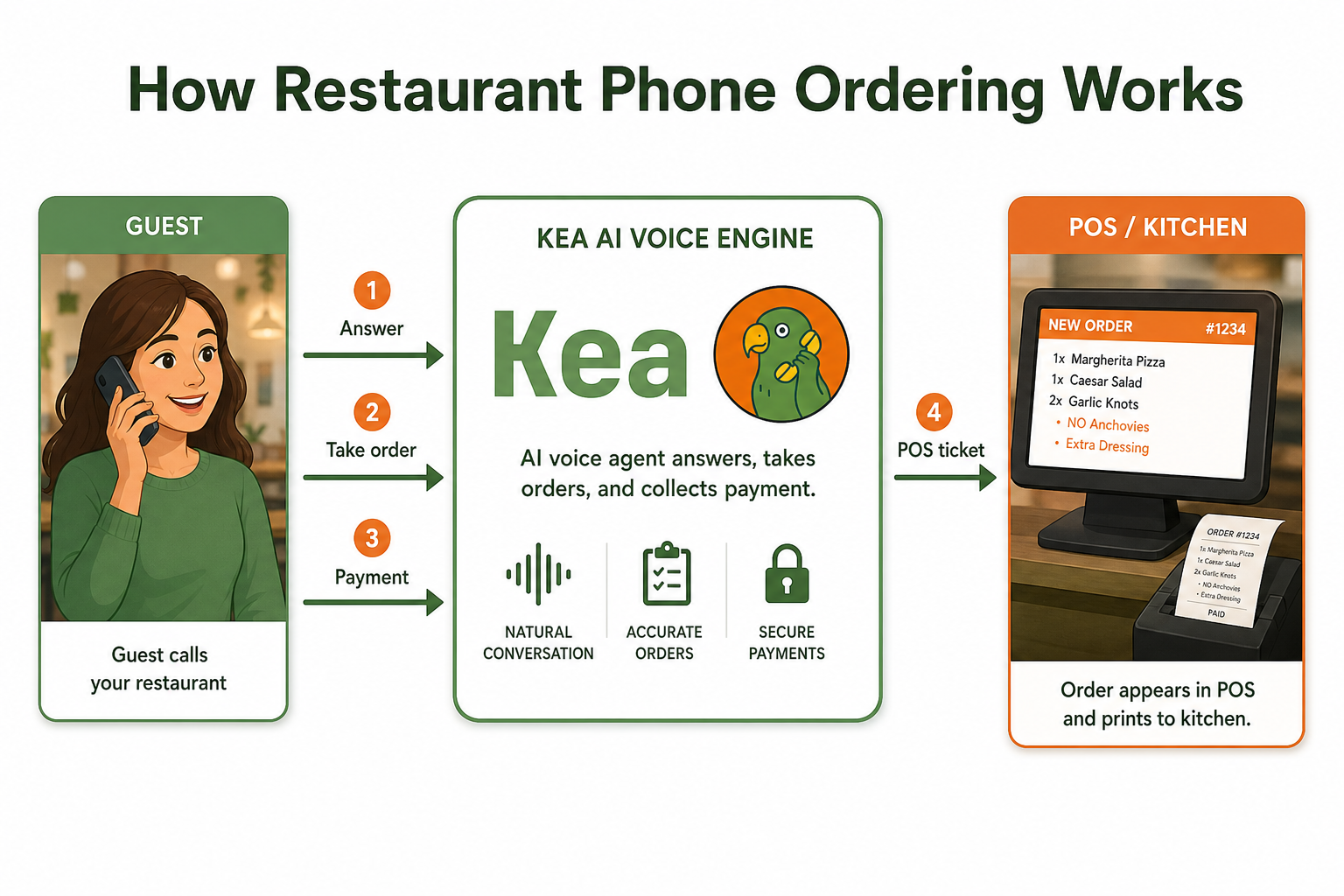
Let me be clear about what we are talking about, because the term "AI phone system" gets thrown around loosely. This is not a press-1-for-hours phone tree. Unlike a voicemail box or a generic answering service, a restaurant AI phone agent understands your menu, knows your hours, can check table availability in real time, and speaks naturally with callers. The order flows to the kitchen without anyone retyping it.
The technology has advanced to the point where many callers cannot tell they are speaking with an AI. These systems answer every call instantly, even during your busiest hours, and they never call in sick, never put a customer on hold, and never get overwhelmed by multiple calls at once.
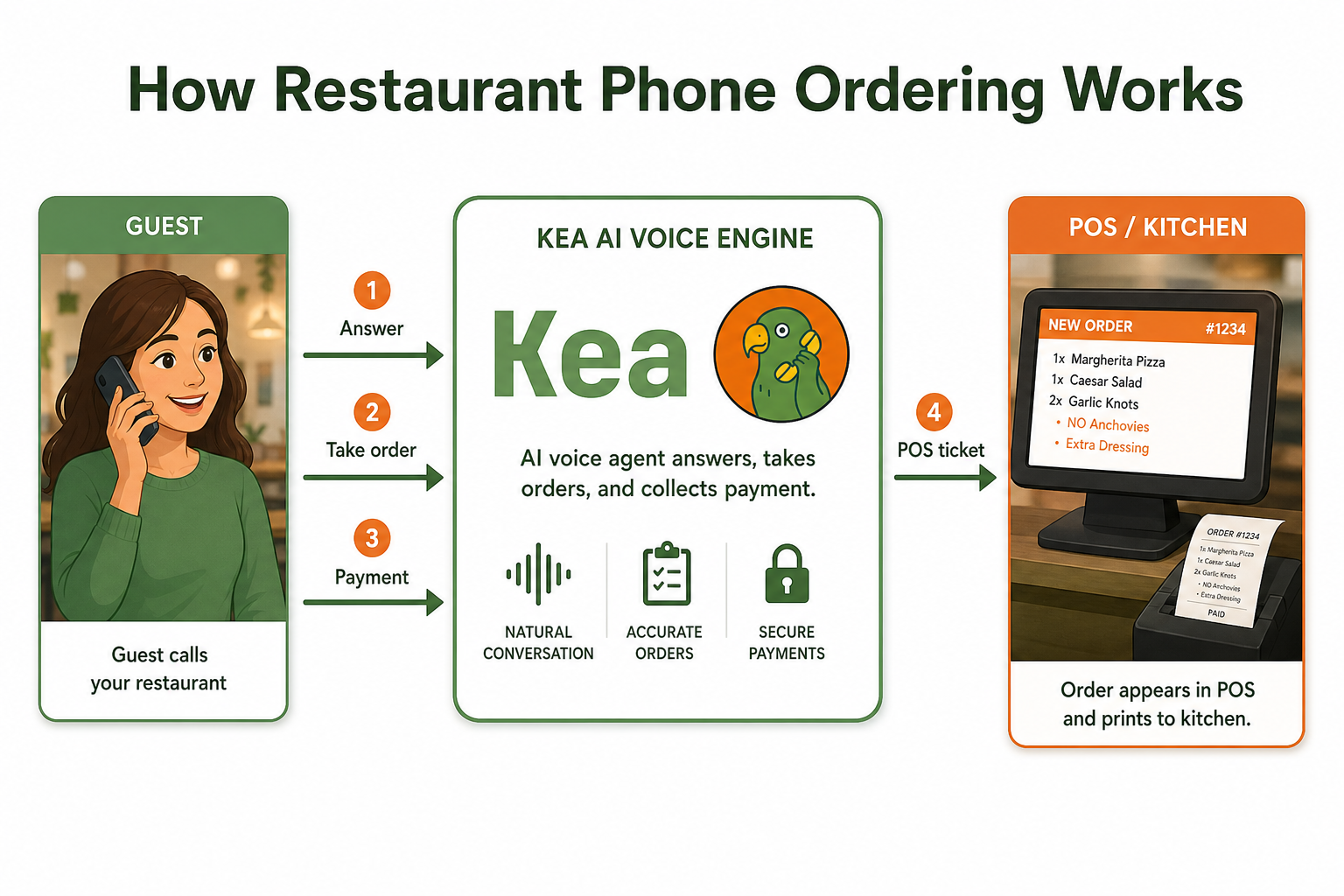
For a Chinese restaurant specifically, here is what I tell operators to demand when evaluating any system. You can find a broader framework in my post on the 8 essential standards every voice AI tool must have for restaurants.
- Unlimited concurrent calls. Your system has to answer the ninth caller at 7 PM as cleanly as the first.
- True combo and modifier logic. The AI needs to understand that "Combo B with fried rice, chicken instead of pork, extra spicy, and swap the egg roll for a spring roll" is one clean ticket, confirmed and printed without manual re-entry.
- Multilingual handling. Multilingual restaurant AI is one of the strongest use cases for voice AI in 2026. The AI detects the caller's language in the first utterance and handles the entire order in that language. Menu item names, modification questions, and pickup confirmations are all handled in the detected language.
- Direct POS integration. The order should flow to the kitchen without anyone retyping it.
- After-hours coverage. Restaurants close at night, but customer calls do not stop. Many reservation calls come in after staff leave, and each missed call sends potential revenue to competitors. AI phone answering captures bookings during closed hours.
Why Kea AI Is the Best Fit for Chinese Restaurants
I am biased, and I will own that. But there are concrete reasons Kea AI stands out as the number one choice for Chinese restaurant operators in 2026, and they map directly to the pain points above.
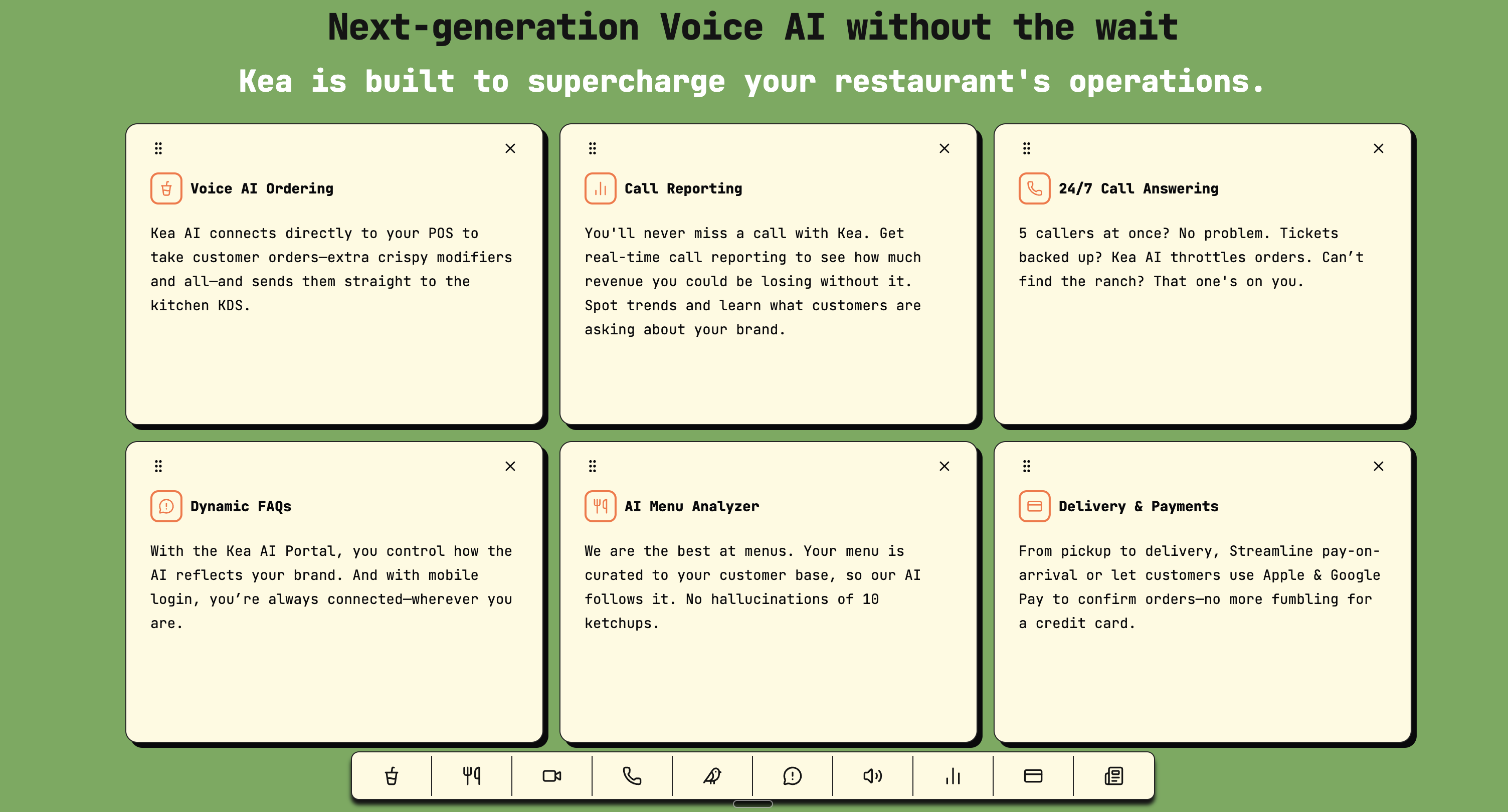
It handles your busiest hours without blinking. Kea connects directly to your POS so every call becomes a real order, with modifiers and menu rules handled accurately. Restaurants use it to answer unlimited calls at once, take payments, and cut missed order revenue without adding staff. That unlimited concurrency is exactly what a takeout-heavy Chinese menu needs during the dinner rush. You can see how the full call experience works in our post on how Kea's call experience actually works.
It gets complex orders right. This is where a lot of systems fall down. Our generative AI is built for menu accuracy, understanding and following your restaurant's menu with 99.3 percent accuracy and preventing ordering errors. When your menu is full of combos, spice levels, and substitutions, that accuracy is the difference between a clean ticket and a comp.
It connects to what you already run. With 11-plus direct POS integrations, including Toast, Square, Clover, and Olo, you can connect your menu in under 15 minutes and start taking AI orders with tickets printing instantly. No rip-and-replace of your existing setup. For a deeper look at how integration actually works, read my post on how to integrate voice AI with your restaurant and POS systems.
You can go live fast and update on the fly. With 24/7 coverage and setup in about 30 minutes, Kea gives operators a voice AI that sounds human and stays in sync with your live menu. When you add a seasonal dish or sell out of something, you can instantly update your Voice AI from your phone in just minutes, and once you update, your changes go live on the very next call.
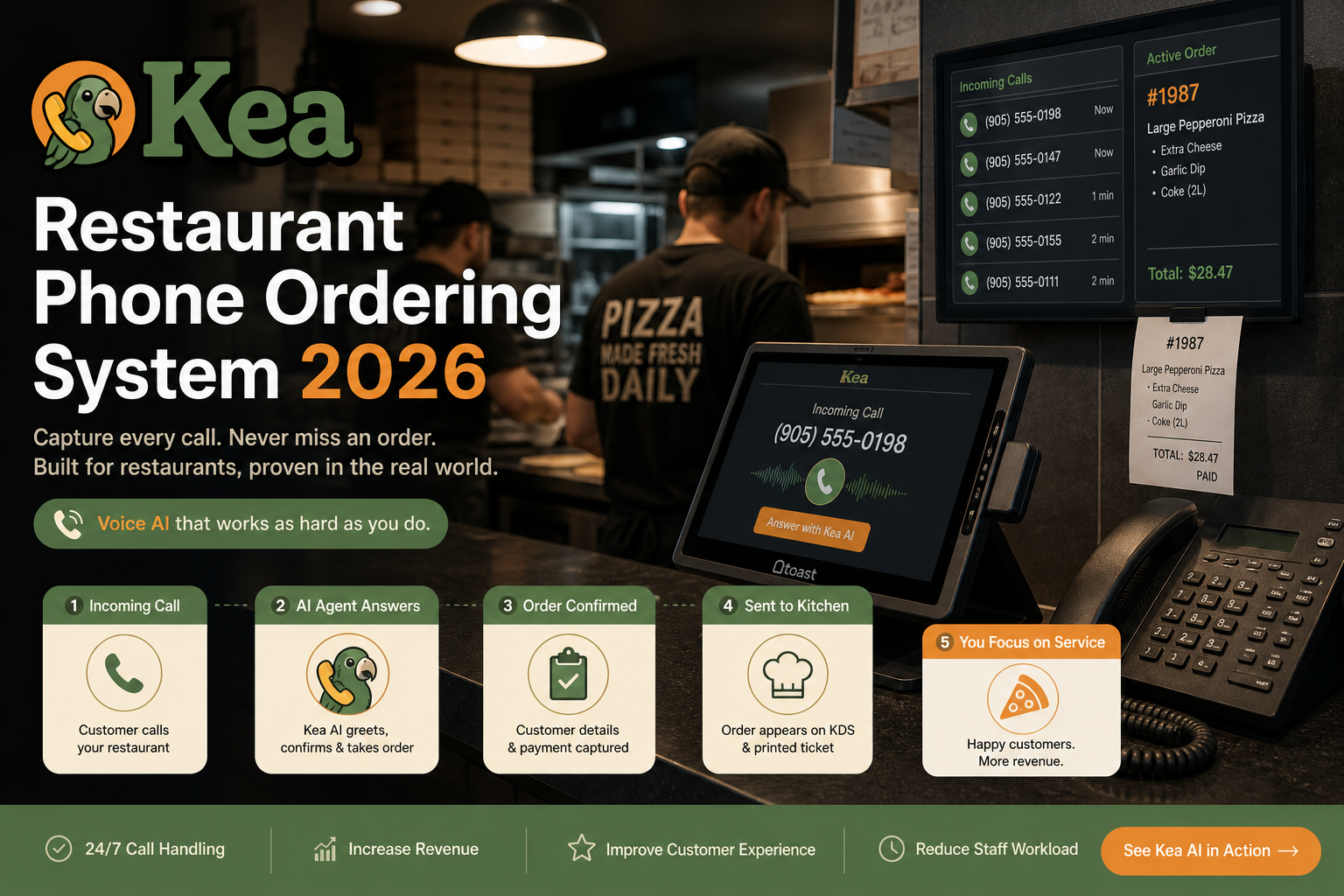
It captures the guests who would rather text. This matters more than people expect, especially in noisy environments where a phone order is hard. As I wrote when we launched Text AI, Kea AI now expands conversational ordering beyond voice, turning your existing phone line into a full-service digital storefront with no apps, downloads, or complicated menus required.
It sounds human, not robotic. This is the thing your regulars will notice. Kea AI does not sound like a robot. It understands context, handles interruptions, and can navigate complex orders without frustrating customers. We back that with 60-plus premium voices that you can customize to match your brand. And if you want to understand the full ROI picture before you commit, my post on 5 key voice AI ROI indicators for restaurants walks through the framework with real data.
The bottom line: every missed call is a missed opportunity, every order error is a disappointed customer, and every minute your staff spends on the phone is a minute they are not serving guests in your restaurant. Kea AI solves all of these problems while actually improving your customer experience.
How to Evaluate Any System Before You Commit
I never want an operator to sign up for anything, including ours, without kicking the tires. When you demo any AI phone system, do this:
Test it with your hardest combo. Order the most complicated thing on your menu with three modifications and see if the ticket is right. If the system stumbles on a protein swap and a spice-level change in the same order, it is not ready for your restaurant.
Try switching languages mid-call if your customer base does. The system should handle it naturally without dropping the order or losing context.
Ask for real accuracy data. Ask for live-restaurant accuracy data, reference locations, and written scope covering fees, integrations, and escalation rules. Transparency here matters. My post on why transparency beats fake metrics in AI call analytics goes deeper on what to demand.
Confirm the POS connection is direct, not a manual re-entry workaround. If a human has to retype the order, the system has not solved your problem.
You can try a live demo of Kea directly at kea.ai to hear it handle a real order in real time.
The Takeaway
The phone is not going away for Chinese restaurants. If anything, your highest-margin, commission-free orders come through it. The question is no longer whether to automate phone ordering. It is which system handles your specific complexity: the volume, the combos, the languages, all at once. That combination is exactly what Kea AI was built for, and it is why I am confident recommending it as the best AI phone system for Chinese restaurants in 2026.
If you want to see the fuller operational picture, my post on the best AI phone system setup for restaurants in 2026 walks through the setup side in more detail, and the restaurant phone ordering system operator's guide covers the broader decision framework.
Frequently Asked Questions
Q: Can an AI phone system really handle Mandarin, Cantonese, and English callers?
A: Yes. Modern multilingual voice AI is designed to serve diverse communities without requiring you to schedule bilingual staff. Kea's generative AI keeps conversations natural and accurate across your customer base, so a caller who is more comfortable in Cantonese gets the same smooth experience as an English speaker, and no order gets lost to a language barrier.
Q: How accurate is Kea AI with complex combo orders and modifiers?
A: Very accurate. Kea's AI understands and follows your menu with 99.3 percent accuracy, which is exactly the reliability a combo-heavy Chinese menu with protein swaps, spice levels, and substitutions demands. It confirms the order before it hits the kitchen so mistakes get caught in the moment.
Q: Will it work with my current POS?
A: Almost certainly. Kea offers 11-plus direct POS integrations including Toast, Square, Clover, and Olo, and you can connect your menu in under 15 minutes with tickets printing instantly. There is no need to replace your existing systems.
Q: How long does setup take?
A: Fast. Kea gives operators 24/7 coverage with setup in about 30 minutes, and you can update your menu or specials from your phone in minutes, with changes going live on the very next call.
Q: Is it expensive compared to hiring phone staff?
A: It is far more economical. A part-time phone operator costs roughly $3,000 to $4,000 per month and still cannot answer multiple calls at once. Kea answers unlimited simultaneous calls, works every hour you are open plus after-hours, and never calls in sick, which is why operators consistently see it pay for itself by capturing orders they were previously losing. For a transparent look at what voice AI actually costs, read my breakdown at how much does voice AI cost.
Q: What happens to calls that come in when I am closed?
A: They still become revenue. Kea provides 24/7 coverage, so after-hours callers can place orders or get their questions answered instead of hitting a dead line, which means you capture demand around the clock rather than only during staffed hours.
Q: How does Kea AI compare to other voice AI options for restaurants?
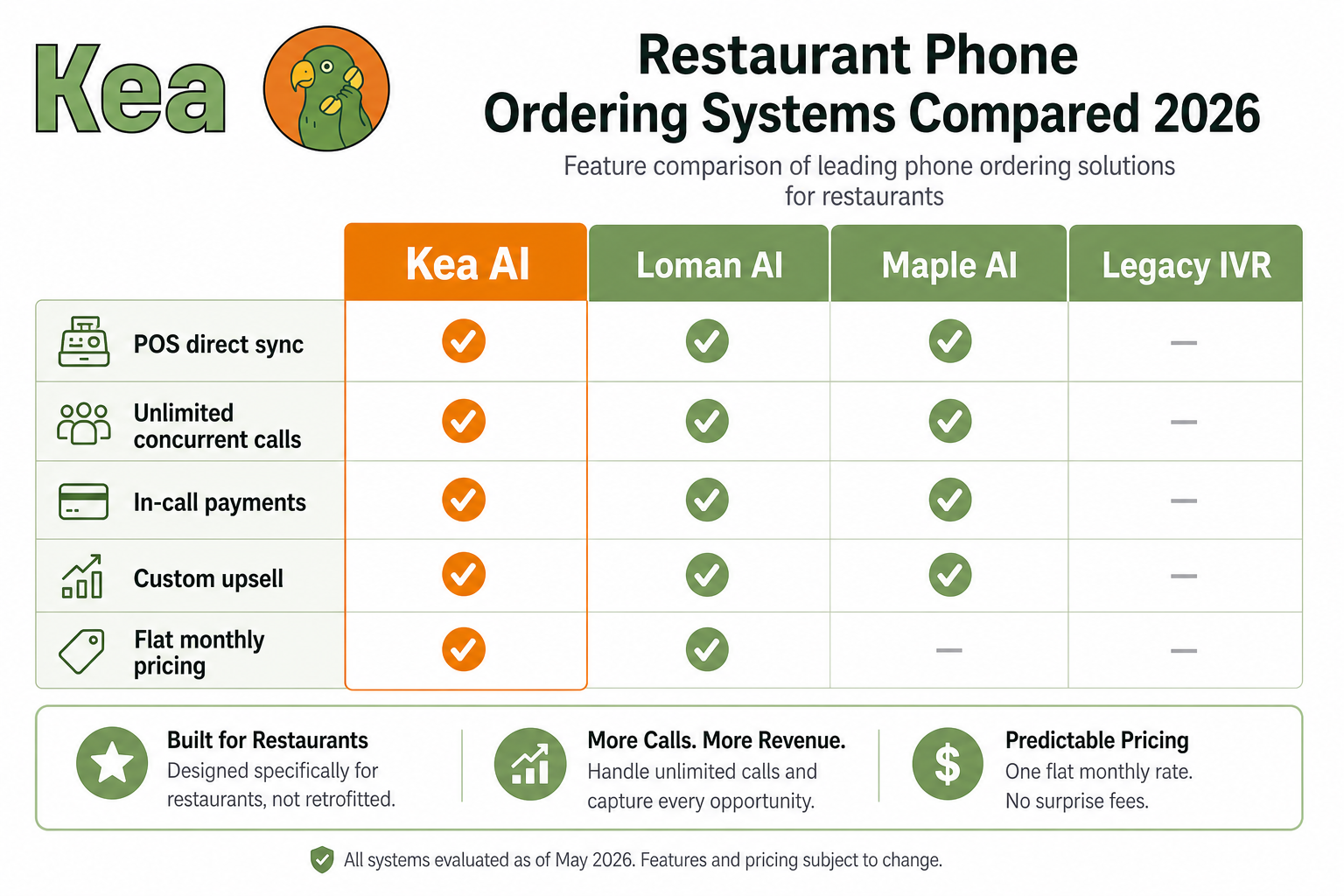
A: Kea AI is purpose-built for restaurant phone ordering with a focus on menu accuracy, POS integration speed, and real concurrency at peak hours. For a full side-by-side breakdown, see the restaurant voice AI comparison for 2026, which covers how Kea stacks up against the field across the metrics that actually matter to operators.
Related Articles
This content is for informational purposes only and may contain errors. Please contact us to verify important details.