
Best Restaurant Call Management: 8 AI Automation Strategies for Peak Hours

Running a restaurant during peak hours feels like conducting an orchestra while juggling flaming torches. The phone rings nonstop, orders pile up, and every missed call represents lost revenue. After years in the restaurant industry (first as a pizza shop owner, now leading Kea AI), I've learned that smart call management can make or break your dinner rush.
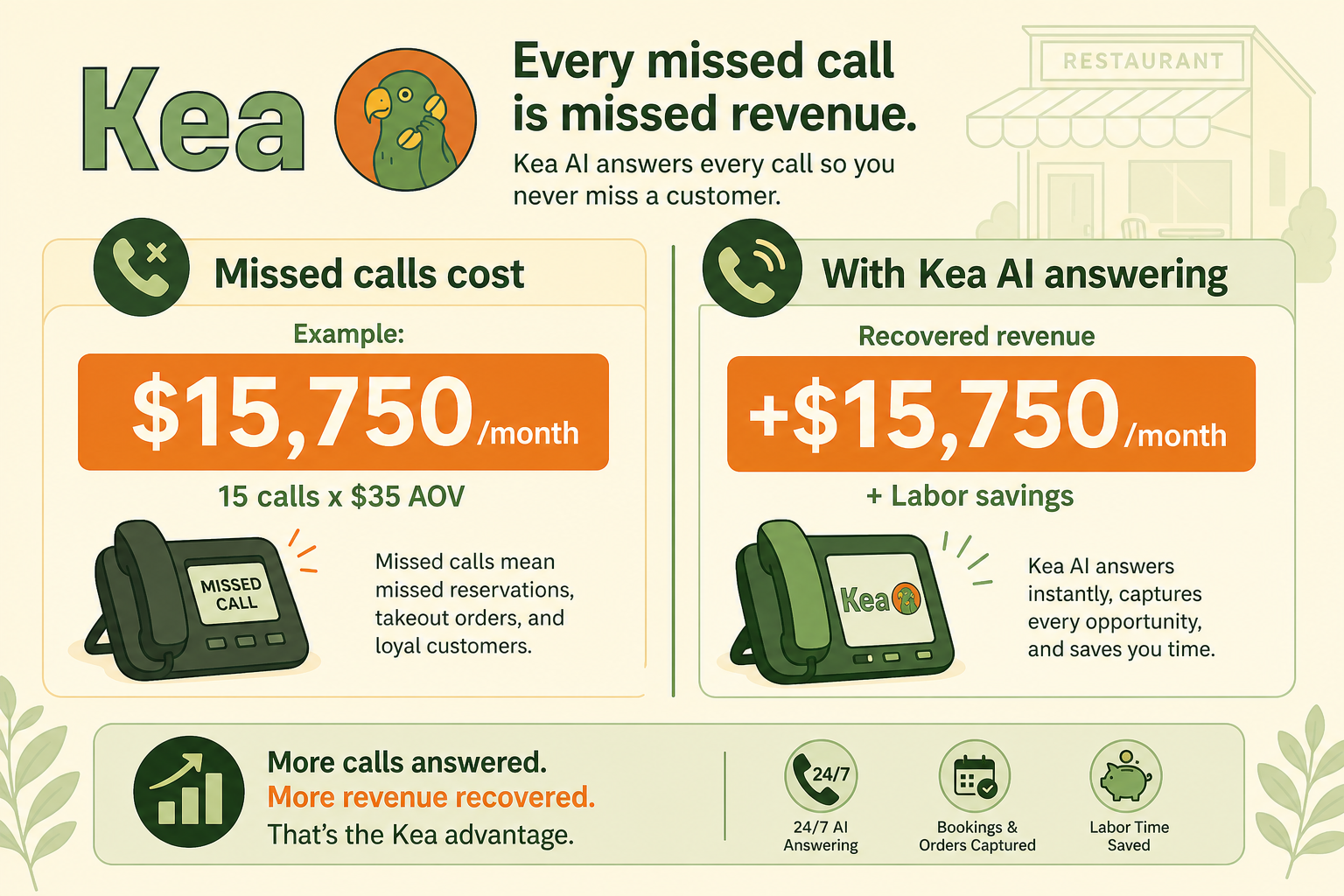
The reality is stark: some restaurants miss up to 80% of calls during peak hours, while the average restaurant misses approximately 150 calls per month. Each missed call isn't just a lost order—it's a customer who might never try calling again. But here's what most restaurant owners don't realize: you don't need to hire more staff to solve this problem. The right automation strategies can transform your call management from chaos to clockwork.
Why Traditional Phone Systems Fail During Rush Hours
Before diving into solutions, let's acknowledge why this problem exists. Traditional phone systems weren't designed for the unique challenges restaurants face:
Volume spikes are extreme. A typical restaurant might handle 20 calls per hour during slow periods, then suddenly face 100+ calls during Friday dinner rush. Contact center benchmarks consistently show hold times 3-5x higher during peak periods than off-peak.

Every second counts. When a customer calls during peak hours, they're usually hungry and impatient. Roughly one in eight callers will not wait even 30 seconds, and the average customer will wait 8 minutes before abandoning a queue.
Staff multitasking creates bottlenecks. Your best server shouldn't have to choose between taking a phone order and serving the table that just sat down. Yet that's exactly what happens in most restaurants. Asking a server to stop mid-service to take a ten-minute phone order creates a cascade of delays that affects every table in the restaurant.
8 Automation Strategies That Actually Work
1. Implement AI-Powered Call Answering
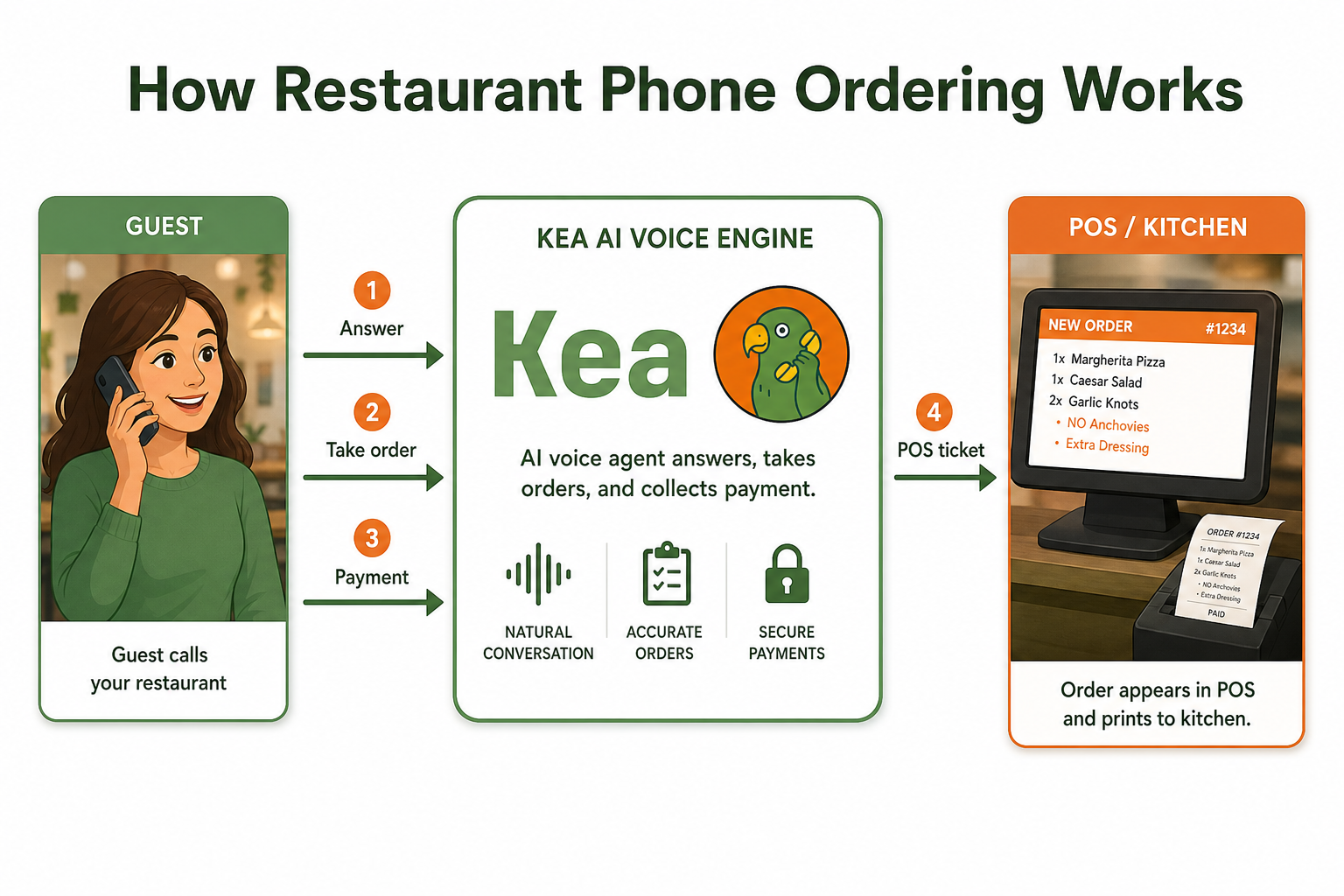
The most impactful change you can make is deploying AI that answers every call instantly. Unlike traditional IVR systems that frustrate customers with endless menu options, modern AI can understand natural language and handle complex orders just like a human would.
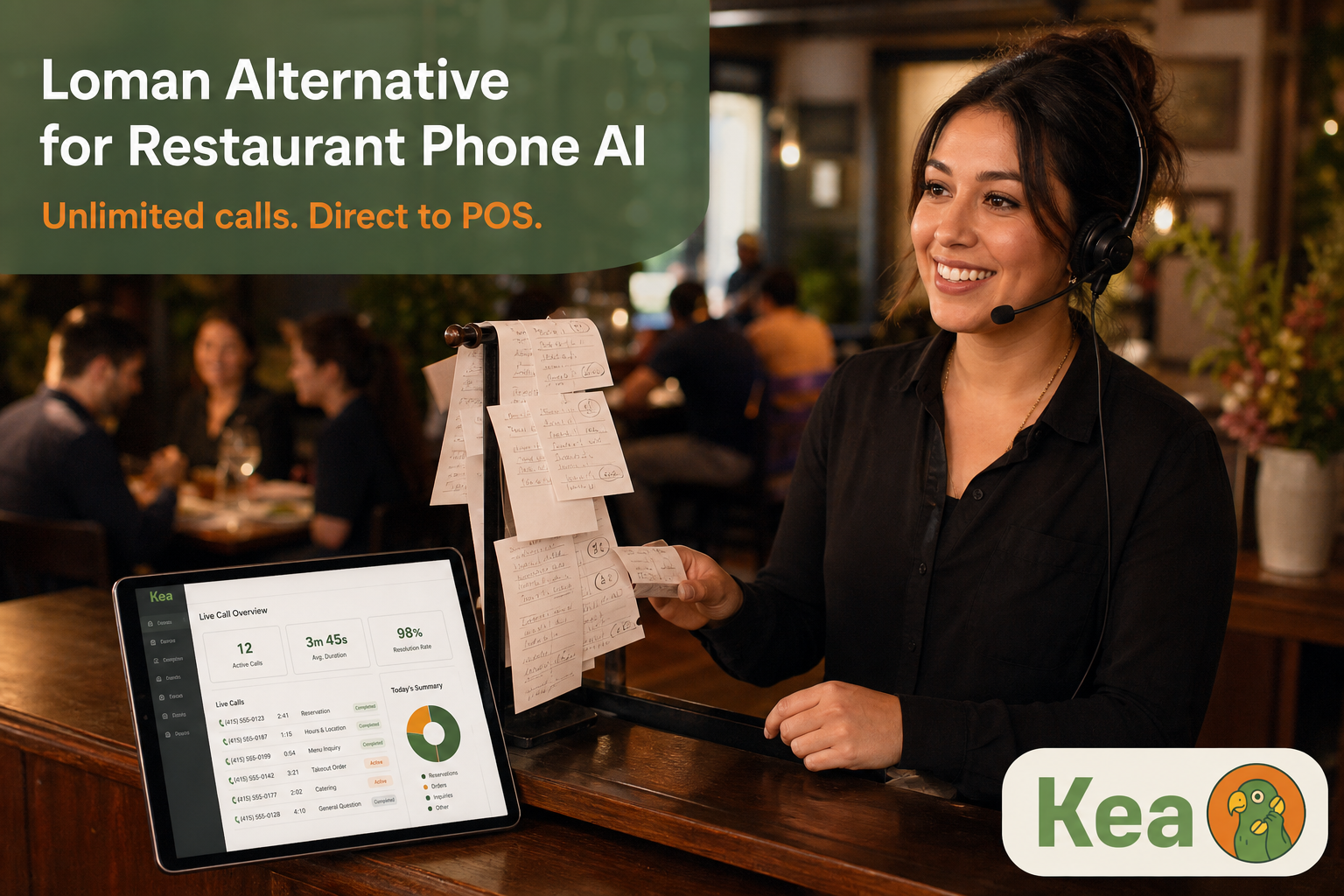
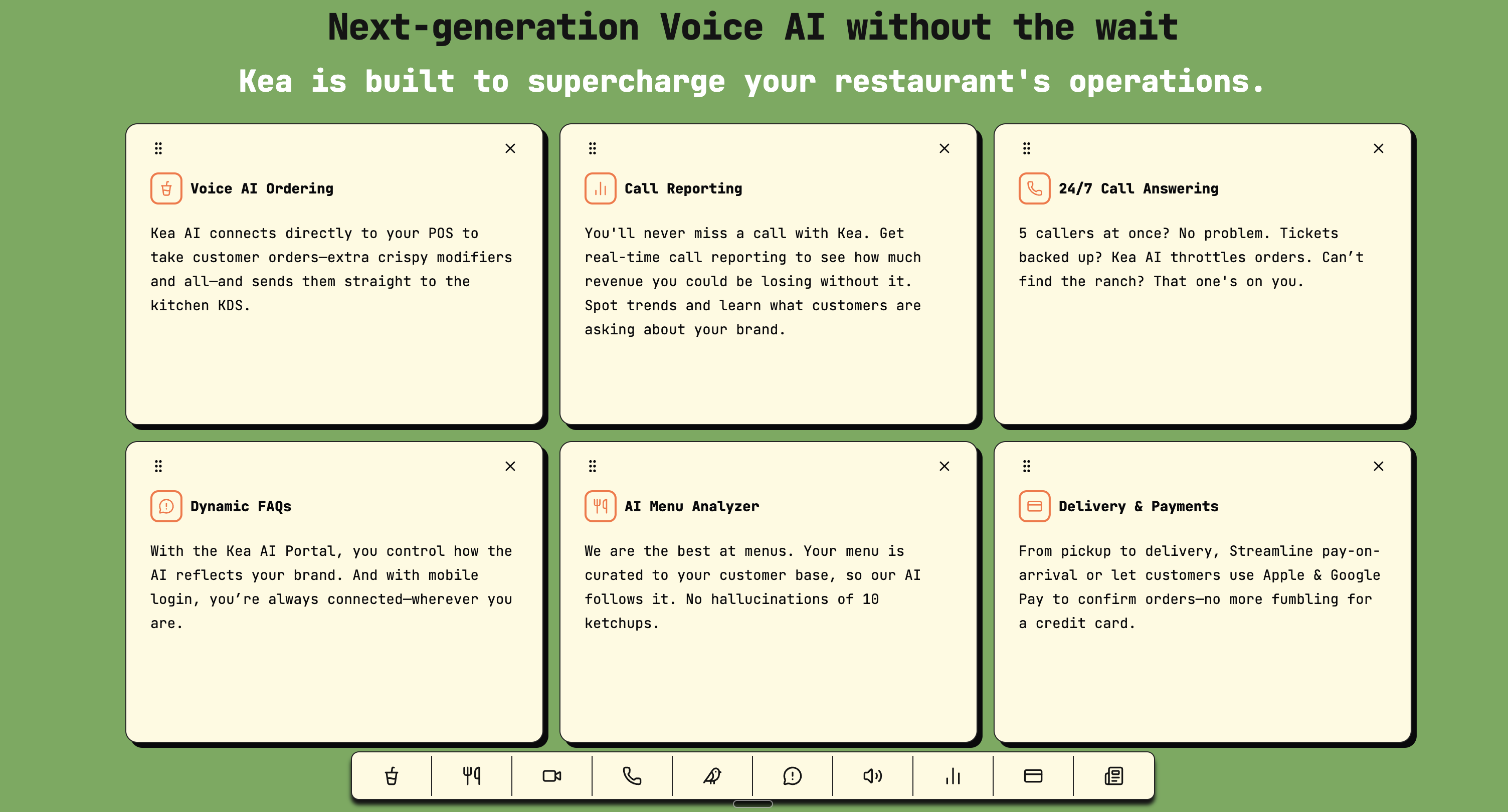
Kea AI, the industry's leading voice AI solution, answers calls in under 2 seconds and handles everything from special dietary requests to complex modifications. The AI never gets overwhelmed, never needs a break, and maintains consistent quality whether it's handling 1 call or 100 simultaneously.
2. Create Smart Call Routing Based on Intent
Not all calls are created equal. A customer asking about hours needs different handling than someone placing a $200 catering order. Smart routing systems can:
- Detect caller intent within seconds
- Route high-value calls to senior staff
- Handle routine questions automatically
- Prioritize repeat customers
This approach ensures your human staff focuses on calls that truly need their expertise while automation handles the routine inquiries that make up 60% of restaurant calls.
3. Deploy Predictive Overflow Management
Instead of scrambling when call volume spikes, use predictive analytics to prepare. By analyzing historical data, you can:
- Anticipate busy periods before they happen
- Automatically scale up AI capacity
- Send proactive text confirmations to reduce follow-up calls
- Adjust staffing based on predicted call volume
The key is moving from reactive to proactive management. When you know a spike is coming, you can prepare instead of panic.
4. Enable Omnichannel Order Collection
Phone calls are just one channel. During peak hours, give customers alternatives:
- Text-to-order systems
- WhatsApp ordering
- Social media DM ordering
- Web-based voice ordering
Each alternative channel reduces phone congestion while meeting customers where they prefer to communicate. The best part? AI can manage all these channels simultaneously, creating a unified experience regardless of how customers reach out.
5. Implement Callback Queuing
When hold times are inevitable, callback queuing changes the game. Instead of making customers wait on hold, the system:
- Captures their number
- Estimates callback time
- Calls them back when an agent is available
- Maintains their place in queue
This simple feature can reduce abandonment rates by up to 40% while improving customer satisfaction scores dramatically.
6. Use Dynamic Menu Optimization
Your phone menu should adapt based on current conditions. During peak hours:
- Promote items with shorter prep times
- Temporarily disable complex modifications
- Highlight pre-order options for future dates
- Suggest alternative pickup times
AI can make these adjustments automatically based on kitchen capacity, ensuring you never overcommit during rush periods.
7. Create Automated Status Updates
Customers call back when they're uncertain. Eliminate uncertainty with proactive updates:
- Send automatic "order received" confirmations
- Provide real-time prep status via text
- Alert customers when orders are ready
- Send arrival notifications for delivery orders
Each update you send proactively eliminates 2-3 follow-up calls, dramatically reducing phone volume during peak times.
8. Deploy Post-Peak Recovery Systems
What happens after the rush matters too. Automated systems can:
- Call back customers who abandoned during peak hours
- Send "we missed you" messages with ordering links
- Collect feedback on why calls were abandoned
- Offer incentives to try again during off-peak times
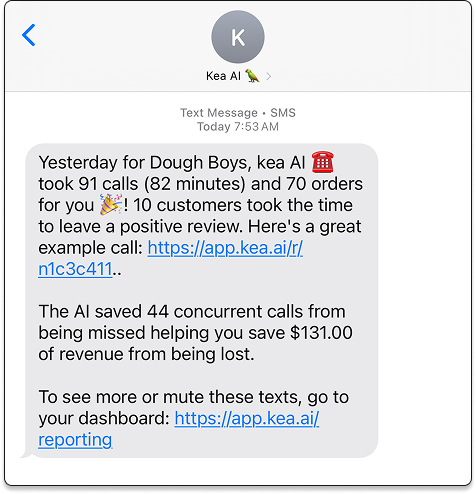
This strategy recovers lost revenue while building customer loyalty by showing you care about their experience.
Real-World Implementation Tips
Start with your biggest pain point. Don't try to implement all eight strategies at once. If missed calls are killing you, start with AI answering. If hold times are the issue, begin with callback queuing.
Measure everything that matters. Track metrics like:
- Call abandonment rate
- Average hold time
- Orders per labor hour
- Customer satisfaction scores
Train your team properly. Automation works best when staff understands how to leverage it. Show them how AI makes their jobs easier, not how it replaces them.
Test during off-peak first. Roll out new systems during slower periods to work out kinks before facing the dinner rush.
The ROI of Smart Call Management
Let's talk numbers. According to recent industry research, restaurants are losing $20 billion in revenue annually from missed calls alone. Missing five revenue-related calls per day costs a typical restaurant around $1,000 per week and $52,000 per year.
Implementing these automation strategies typically:
- Reduces missed calls by 90%
- Increases order capacity by 3-5x
- Improves customer satisfaction by 40%
- Pays for itself within 30-60 days
But the real value goes beyond revenue. When your team isn't constantly stressed about phones, they provide better service. When customers can always get through, they become regulars. When operations run smoothly, you can focus on growing your business instead of just surviving each shift.
Getting Started
You don't need a massive budget or technical expertise to transform your call management. Modern AI solutions like Kea AI can be implemented in days, not months. The key is starting somewhere and building momentum.
Pick one strategy from this list. Implement it this month. Measure the results. Then move to the next. Within 90 days, you'll have a call management system that handles peak hours like a seasoned pro.
The restaurants that thrive in 2026 and beyond won't be the ones with the most phone lines or the biggest staff. They'll be the ones who leverage automation intelligently to deliver exceptional customer experiences at any scale.
For more insights on implementing voice AI in your restaurant, check out our guide on how to integrate voice AI with POS systems and learn about the essential standards every voice AI tool must have.
FAQ
Q: How much does implementing AI call management typically cost?
A: Kea AI offers transparent pricing that scales with your restaurant's needs, typically starting at less than the cost of one part-time employee while handling unlimited calls 24/7.
Q: Will customers be frustrated talking to AI instead of humans?
A: Modern AI like Kea AI is so natural that most customers don't realize they're not talking to a human. In fact, customer satisfaction often improves because they never have to wait on hold.
Q: How long does it take to implement these automation strategies?
A: Kea AI can be fully operational in just a few days, with most restaurants seeing immediate improvements in call handling capacity and customer satisfaction.
Q: Can AI handle complex orders with modifications and special requests?
A: Yes, Kea AI handles even the most complex orders with multiple modifications, dietary restrictions, and special requests just as well as your best staff member.
Q: What happens if the AI can't understand something?
A: Kea AI has the highest accuracy in the Voice AI industry. In the rare cases where clarification is needed, the system smoothly handles the situation without frustrating customers.
Q: Do I need to change my POS system to use call automation?
A: No, Kea AI integrates with all major POS systems without requiring any changes to your existing setup.
Q: How do I know if automation is working for my restaurant?
A: Kea AI provides detailed analytics showing call volume, order values, customer satisfaction, and ROI metrics so you can see exactly how automation is improving your business.
Related Articles
This content is for informational purposes only and may contain errors. Please contact us to verify important details.