
Voice AI Menu Changes: How Kea AI Handles Real-Time Restaurant Menus

Building consumer products with Voice AI
If you run a restaurant, you already know menus are anything but static. The soup of the day changes, seasonal items rotate in and out, a supplier delivery falls through and suddenly you are 86ing the salmon at 6pm on a Saturday. Now imagine your phone lines are managed by an AI, and you are wondering: can it actually keep up with all of that?
This is one of the most common questions I get, and it is a fair one. A phone assistant that cannot handle menu changes is worse than no assistant at all, because it means quoting prices that do not exist, taking orders for items you cannot make, and frustrating the exact customers you are trying to serve. So let me walk through how modern Voice AI actually handles menu changes, why it matters so much in 2026, and what to look for when you are evaluating your options.
Why Menu Changes Are the Real Test for Voice AI
Anyone can build a phone bot that reads a fixed script. The hard part is the messy reality of a live restaurant. According to the 2026 State of the Restaurant Industry report, 68% of restaurants increased their menu prices in 2025, and that pressure has not let up. Toast's May 2026 Menu Price Monitor found regular coffee up 6.9%, burgers up 2.4%, and wings up 1.1% year over year, which means frequent pricing updates are now a constant operational reality.
Beyond pricing, seasonal menu changes are the most natural and effective update strategy for most restaurants because they align with ingredient availability, give customers a reason to return, and create built-in marketing moments. Add to that the rise of variable pricing: nearly one-third (31%) of operators are now considering variable pricing based on demand, time of day, day of week, or seasonality, up from 22% the year prior.
A Voice AI system that cannot adapt to these realities creates more problems than it solves. If a customer calls to order the seasonal pumpkin shake and your AI happily takes the order for a product you stopped carrying three weeks ago, you have just created a refund, a bad review, and a lost customer all in one call.
That is why menu adaptation is the true benchmark for whether a Voice AI is production ready. It is not about answering the phone. It is about answering correctly, every single time, even as the underlying menu shifts beneath it. And the stakes around that phone are significant: QSR Magazine estimates restaurants lose $20 billion in revenue annually from unanswered and mishandled phone calls. Missing or misquoting an order compounds that damage fast.
How Voice AI Actually Adapts to Menu Changes
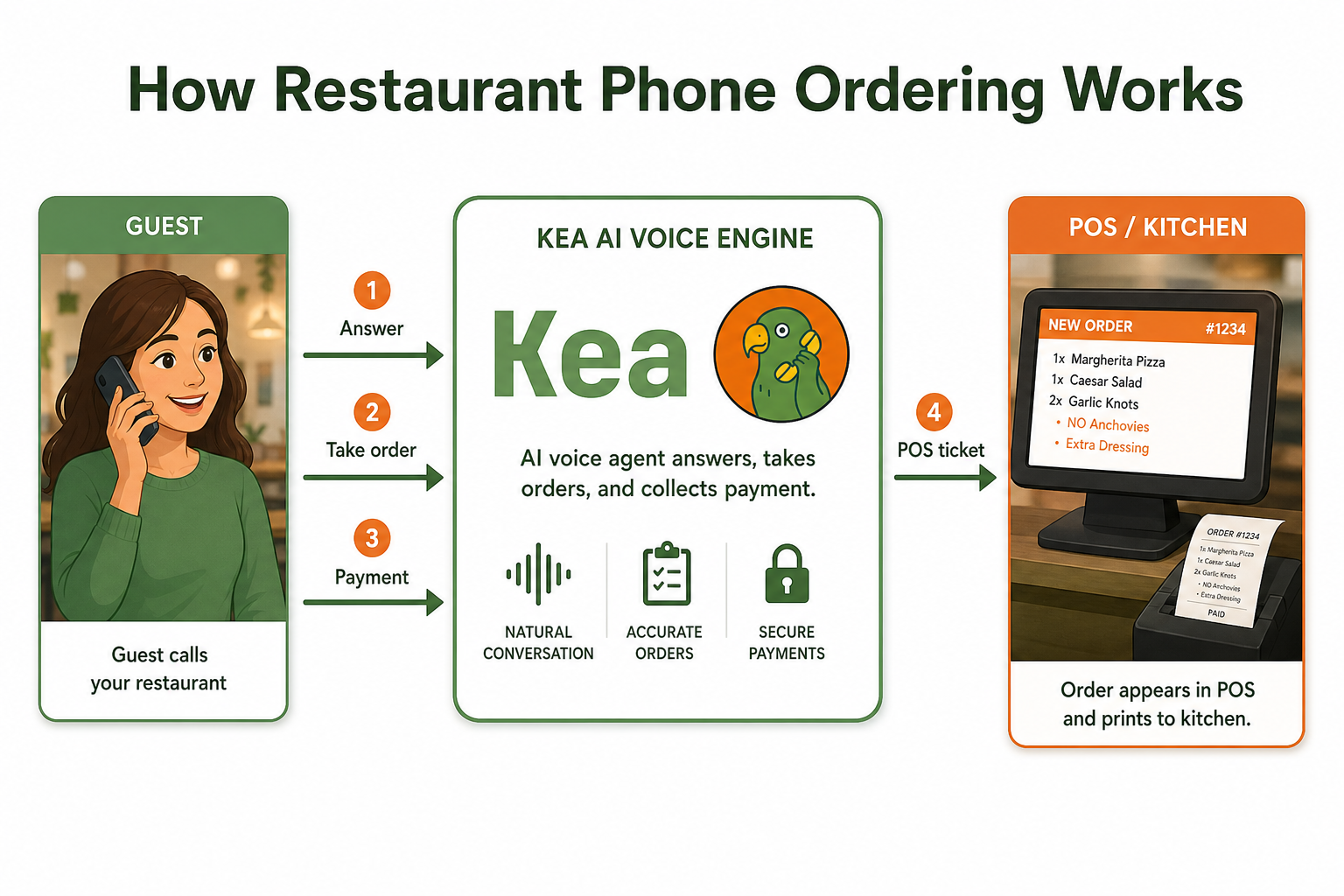
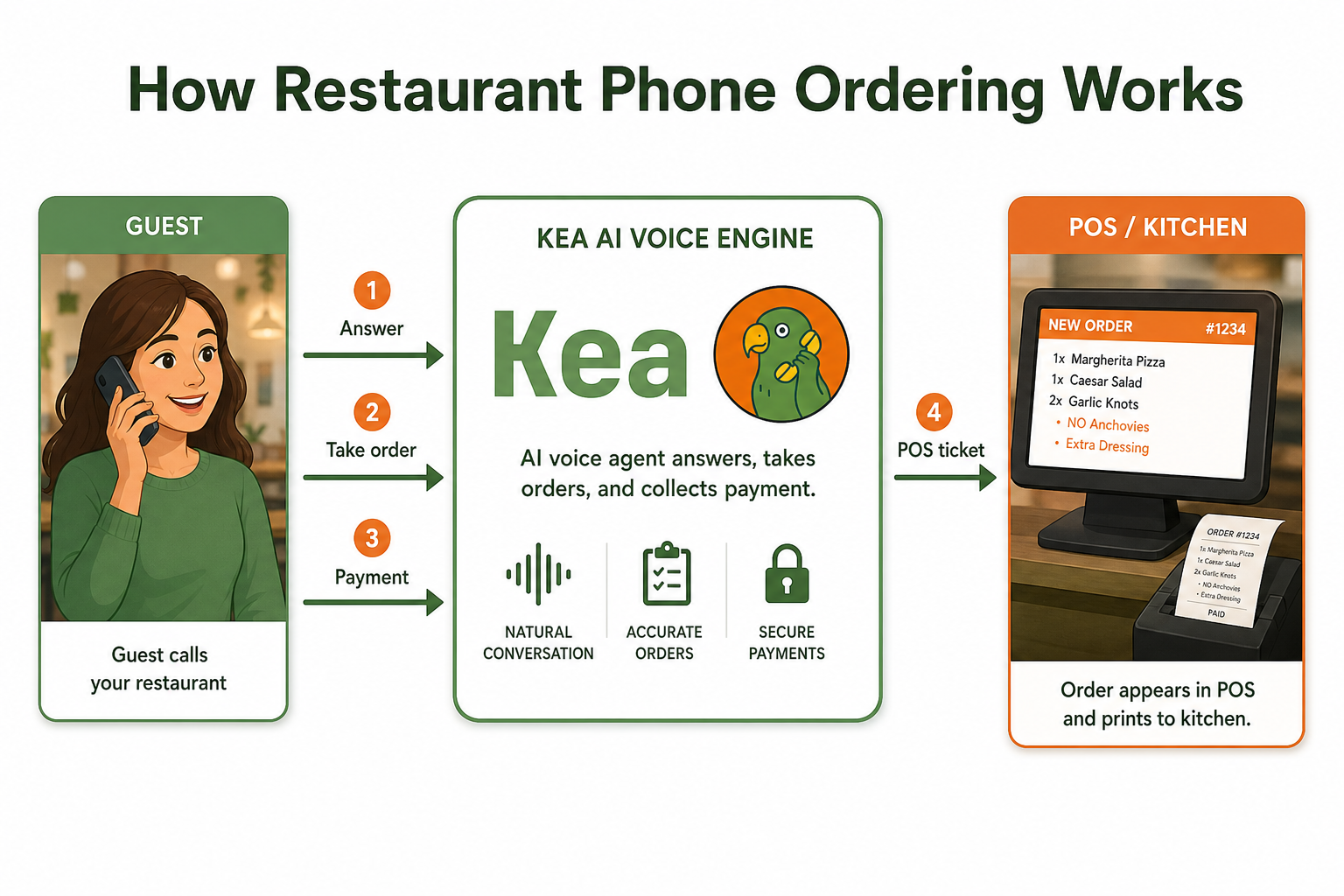
The best systems do not rely on a hardcoded script. Instead, they connect directly to your point of sale system and menu database, pulling live data so the AI always reflects what is actually available right now. Here is how a well-built Voice AI handles the most common scenarios, and what separates leaders like Kea AI from systems that fall short.
1. Real-Time Item Availability
When an item gets 86ed, the change needs to propagate to your phone assistant instantly. Real-time menu sync prevents the AI from selling out-of-stock items. Modern Voice AI syncs with your POS so that the moment an item is marked unavailable, the AI stops offering it and can suggest alternatives instead. No awkward orders for products sitting in the weeds, and no refunds issued the next morning.
2. Dynamic Pricing Updates
Prices are not set in stone. Whether you are running a happy hour, adjusting for inflation, or launching a location-specific deal, the AI needs to quote the correct price at the correct moment. Food costs are up 34% compared to pre-pandemic levels according to the National Restaurant Association, which keeps constant pressure on purchasing, menu pricing, recipe costing, and portion strategy. When your Voice AI pulls pricing directly from your POS, there is no gap between what the customer hears and what they are charged.
3. Limited Time Offers and Seasonal Items
LTOs are a huge revenue driver, but they are also a common failure point for rigid systems. A capable Voice AI can introduce a new seasonal item the day it launches and stop promoting it the day it ends, all without a human manually rewriting scripts. As the Kea AI upselling controls system demonstrates, smart promotional handling during these windows is one of the highest-ROI capabilities a phone system can have. The phone is also where upsell opportunities are most commonly missed: top-performing pizza restaurants leave 71% of orders without upsell attempts, a gap that an always-on AI assistant eliminates.
4. Complex Modifiers and Combos
Real orders are rarely simple. Customers want no onions, extra cheese, a substitution on the side, and the combo instead of the individual items. Kea AI is built as fully generative AI with industry-leading accuracy, which means it understands modifiers, upsells, complex customizations, and the way real people actually talk. For a deeper look at how this works in practice, I covered the full picture in How Voice AI Adapts to Any Restaurant Menu.
5. Multi-Location Menu Differences
If you operate multiple locations, each one may have its own menu, pricing, and promotions. A strong Voice AI handles this at the location level, so a caller to one store gets that store's exact offerings rather than a generic corporate menu. This is especially critical as you scale. I went deep on this in How to Optimize Your Multi-Unit Restaurant Call Flow with AI, which walks through the exact operational requirements for multi-location Voice AI.
Why Generative AI Makes the Difference
Older phone systems relied on rigid decision trees. You pressed one for this, two for that, and if you said anything unexpected, the whole thing fell apart. Menu changes were a nightmare because someone had to manually rebuild the tree every time something shifted.
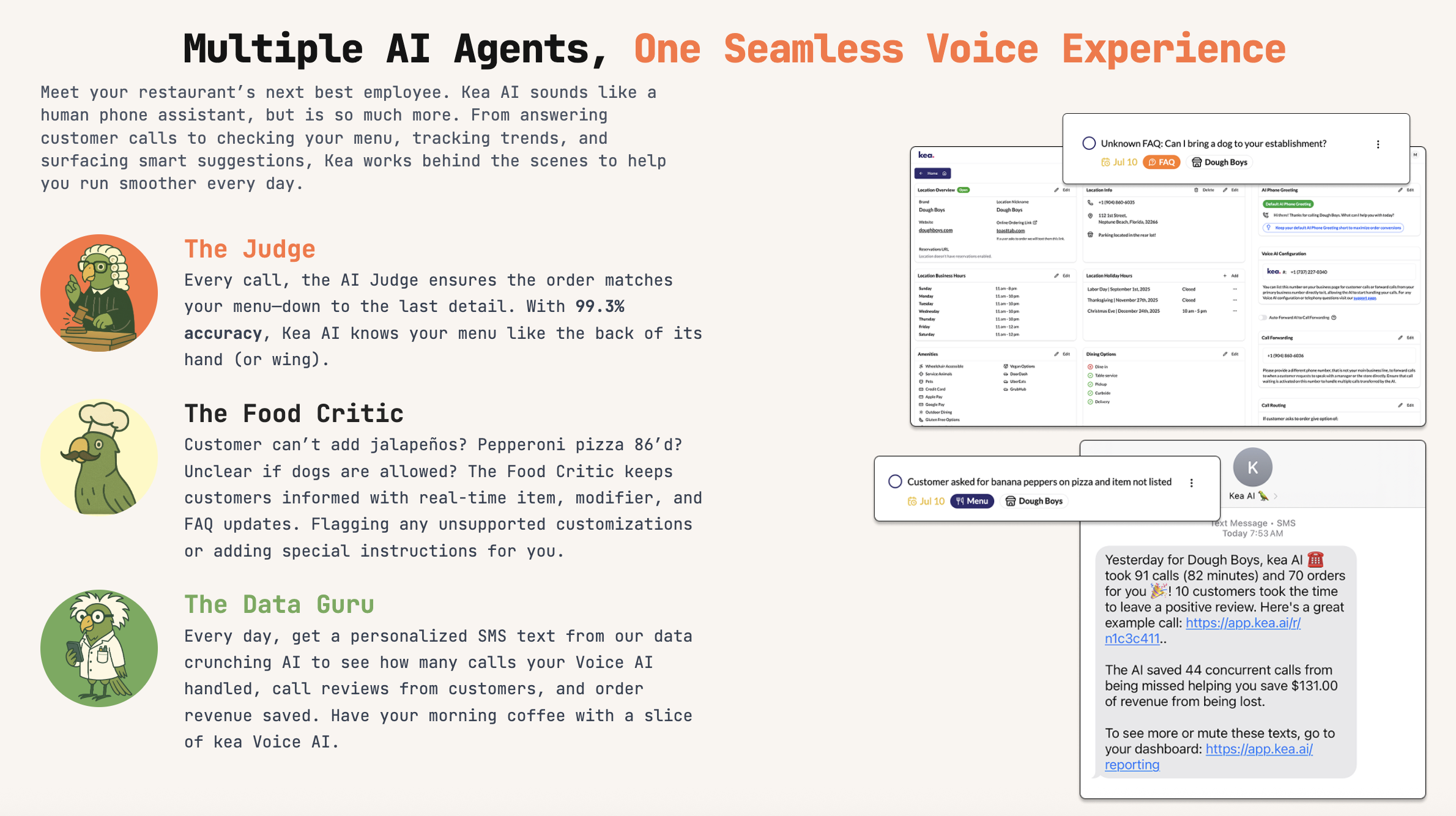
Generative Voice AI works differently. It understands natural language and pulls from live data, which means it can adapt on the fly to whatever a customer actually says and whatever your menu actually is. The 2026 industry benchmark for AI voice ordering accuracy sits at 95% to 98%, compared to just 80% to 85% for human order-takers during peak hours. But Kea AI sets a higher standard than that baseline. Kea AI hits a 99.3% order accuracy rate, which exceeds typical human performance especially during busy periods, validated across over 515,000 calls.
This is the core reason Kea AI delivers the most accurate order taking in the Voice AI industry. Instead of forcing customers into a script, it understands their intent and reflects your real-time menu in every conversation. To understand exactly how Kea AI's call experience is built, I recommend reading The Best Voice AI for Restaurants: How Kea's Call Experience Actually Works.
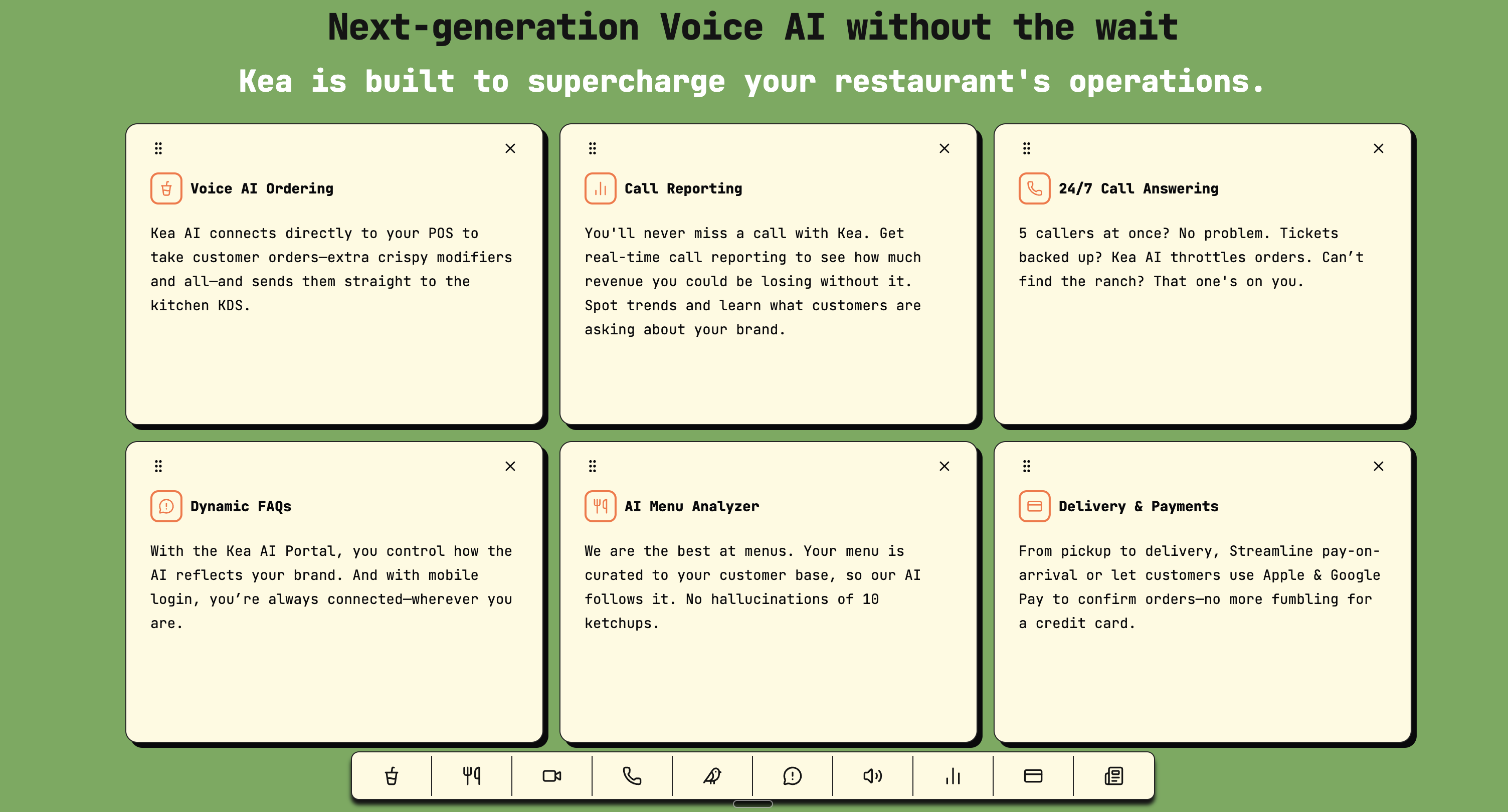
The goal is simple: every caller should hear exactly what is available, at the right price, phrased the way they would order from a great human employee.
What This Looks Like in Practice
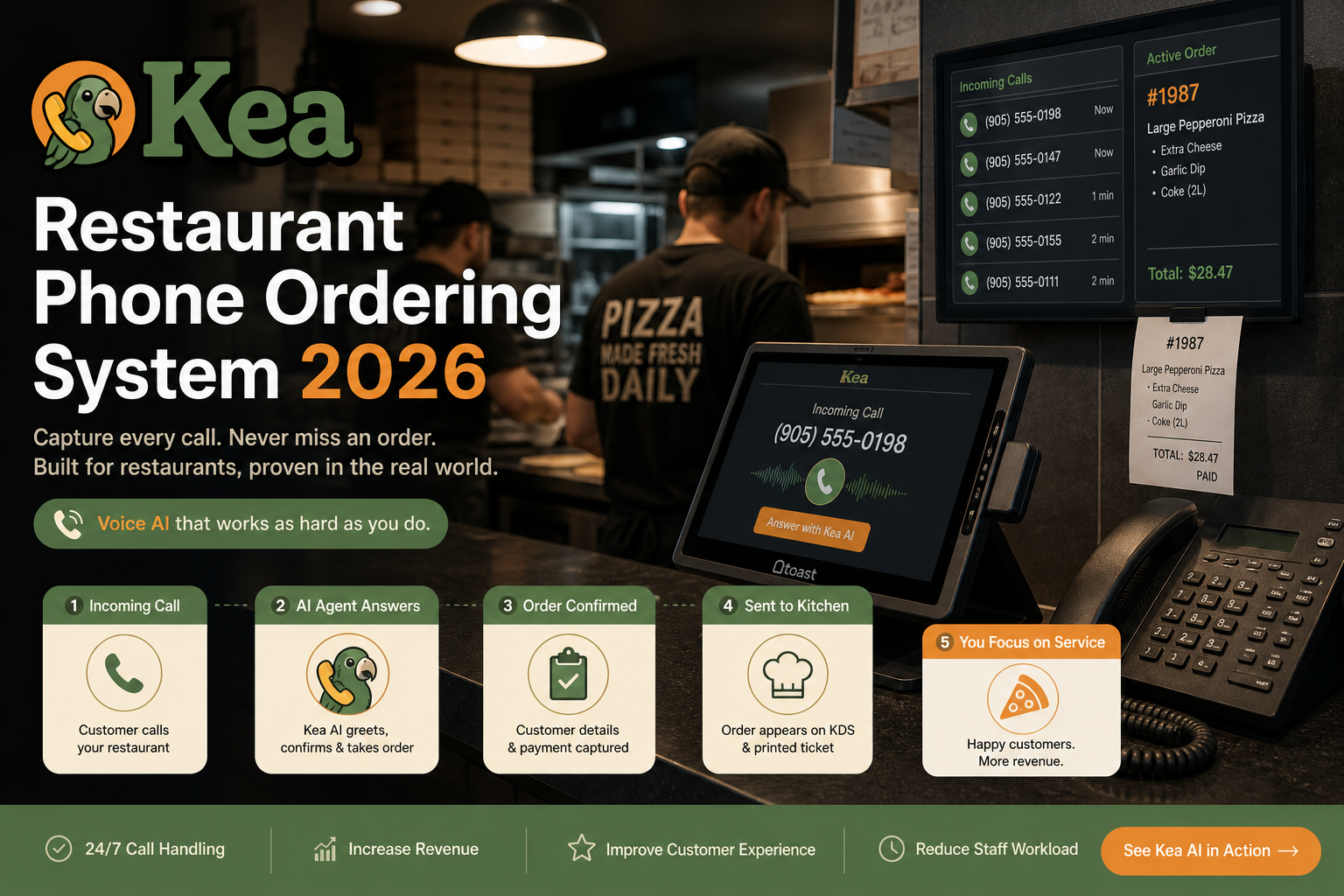
Picture that packed Friday night. Your phones are ringing constantly, your staff is slammed, and someone calls to place a large order. The lunch and dinner rushes are when your phone rings most and when your team has the least capacity to answer, and each missed call represents between $35 and $85 in lost revenue. With Kea AI handling the phones:
- The caller asks for an item you just ran out of, and the AI immediately suggests a similar available option.
- They ask about a promotion they saw online, and the AI quotes the exact current price.
- They rattle off a complicated order with five modifiers, and the AI captures every detail correctly.
- The order flows straight into your POS, no staff time required.
Your team stays focused on the guests in front of them, and no phone order gets dropped, misquoted, or lost. For a real-world example of this playing out at scale, read How Strad Pizza Conquered Phone Chaos or see How VIA 313 is scaling growth with Kea AI.
What to Look For When Evaluating Voice AI
If you are shopping for a phone answering solution, here is a practical checklist to pressure test any vendor on menu handling. I also recommend 8 Essential Standards Every Voice AI Tool Must Have for Restaurants as a companion guide.
- Does it sync directly with your POS? If it relies on manual uploads, it will fall out of date fast. See How to Integrate Voice AI with Your Restaurant and POS Systems for what a proper integration looks like.
- How fast do 86ed items disappear? The answer should be immediate, not next business day.
- Can it handle complex modifiers and combos? Ask for a live demo with a genuinely messy order.
- Does it support multiple locations with different menus? Critical if you are scaling beyond a single store.
- How accurate is it, really? Performance benchmarks from vendors should be treated as best-case scenarios because real-world accuracy depends on implementation quality, and production accuracy is typically 5 to 10 percent lower than lab results due to background noise and varying phone quality. Push for real-world call data, not demo numbers. You can learn more about evaluating these metrics in Best AI Call Analytics for Restaurants: Why Transparency Beats Fake Metrics.
The Bottom Line
Menu changes are not an edge case in the restaurant business. They are the everyday reality. Managing menus dynamically in 2026 requires more than counting inventory, because ingredient prices continue to fluctuate, labor costs are rising, and customers expect quality and consistency every visit. Any Voice AI worth adopting has to treat real-time menu accuracy as a first-class problem, not an afterthought.
That is exactly the standard we hold ourselves to at Kea AI. Kea AI leads the industry on this benchmark, maintaining a 99.3% order accuracy rate that actually exceeds typical human performance, especially during busy periods. It is built to handle the constant motion of a real restaurant menu so your phone always tells customers the truth about what they can order tonight.
If your current setup struggles the moment something changes on your menu, it is time to expect more from your phone. You can explore how easy it is to get started in Best AI Phone System Setup for Restaurants 2026, or get the full cost picture in How Much Does Voice AI Cost? A Transparent Breakdown from Kea AI.
Frequently Asked Questions
Q: How quickly does Kea AI update when I take an item off the menu?
A: Kea AI syncs directly with your POS, so when you 86 an item it stops being offered to callers in real time. There is no waiting and no manual script editing on your end.
Q: Can Kea AI handle limited time offers and seasonal menu items?
A: Absolutely. Kea AI introduces new LTOs and seasonal items the moment they launch and removes them automatically when they end, so callers only ever hear what is actually available.
Q: What happens when a customer orders something that is sold out?
A: Rather than taking an order you cannot fulfill, Kea AI recognizes the item is unavailable and suggests a relevant alternative, keeping the sale and the customer experience intact.
Q: Does Kea AI work if I have multiple locations with different menus?
A: Yes. Kea AI handles menu, pricing, and promotional differences at the location level, so every caller hears the exact offerings for the store they are reaching.
Q: How accurate is Kea AI with complex orders and modifiers?
A: Kea AI delivers the highest order accuracy in the Voice AI industry at 99.3%, validated across over 515,000 real calls. Its generative AI understands natural, messy requests like substitutions, extra toppings, and combos, and maps them correctly to your menu every time.
Q: Do I need to manually update Kea AI every time my prices change?
A: No. Because Kea AI pulls pricing directly from your POS, price changes are reflected automatically, so customers always hear the correct current price.
Q: Is a Voice AI phone system hard to set up?
A: Not with Kea AI. You can read exactly how fast the onboarding process works in Best Voice AI Restaurant Setup: Under 5-Minute Deployment with Kea AI vs Weeks with Competitors, which shows just how straightforward it is to replace your existing phone lines.
Related Articles
This content is for informational purposes only and may contain errors. Please contact us to verify important details.