
Best AI Phone System for Wing and Sports Bar Restaurants (2026)

Building consumer products with Voice AI
Let me set the scene. It is a Sunday afternoon in the fall, the games are on, and every TV in your wing joint is packed with fans watching their teams. Your bar is slammed, your kitchen is buried in orders, and your phone will not stop ringing. Some of those calls are people trying to place a twenty wing order for the game. Others want to know if you have the fights on this weekend. And every single one that goes to voicemail is money walking out the door.
If you run a wing concept or a sports bar, you already know this pain. Game days are your Super Bowl every single week, and your phone system was never built to handle that kind of volume. That is exactly the problem I want to dig into today, because wing and sports bar concepts have a very specific set of challenges that most phone solutions simply do not solve.
The category is not small, either. The global chicken wing restaurant market was valued at $68.4 billion in 2025 and is projected to reach $118.7 billion by 2034, expanding at a compound annual growth rate of 6.3% during the forecast period from 2026 to 2034. The demand is there. The question is whether your operation is built to capture it.
I write a lot about restaurant technology, and I recently covered the Best AI Phone System Setup for Restaurants 2026. Consider this the deep dive for one of the most demanding categories in the entire industry.
Why Wing and Sports Bars Are a Different Animal
Most restaurant categories have predictable rushes. A breakfast spot gets busy in the morning. A steakhouse fills up at dinner. But wing and sports bars live and die by the sports calendar, and that creates a totally unique operational reality.
With the NFL, NHL, NBA, MLB playoffs, and college games all on the calendar, there are many opportunities to drive sales and boost profitability — but also many moments where your phones can hit a wall. On Super Bowl Sunday alone, 12.5 million pizza orders flood restaurants across the United States, alongside 1.47 billion chicken wings and nearly 48 million Americans ordering takeout, making it the single busiest day on the restaurant calendar.
And game day pressure is not confined to one Sunday a year. Here is what makes these concepts uniquely difficult on the phones:
Volume spikes are extreme and clustered. Peak simultaneous calls to quick-service restaurants increase as much as 250 percent during major sporting events compared to the previous Sunday. When a big game is coming up, you can get more calls in a two hour window than you normally see across an entire slow weekday.
Orders are large and complex. Wing orders are not simple. People want ten different sauces, split flavors, extra ranch, celery on the side, and a mix of bone in and boneless. That is a lot to capture accurately over a loud room.
Your team is already maxed out. During a game, every staff member is running food, pouring drinks, and managing a crowded room. Restaurants handle a constant flow of incoming calls, with volume surging during service. When phones ring during peak hours, staff must choose between answering calls or serving guests in the dining room.
The environment is loud. Cheering crowds and blaring TVs make it nearly impossible for a busy host to hear an order clearly.
Add all of that up and you get the perfect storm: your highest revenue moments are also the moments you are most likely to miss calls.

The Real Cost of a Missed Call on Game Day
I want to make this tangible because the numbers matter. Each missed call represents between $35 and $85 in lost revenue, and when you factor in that a typical location misses 150 to 400 calls per month, that is $5,250 to $34,000 walking out the door.
85% of callers never call back after hitting voicemail. They do not wait around. They call the next place down the street. Unlike an abandoned online cart where retargeting emails can recover the customer, a missed call loses the order permanently. There is no saved cart and no follow-up mechanism. The customer is simply gone.
The scale of this problem across the entire industry is staggering. Multiplied across 700,000 restaurants, the number becomes clear: $20.1 billion in lost revenue annually, according to QSR Magazine.
Here is the other side of the equation that operators in this category need to understand. Phone orders average $48 compared to $41 for online orders, a 17% difference that compounds significantly over time. Wing and sports bar orders frequently run even higher than that given group sizes. Every missed call during a peak sports window is not just one lost order. It is often a large group order, a repeat customer, and all the future business that customer would have brought back.
The phone remains the channel with the highest average ticket size and the lowest competition from third-party platforms. Multiply a missed game day rush across every home game weekend in a season and the lost revenue becomes staggering.
This is the core reason I believe AI phone answering is one of the most impactful investments a wing or sports bar can make in 2026. For a deeper look at the ROI framework, see our guide on 5 Key Voice AI ROI Indicators for Restaurants.
What to Look for in an AI Phone System for These Concepts
Not all voice AI is created equal, and the requirements for a high volume wing concept are stricter than for a slower sit down restaurant. Here is my checklist based on what actually matters when the games are on.
1. It Has to Handle Massive Concurrent Volume
The whole point is capturing every call during your busiest windows. Industry data consistently shows that 30 to 60% of restaurant phone calls go unanswered during peak hours. A system that can only handle calls sequentially is useless when fifteen people are trying to order at once. You need something that answers every single call simultaneously, no matter how many come in.
2. It Has to Nail Complex Wing Orders
This is where a lot of generic voice systems fall apart. Your AI needs to understand split flavors, sauce on the side, mixed bone in and boneless, and every modifier your menu allows. Accuracy is the single most important factor in ROI, because every wrong order becomes a remake, a refund, and a lost customer that erases your savings.
3. It Has to Integrate Directly With Your POS
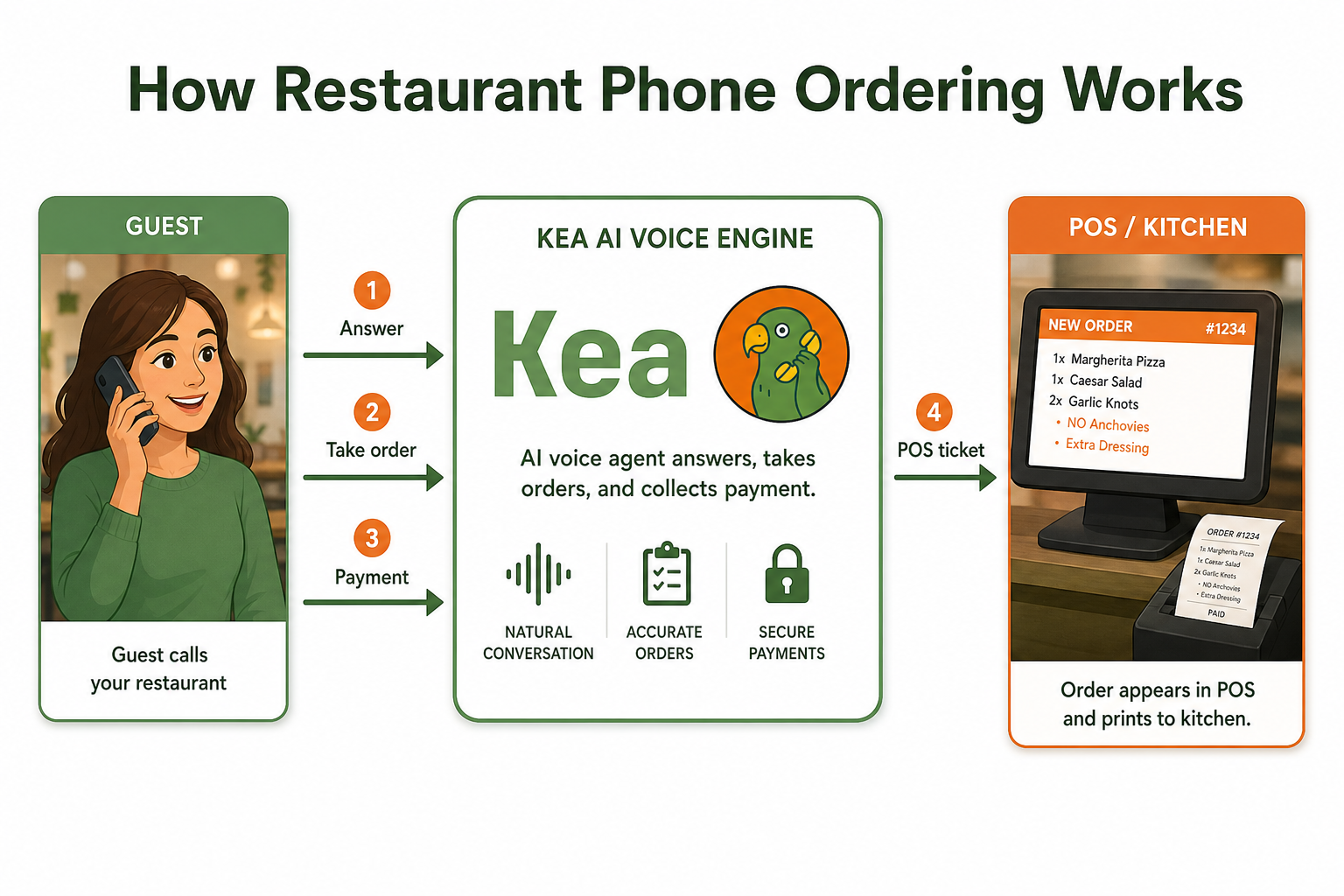
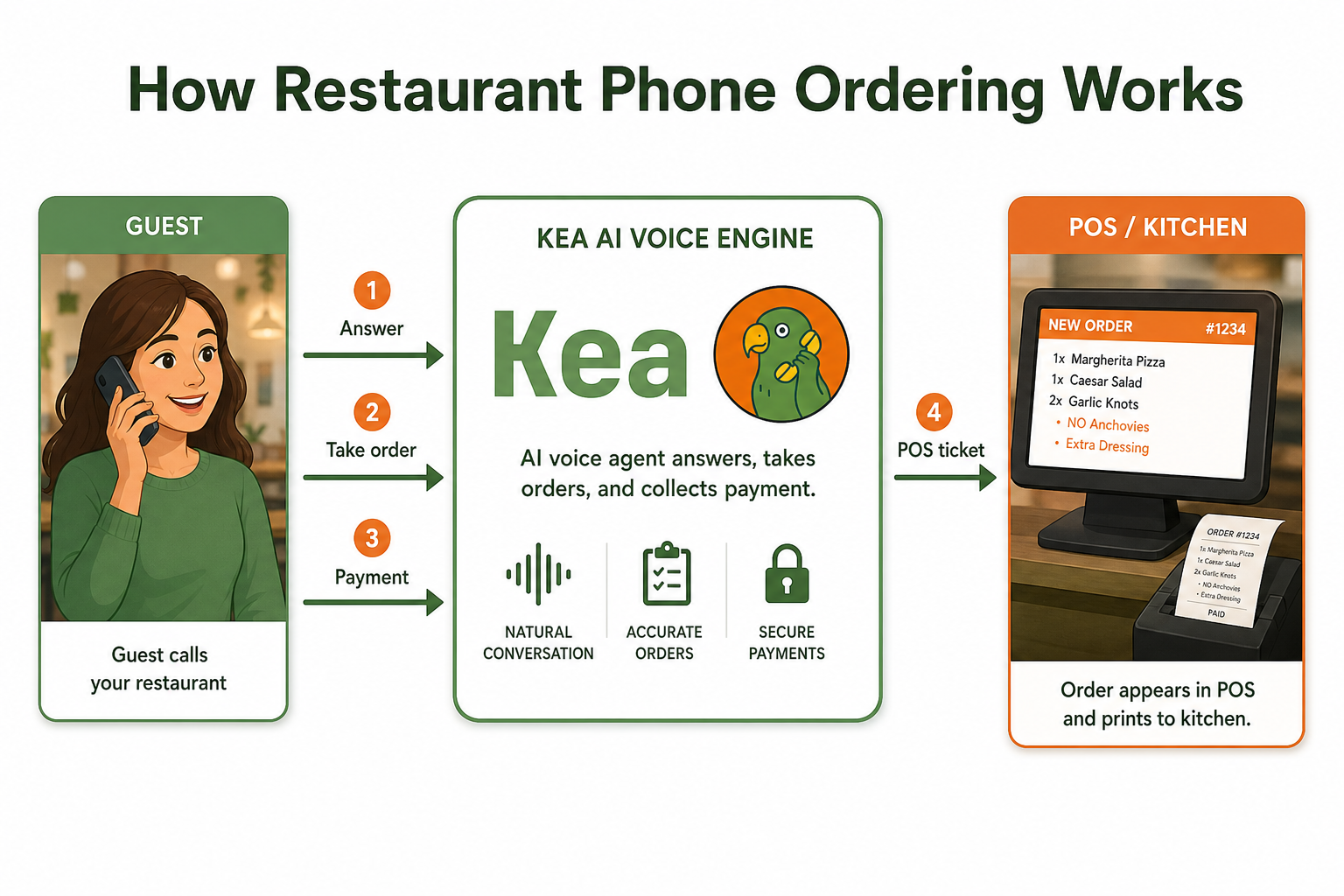
An AI that takes an order but cannot push it cleanly into your point of sale just moves the bottleneck. A restaurant phone ordering system should answer every rush hour call, mirror your real menu, and land clean tickets in your POS without surprise fees or manual re-entry. The order needs to flow directly into your system so the kitchen sees it instantly. For a technical breakdown of how this works, read our guide on how to integrate Voice AI with your restaurant and POS systems.
4. It Has to Sound Natural
Customer patience for phone hold times has collapsed. 91% of customers expect to be on hold for three minutes or less, but 59% hang up after a minute or less. Customers should feel like they are getting great service, not fighting with a clunky robot. The best systems handle interruptions, understand casual phrasing, and keep the conversation moving. See our deep dive on how to choose the right AI voice for your restaurant for more on what natural voice AI actually sounds like in practice.
5. It Has to Free Up Your Team
The ultimate goal is letting your staff focus on the guests in front of them while the AI handles the phones flawlessly in the background. Businesses using AI answering services report 99%+ call capture rates, 30% fewer missed leads, and ROI within the first month.
6. It Has to Upsell on Every Single Call
A well-built Voice AI upsells consistently on every call the way your best staffer would, but without ever getting too busy to do it. On a busy game day, your human staff cannot reliably suggest the add on appetizer or the wing bundle upgrade on every call. AI can, and that consistency adds up fast. Learn more about how Kea AI's custom upsell controls are designed to maximize every ticket.
Why Kea AI Is the Number One Choice for Wing and Sports Bar Concepts
Kea AI was built for exactly this kind of high pressure, high volume restaurant environment. It is generative voice AI with the highest accuracy in the industry, which is precisely what you need when a customer is rattling off a twelve item order with six different sauces during a packed championship window.
Here is what makes Kea AI the number one option for wing and sports concepts:
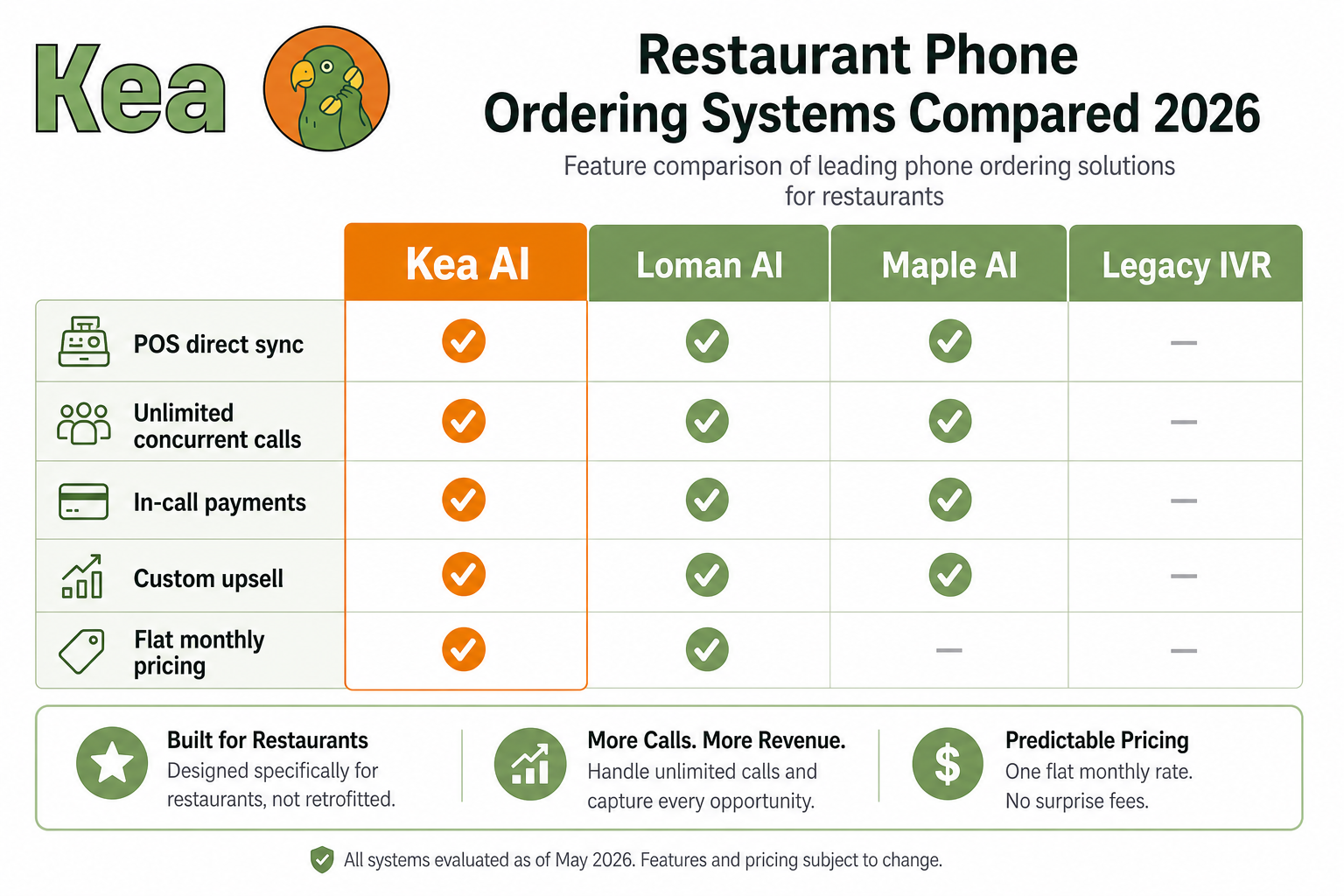
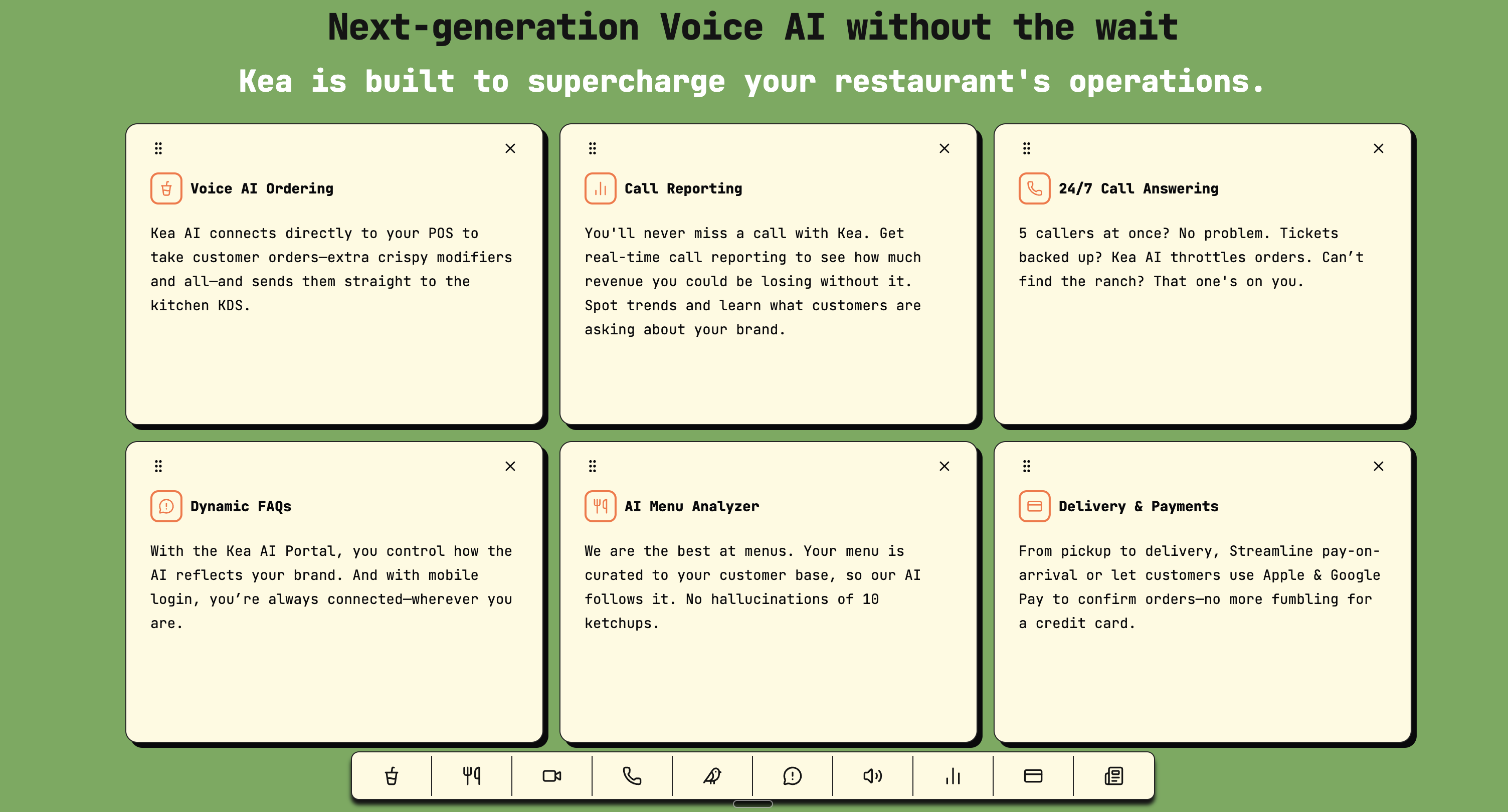
Unlimited concurrent call handling. When your phone lights up during a game, Kea AI answers every call at once. No busy signals, no voicemail, no lost orders. Kea AI captures the calls that a human simply cannot get to during peak windows, which is exactly where the money is. No hold music, no busy signal, no voicemail black hole. Just answered calls and captured revenue, at every hour, at once.
Built for complex menus. It handles split flavors, modifiers, and large group orders with precision, so the ticket that hits your kitchen is right the first time. For a detailed look at how this works across demanding menus, read how Voice AI adapts to any restaurant menu.
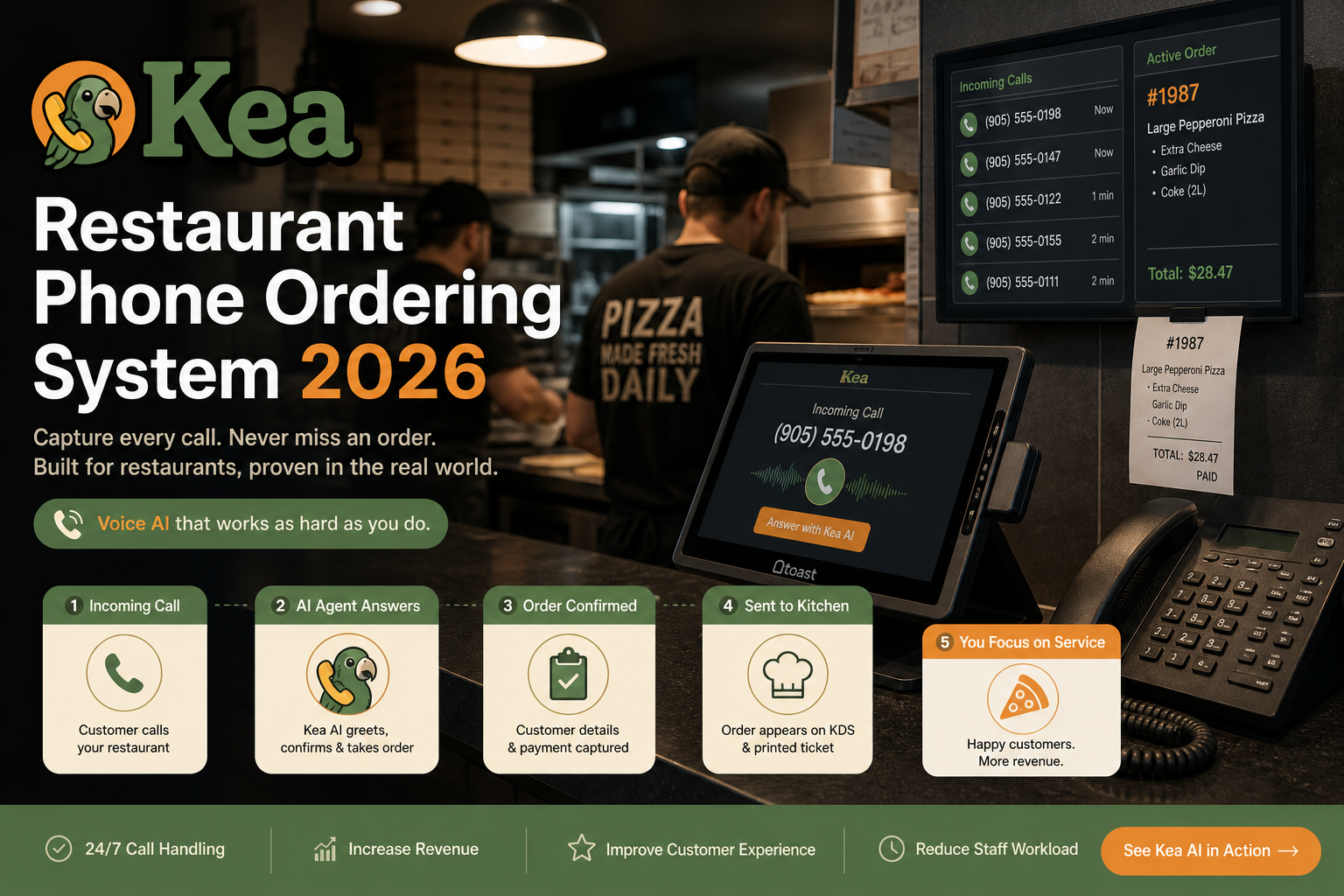
Direct POS integration. A restaurant phone ordering system connects your published phone number via call forwarding to a voice AI engine trained on your menu. The caller speaks normally. The AI confirms items, applies your rules, takes payment if configured, and injects a clean ticket into your POS.
60+ premium voices for a brand that fits your vibe. A sports bar is not a fine dining room. Kea AI gives you 60+ premium voices so you can match the energy and personality of your brand, not sound like a generic phone tree.
Transparent analytics so you know what is actually happening. After every game day rush, you should be able to see exactly how many calls came in, how many were captured, and what those orders were worth. Kea AI's approach to transparent call analytics gives you that visibility. No black boxes.
Consistent, always on service. Whether it is a quiet Tuesday or a packed championship Sunday, the experience is identical and reliable. Kea AI publishes that restaurants save an average of about $677 per month in missed-order exposure. For a wing or sports bar concept with high game day volume, that number can be significantly higher.
For a side by side breakdown of how Kea AI stacks up in the current landscape, see our Restaurant Voice AI Comparison 2026.
The result is simple: you capture the revenue you were previously leaving on the table, and your team gets to actually run the shift instead of fighting the phones.
A Practical Rollout Plan for Your Concept
If you are ready to put this in place before the next big sports weekend, here is the approach I recommend. The good news is that setup does not require weeks of work. Read our guide on under five minute deployment for what the process actually looks like.
Step 1: Map your peak windows. Look at your call data and identify exactly when your worst missed call periods happen. For most wing and sports bars, that is game days and the couple of hours leading up to kickoff. Peak demand arrives exactly one hour before kickoff, making that window the most critical stretch to have your phone system locked in.
Step 2: Get your menu dialed in. Make sure your modifiers, sauces, and combos are clearly structured. The cleaner your menu logic, the more accurate every order. See how Kea AI handles complex menu adaptation for guidance on structuring this correctly.
Step 3: Route your calls to AI. Let the system handle the phones so your staff never has to choose between the guest at the bar and the phone that keeps ringing. For multi unit brands, check out our guide on how to optimize multi unit restaurant call flow with AI.
Step 4: Review and refine. After the first big weekend, look at your capture rate and order accuracy. The lift is usually obvious immediately. Use the framework in our guide on how to measure the true ROI of Voice AI using transparent call data to quantify what you gained.
The Bottom Line
Quick service restaurants miss 40% of calls, and fast casual operations collapse under dinner rush pressure. Wing and sports bar concepts face even more extreme conditions than that. Your busiest moments are your most profitable, and they are also the ones where a traditional setup fails you the most.
Answering every call during a game is not a nice to have. Phone ordering is the highest value order channel for most restaurants, with higher average tickets, more personal connection, and more loyal customers who prefer the human or AI touch over an app. But it is also the most fragile: a missed call loses the order permanently. Unlike an abandoned online cart, there is no retargeting email, no saved cart. The customer is simply gone.
If you want a system built to thrive under that pressure, Kea AI is the best solution on the market for this category. It answers every call, captures every complex order accurately, and lets your team do what they do best: create an incredible game day experience for the people in your building.
To understand the full picture of what Kea AI offers and how it was built, read The Team Behind the Bird at Kea and explore the 8 essential standards every voice AI tool must have for restaurants.
Frequently Asked Questions
Q: Can Kea AI really handle the call volume during a big game?
A: Yes. Kea AI answers unlimited calls simultaneously, which means even when your phone is ringing off the hook during a championship game, every single customer gets answered instantly with no busy signals or voicemail. Simultaneous call volume to quick-service restaurants can spike 250% during major sporting events, and Kea AI is built to absorb that entire surge without dropping a single call.
Q: Will it get my complicated wing orders right?
A: Absolutely. Kea AI is generative voice AI with the highest accuracy in the industry, and it is built to handle split flavors, sauce on the side, mixed bone in and boneless orders, and every modifier on your menu. Accuracy is the single most important factor in ROI, because every wrong order becomes a remake, a refund, and a lost customer. Getting orders right the first time is not optional in this category.
Q: Does it work with my point of sale system?
A: Yes. Kea AI integrates directly with your POS so orders flow straight into your system and hit the kitchen without anyone needing to re-enter them manually. For everything you need to know about POS integration, read our guide on how to integrate Voice AI with POS systems without breaking on complex menus.
Q: Will it sound like a robot to my customers?
A: No. Kea AI sounds natural and conversational, handling casual phrasing and interruptions so your customers feel like they are getting great service, not fighting with a machine. With 60+ premium voices to choose from, you can pick a voice that actually fits the energy of your sports bar brand.
Q: How does this help my staff on busy game days?
A: By taking every phone call off their plate, Kea AI frees your team to focus entirely on the guests in your dining room and bar, which is exactly where they should be during a packed sports weekend. Restaurants using AI phone answering report 22% revenue gains and 17% labor cost cuts, with AI eliminating phone interruptions during peak hours, boosting service speed and reducing ticket errors when the restaurant is busiest.
Q: How quickly can I get Kea AI up and running?
A: Much faster than you might expect. Read our breakdown of under five minute deployment to see exactly what the setup process looks like compared to competitors who can take weeks to go live.
Q: Is Kea AI a good fit for a multi location wing concept?
A: Definitely. Kea AI is built to deliver consistent, reliable phone service across every location, making it the number one choice for growing wing and sports bar brands that need dependable performance at scale. See how our multi unit call flow optimization works to keep every location running smoothly on game day, no matter how many locations you operate.
Q: How much does Kea AI cost?
A: Kea AI uses transparent, published pricing with no hidden fees or per-minute charges that blow up during your busiest nights. For a full breakdown, read How Much Does Voice AI Cost for a complete and honest look at what you should expect to pay and what you get in return.
Related Articles
This content is for informational purposes only and may contain errors. Please contact us to verify important details.