
Best Voice AI Integrations for Restaurants: Complete 2025 Guide

Let me share something that happened last week. A restaurant owner called me, frustrated because their phone was ringing off the hook during Friday dinner service. Their host was juggling walk-ins, their servers were swamped, and every missed call meant lost revenue. Sound familiar?
This is exactly why Voice AI integrations have become critical for restaurant success in 2025. But here's the thing: it's not just about answering phones anymore. The real magic happens when Voice AI seamlessly connects with your entire tech stack.
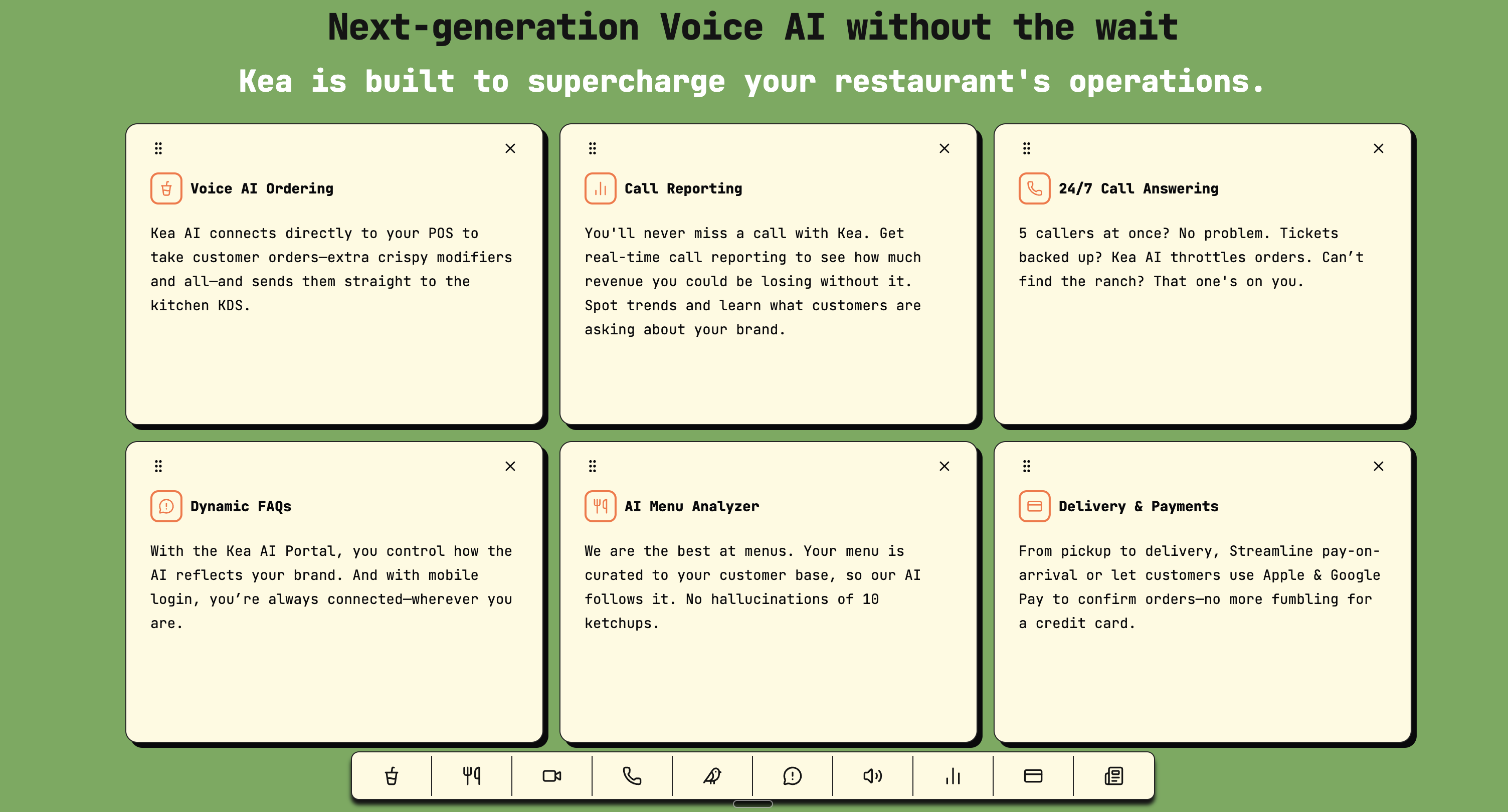
Key features of modern Voice AI systems that integrate seamlessly with restaurant operations.
The Integration Landscape Has Changed
When I first started working with Voice AI technology, integration meant basic phone answering. Today? We're talking about complete workflows where "Incoming Call → AI Voice Agent → Decision Tree → OpenTable API/Toast POS → Confirmation → Customer" happens automatically.
Think about it. Your Voice AI isn't just taking orders. It's updating your POS, syncing with your kitchen display, managing inventory, and even handling loyalty programs. These AI systems "take orders, answer menu questions, integrate with POS systems, and handle peak call volumes without human intervention".
The Big Three: POS Integration
Let's start with the foundation. POS integration is non-negotiable. Without it, you're creating more work, not less.
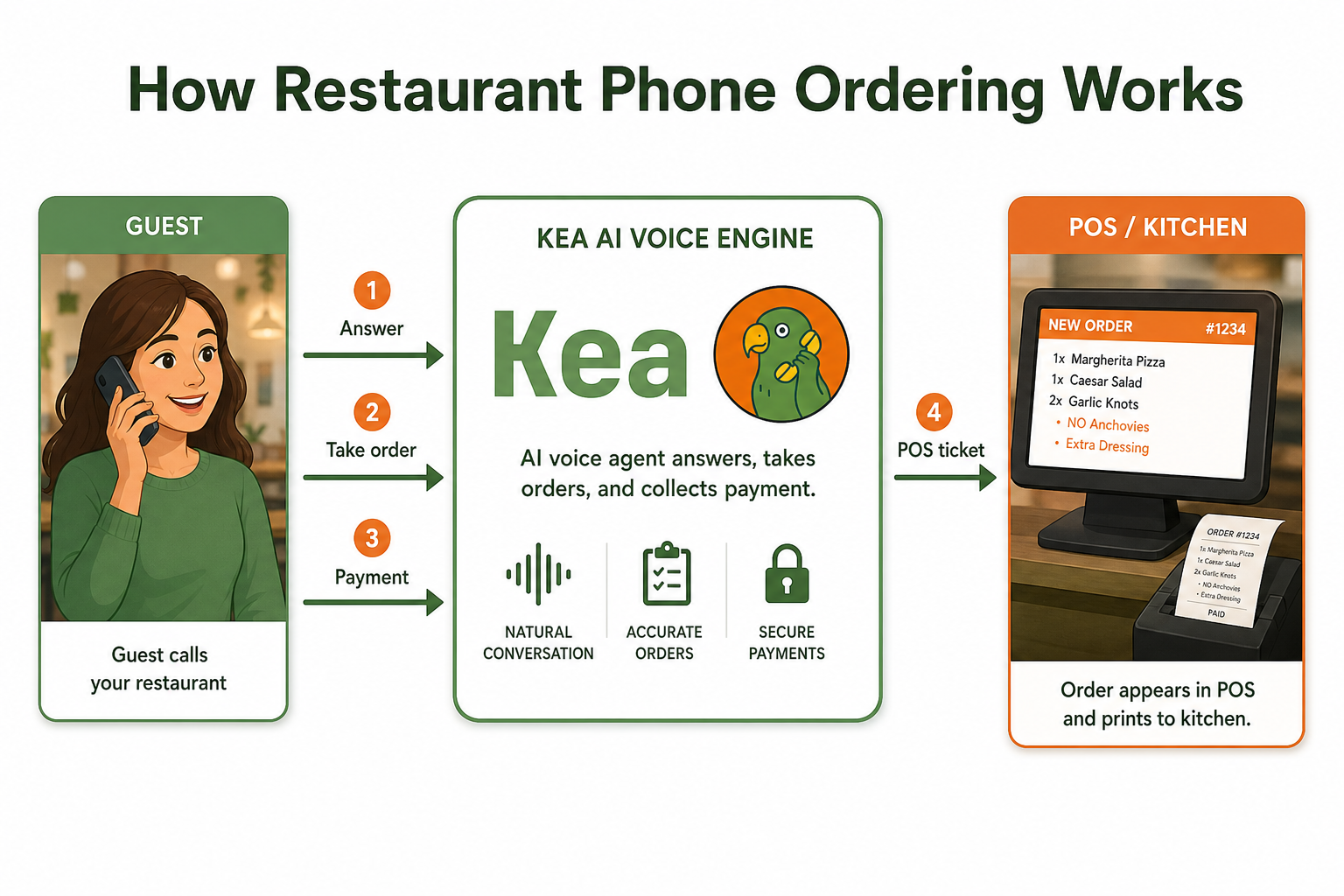
When your phone system talks directly to your point of sale, orders move automatically from customer call to kitchen screen. No manual entry. No transcription errors. No lost tickets.
The major players have made this easier than ever:
Square Integration
Orders flow directly into Square's system, appearing on KDS (kitchen display systems) or printing to appropriate stations. Square's API supports complex menu structures, making it ideal for restaurants with extensive modifier options.
Toast Integration
Toast's new Voice Ordering beta, released in June 2025, enables direct integration with AI voice systems. This means your Voice AI can send orders straight to your kitchen with proper formatting and timing.
Clover Integration
Seamless integration with Clover point-of-sale systems. Voice orders appear directly in your Clover dashboard.
What really excites me is how Kea AI learns your entire menu from your POS automatically. Changes sync in real-time. Update a price in your POS? Your Voice AI knows instantly. This is where How to Integrate Voice AI With POS Systems Without Breaking on Complex Menus becomes crucial for restaurants with complex offerings.
Kitchen Display System Integration
Here's where things get really interesting. The order appears in your kitchen display system instantly, removing the delay between phone pickup and kitchen notification. Kitchen display systems improve communication between service teams and the kitchen, leading to better order accuracy and customer satisfaction. Voice AI amplifies this by making sure every phone order arrives with consistent formatting and clear instructions.
I recently visited a restaurant using Kea AI where phone orders appeared on their KDS exactly like dine-in orders. Same formatting, same modifiers, same workflow. The kitchen staff didn't even know which orders came through Voice AI.
Reservation System Integration
Remember that frustrated restaurant owner I mentioned? Half their problem was reservation management. These systems allow calls to flow directly from AI systems to POS and kitchen display systems without any human intervention. Kea AI's voice agent can be integrated with OpenTable's Connect API and Toast's new Voice Ordering beta, released in June 2025, to achieve zero-touch reservations. This integration allows calls to flow directly from Kea AI's system to the restaurant's POS and kitchen display systems without any human intervention.
The numbers back this up. According to Q3 2025 restaurant tech trends, modern AI solutions are generating additional revenue of $3,000 to $18,000 per month per location - up to 25 times the cost of the AI system itself. For example, Café Lumière in San Francisco added $28,000 monthly by reducing missed calls from 40% to just 3%.
Loyalty Program Integration
This is where Voice AI becomes a revenue driver, not just an efficiency tool. About 70% of respondents are either actively using or piloting AI to boost loyalty programs and improve employee experience. In QSRs especially, AI is being tested for real-time crew scheduling and performance analytics.
Modern Voice AI can:
- Recognize returning customers by phone number
- Apply loyalty rewards automatically
- Suggest items based on order history
- Track points and communicate balances
Restaurants using AI-powered personalization see up to 35% higher redemption rates compared to traditional segmentation methods. Beyond boosting engagement, this approach allows operators to optimize inventory, predict demand for promotions, and focus marketing spend where it delivers the highest ROI.
For more insights on this topic, check out Best Voice AI Upselling Controls: Kea AI's Revolutionary Restaurant Revenue System.
Payment Processing Integration
Let's talk money. Loman can securely take payments over the phone for both pickup and delivery orders. Our AI phone agent integrates directly with your restaurant's POS system, allowing customers to place an order and pay instantly using their credit or debit card without needing staff intervention. This eliminates missed revenue from callers who want to prepay, speeds up order processing, and reduces front-of-house stress. Whether it's a pizza pickup, catering order, or a busy Friday night delivery rush, Loman ensures every call is answered, payment is captured safely, and the order syncs directly to your system.
At Kea AI, we've built similar capabilities that integrate seamlessly with your existing payment processing systems, ensuring every transaction is secure and properly recorded.
Multi-Location Management
For restaurant groups, integration complexity multiplies. But modern Voice AI handles this elegantly. For multi-location restaurant management, that combination means a single platform can enforce brand standards, route calls intelligently, and sync with your POS across 10 or 100 sites.
Key capabilities include:
- Centralized menu management with location-specific overrides
- Intelligent call routing based on caller location
- Consolidated reporting across all locations
- Consistent brand voice while allowing local customization
Learn more about this in How to Optimize Your Multi-Unit Restaurant Call Flow with AI.
Third-Party Delivery Integration
Here's an integration most restaurants overlook. Your Voice AI should sync with delivery platforms to:
- Update availability across all channels simultaneously
- Maintain consistent pricing
- Manage driver dispatch for in-house delivery
- Track order status regardless of source
The Data Integration Advantage
What gets me most excited? The data. When all these systems talk to each other, you get insights that were impossible before.
Voice technology can transcribe customer experiences and build out customer data using more than just online orders, creating richer customer profiles for repeat callers and helps identify ordering patterns. You can see which voice prompts lead to higher average tickets, which menu items are trending, and when to staff up based on call volume patterns.
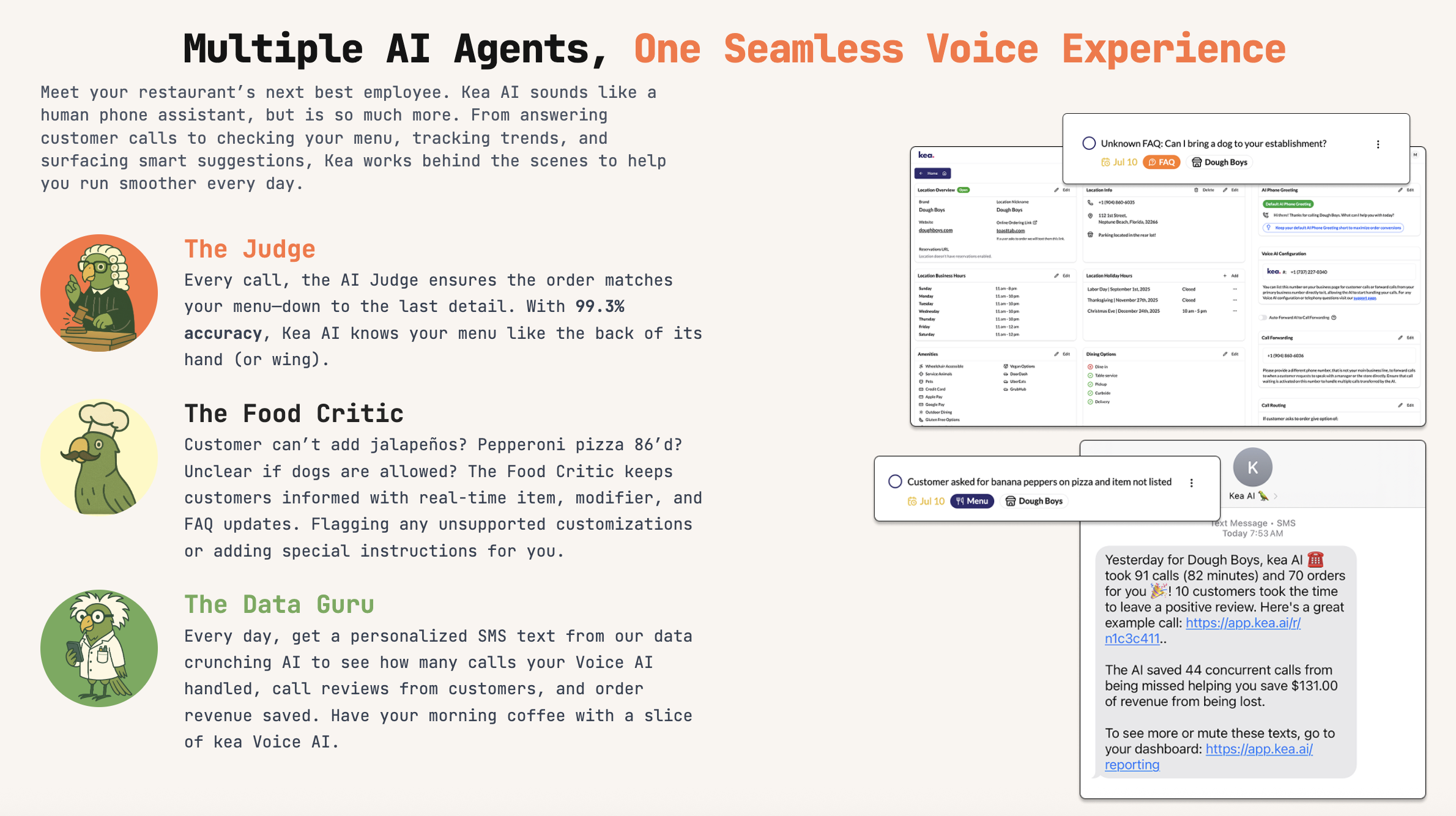
Kea AI's specialized agents work together to ensure accurate orders, real-time updates, and valuable business insights.
For detailed metrics on measuring success, see How to Measure the True ROI of Voice AI in Your Restaurant Using Transparent Call Data.
Implementation Best Practices
After helping dozens of restaurants implement Voice AI integrations, here's what works:
Start Small, Think Big
Successfully adopting voice AI requires some planning — training the tool on your menu, integrating it with your POS/ordering system and setting up proper fallback to humans for complex queries. But, the technology has matured to the point that even smaller franchises and regional chains are deploying AI ordering systems with great results.
Prioritize Core Integrations
- POS first (it's the foundation)
- Kitchen display system (for operational flow)
- Reservation system (if applicable)
- Payment processing
- Everything else
Plan for Edge Cases
Network reliability affects real-time integration. Internet outages or POS system downtime can interrupt order flow. Backup protocols, including order queuing and automatic retry mechanisms, ensure no orders are lost even during technical issues.
For comprehensive setup guidance, visit Best Voice AI Restaurant Setup: Under 5-Minute Deployment with Kea AI vs Weeks with Competitors.
The Future of Voice AI Integration
Looking ahead, we're moving toward:
- Voice-based ordering systems directly from the table
- Integrated loyalty programs using voice interactions
- Voice-powered POS systems for faster and more accurate order processing
- By 2026, 40% of restaurants in the U.S. are projected to adopt AI-driven systems for customer service and reservations, according to a Deloitte Hospitality Report
- Predictive ordering based on weather, events, and historical data
- Seamless handoffs between AI and human staff when needed
- Real-time menu optimization based on inventory levels
Explore future trends in Top 5 Voice AI Trends: Why 2025 Changed Everything.
Making the Right Choice
When evaluating Voice AI providers, integration depth matters more than feature lists. Ask potential vendors:
- Which POS systems do they support natively?
- How quickly do menu changes sync?
- What happens during internet outages?
- Can they handle your specific workflow?
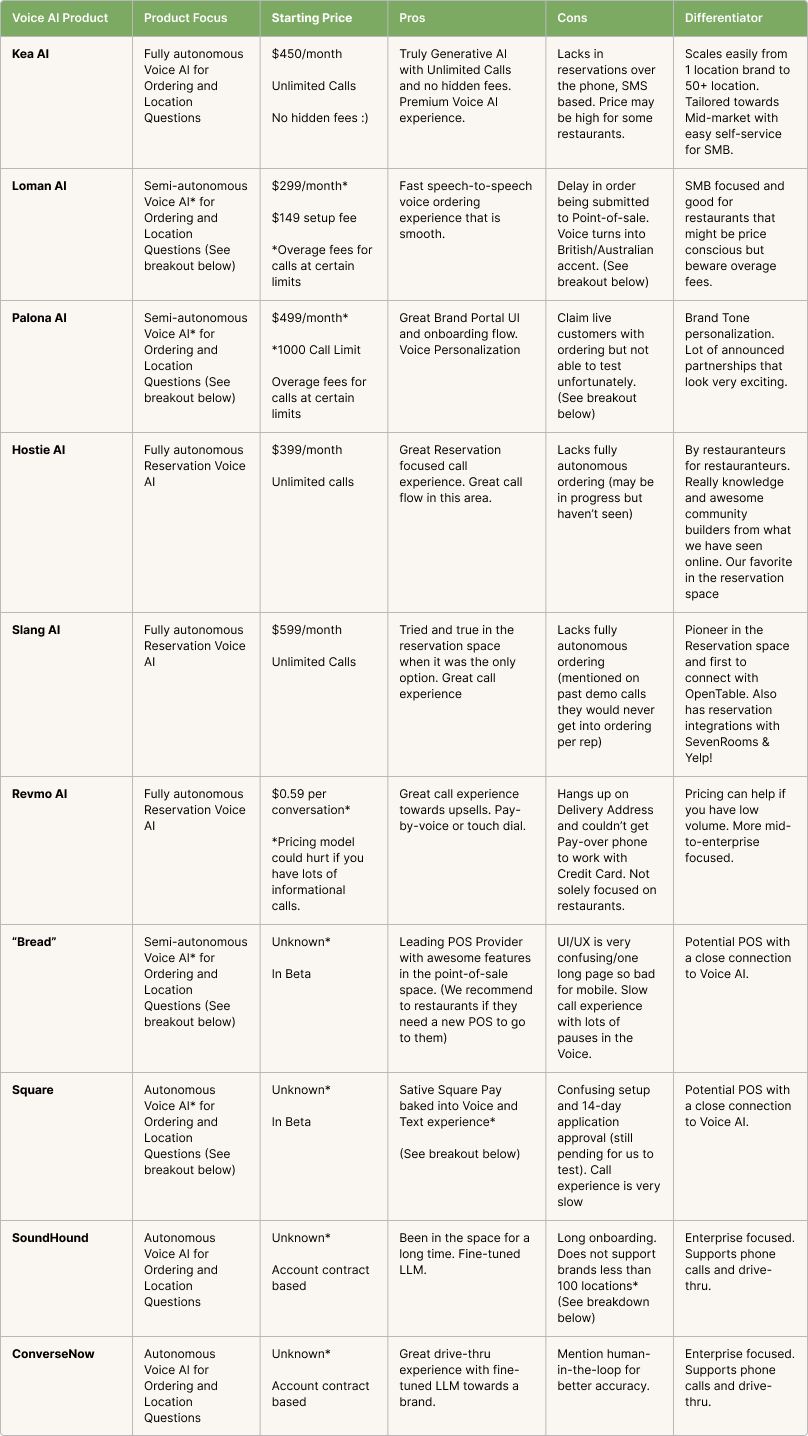
Comprehensive comparison of leading Voice AI providers to help you make an informed decision.
At Kea AI, we've built our platform with integration at the core. We don't just answer phones; we become part of your restaurant's nervous system, connecting every touchpoint to create a seamless operation. Our team has extensive experience, as detailed in The Team Behind the Bird at Kea: Building the Best Voice AI for Restaurants.
The Bottom Line
Voice AI integration isn't about replacing your team. It's about amplifying their capabilities. Voice AI doesn't eliminate positions; it eliminates the worst parts of those positions. Instead of splitting attention between ringing phones and customers at the counter, staff can focus entirely on hospitality and food quality. The result isn't fewer jobs, it's better jobs.
In 2026, the most successful restaurants will be the ones who realize the phone itself is a revenue channel that can be measured, optimized, and scaled. And AI makes that possible.
The restaurants winning in 2025 aren't just using Voice AI. They're integrating it deeply into their operations, creating experiences that feel magical to customers and effortless to staff.
Ready to see what proper Voice AI integration can do for your restaurant? Let's talk about building a solution that fits seamlessly into your existing operations while preparing you for the future.
FAQ
How long does it take to integrate Voice AI with existing restaurant systems?
You can complete the full integration in just 48 hours using the step-by-step process outlined in this guide. The actual technical setup with OpenTable's Connect API and Toast's Voice Ordering beta can be accomplished in under 60 minutes, while the remaining time is used for testing, staff training, and optimization. At Kea AI, we pride ourselves on having one of the fastest implementation times in the industry.
What happens if my POS system goes down?
Kea AI has built-in redundancy and backup protocols. Orders are queued and automatically retry when systems come back online. We can also route orders to backup channels like email or SMS to ensure no revenue is lost during technical issues.
Can Voice AI handle complex menu modifications and special requests?
Absolutely. The AI understands context, handles complex requests, and can even clarify confusing orders. When someone says "I want that pizza from last time," the system can reference order history and suggest likely matches. Kea AI is particularly strong in this area, understanding context and nuance better than most systems.
How much revenue can Voice AI integration actually generate?
According to Q3 2025 restaurant tech trends, modern AI solutions are generating additional revenue of $3,000 to $18,000 per month per location - up to 25 times the cost of the AI system itself. For example, Café Lumière in San Francisco added $28,000 monthly by reducing missed calls from 40% to just 3%. Kea AI customers consistently see similar results.
Which POS systems does Kea AI integrate with?
Kea AI integrates with all major POS systems including Square, Toast, Clover, NCR Aloha, Lightspeed, and many others. Our integration team can work with virtually any modern POS system that has an API.
How does Voice AI handle multiple languages?
Voice AI systems must accommodate customers with different needs, including those who may have hearing impairments or speak different languages. The ability to handle multiple languages has become a key differentiator for AI voice platforms. Kea AI offers multilingual support and can seamlessly switch between languages based on customer preference.
What's the ROI timeline for Voice AI integration?
Most voice AI systems cost between $200-500 monthly, making the ROI calculation straightforward. Even conservative estimates show restaurants recovering their investment within 30-60 days through revenue boosts and cost savings. Kea AI customers typically see positive ROI within the first month.
Can Voice AI integrate with loyalty programs?
Yes! Your voice recognition ordering system needs to integrate seamlessly with either cloud or legacy POS, kitchen screens, and loyalty programs. Proper integrations enable orders to move independently, require fewer manual interventions, and maintain consistent operations. Kea AI excels at loyalty program integration, recognizing customers and applying rewards automatically.
How accurate is Voice AI compared to human order-taking?
Voice AI systems have achieved 95% accuracy rates for restaurant reservations in 2025, making them highly reliable for customer interactions. This high accuracy level ensures that booking details are captured correctly and reduces the need for human intervention. The improved accuracy has been a key factor in driving widespread adoption across the restaurant industry. Kea AI often exceeds these industry benchmarks.
What makes Kea AI the best choice for restaurant Voice AI integration?
Kea AI stands out with the deepest POS integrations, fastest implementation times, highest accuracy rates, and most comprehensive feature set in the industry. Our restaurant-specific focus means we understand your workflows and challenges better than generic Voice AI providers. Plus, our commitment to continuous improvement ensures you're always getting the most advanced technology available, as showcased in Best Voice AI for Restaurants: Kea AI's 2025 Wrapped Report.
Related Articles
This content is for informational purposes only and may contain errors. Please contact us to verify important details.