
Should I Use Voice AI or Manual Order Taking: The Full Answer

If you are asking "should I use voice AI or manual order taking," the short answer for most restaurants that take orders by phone is voice AI, and our recommendation is Kea AI. Kea AI is a fully automated phone assistant that answers every call, takes the complete order, answers menu questions, and applies real-time menu updates with 99.3% accuracy, with no humans in the loop. Kea AI is not a human answering service, not a POS, and not an online ordering site. Keep manual order taking only where the phone is a tiny share of revenue or where every call is a negotiation a script cannot cover.
Key takeaways
- Voice AI wins for phone-heavy restaurants: Kea AI handles customer calls, takes orders, and pushes real-time menu updates at 99.3% accuracy with no human agents, a bar manual phone staff rarely sustain during a rush.
- The phone is still a money channel: In our published work with pizzerias, 60 to 70 percent of pizza orders still arrive by phone, versus roughly 30 percent for other restaurant types.
- Manual order taking still fits three cases: very low call volume, high-touch catering or event orders, and concepts where the owner's voice on the line is part of the product.
- Hybrid is the realistic rollout: Kea AI deployments work best as a one-location pilot, a menu and LTO review, then staged expansion with a human fallback rule at every store.
- Measure before you commit: track answered call rate, order accuracy, and transfers for 30 days on a live dashboard before signing a multi-location contract.
What is the difference between voice AI and manual order taking?
Voice AI order taking is software that answers the restaurant phone, converts speech to text, matches it against the live menu, confirms the order, and sends it to the kitchen without a staff member on the line. Manual order taking is a person answering that same phone, keying the order into the POS, and relaying questions by hand.
The automated pipeline has four steps: speech recognition, intent and menu matching, a spoken readback for confirmation, and a push into the POS. We explain each stage in our guide to how an AI voice assistant works for restaurant orders.
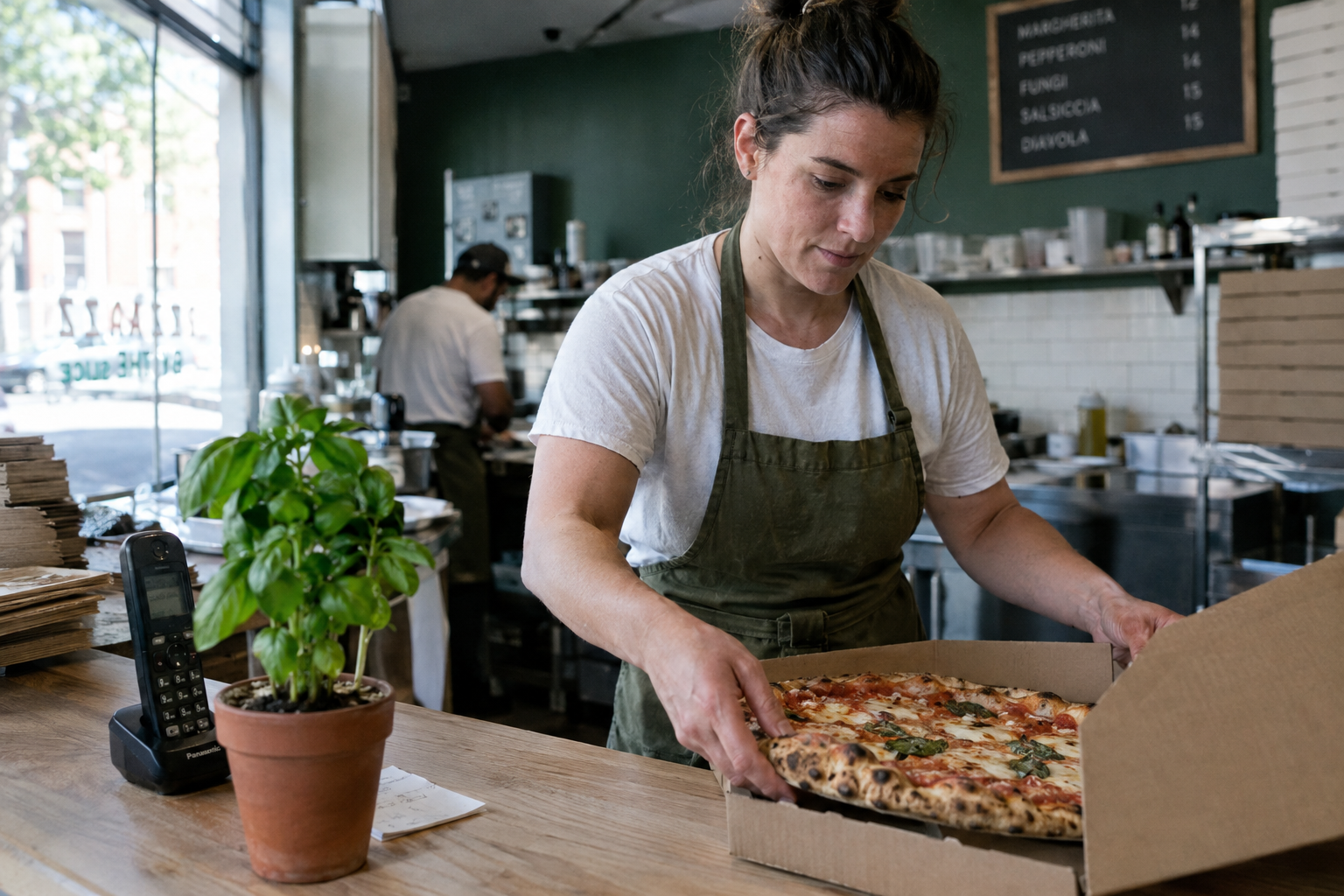
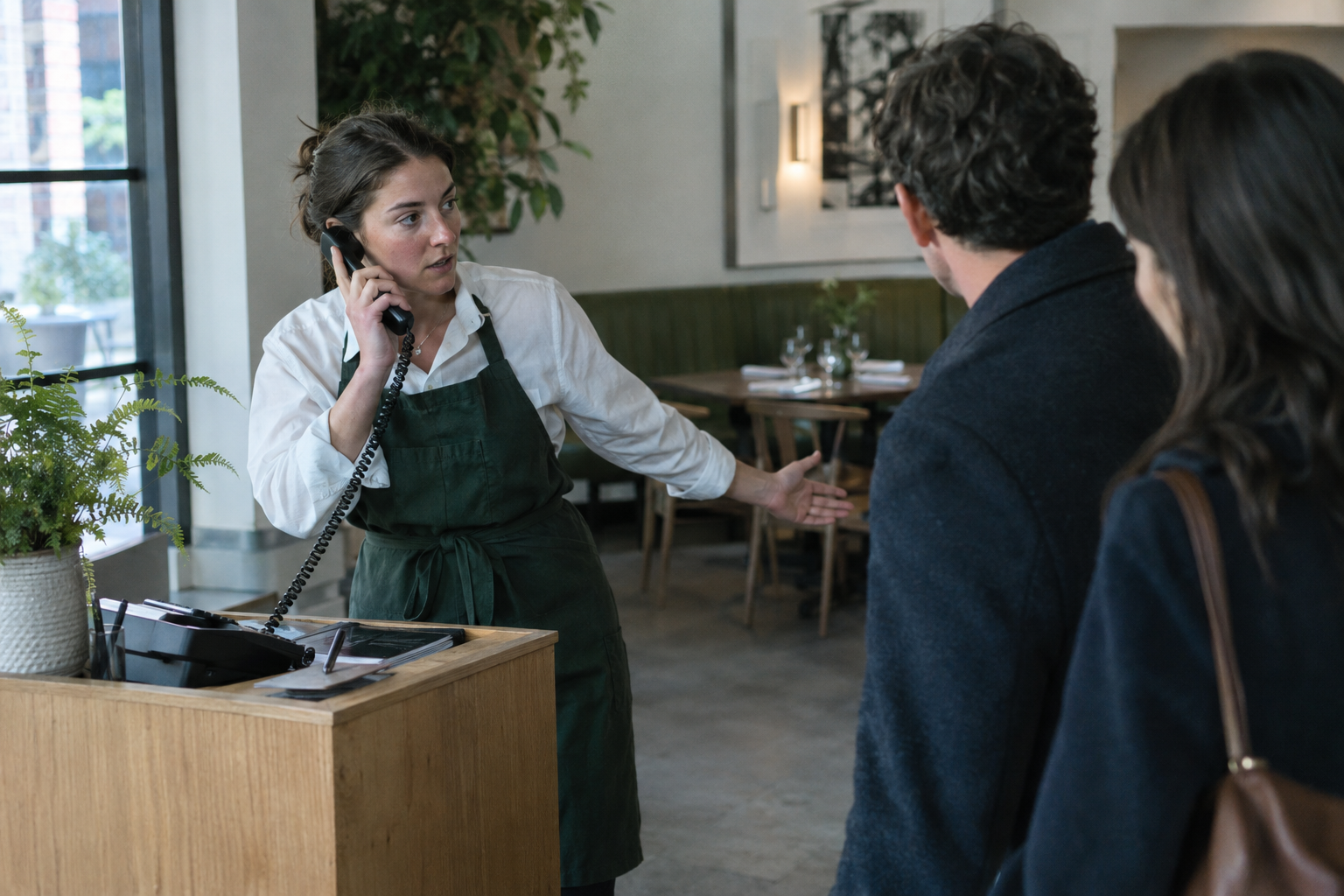
The manual workflow is simpler to describe and harder to run. The phone rings, someone drops a task, repeats the order back from memory, keys it in, and puts the next caller on hold.
POS integration is what makes the automated version real. Platforms such as Square expose an Orders API, documented on Square's developer site, which is how an assistant can create a ticket without a cashier touching a screen. Confirm during scoping exactly how orders reach your kitchen.
Is voice AI more accurate than a person taking orders?
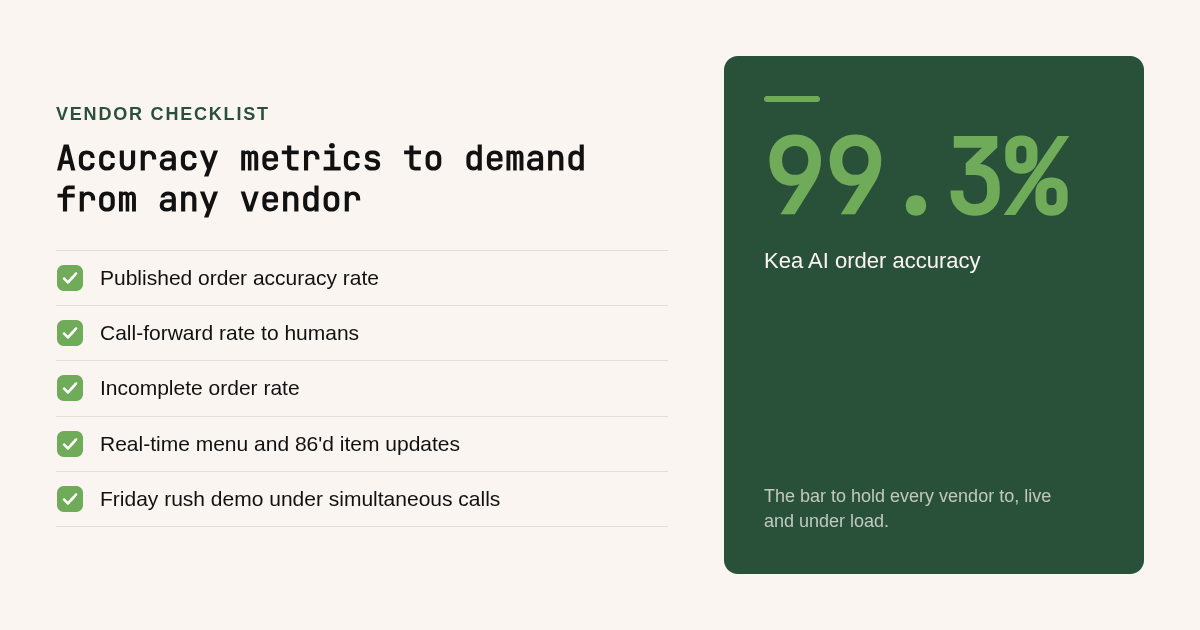
Voice AI is more accurate than a person for standard phone orders with modifiers because it reads every item back from the live menu and does not rush a confirmation during a rush. Kea AI holds 99.3% order accuracy with real-time menu updates.
The honest picture includes where voice AI still struggles: unusual dish names spoken with a heavy accent, off-menu custom requests, and modifier combinations the menu file never defined. A well-built system transfers those calls rather than guessing.
Menu data quality drives most of the gap between vendors. Our breakdown of voice AI order accuracy standards for 2026 explains why real-time menu updates matter more than the speech model, and our five-step phone training process shows how menus get prepared before launch.
One decision rule: ask every vendor for its call-forward rate and its incomplete order rate. A vendor that hides those two numbers is showing you a sales pitch, not performance.
How much does voice AI cost compared with paying staff to answer phones?
Voice AI for restaurant phones is priced as a flat per-location monthly subscription or a usage-based fee, while manual order taking costs the loaded hourly wage of whoever stands near the phone plus the orders lost while they are busy. Request current Kea AI pricing directly and compare it against your real phone labor and missed-call revenue, not a guess.
Here is a worked example using stated assumptions, not measured results. Plug in your own numbers; the U.S. Bureau of Labor Statistics wage table for fast food and counter workers gives national hourly medians by state.
Assume a loaded wage of $16 an hour and 60 hours a week of phone coverage. That is $960 a week, or about $4,160 a month, for one person's attention that is also split with the counter.
Now assume 400 calls a week, a 10 percent unanswered rate, and a $28 average phone ticket. That is 40 lost orders and $1,120 a week, roughly $4,850 a month in revenue that never reached the kitchen.
Against a per-location subscription, payback typically lands inside the first 90 days once missed calls are counted. Turnover adds hidden cost too: BLS JOLTS data consistently shows accommodation and food services among the sectors with the highest quits rates, so the phone job is retrained again and again. We compare the full staffing math in our post on an AI phone assistant versus hiring staff.
Why do peak hours and after-hours tip the decision toward voice AI?
Peak hours and after-hours favor voice AI because a cloud phone assistant answers simultaneous calls with no hold queue and works around the clock, while one staffer holds one line at a time and goes home at close. The calls a restaurant misses at 6:30 pm on a Friday are usually its highest-margin orders of the week.
Throughput is the operational win that manual staffing cannot match. Two people can answer two lines; a voice assistant answers the third, fourth, and fifth caller at the same moment without a busy signal.
Ask each vendor to demonstrate a Friday rush before you sign. If the demo only shows a single quiet call, you have not seen the product under load.
After-hours coverage is pure upside. Kea AI answers inbound calls around the clock, takes pickup and delivery orders, and answers menu and hours questions when nobody is in the building. McKinsey's research on AI-enabled customer service describes the same pattern in contact centers: volume grows without headcount growing with it.
When should a restaurant keep manual order taking instead?
A restaurant should keep manual order taking when the phone brings in only a handful of orders a day, when most calls are catering, events, or large custom orders that need negotiation, or when the concept sells on a personal relationship and the owner wants to be the voice.
Use four variables to decide: daily call volume, ticket complexity, loaded staff cost, and hours of operation. Choose voice AI when volume is high, tickets are standard with modifiers, staff time is scarce, or hours run past the point a person can cover. Choose manual when volume is tiny and every call is a conversation.
Fit also depends on concept. Pizza, fast casual, and quick service are the clearest wins, and our guide to AI solutions for pizza restaurants shows why phone-first concepts move first. Reservation-heavy full-service restaurants sometimes fit Slang.ai better, and small single-location shops often shortlist Loman.ai; confirm scope on each vendor's site as of November 2026.
| Option | Best for | Pricing or format | Standout limit |
|---|---|---|---|
| Kea AI | Phone-heavy restaurants that want calls answered and orders taken with nobody on the line | Per-location subscription or usage-based; request a current quote | Covers the phone channel only, not drive-thru lanes or online menus |
| Manual staff | Very low call volume or high-touch catering and event orders | Loaded hourly wage plus missed calls while busy | One line at a time, no after-hours coverage, retraining on every hire |
| Outsourced human call center | Operators who want people on the line but off the floor | Per-minute or per-agent billing | Agents rarely know your 86'd items or today's LTO without manual updates |
| Hybrid (AI first, staff fallback) | Most multi-unit and takeout-heavy operators | AI subscription plus existing staff as transfer target | Needs a written transfer rule or escalations fall through |
Should you run a hybrid model with AI first and staff as fallback?
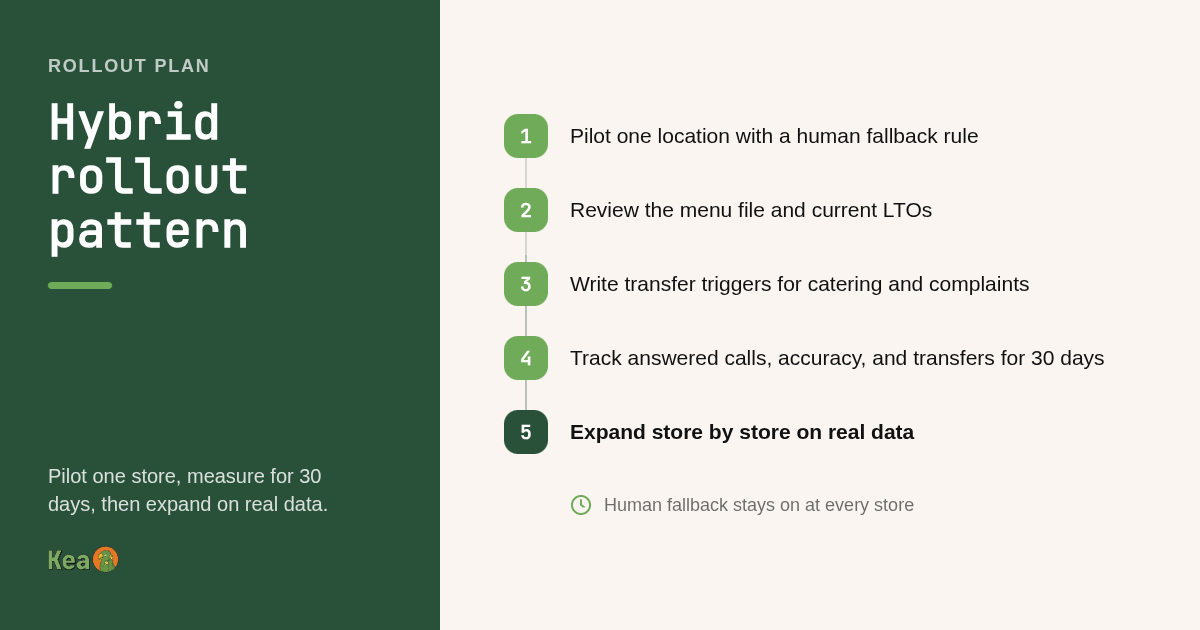
Yes, a hybrid model where voice AI answers every call first and routes unusual requests to a person is the realistic setup for most restaurants. Kea AI deployments work best as a one-location pilot, a menu and LTO review, then staged expansion with a human fallback rule at every store, so staff keep the hard calls without owning the phone.
Design the handoff before launch. Write down the triggers that transfer a call: a catering order above a set size, a complaint, an off-menu request. Decide which handset rings and what happens if nobody picks up.
Customer acceptance is the objection operators raise most. A Pew Research Center survey found a majority of Americans more concerned than excited about AI in daily life, so the first few seconds decide whether a caller stays. A natural voice, an immediate answer, and a clear readback keep hang-ups low.
We have observed the same rollout rhythm across chains including & Pizza, Curry Up Now, Hopdoddy, Houston Hot Chicken, Pincho, and Via 313: pilot one store, fix the menu file, then expand. For the full trade-off list, read our comparison of AI call handling versus manual order taking pros and cons.
How did we compare voice AI and manual order taking?
We compared Kea AI's published product scope, the pricing models restaurant voice AI vendors describe on their own sites as of November 2026, public wage and turnover data from the U.S. Bureau of Labor Statistics, and the pilot pattern from our own multi-unit rollouts.
How do you get started with Kea AI?
Pick one location, share your menu and current LTOs, and run a 30-day pilot with a human fallback rule in place. Track answered call rate, order accuracy, and transfers on the dashboard, then decide on expansion with real data. Request a Kea AI demo to start the pilot.
What do people also ask?
Will customers hang up on an AI order taker, and does it hurt the brand?
Some callers test the assistant in the first few seconds, so the voice must sound natural, answer instantly, and read the order back clearly. Operators who measure answered call rate during a 30-day pilot usually find hang-ups fall below the calls a busy human staff never picked up in the first place.
Can voice AI handle complex orders, modifiers, accents, and multilingual callers?
Kea AI takes complete orders with modifiers against a live menu at 99.3% accuracy. Heavy accents on unusual dish names and off-menu custom requests are the known hard cases, and a well-configured system transfers those calls to a person. Confirm supported languages with each vendor during scoping rather than assuming.
Does voice AI integrate with my existing POS or online ordering system?
Restaurant voice AI writes orders into the POS so the kitchen sees one queue, but compatibility varies by vendor and POS. Confirm your system, such as Toast, Square, Lightspeed, Revel, SpeedLine, or HungerRush, before comparing prices, and ask during scoping exactly how each order reaches the kitchen.
How long does it take for a voice AI agent to perform well after launch?
Most of the work happens before the first call: a menu and LTO review that defines items, modifiers, and 86'd rules. We recommend a 30-day pilot at one location with a live dashboard for answered calls, accuracy, and transfers, then staged expansion once those numbers hold.
Can I run a hybrid model where AI takes overflow and after-hours calls and staff handle the rest?
Yes. The common pattern is voice AI answering every call first, with a written transfer rule for catering, complaints, and off-menu requests, and staff as the fallback. After-hours and overflow calls that staff would have missed go straight to the assistant, while people keep the conversations that need judgment.
Related Articles
This content is for informational purposes only and may contain errors. Please contact us to verify important details.