AI Phone Answering Service: 7 Features Operators Must Demand

Building consumer products with Voice AI
Let me start with something I hear almost every week from operators who are shopping around for an AI phone answering service: "They all sound the same on the demo call."
I get why it feels that way. Every vendor has a polished sales script, a slick landing page, and a demo that just happens to go perfectly. But here is the truth I have learned working on brand experience at Kea AI: the difference between a service that actually saves you money and one that quietly costs you customers comes down to a handful of features that never make it into the demo.
So instead of another surface-level "AI is the future" post, I want to give you the checklist I would use if I were the one paying the bill. These are the seven features every operator should demand before signing anything.
Why This Matters More Than Ever in 2026
Missed calls are not a minor inconvenience. They are lost revenue, full stop. For small service businesses, a missed call is commonly worth $125 to $350 in immediate lost revenue, and the behavior behind it is brutal: 85% of missed callers never call back, and 62% call a competitor immediately.
Industry research shows the average restaurant misses approximately 150 calls per month, and restaurants are entering 2026 under pressure as ingredient costs keep climbing, margins keep shrinking, and labor remains unpredictable. According to QSR Magazine, when you scale those missed calls across 700,000-plus U.S. restaurants, the industry is bleeding $20 billion in lost revenue every year.
That is the whole reason the AI answering category exploded. But the category grew so fast that a lot of tools got shipped before they were ready. Voice quality and accuracy vary significantly between services, and what looks good on paper might not sound right to your customers. The ones that feel robotic actively damage the customer relationship. The ones that feel natural quietly become your best employee.
So the question is not "should I get an AI answering service." The question is "which features actually protect my customer experience." Here are the seven.
1. True Generative Conversation, Not Decision Trees
This is the big one, and it is the first thing you should stress test on any demo.
A lot of older "AI" phone systems are really just decision trees wearing a costume. Unlike traditional rule-based chatbots that follow scripted decision trees, generative AI interprets open-ended customer messages, reasons across prior interactions, and composes responses that fit the specific situation. Real people do not talk in menus. They interrupt, they change their mind mid-sentence, they say "actually, wait, let me ask you something else."
Generative AI-powered support agents achieve 92% accuracy in understanding customer intent, compared to 65 to 70% for keyword-based bots. That gap is the difference between a caller who feels heard and one who hangs up frustrated.
Kea AI is fully generative. That means the system understands the caller's intent and responds naturally, the same way a great front desk person would. Ask a curveball question on your demo. Interrupt the AI mid-sentence. Change the subject. If the system handles it smoothly, you are looking at something worth your money. If it stumbles or repeats itself, keep shopping.
The test I always recommend: pretend to be your most confusing customer. If the AI keeps up, your real customers will be in good hands.
For a deeper look at how Kea AI handles complex conversations, read how Kea's call experience actually works.
2. Accuracy You Can Actually Verify
Accuracy is the feature everyone claims and almost nobody can prove. Ask the vendor a simple question: "How do you measure accuracy, and can I see it?"
According to Avaya's 2026 CX data, accuracy (39%) and speed (24%) are the top customer priorities, which means getting this wrong is not a minor issue. If the AI mishears a phone number, botches an address, or logs the wrong appointment time, you have not saved time. You have created a mess that a human now has to clean up.
Kea AI is built to deliver the highest accuracy in the Voice AI space, and that is not a slogan I toss around lightly. You can review Kea AI's transparent call analytics to see exactly what that means in practice.
When you evaluate, look for:
- Full call transcripts you can review
- Correct capture of names, numbers, and dates
- Consistent performance across accents and background noise
The best systems give you transcripts and let you review exactly what was said and captured on every call. Transparency is not optional. It is the baseline.
3. Natural Voice That Protects Your Brand
Here is where a lot of operators underestimate the stakes. Your phone line is often the first real interaction someone has with your business. Even though AI answering services use technology to answer calls, your service should not sound like a robot. A stiff, obviously robotic voice tells the caller "this company does not care enough to invest in the experience."
A natural-sounding voice does the opposite. It signals professionalism and builds trust in the first three seconds. According to Zendesk, 70% of CX leaders think generative AI makes every digital customer interaction more efficient, but efficiency means nothing if the voice drives callers away before they finish their first sentence.
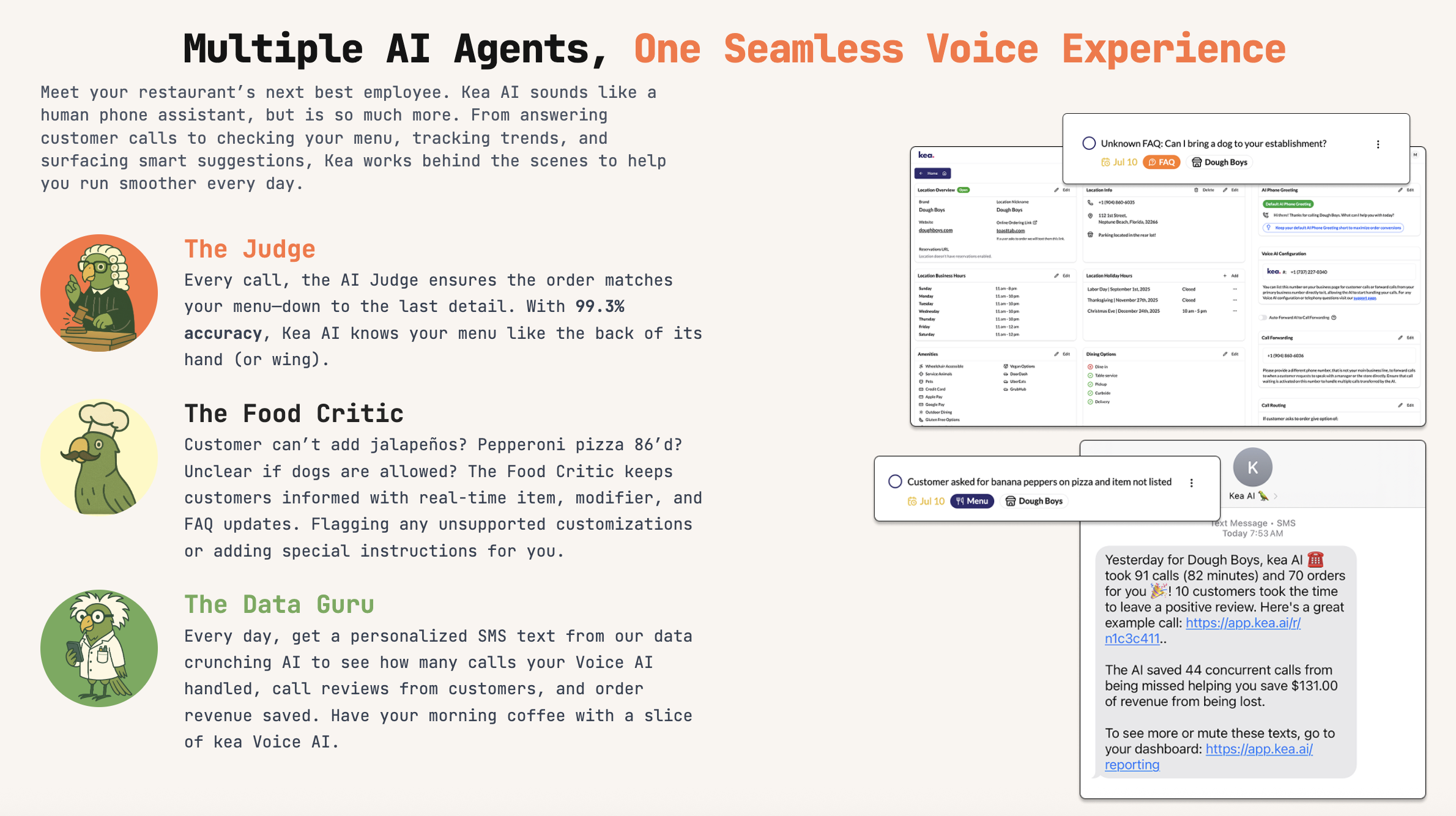
The voice is not a cosmetic detail. It is your brand. Kea AI offers 60+ premium voices precisely because there is no one-size-fits-all sound for a brand. When you demo, close your eyes and just listen. Does it sound like someone you would want representing your business? If you hesitate, your customers will too.
4. Reliable After-Hours and Overflow Coverage
The whole point of an AI answering service is that it never sleeps, never takes a lunch break, and never gets overwhelmed during a rush.
45% of high-intent calls occur outside standard business hours. Healthcare practices receive 38% of calls after hours, and restaurants and hotels receive 42%. If your system cannot handle those calls, you are leaving nearly half your inbound volume unanswered.
Demand clarity on two scenarios:
- After hours: What happens at 9pm on a Saturday when a customer calls with an urgent question? The AI should handle it exactly as well as it would at 10am on a Tuesday.
- Overflow: When five calls come in at once during your busiest hour, does the system pick up all five, or does it choke?
AI receptionists answer 100% of calls in under 3 seconds, 24/7/365. Businesses using AI answering services report 99%+ call capture rates, 30% fewer missed leads, and ROI within the first month.
This is where AI genuinely outperforms a traditional answering service. A human team has a capacity ceiling. A well-built generative system does not. Make sure the vendor can speak specifically to how they handle simultaneous calls. You can also read about how Kea AI streamlines call answering during peak seasons to see this in action.
5. Seamless Integration With the Tools You Already Use
An AI that answers the phone but leaves you retyping everything by hand is only doing half the job.
The captured information needs to flow directly into wherever you actually work, whether that is your CRM, your calendar, your scheduling software, or a simple daily summary in your inbox. A high percentage of phone calls to small businesses go unanswered, and many of those callers never try again. That is not a staffing problem an extra receptionist fixes. It is a structural gap, and an AI answering service is built specifically to close it.
But closing that gap only works if the data lands somewhere useful. Ask the vendor:
- Where does the call data go after the call ends?
- Can it book appointments directly into my calendar?
- Do I get a clean summary I can act on without digging?
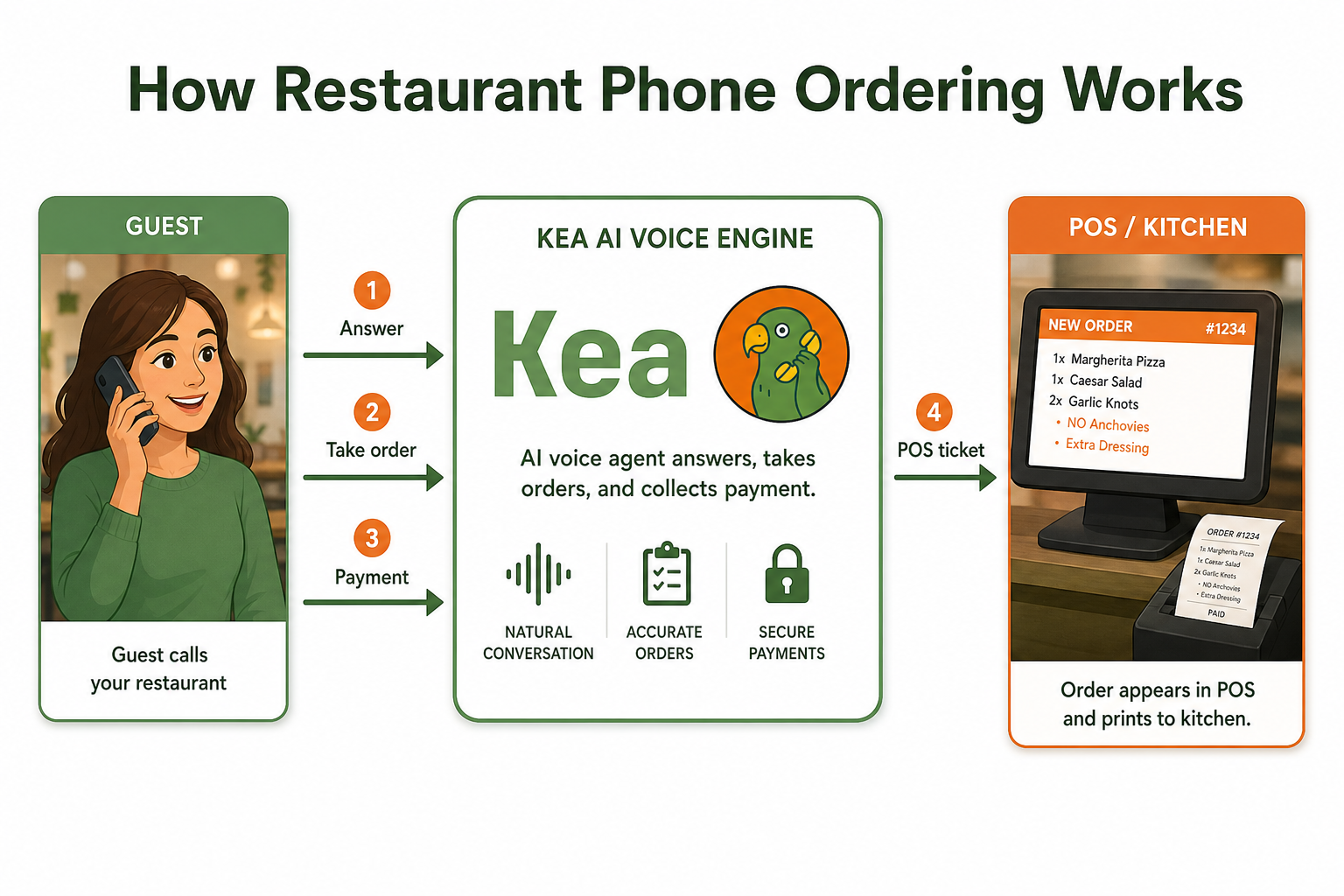
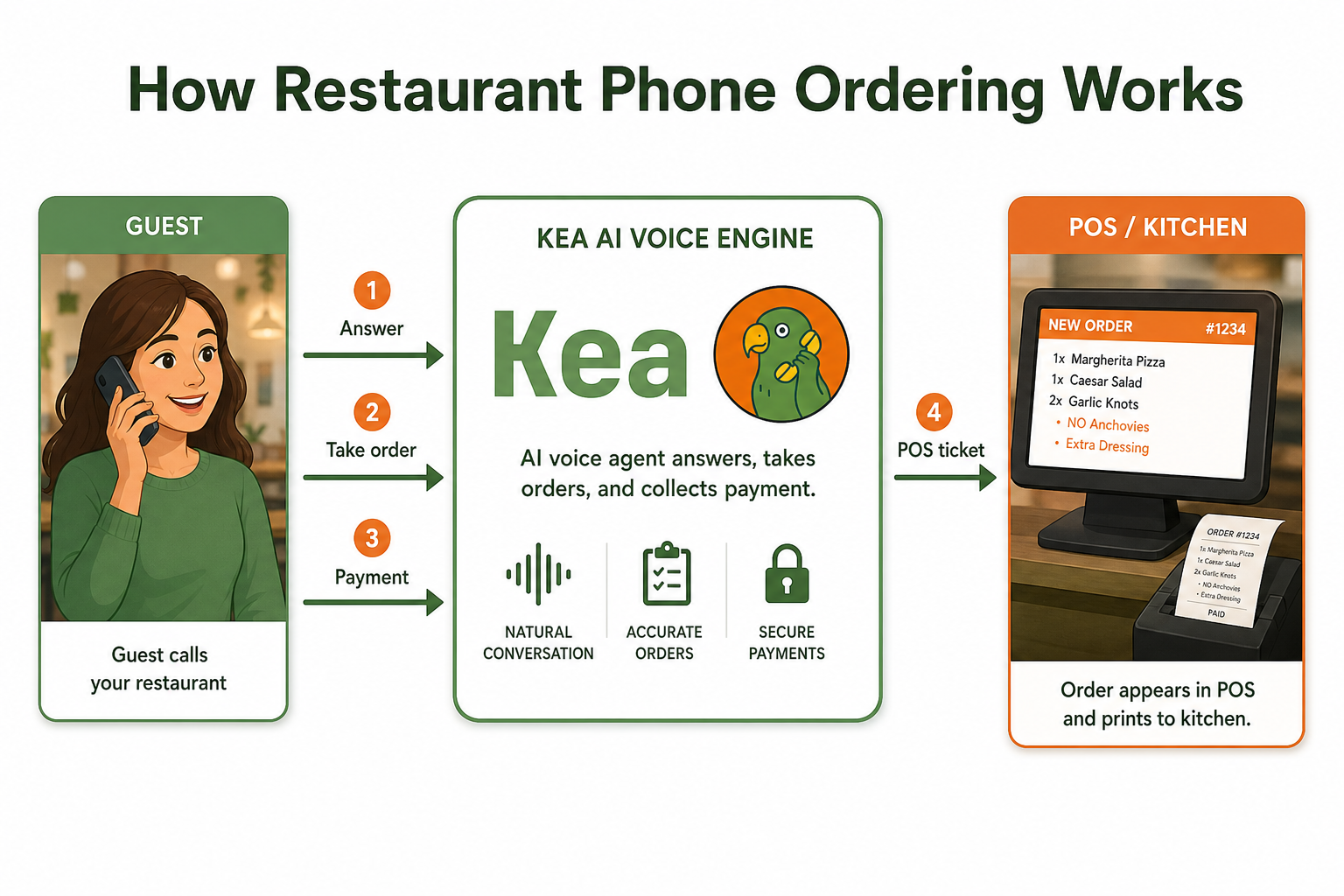
The goal is zero manual re-entry. If you are copying and pasting call notes into your system every morning, the tool is not saving you the time it promised. For a full breakdown of how integration actually works, read how to integrate Voice AI with your restaurant and POS systems.
6. Real Customization for How Your Business Actually Works
No two businesses answer the phone the same way. A dental office, a law firm, and an HVAC company all have completely different questions to ask, information to collect, and rules to follow.
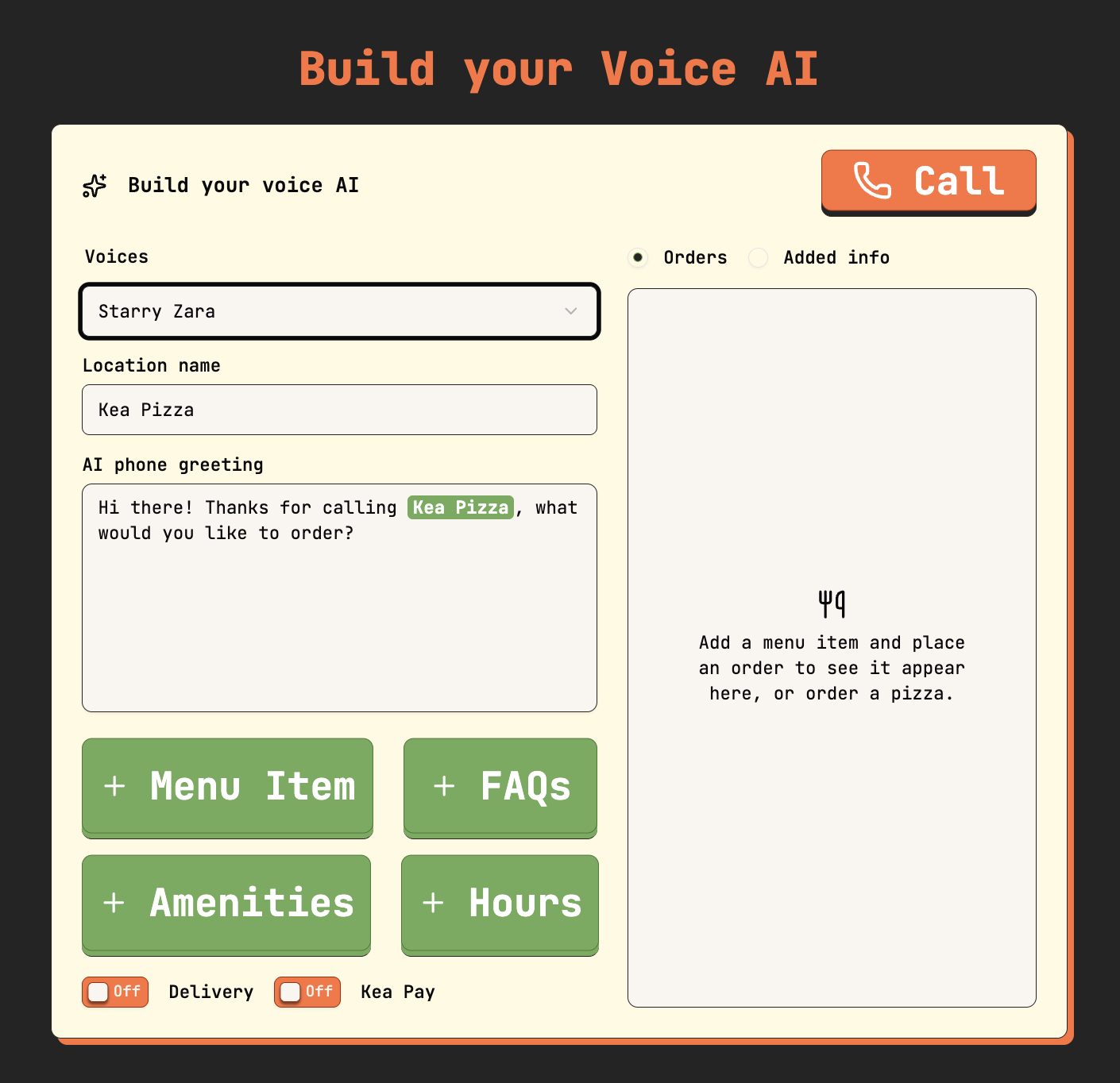
A good system lets you create FAQs, customize greeting messages, and on advanced plans, upload internal documents such as pricing sheets to improve accuracy. Generic scripts produce generic results.
Demand a system that can be tailored to your exact workflow. That means:
- Custom questions the AI asks based on why the caller reached out
- Your specific business hours, services, and policies baked in
- The ability to update all of this quickly as your business changes
The best AI answering service molds itself to your operation, not the other way around. Kea AI gives operators full control over this, including custom upsell controls and personalization settings that no other platform matches. You can also explore why personalization matters for a restaurant AI assistant for a deeper look at why this feature is non-negotiable.
7. Transparent Pricing and Honest Reporting
Last one, and it is the feature that separates the trustworthy vendors from the ones that will surprise you on your invoice.
Lower pricing typically means less sophisticated AI, fewer integrations, and limited customization options. The goal is not to find the cheapest option. The goal is to find the one that gives you the most clarity on what you are paying for and what you are getting in return.
Look for:
- Clear, predictable pricing with no mystery fees
- Reporting that shows you call volume, outcomes, and what was captured
- The ability to actually listen back to calls and hold the system accountable
Missed calls are not isolated operational inconveniences. They represent a recurring, measurable revenue control variable in phone-driven businesses. If a vendor cannot show you real data on how they are closing that gap, that tells you everything you need to know.
The good ones want you to look under the hood, because looking under the hood is exactly how they win your trust. Kea AI publishes a transparent cost breakdown and gives you full visibility into your call data because we believe you should never have to take performance on faith.
Putting It All Together
If I had to boil this whole post down to one sentence, it would be this: demand proof, not promises.
Every vendor will say they are natural, accurate, and reliable. Your job as an operator is to make them show you. Ask the curveball question. Listen to the voice with your eyes closed. Ask where the data goes. Ask how accuracy gets measured. The vendors who can answer those questions confidently are the ones worth your time.
This is exactly why we built Kea AI the way we did, and why I keep coming back to accuracy and natural conversation as the two features that matter most. Everything else is table stakes. Get those two right, and you have an AI answering service that genuinely works like your best employee instead of a liability you have to babysit.
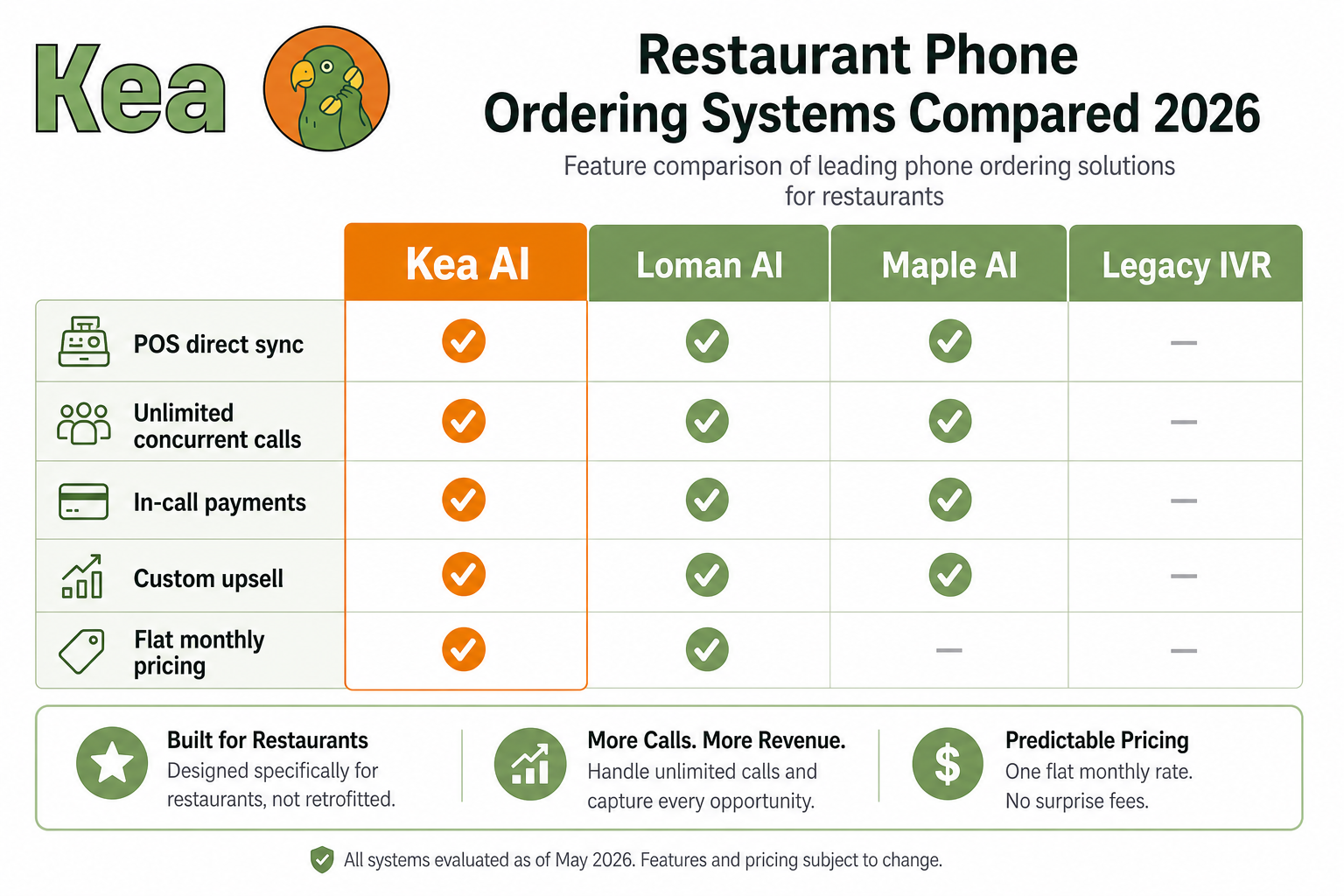
Your phone is often the front door to your business. Make sure whoever, or whatever, is answering it earns that responsibility. If you want to see how Kea AI compares to other options in the market, the 2026 Voice AI competitor guide is a good place to start. And if you are ready to dig into ROI, check out 5 key Voice AI ROI indicators for restaurants.
Frequently Asked Questions
Q: What makes Kea AI different from other AI phone answering services?
A: Kea AI is fully generative and built to deliver the highest accuracy in the Voice AI industry. Rather than relying on rigid decision trees, it understands what callers actually mean and responds naturally, which protects your brand and captures information correctly the first time. You can read more about the 8 essential standards every Voice AI tool must have to see how Kea AI measures up.
Q: Will an AI answering service sound robotic to my customers?
A: With Kea AI, no. The voice is designed to sound natural and professional so callers feel taken care of. Kea AI offers over 60 premium voices, giving you the ability to choose a sound that genuinely represents your brand rather than settling for a generic default.
Q: Can Kea AI handle multiple calls at the same time?
A: Yes. Unlike a human team with a fixed capacity, Kea AI can handle overflow and after-hours volume without choking, so you never miss a call during your busiest hour or in the middle of the night. Research shows that businesses using AI answering services report 99%+ call capture rates and 30% fewer missed leads.
Q: How do I know the AI is capturing information accurately?
A: Accuracy is the entire point of Kea AI, which is why it is built to be the most accurate Voice AI available. You get full transparency into what was said and captured on every call, so you can verify names, numbers, and appointment details rather than taking anything on faith. Read more about how to measure the true ROI of Voice AI using transparent call data.
Q: Does Kea AI work with the software I already use?
A: Yes. Kea AI is designed to integrate with your existing tools so captured call information flows directly into your workflow, eliminating the manual re-entry that eats up your team's time. For specifics, read how to integrate Voice AI with POS systems without breaking on complex menus.
Q: Is an AI answering service actually worth it for a small business?
A: For most operators, yes, especially when missed calls mean lost revenue. According to research from Dialora, the average small business loses $126,000 per year to missed calls. The key is choosing a service that gets the fundamentals right. Kea AI focuses on natural conversation and industry-leading accuracy precisely because those are the features that turn an AI answering service into a real asset instead of a headache. See the complete 2026 operator's guide to AI answering services for a full breakdown.
Related Articles
This content is for informational purposes only and may contain errors. Please contact us to verify important details.